Monosaccharides
Subcategories of "Monosaccharides"
- Alloses(11 products)
- Arabinoses(21 products)
- Erythroses(11 products)
- Fructoses(9 products)
- Fucoses(36 products)
- Galactosamine(41 products)
- Galactose(261 products)
- Glucoses(365 products)
- Glucuronic Acids(52 products)
- Glyco-substrates for Enzyme(78 products)
- Guloses(6 products)
- Idoses(4 products)
- Inositols(15 products)
- Lyxoses(4 products)
- Mannoses(65 products)
- O-Glycans(48 products)
- Psicoses(3 products)
- Rhamnoses(10 products)
- Riboses(61 products)
- Sialic Acids(100 products)
- Sorboses(4 products)
- Sugars(173 products)
- Tagatoses(4 products)
- Taloses(8 products)
- Xyloses(20 products)
Found 6085 products of "Monosaccharides"
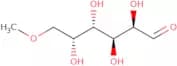
6-O-Methyl-D-galactopyranose
CAS:6-O-Methyl-D-galactopyranose is a monosaccharide that is an important component of the glycosidic linkage in the plant galactomannans. 6-O-Methyl-D-galactopyranose has been shown to be a good substrate for immobilized lectin, which can be used in ionization techniques as well as to characterize glycoproteins and glycopeptides. 6-O-Methyl-D-galactopyranose has also been used in the identification of blood groups and amino acid analysis.
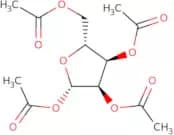
Formula:C7H14O6Purity:Min. 97 Area-%Color and Shape:White Off-White PowderMolecular weight:194.18 g/mol1,2,3,5-Tetra-O-acetyl-β-D-ribofuranose
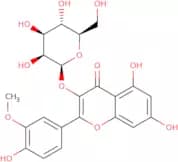
CAS:Important resource for RNA- and DNA-related syntheses including ribosylationFormula:C13H18O9Purity:Min. 95%Color and Shape:White PowderMolecular weight:318.28 g/molIsorhamnetin 3-O-galactoside
CAS:Isorhamnetin 3-O-galactoside is a flavonoid derivative that is found in plant tissue. It has antioxidant properties and has been shown to inhibit leucaena seed germination, growth, and the production of reactive oxygen species (ROS). Isorhamnetin 3-O-galactoside can be extracted from fruit by using an aqueous solution of potassium hydroxide. It is also used as a dietary supplement for its potent inhibitory activity on ROS. Isorhamnetin 3-O-galactoside is found in plants with other flavonoids such as quercetin and kaempferol. The chemical structure of this compound consists of a hydroxyl group at the C3 position and an O-glycosidic linkage to galactose at the C2 position. This compound can be detected by mass spectrometric methods such as electron ionization or electrospray ionization because it
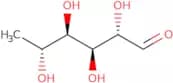
Formula:C22H22O12Purity:Min. 95%Molecular weight:478.4 g/molD-Rhamnose
CAS:Chiral-pool sugar used to mirror syntheses based on natural L-RhaFormula:C6H12O5Purity:Min. 97 Area-%Color and Shape:White PowderMolecular weight:164.16 g/molD-Xylonic acid calcium salt hydrate
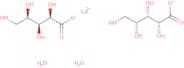
CAS:D-Xylonic acid calcium salt hydrate is a product that is made from the hydrolysis of cellulose. It is a byproduct of the production of d-xylose and can be used as a nutritional supplement or an additive in animal feed. D-Xylonic acid calcium salt hydrate has been shown to have an uptake rate in aerobic conditions that is ten times higher than glucose, which makes it more economical for use in the production of d-xylose. D-Xylonic acid calcium salt hydrate can be catalyzed to produce yields for d-glucose and d-xylose, which are both important monosaccharides. The catalytic process also produces d-gluconic acid and aerobic oxidation produces d-xylose, making it possible to recycle these products.Formula:C10H18O12·Ca·xH2OPurity:Min. 97%Color and Shape:White PowderMolecular weight:370.32 g/mol2,3,4,6-Tetra-O-benzyl-1-deoxynojirimycin hydrochloric acid salt
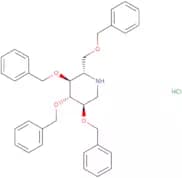
CAS:2,3,4,6-Tetra-O-benzyl-1-deoxynojirimycin hydrochloric acid salt is a synthetic monosaccharide. It was originally synthesized by the methylation of a native oligosaccharide before being subjected to click chemistry. The resulting product is a complex carbohydrate with an aromatic ring in place of the sugar alcohol moiety. 2,3,4,6-Tetra-O-benzyl-1-deoxynojirimycin hydrochloric acid salt has CAS number 72983-76-7 and is soluble in water. This product is also available as a custom synthesis service and can be modified to meet your needs.Formula:C34H38ClNO4Purity:Min. 95 Area-%Color and Shape:PowderMolecular weight:560.12 g/molL-Ribonic acid-1,4-lactone
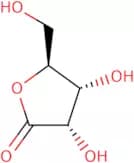
CAS:L-Ribonic acid-1,4-lactone is a synthetic process that is used as an antiviral agent. It is a sugar reactant in the production of riboflavin. L-Ribonic acid-1,4-lactone has been shown to inhibit the synthesis of viral RNA and DNA, which prevents replication of the virus. The mechanism of L-ribonic acid lactone's antiviral activity is not currently known.
Formula:C5H8O5Purity:(%) Min. 90%Color and Shape:PowderMolecular weight:148.12 g/molCochineal
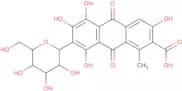
CAS:Cochineal is a natural dye that is extracted from the female cochineal insect. Cochineal is used in food and cosmetics, and as a red colorant in some pharmaceutical products. The carminic acid present in cochineal forms a stable complex with the anionic groups present in wool or silk, so it is not soluble in water. Cochineal has been shown to have genotoxic activity and can cause mutations at both the base-pairing level and at protein level. Cochineal has also been shown to be cytotoxic against human serum cells and disrupt mitochondrial membrane potential. Its optimum concentration for signal peptide detection by electrochemical impedance spectroscopy (EIS) was found to be 0.1 mM.Formula:C22H20O13Purity:Min. 95%Color and Shape:Red PowderMolecular weight:492.39Phenyl 2,3,4,6-tetra-O-acetyl-b-D-thiogalactopyranoside
CAS:Phenyl 2,3,4,6-tetra-O-acetyl-b-D-thiogalactopyranoside is a sugar that belongs to the class of glycosides. It is a white crystalline powder and has a molecular weight of 459.8. The chemical formula for this compound is C 12 H 18 O 9 . Phenyl 2,3,4,6-tetra-O-acetyl-b-D-thiogalactopyranoside is used in the synthesis of oligosaccharides and polysaccharides. It can be used to modify the structure of saccharides and sugar molecules by methylation or fluorination. This product also has CAS No. 24404-53-3 and can be custom synthesized according to your specifications.Formula:C20H24O9SPurity:Min. 95%Color and Shape:PowderMolecular weight:440.47 g/molL-Gluconic acid calcium
CAS:L-Gluconic acid calcium salt is a white crystalline powder. It is soluble in water and slightly soluble in alcohol. The structure of this compound has not been fully elucidated, but it is known to be a modification of L-gluconic acid, which is a monosaccharide. This product can be used as a biochemical reagent for the synthesis of oligosaccharides and polysaccharides.
Formula:(C6H12O7)2•CaPurity:Min. 95%Color and Shape:PowderMolecular weight:432.39 g/molL-Fucitol
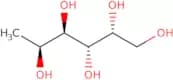
CAS:L-Fucitol is a sugar that is found in the form of D-arabinose and D-xylitol. It is used in flow systems for the detection of herpes simplex virus type 1 (HSV1) glycoproteins and can be used to measure xylitol dehydrogenase activity. L-Fucitol has been shown to inhibit the growth of bacteria that are resistant to penicillin, ampicillin, and erythromycin. L-Fucitol also inhibits enzymes such as galactocerebrosidase, which breaks down galactocerebroside, a myelin constituent. This inhibition leads to accumulation of galactitol, an inhibitor of oligosaccharide synthesis. L-Fucitol also inhibits enzyme activities such as glycosidases and glycosyltransferases, which affect metabolic profiles by inhibiting the breakdown or synthesis of sugars. L-Fucitol is a monosac
Formula:C6H14O5Purity:Min. 95%Color and Shape:White Off-White PowderMolecular weight:166.17 g/mol2-Deoxy-2-(4-methoxybenzyliden)imino-D-glucose
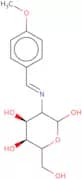
CAS:2-Deoxy-2-(4-methoxybenzyliden)imino-D-glucose is a modified carbohydrate that is used for the synthesis of oligosaccharides, polysaccharides, and glycosaminoglycans. This compound is also used as a substrate for methylation reactions. It can be synthesized from D-glucose by the addition of a 2-(4-methoxybenzylidene) group to the 2′ position of the carbon atom on the anomeric carbon. The structure of this compound has been determined by X-ray crystallography.Formula:C14H19NO6Purity:Min. 95%Color and Shape:White to off-white solid.Molecular weight:297.3 g/molβ-D-Galactopyranosyl amine
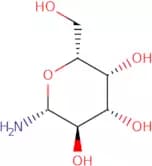
CAS:Inhibitor of β-galactosidase
Formula:C6H13NO5Purity:(¹H-Nmr) Min. 95 Area-%Color and Shape:White PowderMolecular weight:179.17 g/molLumiracoxib acyl-β-D-glucuronide
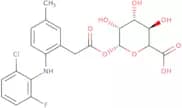
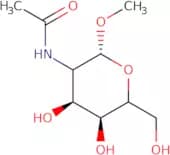
CAS:Controlled ProductLumiracoxib acyl-b-D-glucuronide is a synthetic compound that is a derivative of the nonsteroidal anti-inflammatory drug lumiracoxib. It has been shown to be effective as an inhibitor of inflammation and pain in animal models, with no significant toxic effects on the liver or kidney. Lumiracoxib acyl-b-D-glucuronide is a white powder that can be synthesized by glycosylation and modification of lumiracoxib. This compound is soluble in water and ethanol, but insoluble in ether.Formula:C21H21ClFNO8Purity:Min. 95%Color and Shape:White To Yellow SolidMolecular weight:469.84 g/molMethyl 2-acetamido-2-deoxy-b-D-glucopyranoside
CAS:Methyl 2-acetamido-2-deoxy-b-D-glucopyranoside is a xylose sugar that is found in the leaves of Nepeta cataria. It has shown to inhibit bacterial growth by binding to DNA and RNA, as well as inhibit transcription, translation, and replication. Methyl 2-acetamido-2-deoxy-b-D-glucopyranoside also binds to cardiac channels and inhibits their activity. This compound has been shown to have anti cancer effects on prostate cancer cells in mice. Furthermore, it inhibits microbial metabolism in vitro by inhibiting the enzyme acetolactate synthase. Methyl 2-acetamido-2-deoxy-b-D -glucopyranoside has also been shown to be an effective treatment for autoimmune diseases such as multiple sclerosis and rheumatoid arthritis in mice.Formula:C9H17NO6Purity:Min. 95%Color and Shape:White Off-White PowderMolecular weight:235.24 g/molChloramphenicol glucuronide
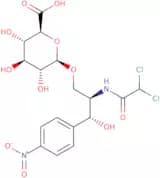
CAS:Chloramphenicol glucuronide is an active metabolite of chloramphenicol. It can be detected in human serum and urine, as well as rat liver microsomes. Chloramphenicol glucuronide binds to the cytosolic protein, cytochrome b5 reductase, which inhibits protein synthesis and cell growth. This compound has been shown to be effective for treating infectious diseases such as typhoid fever, pelvic inflammatory disease, and pneumonia. The chloramphenicol glucuronide group also includes a number of other metabolites that are formed from chloramphenicol by conjugation with glucuronic acid.Formula:C17H20Cl2N2O11Purity:Min. 95 Area-%Color and Shape:PowderMolecular weight:499.26 g/molN-Acetyl-2,3-dehydro-2-deoxyneuraminic acid methyl ester
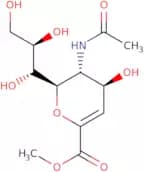
CAS:N-Acetyl-2,3-dehydro-2-deoxyneuraminic acid methyl ester (NAD) is a natural product that is produced by the human body. NAD has been shown to induce apoptosis in cancer cells and modulate gene expression. This compound also plays a role in the development of stem cells, which are important for tissue regeneration. NAD has been shown to have therapeutic effects on paraplegia and angiogenesis. It also has anti-inflammatory properties that may be related to its ability to regulate mesenchymal stem cells.Formula:C12H19NO8Purity:Min. 95%Color and Shape:PowderMolecular weight:305.29 g/mol3-O-Benzyl-2-deoxy-D-arabinopyranose
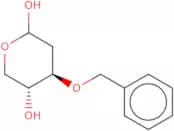
3-O-Benzyl-2-deoxy-D-arabinopyranose is a modified sugar that can be used in the synthesis of oligosaccharides. It is a white powder that has a purity level of more than 99%. The CAS number for 3-O-Benzyl-2-deoxy-D-arabinopyranose is 52397-07-8. This product can be custom synthesized to meet your specific needs. It can also be methylated, glycosylated, or modified with a click chemistry reaction.
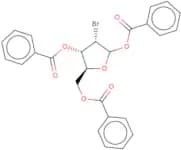
Formula:C12H16O4Purity:Min. 95%Molecular weight:224.25 g/mol1,3,5-Tri-O-benzoyl-2-deoxy-2-bromo-alpha-L-arabinofuranose
1,3,5-Tri-O-benzoyl-2-deoxy-2-bromo-alpha-L-arabinofuranose is a complex monosaccharide that can be used as a building block in the synthesis of various compounds. It is a derivative of the sugar arabinose, with the addition of benzoyl and bromo groups at specific positions. The compound has potential applications in the fields of organic chemistry and medicinal chemistry and is available for research.Formula:C26H21BrO7Purity:Min. 95%Molecular weight:524.04 g/mol1,2,3,6-Tetra-O-benzyl-β-D-glucopyranoside
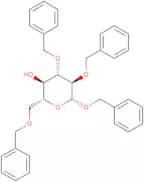
CAS:1,2,3,6-Tetra-O-benzyl-β-D-glucopyranoside is a synthetic compound that is produced by the modification of natural sugars. It was first synthesized by a team of chemists led by Professor Robert Burns Woodward. This molecule has been modified with methyl groups and fluorine atoms to improve its stability and to provide a more convenient method for its analysis. 1,2,3,6-Tetra-O-benzyl-β-D-glucopyranoside can be used in the synthesis of oligosaccharides and polysaccharides.Formula:C34H36O6Purity:Min. 95%Color and Shape:PowderMolecular weight:540.65 g/mol