Monosaccharides
Monosaccharides are the simplest form of carbohydrates and serve as fundamental building blocks for more complex sugars and polysaccharides. These single sugar molecules play critical roles in energy metabolism, cellular communication, and structural components of cells. In this section, you will find a wide variety of monosaccharides essential for research in biochemistry, molecular biology, and glycoscience. These compounds are crucial for studying metabolic pathways, glycosylation processes, and developing therapeutic agents. At CymitQuimica, we offer high-quality monosaccharides to support your research needs, ensuring precision and reliability in your scientific investigations.
Subcategories of "Monosaccharides"
- Alloses(11 products)
- Arabinoses(21 products)
- Erythroses(11 products)
- Fructoses(9 products)
- Fucoses(36 products)
- Galactosamine(41 products)
- Galactose(260 products)
- Glucoses(365 products)
- Glucuronic Acids(51 products)
- Glyco-substrates for Enzyme(77 products)
- Guloses(6 products)
- Idoses(4 products)
- Inositols(15 products)
- Lyxoses(4 products)
- Mannoses(65 products)
- O-Glycans(48 products)
- Psicoses(3 products)
- Rhamnoses(10 products)
- Riboses(61 products)
- Sialic Acids(100 products)
- Sorboses(4 products)
- Sugars(173 products)
- Tagatoses(4 products)
- Taloses(8 products)
- Xyloses(20 products)
Show 17 more subcategories
Found 6088 products of "Monosaccharides"
Sort by
Purity (%)
0
100
|
0
|
50
|
90
|
95
|
100
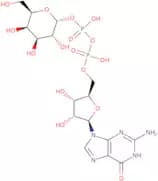
GDP-D-galactose
CAS:<p>GDP-D-galactose is a sugar nucleotide that is an intermediate in the synthesis of GDP-D-mannose. It is synthesized from D-galactose by the enzyme galactokinase, which converts D-galactose to D-galacturonate. GDP-D-galactose can then be converted to GDP-D-mannose by the enzyme GDP mannokinase. The incorporation of GDP into macromolecules is a process that can be used as a marker for biosynthesis and has been shown in Gracilaria sp.</p>Formula:C16H25N5O15P2Purity:Min. 95%Molecular weight:589.4 g/mol1,2:3,5-Di-O-Isopropylidene-α-L-xylofuranose
CAS:<p>1,2:3,5-Di-O-Isopropylidene-a-L-xylofuranose is a fluorinated sugar that is used as a building block in the synthesis of complex carbohydrates and oligosaccharides. It has a CAS number of 131156-47-3. 1,2:3,5-Di-O-Isopropylidene-a-L-xylofuranose is an active component in the modification of saccharide and polysaccharide structures by click chemistry. It can be modified with various functional groups such as methylation or monosaccharide to produce specific compounds. This product is available for custom synthesis.</p>Formula:C11H18O5Purity:Min. 95%Color and Shape:PowderMolecular weight:230.26 g/mol1,3,4,6-Tetra-O-acetyl-2-azido-2-deoxy-a-D-galactopyranose
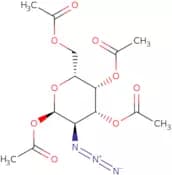
CAS:<p>1,3,4,6-Tetra-O-acetyl-2-azido-2-deoxy-a-D-galactopyranose is an azide sugar that is resistant to the activity of sulfide and can be used as a probe for sulfide in the distal colon. It has been shown that this sugar binds to recombinant human erythrocyte enzymes and inhibits their activities. The hydrolysis of this sugar by pancreatic enzymes has been shown to be dependent on the conformational state of the enzyme. This sugar also inhibits salivary amylase and intestinal sucrase activities.</p>Formula:C14H19N3O9Purity:Min. 95%Color and Shape:White PowderMolecular weight:373.32 g/molPhenyl 4,6-O-benzylidene-2-deoxy-2-phthalimido-b-D-thioglucopyranoside
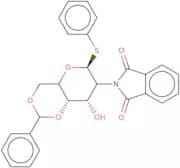
CAS:<p>Phenyl 4,6-O-benzylidene-2-deoxy-2-phthalimido-b-D-thioglucopyranoside is a custom synthesis sugar that has been modified with fluorination, glycosylation, and carbamoylation. It is an oligosaccharide that contains a saccharide at the reducing end of the molecule. The CAS number for this compound is 79528-51-1.</p>Formula:C27H23NO6SPurity:Min. 95%Color and Shape:White PowderMolecular weight:489.54 g/molZiyuglycoside II
CAS:<p>Ziyuglycoside II is a steroidal alkaloid that has been shown to have anti-angiogenic properties. It is a natural compound extracted from the Chinese herb ziyuglycoside. This compound has been shown to inhibit the activation of toll-like receptor 4, which plays an important role in inflammation and immunity. Ziyuglycoside II also inhibits the production of reactive oxygen species and autophagy, leading to cell death by apoptosis. This compound has been shown to be effective against bowel disease and epithelial mesenchymal transition (EMT). Ziyuglycoside II has also been shown to have matrix effects on the cells Hl-60, which are related to tumor metastasis.</p>Formula:C35H56O8Purity:Min. 95%Color and Shape:White To Off-White SolidMolecular weight:604.81 g/molMethyl 4-deoxy-4-fluoro-a-D-glucose
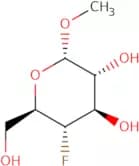
CAS:<p>Methyl 4-deoxy-4-fluoro-a-D-glucose is a synthetic and custom synthesis monosaccharide for use in glycosylation, polysaccharide modification, and click chemistry. It is a fluorinated sugar that can be used in the synthesis of oligosaccharides and complex carbohydrates. Methyl 4-deoxy-4-fluoro-a-D-glucose has CAS number 56926-53-5.</p>Formula:C7H13FO5Purity:Min. 98 Area-%Color and Shape:PowderMolecular weight:196.17 g/mol1,2,3,4,6-Penta-O-benzyl-β-D-thiogalactopyranoside
CAS:<p>1,2,3,4,6-Penta-O-benzyl-b-D-thiogalactopyranoside is a custom synthesis that is a complex carbohydrate. It has a CAS number of 210358-01-3 and a molecular weight of 603. It is modified with saccharide, methylation, glycosylation, and carbonyl groups. This product is available in high purity and without fluorination or synthetic modification.</p>Formula:C41H42O5SPurity:Min. 95%Color and Shape:PowderMolecular weight:646.84 g/mol2,3,4,6-Tetra-O-benzoyl-β-D-glucopyranosyl fluoride
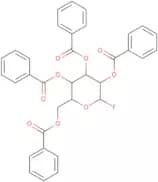
CAS:<p>Synthetic carbohydrate building block</p>Formula:C34H27FO9Purity:Min. 95%Color and Shape:PowderMolecular weight:598.59 g/mol6-O-Benzyl-D-mannose
<p>6-O-Benzyl-D-mannose is a methylated monosaccharide. It is an important intermediate in the synthesis of oligosaccharides and polysaccharides. 6-O-Benzyl-D-mannose can be used for modification of saccharides, carbohydrates and sugars. This product has high purity and a custom synthesis.</p>Formula:C13H18O6Purity:Min. 95%Molecular weight:270.28 g/mol1,2:3,4-Di-O-isopropylidene-L-arabinopyranose
CAS:<p>1,2:3,4-Di-O-isopropylidene-L-arabinopyranose is a custom synthesis of 1,2:3,4-di-O-isopropylidene arabinopyranose. It is an oligosaccharide with a glycosylation and methylation that has a high purity with a CAS number of 212069-31-3. This complex carbohydrate can be modified to create new saccharides. The modification process includes fluorination and click chemistry reactions.</p>Formula:C11H18O5Purity:Min. 95%Color and Shape:PowderMolecular weight:230.26 g/moltrans-β-D-Glucopyranosyl methylacetoacetate
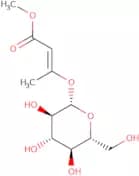
CAS:<p>Trans-beta-D-glucopyranosyl methylacetoacetate is a carbohydrate that belongs to the group of modified sugars. It is a synthetic compound and can be custom synthesized for your specific needs. This product has a high purity and can be used in research or as a starting material for the synthesis of other compounds. Trans-beta-D-glucopyranosyl methylacetoacetate is an oligosaccharide that can be fluorinated, methylated, glycosylated, or click modified. This product is also available in various grades, such as standard and high purity.</p>Formula:C11H18O8Purity:Min. 95%Color and Shape:PowderMolecular weight:278.26 g/molMethyl 4,6-O-benzylidene-β-D-glucopyranoside
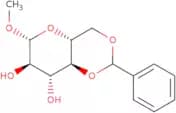
CAS:<p>Methyl 4,6-O-benzylidene-b-D-glucopyranoside is a nitro derivative of methyl b-D-glucopyranoside. The anomeric proton and the nitro group are in the same plane and on opposite sides of the molecule. This compound has been shown to be both a receptor binding agent and a gelation agent. It is used to study biological membranes because it binds to phospholipids in the cell membrane, which alters its physical properties. Methyl 4,6-O-benzylidene-b-D-glucopyranoside is also known for its ability to form hydrogen bonds with water molecules. This is due to its cavity that can accommodate one water molecule per monomer unit. The crystal structure of this compound has been determined by x ray crystallography and shows that it forms dimers through hydrogen bonding between two molecules in each dimer. These interactions are</p>Formula:C14H18O6Purity:Min. 95%Color and Shape:PowderMolecular weight:282.29 g/mol1,2;4,5-Di-O-isopropylidene-b-D-fructopyranose
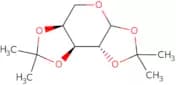
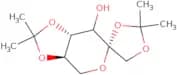
CAS:<p>Synthetic building block</p>Formula:C12H20O6Purity:Min. 95 Area-%Color and Shape:Off-White PowderMolecular weight:260.28 g/mol1-Bromo-2,3,4,6-tetra-O-acetyl-α-D-galactopyranoside
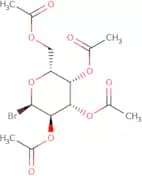
CAS:<p>Donor for Koenigs-Knorr type galactosylation and other anomeric substitutions</p>Formula:C14H19BrO9Purity:Min. 95%Color and Shape:White PowderMolecular weight:411.2 g/mol4-Methoxyphenyl 3-O-benzyl-6-O-tert-butyldimethylsilyl-2-deoxy-2-phthalimido-b-D-glucopyranoside
CAS:<p>C3-Benzyl-6-O-tert-butyldimethylsilyl-2-deoxy-2-phthalimido-b-D-glucopyranoside is a synthetic glycosylation agent that converts carbohydrates to sugar derivatives. It is a fluorinated sugar with a benzyl group and can be used in the synthesis of complex polysaccharides and saccharides. C3BzTBDMSG has been shown to have high purity, which makes it an ideal choice for Click chemistry and modification.</p>Formula:C34H41NO8SiPurity:Min. 95%Molecular weight:619.78 g/molEsculin - Anhydrous
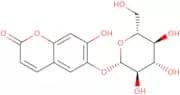
CAS:<p>Esculin is a natural product obtained from the plant Aesculus hippocastanum. Esculin has been shown to have anti-inflammatory properties in experimental models. It also has been shown to inhibit the activity of both human and animal renin, suppressing kidney fibrosis. Esculin was found to be more effective than indomethacin in preventing the progression of renal disease induced by the model system of chronic kidney disease. Esculin also has antioxidant properties and can reduce oxidative stress caused by free radicals, which may contribute to its anti-inflammatory effects. Esculin is a coumarin derivative that can be used as a chromatographic stationary phase for separation and identification of various chemical compounds.</p>Formula:C15H16O9Purity:Min. 98 Area-%Color and Shape:PowderMolecular weight:340.28 g/molHaloperidol b-D-glucuronide
CAS:Controlled Product<p>Haloperidol b-D-glucuronide is the glucuronide conjugate of haloperidol. It is a major metabolite of haloperidol, which can be detected in urine samples and plasma concentration–time curves. It has been shown to be effective in the treatment of schizophrenic patients and is used as a marker for schizophrenia. Haloperidol b-D-glucuronide has been found to inhibit the reduction of carbonyl groups by human liver microsomes, but not rat liver microsomes. This inhibition may be due to its capacity to bind with human liver enzymes, such as cytochrome P450 reductase and glutathione reductase. Haloperidol b-D-glucuronide also inhibits the uptake of antipsychotic medications into human liver cells, but not rat liver cells.</p>Formula:C27H31ClFNO8Purity:Min. 95%Molecular weight:551.99 g/mol3,5,6-Tri-O-benzyl-1,2-O-Isopropylidene-a-D-glucofuranose
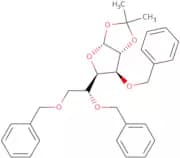
CAS:<p>3,5,6-Tri-O-benzyl-1,2-O-isopropylidene-a-D-glucofuranose is a synthetic monosaccharide that has been fluorinated at the C3 position. It is an oligosaccharide with a complex carbohydrate structure. This glycosylation product can be custom synthesized and has been modified by methylation. 3,5,6-Tri-O-benzyl-1,2-O-isopropylidene Glucuronic acid can be used in the synthesis of polysaccharides or as a sugar for click chemistry. The chemical formula is C13H28O4F3 and its molecular weight is 322.32 g/mol.</p>Formula:C30H34O6Purity:Min. 95%Color and Shape:PowderMolecular weight:490.59 g/molPhenolphthalein b-D-glucuronic acid sodium salt
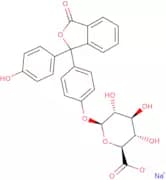
CAS:<p>beta-glucuronidase substrate</p>Formula:C26H22O10NaPurity:Min. 95 Area-%Color and Shape:Yellow PowderMolecular weight:517.44 g/molPhenyl 2,3,4,6-tetra-O-benzyl-b-D-thioglucopyranoside
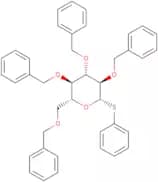
CAS:<p>Phenyl 2,3,4,6-tetra-O-benzyl-b-D-thioglucopyranoside is a modification. It is an oligosaccharide that belongs to the class of carbohydrates. Phenyl 2,3,4,6-tetra-O-benzyl-b-D-thioglucopyranoside has a high purity and can be synthesized in a custom manner. It is a white to off white powder that has CAS No. 38184-10-0 and can be used for glycosylation or methylation reactions. It also has fluoroquinolone resistance and can be used as a complex carbohydrate in the synthesis of polysaccharides.</p>Formula:C40H41O5SPurity:Min. 95%Color and Shape:White Off-White PowderMolecular weight:632.83 g/mol