Monosaccharides
Subcategories of "Monosaccharides"
- Alloses(11 products)
- Arabinoses(21 products)
- Erythroses(11 products)
- Fructoses(9 products)
- Fucoses(36 products)
- Galactosamine(41 products)
- Galactose(261 products)
- Glucoses(365 products)
- Glucuronic Acids(52 products)
- Glyco-substrates for Enzyme(78 products)
- Guloses(6 products)
- Idoses(4 products)
- Inositols(15 products)
- Lyxoses(4 products)
- Mannoses(65 products)
- O-Glycans(48 products)
- Psicoses(3 products)
- Rhamnoses(10 products)
- Riboses(61 products)
- Sialic Acids(100 products)
- Sorboses(4 products)
- Sugars(173 products)
- Tagatoses(4 products)
- Taloses(8 products)
- Xyloses(20 products)
Found 6085 products of "Monosaccharides"
Sucrose-6-acetic ester
CAS:Sucrose-6-acetic ester is a product of the reaction between sucrose and acetic anhydride. It is a white crystalline compound that reacts with chlorinating agents to form sulfoxide compounds. Sucrose-6-acetic ester can be converted to acetylsalicylic acid, which is used to synthesize aspirin. The reaction selectivity of this process relies on the enzyme catalysis of acetylation and triphosgene as well as an acidic or basic catalyst. Acetylation is carried out in organic solvents and requires a crystallization process for purification. This product also has fatty acid properties, which are insoluble in water and other polar solvents.
Formula:C14H24O12Purity:Min. 95%Color and Shape:White PowderMolecular weight:384.33 g/molN-Azidoacetylglucosamine
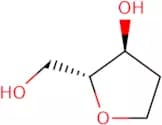
CAS:Click reagent for metabolic labeling of GlcNAcFormula:C8H14N4O6Purity:Min. 95%Color and Shape:PowderMolecular weight:262.22 g/mol1,2-Dideoxy-D-ribofuranose
CAS:Precursor for the preparation of abasic nucleoside analoguesFormula:C5H10O3Purity:Min. 98 Area-%Color and Shape:Clear LiquidMolecular weight:118.13 g/molD-Xylonic acid calcium salt hydrate
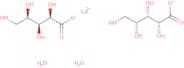
CAS:D-Xylonic acid calcium salt hydrate is a product that is made from the hydrolysis of cellulose. It is a byproduct of the production of d-xylose and can be used as a nutritional supplement or an additive in animal feed. D-Xylonic acid calcium salt hydrate has been shown to have an uptake rate in aerobic conditions that is ten times higher than glucose, which makes it more economical for use in the production of d-xylose. D-Xylonic acid calcium salt hydrate can be catalyzed to produce yields for d-glucose and d-xylose, which are both important monosaccharides. The catalytic process also produces d-gluconic acid and aerobic oxidation produces d-xylose, making it possible to recycle these products.Formula:C10H18O12·Ca·xH2OPurity:Min. 97%Color and Shape:White PowderMolecular weight:370.32 g/molD-Arabinaric acid dipotassium salt
CAS:D-Arabinaric acid dipotassium salt is a custom synthesis with complex carbohydrate, which can be modified by methylation, glycosylation, and carbonylation. It has CAS number 6703-05-5 and a high purity. This product is also fluorinated, which makes it an excellent synthetic reagent.Formula:C5H6K2O7Purity:Min. 95 Area-%Color and Shape:White Off-White PowderMolecular weight:256.29 g/mol2,3,5-Tri-O-benzyl-D-lyxofuranose
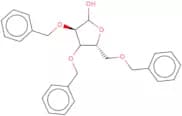
CAS:2,3,5-Tri-O-benzyl-D-lyxofuranose is a custom organic synthesis. The product is an Oligosaccharide and Polysaccharide that belongs to the carbohydrate family. It can be used for methylation reactions and click chemistry modifications with other molecules. This product has been found to have high purity, and it can be used in various applications such as Fluorination, complex carbohydrate, and Modification. 2,3,5-Tri-O-benzyl-D-lyxofuranose is a monosaccharide sugar that has a molecular weight of 327.24 g/mol and a melting point of 155°C.Formula:C26H28O5Purity:Min. 95%Color and Shape:Yellow PowderMolecular weight:420.5 g/molRepaglinide acyl-D-glucuronide
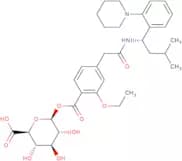
CAS:Repaglinide is a drug that belongs to the class of drugs called meglitinides. It is used in the treatment of type 2 diabetes mellitus and has been shown to lower blood sugar levels. Repaglinide is metabolized to repaglinide acyl-D-glucuronide, its active form, by esterases in the liver. The majority of this metabolite is excreted in urine as an acyl glucuronide. A small amount of this metabolite is excreted into bile and undergoes enterohepatic circulation, resulting in reabsorption and conjugation with glucuronic acid. This process results in a decrease in the amount of repaglinide acyl-D-glucuronide that circulates through the body and prolongs its activity.Formula:C33H44N2O10Purity:(%) Min. 97%Color and Shape:White PowderMolecular weight:628.71 g/molQuercetin-3-O-a-L-arabinoside
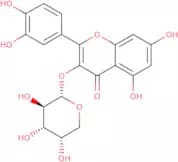
CAS:Quercetin-3-O-a-L-arabinoside is a flavonoid that has been shown to be active against human colorectal adenocarcinoma cells. Quercetin 3-O-a-L-arabinoside inhibits the proliferation of hl60 cells by inducing apoptosis and inhibiting protein synthesis. The biological properties of quercetin 3-O-a-L-arabinoside are not well understood, but it may work as an antioxidant due to its ability to scavenge free radicals. Quercetin 3-O-a-L-arabinoside has also been found to have antimicrobial activity against bacteria, fungi, and viruses. Quercetin 3 O a L arabinoside is able to inhibit the growth of various strains of Mycobacterium tuberculosis, including drug resistant strains. This compound is also shown to be effective in the treatment of platinum resistantFormula:C20H18O11Purity:Min. 98 Area-%Color and Shape:Yellow PowderMolecular weight:434.35 g/molAllyl β-D-galactopyranoside
CAS:Allyl β-D-galactopyranoside is a complex carbohydrate that is modified by methylation, glycosylation, and fluorination. It can be synthesized using the Carbohydrate-Click reaction. Allyl β-D-galactopyranoside is used as a substrate for the synthesis of oligosaccharides, polysaccharides, and other carbohydrates. This product has high purity and is available in custom synthesis.Formula:C9H16O6Purity:Min. 95%Color and Shape:White PowderMolecular weight:220.22 g/molZiyuglycoside I
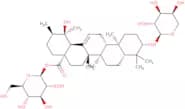
CAS:Ziyuglycoside I is a naturally occurring compound that has been shown to have physiological effects on skin cells. It has been found to bind to collagen and the matrix of skin cells, which may be its mechanism of action. Ziyuglycoside I also has an anti-inflammatory effect, which may be due to its ability to inhibit transcription-polymerase chain reactions (PCR). It has been shown to have antimicrobial activity against some strains of bacteria that are resistant to antibiotics such as erythromycin and tetracycline. Ziyuglycoside I has potential applications in the treatment of infectious diseases and inflammatory skin diseases.
Formula:C41H66O13Purity:Min. 95%Color and Shape:White PowderMolecular weight:766.95 g/molD-Mannose-BSA
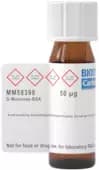
D-Mannose-BSA is a receptor protein that is endogenous and found in the extracellular fluid. It has been shown to bind to the CD18 receptor on leukocytes and macrophages, which can be used as a diagnostic tool for identifying depression. D-Mannose-BSA has also been shown to bind to mouse macrophages, which may be due to its high affinity for the Fc receptors on these cells. D-Mannose-BSA binds to membranes of biotinylated cells and can be used as a ligand for immunoprecipitation. Antiserum against D-mannose is specific for polymorphonuclear neutrophils (PMN) and monocytes, but not lymphocytes or eosinophils. It can be used postoperatively as an adjunct therapy in wound healing.Color and Shape:PowderL-Mannitol
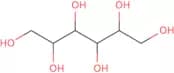
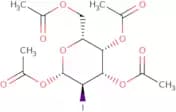
CAS:L-Mannitol is a sugar alcohol that is an important component of pharmaceutical preparations. It is used as a preservative, diluent, and sweetener in many pharmaceutical products. L-Mannitol has been shown to have anti-inflammatory properties and may help prevent allergic reactions by inhibiting the production of prostaglandin D2. L-Mannitol also inhibits the activity of xylitol dehydrogenase, which prevents the conversion of xylitol to DHA, an intermediate metabolite that can cause tissue damage in animals and humans. L-Mannitol has been shown to have a laxative effect when taken orally or injected as an intravenous solution. This property may be due to its ability to stimulate chloride secretion from intestinal cells and increase water reabsorption from the colon. L-Mannitol is also used as a chromatographic matrix for saponins and conjugates with other amino acids.Formula:C6H14O6Purity:Min. 95%Color and Shape:PowderMolecular weight:181.6 g/mol1,3,4,6-Tetra-O-acetyl-2-deoxy-2-iodo-β-D-galactopyranose
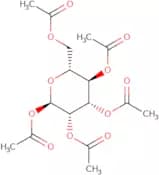
CAS:Synthetic carbohydrate building blockFormula:C14H19IO9Purity:Min. 95%Molecular weight:458.2 g/mol1,2,3,4,6-Penta-O-acetyl-a-D-mannopyranose
CAS:1,2,3,4,6-Penta-O-acetyl-α-D-mannopyranose is an acetylated sugar which is used as an intermediate in the mannosylation of glycoproteins or glycoconjugates. It can be used in the production of mannosylated glycoconjugate vaccines or lipid nanoparticles (LNPs) which have been investigated for improving antigen up-take mediated, via the mannose receptor (MR) of human antigen presenting cells (APCs). 1,2,3,4,6-Penta-O-acetyl-a-D-mannopyranose, also known as α-D-Mannose pentaacetate, has also been used in the study of isolated rat pancreatic islets where it stimulates insulin release.
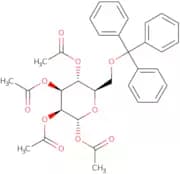
Formula:C16H22O11Purity:Min. 98 Area-%Color and Shape:White Off-White PowderMolecular weight:390.34 g/mol1,2,3,4-Tetra-O-acetyl-6-O-trityl-a-D-mannopyranose
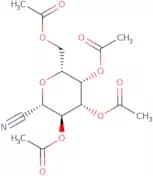
CAS:Tetra-O-acetyl-6-O-trityl-a-D-mannopyranose is a synthetic glycoside that is used as an intermediate in the synthesis of oligosaccharides. It has been modified with a fluorine atom at C1 to form 1,2,3,4-tetra-O-acetyl 6-(trifluoromethyl)-a-D mannopyranoside. This modification can be done through a click reaction. Tetra-O acetyl 6-(trifluoromethyl)-a D mannopyranoside is soluble in water and has a melting point of about 210°C.Formula:C33H34O10Purity:Min. 95%Color and Shape:White PowderMolecular weight:590.62 g/mol2,3,4,6-Tetra-O-acetyl-b-D-galactopyranosyl cyanide
CAS:2,3,4,6-Tetra-O-acetyl-b-D-galactopyranosyl cyanide is a carbohydrate that is used in the synthesis of conjugates for use as immunogens. It has been modified to create a high purity product. Click chemistry is used to attach a fluorine atom to the sugar. The glycosylation reaction with the monosaccharides and disaccharides is then performed followed by methylation of the saccharide with methanol to produce 2,3,4,6-Tetra-O-acetyl-b-D-galactopyranosyl cyanide.Formula:C15H19NO9Purity:Min. 95 Area-%Color and Shape:White Off-White PowderMolecular weight:357.31 g/molMetrizamide
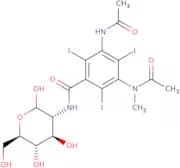
CAS:Radiopaque contrast agent; diagnostic aid for myelographyFormula:C18H22I3N3O8Purity:(%) Min. 95%Color and Shape:White PowderMolecular weight:789.1 g/mol3,6-Di-O-methyl-D-glucose
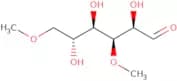
CAS:3,6-Di-O-methyl-D-glucose is a glycopeptide sugar that is used as a terminal sugar in the cell wall of many gram-positive bacteria. It is found on the surface of most strains of Streptococcus pneumoniae and Staphylococcus aureus. 3,6-Di-O-methyl-D-glucose is an antigen for monoclonal antibodies against the streptococcal M protein and has been used to identify the carbohydrate chemistry of Streptococcus pneumoniae. 3,6-Di-O-methyl glucose may also be useful in the detection of cellulose derivatives by magnetic resonance spectroscopy or nitrocellulose membranes. The terminal sugars found on these membranes are hydrolyzed by acid and dry weight methods before being analyzed by gas chromatography or high performance liquid chromatography.Formula:C8H16O6Purity:Min. 95%Molecular weight:208.21 g/molMethyl 2-amino-2-deoxy-β-D-glucopyranoside hydrochloride
CAS:Methyl 2-amino-2-deoxy-β-D-glucopyranoside hydrochloride is a synthetic compound that is a sugar derivative. The methyl group in this molecule can be used for the synthesis of saccharides, oligosaccharides, and other complex carbohydrates. This product has a CAS number of 3867-93-4. It is soluble in water and has a purity of at least 98%.Formula:C7H16ClNO5Purity:Min. 95%Color and Shape:White PowderMolecular weight:229.66 g/molD-Mannojirimycin hydrogensulfite
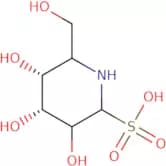
D-Mannojirimycin hydrogensulfite, an iminosugar analogue of Mannose, is a potent inhibitor of alpha-mannosidase.Formula:C6H13NO7SPurity:Min. 95%Color and Shape:PowderMolecular weight:243.24 g/mol