Monosaccharides
Monosaccharides are the simplest form of carbohydrates and serve as fundamental building blocks for more complex sugars and polysaccharides. These single sugar molecules play critical roles in energy metabolism, cellular communication, and structural components of cells. In this section, you will find a wide variety of monosaccharides essential for research in biochemistry, molecular biology, and glycoscience. These compounds are crucial for studying metabolic pathways, glycosylation processes, and developing therapeutic agents. At CymitQuimica, we offer high-quality monosaccharides to support your research needs, ensuring precision and reliability in your scientific investigations.
Subcategories of "Monosaccharides"
- Alloses(11 products)
- Arabinoses(21 products)
- Erythroses(11 products)
- Fructoses(9 products)
- Fucoses(36 products)
- Galactosamine(41 products)
- Galactose(261 products)
- Glucoses(365 products)
- Glucuronic Acids(52 products)
- Glyco-substrates for Enzyme(78 products)
- Guloses(6 products)
- Idoses(4 products)
- Inositols(15 products)
- Lyxoses(4 products)
- Mannoses(65 products)
- O-Glycans(48 products)
- Psicoses(3 products)
- Rhamnoses(10 products)
- Riboses(61 products)
- Sialic Acids(100 products)
- Sorboses(4 products)
- Sugars(173 products)
- Tagatoses(4 products)
- Taloses(8 products)
- Xyloses(20 products)
Show 17 more subcategories
Found 6085 products of "Monosaccharides"
Sort by
Purity (%)
0
100
|
0
|
50
|
90
|
95
|
100
D-Threitol
CAS:D-Threitol is a carbohydrate that has been shown to have anti-microbial activity against a number of microbes, including E. coli, Klebsiella pneumoniae, Bacillus subtilis, and Staphylococcus aureus. It may also be useful in the treatment of microbial infections in the respiratory tract. D-Threitol is an analogue of threitol with an acyl chain at the 4 position instead of the 5 position. The allyl carbonate moiety can be cleaved by acid to form an acid complex, which is more stable than D-threitol. D-Threitol binds to antibody response sites on cells, thereby preventing cells from responding to pathogens or other foreign bodies by initiating appropriate immune responses. This binding also prevents bacteria from attaching themselves to cell walls.Formula:C4H10O4Purity:Min. 98 Area-%Color and Shape:PowderMolecular weight:122.12 g/molD-Mannose-6-phosphate sodium
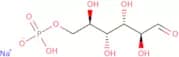
CAS:D-Mannose-6-phosphate sodium salt (DMSP) is a phosphorylated sugar that is produced by the enzyme expressed in the yeast, Saccharomyces cerevisiae. DMSP has been shown to be involved in the synthesis of phosphatidylcholine and other lipids. Its solubilization and adsorption properties have been studied using dibutyryl camp, which is a lipid found in milk fat. The amino acid analysis of DMSP revealed that it contains both D-mannose residues and 6-phosphate groups. The 6-phosphate group is found only on one side of the molecule, which may contribute to its asymmetry.Formula:C6H12NaO9PPurity:Min. 98 Area-%Color and Shape:White PowderMolecular weight:282.12 g/molBenzyl a-D-xylopyranoside
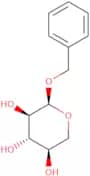
CAS:Benzyl a-D-xylopyranoside is a benzyl galactofuranose that is synthesized from the condensation of benzaldehyde and D-xylose. This compound has been shown to be an excellent target molecule for the detection of Mycobacterium tuberculosis, as it constitutes about 10% of the mycolic acid in this organism. Benzyl a-D-xylopyranoside can also be used to detect other bacteria such as Actinomyces, Streptomyces, and Corynebacterium. The yield of this compound is high and its regiospecificity is complete.
Formula:C12H16O5Purity:Min. 95%Color and Shape:PowderMolecular weight:240.25 g/mol3-Azido-3-deoxy-1,2:5,6-di-O-isopropylidene-a-D-glucofuranose
CAS:3-Azido-3-deoxy-1,2:5,6-di-O-isopropylidene-a-D-glucofuranose is a synthetic sugar that has been modified by Fluorination, Monosaccharide, Synthetic, Oligosaccharide, complex carbohydrate, CAS No. 13964-23-3 and Glycosylation. It is also a Polysaccharide with modifications of Click modification and Methylation. 3A3DG can be used to modify the sugar content of glycoproteins and glycolipids in order to study their role in cellular processes such as transcriptional regulation and apoptosis. This product is available for custom synthesis in quantities from milligrams to kilograms.Formula:C12H19N3O5Purity:Min. 95%Color and Shape:Yellow PowderMolecular weight:285.3 g/molD-Ribonic acid-1,4-lactone
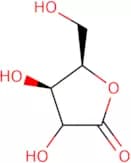
CAS:D-ribono-1,5-lactone is a useful intermediate for the synthesis of bioactive compounds including antivirals.
Formula:C5H8O5Color and Shape:White PowderMolecular weight:148.11 g/mol2,3,4,6-Tetra-O-benzoyl-b-D-glucopyranosyl cyanide
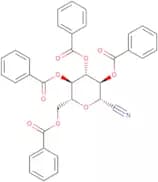
CAS:2,3,4,6-Tetra-O-benzoyl-b-D-glucopyranosyl cyanide is a quaternary ammonium salt that is found in the cenozoic sequence of samples. It has been suggested that this compound may be a new source of radiocarbon.Formula:C35H27NO9Purity:Min. 95%Color and Shape:PowderMolecular weight:605.59 g/mol3,5-Di-O-benzoyl-2-deoxy-2-fluoro-2C-methyl-D-ribono-1,4-lactone
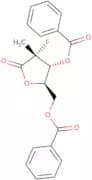
CAS:3,5-Di-O-benzoyl-2-deoxy-2-fluoro-2C-methyl-D-ribono-1,4-lactone is a synthetic compound with the molecular formula C6H12F6O8. It has a molecular weight of 536.14 and an empirical formula of C24H32F6O8. 3,5-Di-O-benzoyl -2,3,4,5,-tetra-, 2C-, methyl -D-, ribo-, 1,4-, lactone is soluble in water and it can be synthesized from D-(+)-glucose and methyl 4-(trifluoromethyl)benzoate in three steps. The structure of 3,5 Di O benzoic acid was first determined by XRD analysis. The compound is a white crystalline solid with melting point at 180°C to 181°C and boilingFormula:C20H17FO6Purity:Min. 97 Area-%Color and Shape:White Off-White PowderMolecular weight:372.34 g/mol2,3,4,6-Tetra-O-pivaloyl-a-D-glucopyranosyl bromide - stabilised with CaCO3
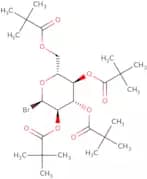
CAS:Intermediate in the synthesis of dapagliflozinFormula:C26H43BrO9Purity:Min. 95%Color and Shape:White To Off-White SolidMolecular weight:579.52 g/mol2-Acetamido-1,3,4,6-tetra-O-benzyl-2-deoxy-β-D-thioglucopyranose
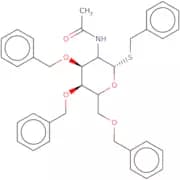
2-Acetamido-1,3,4,6-tetra-O-benzyl-2-deoxy-b-D-thioglucopyranose is a modification of the natural molecule glucose. It is an Oligosaccharide with a complex carbohydrate structure. The molecule has been custom synthesized and is synthesized to be of high purity. It has CAS No.: 52268-42-9. 2-Acetamido-1,3,4,6-tetra-O-benzyl-2-deoxyglucopyranose is a Monosaccharide that can be methylated and glycosylated to form Polysaccharides. This molecule can be used as a sugar in food products or as a Fluorination agent for other molecules.Formula:C36H39NO5SPurity:Min. 95%Molecular weight:597.76 g/mol2,3,4-Tri-O-acetyl-a-D-glucuronide methyl ester trichloroacetimidate
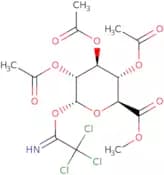
CAS:2,3,4-Tri-O-acetyl-a-D-glucuronide methyl ester trichloroacetimidate (TOG) is a synthetic glycosylation reagent that has been used for the synthesis of complex carbohydrates. It is an O-glycosidase inhibitor and is used in the preparation of saccharides with a high degree of substitution. TOG can be used to modify saccharides, oligosaccharides, and polysaccharides.Formula:C15H18Cl3NO10Purity:Min. 98 Area-%Color and Shape:White PowderMolecular weight:478.66 g/molDL-Glyceraldehyde 3-phosphate - 45-55 mg/mL aqueous solution
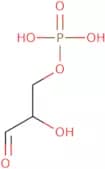
CAS:Glyceraldehyde-3-phosphate dehydrogenase (GAPDH) is an enzyme that catalyzes the conversion of glyceraldehyde-3-phosphate to 1,3 bisphosphoglycerate. GAPDH is involved in glycolysis and the pentose phosphate pathway. It has been shown to be an important player in mediating cellular responses to hypoxia, inflammation, and oxidative stress. The glyceraldehyde-3-phosphate dehydrogenase gene has been found to be mutated in a number of cancers including breast cancer and colon cancer. This gene also has a role in inflammatory lesion development as well as energy metabolism. GAPDH also participates in the biochemical reactions that lead to neuronal death during neurodegenerative diseases such as Alzheimer's disease and Parkinson's disease.Formula:C3H7O6PColor and Shape:Colorless Clear LiquidMolecular weight:170.06 g/mol1,6-Anhydro-2-azido-2-deoxy-b-D-glucopyranose
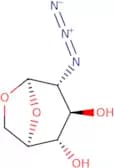
CAS:1,6-Anhydro-2-azido-2-deoxy-b-D-glucopyranose is a sugar. It belongs to the group of carbohydrates and has a molecular weight of 198.15 g/mol. The CAS number for this compound is 67546-20-7. 1,6-Anhydro-2-azido-2,3,4,5,6,7,8,9,10,-hexahydroxybenzoate (1) is an intermediate in the synthesis of 1,6 anhydro 2 azido 2 deoxy b D glucopyranose (2). In this reaction 2 are reacted with sodium azide and potassium hydroxide in ethanol to give 2 as a white crystalline solid with mp 169°C. This product can be used as a monosaccharide or modified monosaccharide for glycosylation or methylation reactions.Formula:C6H9N3O4Purity:Min. 95%Color and Shape:SolidMolecular weight:187.15 g/mol1,3,4,6-Tetra-O-benzyl-b-D-galactopyranoside
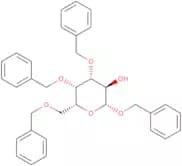
CAS:1,3,4,6-Tetra-O-benzyl-b-D-galactopyranoside is a custom synthesis that has been modified with methylation and fluorination. It is an oligosaccharide composed of saccharides linked by glycosidic bonds. Carbohydrates are polymers of monosaccharides, which can be classified as either simple sugars or complex carbohydrates. This product is a high purity, synthetic sugar that is suitable for use in the synthesis of complex carbohydrate polymers.Formula:C34H36O6Purity:Min. 95%Color and Shape:PowderMolecular weight:540.65 g/molN-Acetyl-D-galactosamine-4-O-sulphate sodium
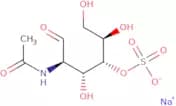
CAS:N-Acetyl-D-galactosamine-4-O-sulphate sodium salt is a carbohydrate, modification. It is a synthetic, custom synthesis, high purity, monosaccharide, glycosylation and methylation product. The CAS number of this product is 660839-03-2.Formula:C8H15NO9S•NaPurity:Min. 95%Color and Shape:PowderMolecular weight:324.26 g/mol2,3,4,6-Tetra-O-benzyl-a-D-glucopyranosyl fluoride
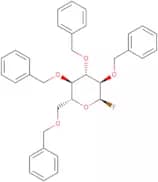
CAS:2,3,4,6-Tetra-O-benzyl-a-D-glucopyranosyl fluoride is a modification of a carbohydrate. It is a complex carbohydrate that has the CAS No. 89025-46-7 and is custom synthesized. The product contains an oligosaccharide and high purity that are synthetic and monosaccharides that are methylated, glycosylated, and polysaccharides that are sugars with fluorination. The product also contains saccharides with glycosylation and polysaccharide sugar units.Formula:C34H35FO5Purity:Min. 95%Color and Shape:White To Off-White SolidMolecular weight:542.64 g/molPhenyl 4,6-O-benzylidene-β-D-glucopyranoside
CAS:Phenyl 4,6-O-benzylidene-b-D-glucopyranoside is a white crystalline powder that belongs to the group of glycoconjugates. It has been made by the modification of glycosides and saccharides. This product can be used as a fluorination agent in organic synthesis, or as a click modification in carbohydrate chemistry. Phenyl 4,6-O-benzylidene-b-D-glucopyranoside can also be used for glycosylation reactions and methylation reactions.Formula:C19H20O6Purity:Min. 95%Color and Shape:White to off-white solid.Molecular weight:344.36 g/molTriclosan-beta-D-glucopyranoside
Triclosan-beta-D-glucopyranoside is a synthetic sugar that can be used as a building block for the preparation of complex carbohydrates. Triclosan-beta-D-glucopyranoside is not known to have any commercial applications.Formula:C18H17Cl3O7Purity:Min. 95%Color and Shape:PowderMolecular weight:451.68 g/mol2-Acetamido-2-deoxy-4,6-O-isopropylidene-D-glucopyranose
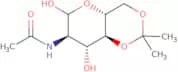
CAS:2-Acetamido-2-deoxy-4,6-O-isopropylidene-D-glucopyranose is a modification of 2,3,4,5,6 tetraacetamido 1,2,3,4,5 pentaoxo 1,2 deoxy D glucose. It is an oligosaccharide that has been synthesized for the first time in 1977. The monosaccharide can be methylated and glycosylated to form polysaccharides such as mannans and galactans. The chemical structure of this product can be modified with fluorination or saccharide substitution.Formula:C11H19NO6Purity:Min. 95%Molecular weight:261.27 g/mol1,5-Anhydro-D-fructose
CAS:Antioxidant; antibacterial; suppresses LPS-induced inflammatory responseFormula:C6H10O5Purity:Min. 95%Color and Shape:PowderMolecular weight:162.14 g/molDelphinidin 3-galactoside chloride
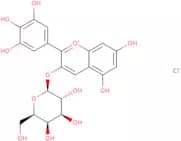
CAS:Delphinidin 3-galactoside chloride is a natural organic compound that belongs to the flavonol glycosides. It is a pigment that has been identified in flowers and fruits, such as the fruit tree. This compound exhibits antioxidant properties and can scavenge radicals, which may be due to its ability to inhibit dehydroascorbate reductase activity. Delphinidin 3-galactoside chloride also has an effect on high cholesterol levels, which may be due to its ability to inhibit HMG-CoA reductase activity. In addition, it has been shown that this compound can inhibit the growth of human pathogens such as P. aeruginosa and S. aureus.Formula:C21H21O12ClPurity:Min. 95%Molecular weight:500.84 g/mol