Monosaccharides
Subcategories of "Monosaccharides"
- Alloses(11 products)
- Arabinoses(21 products)
- Erythroses(11 products)
- Fructoses(9 products)
- Fucoses(36 products)
- Galactosamine(41 products)
- Galactose(261 products)
- Glucoses(365 products)
- Glucuronic Acids(52 products)
- Glyco-substrates for Enzyme(78 products)
- Guloses(6 products)
- Idoses(4 products)
- Inositols(15 products)
- Lyxoses(4 products)
- Mannoses(65 products)
- O-Glycans(48 products)
- Psicoses(3 products)
- Rhamnoses(10 products)
- Riboses(61 products)
- Sialic Acids(100 products)
- Sorboses(4 products)
- Sugars(173 products)
- Tagatoses(4 products)
- Taloses(8 products)
- Xyloses(20 products)
Found 6088 products of "Monosaccharides"
D-Xylose
CAS:Xylose (Xyl) is an aldopentose also known as wood sugar (Collins, 2006). The main sources of xylose are hemicelluloses found in hardwood and perennial plants, such as, grasses, cereals, and herbs (Petzold-Welcke, 2014) and some algae. Xylose is used in the production of xylitol, a low calory sugar substitute. Xylose is used in glycosaminoglycan (GAG) biosynthesis, which is initiated by peptide O-xylosyltransferases, which transfer xylose onto selected serine residues in the core proteins. The first enzyme in the pathway, peptide O-xylosyltransferase, catalyzes the transfer of xylose from uridine diphosphate (UDP)-α-D-xylose onto serine and thus determines the site(s) of GAG attachment on the core protein (Briggs, 2018).Formula:C5H10O5Purity:Min. 99.0 Area-%Molecular weight:150.13 g/mol2-Deoxy-2-fluoro-D-glucose 6-phosphate dipotassium
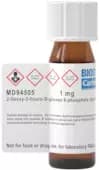
CAS:2-Deoxy-2-fluoro-D-glucose 6-phosphate dipotassium is a fluorinated sugar that is used as a building block in the synthesis of complex carbohydrates. 2-Deoxy-2-fluoro-D-glucose 6-phosphate dipotassium can be modified to produce glycosylations, methylations, and click chemistry modifications. This product is sold as a custom synthesis and can be used for any desired modification.Formula:C6H10FK2O8PPurity:Min. 95 Area-%Color and Shape:PowderMolecular weight:338.31 g/mol3,5-O-Isopropylidene-a-L-xylofuranose
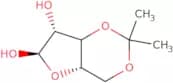
3,5-O-Isopropylidene-a-L-xylofuranose is a Custom synthesis, modification, fluorination and methylation of a monosaccharide. 3,5-O-Isopropylidene-a-L-xylofuranose is a synthetic oligosaccharide that has been modified by click chemistry with the addition of an acetate group.Formula:C8H14O5Purity:Min. 95%Molecular weight:190.19 g/mol2,3,4,6-Tetra-O-acetyl-b-D-thiogalactopyranose
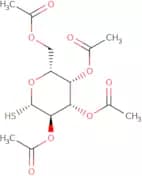
CAS:2,3,4,6-Tetra-O-acetyl-b-D-thiogalactopyranose is a synthetic sugar that is prepared by the fluorination of D-galactopyranose and subsequent acetylation. This compound can be used for glycosylation reactions and as a substrate for click chemistry. It is an oligosaccharide with four monosaccharides in its backbone. The CAS number of 2,3,4,6-Tetra-O-acetyl-b-D-thiogalactopyranose is 50615-66-2.Formula:C14H20O9SPurity:Min. 95%Color and Shape:PowderMolecular weight:364.37 g/mol4-Methoxyphenyl 2,3,4,6-tetra-O-acetyl-β-D-galactopyranoside
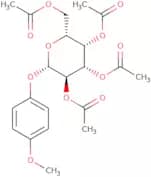
CAS:4-Methoxyphenyl 2,3,4,6-tetra-O-acetyl-b-D-galactopyranoside is a white crystalline powder. It is soluble in water and ethanol. This chemical has been used as a reagent for the methylation of saccharides and oligosaccharides with 4-methoxybenzene sulfonate. It is also an excellent substrate for click chemistry reactions.Formula:C21H26O11Purity:Min. 95%Color and Shape:White to off-white solid.Molecular weight:454.42 g/molD-Maltose 1-phosphate dipotassium salt
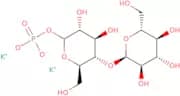
CAS:D-Maltose 1-phosphate dipotassium salt is a disaccharide that can be used in the synthesis of oligosaccharides and polysaccharides. It is also an excellent candidate for further modification.Formula:C12H21O14PK2Purity:Min. 95%Molecular weight:498.46 g/mol1-(2,2,2-Trifluoro-N-phenylethanimidate)-2,3,4-tri-O-acetyl-D-glucopyranuronic acid methyl ester
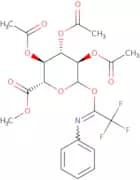
CAS:1-(2,2,2-Trifluoro-N-phenylethanimidate)-2,3,4-tri-O-acetyl-D-glucopyranuronic acid methyl ester is a methylated variant of an oligosaccharide. It has been synthesized by the click modification of an oligosaccharide with a monosaccharide and a fluorinated saccharide. This compound has been shown to have antiviral activity against the influenza virus in vitro. The antiviral activity may be due to its ability to inhibit the viral polymerase and RNA synthesis or to prevent virus assembly and release.Formula:C21H22F3NO10Purity:Min. 95%Molecular weight:505.4 g/molPentagalloylglucose - Bio-X ™
CAS:A gallotannin found in plants, with various biological activities. Its anti-cancer effect has been demonstrated in several cancer cell lines, mediated by inhibition of DNA replication, proliferation and angiogenesis. Elicits anti-inflammatory, antioxidative and anti-diabetic effects. Recently, it has been identified as an inhibitor of c-Myc in hepatocellular carcinoma and multiple myeloma cells.Formula:C41H32O26Purity:Min. 98 Area-%Color and Shape:PowderMolecular weight:940.68 g/molD-Glucurono-3,6-lactone
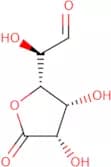
CAS:Glucose metaboliteFormula:C6H8O6Purity:Min 98%Color and Shape:White PowderMolecular weight:176.12 g/mol1,3,5-Tri-O-benzoyl-2-deoxy-2-bromo-alpha-L-arabinofuranose
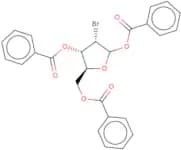
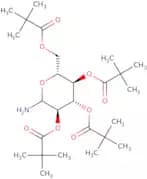
1,3,5-Tri-O-benzoyl-2-deoxy-2-bromo-alpha-L-arabinofuranose is a complex monosaccharide that can be used as a building block in the synthesis of various compounds. It is a derivative of the sugar arabinose, with the addition of benzoyl and bromo groups at specific positions. The compound has potential applications in the fields of organic chemistry and medicinal chemistry and is available for research.Formula:C26H21BrO7Purity:Min. 95%Molecular weight:524.04 g/mol2,3,4,6-Tetra-O-pivaloyl-D-glucopyranosyl amine
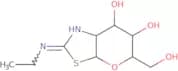
CAS:2,3,4,6-Tetra-O-pivaloyl-D-glucopyranosyl amine is a monosaccharide that is custom synthesized and modified with fluorination. It also has saccharide properties such as methylation and glycosylation. This product can be used in the synthesis of complex carbohydrates or polysaccharides. It is a high purity compound with CAS No. 888963-33-5.Formula:C26H45NO9Purity:Min. 95%Molecular weight:515.64 g/molThiamet G
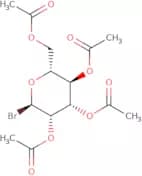
CAS:Inhibits β-N-acetylglucosaminidase, also known as O-GlcNAcase (OGA), which cleaves the O-linked glycans from glycoproteins. Interferes with O-GlcNAc cycling and leads to the accumulation of O-GlcNAcylated proteins. Thiamet G elicits neuroprotective effects by modulating microglia/macrophages and inhibiting hyperphosphorylation of the microtubule-associated protein tau in models of stroke and Alzheimer’s disease. Thiamet G also has implications on diabetes and cardiovascular pathologies.Formula:C9H16N2O4SPurity:Min. 95%Color and Shape:PowderMolecular weight:248.3 g/mol2,3,4,6-Tetra-O-acetyl-a-D-mannopyranosyl bromide - stabilised with 2% CaCO3
CAS:Donor for Koenigs-Knorr type mannosylation and other anomeric substitutions
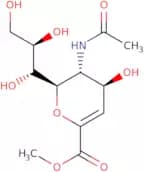
Formula:C14H19BrO9Purity:Min. 95%Color and Shape:Yellow PowderMolecular weight:411.2 g/molN-Acetyl-2,3-dehydro-2-deoxyneuraminic acid methyl ester
CAS:N-Acetyl-2,3-dehydro-2-deoxyneuraminic acid methyl ester (NAD) is a natural product that is produced by the human body. NAD has been shown to induce apoptosis in cancer cells and modulate gene expression. This compound also plays a role in the development of stem cells, which are important for tissue regeneration. NAD has been shown to have therapeutic effects on paraplegia and angiogenesis. It also has anti-inflammatory properties that may be related to its ability to regulate mesenchymal stem cells.Formula:C12H19NO8Purity:Min. 95%Color and Shape:PowderMolecular weight:305.29 g/molThiodigalactoside - Bio-X ™
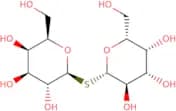
CAS:This product is part of our Bio-X ™ Range. These products are aimed at life science researchers who need high quality ready-to-use products for assay development, screening or other R&D work. With a solubility datasheet and convenient vials, all of our Bio-X ™ products are in stock across our global warehouses for rapid delivery and ease of use.Formula:C12H22O10SPurity:Min. 95%Color and Shape:PowderMolecular weight:358.36 g/molD-Galactono-1,4-lactone
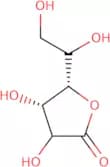
CAS:D-Galactono-1,4-lactone is an intermediate in the galactose catabolism pathway. It is an acidic compound that can be found in plants and bacteria. D-Galactono-1,4-lactone has been shown to inhibit enzyme activities when it is present at high concentrations. This compound also inhibits the enzyme carbon source, which is involved in the conversion of glucose to energy. The deuterium isotope effect on the inhibition of enzyme activity by D-galactono-1,4-lactone has been studied extensively using plant phytochemicals such as triticum aestivum.Formula:C6H10O6Purity:Min. 95%Color and Shape:White PowderMolecular weight:178.14 g/mol1,2:3,5-Di-O-isopropylidene-a-D-xylofuranose
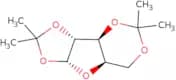
CAS:1,2:3,5-Di-O-isopropylidene-a-D-xylofuranose is a synthetic glycoside that is used in the synthesis of complex carbohydrates. It has been used for the modification of polysaccharides and oligosaccharides. This compound has also been modified with fluorine to form 1,2:3,5-Di-O-isopropylidene-a-D-(1'-fluoro)-xylofuranose. The chemical name of this product is CAS No. 20881-04-3.Formula:C11H18O5Purity:Min. 95%Color and Shape:White PowderMolecular weight:230.26 g/mol4-Aminophenyl a-D-mannopyranoside
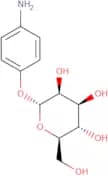
CAS:4-Aminophenyl a-D-mannopyranoside is a compound that has been shown to have anti-inflammatory properties. It is also used as a starting material in the synthesis of other drugs. Rats with chronic kidney disease were given 4-aminophenyl a-D-mannopyranoside daily for three weeks, and it was found that this compound prevented the development of kidney injury markers. This drug has also been shown to be effective against mouse strains with nervous system diseases. 4-Aminophenyl a-D-mannopyranoside binds to lysine residues on proteins and prevents the interactions between these residues and the amino acid glutathione, which is required for glut1 uptake in brain cells. This uptake is essential for cellular function, and therefore 4-aminophenyl a-D-mannopyranoside may be useful as chemotherapeutic treatment for brain cancer.
Formula:C12H17NO6Purity:Min. 95%Color and Shape:Off-White PowderMolecular weight:271.27 g/mol2,3-O-Isopropylidene-2-C-methyl-D-ribono-1,4-lactone
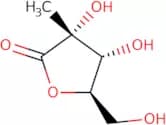
CAS:2,3-O-Isopropylidene-2-C-methyl-D-ribono-1,4-lactone is a crystalline compound that is obtained by the reaction of dimethylamine with epichlorohydrin. The compound has an asymmetric carbon atom and exists in two enantiomeric forms. It can be used as an acceptor in crystallographic analysis. The chemical structure of 2,3-O-Isopropylidene-2-C-methyl-D-ribono-1,4 -lactone is a lactone form of episulfide. Episulfides are lactones with episulfide groups attached to the C2 and C3 positions on the D ring. The episulfide group is formed by the reaction between the alcohol and sulfhydryl group from cysteamine with sulfur trioxide. The chemical formula for this compound is C13H20N2O8SFormula:C9H14O5Purity:Min. 95%Color and Shape:PowderMolecular weight:202.2 g/molMethyl α-L-idopyranosiduronic acid sodium
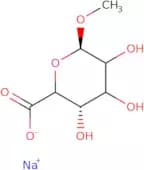
CAS:Methyl a-L-idopyranosiduronic acid sodium salt is an impedance sensor that has been developed for use in electroanalytic research. The sensor consists of a monolayer of mammalian cells that are grown on a microfabricated substrate and visualized using microscopy. Methyl a-L-idopyranosiduronic acid sodium salt is used to measure the biophysical properties of muscle cells, such as their phenotype, by measuring the electrical resistance of the cell membrane. This can be used to characterize muscle disorders and identify new drug targets for regenerative medicine.Formula:C7H12O7•NaPurity:Min. 95 Area-%Color and Shape:SolidMolecular weight:231.15 g/mol