Monosaccharides
Monosaccharides are the simplest form of carbohydrates and serve as fundamental building blocks for more complex sugars and polysaccharides. These single sugar molecules play critical roles in energy metabolism, cellular communication, and structural components of cells. In this section, you will find a wide variety of monosaccharides essential for research in biochemistry, molecular biology, and glycoscience. These compounds are crucial for studying metabolic pathways, glycosylation processes, and developing therapeutic agents. At CymitQuimica, we offer high-quality monosaccharides to support your research needs, ensuring precision and reliability in your scientific investigations.
Subcategories of "Monosaccharides"
- Alloses(11 products)
- Arabinoses(21 products)
- Erythroses(11 products)
- Fructoses(9 products)
- Fucoses(36 products)
- Galactosamine(41 products)
- Galactose(261 products)
- Glucoses(365 products)
- Glucuronic Acids(51 products)
- Glyco-substrates for Enzyme(77 products)
- Guloses(6 products)
- Idoses(4 products)
- Inositols(15 products)
- Lyxoses(4 products)
- Mannoses(65 products)
- O-Glycans(48 products)
- Psicoses(3 products)
- Rhamnoses(10 products)
- Riboses(61 products)
- Sialic Acids(100 products)
- Sorboses(4 products)
- Sugars(173 products)
- Tagatoses(4 products)
- Taloses(8 products)
- Xyloses(20 products)
Show 17 more subcategories
Found 6088 products of "Monosaccharides"
Sort by
Purity (%)
0
100
|
0
|
50
|
90
|
95
|
100
Fructosyl-lysine
CAS:<p>Fructosyl-lysine is a substituted lysine that is formed through the glycation of proteins by sugars. It can be detected by fluorescence spectrometry and has been shown to inhibit the activity of receptor tyrosine kinases, which are involved in physiological functions such as cell growth and differentiation. Fructosyl-lysine also inhibits collagen synthesis and reduces the amount of glucose in human serum. This compound may be used as a model system to study glycation reactions with lysine, fatty acids, and other amino acids. The concentration of fructosyl-lysine found in human serum is at physiological levels and may not have any effect on antibody response.</p>Formula:C12H24N2O7Purity:Min. 95%Color and Shape:PowderMolecular weight:308.33 g/mol5-Ketomannose
CAS:<p>5-Ketomannose is a catalytic α-d-mannopyranoside that is used as a glycosidase inhibitor. It binds to the active site of glycosidases, blocking their activity and inhibiting the breakdown of carbohydrates. 5-Ketomannose has been shown to inhibit the action of a number of enzyme types, including glycosidases, glycoprocessing enzymes, and catalytic hydrogenation. This compound also inhibits deoxymannojirimycin, which is an inhibitor of glycosidase. 5-Ketomannose has anti-inflammatory effects and may be useful for treatment in inflammatory bowel disease (IBD) or ulcerative colitis.</p>Formula:C6H10O6Purity:Min. 95%Color and Shape:PowderMolecular weight:178.14 g/mol4-Acetamidophenyl-2,3,4-tri-O-acetyl-β-D-glucuronide methyl ester
CAS:<p>4-Acetamidophenyl-2,3,4-tri-O-acetyl-b-D-glucuronide methyl ester is a modified sugar with a saccharide at the 2' position and an acetamidophenol group at the 4' position. It can be used in a variety of synthetic methods, such as the Click modification and glycosylation. This product is custom synthesized and has high purity, making it a good choice for many research applications.</p>Formula:C21H25NO11Purity:Min. 95%Molecular weight:467.42 g/mol4-Azido-4-deoxy-D-glucose
CAS:<p>4-Azido-4-deoxy-D-glucose (4A4DG) is a potential inhibitor of lactose synthase, which is an enzyme that catalyzes the synthesis of lactose from glucose. 4A4DG is an azide analogue of D-glucose and acts as an acceptor substrate for the enzyme. It has been found to be crystalline in nature and is composed of a monosaccharide. 4A4DG has been used in syntheses of several analogues of D-glucose and can be used as a potential inhibitor for lactose synthase.</p>Formula:C6H11N3O5Purity:Min. 95%Color and Shape:White PowderMolecular weight:205.17 g/mol6-Chloro-6-deoxy-D-altrose
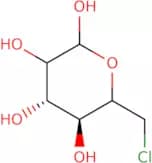
<p>6-Chloro-6-deoxy-D-altrose is a modification of the 6-deoxy -D-altrose. It is an oligosaccharide, carbohydrate complex carbohydrate, which is synthesized using custom synthesis. The CAS No. for this product is 8863-07-8. This product has a high purity and methylation and glycosylation can be done to it. It has a molecular weight of 565.25 and its chemical formula is C12H24O11F2Na2. The molecular formula can be written as C12H22O11F2Na2 with the molecular weight being 565.25 g/mol.</p>Formula:C6H11ClO5Purity:Min. 95%Molecular weight:198.6 g/mol(-)-2,3-O-Isopropylidene-L-threitol-1,4-dimethane sulfonate
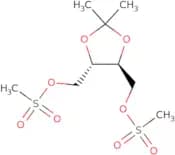
CAS:<p>(-)-2,3-O-Isopropylidene-L-threitol-1,4-dimethane sulfonate is a methylated saccharide that can be used as a raw material for the synthesis of oligosaccharides. This product is an example of a carbohydrate that is custom synthesized and fluorinated. The glycosylation reaction will produce a higher purity product.</p>Formula:C9H18O8S2Purity:Min. 95%Molecular weight:318.37 g/mol1,2,3,4-Tetra-O-acetyl-6-O-triisopropylsilyl-a-D-mannopyranose
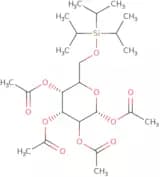
<p>1,2,3,4-Tetra-O-acetyl-6-O-triisopropylsilyl-a-D-mannopyranose (1,2,3,4TAMS) is a custom synthesis of an oligosaccharide. It is a complex carbohydrate that has been modified with methylation and glycosylation. 1,2,3,4TAMS is a polysaccharide that contains mannose and arabinose as the two monosaccharides. 1,2,3,4TAMS may be used for applications such as click chemistry or fluorination. 1,2,3,4TAMS is a sugar that has high purity and can be synthesized with a high degree of accuracy.</p>Formula:C23H40O10SiPurity:Min. 95%Molecular weight:504.66 g/mol5-Chloro-8-hydroxyquinoline b-D-glucuronide
CAS:<p>Chromogenic substrate targeting beta-glucuronidase</p>Formula:C15H14ClNO7Purity:Min. 98 Area-%Color and Shape:White PowderMolecular weight:355.73 g/molD-Glucuronic acid
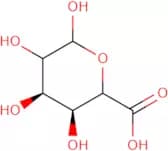
CAS:<p>D-Glucuronic acid (GlcA) is D-glucose with position six oxidised to a carboxyl group (Collins, 2006). It is a common component of a number of gums and mucilages structurally related to pectins, where it is can be present as a terminal non reducing end residue (Renard, 1999). Glucuronic acid is also found in bacterial polysaccharides, such as, xanthan gum produced by Xanthomonas campestris (Faria, 2011), and in glycosaminoglycans, such as, heparan sulfate (Casale, 2020).</p>Formula:C6H10O7Purity:Min. 98%Color and Shape:White Off-White PowderMolecular weight:194.14 g/mol1,6-Di-O-acetyl-2-azido-2-deoxy-3-O-benzyl-4-O-(4-methoxybenzyl)-a-D-glucopyranose
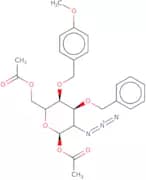
CAS:<p>1,6-Di-O-acetyl-2-azido-2-deoxy-3-O-benzyl-4-O-(4-methoxybenzyl)-a-D-glucopyranose is a modification of the alpha anomer of a glucopyranoside. It is a synthetic compound that has been used in carbohydrate research. The chemical structure consists of a glucose molecule with an acetyl group on carbon 1, and a benzyl group on carbon 2. This modification has been shown to inhibit bacterial growth, specifically Mycobacterium tuberculosis and Mycobacterium avium complex. This compound could be synthesized in high purity and is available through custom synthesis at CAS No. 635683-74-8.</p>Formula:C25H29N3O8Purity:Min. 95%Molecular weight:499.51 g/mol7-Deoxy-L-glycero-D-gluco-heptitol
<p>7-Deoxy-L-glycero-D-gluco-heptitol is a custom synthesis of an oligosaccharide that has been fluorinated and modified. This product is made up of seven sugar molecules, including three monosaccharides and four disaccharides. It is a complex carbohydrate with a high purity level. The modification process includes methylation, click modification, and fluorination.</p>Purity:Min. 95%N-Benzylidenimino 2,3,4,6-tetra-O-pivaloyl-D-glucopyranoside
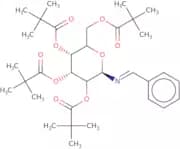
<p>N-Benzylidenimino 2,3,4,6-tetra-O-pivaloyl-D-glucopyranoside is a custom synthesis that is used for glycosylation. It is an oligosaccharide with a sugar unit at the nonreducing end of the molecule. The glycone moiety of this compound is O-(2,3,4,6-tetra-O-pivaloyl)-D-glucopyranosyl-(1→2)-α--D--glycero--Hexose. This product can be used as a sugar in the synthesis of complex carbohydrate.</p>Formula:C33H49NO9Purity:Min. 95%Molecular weight:603.74 g/mol3,5-Di-O-lauryl-D-xylofuranose
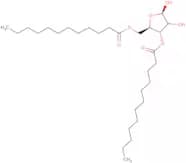
CAS:<p>3,5-Di-O-lauryl-D-xylofuranose is a custom synthesized monosaccharide that is used as a raw material for the synthesis of complex carbohydrates. It has been modified with fluorine and methyl groups to produce 3,5-di-O-lauryl-D-xylofuranose. This compound can be used in the production of polysaccharides or saccharides. The chemical name for this compound is 3,5-di-O-[(9Z)-hexadecenyl]-2-(1E,3E)-dioxaheptalene.</p>Formula:C29H54O7Purity:Min. 95%Molecular weight:514.73 g/mol2,3,4-Tri-O-acetyl-b-L-arabinopyranosyl azide
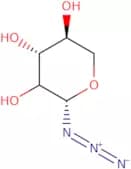
<p>2,3,4-Tri-O-acetyl-b-L-arabinopyranosyl azide is a custom synthesis that is modified with fluorination, methylation, and monosaccharide. It can be synthesized using click modification and oligosaccharide. This compound is a carbohydrate that has saccharide as its main component. Carbohydrate is the most abundant organic molecule in the human body. Complex carbohydrates are polysaccharides made up of many monosaccharides linked together. Polysaccharides are also called glycans or glycosaminoglycans (GAGs). Glycosylation is the process by which sugars are attached to proteins or lipids.</p>Formula:C5H9N3O4Purity:Min. 95%Molecular weight:175.14 g/molN-Acetyl-D-glucosamine - plant source
CAS:<p>Please enquire for more information about N-Acetyl-D-glucosamine - plant source including the price, delivery time and more detailed product information at the technical inquiry form on this page</p>Formula:C8H15NO6Purity:Min. 98 Area-%Molecular weight:221.21 g/molDiacetone-D-glucose
CAS:<p>1,2:5,6-Di-O-isopropylidene-alpha-D-glucofuranose, also known as diacetone-D-glucose (DAG), is a partially protected D-glucose sugar locked in the furanose form with isopropylidene protecting groups on the 1,2 and 5,6 positions. The unprotected 3 position is ready for a variety of chemical manipulations, such as alkylation, acylation or stereo-inversion. An orthogonal protecting group could be added to the 3 position to allow deprotection of an isopropylidene and therefore manipulations of the other hydroxyl groups. Diacetone-D-glucose has been used to make fluorinated hexopyranose glycolysis inhibitors useful in the treatment of brain tumours.</p>Formula:C12H20O6Purity:Min. 98 Area-%Color and Shape:White Off-White PowderMolecular weight:260.28 g/molL-Glycero-D-manno heptose peracetate
<p>L-Glycero-D-manno heptose peracetate is a custom make to order saccharide.</p>Purity:Min. 95%(5S, 8S, 9S) -8- [(4R) - 2, 2- Dimethyl- 1, 3- dioxolan- 4- yl] - 9- hydroxy- 2, 2- dimethyl- 1, 3, 7- trioxaspiro[4.4] nonan- 6- on e
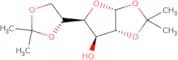
<p>(5S, 8S, 9S) -8- [(4R) - 2, 2- Dimethyl- 1, 3- dioxolan- 4- yl] - 9- hydroxy- 2, 2- dimethyl- 1, 3, 7- trioxaspiro[4.4] nonan- 6- on e is a Glycosylation product that is prepared by the modification of a monosaccharide with a fluorinated methyl group. This chemical has been custom synthesized and its CAS number is not available. It is a complex carbohydrate with high purity and it can be modified to produce other oligosaccharides.</p>Purity:Min. 95%1-Deoxy-L-fructose
<p>Deoxy-L-fructose is a sugar that is synthesized by the cleavage of sucrose, which is a disaccharide composed of glucose and fructose. Deoxy-L-fructose can be obtained from the hydrolysis of sucrose or it can be synthesized by the hydrogenation of d-talitol. This compound is used in various industrial processes as an intermediate in the production of other sugars and alcohols. 1-Deoxy-L-fructose has been found to have antimicrobial properties against Enterobacter aerogenes, Lactobacillus plantarum, and Lactobacillus acidophilus. It also inhibits the growth of Escherichia coli (E. coli) bacteria when tested in vitro at concentrations between 0.2 and 2mM. The antibiotic activity against E. coli may be due to its ability to inhibit ribosome synthesis and protein synthesis in these cells</p>Purity:Min. 95%1,2,3,4,6-Penta-O-benzoyl-α-D-mannopyranose
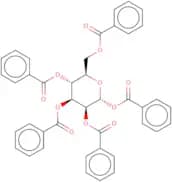
CAS:<p>1,2,3,4,6-Penta-O-benzoyl-alpha-D-mannopyranose is a monosaccharide that can be synthesized by modification of the corresponding mannose. This sugar has been shown to form a complex carbohydrate with an oligosaccharide or saccharide. It can also be used in click chemistry as a linker between two amino acids or peptides. The chemical name for 1,2,3,4,6-Penta-O-benzoyl-alpha-D-mannopyranose is 1,2:3,4:6:1′′′′′′′″:5′″:8:1″″″″″″"’5″'8″1 (2R)-2-(3'-chloroacetyl)pentaerythritol 2,4'-diyl dianhydride.</p>Formula:C41H32O11Molecular weight:700.69 g/mol



![(5S, 8S, 9S) -8- [(4R) - 2, 2- Dimethyl- 1, 3- dioxolan- 4- yl] - 9- hydroxy- 2, 2- dimethyl- 1, 3…](/_next/image/?url=https%3A%2Fstatic.cymitquimica.com%2Fproducts%2F3D%2Fthumb-webp%2FMD170670.webp&w=3840&q=75)