Monosaccharides
Monosaccharides are the simplest form of carbohydrates and serve as fundamental building blocks for more complex sugars and polysaccharides. These single sugar molecules play critical roles in energy metabolism, cellular communication, and structural components of cells. In this section, you will find a wide variety of monosaccharides essential for research in biochemistry, molecular biology, and glycoscience. These compounds are crucial for studying metabolic pathways, glycosylation processes, and developing therapeutic agents. At CymitQuimica, we offer high-quality monosaccharides to support your research needs, ensuring precision and reliability in your scientific investigations.
Subcategories of "Monosaccharides"
- Alloses(11 products)
- Arabinoses(21 products)
- Erythroses(11 products)
- Fructoses(9 products)
- Fucoses(36 products)
- Galactosamine(41 products)
- Galactose(261 products)
- Glucoses(365 products)
- Glucuronic Acids(51 products)
- Glyco-substrates for Enzyme(77 products)
- Guloses(6 products)
- Idoses(4 products)
- Inositols(15 products)
- Lyxoses(4 products)
- Mannoses(65 products)
- O-Glycans(48 products)
- Psicoses(3 products)
- Rhamnoses(10 products)
- Riboses(61 products)
- Sialic Acids(100 products)
- Sorboses(4 products)
- Sugars(173 products)
- Tagatoses(4 products)
- Taloses(8 products)
- Xyloses(20 products)
Show 17 more subcategories
Found 6088 products of "Monosaccharides"
Sort by
Purity (%)
0
100
|
0
|
50
|
90
|
95
|
100
1,2,4,6-Tetra-O-acetyl-3-O-benzyl-b-D-glucopyranose
CAS:<p>Hypromellose is a polymer that is made from cellulose. It is used as an excipient in pharmaceutical formulations, such as tablets and capsules. Hypromellose can also be used as a food additive for thickening, stabilizing, and suspending. It has a molecular weight of about 20000 Daltons and may have the following side effects: mild gastrointestinal discomfort, diarrhea, nausea, or vomiting.</p>Formula:C21H26O10Purity:Min. 95%Color and Shape:PowderMolecular weight:438.43 g/molOctyl L-glucopyranoside
CAS:<p>Octyl L-glucopyranoside is a detergent that is used in biochemical research. It is used as a signal peptide to purify proteins by binding to the hydrophobic region of the protein. In addition, it binds to human polymorphonuclear leukocytes and dextran sulfate. Octyl L-glucopyranoside also has a rate constant of 8 × 10 M-1 s-1 and an analytical method for glycol ethers. The octyl glucopyranoside has been shown to inhibit axonal growth, which may be due to its ability to bind toll-like receptor 4 (TLR4) on dendritic cells.</p>Formula:C14H28O6Purity:Min. 95%Molecular weight:292.37 g/molN-Acetyl-D-[UL-13C6]glucosamine
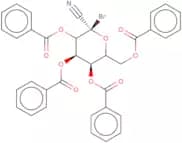
CAS:<p>N-Acetyl-D-[UL-13C6]glucosamine is a complex carbohydrate that contains a sugar at the end of a glycosidic bond. This product is modified with methylation, glycosylation, and fluorination. It has CAS No. 127959-06-2, High purity, and is custom synthesized for your specific needs.</p>Formula:C6C2H15NO6Purity:Min. 95%Molecular weight:227.21 g/mol2-Bromo-2-deoxy-3,4,5,7-tetra-O-benzoyl-a-D-gluco-heptulopyranosononitrile
CAS:<p>2-Bromo-2-deoxy-3,4,5,7-tetra-O-benzoyl-a-D-glucoheptulopyranosononitrile is a sugar. It is a synthetic compound that can be used in the synthesis of glycosylated saccharides and oligosaccharides. 2-Bromo-2-deoxy-3,4,5,7 tetra O benzoyl a D glucoheptulopyranosononitrile has been shown to have antibacterial activity against Clostridium perfringens. This compound also has the ability to inhibit protein synthesis in E coli cells.</p>Formula:C35H26BrNO9Purity:Min. 95%Molecular weight:684.49 g/mol1,2,3,6-Tetra-O-acetyl-4-azido-4-deoxy-b-D-glucose
<p>Tetra-O-acetyl-4-azido-4-deoxy-b-D-glucose is a modified carbohydrate with the chemical formula C8H14N2O6. It is a white crystalline solid that can be synthesized from methylated 1,2,3,6-tetra-O-acetyl b-D-glucopyranoside and sodium azide. Tetra-O-acetyl b-(1→4)-d-[(1→2)-a] D -glucopyranose is used as an intermediate in the synthesis of glycosides and polysaccharides. It is also used as a reagent for preparing oligosaccharides and glycoproteins by modification reactions.</p>Purity:Min. 95%D-Arabinose-5-13C
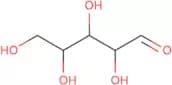
CAS:<p>D-Arabinose-5-13C is a fluorinated monosaccharide that has been used in the synthesis of oligosaccharides and polysaccharides. It can be custom synthesized to meet customer specifications. D-Arabinose-5-13C is a white, crystalline powder that is soluble in water. This compound can be methylated or glycosylated for further modification.</p>Formula:C5H10O5Purity:Min. 95%Molecular weight:151.12 g/molMethyl-4,6-O-benzyliden-2-amino-b-D-mannopyranoside
<p>Methyl-4,6-O-benzyliden-2-amino-b-D-mannopyranoside is a synthetic glycosylation agent for the synthesis of oligosaccharides and polysaccharides. It has been modified with fluorination and methylation. Methyl 4,6-O-benzyliden amino b D mannopyranoside is used as a monomer in the preparation of complex carbohydrates. The chemical name for this compound is 1,3,5,7,-tetraoxaheptane 3,7,9,11 tetrahydroxybutyric acid methyl ester.</p>Purity:Min. 95%3-Deoxy-3-fluoro-D-myo-inositol 1,4,5-trisphosphate hexasodium salt
CAS:<p>3-Deoxy-3-fluoro-D-myo-inositol 1,4,5-trisphosphate hexasodium salt is a synthetic sugar that has been modified with fluorination and glycosylation. It is used for the synthesis of oligosaccharides and monosaccharides. 3-Deoxy-3-fluoro-D-myo-inositol 1,4,5-trisphosphate hexasodium salt is a carbohydrate that can be found in complex carbohydrates such as glycolipids and glycoproteins. The CAS number for this compound is 129365–68–0.</p>Formula:C6H8FO14P3Na6Purity:Min. 95%Molecular weight:553.98 g/mol5-Azido-5-deoxy-L-altrofuranose
<p>5-Azido-5-deoxy-L-altrofuranose is a synthetic, fluorinated monosaccharide. It is a modification of the sugar molecule with the addition of a methyl group at the 5th carbon in the furanose ring. The complex carbohydrate is synthesized by glycosylation and polysaccharide synthesis. It can be used for click chemistry modifications to other molecules.</p>Formula:C6H11N3O5Purity:Min. 95%Molecular weight:205.17 g/mol17-b-Estradiol-d3 3-b-D-glucuronide
17-b-Estradiol-d3 3-b-D-glucuronide is a custom synthesis of a complex carbohydrate. It has CAS No. and is a modification of the saccharides, methylation, glycosylation and click modification. This compound is fluorinated for high purity and synthetic.Formula:C24H29D3O8Purity:Min. 95%Molecular weight:451.52 g/molEthyl 2,3,4-tri-O-acetyl-b-D-glucuronide methyl ester
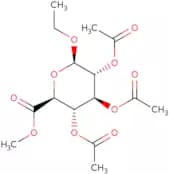
CAS:<p>Ethyl 2,3,4-tri-O-acetyl-b-D-glucuronide methyl ester is a fluorinated monosaccharide. It can be used as a synthetic intermediate for the production of oligosaccharides and polysaccharides. This product is also used in the glycosylation of sugar molecules.</p>Formula:C15H22O10Purity:Min. 95%Molecular weight:362.33 g/mol1,6-Anhydro-4-O-p-toluenesufonyl-b-D-glucopyranose
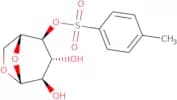
CAS:This modified sugar can be used in the synthesis of oligosaccharides and polysaccharides. It can also be used as a custom synthesis to introduce fluorine atoms into saccharides. This modification is useful for obtaining specific glycosylation products, such as those that are methylated or click-modified.Formula:C13H16O7SPurity:Min. 95%Molecular weight:316.33 g/mol3,5-Di-O-Benzyl-1,2-O-isopropylidene-a-D-ribofuranose
CAS:<p>3,5-Di-O-Benzyl-1,2-O-isopropylidene-a-D-ribofuranose is a modification of a sugar that has been synthesized and modified to increase its stability. It has been synthesized by methylation, glycosylation, and polysaccharide synthesis.br>br><br>3,5-Di-O-Benzyl-1,2-O-isopropylidene -a -D -ribofuranose is a monosaccharide with the chemical formula C6H12O6. It is also known as ribose or deoxyribose. This compound is found in many biological systems including DNA and RNA. Ribose can be found naturally in such things as fruit juices and honey. 3,5 Di--O--Benzyl--1,2--O--isopropylidene -a -D -ribofuranose is an</p>Formula:C22H26O5Purity:Min. 95%Molecular weight:370.44 g/molMethyl 5-deoxy-2,3-O-isopropylidene-D-ribofuranoside
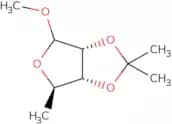
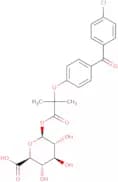
CAS:<p>Methyl 5-deoxy-2,3-O-isopropylidene-D-ribofuranoside is a methylated sugar that is used in the synthesis of complex carbohydrates. This product can be custom synthesized to meet your requirements. The CAS number for Methyl 5-deoxy-2,3-O-isopropylidene-D-ribofuranoside is 78341-97-6.</p>Formula:C9H16O4Purity:Min. 95%Molecular weight:188.22 g/molFenofibryl b-D-glucuronide
CAS:<p>Fenofibryl b-D-glucuronide is a potential anticancer drug that has been shown to inhibit growth and induce apoptosis in human liver cancer cells. Fenofibryl b-D-glucuronide is also known to have the ability to react with covalent adducts, which may be due to its reactive nature. It is not currently known how this compound interacts with other drugs or how it affects body mass index in humans.</p>Formula:C23H23ClO10Purity:Min. 95%Molecular weight:494.88 g/molN-Acetyl-glucosaminyl thiazoline triaacetate
CAS:<p>N-Acetyl-glucosaminyl thiazoline triaacetate is a custom synthesis that is fluorinated. It has been modified for methylation and Click chemistry. This chemical is an oligosaccharide, polysaccharide, saccharide, carbohydrate, or sugar. It is purified with high purity and has a monosaccharide modification. N-Acetyl-glucosaminyl thiazoline triaacetate is used in the modification of complex carbohydrates and can be synthesized from methylated glucosamine and acetamidomethylthiazoline.</p>Purity:Min. 95%(2-Pirydyl) 2,3,4,6-tetra-O-acetyl-1-deoxy-b-D-galacto-1-C-pyranoside
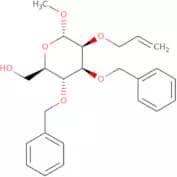
<p>2-Pirydyl 2,3,4,6-tetra-O-acetyl-1-deoxy-b-D-galacto-1Cpyranoside is a custom synthesis of a high purity glycosylation. This compound is an oligosaccharide that contains a sugar and a polysaccharide. The sugar is a monosaccharide while the polysaccharide is made up of many saccharides. The modification on this compound is methylation. This product has been assigned CAS No.: 362889-00-0.</p>Purity:Min. 95%Molecular weight:409.39 g/molMethyl 2-O-allyl-3,4-di-O-benzyl-a-D-mannopyranoside
CAS:<p>Methyl 2-O-allyl-3,4-di-O-benzyl-a-D-mannopyranoside is an organic compound that belongs to the group of Modification. It is a modified oligosaccharide with a molecular weight of 690.3 g/mol. The modification is an Oligosaccharide, Carbohydrate, complex carbohydrate, Custom synthesis, Synthetic. CAS No. 210297-56-6, High purity, Monosaccharide, Methylation, Glycosylation and Polysaccharide. This molecule has a monosaccharide with the chemical formula C5H11NO5 and a molecular weight of 131.2 g/mol. The fluorination and saccharides are Fluorination and saccharides respectively.</p>Formula:C24H30O6Purity:Min. 95%Molecular weight:414.49 g/molErgosterol peroxide glucoside
CAS:<p>Ergosterol peroxide glucoside is a glycosylated compound that has been modified with methyl and fluorine groups. It can be custom synthesized to order, and is available in high purity. Ergosterol peroxide glucoside is a complex carbohydrate that has been modified with methyl and fluorine groups. This modification provides stability to the molecule, making it an ideal candidate for use as a pharmaceutical excipient. The sugar moiety is also modified to contain a click-reaction site for the covalent attachment of other molecules. The synthesis of this compound requires glycosylation, methylation, and fluorination reactions.</p>Purity:Min. 95%Phenyl 2,3,4-tri-O-acetyl-a-L-thiorhamnopyranoside
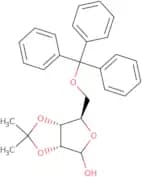
CAS:<p>Phenyl 2,3,4-tri-O-acetyl-a-L-thiorhamnopyranoside is a synthetic compound that is used as a protecting group for the synthesis of oligosaccharides. It is also used to synthesize saccharides in a complex carbohydrate modification. The compound can be fluorinated to form an active fluorinated compound. Phenyl 2,3,4-tri-O-acetyl-a-L-thiorhamnopyranoside has been shown to have high purity and low toxicity in animal studies.</p>Formula:C18H22O7SPurity:Min. 95%Molecular weight:382.43 g/mol2,3-O-Isopropylidene-5-O-trityl-D-ribofuranose
CAS:<p>2,3-O-Isopropylidene-5-O-trityl-D-ribofuranose is a metal complex that can be used as an antitumor agent. It has been shown to have antimicrobial activity against Gram positive and Gram negative bacteria and fungi. 2,3-O-Isopropylidene-5-O-trityl-D-ribofuranose is also active against Gram negative bacteria such as Escherichia coli and Pseudomonas aeruginosa. This compound is easily synthesized from acetoacetic acid by the reaction with trifluoroacetic anhydride followed by ammonolysis or azide coupling. The product is then amidated or tosylated to give the desired product.<br>2,3-O-Isopropylidene - 5 - O - trityl - D - ribofuranose has also been shown to inhibit tumor growth in</p>Formula:C27H28O5Purity:Min. 95%Color and Shape:SolidMolecular weight:432.51 g/molMethyl 2,3,4,6-tetra-O-benzyl-b-D-galactopyranoside
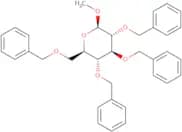
CAS:<p>Methyl 2,3,4,6-tetra-O-benzyl-b-D-galactopyranoside is a modification of the sugar galactose. It is a complex carbohydrate and an oligosaccharide that is synthesized from monosaccharides by glycosylation or polysaccharide synthesis. This product has been custom synthesized and can be modified to your specifications. It has high purity and is synthetic. Methyl 2,3,4,6-tetra-O-benzyl-b-D-galactopyranoside is used in various applications such as pharmaceuticals, agrochemicals, cosmetics and food additives.</p>Purity:Min. 95%2-Acetyl-5-methoxyphenyl beta-D-Glucopyranoside
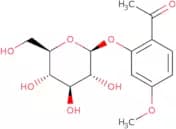
CAS:<p>2-Acetyl-5-methoxyphenyl beta-D-glucopyranoside is a flavonoid that belongs to the group of dihydroquercetin. It can be prepared by liquid chromatography. 2-Acetyl-5-methoxyphenyl beta-D-glucopyranoside inhibits tumor cells in vitro and in vivo, through the inhibition of protein synthesis and DNA replication. In addition, it has been shown to inhibit the growth of leptadenia species with a high degree of selectivity. It also exhibits an antitumor effect on mouse sarcoma 180 cells, as well as on human melanoma cells. This compound binds to macroporous adsorbents such as sephadex and tricusposide, which are used for purification purposes.</p>Formula:C15H20O8Purity:Min. 95%Molecular weight:328.31 g/mol2-(Acetylthio)ethyl 2,3,4,6-tetra-O-acetyl-b-D-glucopyranoside
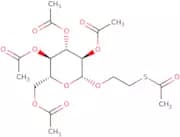
CAS:<p>2-(Acetylthio)ethyl 2,3,4,6-tetra-O-acetyl-b-D-glucopyranoside is an organic compound that belongs to the group of glycosylation. It is a synthetic sugar that can be used in the production of oligosaccharides and polysaccharides. This product has been modified with fluorination, methylation, acetylation and click chemistry. The CAS number for this product is 34044-34-3.</p>Formula:C18H26O11SPurity:Min. 95%Molecular weight:450.46 g/molSilodosin b-D-glucuronide sodium salt
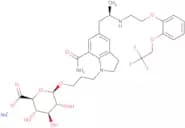
CAS:<p>Silodosin b-D-glucuronide sodium salt is a glycoconjugate of silodosin and glucuronic acid. It is a white to off-white crystalline powder that is soluble in water. Silodosin b-D-glucuronide sodium salt has been custom synthesized for the modification of saccharides and polysaccharides, which are an important part of our diet. The compound is used as a reagent for click chemistry, glycosylation, and oligosaccharide synthesis.</p>Formula:C31H39F3N3NaO10Purity:Min. 95%Color and Shape:Off-White PowderMolecular weight:693.64 g/mol5-(Acetylamino)-2,6-anhydro-3,4,5-trideoxy-4-[[(1,1-dimethylethoxy)carbonyl]amino]-D-glycero-D-galacto-non-2-enonic acid
CAS:<p>5-(Acetylamino)-2,6-anhydro-3,4,5-trideoxy-4-[[(1,1-dimethylethoxy)carbonyl]amino]-D-glycero-D-galacto-non-2-enonic acid is an oligosaccharide sugar. It is a complex carbohydrate that contains a methylated glycosylation site and is fluorinated. The CAS number for 5-(Acetylamino)-2,6-anhydro-3,4,5-trideoxy-4-[(1,1dimethylethoxy)carbonyl]amino]-DglyceroDgalacto non 2 enonic acid is 16683074. This product can be custom synthesized to your specifications and has high purity.</p>Formula:C16H26N2O9Purity:Min. 95%Molecular weight:390.39 g/molPhenyl 2,3,4-tri-O-benzyl-b-L-thiorhamnopyranose
CAS:<p>Phenyl 2,3,4-tri-O-benzyl-b-L-thiorhamnopyranose is a custom synthesis of a carbohydrate which is modified with fluorine. This compound has been used for the synthesis of saccharides and oligosaccharides. Phenyl 2,3,4-tri-O-benzyl-b-L-thiorhamnopyranose has high purity and is methylated. It can be glycosylated and click modified with ease.</p>Formula:C33H34O4SPurity:Min. 95%Molecular weight:526.69 g/mol6-Deoxy-6-fluoro-1,2-O-isopropylidene-a-D-glucofuranose
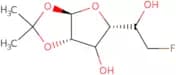
CAS:<p>6-Deoxy-6-fluoro-1,2-O-isopropylidene-a-D-glucofuranose is an oligosaccharide with a molecular weight of 692.3 Da. It is synthesized by the reaction of 1,2:5,6:8,9-hexahydroxydecane and 2,5,6:8,9-hexahydroxyoctane in dichloromethane. This product can be methylated at the hydroxyl group at C1 or glycosylated at the hydroxyl group at C2 to produce 6-(methyloxy)-6-(glycosyloxy)-1,2-O-isopropylidene-a-Dglucofuranose or 6-(methyloxy)-6-(glycosyloxy) -a -Dglucofuranose. The desired product can be purified using column chromatography on</p>Formula:C9H15FO5Purity:Min. 95%Molecular weight:222.21 g/mol2-Deoxy-2-fluoro-b-D-galactopyranosyl azide
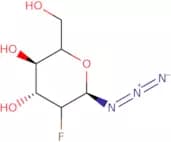
CAS:<p>2-Deoxy-2-fluoro-b-D-galactopyranosyl azide is a synthetic modification of the sugar 2,3,4,6-tetraacetamido-2,3,4,6-tetraazido-b-D-galactopyranose. It is used as a chemical probe for the study of glycosylation reactions and carbohydrate synthesis. 2-Deoxy-2-fluoro b D galactopyranosyl azide has been shown to be an efficient reagent for the methylation of saccharides. This compound is also used in the modification of polysaccharides.<br>Methylation reactions are often used to prepare modified carbohydrates that are difficult to synthesize by other methods. These compounds can be used as chemical probes for studying glycosylation reactions and carbohydrate synthesis.</p>Formula:C6H10FN3O4Purity:Min. 95%Molecular weight:207.16 g/molMethyl b-D-glucopyranoside hemihydrate
CAS:<p>Methyl b-D-glucopyranoside hemihydrate is a white crystalline solid that is soluble in water. It is a synthetic product, which can be custom synthesized and modified to suit the needs of customers. Methyl b-D-glucopyranoside hemihydrate is used for the synthesis of glycosidic substances and as a raw material for saccharide derivatives. This compound has been shown to have high purity, and is often used in the production of oligosaccharides and monosaccharides.</p>Formula:C7H14O6H2OPurity:Min. 95%Color and Shape:White to off-white solid.Molecular weight:203.19 g/mol1,3,4,5-Tetra-O-acetyl-L-sorbopyranose
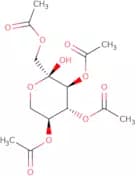
CAS:<p>1,3,4,5-Tetra-O-acetyl-L-sorbopyranose is a modified and complex carbohydrate. It is an oligosaccharide that has been synthesized from D-glucose. The modification of this sugar is accomplished by acetylation of the hydroxyl groups on the 2' and 3' positions of the glucose ring followed by fluorination with elemental fluorine to yield 1,3,4,5-tetra-O-acetyl-L-sorbopyranose. This compound is a white crystalline solid with a melting point of 145–147°C.<br> 1,3,4,5-Tetra-O-acetyl-L-sorbopyranose has been shown to inhibit bacterial growth in vitro and in vivo through glycosylation inhibition.</p>Formula:C14H20O10Purity:Min. 95%Molecular weight:348.3 g/molD-[UL-13C6,15N]Glucosamine HCl
<p>D-[UL-13C6,15N]Glucosamine HCl is a complex carbohydrate that can be custom synthesized to order. It is a synthetic sugar that has been modified by Click chemistry. The synthesis of this product requires the use of fluorination and glycosylation reactions. This product can be used in a variety of applications including methylation, modification, or oligosaccharide synthesis. D-[UL-13C6,15N]Glucosamine HCl is also known as glucosamine hydrochloride and has CAS number 1088-96-4.</p>Formula:C6H13NO5·HClPurity:Min. 95%Color and Shape:White PowderMolecular weight:222.58 g/molLumefantrine glucuronide - (mixture of diasteromers)
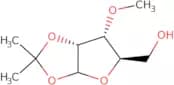
<p>Lumefantrine glucuronide is a sugar molecule that is glycosylated. It is the active form of lumefantrine and has been shown to be effective against malaria. Lumefantrine glucuronide binds to the parasite's RBCs, inhibiting the conversion of glucose into glycogen, thus preventing the production of ATP. Lumefantrine glucuronide is synthesized by attaching a sugar molecule to an amino acid backbone through an amide bond. The sugar molecule in this case is known as Glucuronic acid and it can be methylated or fluorinated. Lumefantrine glucuronide is also modified with Click chemistry, which involves attaching a reactive group to a chemical species that reacts with other chemical species at a distance. This modification allows for the attachment of polymers such as saccharides or oligosaccharides onto lumefantrine glucuronide.</p>Formula:C36H40Cl3NO7Purity:Min. 95%Molecular weight:705.06 g/mol3-O-Methyl-1,2-O-(1-methylethylidene)-a-D-ribofuranose
CAS:3-O-Methyl-1,2-O-(1-methylethylidene)-a-D-ribofuranose is an Oligosaccharide that is a custom synthesis. This product is manufactured by the Glycosylation and Fluorination of 3-O-methyl 1,2,-O-(1-methylethylidene) a D ribofuranose. The product is then methylated and monosaccharide and polysaccharides are synthesized. Click modification of the molecule can be performed to produce a complex carbohydrate. The product has high purity and can be modified for specific purposes.Purity:Min. 95%Benzyl 2-acetamido-3,4-di-O-benzyl-2-deoxy-a-D-galactopyranoside
<p>Benzyl 2-acetamido-3,4-di-O-benzyl-2-deoxy-a-D-galactopyranoside is a custom synthesis. It is an oligosaccharide with a CAS number and a complex carbohydrate. The modification of the saccharide includes methylation, glycosylation, and click modification. Carbohydrates are sugar molecules that are polymers of monosaccharides.</p>Purity:Min. 95%Ondansetron 7-D-glucuronide (mixture of isomers)
CAS:<p>Ondansetron 7-D-glucuronide (mixture of isomers) is a synthetic compound with a molecular weight of 552.9 and chemical formula C17H20F3NO5. It has been modified by the addition of a fluorine atom at position 2 on the phenyl ring. Ondansetron 7-D-glucuronide (mixture of isomers) has been synthesized by glycosylation, oligosaccharide, sugar, methylation and monosaccharide synthesis. This compound is used in pharmaceuticals as an antiemetic agent for the prevention and treatment of nausea and vomiting following surgery or chemotherapy.</p>Purity:Min. 95%1-O-Methyl-β-D-galactopyranoside
CAS:1-O-Methyl-beta-D-galactopyranoside is a monosaccharide sugar, which is a natural product of the degradation of plant cell walls. It is found in the blood of humans and other animals. 1-O-Methyl-beta-D-galactopyranoside has been shown to be an important reactive oxygen species (ROS) scavenger, which can protect cells from oxidative damage by reacting with ROS and converting them into less harmful molecules. 1-O-Methyl-beta-D-galactopyranoside binds to lectins and oligosaccharides, which are carbohydrate structures on the surface of cells that are involved in cellular recognition. This binding process may lead to uptake of 1OmBG by cells, which may be due to its ability to form hydrogen bonds with the hydroxyl group on polysaccharides such as polysaccharides in the plasma membrane or glycoproteinsFormula:C7H14O6Purity:Min. 98.0 Area-%Molecular weight:194.19 g/molRef: 3D-M-3591
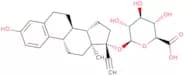
1kgTo inquire100gTo inquire250gTo inquire500gTo inquire2500gTo inquire-Unit-kgkgTo inquireEthynyl estradiol 17-b-D-glucuronide
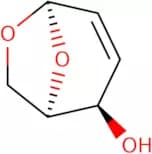
CAS:<p>Ethynyl estradiol 17-b-D-glucuronide is a custom synthesized compound. It is a complex carbohydrate that contains oligosaccharides and polysaccharides. The saccharide component of this compound is methylated, glycosylated, or carbamoylated. The synthesis of ethynyl estradiol 17-b-D-glucuronide was achieved by click chemistry and fluorination. This newly synthesized drug has been shown to have high purity and fluoroquinolone resistance.</p>Formula:C26H32O8Purity:Min. 95%Molecular weight:472.53 g/mol1,6-Anhydro-2,3-dideoxy-b-threo-hex-2-enopyranose
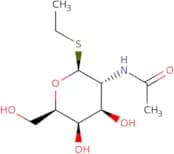
CAS:<p>1,6-Anhydro-2,3-dideoxy-b-threo-hex-2-enopyranose is a methylated saccharide. It can be used for the synthesis of 1,6-anhydro Oligosaccharides and glycosylation.</p>Formula:C6H8O3Purity:Min. 95%Molecular weight:128.13 g/molEthyl 2-acetamido-2-deoxy-b-D-thiogalactopyranoside
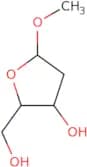
CAS:<p>Ethyl 2-acetamido-2-deoxy-b-D-thiogalactopyranoside is a custom synthesis of an oligosaccharide, polysaccharide that is modified with methylation and glycosylation. The modification of the saccharide is done by click chemistry and it has been fluorinated. This product is a complex carbohydrate that can be used as a sugar or in pharmaceuticals. It is synthesized to have high purity and it can be used in processes such as glycosylation, carbamoylation, or fluorination.</p>Formula:C10H19NO5SPurity:Min. 95%Molecular weight:265.33 g/molMethyl 2-deoxy-L-threo-pentofuranoside
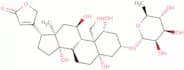
CAS:<p>Methyl 2-deoxy-L-threo-pentofuranoside is a custom synthesis that has been fluorinated, methylated, and modified with a click modification. It is an oligosaccharide with a saccharide structure and a carbohydrate modification. Methyl 2-deoxy-L-threo-pentofuranoside contains the CAS number 302349-32-2. The molecular weight of this compound is 522.2 g/mol. The molecular formula is C14H26O12F3N3O8S2. This product can be used in the production of glycosylation reactions to create complex carbohydrates with high levels of purity and yield.</p>Formula:C6H12O4Purity:Min. 95%Molecular weight:148.16 g/molOuabain - anhydrous
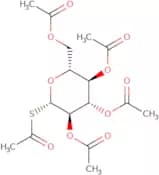
CAS:<p>Ouabain is a potent inhibitor of the Na+/K+-ATPase pump in cardiac and skeletal muscles. It has been shown to inhibit signal pathways that are involved in the regulation of cellular membrane potentials, such as the michaelis–menten kinetics. Ouabain has also been found to be effective against syncytial virus infection. Ouabain inhibits viral replication by inhibiting cellular protein synthesis and reducing cell number due to its cytotoxic effects on myocardial cells. Ouabain has also been found to inhibit neuronal death induced by α1-adrenergic receptor agonists, such as p2y receptors.</p>Formula:C29H44O12Purity:Min. 95%Color and Shape:PowderMolecular weight:584.65 g/mol1,2,3,4,6-Penta-O-acetyl-b-D-thioglucopyranose
CAS:<p>1,2,3,4,6-Penta-O-acetyl-b-D-thioglucopyranose is a custom synthesis that is a complex carbohydrate. It is an Oligosaccharide which is a polysaccharide. The modification of saccharide with the CAS No. 13639-50-4 has been done by glycosylation and carbamylation. The glycogen molecule contains three glucoses and one galactose molecule that are linked by alpha 1,4 linkages. The first two glucose molecules are connected to each other by an alpha 1,4 linkage and the third glucose molecule is connected to the fourth glucose molecule through an alpha 1,6 linkage. The first two glucoses are also linked together by a beta 1,4 linkage. There are many ways in which this glycogen can be modified or synthesized including methylation and fluorination. This product has high purity and can be used in Click</p>Purity:Min. 95%1,2:3,4:5,6-Tri-O-isopropylidene-D-mannitol
CAS:<p>1,2:3,4:5,6-Tri-O-isopropylidene-D-mannitol is a dietary fiber that is made up of <br>inulin and oligosaccharides. It can be found in various plants and vegetables. This dietary fiber has been shown to have cancer preventive properties. 1,2:3,4:5,6-Tri-O-isopropylidene-D-mannitol has also been shown to decrease the risk of colon cancer by reducing the production of diacylglycerol which is an important signaling molecule in carcinogenesis.</p>Formula:C15H26O6Purity:Min. 95%Molecular weight:302.4 g/mol1,3,4,6-Tetra-O-acetyl-2-amino-2-deoxy-D-galactopyranose HCl
CAS:<p>1,3,4,6-Tetra-O-acetyl-2-amino-2-deoxy-D-galactopyranose HCl is a synthetic compound that is used as a reagent for the synthesis of oligosaccharides and polysaccharides. Its fluoroquinolone modification makes it useful in the synthesis of complex carbohydrate structures. 1,3,4,6-Tetra-O-acetyl-2-amino-2-deoxy -D -galactopyranose HCl is an intermediate in the preparation of 1,3,4,6 tetra acetamido 2 amino 2 deoxy D galactopyranose HCL. It has high purity and can be custom synthesized to meet your needs.</p>Formula:C14H21NO9·HClPurity:Min. 95%Color and Shape:SolidMolecular weight:383.78 g/mol6-O-tert-Butyldiphenylsilyl-3,4-O-isopropylidene-D-galactal
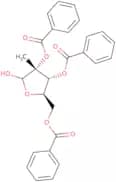
CAS:<p>6-O-tert-Butyldiphenylsilyl-3,4-O-isopropylidene-D-galactal is a synthetic monosaccharide that is used as a building block for the synthesis of complex carbohydrates. This product is also used in glycosylation reactions and click modification. It is available in high purity and can be custom synthesized to meet customer needs.</p>Purity:Min. 95%2,3,5-Tri-O-benzoyl-2-C-methyl-D-ribofuranose
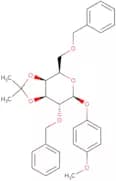
CAS:<p>2,3,5-Tri-O-benzoyl-2-C-methyl-D-ribofuranose is a custom synthesis of a complex carbohydrate. This product is an Oligosaccharide with CAS No. 30361-17-2 and Polysaccharide with Modification and Methylation. It is a saccharide with Methylation and Glycosylation. 2,3,5-Tri-O-benzoyl-2-C-methyl-D-ribofuranose is a Carbohydrate with Click modification and Fluorination. This product has High purity and Synthetic properties.</p>Formula:C27H24O8Purity:Min. 95%Molecular weight:476.47 g/mol4-Methoxyphenyl 2,6-di-O-benzyl-3,4-O-isopropylidene-b-D-galactopyranose
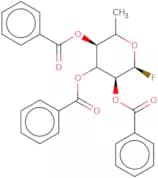
CAS:<p>4-Methoxyphenyl 2,6-di-O-benzyl-3,4-O-isopropylidene-b-D-galactopyranose is a neurotrophic factor that belongs to the family of morphogenetic proteins. It is found in Podocarpaceae and is a growth factor. This compound has been shown to have hepatoprotective effects against viral infection and can be used as an antiviral agent. 4MPBG also has antiinflammatory and immunomodulatory properties.</p>Formula:C30H34O7Purity:Min. 95%Molecular weight:506.59 g/mol2,3,4-Tri-O-benzoyl-a-L-rhamnopyranosyl fluoride
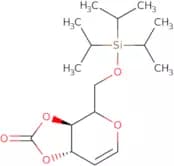
CAS:<p>The 2,3,4-Tri-O-benzoyl-a-L-rhamnopyranosyl fluoride is a complex carbohydrate that is custom synthesized. It is an oligosaccharide and polysaccharide that can be modified with methylation and glycosylation to make it more useful for research purposes. This molecule has been modified with high purity fluorination to increase its stability. Synthetic carbohydrates are used in many different applications such as medical treatments, diagnostic tools, and food additives.</p>Formula:C27H23FO7Purity:Min. 95%Molecular weight:478.47 g/mol6-O-Triisopropylsilyl-3,4-O-carbonyl-D-galactal
CAS:<p>6-O-Triisopropylsilyl-3,4-O-carbonyl-D-galactal is a synthetic sugar modification that can be obtained by the Click reaction of a glycosylation or methylation. It is used as an intermediate for the synthesis of oligosaccharides and monosaccharides. 6-O-Triisopropylsilyl-3,4-O-carbonyl-D-galactal has also been shown to be useful for the preparation of complex carbohydrates such as glycoconjugates and glycolipids.</p>Formula:C16H28O5SiPurity:Min. 95%Molecular weight:328.48 g/mol


![N-Acetyl-D-[UL-13C6]glucosamine](/_next/image/?url=https%3A%2Fstatic.cymitquimica.com%2Fproducts%2F3D%2Fthumb-webp%2FMA44797.webp&w=3840&q=75)






![5-(Acetylamino)-2,6-anhydro-3,4,5-trideoxy-4-[[(1,1-dimethylethoxy)carbonyl]amino]-D-glycero-D-gal…](/_next/image/?url=https%3A%2Fstatic.cymitquimica.com%2Fproducts%2F3D%2Fthumb-webp%2FMA58736.webp&w=3840&q=75)

![D-[UL-13C6,15N]Glucosamine HCl](/_next/image/?url=https%3A%2Fstatic.cymitquimica.com%2Fproducts%2F3D%2Fthumb-webp%2FMG15630.webp&w=3840&q=75)