Monosaccharides
Monosaccharides are the simplest form of carbohydrates and serve as fundamental building blocks for more complex sugars and polysaccharides. These single sugar molecules play critical roles in energy metabolism, cellular communication, and structural components of cells. In this section, you will find a wide variety of monosaccharides essential for research in biochemistry, molecular biology, and glycoscience. These compounds are crucial for studying metabolic pathways, glycosylation processes, and developing therapeutic agents. At CymitQuimica, we offer high-quality monosaccharides to support your research needs, ensuring precision and reliability in your scientific investigations.
Subcategories of "Monosaccharides"
- Alloses(11 products)
- Arabinoses(21 products)
- Erythroses(11 products)
- Fructoses(9 products)
- Fucoses(36 products)
- Galactosamine(41 products)
- Galactose(261 products)
- Glucoses(365 products)
- Glucuronic Acids(51 products)
- Glyco-substrates for Enzyme(77 products)
- Guloses(6 products)
- Idoses(4 products)
- Inositols(15 products)
- Lyxoses(4 products)
- Mannoses(65 products)
- O-Glycans(48 products)
- Psicoses(3 products)
- Rhamnoses(10 products)
- Riboses(61 products)
- Sialic Acids(100 products)
- Sorboses(4 products)
- Sugars(173 products)
- Tagatoses(4 products)
- Taloses(8 products)
- Xyloses(20 products)
Show 17 more subcategories
Found 6088 products of "Monosaccharides"
Sort by
Purity (%)
0
100
|
0
|
50
|
90
|
95
|
100
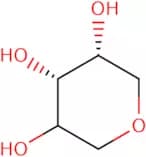
1,5-Anhydroxylitol
CAS:<p>1,5-Anhydroxylitol is a white crystalline solid that is soluble in water and methanol. 1,5-Anhydroxylitol is an intermediate in the metabolic pathway of glyceric acid. It can be produced by the oxidation of sulfoxide or by reduction of glycols. 1,5-Anhydroxylitol has been shown to have acidic properties with a pKa value of 3.2. The protonation of 1,5-anhydroxylitol is postulated to involve hydroxide ions from water or hydroxide solution. The hydroxide ion reacts with the hydroxyl group on the ring at the 5th carbon atom to produce a reactive metastable form that quickly decomposes into glyceric acid and water.</p>Formula:C5H10O4Purity:Min. 95%Molecular weight:134.13 g/mol1,3,5-Tri-O-benzoyl-2-deoxyribofuranose
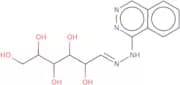
CAS:<p>1,3,5-Tri-O-benzoyl-2-deoxyribofuranose is a custom synthesis of a complex carbohydrate. It has been modified by methylation and glycosylation to form an Oligosaccharide. This product is also fluorinated and synthesized in the laboratory using click chemistry. The compound is available at high purity with low impurities.</p>Formula:C26H22O7Purity:Min. 95%Molecular weight:446.45 g/molAldehydo-D-glucose phthalazin-1-yl hydrazone
CAS:<p>Aldehydo-D-glucose phthalazin-1-yl hydrazone is a synthetic glycosylation agent that can be used in the synthesis of complex carbohydrates, such as polysaccharides, saccharides and oligosaccharides. It has been shown to be useful for the modification of saccharides and oligosaccharides. This compound can also be used for fluorination reactions, fluoroalkylations, click chemistry reactions, methylations and polymerizations. Aldehydo-D-glucose phthalazin-1-yl hydrazone has not yet been assigned CAS number.</p>Formula:C14H18N4O5Purity:Min. 95%Molecular weight:322.32 g/molMethyl 2-deoxy-D-arabinopyranoside
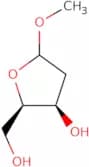
CAS:<p>Methyl 2-deoxy-D-arabinopyranoside is a fluorinated monosaccharide with an alpha,beta-unsaturated carbonyl group. It is used as a building block for the synthesis of complex carbohydrates and oligosaccharides. Methyl 2-deoxy-D-arabinopyranoside has been shown to be modified by methylation, glycosylation, and polysaccharide formation. This product can be custom synthesized to meet the needs of the customer.</p>Formula:C6H12O5Purity:Min. 95%Molecular weight:164.16 g/molNorfluoxetine b-D-glucuronide
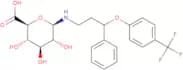
CAS:<p>Norfluoxetine is a selective serotonin reuptake inhibitor (SSRI) that is metabolized to the active metabolite, norfluoxetine b-D-glucuronide. The metabolism of norfluoxetine b-D-glucuronide has been shown to be inhibited by estradiol. Norfluoxetine b-D-glucuronide also exhibits antioxidant activity, which may be related to its ability to modulate expression of genes encoding antioxidant proteins. Norfluoxetine b-D-glucuronide has been found in wastewater and wastewater treatment plant effluents, suggesting this drug may have an environmental impact. The transcriptome of organisms exposed to norfluoxetine b-D-glucuronide has been studied and it was found that there are some genes that are responsive to this drug.</p>Formula:C22H24F3NO7Purity:Min. 95%Color and Shape:White PowderMolecular weight:471.42 g/mol2-Acetamido-3,4,6-tri-O-acetyl-2-deoxy-D-glucopyranosyl chloride - Stabilised with 2% CaCO3
CAS:<p>2-Acetamido-3,4,6-tri-O-acetyl-2-deoxy-D-glucopyranosyl chloride - Stabilised with 2% CaCO3 is a complex carbohydrate. It is synthesized by the reaction of 2 Acetamido-3,4,6 triacetyl-2 deoxy D glucose and Chloromethyl chloroformate in presence of sodium carbonate at pH 8.5 for 3 hours. The product is purified using column chromatography and recrystallized with water to give white crystalline powder. It has been used as an inhibitor of glycosidases and methyltransferases as well as a glycoprotein crosslinking agent.</p>Formula:C14H20ClNO8Purity:Min. 95%Color and Shape:Off-White PowderMolecular weight:365.76 g/molD-Fructose-1,6-diphosphate disodium salt
CAS:<p>D-Fructose-1,6-diphosphate disodium salt is a custom synthesis of methylated D-fructose. D-Fructose is an oligosaccharide found in polysaccharides and saccharides. It can be modified by fluorination and click chemistry. D-Fructose has many applications including being a monosaccharide, polysaccharide, or carbohydrate in the synthesis of polymers and pharmaceuticals.</p>Formula:C6H12O12P2·2NaPurity:Min. 95%Molecular weight:384.08 g/molL-Galactose-1-phosphate
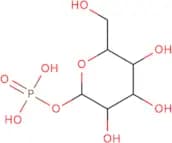
CAS:<p>L-Galactose-1-phosphate is a modification of the monosaccharide galactose. This product can be synthesized by methylation and glycosylation of L-galactose, as well as by fluorination and saccharide synthesis. This product has a CAS number of 210100-25-7. It is also a complex carbohydrate that contains many sugars. The molecular weight of this product is 541.37 g/mol, with an empirical formula of C6H14O6P2. This product is soluble in water, methanol, ethanol, acetone and chloroform. It has a melting point of 162 °C and a boiling point of 320 °F at atmospheric pressure. This product is not stable in alkaline conditions, but stable in acidic conditions.</p>Purity:Min. 95%Allyl 2-acetamido-3-O-benzyl-2-deoxy-b-D-glucopyranose
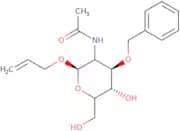
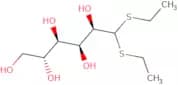
CAS:<p>Allyl 2-acetamido-3-O-benzyl-2-deoxy-b-D-glucopyranose is a modification of allyl 2,3,4,6,7,8,-hexahydroxyheptopyranose. It is an oligosaccharide that is a member of the carbohydrate family. Allyl 2-acetamido-3-O-benzyl -2deoxy-b D glucopyranose is synthesized by methylating and glycosylating allyl 2,3,4,6,7,8 hexahydroxyheptopyranose with acetic acid in the presence of sulfuric acid. This compound has CAS number 65730-00-9.</p>Formula:C18H25NO6Purity:Min. 95%Molecular weight:351.4 g/molD-Glucose diethyl mercaptal
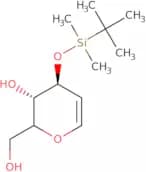
CAS:<p>D-Glucose diethyl mercaptal is a homogeneous catalyst that can be used to acetylate galactitol to produce D-arabinose. It acts as an efficient and selective catalyst for the reaction of nitrous acid with hydrochloric acid, which produces acetyl chloride. Acetyl chloride is a reactive compound that can be used in the synthesis of many other compounds. <br>D-Glucose diethyl mercaptal has been used in chromatographic methods to separate d-arabinose from L-arabinose. The ring-opening polymerization of D-glucopyranose by mercaptals leads to the formation of polyols, which are useful materials for the production of plastics and rubber products. Chloride ions are required for this reaction, while hydrogen chloride is produced as a byproduct.</p>Formula:C10H22O5S2Purity:Min. 95%Molecular weight:286.41 g/mol3-O-tert-Butyldimethylsilyl-D-galactal
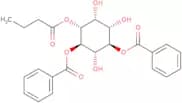
<p>3-O-tert-Butyldimethylsilyl-D-galactal is a synthetic, fluorinated monosaccharide that has been used as a substrate for glycosylation reactions. The compound is synthesized by the reaction of 3,4,6-trichloro-2,5,7,8-tetrafluorohexanal with D-galactal in the presence of a base such as potassium carbonate. The product is purified by column chromatography and recrystallization from methanol to provide a white powder with a melting point of 176 °C.</p>Formula:C12H24O4SiPurity:Min. 95%Molecular weight:260.4 g/mol1D-1-O-Butyryl-4,6-O-dibenzoyl-myo-inositol
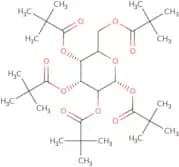
CAS:<p>1D-1-O-Butyryl-4,6-O-dibenzoyl-myo-inositol is an oligosaccharide that has been modified with fluoride. It is a custom synthesis of a complex carbohydrate and its CAS number is 153265-90-8. 1D-1-O-Butyryl-4,6-O-dibenzoyl-myo-inositol is used in the synthesis of saccharides and polysaccharides.</p>Formula:C24H26O9Purity:Min. 95%Molecular weight:458.46 g/mol1,2,3,4,6-Penta-O-pivaloyl-a-D-mannopyranose
CAS:<p>1,2,3,4,6-Penta-O-pivaloyl-a-D-mannopyranose is a sugar that belongs to the group of complex carbohydrates. It is custom synthesized and can be modified to suit customer requirements. The synthesis process includes glycosylation, fluorination and methylation. 1,2,3,4,6-Penta-O-pivaloyl-a-D-mannopyranose is used as a raw material for saccharide and oligosaccharide production. It also has applications in the food industry as a sweetener or flavor enhancer.</p>Formula:C31H52O11Purity:Min. 95%Molecular weight:600.74 g/mol2,6-Anhydro-3-deoxy-D-lyxo-hept-2-enonimidamide monohydrochloride
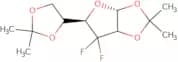
CAS:<p>2,6-Anhydro-3-deoxy-D-lyxo-hept-2-enonimidamide monohydrochloride is a fluorinated sugar that has been custom synthesized to be used as a glycosylation or polysaccharide modification. It has been methylated and click modified to increase its purity. 2,6-Anhydro-3-deoxy-D-lyxo-hept-2-enonimidamide monohydrochloride is also known by the CAS number 180336-29-2.</p>Formula:C7H12N2O4·HClPurity:Min. 95%Molecular weight:224.64 g/mol3-Deoxy-3,3-difluoro-1,2:5,6-di-O-isopropylidene-a-D-glucofuranose
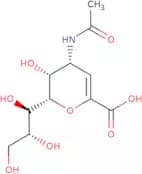
<p>3-Deoxy-3,3-difluoro-1,2:5,6-di-O-isopropylidene-a-D-glucofuranose is a sugar. It is a glycosylation product of the natural amino acid lysine with glucose. This modification increases the solubility and stability of lysine in biological systems. 3DG can be methylated to form 3DG monomethyl ether and 3DG dimethyl ether. Both these derivatives are also used as a fluorescent probe for detecting saccharides at low concentrations. 3DG can be fluorinated to form 3DG difluoromethyl ether, which has been shown to have anti-inflammatory properties. These properties may be due to its ability to inhibit prostaglandin synthesis by inhibiting prostaglandin synthase activity.</p>Formula:C12H18F2O5Purity:Min. 95%Molecular weight:280.27 g/mol4-Acetamido-2,6-anhydro-3,4-dideoxy-D-glycero-D-galactonon-2-enonic acid
CAS:<p>The product is a custom-made synthetic sugar. It is Fluorinated and Methylated. The product has been synthesized for glycosylation, methylation, and click modification. The product can be used in the synthesis of complex carbohydrates.</p>Formula:C11H17NO8Purity:Min. 95%Molecular weight:291.25 g/molMethyl 3-O-benzyl-2-deoxy-D-arabinopyranoside
<p>Methyl 3-O-benzyl-2-deoxy-D-arabinopyranoside is a custom synthesis that belongs to the class of complex carbohydrates. It can be used as a modification of saccharides and polysaccharides, in addition to being methylated and glycosylated. This product is also fluorinated for use in click chemistry. Methyl 3-O-benzyl-2-deoxy-D-arabinopyranoside has high purity, which makes it suitable for use in pharmaceuticals, biochemistry, and other research applications.</p>Formula:C13H18O4Purity:Min. 95%Molecular weight:238.28 g/molN-{[4-(Hydroxyamino)phenyl]sulfonyl}-N-[2-(2-naphthyloxy)ethyl]-b-D-glucopyranosylamine
CAS:<p>N-{[4-(Hydroxyamino)phenyl]sulfonyl}-N-[2-(2-naphthyloxy)ethyl]-b-D-glucopyranosylamine is a small molecule that inhibits the activity of oncoproteins by binding to lysine residues. It has been shown to inhibit the growth of tumor cells in vitro and in vivo, suggesting that it may be useful for anti-cancer therapy. The binding of this compound to lysine residues is specific and does not interfere with protein synthesis or other cellular processes.</p>Formula:C24H28N2O9SPurity:Min. 95%Molecular weight:520.55 g/molMethyl 5-aldo-2,3-O-isopropylidene-D-ribofuranoside
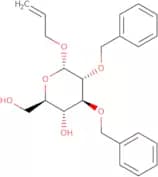
<p>Methyl 5-aldo-2,3-O-isopropylidene-D-ribofuranoside is a custom synthesis product. It is an oligo and polysaccharide with a complex carbohydrate structure. This product has high purity and is modified by fluorination. It has been modified to form a monosaccharide sugar.</p>Purity:Min. 95%Allyl 2,3-di-O-benzyl-a-D-glucopyranoside
CAS:<p>Allyl 2,3-di-O-benzyl-a-D-glucopyranoside is a plant growth regulator that stimulates callus formation. It belongs to the group of auxins and has been shown to promote callus growth in Arabidopsis thaliana cultivars, such as glaberrima and kinetin. This compound has also been shown to stimulate the formation of calli from coconut explants.</p>Formula:C23H28O6Purity:Min. 95%Molecular weight:400.46 g/mol(2S, 4S, 4'R) [4,4'-bi-1,3-dioxolane]-2-methanol-2,2'-dimethyl
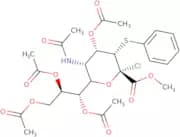
CAS:<p>2,4-Dioxolane is a synthetic compound with the molecular formula (2S, 4S, 4'R) [4,4'-bi-1,3-dioxolane]-2-methanol-2,2'-dimethyl. It was first synthesized in 1963 by C. L. Hedrick and coworkers at Eli Lilly and Company as a potential drug for the treatment of schizophrenia. The chemical structure of 2,4-dioxolane consists of two oxetanes linked together with an ether bond. In this molecule both hydroxyl groups are on the same side of the carbon chain.</p>Formula:C9H16O5Purity:Min. 95%Molecular weight:204.22 g/mol5-(Acetylamino)-2-chloro-2,5-dideoxy-3-S-phenyl-3-thio-D-erythro-a-L-gluco-2-nonulopyranosonic acid methyl ester 4,7,8,9-tetraacetat e
CAS:<p>5-(Acetylamino)-2-chloro-2,5-dideoxy-3-S-phenyl-3-thio-D-erythro-a-L-gluco-2,4,6-triulopyranosonic acid methyl ester 4,7,8,9 -tetraacetate is a synthetic compound that is modified with a fluorine atom. It is used as a reagent in the synthesis of oligosaccharides and polysaccharides. 5-(Acetylamino)-2,5 dideoxy 3S phenyl 3thio D erythro a L glucopyranosonic acid methyl ester 4 7 8 9 tetraacetate has the CAS number 120104 58 7. This compound can be synthesized from 2 chloro acetamide and 5 (acetylamino) 2 chloro 2 hydroxy pyridine. The molecular weight of this product is 5</p>Formula:C26H32ClNO12SPurity:Min. 95%Molecular weight:618.05 g/mol1,5-Anhydro-4,6-O-benzylidene-3-O-[2,4-dichlorophenyl]thiocarbonyloxy-2-O-toluoyl-D-glucitol
<p>1,5-Anhydro-4,6-O-benzylidene-3-O-[2,4-dichlorophenyl]thiocarbonyloxy-2-O-toluoyl-D-glucitol is a glycosylation reagent that is custom synthesized for use in the synthesis of oligosaccharides. Fluorination and methylation of the sugar moiety can be done to give desired modifications. The product has been purified by high performance liquid chromatography (HPLC) and has a purity of >98%. CAS No.: 901061-95-8</p>Formula:C28H24Cl2O7SPurity:Min. 95%Molecular weight:575.46 g/mol6-O-Benzoyl-D-glucal
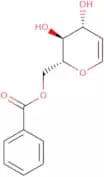
CAS:<p>6-O-Benzoyl-D-glucal is a bromide that is an arbutin derivative. It is used as an anti-inflammatory, antiallergic, and analgesic agent. 6-O-Benzoyl-D-glucal is also a glucoside that has been shown to have substituents and elimination reactions with phenols. In the leaves of proteaceae plants, it acts as a substituent in esters and glycosides, which are eliminated during the metabolism of those compounds. 6-O-Benzoyl-D-glucal can be synthesized from glucose by oxidation of the phenolic hydroxyl groups with potassium permanganate or chromium trioxide.</p>Purity:Min. 95%Benzyl 5-Aldo-2,3-O-isopropylidene-a-D-mannopentenofuranoside
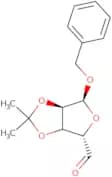
CAS:<p>Benzyl 5-Aldo-2,3-O-isopropylidene-a-D-mannopentenofuranoside is a synthetic carbohydrate that is a modification of the saccharide mannose. This product contains a methylated benzyl group and an acetal linkage to the D-mannopentenofuranose. The fluorination of the C5 position on this sugar provides an additional level of stability to this molecule. This product is custom synthesized and can be modified according to customers' specifications. It has been shown to be stable in water at pH levels between 2 and 12 and can be stored at room temperature for up to two years without degradation.</p>Formula:C15H18O5Purity:Min. 95%Molecular weight:278.3 g/molD-Myo-inositol-1,3,4,5-tetraphosphate
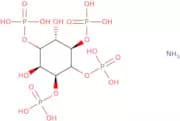
CAS:<p>D-myo-inositol-1,3,4,5-tetraphosphate (IP4) is a molecule that is involved in the regulation of cell metabolism and signal transduction. It is synthesized from myo-inositol by the enzyme inositol monophosphatase and hydrolyzed by inositol hexaphosphate kinase to form D-myo-inositol. IP4 can bind to receptors which span the plasma membrane and interact with intracellular Ca2+ channels. This binding results in an increase of cytosolic Ca2+ levels, which may be due to IP4’s ability to activate phosphatidylinositol turnover. IP4 is also involved in the regulation of neuronal death and infectious diseases such as HIV.</p>Purity:Min. 95%2,3,4,6-Tetra-O-acetyl-b-D-glucopyranosyl-N-Fmoc-L-threonine pentafluorophenyl ester
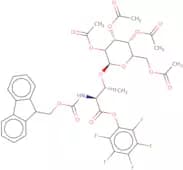
<p>2,3,4,6-Tetra-O-acetyl-b-D-glucopyranosyl-N-Fmoc-L-threonine pentafluorophenyl ester is a custom synthesis. This product is a complex carbohydrate that belongs to the group of polysaccharides. It has been modified by methylation and glycosylation. 2,3,4,6-Tetra-O-acetyl-b-D-glucopyranosyl-N-Fmoc-L--threonine pentafluorophenyl ester has a CAS number and is available in high purity. This product can be used as an additive for food products or as a starting material for the synthesis of other saccharides.</p>Formula:C39F5H36NO14Purity:Min. 95%Molecular weight:837.71 g/mol1-O-Acetyl-2,3,5-tri-O-p-chlorobenzoyl-b-D-ribofuranose
CAS:<p>1-O-Acetyl-2,3,5-tri-O-p-chlorobenzoyl-b-D-ribofuranose is a modified monosaccharide that is synthesized by the methylation of 2,3,5,6'-tetraacetyl bromoacetyl bromoacetate with sodium methoxide in methanol and acetone. The compound is then reacted with formaldehyde and acetic anhydride to produce 1-(4'-chlorobenzoyl)-2,3,5,-triacetoxybibofuranoside. The product is then treated with phosphoryl chloride to generate 1-(4'-chlorobenzoyl)-2,3,5,-triacetoxybibofuranoside O-(1'',2'''-dichloroethyl) ether. This product has been used as a complex carbohydrate in the synthesis of oligosaccharides or</p>Formula:C28H21Cl3O9Purity:Min. 95%Molecular weight:607.82 g/mol6-O-Acetyl-2-azido-3,4-di-O-benzyl-2-deoxy-D-glucopyranose
CAS:<p>Glucosamine is a hexose sugar that is an amino sugar and a precursor in the biosynthesis of glycoproteins. It also acts as an intermediate for the synthesis of other non-carbohydrate natural products. 6-O-Acetyl-2-azido-3,4-di-O-benzyl-2-deoxyglucopyranose is a glucosamine derivative that has been synthesized from trifluoroacetic acid and piperidine. The acetyl group on this compound makes it soluble in water, which allows for its use in pharmaceuticals and other applications.</p>Purity:Min. 95%1,3,4,5,6-Penta-O-acetyl-2-keto-D-fructose
CAS:<p>1,3,4,5,6-Penta-O-acetyl-2-keto-D-fructose is a custom synthesis of monosaccharide. It has been modified by fluorination and methylation. The CAS number for 1,3,4,5,6-Penta-O-acetyl-2-keto-D-fructose is 494828–55–6. This product is a saccharide that is a sugar with a complex carbohydrate structure.</p>Formula:C16H22O11Purity:Min. 95%Molecular weight:390.34 g/mol2-Deoxy-D- arabino- hexonic acid calcium
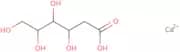
CAS:<p>2-Deoxy-D-arabino-hexonic acid calcium is a fluorinated monosaccharide with a molecular weight of 348.09 g/mol. It can be used for the synthesis of oligosaccharides, glycosylations, and polysaccharides. Click modification, methylation, sugar modification are all possible modifications for this compound. This product has been custom synthesized by our company and is available in high purity.</p>Formula:C6H12O6·xCaPurity:Min. 95%6- Amino- 6- deoxy-D-allopyranose hydrochloride
CAS:<p>6-Amino-6-deoxy-D-allopyranose hydrochloride is a complex carbohydrate that can be modified with fluorination, methylation, glycosylation, and/or saccharide. It has a CAS number of 24384-96-1. We offer this product in high purity and custom synthesis.</p>Formula:C6H13NO5·HClPurity:Min. 95%Molecular weight:215.63 g/mol1,2:4,5-Di-O-isopropylidene-D,L-myo-inositol
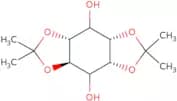
CAS:<p>1,2:4,5-Di-O-isopropylidene-D,L-myo-inositol is a custom synthesized product that has been modified to contain a fluorine atom. It is an oligosaccharide and polysaccharide. This product is used as a synthetic precursor to other products such as saccharides, carbohydrates and monosaccharides.</p>Formula:C12H20O6Purity:Min. 95%Molecular weight:260.28 g/molMethyl 2-acetamido-2-deoxy-4,6-(4-methoxybenzylidene)-a-D-galactopyranoside
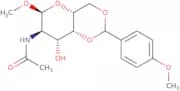
CAS:<p>Methyl 2-acetamido-2-deoxy-4,6-(4-methoxybenzylidene)-a-D-galactopyranoside is a fluorinated sugar that is synthesized from the monosaccharide D-galactose. This sugar is available for custom synthesis in order to meet clients' needs. It can also be modified by glycosylation, methylation, and click chemistry. Methyl 2-acetamido-2-deoxy-4,6-(4-methoxybenzylidene)-a-D-galactopyranoside is a white powder with a molecular weight of 594.26. It has been shown to inhibit the growth of Mycobacterium tuberculosis and Mycobacterium avium complex in culture.</p>Formula:C17H23NO7Purity:Min. 95%Molecular weight:353.37 g/mol1,4:3,6-Dianhydro- 2- O- methyl-D- glucitol
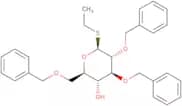
CAS:<p>1,4:3,6-Dianhydro-2-O-methyl-D-glucitol is a modified sugar that belongs to the group of carbohydrates. It is synthesized by the modification of 1,4:3,6-dianhydro-2,5-diO-methyl D glucitol with methyl iodide and sodium methoxide. The compound is used in pharmaceuticals as an excipient and in cosmetics as a moisturizer. It has been shown to be effective against influenza A virus.</p>Formula:C7H12O4Purity:Min. 95%Molecular weight:160.17 g/molEthyl 2,3,6-tri-O-benzyl-b-D-thioglucopyranoside
CAS:<p>Ethyl 2,3,6-tri-O-benzyl-b-D-thioglucopyranoside is a monosaccharide with a chemical formula of C8H11O5. It has been synthesized from benzyl bromide and D-thioglucose in the presence of sodium hydroxide and potassium carbonate. The compound is used in the synthesis of oligosaccharides and polysaccharides. Ethyl 2,3,6-tri-O-benzyl-b-D-thioglucopyranoside has been shown to have a purity greater than 99% by high performance liquid chromatography (HPLC) analysis.</p>Formula:C29H34O5SPurity:Min. 95%Molecular weight:494.64 g/mol6-Deoxy L-glucose
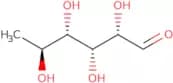
CAS:<p>6-Deoxy L-glucose is a sugar analogue that inhibits the transport of glucose in bacteria. It competes with glucose for binding to transporter proteins and prevents glucose from being transported into the cell. 6-Deoxy L-glucose has been shown to inhibit the growth of wild-type strains, such as E. coli K12, in a dose-dependent manner. The antibiotic also reduces ATP production by inhibiting enzymes critical for glycolysis and gluconeogenesis. 6-Deoxy L-glucose has an optimum pH of 7.5 and is activated by hydrochloric acid or hydroxyl groups at the gamma position.</p>Purity:Min. 95%Phenyl 4-azido-2,3-di-O-benzyl-4,6-dideoxy-b-D-thioglucopyranoside
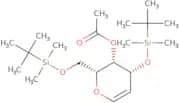
CAS:<p>Phenyl 4-azido-2,3-di-O-benzyl-4,6-dideoxy-b-D-thioglucopyranoside (PBDTT) is a synthetic monosaccharide that belongs to the group of complex carbohydrates. It is used for glycosylation reactions in the synthesis of polysaccharides and oligosaccharides. This compound can be used as a Click modification reagent for the methylation of sugars. PBDTT has a CAS No. 369631-91-4 and is available at high purity.</p>Formula:C26H30N3O3SPurity:Min. 95%Molecular weight:464.6 g/mol4-O-Acetyl-3,6-di-O-tert-butyldimethylsilyl-D-galactal
CAS:<p>4-O-Acetyl-3,6-di-O-tert-butyldimethylsilyl-D-galactal is a high purity, custom synthesis sugar. This compound has been modified with Click chemistry and fluorination. The modification has been shown to have glycosylation and methylation. This product is synthesized from a complex carbohydrate.</p>Purity:Min. 95%4-Formylphenyl 2-acetamido-3,4,6-tri-O-acetyl-2-deoxy-b-D-glucopyranoside
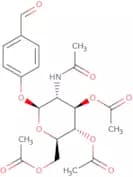
CAS:<p>4-Formylphenyl 2-acetamido-3,4,6-tri-O-acetyl-2-deoxy-β--glucopyranoside is a pyranoside that is a potent inhibitor of the enzyme glycosidase. It is used to study the interactions between enzymes and substrates. The crystal structure of 4FFAP has been determined using X-ray diffraction data. This compound has a six membered ring with two acetamido groups and one carbonyl group attached to the same carbon atom in the ring. 4FFAP interacts with other molecules through hydrogen bonding and van der Waals forces.</p>Formula:C21H25NO10Purity:Min. 95%Molecular weight:451.42 g/molThyroxine acyl-b-D-glucuronide
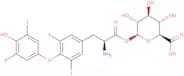
CAS:<p>Thyroxine acyl-b-D-glucuronide is a synthetic, modified thyroxine that has been modified with a saccharide moiety. The saccharide moiety is an oligosaccharide containing glucose, mannose and galactose residues. This product is a sugar with the molecular formula C24H40O14. Thyroxine acyl-b-D-glucuronide is soluble in water and alcohol. It has a molecular weight of 562.5 g/mol and a melting point of 230°C.</p>Formula:C21H19I4NO10Purity:Min. 95%Molecular weight:952.99 g/mol2,3,5-Tri-O-benzyl-D-arabinofuranosyl chloride
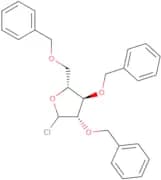
CAS:<p>2,3,5-Tri-O-benzyl-D-arabinofuranosyl chloride is an antitumour drug that is a purine nucleoside analogue. It is a synthetic compound and has been shown to have chemotherapeutic and antitumor activities. This drug binds to the enzyme RNA polymerase II, leading to inhibition of DNA synthesis and cell death. 2,3,5-Tri-O-benzyl-D-arabinofuranosyl chloride has potential as an antitumor agent.</p>Formula:C26H27ClO4Purity:Min. 95%Molecular weight:438.94 g/mol4-Methoxyphenyl 2,3-di-O-benzyl-b-D-galactopyranoside
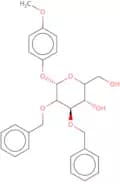
<p>4-Methoxyphenyl 2,3-di-O-benzyl-b-D-galactopyranoside is a high purity synthetic compound that can be custom synthesized to your specifications. This product is a carbohydrate with the molecular formula C7H8O6 and molecular weight of 232.14. The CAS number for this compound is 51878-93-5.</p>Formula:C27H30O7Purity:Min. 95%Molecular weight:466.52 g/molMethyl 2,4,6-tri-O-benzyl-a-D-glucopyranose
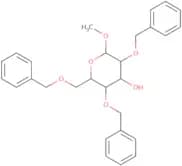
CAS:<p>Methyl 2,4,6-tri-O-benzyl-a-D-glucopyranose is a high purity custom synthesis sugar that can be synthesized in glycosylation and methylation. The CAS number is 35303-86-7. This product has a saccharide structure, which can be found in many complex carbohydrates. It is used as a synthetic intermediate for the production of oligosaccharides and monosaccharides.</p>Formula:C28H32O6Purity:Min. 95%Molecular weight:464.55 g/mol3,4,6-Tri-O-acetyl-2-deoxy-2-trichloroacetamido-D-glucopyranose
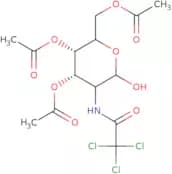
<p>3,4,6-Tri-O-acetyl-2-deoxy-2-trichloroacetamido-D-glucopyranose is an oligosaccharide that can be synthesized with a high purity. It is used as an intermediate in the synthesis of saccharides and complex carbohydrates. 3,4,6-Tri-O-acetyl-2-deoxy-2-trichloroacetamido-D-glucopyranose can also be fluorinated, glycosylated and methylated to generate new compounds. The CAS number for this compound is 4953–59–3. This compound is made up of three sugars: a hexose, a pentose and a triose. The carbohydrate that is produced from this compound has the following formula: C6H12O6 • H2O • O4CCH(OH)CH(OH)CH(OH)COO</p>Formula:C14H18Cl3NO9Purity:Min. 95%Molecular weight:450.66 g/mol3-Deoxy-D-gluconic acid calcium
CAS:<p>3-Deoxy-D-gluconic acid calcium is a modification of the sugar 3-deoxy-D-glucono-1,5-lactone. It is an oligosaccharide that has been synthesized from D-glucose and D-xylose with the use of a click reaction. The monosaccharide (3DG) can be methylated to produce 3,6-dimethyl 3DG or fluorinated to make 3,6,9F 2 -3DG. This modification can be glycosylated to form a complex carbohydrate. The saccharide is also found in nature as the sugar component of glycogen and cellulose.</p>Formula:C6H12O6CaPurity:Min. 97 Area-%Molecular weight:400.39 g/mol1,2,4,6-Tetra-O-acetyl-3-O-benzyl-a-D-mannopyranose
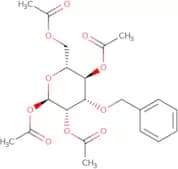
CAS:<p>Tetra-O-acetyl-3-O-benzyl-a-D-mannopyranose is a modification of mannose. It is a complex carbohydrate that belongs to the class of oligosaccharides and has CAS No. 65827-58-9. The molecular weight of this compound is 462.76 g/mol. Tetra-O-acetyl-3-O-benzyl mannopyranose is synthesized for use as an analytical reagent to study the glycosylation and methylation reactions in carbohydrates, as well as for use in diagnostic kits for the detection of penicillinase and erythromycin resistance genes. This product has high purity, custom synthesis, and can be used as a monosaccharide or polysaccharide sugar in glycosylation reactions. Tetra O acetyl 3 O benzyl mannopyranose can also be fluorinated</p>Formula:C21H26O10Purity:Min. 95%Molecular weight:438.43 g/mol2,3,4-Tri-O-acetyl-b-D-glucuronide methyl ester trichloroacetimidate
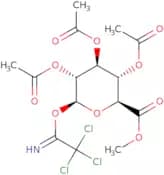
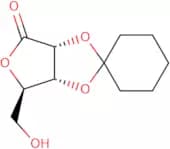
CAS:<p>2,3,4-Tri-O-acetyl-b-D-glucuronide methyl ester trichloroacetimidate is a custom synthesis that contains a fluorinated sugar. It is synthesized by the modification of an oligosaccharide with a polysaccharide. The modification includes the addition of methyl groups to the sugar and the introduction of chlorine atoms in place of hydroxyl groups. This compound has been shown to be effective at inhibiting bacterial growth and at reducing inflammation.</p>Formula:C15H18Cl3NO10Purity:Min. 95%Molecular weight:478.66 g/molD-Ribonolactone 2,3-cyclohexyl ketal
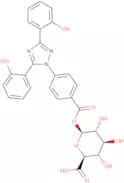
CAS:<p>D-Ribonolactone 2,3-cyclohexyl ketal is a custom synthesis. It is a synthetic modification of the natural D-ribose sugar molecule. It has been modified by methylation and glycosylation to yield a complex carbohydrate with a high degree of purity. The fluorination process has been used to introduce fluorine atoms into the molecule.</p>Formula:C11H16O5Purity:Min. 95%Molecular weight:228.24 g/molDeferasirox acyl-b-D-glucuronide
CAS:<p>This compound is a high purity, synthetic, complex carbohydrate. It is made of saccharides and polysaccharides. This product can be used as a methylation reagent for oligosaccharide synthesis or click modification. The molecular weight is about 1140 g/mol. This product has been shown to have an inhibitory effect on bacterial growth and may be effective against Mycobacterium tuberculosis or Mycobacterium avium.</p>Formula:C27H23N3O10Purity:Min. 95%Molecular weight:549.49 g/mol





![N-{[4-(Hydroxyamino)phenyl]sulfonyl}-N-[2-(2-naphthyloxy)ethyl]-b-D-glucopyranosylamine](/_next/image/?url=https%3A%2Fstatic.cymitquimica.com%2Fproducts%2F3D%2Fthumb-webp%2FMN176336.webp&w=3840&q=75)
![(2S, 4S, 4'R) [4,4'-bi-1,3-dioxolane]-2-methanol-2,2'-dimethyl](/_next/image/?url=https%3A%2Fstatic.cymitquimica.com%2Fproducts%2F3D%2Fthumb-webp%2FMM44925.webp&w=3840&q=75)
![1,5-Anhydro-4,6-O-benzylidene-3-O-[2,4-dichlorophenyl]thiocarbonyloxy-2-O-toluoyl-D-glucitol](/_next/image/?url=https%3A%2Fstatic.cymitquimica.com%2Fproducts%2F3D%2Fthumb-webp%2FMA05714.webp&w=3840&q=75)