Monosaccharides
Monosaccharides are the simplest form of carbohydrates and serve as fundamental building blocks for more complex sugars and polysaccharides. These single sugar molecules play critical roles in energy metabolism, cellular communication, and structural components of cells. In this section, you will find a wide variety of monosaccharides essential for research in biochemistry, molecular biology, and glycoscience. These compounds are crucial for studying metabolic pathways, glycosylation processes, and developing therapeutic agents. At CymitQuimica, we offer high-quality monosaccharides to support your research needs, ensuring precision and reliability in your scientific investigations.
Subcategories of "Monosaccharides"
- Alloses(11 products)
- Arabinoses(21 products)
- Erythroses(11 products)
- Fructoses(9 products)
- Fucoses(36 products)
- Galactosamine(41 products)
- Galactose(261 products)
- Glucoses(365 products)
- Glucuronic Acids(51 products)
- Glyco-substrates for Enzyme(77 products)
- Guloses(6 products)
- Idoses(4 products)
- Inositols(15 products)
- Lyxoses(4 products)
- Mannoses(65 products)
- O-Glycans(48 products)
- Psicoses(3 products)
- Rhamnoses(10 products)
- Riboses(61 products)
- Sialic Acids(100 products)
- Sorboses(4 products)
- Sugars(173 products)
- Tagatoses(4 products)
- Taloses(8 products)
- Xyloses(20 products)
Show 17 more subcategories
Found 6088 products of "Monosaccharides"
Sort by
Purity (%)
0
100
|
0
|
50
|
90
|
95
|
100
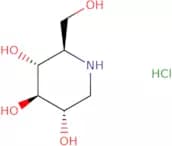
1-Deoxy-L-altronojirimycin hydrochloride
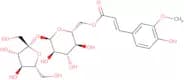
CAS:<p>L-altronojirimycin is a diterpene glycoside that belongs to the group of natural products that have inhibitory properties against lipid peroxidation. It has been shown to decrease the concentration of 1,2-dipalmitoylglycerophosphocholine (DPPC) in primary cells and reduce the rate of lipid peroxidation in a concentration-dependent manner. L-altronojirimycin inhibits the activity of enzymes such as acetylcholinesterase and phospholipase A2, which are involved in inflammation. This drug has also been shown to have cardioprotective effects and inhibit mutations in cardiac muscle cells. L-altronojirimycin has been tested for its long-term efficacy and shown to be effective against both bowel disease and cardiac effects.</p>Formula:C6H13NO4•HClPurity:Min. 95%Color and Shape:PowderMolecular weight:199.63 g/mol6-O-Feruloylsucrose
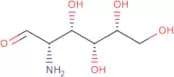
CAS:<p>6-O-Feruloylsucrose is a phenylpropanoid glycoside that has been shown to inhibit the growth of Gram-positive and Gram-negative bacteria. It is also hepatoprotective and has been shown to have antimicrobial activity against fungi, such as Candida albicans. The 6-O-feruloylsucrose inhibits microbial infections by binding to metal cations, which are essential for bacterial cell wall synthesis. This leads to a decrease in the production of microbial cell walls, inhibiting their growth. 6-O-Feruloylsucrose can be used as an additive in food products or as a preservative in cosmetics.</p>Formula:C22H30O14Purity:Min. 95%Color and Shape:White To Off-White SolidMolecular weight:518.47 g/mol2-Amino-2-deoxy-D-idose
CAS:<p>2-Amino-2-deoxy-D-idose is a sugar that is found in the cell walls of bacteria. It has been shown to be an inhibitor of the enzymes that catalyze the acetylation and methylenecyclopropanes reactions, which are necessary for bacterial growth. 2-Amino-2-deoxy-D-idose binds to copper ions, preventing them from binding with the enzymes. This drug also chelates metals such as zinc, iron, and manganese to prevent their use by bacteria.</p>Formula:C6H13NO5Purity:Min. 95%Molecular weight:179.17 g/mola-L-Fucose-1-phosphate
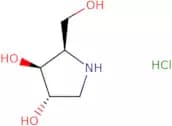
<p>a-L-Fucose-1-phosphate is a Glycosylation, complex carbohydrate, Methylation, Click modification, Polysaccharide, Fluorination, saccharide, Modification, sugar, Oligosaccharide and Synthetic product. a-L-Fucose-1-phosphate is available for custom synthesis and can be ordered with high purity.</p>Purity:Min. 95%1,4-Dideoxy-1,4-imino-D-xylitol HCl
CAS:<p>1,4-Dideoxy-1,4-imino-D-xylitol HCl (DDX) is a potent inhibitor of the enzyme carboxypeptidase A2. DDX has been shown to inhibit the growth of HIV in vitro and in vivo. DDX also inhibits the production of proinflammatory cytokines and neurotrophic factors from HL60 cells. It has been shown to be a potential drug target for the treatment of infectious diseases such as alphaviruses, which produce a severe neuroinvasive disease in humans. DDX binds to dna with high affinity and specificity, but does not bind to RNA or proteins. DDX inhibits mitochondrial membrane potential by binding to ATP synthase and blocking the synthesis of ATP. DDX has also been shown to have an anti-oxidative injury effect on mitochondria, which may contribute to its inhibition of viral replication.</p>Formula:C5H11NO3·HClPurity:Min. 95%Molecular weight:169.61 g/mol2-Bromoethyl 2,3,4,6-tetra-O-acetyl-b-D-glucopyranoside
CAS:<p>2-Bromoethyl 2,3,4,6-tetra-O-acetyl-b-D-glucopyranoside is a modified form of D-(+)-glucose. The modification has been accomplished through the use of a click chemistry reaction with an azide and alkyne. This product is offered for custom synthesis and can be used in glycosylation reactions.</p>Formula:C16H23BrO10Purity:Min. 95%Molecular weight:455.25 g/molBenzyl b-D-xylopyranoside
CAS:<p>Benzyl b-D-xylopyranoside is an inorganic compound that is used as a radioactive tracer to study the movement of fluid and macromolecules in the apical membrane of the chondrocyte. It was shown to be effective in preventing the formation of tissue-damaging acute phase proteins when administered at a time point corresponding to the onset of an acute inflammatory response. Benzyl b-D-xylopyranoside has also been shown to have regulatory effects on untreated control cells, but not on untreated control cells. This drug inhibits biosynthesis of GAGs, which are molecules that provide structural support for cells and tissues. The mechanism by which benzyl b-D-xylopyranoside exerts its effect is not yet known.</p>Formula:C12H16O5Purity:Min. 95%Molecular weight:240.25 g/mol4-Epi-daunosamine
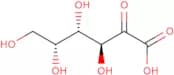
CAS:<p>4-Epi-daunosamine is a glycopeptide antibiotic that is used to treat infections caused by Gram-positive bacteria. It binds to the cell wall of these bacteria and inhibits the synthesis of new cell walls. This causes the cells to burst and die, which leads to bacterial death. 4-Epi-daunosamine has been shown to be effective against animal pathogens such as Streptococcus pneumoniae, Haemophilus influenzae, and Clostridium perfringens. 4-Epi-daunosamine also has a low level of toxicity in humans, but can cause adverse effects such as nausea and vomiting if taken in large doses.</p>Formula:C6H11NO3Purity:Min. 95%Molecular weight:145.16 g/mol2-Keto-D-galactonic acid
CAS:<p>2-Keto-D-galactonic acid is a chemical compound that is used as an intermediate in the synthesis of antibiotics. It has been found to inhibit the growth of bacteria, such as Erwinia carotovora and Escherichia coli. The 2-keto-d-galactonic acid can be crystallized in two forms: an amorphous form or a crystalline form.</p>Purity:Min. 95%Glufosfamide
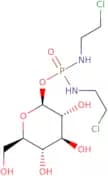
CAS:<p>Glufosfamide is a cytotoxic drug that is used in the treatment of some types of cancer. It is a prodrug that requires conversion to its active form, glufosfamid, by esterase enzymes before it can exert its genotoxic effects. Glufosfamide has shown to be active against platinum-resistant ovarian cancer and solid tumours. This drug also has been shown to inhibit the growth of prostate cancer cells and miapaca-2 cells, which are derived from pancreatic cancer. Glufosfamide has been found to have low toxicity in mice, but there may be adverse reactions when combined with other drugs such as erythromycin or ketoconazole.</p>Formula:C10H21Cl2N2O7PPurity:Min. 95%Molecular weight:383.16 g/mol1,2-Dideoxy-2-fluoronojirimycin
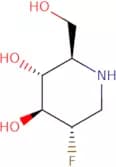
CAS:<p>1,2-Dideoxy-2-fluoronojirimycin is a synthetic alkenyl compound that inhibits the HIV-1 virus by competitively inhibiting the enzyme reverse transcriptase. It has been shown to inhibit the synthesis of viral DNA and RNA. 1,2-Dideoxy-2-fluoronojirimycin is an aralkyl compound with a hydroxyl group at position 1 and a fluorine atom at position 2. It also has sulfinyl groups in positions 3 and 4. The natural product is synthesised from glucose via glycosidase inhibition. This compound has shown potent antiviral activity against HIV-1 strains with high levels of resistance to other compounds such as AZT.</p>Formula:C6H12NO3FPurity:Min. 95%Molecular weight:165.16 g/molMethyl 2-deoxy-b-D-ribofuranoside
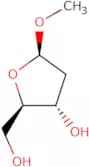
CAS:<p>Methyl 2-deoxy-b-D-ribofuranoside is a methylglucoside that is used in the synthesis of thiourea. Methyl 2-deoxy-b-D-ribofuranoside inhibits the production of an atypical nucleotide, 5'-methylthioadenosine, which is used to synthesize thymine. It has been shown to be catalytic and may play a role in the biosynthesis of methionine and histidine. The chloride ion causes the reaction to proceed via an S N 2 mechanism. Methyl 2-deoxy-b-D-ribofuranoside can also be used in the synthesis of chloroacetic acid, azide, dimethylformamide, fluoride, anomeric alcohols, hydantoins and thionyl chloride. Methyl 2-deoxy-b-D-ribofuranoside can be chromatographically separated using silica</p>Formula:C6H12O4Purity:Min. 95%Molecular weight:148.16 g/molFusidic acid acyl glucuronide
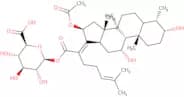
CAS:<p>Fusidic acid acyl glucuronide is a high purity, custom synthesis, click modification of fusidic acid. It has been modified by fluorination and methylation. Fusidic acid acyl glucuronide is an Oligosaccharide, Polysaccharide, saccharide, sugar with a CAS No. 13013-66-6. It is a complex carbohydrate that has been synthesized using high purity, monosaccharides and polysaccharides.</p>Formula:C37H56O12Purity:Min. 95%Molecular weight:692.83 g/molN-Methylglucamine antimonate
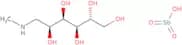
CAS:<p>N-Methylglucamine antimonate is a drug that is used to treat cutaneous leishmaniasis. It is not active against the visceral form of the disease. The drug binds to antimony in a 1:1 stoichiometry and inhibits the polymerase chain reaction (PCR) in the parasite, which prevents DNA replication and transcription. This inhibition leads to cell death and eventual elimination of Leishmania parasites from the host. N-Methylglucamine antimonate is only effective against Leishmania parasites and has no effect on other bacteria or viruses, such as bowel disease. The drug can be given orally or intravenously, but should not be given to patients with bowel diseases because this may lead to intestinal ulceration or perforation.</p>Formula:C7H17NO5·HSbO3Purity:Min. 95%Color and Shape:White PowderMolecular weight:365.98 g/molAlphadolone 3-b-D-glucuronide
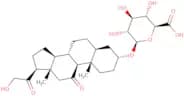
CAS:<p>Alphadolone 3-b-D-glucuronide is a compound that is synthetically derived from alphadolone. This product can be used for the synthesis of saccharides, polysaccharides, and oligosaccharides with click modification or glycosylation. It can also be used as a starting material for the preparation of methylated saccharides or glycopeptides. The chemical formula is C12H14O6F2, and it has a molecular weight of 290.20 g/mol. Alphadolone 3-b-D-glucuronide is soluble in water, methanol, and ethanol. It's CAS number is 70522-56-4.</p>Formula:C27H40O10Purity:Min. 95%Molecular weight:524.6 g/molPentaric acid
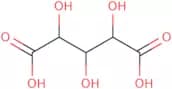
CAS:<p>Pentaric acid is a crystalline, monocarboxylic acid with a hydroxyl group. It is used as an inhibitor of corrosion in metal and as a disinfectant. Pentaric acid can be found in urine samples and has been shown to be an effective inhibitor of the enzymatic reaction that produces azobenzene, which is associated with the development of bladder cancer. This compound also inhibits the growth of bacteria. Pentaric acid is used as an additive in some detergents and soaps because it can inhibit the growth of bacteria on surfaces. <br>Pentaric acid was first synthesized by German chemist Otto Wohlert in 1834. Hydrogen ions are released when pentaric acid dissolves in water, lowering the pH level and causing corrosion to metal surfaces. The corrosion inhibition properties of pentaric acid have been known since its discovery, but its anti-bacterial properties were not discovered until recently when researchers found that pentar</p>Formula:C5H8O7Purity:Min. 95%Molecular weight:180.11 g/mol3-Azido-2,3-dideoxy-D-ribose
CAS:<p>3-Azido-2,3-dideoxy-D-ribose is a boron trifluoride etherate that has significant activity against the anomers of d-mannitol. It can be used as a stereoselective synthesis of the triflate on the corresponding anomer. Triflate is prepared by reaction with trifluoromethanesulfonic acid chloride and then reacted with sodium azide in ethanol to yield 3-azido-2,3-dideoxy-D-ribose. The product can be purified by recrystallization from acetic acid and water or by extraction with chloroform. This compound is also extracted from boric acid and dioxane using aqueous sodium hydroxide solution.</p>Purity:Min. 95%5-Deoxy-D-arabinose
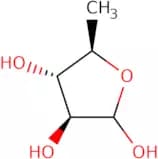
CAS:<p>5-Deoxy-D-arabinose is a phenylhydrazone compound that is soluble in water and alcohol. It has a molecular weight of 176.20, and its chemical formula is C6H8N2O3. The substance has been shown to be an inhibitor of the bacterial enzyme d-threose synthase, which catalyzes the formation of d-threose from D-ribose 5-phosphate and glycerone phosphate. This substance also inhibits fungal pteridine reductase; however, it does not inhibit mammalian pteridine reductase. 5-Deoxy-D-arabinose has analogues that are biologically active.</p>Formula:C5H10O4Purity:Min. 95%Molecular weight:134.13 g/mol3-O-Benzyl-a-D-mannopyranose
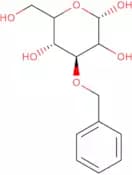
CAS:<p>3-O-Benzyl-a-D-mannopyranose is a sugar that is used in the synthesis of complex carbohydrates. It is a synthetic compound that can be fluorinated, glycosylated, or methylated to produce desired compounds. 3-O-Benzyl-a-D-mannopyranose has a CAS number of 65877-63-6 and can be used in the synthesis of oligosaccharides, monosaccharides, and saccharides. This product has high purity and is available for custom synthesis.</p>Formula:C13H18O6Purity:Min. 95%Molecular weight:270.28 g/molScopoletin b-D-glucuronide
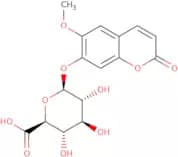
CAS:<p>Scopoletin b-D-glucuronide is a synthetic compound that is modified by the addition of a fluorine atom to the methyl group in scopoletin. Scopoletin b-D-glucuronide has shown antiviral activity against herpes simplex virus type 1 and 2, with an IC50 value of 1.6 μM. It also has antiviral activity against HIV type 1 and HIV type 2, with an IC50 value of 0.5 μM. This compound also inhibits viral DNA synthesis, which may be due to its inhibition of host cell protein synthesis and subsequent inhibition of viral protein synthesis. Scopoletin b-D-glucuronide has been shown to have anti-inflammatory effects in a mouse model for rheumatoid arthritis, and it may be due to its suppression of prostaglandin synthesis or interference with leukocyte chemotaxis.</p>Formula:C16H16O10Purity:Min. 95%Molecular weight:368.29 g/mol2,3,5-Tri-O-benzyl-D-ribose
CAS:<p>Remdesivir impurity</p>Formula:C26H28O5Purity:Min. 98 Area-%Color and Shape:White Off-White PowderMolecular weight:420.5 g/molNaltrexone 3-D-glucuronide-D4
<p>Naltrexone 3-D-glucuronide-D4 is a carbohydrate. It is a glycosylation product of naltrexone. The compound has been synthesized by the methylation of naltrexone and the glycosylation of the resultant product with glucose. Naltrexone 3-D-glucuronide-D4 is a high purity, custom synthesis, synthetic carbohydrate with a CAS number.</p>Purity:Min. 95%Ramipril acyl-b-D-glucuronide
CAS:<p>Ramipril acyl-b-D-glucuronide is a glycosylated prodrug that is the active form of ramipril, an ACE inhibitor. It is metabolized in the liver to ramipril and excreted in the urine. Ramipril acyl-b-D-glucuronide has been shown to have an increased bioavailability and a longer half-life than ramipril due to its glycosylation. The synthesis of this drug has been modified by methylation, fluorination, and saccharide modification. This compound is also available as a custom synthesis for research purposes with high purity.</p>Formula:C29H40N2O11Purity:Min. 95%Molecular weight:592.63 g/molSertraline carbamoyl glucuronide
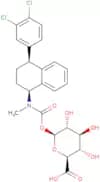
CAS:<p>Sertraline is a selective serotonin reuptake inhibitor (SSRI) that is used primarily in the treatment of depression and anxiety. It inhibits the serotonin transporter protein, making more serotonin available for binding to postsynaptic receptors. Sertraline also has a minor inhibitory effect on norepinephrine and dopamine reuptake, but its primary function is as a selective serotonin reuptake inhibitor. The major metabolite of sertraline is sertraline carbamoyl glucuronide, which is formed through glucuronidation by UGT2B7. This metabolite has been found to be bifurcated with one half being excreted in urine and the other half being excreted in faeces. The half that undergoes urinary excretion has been shown to have a half-life of 24 hours whereas the other half has a much shorter half-life of 2 hours. Carbamoylation of sertraline may</p>Formula:C24H25Cl2NO8Purity:Min. 95%Molecular weight:526.36 g/mol5-Deoxy-L-lyxose
CAS:<p>5-Deoxy-L-lyxose is a marine bioactive molecule that belongs to the group of 5-deoxy sugars. Its ring structure is similar to that of ribulose, and it has been found in marine sponges. This compound has a hydroxyl group in its structure and can be oxidized to produce orange pigments. The compound's nmr spectra show it to be an isomer of benzoate, with the sodium salt being more soluble in water than the sodium salts of other 5-deoxy sugars. 5-Deoxy-L-lyxose is also conjugated with amino acids or peptides.</p>Formula:C5H10O4Purity:Min. 95%Molecular weight:134.13 g/molRhein 8-b-D-glucuronide
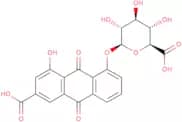
CAS:<p>Rhein 8-b-D-glucuronide is a synthetic glycosylate that has been modified with fluorine. It is soluble in water and methanol. Rhein 8-b-D-glucuronide is used as a reagent in sugar chemistry, such as the synthesis of oligosaccharides and monosaccharides. The compound can be used to modify saccharides as well, such as methylation and Click modification. Rhein 8-b-D-glucuronide has CAS number 70793-10-1 and a high purity level of >99%.</p>Formula:C21H16O12Purity:Min. 95%Molecular weight:460.34 g/mol1-(4-methoxy-phenoxy)-a-D-talopyranose
<p>Methylation: The process of adding a methyl group to a molecule.<br>Saccharide: A carbohydrate that is composed of sugar units, such as glucose or sucrose.<br>Polysaccharide: A carbohydrate consisting of many sugar units linked together. <br>CAS No.: Chemical Abstracts Service number assigned to a chemical compound, which provides unique identification and allows for the tracking of chemical substances. <br>Modification: The process of altering the physical properties of an organic molecule by adding or removing functional groups. <br>Oligosaccharide: A carbohydrate consisting of three to ten sugar units linked together.<br>Carbohydrate: One type of macronutrient that contains carbon, hydrogen, and oxygen atoms in a ratio of 1:2:1 and can be classified as either simple or complex carbohydrates. <br>Sugar: Carbohydrates that are composed solely of one type of monosaccharide unit and typically have a sweet taste.</p>Purity:Min. 95%L-Xylose-BSA
<p>L-Xylose-BSA is a glycosylation product that has been modified with methylation, click modification, and fluorination. The compound is a complex carbohydrate that is classified as a polysaccharide. L-Xylose-BSA is a monosaccharide that has been synthesized using the Custom synthesis and high purity techniques. This saccharide is used in various types of research including glycosylation, methylation, click modification, and fluorination. L-Xylose-BSA can also be found under CAS No. 6525-83-8 or EC No. E 1451/1.</p>Purity:Min. 95%Ethyl b-D-fructofuranoside
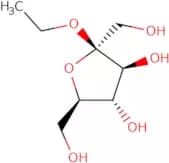
CAS:<p>Ethyl b-D-fructofuranoside is a synthetic compound that is used in the synthesis of oligosaccharides and polysaccharides. It can be custom synthesized to suit the needs of the customer. This product is available for sale as a white powder with a purity of at least 99%.</p>Formula:C8H16O6Purity:Min. 95%Molecular weight:208.21 g/mol(-)-Lyoniresinol 9'-O-glucoside
CAS:<p>This chemical is a custom synthesis of (-)-Lyoniresinol 9'-O-glucoside. The chemical is a modification of (-)-Lyoniresinol 9'-O-glucoside and fluorinated at the C2 position. It is also methylated on the C3 position. The chemical is synthesized by click chemistry, which involves the use of copper(II) ions as catalysts to generate covalent bonds between two molecules. This chemical has been shown to be an oligosaccharide with saccharide chains that are linked together by glycosylation. There are six sugar residues in this compound: glucose, galactose, rhamnose, xylose, glucuronic acid, and mannitol. This compound has CAS number 143236-02-6 and molecular weight of 881.5 g/mol (CAS No.).</p>Formula:C28H38O13Purity:Min. 95%Molecular weight:582.59 g/molMethyl a-D-mannofuranoside
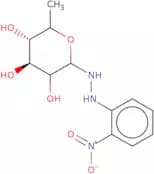
CAS:<p>Methyl a-D-mannofuranoside is a synthetic sugar that has been modified by the addition of fluorine at C-1 and methylation at C-2. This modification provides the compound with desired physical properties, such as increased stability and solubility. Methyl a-D-mannofuranoside can be used in the synthesis of oligosaccharides, which are complex carbohydrates consisting of three to ten monosaccharides linked together by glycosidic bonds. It is also used for click chemistry modifications.</p>Formula:C7H14O6Purity:Min. 95%Molecular weight:194.18 g/molFucose 2-nitrophenylhydrazone
<p>Fucose 2-nitrophenylhydrazone is a custom synthesis that is a modification of fucose. It has been used in methylation, click modification, and fluorination. This compound has been shown to be effective in the synthesis of oligosaccharides and polysaccharides. Fucose 2-nitrophenylhydrazone has also been used as an intermediate for the synthesis of saccharides such as monosaccharide and sugar.</p>Formula:C12H17N3O6Purity:Min. 95%Molecular weight:299.11174L-Idaric acid 1,4-lactone
CAS:<p>L-Idaric acid 1,4-lactone is a synthetic glycosylidic sugar that can be modified with fluorine compounds to create a variety of derivatives. It is used as a monomer in the synthesis of oligosaccharides, polysaccharides, and complex carbohydrates. L-Idaric acid 1,4-lactone can also be synthesized from methyl erythritol tetraacetate and glycerol in the presence of acetic anhydride.</p>Formula:C6H8O7Purity:Min. 98%Color and Shape:White PowderMolecular weight:192.12 g/mol3-Amino-2,3-dideoxy-D-myo-inositol
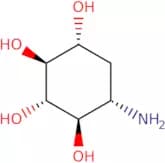
CAS:<p>3-Amino-2,3-dideoxy-D-myo-inositol (3ADMI) is a gene product that belongs to the class of chemical biology. It is an actuator that has been shown to be able to bind and activate enzymes. 3ADMI is used as a substrate in the calibration of enzyme kinetics and as an analog for aminoglycosides. The conjugates of 3ADMI have been shown to prevent viral replication by inhibiting the synthesis of DNA or RNA.</p>Formula:C6H13NO4Purity:Min. 95%Color and Shape:White/Off-White SolidMolecular weight:163.17 g/mol5-Deoxy-L-lyxono-1,4-lactone
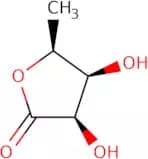
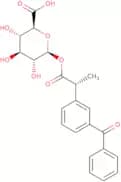
CAS:<p>5-Deoxy-L-lyxono-1,4-lactone is a crystalline solid that belongs to the class of hydroxamic acids. This compound has been shown to react with hydroxylamine in an aldonic reaction and to inhibit the enzyme xanthin oxidase. The monoclinic crystal structure of 5-Deoxy-L-lyxono-1,4-lactone was determined by XRD analysis. This compound is synthesized from glyoxylate and malonitrile in an efficient manner. It also inhibits glucose oxidation and can be used as an additive for food products.</p>Formula:C5H8O4Purity:Min. 95%Molecular weight:132.12 g/mol(R)-Ketoprofen b-D-glucuronide
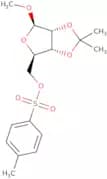
CAS:<p>(R)-Ketoprofen b-D-glucuronide is a synthetic modified sugar that is produced by the glucuronidation of ketoprofen, a nonsteroidal anti-inflammatory drug. The modification of ketoprofen with glucuronic acid can be achieved through an enzymatic process, which is catalyzed by UDP-glucuronyltransferase. This modification increases the solubility of ketoprofen and its ability to penetrate cells. (R)-Ketoprofen b-D-glucuronide has been shown to have antibacterial properties against Gram positive bacteria such as Staphylococcus aureus and Streptococcus pyogenes. It has also shown antiviral activity against HIV-1 due to its inhibition of reverse transcriptase, which is an enzyme important for viral replication.</p>Formula:C22H22O9Purity:Min. 95%Color and Shape:White to off-white solid.Molecular weight:430.4 g/molMethyl 2,3-O-isopropylidene-5-O-(4-toluenesulfonyl)-b-D-ribofuranoside
CAS:<p>Methyl 2,3-O-isopropylidene-5-O-(4-toluenesulfonyl)-b-D-ribofuranoside is a nucleoside derivative. It is a deprotected nucleoside that can be used as an alkylation agent. Methyl 2,3-O-isopropylidene-5-O-(4-toluenesulfonyl)-b-D-ribofuranoside is the sodium salt of 5'-O-(4-(methylsulfonyl)benzenesulfonate) -2'-deoxyadenosine. This compound is used in the preparation of other nucleosides, including 5'-O-(4-(methylsulfonyl)benzenesulfonate) -2'-deoxycytidine and 5'-O-(4-(methylsulfonyl)benzenesulfonate) -2'-</p>Purity:Min. 95%Myo-inositol-d6
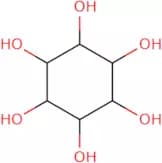
CAS:<p>Myo-inositol-d6 is a stable isotope of myo-inositol. It is used to monitor the biosynthesis of myo-inositol in yeast cells. Myo-inositol is a carbohydrate that has regulatory functions in yeast cells. Myo-inositol-d6 can be used as an extracellular bioassay for determining the uptake and intracellular distribution of myo-inositol in mammalian cells.</p>Formula:C6H12O6Purity:Min. 95%Color and Shape:PowderMolecular weight:186.19 g/mol3,4,6-Tri-O-acetyl-2-azido-2-deoxy-a-D-galactopyranosyl bromide - stabilised with 2% CaCO3
CAS:<p>3,4,6-Tri-O-acetyl-2-azido-2-deoxy-a-D-galactopyranosyl bromide - stabilised with 2% CaCO3 is a complex carbohydrate that is synthesized from 3,4,6-tri-O-acetylgalactose and 2-(bromoethyl) azide. This modification has been used to produce an oligosaccharide for use in the synthesis of glycoproteins. The modification was also used in the synthesis of a polysaccharide that is used as a reagent for the methylation of saccharides.</p>Formula:C12H16BrN3O7Purity:Min. 95%Molecular weight:394.18 g/mol1,2-Dichloro-1,2-dideoxy-myo-inositol
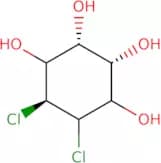
<p>1,2-Dichloro-1,2-dideoxy-myo-inositol is a methylated saccharide. It is used in the synthesis of complex carbohydrates and can be modified to include fluorine atoms. 1,2-Dichloro-1,2-dideoxy-myo-inositol has been shown to inhibit the growth of Staphylococcus aureus and Clostridium perfringens.</p>Purity:Min. 95%1,2,3,4-Tetra-O-acetyl-D-xylopyranose
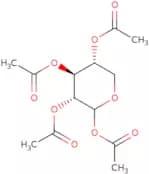
CAS:<p>1,2,3,4-Tetra-O-acetyl-D-xylopyranose is a molecule that is derived from D-xylose. It has been shown to inhibit the growth of fungi such as T. rubrum and L. candidum by acetylation of l-threonine at the C2 position. This molecule can be recycled and its inhibitory activity can be increased through acetylation of the hydroxymethyl group on the C4 position. The mechanism of inhibition is not known but it may be due to steric hindrance or peracylation.</p>Formula:C13H18O9Purity:Min. 95%Molecular weight:318.28 g/molEthyl a-D-thiomannopyranoside
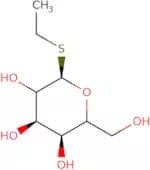
CAS:<p>Ethyl a-D-thiomannopyranoside is an oligosaccharide that is synthesized by the methylation of a-D-mannopyranoside. This product is also known as 3,6-O-(2-acetamido)-a-D-glucopyranose, which is a type of saccharide. It has been fluorinated for use in structural studies. The modification of this product includes click chemistry and glycosylation to produce a complex carbohydrate with high purity and high molecular weight. The monosaccharides include glucose, galactose, and mannose. This product has been used as a synthetic sugar to produce oligosaccharides or polysaccharides.</p>Formula:C8H16O5SPurity:Min. 95%Molecular weight:224.28 g/molD-Arabino-5-hexulosonic acid
CAS:<p>D-Arabino-5-hexulosonic acid is an intermediate in the pentose phosphate pathway. It is a component of the hexuronate, which is an important precursor for galactitol, 6-phosphate, and acid dehydrogenase. D-Arabino-5-hexulosonic acid is also an important intermediate in the glycolytic pathway for ATP production. The gene product has been shown to be involved in aerobic glycolysis, which is utilized by Staphylococcus aureus to produce energy from glucose fermentation. D-Arabino-5-hexulosonic acid plays a role in ion exchange and mitochondrial metabolism as well.</p>Formula:C6H10O7Purity:Min. 95%Molecular weight:194.14 g/mol1,2,3,4-Tetra-O-acetyl-D-fucopyranose
<p>1,2,3,4-Tetra-O-acetyl-D-fucopyranose is a glycosylation agent that can be used in the synthesis of complex carbohydrates or in the modification of natural polysaccharides. It can be fluorinated to produce 1,2,3,4-tetra-O-fluoro-D-fucopyranose or modified with a click reagent to produce 1,2,3,4-tetra-[5-(N'-diethylamino)pentyl]-D-fucopyranose. The CAS number for this product is 109712-63-7. This product is available for custom synthesis and is sold at a purity of >99%.</p>Purity:Min. 95%Clofibric acid acyl-b-D-glucuronide
CAS:<p>Clofibric acid acyl-b-D-glucuronide is a reactive chemical species that has been shown to have genotoxic effects. It binds to DNA and forms covalent adducts, leading to mutations in the DNA sequence. Clofibric acid acyl-b-D-glucuronide is a metabolite of clofibrate, which is used for the treatment of hyperlipidemia and atherosclerosis. This metabolite can be detected in human blood, serum, and liver samples by GC/MS, with a limit of detection of 0.1 ng/mL (0.0003 µg/L).</p>Formula:C16H19ClO9Purity:Min. 95%Molecular weight:390.77 g/mola-D-Xylopyranosyl azide
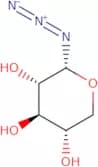
CAS:<p>a-D-Xylopyranosyl azide is a sugar that can be synthesized from the reaction of 1,2-dichloroethane with 2,3,4,6-tetra-O-acetyl-a-D-xylopyranose. This compound has a high purity and can be custom synthesized to order. It is used in glycosylation reactions to modify saccharides and oligosaccharides. It has been shown to be useful for click modification and fluorination reactions.</p>Purity:Min. 95%Mirabegron N-glucuronide
CAS:<p>Mirabegron is a drug that is used to treat overactive bladder. Mirabegron N-glucuronide is the major metabolite of mirabegron, which has been shown to be excreted in urine. This metabolite can be detected using a validated assay and can be measured using a mass spectrometer. The concentration of mirabegron N-glucuronide in the blood sample was measured at various timepoints after administration of mirabegron. Pharmacokinetic studies were performed in humans and human liver tissue, giving information on how long it takes for the drug to reach its maximum concentration in the body and how long it stays there before being eliminated.</p>Purity:Min. 95%3-Deoxy-3-fluoro-D-myo-inositol
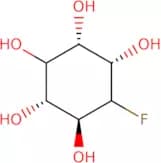
CAS:<p>3-Deoxy-3-fluoro-D-myo-inositol, also known as myo-inositol 3-O-(2'-deoxy) (dFMI), is a natural product found in the brain that has been shown to selectively inhibit the growth of trophozoites. It can bind to nonselective cations and block intracellular Ca2+ channels. This causes an increase in cytosolic Ca2+ concentration, which activates a cytosolic Ca2+ signal cascade. These effects show that dFMI is capable of inhibiting the growth of trophozoites by blocking the function of Ca2+ channels and increasing cytosolic Ca2+.</p>Formula:C6H11FO5Purity:Min. 95%Molecular weight:182.15 g/molHydroxyterbinafine b-D-glucuronide
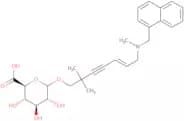
CAS:<p>Hydroxyterbinafine b-D-glucuronide is a synthetic monosaccharide that has been modified by the addition of a fluorine atom. Hydroxyterbinafine b-D-glucuronide is an oligosaccharide or polysaccharide, which is composed of at least two saccharides. It is obtained from the hydrolysis of methylated hydroxyterbinafine. This compound has been shown to have antiviral, antifungal and anticancer activities.</p>Formula:C27H33NO7Purity:Min. 95%Molecular weight:483.57 g/molAlphadolone 21-b-D-glucuronide
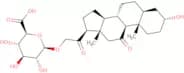
CAS:<p>Alphadolone 21-b-D-glucuronide (ADG) is a synthetic compound that belongs to the group of carbohydrates. ADG is a sugar that has been modified with fluorination and methylation. It is also glycosylated and click modified. This product is custom synthesized for research purposes only.</p>Formula:C27H40O10Purity:Min. 95%Molecular weight:524.6 g/mol