


Monosaccharides
Monosaccharides are the simplest form of carbohydrates and serve as fundamental building blocks for more complex sugars and polysaccharides. These single sugar molecules play critical roles in energy metabolism, cellular communication, and structural components of cells. In this section, you will find a wide variety of monosaccharides essential for research in biochemistry, molecular biology, and glycoscience. These compounds are crucial for studying metabolic pathways, glycosylation processes, and developing therapeutic agents. At CymitQuimica, we offer high-quality monosaccharides to support your research needs, ensuring precision and reliability in your scientific investigations.
Subcategories of "Monosaccharides"
- Alloses(11 products)
- Arabinoses(21 products)
- Erythroses(11 products)
- Fructoses(9 products)
- Fucoses(36 products)
- Galactosamine(41 products)
- Galactose(261 products)
- Glucoses(365 products)
- Glucuronic Acids(51 products)
- Glyco-substrates for Enzyme(77 products)
- Guloses(6 products)
- Idoses(4 products)
- Inositols(15 products)
- Lyxoses(4 products)
- Mannoses(65 products)
- O-Glycans(48 products)
- Psicoses(3 products)
- Rhamnoses(10 products)
- Riboses(61 products)
- Sialic Acids(100 products)
- Sorboses(4 products)
- Sugars(173 products)
- Tagatoses(4 products)
- Taloses(8 products)
- Xyloses(20 products)
Show 17 more subcategories
Found 6088 products of "Monosaccharides"
Sort by
Purity (%)
0
100
|
0
|
50
|
90
|
95
|
100
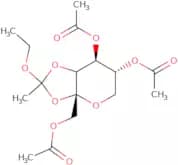
3,4,6-Tri-O-acetyl-1,2-O-ethoxyethylidene-a-D-fructopyranose
<p>3,4,6-Tri-O-acetyl-1,2-O-ethoxyethylidene-a-D-fructopyranose is a modified carbohydrate with the chemical formula C 12 H 20 O 8 . It is a white crystalline solid that is soluble in water. 3,4,6-Tri-O-acetyl-1,2-O-ethoxyethylidene-a-Dfructopyranose can be used as a monosaccharide or an oligosaccharide. This compound has been synthesized by methylation and glycosylation of glucose.</p>Formula:C16H24O10Purity:Min. 95%Molecular weight:376.36 g/mol3-O-Toluoyl decitabine
CAS:<p>3-O-Toluoyl decitabine is a synthetic, high purity drug that is custom synthesized to order. The synthesis of 3-O-Toluoyl decitabine involves the modification of sugar molecules with fluorination, glycosylation, and methylation. This compound has CAS No. 183016-21-9 and is used in the treatment of cancer by inhibiting ribonucleic acid (RNA) synthesis. 3-O-Toluoyl decitabine inhibits RNA polymerase II and III, which are enzymes that catalyze the transcription of DNA into RNA. It also inhibits protein kinase C, which leads to cell death and tumor shrinkage.</p>Formula:C16H18N4O5Purity:Min. 95%Molecular weight:346.34 g/molFenofibryl b-D-glucuronide
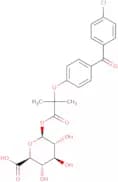
CAS:<p>Fenofibryl b-D-glucuronide is a potential anticancer drug that has been shown to inhibit growth and induce apoptosis in human liver cancer cells. Fenofibryl b-D-glucuronide is also known to have the ability to react with covalent adducts, which may be due to its reactive nature. It is not currently known how this compound interacts with other drugs or how it affects body mass index in humans.</p>Formula:C23H23ClO10Purity:Min. 95%Molecular weight:494.88 g/molDihydrozeatin-9-glucoside
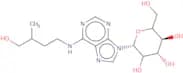
CAS:<p>Dihydrozeatin-9-glucoside is a conjugate of the natural product dihydrozeatin and glucose. The glucoside has been found to inhibit the growth of plants, which may be due to its ability to bind to polyclonal antibodies. Dihydrozeatin-9-glucoside is also an immunogen that has been shown to produce monoclonal antibodies in tissue culture. It has been used for immunoaffinity chromatography and as a biochemical marker for plant tissue cultures. Dihydrozeatin-9-glucoside binds to wheat leaf cells and inhibits their growth, making it a potential tool for the study of plant cell death.</p>Formula:C16H25N5O6Purity:Min. 95 Area-%Color and Shape:White PowderMolecular weight:383.4 g/mol4-O-Benzyl-D-galactal
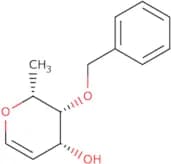
CAS:<p>4-O-Benzyl-D-galactal is a benzylated Oligosaccharide. It can be custom synthesized and modified according to your requirements. 4-O-Benzyl-D-galactal can be used as a raw material for the synthesis of polysaccharides and saccharides. This product has high purity with low impurities, and can be used for the synthesis of highly functional polysaccharides and saccharides.</p>Formula:C13H16O4Purity:Min. 95%Molecular weight:236.26 g/mol2,3,4,6-Tetra-O-acetyl-1,5-anhydro-D-mannitol
CAS:<p>2,3,4,6-Tetra-O-acetyl-1,5-anhydro-D-mannitol is a high yield precursor for the production of the drug 2,3,4,6-tetraacetoxybenzoin. The anomers are selectively formed by reacting with chlorides and iodides at elevated temperatures. The reaction yields the diastereomeric mixture of tetraacetoxybenzoin in a ratio of about 1:2. This product also reacts with acetobromoglucose to produce acrylonitrile (ACN). 2,3,4,6-Tetra-O-acetyl-1,5-anhydro-D-mannitol is a catalytic precursor for the production of the drug 2-(pyranosyl)-1-[2-(chloro)acetylamino]-2-(nitrophenyl)ethanol (PAN). This product can be</p>Formula:C14H20O9Purity:Min. 95%Molecular weight:332.3 g/molCladinose
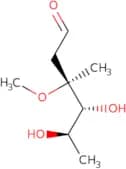
CAS:<p>Cladinose is a natural compound that has been shown to have potent inhibitory properties against microorganisms, such as bacteria and fungi. Cladinose has been shown to inhibit the growth of bacteria by reacting with the ribosomes of cells in the bacterial cytoplasm. It inhibits bacterial protein synthesis by binding to the ribosomal RNA and blocking access to the mRNA template. Cladinose also inhibits fungal growth by inhibiting ergosterol biosynthesis, which prevents fungal cell membrane formation. Cladinose has been shown to have antiinflammatory activity in mice with induced inflammation. This is due to its ability to bind to cyclooxygenase-2 (COX-2) and prevent its activation, thereby preventing prostaglandin synthesis.</p>Formula:C8H16O4Purity:Min. 95%Molecular weight:176.21 g/molMethyl 3,4-O-isopropylidene-6-O-trityl-a-D-galactopyranoside
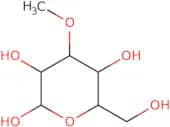
CAS:<p>Methyl 3,4-O-isopropylidene-6-O-trityl-a-D-galactopyranoside is a synthetic, high purity carbohydrate. It is an oligosaccharide that has been modified with fluorination and methylation. Methyl 3,4-O-isopropylidene-6-O-tritylgalactopyranoside is used for the synthesis of glycosides and oligosaccharides.</p>Formula:C29H32O6Purity:Min. 95%Molecular weight:476.57 g/mol2-C-Methyl-D-mannopyranose
CAS:<p>2-C-Methyl-D-mannopyranose is a low molecular weight sugar that is found in the cell walls of bacteria and some plants. It has been shown to have an immunostimulating effect when administered to mice with murine sarcoma. 2-C-Methyl-D-mannopyranose has also been shown to be cytotoxic against murine leukemia cells. This compound has a glycosidic structure and can be hydrolyzed by acid or alkali to form mannose. 2-C-Methyl-D-mannopyranose can be synthesized using ion exchange chromatography, which separates compounds according to their molecular weight. The molecular weights of this compound range from low to high, with a monomeric unit of 160 Da. The nmr spectra of this compound show peaks at 1.5 ppm corresponding to the C=O stretching vibration and at 7 ppm corresponding to the C=N stretching</p>Formula:C7H14O6Purity:Min. 95%Molecular weight:194.18 g/mol1-[[2-N-(5-Nitrothiazolyl)carboxamido]phenyl]-2,3,4-tri-O-acetyl-b-D-glucuronide methyl ester
<p>1-N-(5-Nitrothiazolyl)carboxamido-2,3,4-tri-O-acetyl-b-D-glucuronide methyl ester (NTG) is a glycosylated compound that was synthesized by click chemistry. It is an Oligosaccharide with a single sugar and a molecular weight of 514. The CAS number for NTG is 150158-09-8. NTG has been custom synthesized to order. The purity level of NTG is >99%.</p>Formula:C23H23N3O13SPurity:Min. 95%Molecular weight:581.51 g/molMethyl 3,4,5-tri-O-acetyl-2,6-anhydro-7,8,9-trideoxy-D-glycero-L-galacto-non-8-enonate
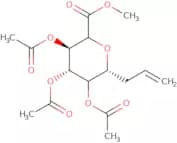
<p>Methyl 3,4,5-tri-O-acetyl-2,6-anhydro-7,8,9-trideoxy-D-glycero-L-galacto-non-8-enonate is a modification of an oligosaccharide. It is a complex carbohydrate with a custom synthesis. Methyl 3,4,5-tri-O-acetyl-2,6,-anhydro-,7,8,9-,trideoxy-,D-,glycero L galacto non 8 enonate is an Oligosaccharide with high purity and CAS No. It is a monosaccharide that has been methylated and glycosylated. Methyl 3,4,5,-tri O acetyl 2 6 anhydro 7 8 9 trideoxy D glycero L galacto non 8 enonate is Polysaccharide made up of sugar and</p>Formula:C16H22O9Purity:Min. 95%Molecular weight:358.35 g/molH-Type 2-APE-HSA
<p>H-Type 2-APE-HSA is a custom synthesis, modification, and fluorination of monosaccharides. This molecule has been modified with methyl groups, which are essential for the metabolism of carbohydrates. H-Type 2-APE-HSA is an oligosaccharide that contains saccharide units that have glycosylation. H-Type 2-APE-HSA is a complex carbohydrate that contains a number of different sugars in its structure.</p>Purity:Min. 95%(S,S)-(-)-1,4-Dimethoxy-2,3-butanediol
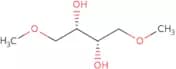
CAS:<p>(S,S)-(-)-1,4-Dimethoxy-2,3-butanediol is an organic compound with the chemical formula CH(OCH)CHOH. This colorless liquid is a chiral molecule that can exist in two enantiomeric forms. The asymmetric carbon atom (C-1) is of high stereoselectivity and has been shown to undergo nucleophilic attack by a wide variety of nucleophiles. The reaction product can be either the corresponding enolate or enolates depending on whether the nucleophile is a base or acid. In addition, this compound yields a stereoselective synthesis of chiral products when reacted with carbonyls.</p>Formula:C6H14O4Purity:Min. 95%Molecular weight:150.17 g/mol2,3,4,6-Tetra-O-acetyl-b-D-glucopyranosyl ethylxanthate
CAS:<p>2,3,4,6-Tetra-O-acetyl-b-D-glucopyranosyl ethylxanthate is a synthetic carbohydrate that has been modified with acetyl groups. This modification is used to produce a carbohydrate that is more resistant to hydrolysis by enzymes. 2,3,4,6-Tetra-O-acetyl-b-D-glucopyranosyl ethylxanthate is one of many glycosides that have been modified with acetyl groups and fluorinated. This modification can be used for the synthesis of high purity carbohydrates.</p>Formula:C17H24O10S2Purity:Min. 95%Color and Shape:White To Off-White SolidMolecular weight:452.5 g/molD-Galactose-BSA
<p>D-Galactose-BSA is a modified carbohydrate that is synthesized by the selective substitution of the hydroxyl group on the beta-carbon of D-galactose. This modification enhances the binding affinity of D-galactose to bovine serum albumin (BSA), which is used as a carrier protein for many biological assays. The fluorination step in this synthesis creates reactive sites on the molecule, which are then available for chemical modifications such as methylation or glycosylation. D-Galactose-BSA can be custom synthesized to meet your specifications for purity, stability, and activity.</p>Color and Shape:White PowderN-(Trifluoroacetyl)-1-desmethyl daunorubicin
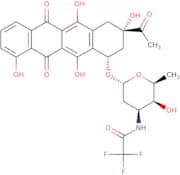
CAS:<p>N-(trifluoroacetyl)-1-desmethyl daunorubicin is an analog of daunorubicin that is synthesized by the click chemistry and fluorination reactions. It contains a trifluoroacetyl group on the 1-position of the desmethyl group, which has been shown to increase its stability in vivo. N-(trifluoroacetyl)-1-desmethyl daunorubicin has been shown to be effective in the treatment of hematological malignancies such as leukemia and lymphoma. This compound is synthesized in high purity and with a purity of greater than 99%. It is also glycosylated and methylated.</p>Formula:C28H26F3NO11Purity:Min. 95%Molecular weight:609.5 g/mol1,2,4,6-Tetra-O-acetyl-3-O-benzyl-b-D-glucopyranose
CAS:<p>Hypromellose is a polymer that is made from cellulose. It is used as an excipient in pharmaceutical formulations, such as tablets and capsules. Hypromellose can also be used as a food additive for thickening, stabilizing, and suspending. It has a molecular weight of about 20000 Daltons and may have the following side effects: mild gastrointestinal discomfort, diarrhea, nausea, or vomiting.</p>Formula:C21H26O10Purity:Min. 95%Color and Shape:PowderMolecular weight:438.43 g/mol(2R,3S,4R)-3,4-Dihydroxypyrrolidine-2-carboxylic acid
CAS:<p>(2R,3S,4R)-3,4-Dihydroxypyrrolidine-2-carboxylic acid is a methylated compound that has been synthesized by the click modification of an oligosaccharide. It is used as an intermediate in the synthesis of saccharides and polysaccharides. This product can be used for the fluorination of complex carbohydrates and for the modification of monosaccharides or sugars. The purity level of this product is high and it has been modified to have a desirable property.</p>Formula:C5H9NO4Purity:Min. 95%Molecular weight:147.13 g/mol(4R)-Benzyl-4-deoxy-4-C-nitrophenyl-b-D-arabinopyranoside
<p>(4R)-Benzyl-4-deoxy-4-C-nitrophenyl-b-D-arabinopyranoside is a synthetic glycoside that has been modified by fluorination and saccharide. It is a custom synthesis, which means it can be synthesized to order with high purity. This compound is used in the modification of glycoconjugates and polysaccharides, as well as the synthesis of oligosaccharides. It is also used in click chemistry, which involves the use of copper and azide ions.</p>Formula:C19H21NO6Purity:Min. 95%Molecular weight:359.37 g/mol2-Bromo-2-deoxy-3,4,5,7-tetra-O-benzoyl-a-D-gluco-heptulopyranosononitrile
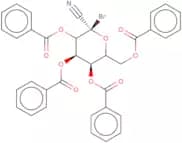
CAS:<p>2-Bromo-2-deoxy-3,4,5,7-tetra-O-benzoyl-a-D-glucoheptulopyranosononitrile is a sugar. It is a synthetic compound that can be used in the synthesis of glycosylated saccharides and oligosaccharides. 2-Bromo-2-deoxy-3,4,5,7 tetra O benzoyl a D glucoheptulopyranosononitrile has been shown to have antibacterial activity against Clostridium perfringens. This compound also has the ability to inhibit protein synthesis in E coli cells.</p>Formula:C35H26BrNO9Purity:Min. 95%Molecular weight:684.49 g/mol3,4,6-Tri-O-acetyl-1,2-O-ethylidene-b-D-mannopyranoside
CAS:<p>3,4,6-Tri-O-acetyl-1,2-O-ethylidene-b-D-mannopyranoside is a synthetic glycosylation product of maltose and 1,2-O-ethylidene b-D mannopyranoside. This compound is a high purity product with custom synthesis. 3,4,6Tri acetyl 1,2 O ethylene b D mannopyranoside has the CAS number 630102 81 7.</p>Formula:C14H20O9Purity:Min. 95%Molecular weight:332.3 g/mol2N-Fmoc-4N-(2,3,4,6-tetra-O-acetyl-b-D-galactopyranosyl)-L-asparagine
CAS:<p>2N-Fmoc-4N-(2,3,4,6-tetra-O-acetyl-b-D-galactopyranosyl)-L-asparagine is a fluorinated carbohydrate that has been synthesized and modified. It can be used in glycosylation reactions to produce oligosaccharides or polysaccharides. This compound is also useful in click chemistry since it can be methylated and undergo other chemical modifications. 2N-Fmoc-4N-(2,3,4,6-tetra-O-acetyl-b-Dgalactopyranosyl)-L asparagine is a white powder with a CAS number of 46746578.</p>Formula:C33H36N2O14Purity:Min. 95%Molecular weight:684.66 g/molMethyl-4,6-O-benzyliden-2-amino-b-D-mannopyranoside
<p>Methyl-4,6-O-benzyliden-2-amino-b-D-mannopyranoside is a synthetic glycosylation agent for the synthesis of oligosaccharides and polysaccharides. It has been modified with fluorination and methylation. Methyl 4,6-O-benzyliden amino b D mannopyranoside is used as a monomer in the preparation of complex carbohydrates. The chemical name for this compound is 1,3,5,7,-tetraoxaheptane 3,7,9,11 tetrahydroxybutyric acid methyl ester.</p>Purity:Min. 95%3-Deoxy-3-fluoro-D-myo-inositol 1,4,5-trisphosphate hexasodium salt
CAS:<p>3-Deoxy-3-fluoro-D-myo-inositol 1,4,5-trisphosphate hexasodium salt is a synthetic sugar that has been modified with fluorination and glycosylation. It is used for the synthesis of oligosaccharides and monosaccharides. 3-Deoxy-3-fluoro-D-myo-inositol 1,4,5-trisphosphate hexasodium salt is a carbohydrate that can be found in complex carbohydrates such as glycolipids and glycoproteins. The CAS number for this compound is 129365–68–0.</p>Formula:C6H8FO14P3Na6Purity:Min. 95%Molecular weight:553.98 g/mol5-O-Trityl-D-ribose
CAS:<p>5-O-Trityl-D-ribose is a sugar derivative that is used in the chemical synthesis of pharmaceuticals, natural products, and other compounds. It is an important intermediate in the synthesis of various nucleosides and nucleotides.</p>Purity:Min. 95%Methyl 2,3-di-O-benzoyl-4,6-O-benzylidene-b-D-galactopyranoside
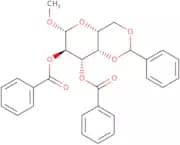
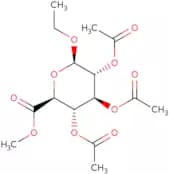
CAS:<p>Methyl 2,3-di-O-benzoyl-4,6-O-benzylidene-b-D-galactopyranoside is a custom synthesis that belongs to the class of complex carbohydrates. This compound is an oligosaccharide or a polysaccharide that has been modified by methylation and glycosylation. The modification of this saccharide with methyl groups allows for fluorination which is a click modification. Methyl 2,3-di-O-benzoyl-4,6-O-benzylidene b -D galactopyranoside is synthesized via glycosylation followed by fluorination. This product can be used as a research chemical or in other applications.</p>Formula:C28H26O8Purity:Min. 95%Molecular weight:490.5 g/molEthyl 2,3,4-tri-O-acetyl-b-D-glucuronide methyl ester
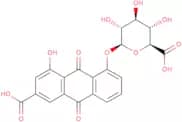
CAS:<p>Ethyl 2,3,4-tri-O-acetyl-b-D-glucuronide methyl ester is a fluorinated monosaccharide. It can be used as a synthetic intermediate for the production of oligosaccharides and polysaccharides. This product is also used in the glycosylation of sugar molecules.</p>Formula:C15H22O10Purity:Min. 95%Molecular weight:362.33 g/molRhein 8-b-D-glucuronide
CAS:<p>Rhein 8-b-D-glucuronide is a synthetic glycosylate that has been modified with fluorine. It is soluble in water and methanol. Rhein 8-b-D-glucuronide is used as a reagent in sugar chemistry, such as the synthesis of oligosaccharides and monosaccharides. The compound can be used to modify saccharides as well, such as methylation and Click modification. Rhein 8-b-D-glucuronide has CAS number 70793-10-1 and a high purity level of >99%.</p>Formula:C21H16O12Purity:Min. 95%Molecular weight:460.34 g/mol3,5-Di-O-Benzyl-1,2-O-isopropylidene-a-D-ribofuranose
CAS:<p>3,5-Di-O-Benzyl-1,2-O-isopropylidene-a-D-ribofuranose is a modification of a sugar that has been synthesized and modified to increase its stability. It has been synthesized by methylation, glycosylation, and polysaccharide synthesis.br>br><br>3,5-Di-O-Benzyl-1,2-O-isopropylidene -a -D -ribofuranose is a monosaccharide with the chemical formula C6H12O6. It is also known as ribose or deoxyribose. This compound is found in many biological systems including DNA and RNA. Ribose can be found naturally in such things as fruit juices and honey. 3,5 Di--O--Benzyl--1,2--O--isopropylidene -a -D -ribofuranose is an</p>Formula:C22H26O5Purity:Min. 95%Molecular weight:370.44 g/molMethyl 2,6-di-O-benzoyl-3,4-di-O-[bis(3,5-dimethylphenyl)]phosphino-a-D-glucopyranoside
CAS:<p>Methyl 2,6-di-O-benzoyl-3,4-di-O-[bis(3,5-dimethylphenyl)]phosphino-a-D-glucopyranoside is a custom synthesis of a modified sugar that has been fluorinated and methylated. This compound is also known by its CAS number 158214-06-3. The compound is a monosaccharide and an oligosaccharide. It is synthesized from saccharides and polysaccharides such as sugar and complex carbohydrates. Methyl 2,6-di-O-benzoyl-3,4 di O-[bis(3,5 dimethylphenyl)]phosphino a D glucopyranoside has many applications in the field of biochemistry and medicine.</p>Formula:C53H56O8P2Purity:Min. 95%Molecular weight:882.95 g/molIsopropyl 2,3,4,6-tetra-O-acetyl-b-D-thioglucopyranoside
CAS:<p>Isopropyl 2,3,4,6-tetra-O-acetyl-b-D-thioglucopyranoside is a custom synthesis of a monosaccharide with four acetates and two fluorines. The molecule is synthesized in the laboratory by modifying the sugar with methyl groups and then fluorinating it. This synthetic product can be used in biochemistry to study glycosylation reactions and complex carbohydrate structures.</p>Formula:C17H26O9SPurity:Min. 95%Molecular weight:406.45 g/molN-Acetyl-glucosaminyl thiazoline triaacetate
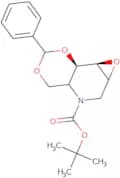
CAS:<p>N-Acetyl-glucosaminyl thiazoline triaacetate is a custom synthesis that is fluorinated. It has been modified for methylation and Click chemistry. This chemical is an oligosaccharide, polysaccharide, saccharide, carbohydrate, or sugar. It is purified with high purity and has a monosaccharide modification. N-Acetyl-glucosaminyl thiazoline triaacetate is used in the modification of complex carbohydrates and can be synthesized from methylated glucosamine and acetamidomethylthiazoline.</p>Purity:Min. 95%2,3-Anhydro-4,6-O-benzylidene-N-(tert-butoxycarbonyl)-1,5-deoxy-1,5-imino-D-glucitol
CAS:<p>2,3-Anhydro-4,6-O-benzylidene-N-(tert-butoxycarbonyl)-1,5-deoxy-1,5-imino-D-glucitol (NTB) is a synthetic glycoside that can be modified with a variety of functional groups for use in bioactive molecules. NTB is a high purity product with an estimated purity of >99%. It is synthesized from glucose by click modification with tertiary butyl bromoacetate followed by fluorination and glycosylation. The product has been shown to be useful in the synthesis of oligosaccharides and complex carbohydrates.</p>Formula:C18H23NO5Purity:Min. 95%Molecular weight:333.38 g/molD-myo-Inositol-1,5,6-triphosphate sodium salt
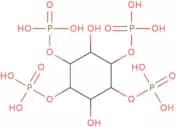
CAS:<p>D-myo-Inositol-1,5,6-triphosphate sodium salt is a synthetic compound that is used in the study of the structure and function of carbohydrates. It is a complex carbohydrate that has been modified with fluorination and methylation. It is also glycosylated and click-modified. D-myo-Inositol-1,5,6-triphosphate sodium salt has CAS number 120965-76-6.</p>Formula:C6H12O15P3·xNaPurity:Min. 95%Molecular weight:417.07 g/molD-Fuculose
CAS:<p>D-Fuculose is a sugar that is used as a sweetener. It is produced by microbial fermentation of l-arabinose, which is an intermediate in the pentose phosphate pathway. D-Fuculose can be synthesized from glucose and fucose using enzymes such as sucrose isomerase or mutarotase. The conversion of glucose to D-fuculose proceeds at temperatures between 50 and 70 degrees Celsius, with optimal activity occurring at 60 degrees Celsius. D-Fuculose has been shown to have high catalytic activity and stability under acidic conditions, making it ideal for use as a food additive in acidic drinks or foods. It also has the highest sweetness intensity of all sugars tested to date.</p>Formula:C6H12O5Purity:Min. 95%Molecular weight:164.16 g/molMethyl 3-O-benzyl-a-L-rhamnopyranoside
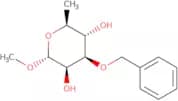
CAS:<p>Methyl 3-O-benzyl-a-L-rhamnopyranoside is a synthetic, fluorinated sugar that is used as a glycosylation and methylation reagent. It can be used for the synthesis of oligosaccharides, polysaccharides, and saccharides in the laboratory. Methyl 3-O-benzyl-a-L-rhamnopyranoside is not found in any natural sources.</p>Formula:C14H20O5Purity:Min. 95%Molecular weight:268.31 g/molBenzyl 2,3-O-isopropylidene-6-O-trityl-5-keto-a-D-mannofuranoside 5-oxime
CAS:<p>The synthesis of benzyl 2,3-O-isopropylidene-6-O-trityl-5-keto-a-D-mannofuranoside 5-oxime is accomplished by the reaction of a D-mannose with phloroglucinol in the presence of sodium methoxide. The product is purified by column chromatography.</p>Formula:C35H35NO6Purity:Min. 95%Molecular weight:565.66 g/molPalbociclib N-glucuronide
<p>Palbociclib N-glucuronide is a synthetic, modified sugar that is used in the synthesis of carbohydrates. It has a molecular weight of 542.34 and was originally synthesized by glycosylation and methylation of palbociclib. The chemical formula for Palbociclib N-glucuronide is C10H18N4O5•C6H7O6•2HCOOH.</p>Formula:C30H37N7O8Purity:Min. 95%Molecular weight:623.66 g/mol1-(4-methoxy-phenoxy)-a-D-talopyranose
<p>Methylation: The process of adding a methyl group to a molecule.<br>Saccharide: A carbohydrate that is composed of sugar units, such as glucose or sucrose.<br>Polysaccharide: A carbohydrate consisting of many sugar units linked together. <br>CAS No.: Chemical Abstracts Service number assigned to a chemical compound, which provides unique identification and allows for the tracking of chemical substances. <br>Modification: The process of altering the physical properties of an organic molecule by adding or removing functional groups. <br>Oligosaccharide: A carbohydrate consisting of three to ten sugar units linked together.<br>Carbohydrate: One type of macronutrient that contains carbon, hydrogen, and oxygen atoms in a ratio of 1:2:1 and can be classified as either simple or complex carbohydrates. <br>Sugar: Carbohydrates that are composed solely of one type of monosaccharide unit and typically have a sweet taste.</p>Purity:Min. 95%4-Deoxy-4-fluoro-D-galactopyranose
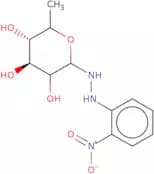
CAS:<p>4-Deoxy-4-fluoro-D-galactopyranose is a custom synthesis that is an oligosaccharide, polysaccharide, saccharide, and carbohydrate. It is fluorinated with a methyl group on the 4th carbon atom and has been modified to include a fluoro group at the 4th position of the molecule. 4-Deoxy-4-fluoro-D-galactopyranose can be used in research as it is high purity and has been modified into a monosaccharide sugar.</p>Purity:Min. 95%Fucose 2-nitrophenylhydrazone
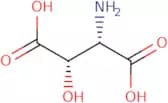
<p>Fucose 2-nitrophenylhydrazone is a custom synthesis that is a modification of fucose. It has been used in methylation, click modification, and fluorination. This compound has been shown to be effective in the synthesis of oligosaccharides and polysaccharides. Fucose 2-nitrophenylhydrazone has also been used as an intermediate for the synthesis of saccharides such as monosaccharide and sugar.</p>Formula:C12H17N3O6Purity:Min. 95%Molecular weight:299.11174(3S)-3-Hydroxy-L-aspartic acid
CAS:<p>3-hydroxy-L-aspartic acid is a non-protein amino acid that is found in mammalian tissue and has been shown to have structural and functional similarities to glutamate. It is involved in the metabolism of energy, such as the synthesis of fatty acids and epidermal growth factor. 3-Hydroxy-L-aspartic acid also binds to calcium ions, which may be due to its carboxylate group. This compound does not have a disulfide bond, unlike many other amino acids.<br>3S)-3-Hydroxy-L-aspartic acid can be used as a monoclonal antibody for the detection of pseudobactin, an antibiotic secreted by Pseudomonas bacteria that inhibits protein synthesis in eukaryotes.</p>Formula:C4H7NO5Purity:Min. 95%Molecular weight:149.1 g/molMethyl 3-acetamido-2-chloro-2,3-dideoxy-a-D-altropyranoside
CAS:<p>Methyl 3-acetamido-2-chloro-2,3-dideoxy-a-D-altropyranoside is a high purity and custom synthesis Glycosylation product. It is a synthetic sugar that is used in the modification of complex carbohydrates. Methyl 3-acetamido-2-chloro-2,3-dideoxy-a-D-altropyranoside can be synthesized by fluorination and methylation of glycosylates or saccharides.</p>Formula:C9H16ClNO5Purity:Min. 95%Molecular weight:253.68 g/mol(2R,4R)-2-[L-Xylo-tetrahydroxybut-1-yl]-1,3-thiazolidine-4-carboxylic acid
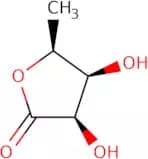
CAS:<p>(2R,4R)-2-[L-Xylo-tetrahydroxybut-1-yl]-1,3-thiazolidine-4-carboxylic acid is a methylated saccharide that can be used for the synthesis of glycosides and other carbohydrate derivatives. (2R,4R)-2-[L-Xylo-tetrahydroxybut-1-yl]-1,3-thiazolidine-4-carboxylic acid has been shown to react with various reagents such as iodine and bromine. This product has been synthesized by Click modification.</p>Formula:C8H15NO6SPurity:Min. 95%Molecular weight:253.27 g/mol5-Deoxy-L-lyxono-1,4-lactone
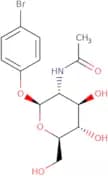
CAS:<p>5-Deoxy-L-lyxono-1,4-lactone is a crystalline solid that belongs to the class of hydroxamic acids. This compound has been shown to react with hydroxylamine in an aldonic reaction and to inhibit the enzyme xanthin oxidase. The monoclinic crystal structure of 5-Deoxy-L-lyxono-1,4-lactone was determined by XRD analysis. This compound is synthesized from glyoxylate and malonitrile in an efficient manner. It also inhibits glucose oxidation and can be used as an additive for food products.</p>Formula:C5H8O4Purity:Min. 95%Molecular weight:132.12 g/mol4-Bromophenyl 2-acetamido-2-deoxy-b-D-glucopyranoside
CAS:<p>4-Bromophenyl 2-acetamido-2-deoxy-b-D-glucopyranoside is a synthetic glycosylate that is used for the modification of saccharides and polysaccharides. It can be used for click chemistry to modify proteins, antibodies, and other biomolecules. The modification of saccharides with 4-Bromophenyl 2-acetamido-2-deoxy-b-D-glucopyranoside can be done using the "glycosylation" reaction. This reaction will result in the formation of a glycosidic linkage between the sugar and the brominated acetamide group. The modification of polysaccharides with 4Bromophenyl 2-acetamido2 deoxy bD glucopyranoside can be done using "Oligosaccharide". This reaction will result in the formation of a glycosidic linkage between the sugar and</p>Formula:C14H18BrNO6Purity:Min. 95%Molecular weight:376.2 g/mol6-Chloro-6-deoxy-D-glucitol
<p>6-Chloro-6-deoxy-D-glucitol is a synthetic sugar, in which the D-glucose moiety has been substituted with a 6-chloro group. It is an important precursor for the synthesis of many complex carbohydrates and polysaccharides. The product can be used as a methylating agent to modify saccharides, oligosaccharides, and polysaccharides. The product is also used to modify sugars by glycosylation, fluorination, or click chemistry. In addition, this product can be used as a starting material for the synthesis of other sugars via glycosylation or fluorination.</p>Formula:C6H13ClO5Purity:Min. 95%Molecular weight:200.62 g/mol2-Amino-2-deoxy-D-lyxose
CAS:<p>2-Amino-2-deoxy-D-lyxose is a sugar that is commonly found in nature. It is an isomaltose and a galactitol, which are both forms of sugar alcohols. 2-Amino-2-deoxy-D-lyxose can be found in acid hydrolysates and arabinitol, which are the products of the hydrolysis of starch. It has been shown to have inhibitory effects on the metabolism of glucose and to regulate the blood glucose levels due to its ability to stimulate insulin secretion. This compound also has an effect on logarithmic growth phase in bacteria, as it inhibits cell growth. 2-Amino-2-deoxy-D-lyxose can be used as a chromatographic stationary phase with glycolaldehyde, which is another sugar alcohol that binds strongly to the column matrix. This compound also has an effect on galacturonic acid, ion exchange</p>Formula:C5H11NO4Purity:Min. 95%Molecular weight:149.15 g/molMethyl 2,3,4,6-tetra-O-acetyl-b-D-mannopyranoside
CAS:<p>Methyl 2,3,4,6-tetra-O-acetyl-b-D-mannopyranoside is a high purity methylated glycosylated oligosaccharide. This product has been custom synthesized on demand using state of the art technology and is available in a variety of purities and modifications.<br> Methyl 2,3,4,6-tetra-O-acetyl-b-D-mannopyranoside is used as a fluorescent probe for carbohydrate binding proteins. It has also been used in the synthesis of glycoproteins.</p>Formula:C15H22O10Purity:Min. 95%Molecular weight:362.33 g/molN-Acetyl-D-[1-13C]neuraminic acid
CAS:<p>N-Acetyl-D-[1-13C]neuraminic acid is a monosialoganglioside that is synthesized in the human body. It is used to study the metabolic pathways of polysialic acid, which is a polysaccharide consisting of sialic acid and neuraminic acid. N-Acetyl-D-[1-13C]neuraminic acid has been shown to be effective in treating cancer and inflammatory disorders. In addition, it can be used as a diagnostic agent for glycan studies and diabetes neuropathy.</p>Formula:C11H19NO9Purity:Min. 95%Color and Shape:PowderMolecular weight:309.27 g/mol




![1-[[2-N-(5-Nitrothiazolyl)carboxamido]phenyl]-2,3,4-tri-O-acetyl-b-D-glucuronide methyl ester](/_next/image/?url=https%3A%2Fstatic.cymitquimica.com%2Fproducts%2F3D%2Fthumb-webp%2FMN04558.webp&w=3840&q=75)







![Methyl 2,6-di-O-benzoyl-3,4-di-O-[bis(3,5-dimethylphenyl)]phosphino-a-D-glucopyranoside](/_next/image/?url=https%3A%2Fstatic.cymitquimica.com%2Fproducts%2F3D%2Fthumb-webp%2FMM166795.webp&w=3840&q=75)





![(2R,4R)-2-[L-Xylo-tetrahydroxybut-1-yl]-1,3-thiazolidine-4-carboxylic acid](/_next/image/?url=https%3A%2Fstatic.cymitquimica.com%2Fproducts%2F3D%2Fthumb-webp%2FMX01046.webp&w=3840&q=75)

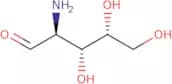

![N-Acetyl-D-[1-13C]neuraminic acid](/_next/image/?url=https%3A%2Fstatic.cymitquimica.com%2Fproducts%2F3D%2Fthumb-webp%2FMA15642.webp&w=3840&q=75)