Monosaccharides
Monosaccharides are the simplest form of carbohydrates and serve as fundamental building blocks for more complex sugars and polysaccharides. These single sugar molecules play critical roles in energy metabolism, cellular communication, and structural components of cells. In this section, you will find a wide variety of monosaccharides essential for research in biochemistry, molecular biology, and glycoscience. These compounds are crucial for studying metabolic pathways, glycosylation processes, and developing therapeutic agents. At CymitQuimica, we offer high-quality monosaccharides to support your research needs, ensuring precision and reliability in your scientific investigations.
Subcategories of "Monosaccharides"
- Alloses(11 products)
- Arabinoses(21 products)
- Erythroses(11 products)
- Fructoses(9 products)
- Fucoses(36 products)
- Galactosamine(41 products)
- Galactose(260 products)
- Glucoses(365 products)
- Glucuronic Acids(51 products)
- Glyco-substrates for Enzyme(77 products)
- Guloses(6 products)
- Idoses(4 products)
- Inositols(15 products)
- Lyxoses(4 products)
- Mannoses(65 products)
- O-Glycans(48 products)
- Psicoses(3 products)
- Rhamnoses(10 products)
- Riboses(61 products)
- Sialic Acids(100 products)
- Sorboses(4 products)
- Sugars(173 products)
- Tagatoses(4 products)
- Taloses(8 products)
- Xyloses(20 products)
Show 17 more subcategories
Found 6088 products of "Monosaccharides"
Sort by
Purity (%)
0
100
|
0
|
50
|
90
|
95
|
100
2-Deoxy-2-[(7-nitro-2,1,3-benzoxadiazol-4-yl)amino]-L-glucose
CAS:<p>2-Deoxy-2-[(7-nitro-2,1,3-benzoxadiazol-4-yl)amino]-L-glucose is a fluorophore that is used in biological imaging. It has been shown to have tumor vasculature targeting properties and can be used to diagnose cancer. The optimal reaction for 2DG is aerobic glycolysis, which occurs when the glucose concentration is high enough. This compound can be used as a carbon source for mammalian cells and has been shown to inhibit the growth of cells from tumors.</p>Formula:C12H14N4O8Purity:Min. 95%Molecular weight:342.26 g/mol1,2,3,4,6-Penta-O-acetyl-5-thio-D-glucose
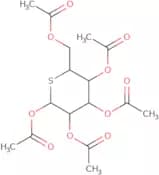
CAS:<p>1,2,3,4,6-Penta-O-acetyl-5-thio-D-glucose is a synthetic sugar that can be used as a building block in the synthesis of glycosides and oligosaccharides.</p>Formula:C16H22O10SPurity:Min. 95%Molecular weight:406.41 g/mol1,2:4,5-Di-O-isopropylidene-b-D-erythro-2,3-hexodiulo-2,6-pyranose
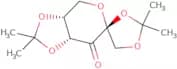
CAS:<p>1,2:4,5-Di-O-isopropylidene-b-D-erythro-2,3-hexodiulo-2,6-pyranose is an acidic compound that is a constituent of the ginseng plant. It has been shown to have biochemical properties as well as bioactivities. It can be synthesized in vivo from the amino acid L-lysine by the enzyme diammonium glyoxalate reductase. The compound has two chiral centers and four stereogenic centers. It is a trisubstituted diastereomer with oxygenated ring opening and chemical structures consisting of a pyranose ring and an ethylene glycol moiety.</p>Formula:C12H18O6Purity:Min. 95%Molecular weight:258.27 g/mol2-Deoxy-L-xylose
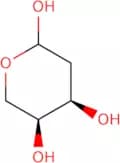
CAS:<p>2-Deoxy-L-xylose is a sugar that is produced by the reduction of 2-deoxy-d-galactose. It has been shown to be an acceptor in enzymatic reactions, such as those catalyzed by alcohol dehydrogenase and sulfoxide reductase. 2-Deoxy-L-xylose has been shown to have antibacterial properties against some strains of bacteria, including typhimurium. This sugar also exhibits antiplasmodial activity against Plasmodium falciparum and can be used for the synthesis of L-xylulose, which is an important intermediate for the biosynthesis of malic acid.</p>Formula:C5H10O4Purity:Min. 95%Molecular weight:134.13 g/mol(-)-2,3-O-Isopropylidene-D-threitol
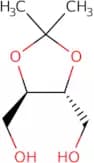
CAS:<p>(-)-2,3-O-Isopropylidene-D-threitol is a chiral compound with two stereoisomers. It is a crystalline solid that melts at 71°C and has a population of 50%. (-)-2,3-O-Isopropylidene-D-threitol is an important intermediate for the synthesis of polyethers with chiral centers. The catalytic asymmetric synthesis of (-)-2,3-O-isopropylidene-D-threitol is achieved by alkylation of (+)-2,3-(dimethoxyphosphinyl)propane with isopropanol. This reaction can be used to produce polyethers with chiral centers in high yields and enantioselectivity.</p>Formula:C7H14O4Purity:Min. 95%Molecular weight:162.18 g/molMethyl a-L-arabinofuranoside
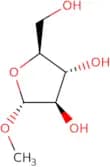
CAS:<p>Methyl a-L-arabinofuranoside is a microbial feed additive that is used to improve the quality of ruminal cellulose. This product has been shown to inhibit the activity of esterases and polysaccharides, which would otherwise break down cellulose so it can be digested by bacteria in the rumen. This supplement also inhibits microbial growth and has been shown to be an effective treatment for infectious diseases. Methyl a-L-arabinofuranoside is detectable in urine, feces, and milk one day after administration. It is broken down by uronic acid esterases into arabinose and methyl alcohol.</p>Formula:C6H12O5Purity:Min. 95%Molecular weight:164.16 g/mol6-O-Hydroxyethyl-D-glucose
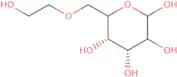
CAS:<p>6-O-Hydroxyethyl-D-glucose (6OHEDG) is a homologue of glucose that has been synthesized by reacting paraformaldehyde with ethylene in the presence of a glucofuranose. It is used as a solute for uptake studies, hydrolyzates for ion-exchanges, and glucoses for preparative chromatographic techniques. 6OHEDG is also used as an analog to glucose in polyethylene glycols and anhydroglucoses.</p>Formula:C8H16O7Purity:Min. 95%Molecular weight:224.21 g/mol2-Acetamido-6-azido-2,6-dideoxy-D-glucopyranose
<p>2-Acetamido-6-azido-2,6-dideoxy-D-glucopyranose is a synthetic compound with an azide functional handle, so set up for click chemistry</p>Formula:C8H14N4O5Purity:Min. 95%Molecular weight:246.22 g/mol2,3,5-Tri-O-benzyl-D-arabinofuranose
CAS:<p>2,3,5-Tri-O-benzyl-D-arabinofuranose is a phosphorane that has been synthesised by the reaction of 2,3,5-trihydroxypentanoic acid and benzaldehyde. The synthesis of this compound involves the use of a stereoselective process to produce the desired product. This compound is able to inhibit both bacterial and fungal growth in vitro. Inhibition of bacterial growth is due to its ability to disrupt the synthesis of proteins and nucleic acids while the inhibition of fungal growth is due to its ability to interfere with chitin production.</p>Formula:C26H28O5Purity:Min. 95%Color and Shape:White PowderMolecular weight:420.5 g/molAmmonium 8-azido-3,8-dideoxy-D-manno-octulosonate
<p>Ammonium 8-azido-3,8-dideoxy-D-manno-octulosonate is an oligosaccharide that is a modification of the natural polysaccharide mannoheptulose. It has been shown to be highly soluble in water and can be easily synthesized. Ammonium 8-azido-3,8-dideoxy-D-manno-octulosonate has been shown to inhibit the activity of glycosyltransferases and methyltransferases. This compound also has a high degree of purity, with minimal impurities or degradation products.</p>Purity:Min. 95%GDP-6-deoxy-a-D-talose
<p>GDP-6-deoxy-a-D-talose is a synthetic oligosaccharide that can be modified to include fluorine, methylation, or other modifications. It has been synthesized for use in the modification of saccharides and complex carbohydrates. GDP-6-deoxy-a-D-talose is soluble in water and has a molecular weight of 519.</p>Purity:Min. 95%α-D-Galactose-1-phosphate
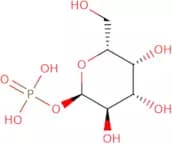
CAS:<p>α-D-Galactose-1-phosphate is a model organism for the study of galactose metabolism. It is an intermediate in the galactose pathway and provides a new approach to understanding the pathogenesis of metabolic disorders. α-D-Galactose-1-phosphate is involved in many enzymatic reactions, including the conversion of uridine diphosphoglucose (UDPG) to UDP glucose, which is a key step in glycolysis. The enzyme that catalyzes this reaction, UDP glucuronosyltransferase (UGT), has been shown to be defective in patients with galactosemia. α-D-Galactose 1 phosphate has also been used as a model for studying human gene expression, specifically protein genes. This molecule has been found to bind DNA polymerase II and inhibit transcriptional elongation at specific sites on DNA called RNA polymerase II pause sites.</p>Formula:C6H13O9PPurity:Min. 95%Color and Shape:PowderMolecular weight:260.14 g/molb-D-Galactose-sp-biotin
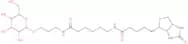
<p>b-D-Galactose-sp-biotin is a glycosylation agent that can be used to modify proteins, polysaccharides, and other complex carbohydrates. It is synthesized by the modification of b-D-galactose with a spacer arm containing biotin. The compound can be modified with fluorine atoms or methyl groups. It can also be modified with click chemistry to produce a reactive site for further chemical modification. This compound has been shown to have high purity and stability, which makes it suitable for use in a variety of applications.</p>Formula:C25H44N4O9SPurity:Min. 95%Color and Shape:White PowderMolecular weight:576.7 g/molL-Allose-6-phosphate disodium salt hydrate
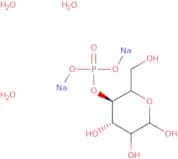
<p>A sugar phosphate</p>Formula:C6H13O9P·Na2·3H2OPurity:Min. 95%Molecular weight:358.15 g/mol2-Acetamido-2-deoxy-β-D-glucopyranosylnitromethane
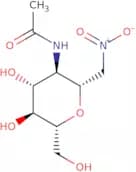
CAS:<p>2-Acetamido-2-deoxy-b-D-glucopyranosylnitromethane is a natural product that can be found in the extract of gladiolus. It has been shown to have antimalarial activity against Plasmodium falciparum and other species. 2-Acetamido-2-deoxy-b-D-glucopyranosylnitromethane inhibits the growth of bacteria by binding to the 50S ribosomal subunit, preventing transcription and replication. The high frequency of human activity has been shown using a patch clamp technique on human erythrocytes. This active form is metabolized through a number of metabolic transformations, including hydrolysis by esterases or glucuronidases, oxidation by cytochrome P450 enzymes, reduction by glutathione reductase, or conjugation with glucuronic acid.</p>Formula:C9H16N2O7Purity:Min. 95%Color and Shape:PowderMolecular weight:264.23 g/molMethyl 6-O-p-toluenesulfonyl-a-D-glucopyranoside
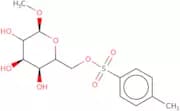
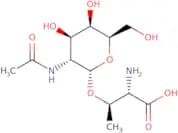
CAS:<p>Methyl 6-O-p-toluenesulfonyl-a-D-glucopyranoside is a custom synthesis. It is an oligosaccharide and polysaccharide that can be modified with methylation and glycosylation. The carbohydrate has a CAS number of 6619-09-6, and the purity is high. This product has been fluorinated for synthetic purposes.</p>Formula:C14H20O8SPurity:Min. 95%Molecular weight:348.37 g/mol2-Acetamido-2-deoxy-α-D-galactopyranosyl L-threonine hydrochloride
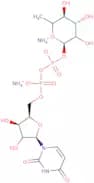
CAS:<p>2-Acetamido-2-deoxy-alpha- D-galactopyranosyl L-threonine is a synthetic sugar. It has a CAS number of 67315-18-8 and a molecular weight of 289.05 g/mol. This sugar is synthesized by the Click modification, fluorination, glycosylation, and methylation methods. The synthesis can be modified to produce 2-acetamido-2,3,4,5,-tetra deoxygalactose or 2 acetamido 4,6 deoxy galactose. This sugar also has saccharide properties as it is classified as an oligosaccharide or monosaccharide.</p>Formula:C12H22N2O8•HClPurity:Min. 95%Color and Shape:PowderMolecular weight:358.77 g/molUDP-b-L-fucose diammonium salt
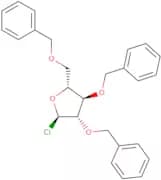
<p>Synthetically produced sugar nucleotide</p>Formula:C15H22N2O16P2·N2H8Purity:Min. 95%Molecular weight:584.37 g/mol2,3,5-Tri-O-benzyl-1-a-D-arabinofuranosyl chloride
CAS:<p>2,3,5-Tri-O-benzyl-1-a-D-arabinofuranosyl chloride is a patent antibiotic produced by Streptomyces antibioticus. It has potent anticancer activity and is being developed as an antitumor agent. 2,3,5-Tri-O-benzyl-1-a-D-arabinofuranosyl chloride inhibits cell proliferation by inhibiting DNA synthesis and protein synthesis. This compound also induces programmed cell death (apoptosis) in tumor cells. Vidarabine is a nucleoside analog that can be used to treat herpes virus infections of the eye or genital tract. Vidarabine is chemically synthesized from 2,3,5 tri O benzyl d arabinofuranosyl chloride and has been shown to have potential antitumor activity.</p>Formula:C26H27ClO4Purity:Min. 95%Molecular weight:438.94 g/mol1,2-13C2-D-Rhamnose
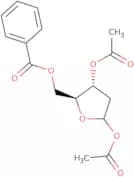
<p>Enantiomer of natural L-Rha 13C-labelled at carbons 1 and 2</p>Formula:C2C4H12O5Purity:Min. 95%Color and Shape:White PowderMolecular weight:166.14 g/mol1,3-Di-O-acetyl-5-O-benzoyl-2-deoxy-D-xylofuranose
CAS:<p>1,3-Di-O-acetyl-5-O-benzoyl-2-deoxy-D-xylofuranose is a complex carbohydrate that has been custom synthesized. It is a monosaccharide with a methyl group at the C1 position and an acetyl group at the C3 position. The chemical formula for 1,3 Di-O-acetyl 5 O benzoyl 2 deoxy D xylofuranose is C11H21NO6. The molecular weight of 1,3 Di O acetyl 5 O benzoyl 2 deoxy D xylofuranose is 277.27 g/mol. 1,3 Di O acetyl 5 O benzoyl 2 deoxy D xylofuranose may have glycosidic bonds and be used in the synthesis of other carbohydrates or as a reagent in organic chemistry reactions.</p>Formula:C16H18O7Purity:Min. 95%Molecular weight:322.31 g/molD-Idonic acid-1,4-lactone
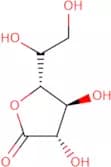
CAS:<p>D-Idonic acid-1,4-lactone is a modification of a carbohydrate which can be custom synthesized. The product is an oligosaccharide that has a high purity and is synthetically produced. This product is composed of monosaccharides, methylation, glycosylation, polysaccharides and sugar. It also contains fluorination and saccharide.</p>Formula:C6H10O6Purity:Min. 95%Color and Shape:Colorless PowderMolecular weight:178.14 g/molD-Glucose ethylenedithioacetal
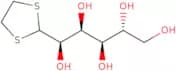
CAS:<p>D-Glucose ethylenedithioacetal is a biological agent. It is a white to off-white crystalline powder that has a molecular weight of 204.3. D-Glucose ethylenedithioacetal is soluble in water and ethanol, but not in ether or chloroform. It is stable in air, but will react with alkali to form the corresponding salt of D-glucose.</p>Formula:C8H16O5S2Purity:Min. 95%Molecular weight:256.34 g/mol4,7-Anhydro-1,2,3-trideoxy-D-allo-oct-1-enitol
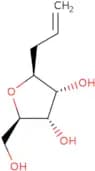
CAS:<p>4,7-Anhydro-1,2,3-trideoxy-D-allo-oct-1-enitol is a modified sugar that has been synthesized for use in glycosylation reactions. It is a high purity product with no detectable impurities. Click modification of this product has been shown to be useful for glycosylation reactions. 4,7-Anhydro-1,2,3-trideoxy-D-allo-oct-1-enitol is also fluorinated and glycosylated. This product can be used in the synthesis of oligosaccharides and monosaccharides.</p>Formula:C8H14O4Purity:Min. 95%Molecular weight:174.19 g/molMethyl 1,2,3,4-tetra-O-acetyl-a-L-idopyranuronate
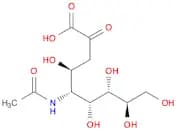
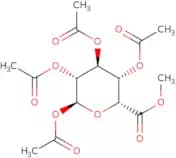
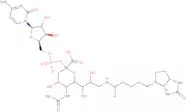
CAS:<p>Methyl 1,2,3,4-tetra-O-acetyl-a-L-idopyranuronate is a carbohydrate standard that belongs to the group of L-iduronic acid derivatives. Methyl 1,2,3,4-tetra-O-acetyl-a-L-idopyranuronate is commonly used in the synthesis of glycosides and glycoconjugates. Its fluorescence properties make it useful for labeling and detection purposes in biochemical assays. This compound can also serve as a substrate for enzymes involved in carbohydrate metabolism. Overall, Methyl 1,2,3,4-tetra-O-acetyl-a-L-idopyranuronate is an essential tool for researchers in the field of glycobiology and biochemistry.</p>Formula:C15H20O11Purity:Min. 95%Molecular weight:376.31 g/molCMP-N-acetylneuraminic acid 9-sp-biotin
<p>CMP-N-acetylneuraminic acid 9-sp-biotin is a biotinylated sugar nucleotide</p>Purity:Min. 95%5-Thio-N-acetylglucosamine
<p>5-Thio-N-acetylglucosamine is a microtubule inhibitor that binds to o-glcnac, a posttranslational modification of proteins that regulates the morphology and cycling of stem cells. 5-Thio-N-acetylglucosamine has been shown to inhibit the transcriptional activity of o-glcnacase, an enzyme that catalyzes the conversion of o-glcnac to glucosamine. This drug also inhibits the metabolic activity of neural progenitor cells, which may be due to its ability to regulate subpopulations with concomitant expression of markers such as Oct4 and Sox2.</p>Purity:Min. 95%D-Glycero-D-manno-heptose
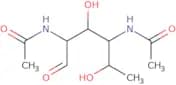
CAS:<p>A seven carbon sugar</p>Formula:C7H14O7Purity:Min. 98 Area-%Color and Shape:Colorless Clear LiquidMolecular weight:210.2 g/mol2,4-Bis(acetylamino)-2,4,6-trideoxy-D-galactose
CAS:<p>2,4-Bis(acetylamino)-2,4,6-trideoxy-D-galactose (BTDG) is a nitro derivative of L-threonine that has been derivatized with an acetyl group and a molecule of 2,4,6-trideoxygalactose. BTDG has been shown to be safe in clinical trials for vaccine development against life-threatening diseases. It is the first glycopolymer approved by the FDA for clinical use in humans. This drug has been shown to increase the antibody response and improve protection against influenza virus infection. BTDG also inhibits bacterial replication by blocking protein synthesis in some bacteria and inhibiting glycolysis in others.</p>Formula:C10H18N2O5Purity:Min. 95%Color and Shape:PowderMolecular weight:246.26 g/molIsosaccharinic acid
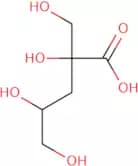
CAS:<p>Isosaccharinic acid is a bacterial strain that produces isosaccharinic acid as its main fatty acid. The thermodynamic data for the reaction mechanism of the conversion of glucose to isosaccharinic acid has been determined. Isosaccharinic acid formation is catalyzed by an enzyme called glycosyl-glycerate dehydrogenase, which converts glycerate to 3-hydroxypropanoic acid and then to 3-oxopropanoate before it undergoes decarboxylation and reduction to form isosaccharinic acid. Radionuclides such as TcO4 are used in chemical ionization mass spectrometry for the detection of this compound in samples. Neutral pH, high activation energies, and low binding constants are all factors that affect the stability of this molecule.</p>Formula:C6H12O6Purity:Min. 95%Molecular weight:180.16 g/molDaunorubicin-d3
<p>Daunorubicin-d3 is a fluorinated, monosaccharide, synthetic, oligosaccharide and complex carbohydrate. Custom synthesis of Daunorubicin-d3 is available with glycosylation, methylation and other modifications. Daunorubicin-d3 has CAS No. 1614-68-8 and purity >99%.</p>Formula:C27H26D3NO10Purity:Min. 95%Molecular weight:530.54 g/mol3-Deoxy-2-keto-6-phospho-D-galactonate lithium salt
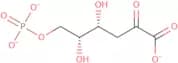
CAS:<p>The enzyme aldolase, which is involved in the metabolism of carbohydrates, catalyzes the cleavage of 3-deoxy-2-keto-6-phospho-D-galactonate to form aldol and 6-phosphoglycerate. The reaction mechanism involves an initial dehydration step that converts the substrate to an enolate ion. This intermediate then reacts with water to produce aldol and 6-phosphoglycerate. The enzyme is active only at low pH levels due to its dependence on divalent cations. The enzyme is also inhibited by other substrates or products of the reaction, such as D-tagatose, D-sorbose, and maltophilia.</p>Formula:C6H11O9P·xLiPurity:Min. 95%ADP-L-glycero-b-D-manno-heptose
<p>ADP-L-glycero-b-D-manno-heptose is a synthetic, fluorinated oligosaccharide that is custom synthesized and modified. It has a high purity level and CAS No., as well as being a complex carbohydrate that can be modified with methylation or click modification to generate desired properties. ADP-L-glycero-b-D-manno-heptose is an Oligosaccharide with a glycosylation and methylation. This compound can be used in the synthesis of saccharides, polysaccharides, or other complex carbohydrates.</p>Purity:Min. 95%1,4-Dideoxy-1,4-epithio-D-ribitol
CAS:<p>1,4-Dideoxy-1,4-epithio-D-ribitol is a complex carbohydrate that belongs to the group of oligosaccharides. It is an Oligosaccharide with a molecular weight of 538.77. It has been modified by methylation and glycosylation and fluorination. The compound is synthesized in high purity and is available for custom synthesis.</p>Formula:C5H10O3SPurity:Min. 95%Molecular weight:150.2 g/mol(±)-Muscarine chloride
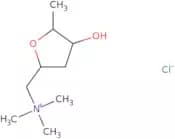
CAS:Controlled Product<p>Muscarine chloride is a potent acetylcholine receptor agonist that causes activation of the postsynaptic membrane by increasing the K+ concentration and hyperpolarizing the membrane. Muscarine chloride increases spontaneous activity in muscle and ganglion cells, which may be due to its ability to activate cholinergic receptors. Muscarine chloride has been shown to cause paralysis of skeletal muscle when injected into frog sciatic nerve, which is caused by its ability to block nerve impulses. Muscarine chloride is effective at doses as low as 0.1 ug/kg and can be used for research purposes when activating acetylcholine receptors.br> br></p>Formula:C9H20NO2•ClPurity:Min. 95%Color and Shape:PowderMolecular weight:209.71 g/molDihydrozeatin-7-glucoside
CAS:<p>Dihydrozeatin-7-glucoside (DZG) is a plant hormone that belongs to the group of abscisic acid. It is biosynthesized from zeatin, an intermediate in the synthesis of the plant hormone gibberellin. DZG has been shown to regulate water loss in plants and plays a role in the regulation of photosynthesis and seed germination. The uptake of DZG by plant cells is complex and can be influenced by both physiological and environmental factors. It can be conjugated with small molecules such as typhasterol, which is found in tobacco leaves, or tabacum l., which is found in certain species of tobacco plants. Dihydrozeatin-7-glucoside also interacts with other hormones such as 24-epibrassinolide and regulates various biochemical processes such as protein synthesis and cell growth.</p>Formula:C16H25N5O6Purity:Min. 95%Molecular weight:383.4 g/molGalactostatin
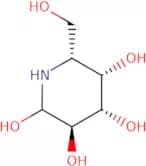
CAS:<p>Galactostatin is a protein synthesis inhibitor that binds to the l-tartaric acid site of the bacterial 30S ribosomal subunit. It inhibits the binding of aminoacyl-tRNA to the ribosome, preventing translation and inhibiting cell growth. Galactostatin has been shown to be effective against HIV infection in mammalian cells. This drug also has a chaperone effect that protects cells from heat or cold stress.</p>Formula:C6H13NO5Purity:Min. 95%Molecular weight:179.17 g/mol6-Amino-6-deoxy-D-mannopyranose hydrochloride
CAS:<p>The 6-Amino-6-deoxy-D-mannopyranose hydrochloride is a custom synthesis and modification of mannose. It is a complex carbohydrate that is an oligosaccharide or polysaccharide, and it can be modified by methylation, glycosylation, or carbamylation. The 6-Amino-6-deoxy-D-mannopyranose hydrochloride has high purity and fluorescence properties. This compound has the CAS number 2074444-9 and is synthetically produced.</p>Formula:C6H13NO5•HClPurity:Min. 95%Molecular weight:215.63 g/mol3-Deoxy-2-keto-D-xylonate lithium
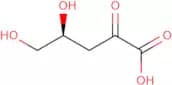
CAS:<p>3-Deoxy-2-keto-D-xylonate lithium salt is a synthetic compound that is used in the synthesis of protamine. It is produced by the reduction of an aldehyde with borohydride. 3-Deoxy-2-keto-D-xylonate lithium salt has been shown to be active against E. cloacae, which can cause diarrhea and other gastrointestinal disorders. 3-Deoxy-2-keto-D-xylonate lithium salt inhibits the growth of E. cloacae by inhibiting glycolaldehyde reductase and aldolases, which are enzymes that are essential for glycolysis and citrate metabolism, respectively. The cleavage products formed by this reaction inhibit bacterial growth by interfering with cell wall biosynthesis, preventing protein synthesis, or blocking ATP production (oxidative phosphorylation).</p>Formula:C5H8O5•LixPurity:Min. 95%Color and Shape:PowderMolecular weight:148.11 g/molL-Psicose
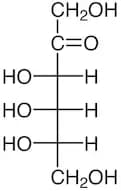
CAS:Formula:C6H12O6Purity:>98.0%(HPLC)Color and Shape:White to Almost white powder to crystalMolecular weight:180.162,3,5-Tri-O-benzyl-L-arabinofuranose, 98%
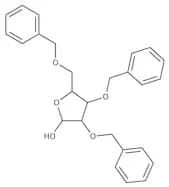
CAS:<p>This Thermo Scientific Chemicals brand product was originally part of the Alfa Aesar product portfolio. Some documentation and label information may refer to the legacy brand. The original Alfa Aesar product / item code or SKU reference has not changed as a part of the brand transition to Thermo Scientific Chemicals.</p>Formula:C26H28O5Purity:98%Molecular weight:420.5Heptyl β-D-glucopyranoside, 99%
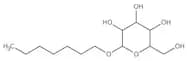
CAS:<p>This Thermo Scientific Chemicals brand product was originally part of the Alfa Aesar product portfolio. Some documentation and label information may refer to the legacy brand. The original Alfa Aesar product / item code or SKU reference has not changed as a part of the brand transition to Thermo Scientific Chemicals.</p>Formula:C13H26O6Purity:99%Molecular weight:278.34D-Fructose-1,6-diphosphate dicalcium salt, 95%
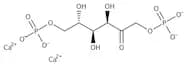
CAS:<p>D-Fructose-1,6-diphosphate dicalcium salt is essential for glycolysis to occur efficiently. It links to adenine nucleotides which regulate 6-phosphofructokinases (Pfks) that catalyze one of the rate limiting steps of glycolysis. This Thermo Scientific Chemicals brand product was originally part of the Alfa Aesar product portfolio. Some documentation and label information may refer to the legacy brand. The original Alfa Aesar product / item code or SKU reference has not changed as a part of the brand transition to Thermo Scientific Chemicals.</p>Formula:C6H12Ca2O12PPurity:95%Molecular weight:418.24b-D-Glucopyranoside,(1aR,2S,3aR,5R,5aR,5bS)-5b-[(benzoyloxy)methyl]tetrahydro-5-hydroxy-2-methyl-2,5-methano-1H-3,4-dioxacyclobuta[cd]pentalen-1a(2H)-yl
CAS:Formula:C23H28O11Purity:95%Color and Shape:SolidMolecular weight:480.4618Methyl (Phenyl 5-Acetamido-7,8,9-tri-O-acetyl-5-N,4-O-carbonyl-3,5-dideoxy-2-thio-β-D-glycero-D-galacto-2-nonulopyranosid)onate
CAS:Formula:C25H29NO12SPurity:96%Color and Shape:SolidMolecular weight:567.5623Ref: IN-DA00GWLG
Discontinued product3-Deoxy-D-gluconic acid
CAS:<p>3-Deoxy-D-gluconic acid is a chemical compound that has the chemical structure of C6H12O6. It is a white crystalline solid that can be found in nature as a reaction product of glucose and oxygen. 3-Deoxy-D-gluconic acid can also be synthesized by reacting D-glucose with nitrous acid or sulfur dioxide. 3-Deoxy-D-gluconic acid is an organic acid and has been shown to inhibit the growth of filamentous fungi by acting on their glycosidic bonds. This chemical compound has not been shown to have any adverse health effects in humans, although it may cause irritation if it comes into contact with skin or eyes.</p>Formula:C6H12O6Purity:Min. 95%Molecular weight:180.16 g/molMethyl b-D-glucuronide sodium salt
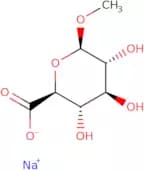
CAS:<p>1-O-Methyl-β-D-glucuronic acid is a β-glucuronidase inducer.</p>Formula:C7H11NaO7Purity:(Titration) Min 99.0%Color and Shape:White Slightly Yellow PowderMolecular weight:230.15 g/mol2-Deoxy-D-ribose
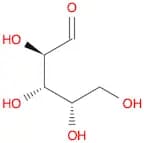
CAS:<p>Used in synthetic organic chemistry and natural product synthesis. Induces apoptosis by inhibiting the synthesis and increasing the efflux of glutathione. It is used for synthesis of optically active dipyrrolyl alkanols from pyrroles on the surface of montmorillonite KSF clay.</p>Formula:C5H10O4Purity:Min. 99.0 Area-%Molecular weight:134.13 g/mol
![2-Deoxy-2-[(7-nitro-2,1,3-benzoxadiazol-4-yl)amino]-L-glucose](/_next/image/?url=https%3A%2Fstatic.cymitquimica.com%2Fproducts%2F3D%2Fthumb-webp%2FMD58731.webp&w=3840&q=75)








![b-D-Glucopyranoside,(1aR,2S,3aR,5R,5aR,5bS)-5b-[(benzoyloxy)methyl]tetrahydro-5-hydroxy-2-methyl-2…](/_next/image/?url=https%3A%2Fstatic.cymitquimica.com%2Fproducts%2FIN%2Fthumb-webp%2FDA00I4J3.webp&w=3840&q=75)