Monosaccharides
Monosaccharides are the simplest form of carbohydrates and serve as fundamental building blocks for more complex sugars and polysaccharides. These single sugar molecules play critical roles in energy metabolism, cellular communication, and structural components of cells. In this section, you will find a wide variety of monosaccharides essential for research in biochemistry, molecular biology, and glycoscience. These compounds are crucial for studying metabolic pathways, glycosylation processes, and developing therapeutic agents. At CymitQuimica, we offer high-quality monosaccharides to support your research needs, ensuring precision and reliability in your scientific investigations.
Subcategories of "Monosaccharides"
- Alloses(11 products)
- Arabinoses(21 products)
- Erythroses(11 products)
- Fructoses(9 products)
- Fucoses(36 products)
- Galactosamine(41 products)
- Galactose(261 products)
- Glucoses(365 products)
- Glucuronic Acids(51 products)
- Glyco-substrates for Enzyme(77 products)
- Guloses(6 products)
- Idoses(4 products)
- Inositols(15 products)
- Lyxoses(4 products)
- Mannoses(65 products)
- O-Glycans(48 products)
- Psicoses(3 products)
- Rhamnoses(10 products)
- Riboses(61 products)
- Sialic Acids(100 products)
- Sorboses(4 products)
- Sugars(173 products)
- Tagatoses(4 products)
- Taloses(8 products)
- Xyloses(20 products)
Show 17 more subcategories
Found 6088 products of "Monosaccharides"
Sort by
Purity (%)
0
100
|
0
|
50
|
90
|
95
|
100
Phenyl-β-D-thioglucopyranoside
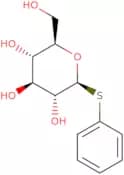
CAS:<p>Phenyl-beta-D-thioglucopyranoside is a heterocycloalkyl compound that contains a phenyl group and a beta-D-thioglucopyranoside. It is used as an intermediate in the production of pharmaceuticals, yellow dye, and cancer drugs. Phenyl-beta-D-thioglucopyranoside binds to the cell membrane of cancer cells and induces apoptosis by inhibiting the synthesis of proteins. This compound also has alkenyl and haloalkyl groups, which may be important for its biological activity. Phenyl-beta-D-thioglucopyranoside can be crystallized in two different forms: one with a crystalline form, which is yellow; the other with a crystalline form, which is colorless.</p>Formula:C12H16SO5Purity:Min. 95%Color and Shape:PowderMolecular weight:272.32 g/mol2,3,4-Tri-O-benzyl-L-rhamnopyranose
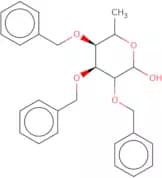
CAS:<p>2,3,4-Tri-O-benzyl-L-rhamnopyranose is a chemical compound that belongs to the family of carbohydrates known as rhamnopyranoses. It is a derivative of L-rhamnose, which is a naturally occurring aldohexose sugar. The compound is often used as a glycosyl donor in the synthesis of oligosaccharides and glycoconjugates. The three benzyl groups in the molecule provide protection for the hydroxyl groups, allowing for selective deprotection and glycosylation. 2,3,4-Tri-O-benzyl-L-rhamnopyranose is also used as a precursor in the synthesis of various natural products.</p>Formula:C27H30O5Purity:Min. 95%Color and Shape:PowderMolecular weight:434.52 g/mol1,2,3,5,6-Penta-O-benzoyl-D-galactofuranose
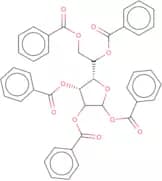
CAS:<p>1,2,3,5,6-Penta-O-benzoyl-D-galactofuranose is a sugar that is custom synthesized and can be modified with fluorination. This product has a CAS number of 138811-45-7 and is high purity. It can be used in glycosylation, oligosaccharide synthesis, methylation, monosaccharide synthesis and polysaccharide synthesis. It is an important building block for the modification of complex carbohydrates.</p>Formula:C41H32O11Purity:Min. 95%Color and Shape:White PowderMolecular weight:700.69 g/molL-Sorbose
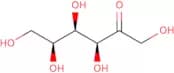
CAS:<p>Resource for the industrial synthesis of ascorbic acid alias Vitamin C</p>Formula:C6H12O6Purity:Min. 98 Area-%Color and Shape:White Off-White PowderMolecular weight:180.16 g/molMethyl 2,3,4-tri-O-acetyl-b-D-glucopyranuronosyl azide
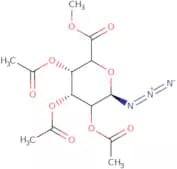
CAS:<p>Methyl 2,3,4-tri-O-acetyl-b-D-glucopyranuronosyl azide is a fluorinated carbohydrate. It is a monosaccharide and an oligosaccharide that is synthesized from a synthetic glycosylation reaction. This product can be used in the production of polysaccharides or as a click modification to modify the sugar moiety of other molecules. Methyl 2,3,4-tri-O-acetyl-b-D-glucopyranuronosyl azide has CAS No. 67776-38-9 and is available in high purity.</p>Formula:C13H17N3O9Purity:(%) Min. 98%Color and Shape:White PowderMolecular weight:359.29 g/mol2,3,4,6-Tetra-O-acetyl-a-D-mannopyranosyl fluoride
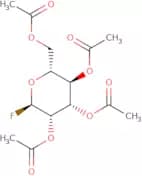
CAS:<p>This product is a fluorinated glycosylation compound that has been synthesized using click chemistry. It is a high-purity, custom synthesis with a purity of >99%. The molecular weight is 477.7 with a monoisotopic mass of 477.2. This compound is an oligosaccharide, monosaccharide, saccharide, and carbohydrate complex carbohydrate that has been modified for methylation and glycosylation.</p>Formula:C14H19FO9Purity:Min. 95%Color and Shape:PowderMolecular weight:350.29 g/molVoglibose
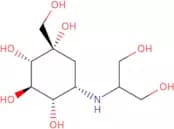
CAS:<p>Voglibose is a competitive inhibitor of α-glucosidase used for the control of blood sugar levels in patients with type 2 diabetes mellitus. The compound binds reversibly to intestinal carbohydrate-active digestive enzymes with α-glucosidase activity, inhibits breakdown of complex sugars and consequently delays the absorption of glucose into blood.</p>Formula:C10H21NO7Color and Shape:White PowderMolecular weight:267.28 g/molMethyl α-L-rhamnopyranoside
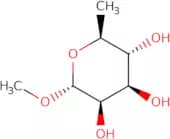
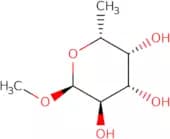
CAS:<p>Methyl α-L-rhamnopyranoside is a conjugate molecule made via a Fisher glycosylation with MeOH. It has been shown to have pesticidal activities and can be used in the production of pesticides or glycoconjugates. Methyl α-L-rhamnopyranoside is of interest as a vaccine adjuvant, due to its ability to activate the immune system. This compound also has anti-inflammatory properties, which may be due to its inhibition of prostaglandin synthesis.</p>Formula:C7H14O5Purity:Min. 95 Area-%Color and Shape:White PowderMolecular weight:178.18 g/molBenzyl 4,6-O-benzylidine-β-D-galactopyranoside
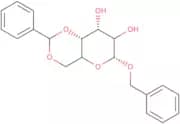
CAS:<p>Benzyl 4,6-O-benzylidine-b-D-galactopyranoside is a benzoylated sugar. It is prepared by reacting benzoyl chloride with benzene and then with the sugar in an equimolar ratio. The reaction proceeds via a nucleophilic substitution at the 2' position of the sugar followed by an elimination of water. Benzyl 4,6-O-benzylidine-b-D-galactopyranoside reacts with dibutyltin to form a benzoylated tin compound that can be used as a catalyst for organic synthesis.</p>Formula:C20H22O6Purity:Min. 95%Color and Shape:White To Off-White SolidMolecular weight:358.39 g/molN-(e-Aminocaproyl)-b-L-fucopyranosyl amine
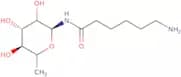
CAS:<p>This compound is a fluorination reagent that is used in carbohydrate synthesis. It can be used to modify complex carbohydrates, such as polysaccharides and oligosaccharides, by attaching a single fluorine atom at the C-2 position of an aminocaproyl moiety. This product can also be used to attach glycosylation sites and methyl groups. The purity of this product is greater than 99%.</p>Formula:C12H24N2O5Purity:Min. 95 Area-%Color and Shape:White PowderMolecular weight:276.33 g/molN1-β-D-Arabinopyranosylamino-guanidine hydrochloride
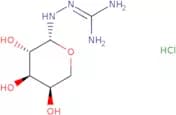
CAS:<p>N1-b-D-arabinopyranosylamino-guanidine HCl is a modified carbohydrate. It is a synthetic monosaccharide that is custom synthesized by methylation and glycosylation. This product has high purity and can be used for modification of saccharides or oligosaccharides to create new carbohydrates with desired properties.</p>Formula:C6H14N4O4•HClPurity:Min. 95%Color and Shape:White to light beige solid.Molecular weight:242.66 g/molMethyl β-D-arabinopyranoside
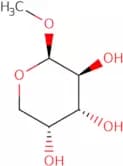
CAS:<p>Methyl b-D-arabinopyranoside is a fluorine containing molecule that has been shown to be an excellent marker for suberin. It is insoluble in water, and can be detected by resonator diffraction. The chemical composition of methyl b-D-arabinopyranoside was determined using liquid crystal composition and plates. A polymer particle with a macroscopic size was used to determine the fluorescence of methyl b-D-arabinopyranoside. Fluorescence analysis showed that methyl b-D-arabinopyranoside is a green fluorescent material with a maximum emission wavelength of 514 nm. Hydroalcoholic extraction was used to isolate this compound from the plant Ricinus communis L., where it was found in constant proportions.</p>Formula:C6H12O5Purity:Min. 95%Color and Shape:PowderMolecular weight:164.16 g/molSalicylic acid D-glucuronide
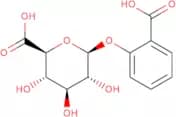
CAS:<p>Salicylic acid D-glucuronide is the major metabolite of aspirin, which is formed by hydrolysis of acetylsalicylic acid. It has been demonstrated to have anti-inflammatory and analgesic effects. Salicylic acid D-glucuronide is excreted in urine and can be detected in human serum. The formation rate of this metabolite varies with the individual's age, sex, and kidney function.<br>Salicylic acid D-glucuronide can be formed in vitro using hydrochloric acid and acetylsalicylic acid as substrates. This reaction is catalyzed by the enzyme uridine diphosphate glucuronyltransferase (UGT). Salicylic acid D-glucuronide has been shown to form covalent adducts with hydroxyl groups from other molecules in vivo and in vitro, including proteins (e.g., albumin) and DNA bases (e.g.,</p>Formula:C13H14O9Purity:Min. 95%Color and Shape:PowderMolecular weight:314.24 g/mol1,2:3,5-Di-O-Isopropylidene-α-L-xylofuranose
CAS:<p>1,2:3,5-Di-O-Isopropylidene-a-L-xylofuranose is a fluorinated sugar that is used as a building block in the synthesis of complex carbohydrates and oligosaccharides. It has a CAS number of 131156-47-3. 1,2:3,5-Di-O-Isopropylidene-a-L-xylofuranose is an active component in the modification of saccharide and polysaccharide structures by click chemistry. It can be modified with various functional groups such as methylation or monosaccharide to produce specific compounds. This product is available for custom synthesis.</p>Formula:C11H18O5Purity:Min. 95%Color and Shape:PowderMolecular weight:230.26 g/molZiyuglycoside II
CAS:<p>Ziyuglycoside II is a steroidal alkaloid that has been shown to have anti-angiogenic properties. It is a natural compound extracted from the Chinese herb ziyuglycoside. This compound has been shown to inhibit the activation of toll-like receptor 4, which plays an important role in inflammation and immunity. Ziyuglycoside II also inhibits the production of reactive oxygen species and autophagy, leading to cell death by apoptosis. This compound has been shown to be effective against bowel disease and epithelial mesenchymal transition (EMT). Ziyuglycoside II has also been shown to have matrix effects on the cells Hl-60, which are related to tumor metastasis.</p>Formula:C35H56O8Purity:Min. 95%Color and Shape:White To Off-White SolidMolecular weight:604.81 g/mol2,3:4,6-Di-O-isopropylidene-2-keto-L-gulonic acid sodium salt
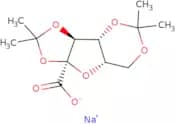
CAS:<p>2,3:4,6-Di-O-isopropylidene-2-keto-L-gulonic acid sodium salt is a fatty acid that has been used as an antipsychotic drug. It is the active metabolite of clozapine and has been shown to have similar efficacy to other first generation antipsychotics such as chlorpromazine and haloperidol. 2,3:4,6-Di-O-isopropylidene-2-keto-L-gulonic acid sodium salt also has a low energy content and can be audited for its locomotor activity. This drug is a metabolic product of clozapine and has been shown to have similar efficacy to other first generation antipsychotics such as chlorpromazine and haloperidol. 2,3:4,6-Di-O-isopropylidene-2-keto--L--gulonic acid</p>Formula:C12H17NaO7Color and Shape:White Off-White PowderMolecular weight:296.25 g/mol6-O-Benzyl-D-mannose
<p>6-O-Benzyl-D-mannose is a methylated monosaccharide. It is an important intermediate in the synthesis of oligosaccharides and polysaccharides. 6-O-Benzyl-D-mannose can be used for modification of saccharides, carbohydrates and sugars. This product has high purity and a custom synthesis.</p>Formula:C13H18O6Purity:Min. 95%Molecular weight:270.28 g/molMethyl a-D-fucopyranoside
CAS:<p>Methyl a-D-fucopyranoside is a monoclonal antibody that binds to the O-antigen of the polysaccharide chain. It is a synthetic trisaccharide consisting of an o-antigen, an α-linked D-fucose residue, and an α-linked galactose residue. This antibody interacts with the serologic subtypes of Group A Streptococcus, but not with other serogroups. Methyl a-D-fucopyranoside utilizes conformational epitopes and disaccharides which are not accessible to other antibodies in order to bind to the o-antigen. The o-antigen is composed of two serologically distinct regions: one region for binding by anti-A antibodies, and another for binding by anti-B antibodies.</p>Formula:C7H14O5Purity:Min. 98 Area-%Color and Shape:White Off-White PowderMolecular weight:178.18 g/mol2-[(1E)-2-[6-(β-D-Galactopyranosyloxy)-2,3-dihydro-1H-xanthen-4-yl]ethenyl]-3,3-dimethyl-1-propyl-3H-indolium iodide
CAS:<p>Please enquire for more information about 2-[(1E)-2-[6-(β-D-Galactopyranosyloxy)-2,3-dihydro-1H-xanthen-4-yl]ethenyl]-3,3-dimethyl-1-propyl-3H-indolium iodide including the price, delivery time and more detailed product information at the technical inquiry form on this page</p>Formula:C34H40NO7•IPurity:Min. 95%Molecular weight:701.59 g/mol2,3,4,6-Tetra-O-benzoyl-α-D-glucopyranosyl bromide
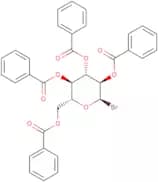
CAS:<p>2,3,4,6-Tetra-O-benzoyl-α-D-glucopyranosyl bromide is a derivative of vitamin A. It has been used as a carbonate for the synthesis of retinol, tetrabenzoate and other related compounds. The compound is soluble in water and has shown growth promoting activity in studies with Salmonella typhimurium. 2,3,4,6-Tetra-O-benzoyl-α-D-glucopyranosyl bromide is metabolized to retinol by hydrolysis or oxidation. It can also be converted into tetrabenzoate by oxidation followed by reduction of the 4′ position hydroxyl group.</p>Formula:C34H27BrO9Purity:Min. 95%Color and Shape:PowderMolecular weight:659.48 g/molRaspberry ketone glucoside
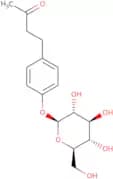
CAS:<p>Raspberry ketone glucoside is a hydrogenated, isopropyl palmitate fatty acid. It is a dietary supplement that has been shown to inhibit the activity of matrix metalloproteinases, which are enzymes that break down collagen in the skin and lead to wrinkles. Raspberry ketone glucoside also inhibits tyrosinase, an enzyme involved in the production of melanin. As a result, raspberry ketone glucoside has been shown to reduce pigmentation and inhibit UV-induced skin damage. Raspberry ketone glucoside may have an inhibitory effect on fatty acids by inhibiting the synthesis of fatty acids and reducing the number of fat cells in adipose tissue. This compound is also used as a crystallization aid for cellulose and as an organic solvent for food composition.</p>Formula:C16H22O7Purity:Min. 95%Color and Shape:White PowderMolecular weight:326.34 g/molEthyl 2-acetamido-2-deoxy-β-D-glucopyranoside
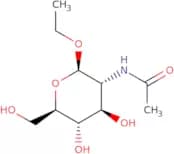
CAS:<p>Ethyl 2-acetamido-2-deoxy-β-D-glucopyranoside is an anomeric sugar that contains a substituent at C4. It is used in the synthesis of oxazolidinones and thiazolidinones.</p>Formula:C10H19NO6Purity:Min. 98 Area-%Color and Shape:PowderMolecular weight:249.26 g/molAllyl β-D-galactopyranoside
CAS:<p>Allyl β-D-galactopyranoside is a complex carbohydrate that is modified by methylation, glycosylation, and fluorination. It can be synthesized using the Carbohydrate-Click reaction. Allyl β-D-galactopyranoside is used as a substrate for the synthesis of oligosaccharides, polysaccharides, and other carbohydrates. This product has high purity and is available in custom synthesis.</p>Formula:C9H16O6Purity:Min. 95%Color and Shape:White PowderMolecular weight:220.22 g/molD-Glucosamine-2-N, 3-O, 6-O-trisulfate sodium salt
<p>D-Glucosamine-2-N, 3-O, 6-O-trisulfate sodium salt is a high purity oligosaccharide that can be custom synthesized. This product is composed of sugar, Click modification, fluorination, glycosylation, and methylation. It has CAS No. and Oligosaccharide. This product is used in the production of complex carbohydrates due to its saccharide composition.</p>Formula:C6H10NNa3O14S3Purity:Min. 95%Color and Shape:White/Off-White SolidMolecular weight:485.31 g/molMethyl 2,3,4,6-tetra-O-benzyl-b-D-thiogalactopyranoside
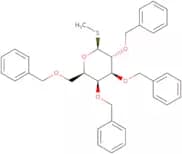
CAS:<p>Methyl 2,3,4,6-tetra-O-benzyl-b-D-thiogalactopyranoside is a synthetic monosaccharide that has been modified with fluorination and glycosylation. It is a product of the click reaction, which is a chemical modification that involves the formation of an aziridine and an alkene in one step. This product has been used for the synthesis of oligosaccharides and complex carbohydrates.</p>Formula:C35H38O5SPurity:Min. 95%Color and Shape:PowderMolecular weight:570.74 g/mol1,2:3,4-Di-O-isopropylidene-L-arabinopyranose
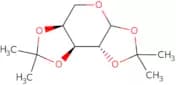
CAS:<p>1,2:3,4-Di-O-isopropylidene-L-arabinopyranose is a custom synthesis of 1,2:3,4-di-O-isopropylidene arabinopyranose. It is an oligosaccharide with a glycosylation and methylation that has a high purity with a CAS number of 212069-31-3. This complex carbohydrate can be modified to create new saccharides. The modification process includes fluorination and click chemistry reactions.</p>Formula:C11H18O5Purity:Min. 95%Color and Shape:PowderMolecular weight:230.26 g/mol1,2;4,5-Di-O-isopropylidene-b-D-fructopyranose
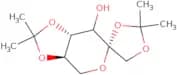
CAS:<p>Synthetic building block</p>Formula:C12H20O6Purity:Min. 95 Area-%Color and Shape:Off-White PowderMolecular weight:260.28 g/mol6-Deoxy-L-talose
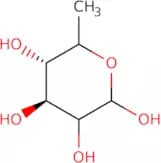
CAS:<p>6-Deoxy-L-talose is a sugar that is found in the cell walls of bacteria. It is a component of glycan, which are long chains of sugar molecules linked together. Glycans are important for the structural integrity and function of bacterial cell walls. 6-Deoxy-L-talose is a monosaccharide that has been detected in the type strain of Bacillus subtilis and in wild-type strains of Pseudomonas aeruginosa. This sugar can be chemically analyzed using gas chromatography and mass spectrometry to determine its structure and chemical composition. 6-Deoxy-L-talose can be used to detect specific monoclonal antibodies against it, which could be useful for detecting bacterial infections or determining how antibiotics affect bacteria.</p>Formula:C6H12O5Purity:Min. 98 Area-%Color and Shape:White PowderMolecular weight:164.16 g/mol4-Methylphenyl 4,6-O-[bis(1,1-dimethylethyl)silylene]-1-thio-β-D-galactopyranoside
CAS:<p>4-Methylphenyl 4,6-O-[bis(1,1-dimethylethyl)silylene]-1-thio-β-D-galactopyranoside is a synthetic sugar that is used in the glycosylation of proteins. It is synthesized from 4-methylphenol and 1,1'-dimethylethylsilylene in the presence of trichlorosilane, followed by silylation with trimethylchlorosilane. The fluorinated site can be modified to suit your needs by following a Click chemistry protocol. This product has CAS No. 1242144-05-3 and is available for custom synthesis upon request.</p>Formula:C21H34O5SSiPurity:Min. 95%Molecular weight:426.64 g/molMethyl 3,4,6-tri-O-acetyl-2-deoxy-2-phthalimido-β-D-glucopyranoside
CAS:<p>Methyl 3,4,6-tri-O-acetyl-2-deoxy-2-phthalimido-b-D-glucopyranoside is a high purity natural carbohydrate. It is an oligosaccharide that can be custom synthesized to meet your requirements. Methyl 3,4,6-tri-O-acetyl-2-deoxy-2-phthalimido b D glucopyranoside has many modifications including click and fluorination. Its CAS number is 76101 13 8. This product can be used for modification, glycosylation and fluorination in the synthesis of complex carbohydrates.<br>!-- <br>--><br>!-- <br>--></p>Formula:C21H23NO10Purity:Min. 95%Color and Shape:White to off-white solid.Molecular weight:449.41 g/molEsculin - Anhydrous
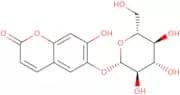
CAS:<p>Esculin is a natural product obtained from the plant Aesculus hippocastanum. Esculin has been shown to have anti-inflammatory properties in experimental models. It also has been shown to inhibit the activity of both human and animal renin, suppressing kidney fibrosis. Esculin was found to be more effective than indomethacin in preventing the progression of renal disease induced by the model system of chronic kidney disease. Esculin also has antioxidant properties and can reduce oxidative stress caused by free radicals, which may contribute to its anti-inflammatory effects. Esculin is a coumarin derivative that can be used as a chromatographic stationary phase for separation and identification of various chemical compounds.</p>Formula:C15H16O9Purity:Min. 98 Area-%Color and Shape:PowderMolecular weight:340.28 g/molAllyl 2-acetamido-2-deoxy-β-D-glucopyranoside
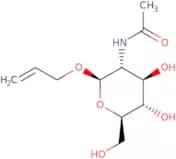
CAS:<p>Allyl 2-acetamido-2-deoxy-β-D-glucopyranoside is a modification of the sugar molecule. It is an oligosaccharide composed of a monosaccharide and one or more other saccharides.</p>Formula:C11H19NO6Purity:Min. 98 Area-%Color and Shape:PowderMolecular weight:261.27 g/mol4-Methoxyphenyl β-D-glucopyranoside
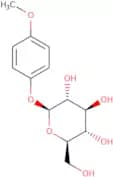
CAS:<p>Bearberry has been used for centuries to treat various disorders of the urinary tract and prostate. The active ingredient in bearberry is a flavonol glycoside called arbutin, which is converted to hydroquinone during metabolism. As an antioxidant, hydroquinone inhibits the oxidation of LDL cholesterol and may reduce the risk of atherosclerosis. Hydroquinone has also been shown to have anti-inflammatory properties in rat liver microsomes and tissue culture, inhibiting prostaglandin synthesis by blocking cyclooxygenase activity. In vitro, bearberry extracts have been shown to inhibit bacterial growth on agar plates with pH levels from 4-7 and at concentrations between 0.1-1%. It was found that bearberry extracts were most effective against Pseudomonas aeruginosa strains, with MIC values ranging from 2-4 mg/mL. Bearberry extract was observed to be more effective than ampicillin against these strains in a chromatographic assay.</p>Formula:C13H18O7Purity:Min. 95%Color and Shape:PowderMolecular weight:286.28 g/mol2,3:4,5-Di-O-isopropylidene-D-arabitol
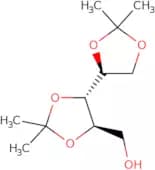
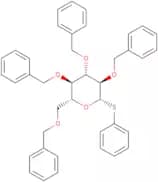
CAS:<p>2,3:4,5-Di-O-isopropylidene-D-arabitol is a synthetic sugar that is used for glycosylation, methylation, and fluorination. The compound is an oligosaccharide that has been modified with methyl groups and activated monosaccharides. 2,3:4,5-Di-O-isopropylidene-D-arabitol is white in color and has a melting point of 109°C. It can be synthesized from D-mannitol with the help of sodium methoxide in methanol.<br>2,3:4,5-Di-O-isopropylidene-D-arabitol is also known as 1-(2,3:4,5) triose; 1-(2,3:4)-diose; 1-(2,3:4)-triose; 1-(2,3:4)-</p>Formula:C11H20O5Purity:Min. 95%Color and Shape:Colorless PowderMolecular weight:232.27 g/molPhenyl 2,3,4,6-tetra-O-benzyl-b-D-thioglucopyranoside
CAS:<p>Phenyl 2,3,4,6-tetra-O-benzyl-b-D-thioglucopyranoside is a modification. It is an oligosaccharide that belongs to the class of carbohydrates. Phenyl 2,3,4,6-tetra-O-benzyl-b-D-thioglucopyranoside has a high purity and can be synthesized in a custom manner. It is a white to off white powder that has CAS No. 38184-10-0 and can be used for glycosylation or methylation reactions. It also has fluoroquinolone resistance and can be used as a complex carbohydrate in the synthesis of polysaccharides.</p>Formula:C40H41O5SPurity:Min. 95%Color and Shape:White Off-White PowderMolecular weight:632.83 g/mol4-Methoxyphenyl 3,4-di-O-benzyl-α-D-mannopyranoside
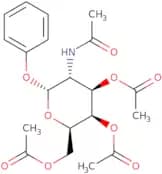
<p>4-Methoxyphenyl 3,4-di-O-benzyl-a-D-mannopyranoside is a glycosylated, complex carbohydrate with a methylated and fluorinated saccharide. This product is available for custom synthesis and can be ordered in high purity.</p>Purity:Min. 95%Phenyl 2-acetamido-3,4,6-tri-O-acetyl-2-deoxy-α-D-galactopyranoside
CAS:<p>Phenyl 2-acetamido-3,4,6-tri-O-acetyl-2-deoxy-a-D-galactopyranoside is a sugar that is used in the synthesis of oligosaccharides and polysaccharides. This compound has an acetamido group on the phenyl ring, which reacts with the aldehyde group of galactose to form an ether bond. The glycosylation reaction can be carried out using either an acid or base catalyst. Acetal formation is also possible when this compound reacts with alcohols. Phenyl 2-acetamido-3,4,6-tri-O-acetyl-2-deoxygalactopyranoside is soluble in water and other polar solvents. It has a CAS number of 130894350 and can be found under the name Oligosaccharide, Monosaccharide, saccharide, Carbohydrate</p>Formula:C20H25NO9Purity:Min. 95%Color and Shape:White to off-white solid.Molecular weight:423.41 g/mol4-Methoxyphenyl 2,4,6-tri-O-benzyl-b-D-galactopyranoside
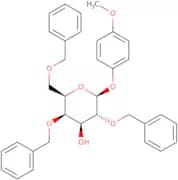
CAS:<p>4-Methoxyphenyl 2,4,6-tri-O-benzyl-b-D-galactopyranoside is a custom synthesis that belongs to the group of complex carbohydrates. It is an Oligosaccharide with CAS No. 247027-79-8 and Polysaccharide. 4MPG has been modified by Methylation, Glycosylation, Carbohydrate, Click modification, sugar, High purity, Fluorination and Synthetic methods. This product is available in high purity and can be used for research purposes.</p>Formula:C34H36O7Purity:Min. 97 Area-%Color and Shape:PowderMolecular weight:556.65 g/molN-Acetyl-D-mannosamine-6-phosphate disodium salt
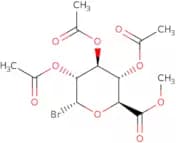
CAS:<p>Precursor of N-acetylneuraminic acid</p>Formula:C8H14NO9P·2NaPurity:Min. 95%Color and Shape:White PowderMolecular weight:345.15 g/mol1-Bromo-2,3,4-tri-O-acetyl-a-D-glucuronide methyl ester
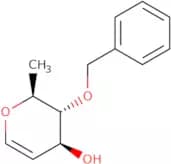
CAS:<p>1-Bromo-2,3,4-tri-O-acetyl-a-D-glucuronide methyl ester is a protected D-glucoronic acid with an alpha bromide at the anomeric position ready to undergo glycosylation reactions with suitable glycoside acceptors. Pharmaceutically active compounds have been used as acceptors to form β-linked D-glucuronide prodrugs which can be used to modify pharmacokinetics, improve solubility and lower the toxicity of the drug.</p>Formula:C13H17BrO9Purity:Min. 80%Molecular weight:397.17 g/mol4-O-Benzyl-L-rhamnal
CAS:<p>4-O-Benzyl-L-rhamnal is a functionalized, asymmetric, glycosylating agent that is used in the synthesis of glycoconjugates. 4-O-Benzyl-L-rhamnal is synthesized by the reaction of benzaldehyde with an aldehyde group on the sugar molecule. The product is then reacted with an alcohol to form a glycosidic bond. This process can be repeated until the desired number of sugar molecules are added. It can also be used to synthesize disaccharides and polysaccharides by convergent or nucleophile reactivity. 4-O-Benzyl-L-rhamnal utilizes a chiral auxiliary to produce its product, which can be used for synthesis purposes or as a starting material for other reactions.</p>Formula:C13H16O3Purity:Min. 95%Color and Shape:PowderMolecular weight:220.27 g/molD-Ribose-1-phosphate bis(cyclohexylammonium)
CAS:<p>D-Ribose-1-phosphate bis(cyclohexylammonium) salt is a custom synthesis of D-ribose. It is a monosaccharide that has been fluorinated, methylated, and glycosylated. The chemical modification of the sugar allows for it to have properties such as high purity and custom synthesis. This product can be used in a number of applications including complex carbohydrate, glycosylation, Methylation, and click modification.</p>Formula:C5H11O8P•(C6H13N)2Purity:Min. 97 Area-%Color and Shape:PowderMolecular weight:428.46 g/molD-ido-Heptono-1,4-lactone
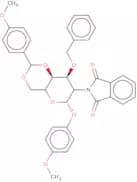
<p>D-ido-Heptono-1,4-lactone is a glycosylation product of heptose with d-ido-D-glucofuranose and is a synthetic sugar. It has an Oligosaccharide, sugar, Synthetic, Fluorination, Custom synthesis, Methylation, Monosaccharide, Polysaccharide, saccharide Click modification. It has CAS No., Modification.</p>Purity:Min. 95%4-Methoxyphenyl 2-deoxy-3-benzyl-4,6-O-(4-methoxybenzylidene)-2-phthalimido-β-D-glucopyranoside
<p>4-Methoxyphenyl 2-deoxy-3-benzyl-4,6-O-(4-methoxybenzylidene)-2-phthalimido-b-D-glucopyranoside is a custom synthesis that has been modified with fluorination and carbamoylation. This product is an oligosaccharide that belongs to the group of polysaccharides. It is a complex carbohydrate that has been synthesized from monosaccharides and sugar. 4MPBGP is soluble in water and has high purity levels.<br>*The following content was automatically generated by eCommerce software:</p>Formula:C36H33NO9Purity:Min. 95%Molecular weight:623.65 g/molD-Tagatose
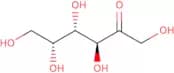
CAS:<p>Low-calorie sweetener; additive in detergents, cosmetics, and pharmaceuticals</p>Formula:C6H12O6Purity:Min. 99 Area-%Color and Shape:PowderMolecular weight:180.16 g/molCyanomethyl 2,3,4,6-tetra-O-acetyl-b-D-thioglucopyranoside
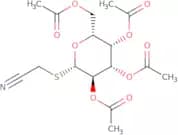
CAS:<p>Cyanomethyl 2,3,4,6-tetra-O-acetyl-b-D-thioglucopyranoside is a synthetic glycosylation agent. It is an acetal derivative of b-D-thioglucopyranoside with a terminal methyl group at C2 and a fluorine atom at C6. This product can be used to modify saccharides and sugars in a variety of ways. It has been shown to react with various carbohydrates including polysaccharides and oligosaccharides. Synthetic glycosylations are often used in the synthesis of complex carbohydrates for use in pharmaceuticals or chemical engineering. The CAS number for this product is 61145-33-3.</p>Formula:C16H21NO9SPurity:Min. 95%Molecular weight:403.41 g/mol6-Deoxy-D-lactose
CAS:<p>6-Deoxy-D-lactose is a custom synthesized, complex carbohydrate that is an Oligosaccharide. It is a polysaccharide with a CAS number of 52689-62-0. 6-Deoxy-D-lactose has been modified by methylation and glycosylation and can be used as a Modification of saccharides. 6-Deoxy-D-lactose has been fluorinated and it can be synthesized by Click modification of sugar or high purity. 6-Deoxy-D-lactose is a white, crystalline powder that is soluble in water, ethanol, and acetone.br><br>6 Deoxy Lactose (6DL) is an oligosaccharide that consists of one glucose molecule linked to one galactose molecule via alpha 1-->4 glycosidic linkage. The chemical formula for 6DL is C 12 H 22 O 11 . 6DL</p>Formula:C12H22O10Purity:Min. 95%Color and Shape:Off-White PowderMolecular weight:326.3 g/molMethyl 2,3,5-tri-O-benzoyl-b-D-arabinofuranoside
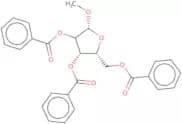
CAS:<p>Methyl 2,3,5-tri-O-benzoyl-b-D-arabinofuranoside is a custom synthesis of an Oligosaccharide with a molecular formula of C12H22O11. It has CAS No. 1093344-99-0 and Methylation, Glycosylation, Carbohydrate, Click modification, saccharide, sugar. This product is a high purity product that is Fluorination and Synthetic.</p>Formula:C27H24O8Purity:Min. 95%Color and Shape:White to off-white solid.Molecular weight:476.47 g/molPropofol-4-Hydroxy-4-D-glucuronide
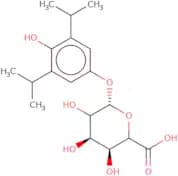
<p>Propofol-4-Hydroxy-4-D-glucuronide is a fluorinated monosaccharide that has been synthesized using the glycosylation, polysaccharide and modification methods. This compound is a custom synthesis that has been modified with methylation and click chemistry. The CAS number for this product is 54910-87-6. This product is a complex carbohydrate with high purity.</p>Formula:C18H26O8Purity:Min. 95%Molecular weight:370.39 g/molLosartan N2-glucuronide
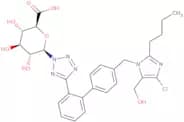
CAS:<p>Losartan N2-glucuronide is a custom synthesis that has been modified by fluorination, methylation, and monosaccharide modification. It is synthesized with click chemistry to create an oligosaccharide. This product is synthesized from saccharides (carbohydrates) and polysaccharides. Losartan glucuronide is a complex carbohydrate that has been glycosylated and sugar modified for high purity.</p>Formula:C28H31ClN6O7Purity:Min. 95%Color and Shape:White To Off-White SolidMolecular weight:599.03 g/mol



![2-[(1E)-2-[6-(β-D-Galactopyranosyloxy)-2,3-dihydro-1H-xanthen-4-yl]ethenyl]-3,3-dimethyl-1-propyl-…](/_next/image/?url=https%3A%2Fstatic.cymitquimica.com%2Fproducts%2F3D%2Fthumb-webp%2FMG183953.webp&w=3840&q=75)

![4-Methylphenyl 4,6-O-[bis(1,1-dimethylethyl)silylene]-1-thio-β-D-galactopyranoside](/_next/image/?url=https%3A%2Fstatic.cymitquimica.com%2Fproducts%2F3D%2Fthumb-webp%2FMM182806.webp&w=3840&q=75)