Monosaccharides
Monosaccharides are the simplest form of carbohydrates and serve as fundamental building blocks for more complex sugars and polysaccharides. These single sugar molecules play critical roles in energy metabolism, cellular communication, and structural components of cells. In this section, you will find a wide variety of monosaccharides essential for research in biochemistry, molecular biology, and glycoscience. These compounds are crucial for studying metabolic pathways, glycosylation processes, and developing therapeutic agents. At CymitQuimica, we offer high-quality monosaccharides to support your research needs, ensuring precision and reliability in your scientific investigations.
Subcategories of "Monosaccharides"
- Alloses(11 products)
- Arabinoses(21 products)
- Erythroses(11 products)
- Fructoses(9 products)
- Fucoses(36 products)
- Galactosamine(41 products)
- Galactose(260 products)
- Glucoses(365 products)
- Glucuronic Acids(51 products)
- Glyco-substrates for Enzyme(77 products)
- Guloses(6 products)
- Idoses(4 products)
- Inositols(15 products)
- Lyxoses(4 products)
- Mannoses(65 products)
- O-Glycans(48 products)
- Psicoses(3 products)
- Rhamnoses(10 products)
- Riboses(61 products)
- Sialic Acids(100 products)
- Sorboses(4 products)
- Sugars(173 products)
- Tagatoses(4 products)
- Taloses(8 products)
- Xyloses(20 products)
Show 17 more subcategories
Found 6088 products of "Monosaccharides"
Sort by
Purity (%)
0
100
|
0
|
50
|
90
|
95
|
100
2-Azido-2-deoxy-3,4-O-isopropylidene-L-idonic acid methyl ester
<p>2-Azido-2-deoxy-3,4-O-isopropylidene-L-idonic acid methyl ester is a custom synthesis that is available in high purity. It is a complex carbohydrate that has been modified with methylation and glycosylation. This product has CAS number 16078-04-1 and is a monosaccharide synthesized from similar compounds.</p>Purity:Min. 95%D-Mannose-BSA
<p>D-Mannose-BSA is a receptor protein that is endogenous and found in the extracellular fluid. It has been shown to bind to the CD18 receptor on leukocytes and macrophages, which can be used as a diagnostic tool for identifying depression. D-Mannose-BSA has also been shown to bind to mouse macrophages, which may be due to its high affinity for the Fc receptors on these cells. D-Mannose-BSA binds to membranes of biotinylated cells and can be used as a ligand for immunoprecipitation. Antiserum against D-mannose is specific for polymorphonuclear neutrophils (PMN) and monocytes, but not lymphocytes or eosinophils. It can be used postoperatively as an adjunct therapy in wound healing.</p>Color and Shape:Powder1,2,3,4,6-Penta-O-acetyl-β-D-mannopyranose
CAS:<p>1,2,3,4,6-Penta-O-acetyl-β-D-mannopyranose is a custom synthesis of an oligosaccharide that is used in the modification of saccharides and complex carbohydrates. It has been used in the synthesis of glycosylations and methylations. This product is a fluorinated monosaccharide with high purity.</p>Formula:C16H22O11Purity:Min. 98 Area-%Color and Shape:PowderMolecular weight:390.34 g/mol(2S, 3R, 4S, 5R) -3, 4- Dihydroxy- 5- (hydroxymethyl) - N- methyl-2- pyrrolidinecarboxami de
CAS:<p>2,3-dihydroxy-5-hydroxymethylpyrrolidineacetic acid is a synthetic compound that is a building block for the synthesis of complex carbohydrates. It is an intermediate in the preparation of 2,3-dihydroxy-5-hydroxymethylpyrrolidinone and 4,6-dihydroxy-2,5,7,8-tetramethylchroman-2-carboxylic acid. This product can be used in glycosylation reactions for the synthesis of saccharide and oligosaccharides.</p>Purity:Min. 95%L-Iditol
CAS:<p>L-Iditol is a sugar alcohol that is found in small quantities in nature and is used as a food additive and pharmaceutical excipient. L-Iditol has been shown to inhibit the growth of bacteria such as Escherichia coli K-12 at concentrations of 0.1% to 1%. This compound was also shown to have a protective effect on human erythrocytes from oxidative damage. The long-term toxicity of L-Iditol has not been well studied, but it does not seem to be toxic when ingested in doses up to 2000 mg/kg body weight.</p>Formula:C6H14O6Purity:Min. 95%Color and Shape:White PowderMolecular weight:182.17 g/molN-[2-(4'-Chlorophenylacetonitrile)]-2,3,4,6-tetra-pivaloyl-D-glucopyranoside
CAS:<p>N-[2-(4'-Chlorophenylacetonitrile)]-2,3,4,6-tetra-pivaloyl-D-glucopyranoside is a synthetic monosaccharide that has been modified with fluorine. The synthesis of this compound involves the glycosylation of 2,3,4,6-tetra-pivaloyl-D-glucopyranoside with methyl 3-(4'-chlorophenyl)acetonitrile. This product is an oligosaccharide that has been used as a model for complex carbohydrates and as a sugar donor in click chemistry. It is soluble in water and ethanol and has a purity level of ≥98%.</p>Formula:C34H49ClN2O8Purity:Min. 95%Molecular weight:649.23 g/molBenzyl-2,3-anhydro-a-D-ribopyranoside
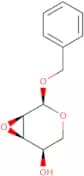
CAS:<p>Benzyl-2,3-anhydro-a-D-ribopyranoside is a monosaccharide that is synthesized by the modification of the sugar benzyl 2,3-anhydro-a-D-ribofuranose. It is a white powder. Benzyl-2,3-anhydro-a-D-ribopyranoside is used as a reagent in glycosylation and methylation reactions. It has CAS No. 61134–24–5 and molecular weight of 230.22 g/mol. The molecule contains an anhydro group at C1 and hydroxyl groups at C6 and C8 positions. This product is soluble in water and ethanol.</p>Formula:C12H14O4Purity:Min. 95%Molecular weight:222.24 g/mol2'-Phospho-cyclic ADP-ribose
CAS:<p>2'-Phospho-cyclic ADP-ribose is a structural analog of the dinucleotide phosphate, ADP-ribose. It has been shown to inhibit the uptake of adp-ribose and to block the transfer reactions that are catalyzed by enzymes such as phosphodiesterases and nucleoside diphosphate kinase. 2'-Phospho-cyclic ADP-ribose can be used to inhibit skin cancer and other cancers. The compound has been shown to inhibit cell function in skin cells, which may be due to its ability to activate apoptosis.</p>Formula:C15H19N5O16P3Purity:Min. 95%Molecular weight:618.26 g/molMethyl 2-amino-2-deoxy-β-D-glucopyranoside hydrochloride
CAS:<p>Methyl 2-amino-2-deoxy-β-D-glucopyranoside hydrochloride is a synthetic compound that is a sugar derivative. The methyl group in this molecule can be used for the synthesis of saccharides, oligosaccharides, and other complex carbohydrates. This product has a CAS number of 3867-93-4. It is soluble in water and has a purity of at least 98%.</p>Formula:C7H16ClNO5Purity:Min. 95%Color and Shape:White PowderMolecular weight:229.66 g/mol(2S, 3R, 4R) -3-Fluoro- 4- (hydroxymethyl) - N- methyl- 1- (phenylmethyl) - 2- azetidinecarboxamide
<p>(2S, 3R, 4R) -3-Fluoro-4-(hydroxymethyl)-N-methyl-1-(phenylmethyl)-2-azetidinecarboxamide is a fluorinated monosaccharide with a 2,3,4 configuration. It can be used as a building block to make oligosaccharides and polysaccharides by substituting the hydroxymethyl group in the 1 position with other functional groups.</p>Purity:Min. 95%4-Deoxy-4-fluoro-D-glucopyranose
CAS:<p>4-Deoxy-4-fluoro-D-glucopyranose is a fluorinated sugar that is found in the roots of Glycyrrhiza uralensis. It can inhibit glycosylation by blocking the stepwise addition of glucose to the growing oligosaccharide chain. 4-Deoxy-4-fluoro-D-glucopyranose also has biological activities, such as antiinflammatory and antitumor properties. This compound is an analog of D-arabinose and D-xylulose, which are found in many plants. 4DFG can be used to synthesize glycosides with various substituents on the hydroxyl group.</p>Purity:Min. 95%5'-Hydroxypropranolol-b-D-glucuronoside
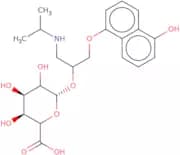
<p>5'-Hydroxypropranolol-b-D-glucuronoside is a synthetic glycosylate of 5'-hydroxypropranolol. It can be modified with fluorine, methyl or click chemistry. The chemical name is O-(2,3,4,5-tetrafluorobenzoyl)glycine and the CAS number is 878183-10-6. This compound has a molecular weight of 471.8 g/mol and an empirical formula of C14H9F5NO5. It can be used in the synthesis of oligosaccharides and polysaccharides.</p>Formula:C22H29NO9Purity:Min. 95%Molecular weight:451.47 g/mol2,3,4,5-Tetra-O-acetyl-D-ribononitrile
CAS:<p>2,3,4,5-Tetra-O-acetyl-D-ribononitrile is a custom synthesis chemical. It is an Oligosaccharide, Polysaccharide, Modification and has the CAS No. 25546-50-3. It can be used as a Fluorination reagent in Synthetic Chemistry and Click modification. The purity of this chemical is high and it has a Custom synthesis. 2,3,4,5-Tetra-O-acetyl-D-ribononitrile is synthesized by Methylation and Glycosylation of sugar molecule with acetyl group. This chemical can be used to modify saccharide and carbohydrate molecules.</p>Formula:C13H17NO8Purity:Min. 95%Color and Shape:PowderMolecular weight:315.28 g/molGlupentaacetate
<p>Glupentaacetate is a synthetic, fluorinated sugar that is used in the synthesis of complex carbohydrates. It has been shown to be a useful tool for the modification of glycosylations, polysaccharides and saccharides. Glupentaacetate has been modified with a methyl group at the C-2 position. This modification leads to increased reactivity and stability, in addition to being useful for click chemistry. Glupentaacetate is also stable under acidic conditions, making it an excellent choice for use in organic synthesis.</p>Purity:Min. 95%2,3,4,6-Tetra-O-methyl-D-glucose
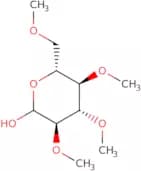
CAS:<p>methyl ether of glucose with the anomeric position free.</p>Formula:C10H20O6Purity:Min. 95%Color and Shape:PowderMolecular weight:236.26 g/mol9-(b-D-Galactopyranose)-nonanoic acid
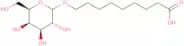
CAS:<p>9-(b-D-Galactopyranose)-nonanoic acid is a custom synthesis, modification and fluorination of a methylated monosaccharide in the form of an oligosaccharide. This synthetic compound is polysaccharide with a carbohydrate group at one end, which can be modified to be glycosylated or saccharified. It has been shown to have anti-inflammatory properties, which may be due to its ability to inhibit prostaglandin synthesis.</p>Formula:C15H28O8Purity:Min. 95%Color and Shape:SolidMolecular weight:336.38 g/molD-Ribonic acid-1,4-lactone
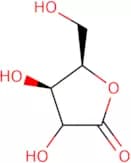
CAS:<p>D-ribono-1,5-lactone is a useful intermediate for the synthesis of bioactive compounds including antivirals.</p>Formula:C5H8O5Color and Shape:White PowderMolecular weight:148.11 g/mol2-Allyloxycarbonylamino-2-deoxy-D-galactose
<p>2-Allyloxycarbonylamino-2-deoxy-D-galactose is a monosaccharide that is synthetically modified for use as a synthetic building block in the synthesis of complex carbohydrates and saccharides. This compound is fluorinated at the 2 position to increase its water solubility, which makes it useful for chemical modifications. It has been shown to be methylated and glycosylated.</p>Purity:Min. 95%N-Acetyl-D-galactosamine
CAS:<p>N-Acetyl-D-galactosamine (GalNAc) is an aldohexose (2-acetamido-2-deoxygalactose) in which the hydroxyl group at position 2 is replaced by a N-Acetyl group (Collins, 2006). GalNAc forms a key part of both N- and O-linked glycoproteins, glycolipids, gangliosides, blood groups, glycosaminoglycans (chondroitin and dermatan sulfate) and human milk oligosaccharides. The number of acetylgalactosamine residues attached to the IgA O-linked glycans of Crohn'sdisease patients is significantly decreased, and strongly correlated with clinical activity. It is suggested that alterations of GalNAc attachment in IgA may be useful as a novel diagnostic and prognostic marker of Crohn's disease (Inoue, 2012).</p>Formula:C8H15NO6Purity:Min. 97 Area-%Color and Shape:White PowderMolecular weight:221.21 g/mol1,3,4,6-Tetra-O-benzyl-b-D-galactopyranoside
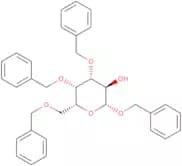
CAS:<p>1,3,4,6-Tetra-O-benzyl-b-D-galactopyranoside is a custom synthesis that has been modified with methylation and fluorination. It is an oligosaccharide composed of saccharides linked by glycosidic bonds. Carbohydrates are polymers of monosaccharides, which can be classified as either simple sugars or complex carbohydrates. This product is a high purity, synthetic sugar that is suitable for use in the synthesis of complex carbohydrate polymers.</p>Formula:C34H36O6Purity:Min. 95%Color and Shape:PowderMolecular weight:540.65 g/mol2,3,5-Tri-O-benzoyl-2- C- methyl- D- arabinonic acid γ-lactone
<p>2,3,5-Tri-O-benzoyl-2- C- methyl- D- arabinonic acid gamma-lactone is a modification of an oligosaccharide. It is synthesized by the benzoylation of 2,3,5-trihydroxybenzoic acid with methyl iodide and sodium carbonate in acetic acid. The product is purified by recrystallization from methanol and water to yield a white crystalline solid.<br>The chemical formula for 2,3,5-tri-O-benzoyl-2- C- methyl--D--arabinonic acid gamma lactone is C14H16O8. The molecular weight of the compound is 478.26 g/mol</p>Purity:Min. 95%3,4-O-Isopropylidene-D-mannitol
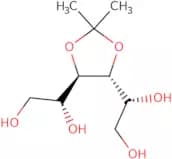
CAS:<p>3,4-O-Isopropylidene-D-mannitol (IPM) is a d-mannitol that has been synthesized by an acid-catalyzed condensation reaction. It is a highly reactive compound with acidic properties and, as such, can be used as a buffer in acid environments. The product of this synthesis was also found to have anticancer activity in vitro, which may be due to its ability to induce apoptosis and inhibit cell proliferation. IPM possesses a hydroxyl group at the 3 position of the molecule and a hydrophilic nature. This makes it suitable for surface-enhanced Raman spectroscopy (SERS) studies and other detection methods.</p>Formula:C9H18O6Purity:Min. 95%Color and Shape:White Off-White PowderMolecular weight:222.24 g/molN-Nonyldeoxynojirimycin
CAS:<p>Inhibitor and pharmacological chaperone of lysosomal β-glucosidase (glucosylceramidase). The compound binds to the unstable glucosidase active site during the folding and post-translational processing in Golgi apparatus and endoplasmatic reticulum. It is effective in stabilising the enzyme and preventing accumulation of glucosylceramides in models for Gaucher disease, especially in the ones carrying N370S mutation. In addition, it has antiviral activity against Hepatitis C virus, which is mediated by misfolding of viral glycoproteins in the presence of the inhibitor.</p>Formula:C15H31NO4Purity:Min. 95%Color and Shape:White PowderMolecular weight:289.41 g/molN-Butyldeoxymannojirimycin HCl
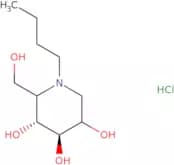
CAS:<p>N-Butyldeoxymannojirimycin HCl is a custom synthesis, complex carbohydrate that is synthesized from Oligosaccharides and Polysaccharides. This product is modified with Methylation, Glycosylation, and Carbohydrate. It has the CAS No. 155501-85-2 and it is high purity and fluorinated. The product can be used in Synthetic applications such as Click modification, sugar, or Fluorination.</p>Formula:C10H21NO4·HClPurity:Min. 95%Color and Shape:SolidMolecular weight:255.74 g/mol1-Deoxy-1-vinylsulfonamido-b-D-glucuronide
<p>1-Deoxy-1-vinylsulfonamido-b-D-glucuronide is a synthetic sugar. It is a member of the group of compounds called sulfonamides. This drug has high purity, and can be custom synthesized to meet specific requirements. 1-Deoxy-1-vinylsulfonamido-b-D-glucuronide is used in the synthesis of oligosaccharides, monosaccharides, and saccharides.</p>Purity:Min. 95%Phenyl 2-acetamido-2-deoxy-β-D-glucopyranoside
CAS:<p>Phenyl 2-acetamido-2-deoxy-b-D-glucopyranoside is a chemical compound that is a member of the class of phenyl 2-acetamido-2-deoxy-b-D-glucopyranosides. This compound has been shown to be anomeric, substituent and phenyl.</p>Formula:C14H19NO6Purity:Min. 90%Color and Shape:PowderMolecular weight:297.3 g/mol2,3,5-Tri-O-benzyl-L-ribonic acid-1,4-lactone
<p>2,3,5-Tri-O-benzyl-L-ribonic acid-1,4-lactone (2,3,5-TRBA) is a fluorinated monosaccharide that is synthesized from D-ribose and hexafluoroisopropanol. It is also an oligosaccharide that can be custom synthesized for the synthesis of complex carbohydrates. 2,3,5-TRBA can be modified with methylation or glycosylation to yield a range of desired products. The CAS number for this compound is 103514-06-1. This compound has a purity of >98%.</p>Formula:C26H26O5Purity:Min. 95%Color and Shape:PowderMolecular weight:418.48 g/mol1-Chloro-3,5-di-O-(4-chlorobenzoyl)-2-deoxy-D-ribofuranose
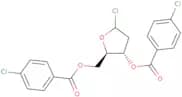
CAS:<p>Research on 1-chloro-3,5-di-O-(4-chlorobenzoyl)-2-deoxy-D-ribofuranose has shown that this compound has high antibacterial activity against a broad spectrum of Gram positive and Gram negative bacteria. In addition to its role as an antibacterial agent, this compound can also be used as a research reagent for the detection of genetic mutations in bacteria. This compound is not soluble in acetone or chloroform, but is soluble in water.</p>Formula:C19H15Cl3O5Purity:Min. 95%Color and Shape:White PowderMolecular weight:429.68 g/mol1,3,5-Tri-O-benzoyl-2-deoxy-2-fluoro-α-L-arabinofuranose
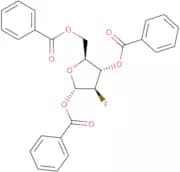
CAS:<p>Intermediate in synthesis of clevudine</p>Formula:C26H21FO7Purity:Min. 98 Area-%Color and Shape:PowderMolecular weight:464.44 g/mol3-Deoxy- 3- fluoro- 1, 2- O- isopropylidene - D- allofuranose
<p>3-Deoxy-3-fluoro-1,2-O-isopropylidene-D-allofuranose is an oligosaccharide that has been fluorinated at the 3 position and 3' position of the allofuranose moiety. It is a synthetic monosaccharide that belongs to a family of complex carbohydrates. The modification of this sugar with fluorine atoms is done by click chemistry, which entails the use of copper (II) ions. This sugar can be used for glycosylation and polysaccharide synthesis. Its high purity makes it ideal for use in laboratory settings.</p>Formula:C9H15FO5Purity:Min. 95%Molecular weight:222.21 g/molN-Acetyl-2,3-dehydro-2-deoxyneuraminic acid
CAS:<p>Inhibitor of viral, bacterial and animal sialidase</p>Formula:C11H17NO8Purity:Min. 94 Area-%Color and Shape:White PowderMolecular weight:291.25 g/molMethyl 2,3,4-tri-O-methyl-α-D-glucopyranoside
CAS:<p>Methyl 2,3,4-tri-O-methyl-α-D-glucopyranoside is a synthetic monosaccharide that has been fluorinated with bromine. The synthetic process for this compound is click chemistry, which involves the use of copper and a chiral ligand. Methyl 2,3,4-tri-O-methyl-α-D-glucopyranoside is an example of a carbohydrate modification. It is also an oligosaccharide that contains three monosaccharides.<br>Methyl 2,3,4-tri-O-methyl-α-D-glucopyranoside can be used in glycosylation or methylation reactions due to its high purity and custom synthesis. This compound can also be used as an Oligosaccharide due to its saccharide composition.</p>Formula:C10H20O6Purity:Min. 95%Color and Shape:PowderMolecular weight:236.26 g/molMethyl 4,6-O-benzylidene-a-D-galactopyranoside
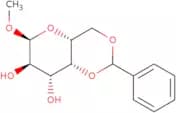
CAS:<p>Methyl 4,6-O-benzylidene-a-D-galactopyranoside is a high purity, custom synthesis, sugar modified product. It has a CAS No. 72904-85-9, and can be synthesized by the click modification of methyl 1,4-O-diacetyl D-mannopyranoside. The fluorination of the glucose moiety in this molecule is accomplished using NCS/BF3 complex in acetonitrile. Glycosylation is achieved using NEM/HBTU and DCC in DMF. The saccharide is then modified with methyl 4,6-O-benzylidene alditol acetate to yield Methyl 4,6-O-benzylidene a D galactopyranoside. This product can also be synthesized by the glycosylation of methyl 2,5 dihydroxyacetophenone with methyl</p>Formula:C14H18O6Purity:Min. 95%Color and Shape:White to off-white solid.Molecular weight:282.29 g/mol3,6-Di-O-methyl-D-glucose
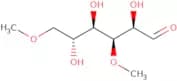
CAS:<p>3,6-Di-O-methyl-D-glucose is a glycopeptide sugar that is used as a terminal sugar in the cell wall of many gram-positive bacteria. It is found on the surface of most strains of Streptococcus pneumoniae and Staphylococcus aureus. 3,6-Di-O-methyl-D-glucose is an antigen for monoclonal antibodies against the streptococcal M protein and has been used to identify the carbohydrate chemistry of Streptococcus pneumoniae. 3,6-Di-O-methyl glucose may also be useful in the detection of cellulose derivatives by magnetic resonance spectroscopy or nitrocellulose membranes. The terminal sugars found on these membranes are hydrolyzed by acid and dry weight methods before being analyzed by gas chromatography or high performance liquid chromatography.</p>Formula:C8H16O6Purity:Min. 95%Molecular weight:208.21 g/mol2-Chloro-2-deoxy-D-mannitol
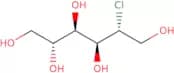
CAS:<p>2-Chloro-2-deoxy-D-mannitol is a synthetic sugar that is used in the synthesis of oligosaccharides and complex carbohydrates. It is also used to fluorinate saccharides. 2-Chloro-2-deoxy-D-mannitol can be modified with methyl groups, which allows for the synthesis of monosaccharides and polysaccharides. This product has a CAS number of 127530-02-3 and is soluble in water. It has a melting point of 220°C, boiling point of 390°C, density of 1.8 g/mL at 20°C, and refractive index (n20 D) of 1.54792 at 20°C.</p>Formula:C6H13ClO5Purity:Min. 95%Molecular weight:200.62 g/mol2,3-O-IIsopropylidene-D-allono-1.4-lactone
<p>2,3-O-Isopropylidene-D-allono-1.4-lactone is a methylated saccharide that has been modified by the click reaction with a phosphonate group and an isopropylidene group. The synthesis of this product can be customized to suit your needs. This product is offered in high purity, and it is an excellent source of carbohydrates or sugars. 2,3-O-Isopropylidene-D-allono-1.4-lactone also has a fluorinated group on its molecule. It is a complex carbohydrate that can be used for glycosylation or as a click modification substrate.</p>Purity:Min. 95%6-Deoxy-D-gulono(L-mannono)-1.4-lactone
<p>6-Deoxy-D-gulono(L-mannono)-1.4-lactone is a custom synthesis of an oligosaccharide. It is a polysaccharide that is glycosylated with a sugar or carbohydrate. This molecule can be modified in the following ways: fluorination, methylation, and click modification. The CAS number for this compound is 73226-08-2.</p>Purity:Min. 95%1,2,3,4,6-Penta-O-acetyl-a-D-glucopyranose
CAS:<p>1,2,3,4,6-Penta-O-acetyl-a-D-glucopyranose is a chemical compound that is an ester of the sugar penta-O-acetyl-a-D-glucopyranose and acetic acid. It has been shown to inhibit the activity of a number of enzymes, including proteins such as phospholipases C and D and fatty acid synthetases. The 1,2,3,4,6-penta-O-acetyl analogues have been shown to be effective in inhibiting model systems for the pathogenesis of inflammatory bowel disease and cancer. The hydroxyl group on the sugar ring may be important for binding to these enzymes.</p>Formula:C16H22O11Purity:Min. 95%Color and Shape:White PowderMolecular weight:390.34 g/mol2,5:3,4-Dianhydro-D-altritol
CAS:<p>2,5:3,4-Dianhydro-D-altritol is a hydrogenated form of the sugar D-altritol. It can be prepared by hydrogenolysis of D-mannitol or D-sorbitol with palladium on charcoal at 200°C. The 2,5:3,4-dianhydro form can be converted to the 3,4-dianhydro form by hydrolysis with sodium hydroxide. Hydrogenation of the 3,4 form produces 2,5:3,4-dianhydro-D-altritol. This compound has been used in high energy density fuels and as a trackable marker for hydrogenolysis experiments.<br>2,5:3,4-Dianhydro-D-altritol is soluble in alcohols and extracted with ether in organic solvents such as acetone or chloroform. It oxidizes readily to the corresponding d</p>Purity:Min. 95%3,4,6-Tri-O-acetyl-1,2-O-ethylidene-b-D-mannopyranose
<p>3,4,6-Tri-O-acetyl-1,2-O-ethylidene-b-D-mannopyranose is a synthetic glycoside that has been fluorinated and methylated. The compound is a versatile building block for the synthesis of complex carbohydrates. It is most commonly used in the synthesis of Oligosaccharides as well as sugar derivatives such as Methylation and Monosaccharide. 3,4,6-Tri-O-acetyl-1,2-O-ethylidene-b-D-mannopyranose has a CAS number of 118810.</p>Purity:Min. 95%2-C-Methyl-L-ribono-1,4-lactone
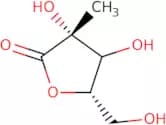
CAS:<p>2-C-Methyl-L-ribono-1,4-lactone is a crystallized carbohydrate that contains the enantiomers L and D. It is a chiral molecule with two asymmetric carbon atoms. The L form has a higher yield than the D form and can be synthesized from l-arabinose, dimethylamine, and isomerisation. This compound is also present in ketoses such as d-xylose and 1-deoxy-d-ribulose. 2CMLR1L4L acts as an inhibitor of the enzyme d-galactose dehydrogenase, which catalyzes the conversion of d-galactose to d-glucose. Cyanide can bind to this compound to form cyanohydrin adducts, which are toxic to cells.</p>Formula:C5H10O5Purity:Min. 95%Molecular weight:150.13 g/mol(2R, 3R, 4R) -3, 4- Dihydroxy- 2- (hydroxymethyl) - 1- pyrrolidineacetic acid
CAS:<p>(2R, 3R, 4R) -3, 4- Dihydroxy- 2- (hydroxymethyl) - 1- pyrrolidineacetic acid is a synthetic monosaccharide that can be modified with fluorine and methylation. This compound is a carbohydrate that can be used for the synthesis of oligosaccharides and polysaccharides. It has been shown to be useful for glycosylation reactions and in the synthesis of complex carbohydrates.</p>Purity:Min. 95%2-(Dimethoxymethyl)dihydro-3(2H)-furanone
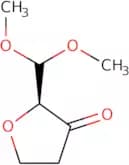
CAS:<p>2-(Dimethoxymethyl)dihydro-3(2H)-furanone is a custom synthesis that can be modified, fluorinated, methylated, or monosaccharide. It is used in the synthesis of oligosaccharides and saccharides. 2-(Dimethoxymethyl)dihydro-3(2H)-furanone is used as a building block for complex carbohydrates such as glycosylation. The CAS number for this compound is 287183-59-9 and the Carbohydrate classification is CAS No. 287183-59-9.</p>Formula:C7H12O4Purity:Min. 95%Molecular weight:160.17 g/mol2-Acetamido-1,3,6-tri-O-acetyl-2,4-dideoxy-4-fluoro-D-galactopyranose
<p>2-Acetamido-1,3,6-tri-O-acetyl-2,4-dideoxy-4-fluoro-D-galactopyranose is a fluorinated sugar that has been modified with acetamido groups. It is used as a building block in the synthesis of oligosaccharides and polysaccharides. This compound has been shown to be an effective inhibitor of glycosylation and can be used to inhibit the growth of cancer cells. 2-Acetamido-1,3,6-tri-O-acetyl--2,4,-dideoxy--4--fluoro--D--galactopyranose is soluble in water and organic solvents such as DMSO or DMF. It can also be used for click chemistry reactions because it contains a reactive azide group.</p>Formula:C14H20FNO8Purity:Min. 95%Molecular weight:349.31 g/molb-Chloralose
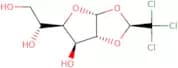
CAS:<p>b-Chloralose is a general anesthetic that is used to induce and maintain anesthesia. It has been shown to decrease the heart rate, respiratory rate, and blood pressure in patients. It also causes a reduction of the glomerular filtration rate and delays the recovery of consciousness. Although b-chloralose has been shown to have negative effects on the cardiovascular system, it can be administered safely in combination with other anesthetics because it does not alter their effects. The use of b-chloralose is limited by its short duration of action and by adverse reactions such as nausea, vomiting, and convulsions.</p>Formula:C8H11Cl3O6Purity:Min. 95%Color and Shape:PowderMolecular weight:309.53 g/moltrans,trans-3,4-Dihydroxy-D-proline
<p>Trans,trans-3,4-Dihydroxy-D-proline is a custom synthesis that has been fluorinated and methylated. It is a polysaccharide with a sugar backbone of an oligosaccharide or saccharide. The carbons in the backbone are connected by glycosylation to form a complex carbohydrate. This product has CAS No.</p>Purity:Min. 95%2,6-Dideoxy-D-arabino-hexose
CAS:<p>2,6-Dideoxy-D-arabino-hexose is a hydrogenolysis product of 2,6-dideoxy-D-ribo-hexose. It has been shown to have a solvolytic activity and can be used for the dehalogenation of several halogenated compounds. 2,6-Dideoxy-D-arabino-hexose is also stereoselective and can be used as an estimator in population genetics. This sugar is also regulatory, catalytic, and crystalline. It is found in many carbohydrates, including weighting disaccharides such as sucrose.</p>Purity:Min. 95%Phenyl-β-D-glucopyranoside
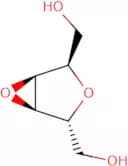
CAS:<p>Phenyl-beta-D-glucopyranoside is a phenolic compound that can be found in plant cell walls. It is a monosaccharide with an ester linkage, which is hydrolyzed by esterases to yield protocatechuic acid. Phenyl-beta-D-glucopyranoside is an inhibitor of sugar transport and has been shown to have protective effects on the liver when it is exposed to toxic substances. This sugar also binds to proteins, which may alter the function of these proteins. Phenyl-beta-D-glucopyranoside has been shown to inhibit glycolysis in hepatic tissues and tannins are released from erythrocytes treated with this substance. Phenyl-beta-D-glucopyranoside has been shown to be chemically stable under acidic conditions.</p>Formula:C12H16O6Molecular weight:256.26 g/molN-Acetyl-2-O-methyl-b-D-neuraminic acid
CAS:<p>N-Acetyl-2-O-methyl-b-D-neuraminic acid (AOMBNA) is a modification of sialic acid. It is an N-acetylated, O-methylated analogue of b-D-neuraminic acid. AOMBNA is synthesized by the chemical modification of D,L -erythro -2,3,4,6 tetra hydro sialic acid with methyl bromo acetate in the presence of sodium methoxide. The product can be purified by crystallization from dichloromethane and methanol mixture. AOMBNA has been used in complex carbohydrate synthesis and glycosylation reactions.</p>Formula:C12H21NO9Purity:Min. 95%Color and Shape:PowderMolecular weight:323.3 g/mol1-Deoxy-D-tagatose
CAS:<p>1-Deoxy-D-tagatose (1Dt) is a competitive inhibitor of glycolysis, which blocks the conversion of glucose to pyruvate. 1Dt has been shown to inhibit the growth of strain CAEN on media containing l-arabinose and d-xylose as carbon sources. 1Dt also inhibits the activity of dehydrogenase enzymes in C. elegans, leading to inhibition of mitochondrial respiration and impaired locomotion. It has been shown that 1Dt can be used as a substrate for bioproduction, with hydrazone as an intermediate product. Larger molecules are produced after hydrolysis and decarboxylation of 1Dt. The most common products are tagatose, l-fucitol, and l-arabinose.<br>1Dt has been shown to have anti-inflammatory properties in animal models by inhibiting the production of reactive oxygen species that are generated during inflammation</p>Formula:C6H12O5Purity:Min. 95%Molecular weight:164.16 g/mol




![N-[2-(4'-Chlorophenylacetonitrile)]-2,3,4,6-tetra-pivaloyl-D-glucopyranoside](/_next/image/?url=https%3A%2Fstatic.cymitquimica.com%2Fproducts%2F3D%2Fthumb-webp%2FMC08449.webp&w=3840&q=75)