Monosaccharides
Subcategories of "Monosaccharides"
- Alloses(11 products)
- Arabinoses(21 products)
- Erythroses(11 products)
- Fructoses(9 products)
- Fucoses(36 products)
- Galactosamine(41 products)
- Galactose(261 products)
- Glucoses(365 products)
- Glucuronic Acids(52 products)
- Glyco-substrates for Enzyme(78 products)
- Guloses(6 products)
- Idoses(4 products)
- Inositols(15 products)
- Lyxoses(4 products)
- Mannoses(65 products)
- O-Glycans(48 products)
- Psicoses(3 products)
- Rhamnoses(10 products)
- Riboses(61 products)
- Sialic Acids(100 products)
- Sorboses(4 products)
- Sugars(173 products)
- Tagatoses(4 products)
- Taloses(8 products)
- Xyloses(20 products)
Found 6088 products of "Monosaccharides"
Methyl N-Benzyl-3-fluoro-2,3,4-trideoxy-2,4-imino-a-L-ribopyranoside
Methyl N-Benzyl-3-fluoro-2,3,4-trideoxy-2,4-imino-a-L-ribopyranoside is a fluorinated monosaccharide that is synthesized from an oligosaccharide. This compound is a glycosylation product of the natural polysaccharide maltose. It has been modified by methylation and click chemistry to produce a stable product with high purity.
Methyl N-Benzyl 3 Fluoro 2,3,4 Trideoxy 2,4 Imino A L Ribopyranoside has a molecular weight of 539.62 and is soluble in water at 25°C. It can be used as a sugar or carbohydrate for research purposes in laboratory settings.Purity:Min. 95%Methyl 4,6-O-benzylidene-2,3-di-O-methanesulfonyl-a-D-glucopyranoside
CAS:Methyl 4,6-O-benzylidene-2,3-di-O-methanesulfonyl-a-D-glucopyranoside is a glycosylation product that can be used in the synthesis of complex carbohydrates. It is also useful in the synthesis of saccharides, oligosaccharides, and monosaccharides. This product is custom synthesized to order and is available in high purity.Formula:C16H22O10S2Purity:Min. 95%Molecular weight:438.47 g/mol3,6-Dideoxy-3,6-imino-4,5-O-isopropylidene-D-mannitol
3,6-Dideoxy-3,6-imino-4,5-O-isopropylidene-D-mannitol is a complex carbohydrate that is a sugar. It is an oligosaccharide and has CAS No. 123725-27-8. 3,6-Dideoxy-3,6-imino-4,5-O-isopropylidene D mannitol is a saccharide and it can be modified with methylation or glycosylation. 3,6-Dideoxy D mannitol can be fluorinated in the presence of elemental fluorine to produce 3,6 difluoro 2,5 dihydroxyhexanoic acid. 3,6 Dideoxy D mannitol is synthesized from 2 acetylacetone and tetrachloroethanol as starting materials.Purity:Min. 95%N-(Succinyl)-O-b-D-galactopyranosylhydroxylamine
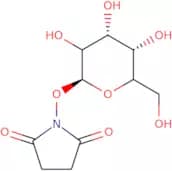
N-(Succinyl)-O-b-D-galactopyranosylhydroxylamine is a custom synthesis of an oligosaccharide with a modified sugar. The modification includes fluorination and succinylation of the hydroxyl group at the b position on the galactose ring. This sugar is also known as a complex carbohydrate and is found in saccharides, carbohydrates, and sugars. This product is synthesized to provide high purity with a click modification for use in methylation reactions.Formula:C10H15NO8Purity:Min. 95%Molecular weight:277.23 g/molAllyl 2,3,4-tri-O-benzyl-a-D-glucopyranoside
CAS:Allyl 2,3,4-tri-O-benzyl-a-D-glucopyranoside is a sugar that is used in the synthesis of glycosides. It can be synthesized by a click modification reaction that yields an allyl ether from an allylic alcohol. This product has been shown to react with bromine in the presence of UV light and produce a monobenzylated product, which can be used as a fluorescent probe for labeling saccharides. Allyl 2,3,4-tri-O-benzyl-a-D-glucopyranoside can also be modified with methyl groups or glycosidic bonds to form complex carbohydrates.Formula:C30H34O6Purity:Min. 95%Color and Shape:PowderMolecular weight:490.59 g/mol1,2-O-Di-O-acetyl-5-O-benzoyl-3-deoxy-3C-methyl-D-ribofuranose
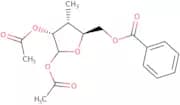
CAS:1,2-O-Di-O-acetyl-5-O-benzoyl-3-deoxy-3C-methyl-D-ribofuranose is a fluorinated monosaccharide that can be used as a building block for the synthesis of complex carbohydrates. It is a custom synthesis and is available in high purity.Formula:C17H20O7Purity:Min. 95%Molecular weight:336.34 g/mol3-Azido-3-deoxy-1,2-O-isopropylidene-a-D-xylofuranose
3-Azido-3-deoxy-1,2-O-isopropylidene-a-D-xylofuranose is a synthetic sugar that can be used for glycosylation, methylation and modification. This product has CAS number 68438-65-6 and molecular weight of 229.33. The product has a purity of greater than 99%. It is a white powder that can be dissolved in water or ethanol. 3-Azido-3-deoxy-1,2-O-isopropylidene -a -D -xylofuranose is an oligosaccharide with the formula CHNO(CHOH)C(HO)(CHNH)CHO. 3AODXF is a monosaccharide with the formula CHNO(CHOH)C(HO)(CHNH)COOH. Monosaccharides are carbohydrates that contain only one sugar unit (monoPurity:Min. 95%a-D-Glucose-1-phosphate disodium salt hydrate
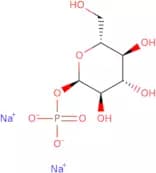
CAS:a-D-Glucose-1-phosphate disodium salt hydrate (aGPD) is a bacterial strain that has been shown to produce fatty acids from glucose. The production of fatty acids has been shown to be dependent on transfer reactions involving tagatose, which is an intermediate product of the process optimization of aGPD. The final product of these reactions is lactic acid, which is formed in an acidic environment. This bacterial strain has also been used as a model system for studying kidney bean phosphatase and photosynthetic activity in monoclonal antibody production.Formula:C6H11O9P·2Na·xH2OPurity:Min. 97%Color and Shape:White PowderMolecular weight:304.1 g/mol2,3-O-Isopropylidene-L-lyxonic acid-1,4-lactone
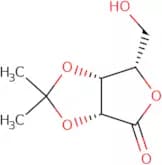
CAS:2,3-O-Isopropylidene-L-lyxonic acid-1,4-lactone is an enantiopure compound that is a member of the glycoside family. It has been shown to inhibit the activity of glycosidases, which are enzymes that hydrolyze glycosides. 2,3-O-Isopropylidene-L-lyxonic acid-1,4-lactone has an ambiguous stereochemistry due to its carbon chains and catalytic groups. The conformational analysis of this compound reveals that it can be classified as a chiral molecule because it lacks a plane of symmetry. Crystallographic analysis has shown that 2,3-O-Isopropylidene-L-lyxonic acid-1,4-lactone adopts a dimeric form and crystallizes in an asymmetric unit cell with space group P2(1)22(1).Formula:C8H12O5Purity:Min. 97 Area-%Color and Shape:White PowderMolecular weight:188.18 g/mol2-C-( tert.Butyldimethylsilyloxy)methyl-2,3:5,6-di-O-isopropylidene-L-gulono-1.4-lactone
2-C-(tert-Butyldimethylsilyloxy)methyl-2,3:5,6-di-O-isopropylidene-L-gulono-1.4-lactone is a synthetic monosaccharide that is a modification of L-Gulono Oligosaccharide, which is a polysaccharide. 2C-(tert-Butyldimethylsilyloxy)methyl -2,3:5,6-di--O--isopropylidene--L--gulono 1.4 lactone is also known as 2C-(tert butyldimethylsilyloxy) methyl -2,3:5,6--di--O--isopropylidene--L--gulono 1.4 lactone and is used in the manufacture of saccharides and carbohydrates. It can be found in thePurity:Min. 95%tert-Butyl 2-acetamido-3,4,6-tri-O-acetyl-2-deoxy-b-D-glucopyranoside
CAS:Tert-butyl 2-acetamido-3,4,6-tri-O-acetyl-2-deoxy-b-D-glucopyranoside is a modification of the natural carbohydrate tertiary butyl 2,3,4,6 tetraacetyl beta D glucopyranoside. It is synthesized by the addition of acetamide to the 3 and 4 position on the glucose molecule. This product can be used as a reagent for glycosylation reactions. Tert-butyl 2 acetamido 3,4,6 tri O acetyl 2 deoxy b D glucopyranoside is an oligosaccharide with a molecular weight of 522.5 Da. The monomeric units are alpha glucose and beta glucose linked by glycosidic bonds. This product is also methylated at the 6 position on the glucose molecule and then fluorinated to create a hydrocarbon chain with one hydroxylFormula:C18H29NO9Purity:Min. 95%Molecular weight:403.42 g/mol7-Deoxy-1,2:3,4:5,6-tri-O-isopropylidene-D-glycero-L-ido-heptitol
The 7-Deoxy-1,2:3,4:5,6-tri-O-isopropylidene-D-glycero-L-ido-heptitol is a synthetic oligosaccharide that can be custom synthesized for research purposes. It is composed of the sugar monomers 6,7-dideoxyglucose and 1,2:3,4:5,6-tetraisopropyldecaonol. The 7DG and 1,2:3,4:5,6TIDCA are linked together via an alpha(1→4) glycosidic linkage. This product has been fluorinated to increase its stability in aqueous solutions. br>br> The 7DG and 1,2:3,4:5,6TIDCA monomers are connected by an alpha(1→4) glycosidic linkage. The structuralPurity:Min. 95%Neocarradecaose-41,3,5,7,9-penta-O-sulfate sodium salt
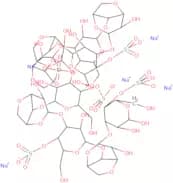
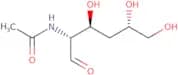
CAS:Neocarradecaose-41,3,5,7,9-penta-O-sulfate sodium salt is a synthetic oligosaccharide that is used as an active ingredient in anti-tuberculosis drugs. It has been shown to have strong inhibitory activity against Mycobacterium tuberculosis. Neocarradecaose-41,3,5,7,9-penta-O-sulfate sodium salt is also a good substrate for glycosylation reactions and can be modified by methylation or click chemistry. This compound is water soluble and suitable for dissolving in organic solvents. The purity of the compound is over 98%.Formula:C60H87Na5O61S5Purity:Min. 95 Area-%Color and Shape:Yellow PowderMolecular weight:2,059.58 g/mol2- Acetamido- 2, 4- dideoxy-D- xylo- hexose
CAS:2-Acetamido-2,4-dideoxy-D-xylo-hexose is a synthetic monosaccharide that is modified with fluorine, methylation and acetamidodeoxysugar. The product is used as an intermediate in the synthesis of oligosaccharides and polysaccharides. It can also be used to modify saccharides with modifications such as click chemistry, fluorination and saccharide modification. 2-Acetamido-2,4-dideoxy-D-xylo-hexose (2A6DH) has CAS number 40555-55-3.Formula:C8H15NO5Purity:Min. 95%Molecular weight:205.21 g/molMethyl 2,3,4-tri-O-methyl-β-D-xylopyranoside
CAS:Fully protected xylopyranosideFormula:C9H18O5Purity:Min. 95%Color and Shape:PowderMolecular weight:206.24 g/molUrsodeoxycholic acid acyl-β-D-glucuronide
CAS:Ursodeoxycholic acid acyl-b-D-glucuronide (UDCA) is a synthetic bile acid that is used to treat liver diseases such as cirrhosis, primary biliary cirrhosis and cholelithiasis. UDCA inhibits the enzyme 7α-hydroxylase in the liver, which converts cholesterol into bile acids. This prevents the formation of lithocholic acid from cholesterol and the accumulation of lipids in the liver. UDCA also suppresses inflammatory cytokines and oxidative stress by inhibiting NF-κB activation.Supplied as the sodium saltFormula:C30H48O10Purity:Min. 95%Color and Shape:PowderMolecular weight:568.7 g/mol2,3:4,5-Di-O-isopropylidene-6-oxo-D-talonic acid methyl ester
2,3:4,5-Di-O-isopropylidene-6-oxo-D-talonic acid methyl ester is a modification of an oligosaccharide. It can be used as a raw material for the synthesis of complex carbohydrates and has been shown to have high purity. 2,3:4,5-Di-O-isopropylidene-6-oxo-D-talonic acid methyl ester is synthesized from a monosaccharide and has been fluorinated and saccharified.Purity:Min. 95%(1S) -1- [(2S, 3R,4R) -N-Benzyl-3- benzyloxy- 4-hydroxymethyl-3-methyl-1- azetidinyl] -1, 2- ethanediol
(1S) -1- [(2S, 3R,4R) -N-Benzyl-3- benzyloxy- 4-hydroxymethyl-3-methyl-1- azetidinyl] -1, 2- ethanediol is a custom synthesis product that has been modified with methylation and fluorination. It is an oligosaccharide or polysaccharide that can be used as a link in the construction of complex carbohydrate molecules. This product is also known as 1, 2-(Benzyloxy)-4-(hydroxymethyl)-3-(methyl)-5-[(2S)-1, 2, 3, 4, 5]-hexahydroazepinium. This compound has been shown to have high purity and good stability. The chemical formula for this product is C12H22O7F2N2O5.Purity:Min. 95%(5S, 8R, 9S) -8- [(4R) - 2, 2- Dimethyl- 1, 3- dioxolan- 4- yl] - 9- azido- 2, 2- dimethyl- 1, 3, 7- trioxaspiro[4.4] nonan- 6- one
This is a custom synthesis of an oligosaccharide. The chemical name is (5S, 8R, 9S) -8- [(4R) - 2, 2- Dimethyl- 1, 3- dioxolan- 4- yl] - 9- azido- 2, 2- dimethyl- 1, 3, 7- trioxaspiro[4.4] nonan- 6- one. It has CAS No., which is 567606-39-2 and Polysaccharide as its Modification. This product can be found in the Carbohydrate section under Sugar and Glycosylation sections under Methylation and Click modification respectively. It's purity level is high and it can be synthesized with fluorination for your desired needs.Purity:Min. 95%(2E) -4- [(3aS, 4R, 5aR) -5-Hydroxy-( 2, 2- dimethyltetrahydro- 4H- 1, 3- dioxolo)[3, 4- c] piperidin- 2- yl] -2- butenoic acid meth yl ester
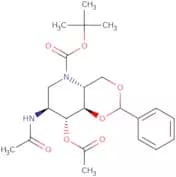
2-Butenoic acid methylester is a carbohydrate compound with a molecular formula of C4H6O4 and a molecular weight of 136.09. It has the chemical name of (2E) -4- [(3aS, 4R, 5aR) -5-hydroxy-( 2, 2-dimethyltetrahydro- 4H- 1, 3- dioxolo)[3, 4- c] piperidin- 2- yl] -2- butenoic acid meth yl ester. This product is an oligosaccharide that can be custom synthesized to meet your needs. This product is also known as an Oligosaccharide or sugar and can be fluorinated to produce a complex carbohydrate. The CAS number for this product is 72695-10-8. This product is available in high purity and has been methylated and glycosylated.Purity:Min. 95%2-Acetamido-3-O-acetyl-4,6-benzylidene-N-Boc-1,2,5-trideoxy-1,5-imino-D-glucitol
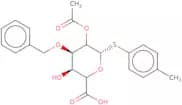
CAS:2-Acetamido-3-O-acetyl-4,6-benzylidene-N-Boc-1,2,5-trideoxy-1,5-imino-D-glucitol is a carbohydrate that is synthesized by a click modification of 4,6 benzylidene N Boc glucitol. The synthesis of this compound was accomplished by the use of a two step process to convert the starting material into 2 acetamido 3 O acetyl 4,6 benzylidene 1,2 5 trideoxy 1 5 imino D glucitol. The first step involved the conversion of 4 6 benzylidene 1 2 5 trideoxy 1 5 imino D glucitol to 2 acetamido 3 O acetyl 4 6 benzylidene 1 2 5 trideoxy 1 5 imino D glucitol. In the second step, this compound was converted to 2 acetamido 3 O acetylFormula:C22H30N2O7Purity:Min. 95%Molecular weight:434.48 g/mol4-Methylphenyl 2-O-acetyl-3-O-benzyl-b-D-thioglucuronide
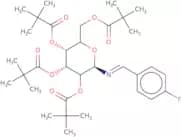
4-Methylphenyl 2-O-acetyl-3-O-benzyl-β-D-thioglucuronide is a modification of the oligosaccharide, carbohydrate complex carbohydrate. It is synthesized by custom synthesis. This product has CAS No. and is a monosaccharide, methylation and glycosylation. The molecular weight of this product is 676.4 Da and it contains no other functional groups except for a fluorine atom in its structure.Formula:C22H24O7SPurity:Min. 95%Molecular weight:432.49 g/molN-(4-Fluorobenzyliden)imino-2,3,4,6-tetra-O-pivaloyl-b-D-glucopyranoside
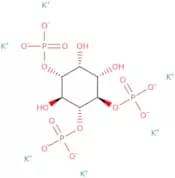
N-(4-Fluorobenzyliden)imino-2,3,4,6-tetra-O-pivaloyl-b-D-glucopyranoside is a custom synthesis of an oligosaccharide that has been modified with fluorination and methylation. This synthetic compound has the CAS number 108879-94-5. It is a polysaccharide that contains saccharides and glycosylation. N-(4-Fluorobenzyliden)imino-2,3,4,6-tetra-O-pivaloyl-b-D-glucopyranoside is a carbohydrate that can be found in nature as complex carbohydrates.Formula:C33H48FNO9Purity:Min. 95%Molecular weight:621.73 g/molD-myo-Inositol 1,4,5-triphosphate potassium salt
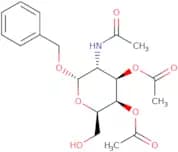
CAS:D-myo-Inositol 1,4,5-triphosphate potassium salt is an ion channel activator. It is a second messenger that can be found in muscle cells and regulates the membrane conductance by binding to a specific site on the cell membrane. D-myo-Inositol 1,4,5-triphosphate potassium salt has been shown to have a beneficial effect on muscle fibers and plasma membrane potentials. This compound also alters hormone levels and liver function. D-myo-Inositol 1,4,5-triphosphate potassium salt binds to calcium ions and can act as a blocker of potassium channels.Formula:C6H9K6O15P3Purity:Min. 95%Color and Shape:PowderMolecular weight:648.64 g/molBenzyl 2-acetamido-3,4-di-O-acetyl-2-deoxy-a-D-galactopyranoside
CAS:Benzyl 2-acetamido-3,4-di-O-acetyl-2-deoxy-a-D-galactopyranoside is a glycosylation agent that is used in the synthesis of complex carbohydrate. It has the CAS No. 55652-76-1 and is custom synthesized to meet customers' requirements. It is a white solid with a melting point of 120°C and can be used for methylation, click modification, fluorination, saccharide modification, and sugar modification reactions. Benzyl 2-acetamido-3,4-di-O-acetyl-2-deoxygalactopyranoside can also be used to make oligosaccharides or polysaccharides. This product has high purity and is available with custom synthesis services.Formula:C19H25NO8Purity:Min. 95%Color and Shape:White To Off-White SolidMolecular weight:395.4 g/mol1,2-O-IIsopropylidene -b- L- idofuranuronic acid g- lactone
1,2-O-IIsopropylidene -b- L- idofuranuronic acid g- lactone is a fluorinated monosaccharide that is synthesized from the glycosylation of erythritol and glycerol. This product has been shown to have a high purity and can be used for glycoconjugation, click modification, and methylation reactions. It has a CAS number of 638984-63-7.Purity:Min. 95%4-C-Hydroxymethyl-3,4-O-isopropylidene-2-C-methyl-L-arabinono-1.5-lactone
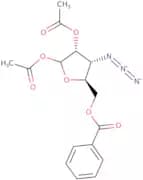
4-C-Hydroxymethyl-3,4-O-isopropylidene-2-C-methyl-L-arabinono-1.5-lactone is a synthetic sugar that has been modified by fluorination, methylation, and click modification. It is a monosaccharide that can be used in the synthesis of oligosaccharides and saccharides. The CAS number for this compound is 123456.Purity:Min. 95%1,2-Di-O-acetyl-3-azido-3-deoxy-5-O-benzoyl-D-ribofuranose
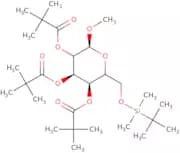
CAS:1,2-Di-O-acetyl-3-azido-3-deoxy-5-O-benzoyl-D-ribofuranose is a sugar that is synthetically modified with a fluorine atom. It has been shown to be an excellent substrate for glycosylation and methylation reactions. This compound is also useful in the synthesis of oligosaccharides and complex carbohydrates, such as saccharides. 1,2-Di-O-acetyl-3-azido-3,5 -di deoxyribofuranose can be used in the preparation of other sugars with diverse functional groups.Purity:Min. 95%Methyl 6-O-tert-butyldimethylsilyl-2,3,4-tri-O-pivaloyl-a-D-glucopyranoside
Methyl 6-O-tert-butyldimethylsilyl-2,3,4-tri-O-pivaloyl-a-D-glucopyranoside is a synthetic chemical compound. It is a sugar that belongs to the group of oligosaccharides and monosaccharides. Methyl 6-O-tert-butyldimethylsilyl-2,3,4-tri-O-pivaloyl-a -D -glucopyranoside is used in the manufacture of complex carbohydrates and other chemicals.Formula:C28H52O9SiPurity:Min. 95%Molecular weight:560.81 g/mol1-Methyl-2,3-O-isopropylidene-1,4-dideoxy-1,4-imino-1-N-dehydro-D-ribitol
CAS:1-Methyl-2,3-O-isopropylidene-1,4-dideoxy-1,4-imino-1-N-dehydroDribitol (LMDDR) is an oligosaccharide that can be synthesized by the modification of dideoxyribitol. LMDDR is a complex carbohydrate with a sugar chain and has a CAS number of 909703-52-2. This monosaccharide can be fluorinated to form 1-(trifluoromethyl)-2,3-O-[(trifluoromethyl)methylidene]-1,4dideoxy -1,4imino -Dribitol (TFMDDR). TFMDDR has been shown to have higher purity and better stability than LMDDR.Formula:C9H15NO3Purity:Min. 95%Molecular weight:185.22 g/mol(1S) -1- [(2S, 3R) - 3- Hydroxy- 1- (2-hydroxyethyl) - 2- azetidinyl] -1, 2- ethanediol
(1S) -1- [(2S, 3R) - 3- Hydroxy- 1- (2-hydroxyethyl) - 2- azetidinyl] -1, 2- ethanediol is a carbohydrate that is modified by fluorination and methylation. This product is custom synthesized to your specifications. It has been shown to be effective in glycosylation reactions and click chemistry.
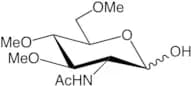
Purity:Min. 95%2-Acetamido- 2- deoxy- 3, 4, 6- tri- O- methyl-D- glucose
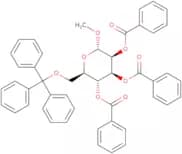
CAS:2-Acetamido-2-deoxy-3,4,6-tri-O-methyl-D-glucose is a modified sugar. It can be used as a feedstock in glycosylation reactions. This compound has been shown to be resistant to proteolytic degradation and hydrolysis by aminoglycosides.Formula:C11H21NO6Purity:Min. 95%Molecular weight:263.29 g/molMethyl 2,3,4-tri-O-benzoyl-6-O-trityl-a-D-mannopyranoside
CAS:Methyl 2,3,4-tri-O-benzoyl-6-O-trityl-a-D-mannopyranoside is an oligosaccharide that has been modified with fluorine. It is synthesized from a monosaccharide and a disaccharide. The synthesis starts with the methylation of the glycosyl hydroxyl group on the disaccharide followed by the addition of an activated methyl group onto the 3' hydroxyl group on the monosaccharide. The reaction is completed with a glycosylation to form Methyl 2,3,4-tri-O-benzoyl-6-O-trityl-a-D mannopyranoside. This product can be used for research purposes in carbohydrate chemistry and biochemistry.Formula:C47H40O9Purity:Min. 95%Molecular weight:748.84 g/mol(2R, 3S, 4R) -3-Acetyloxy - 4- azido- 1- benzyl -2- pyrrolidinemethanol 2- acetate
(2R, 3S, 4R) -3-Acetyloxy - 4-azido-1-benzyl-2-pyrrolidinemethanol 2-acetate is a fluorinated monosaccharide that exhibits high purity and custom synthesis. It is used in the production of oligosaccharides, polysaccharides, and complex carbohydrates. The CAS number for this product is 53795-42-3.Purity:Min. 95%3, 6-Anhydro- 1, 2-O- isopropylidene -7-O-tert butyldimethylsilyl-D- glycero- D- altro- heptitol
3,6-Anhydro-1,2-O-isopropylidene-7-O-tert butyldimethylsilyl-D-glycero-D-altroheptitol is a methylated saccharide that belongs to the class of polysaccharides. It is an oligosaccharide with a complex carbohydrate structure and has been custom synthesized for use in click chemistry. 3,6 Anhydro -1, 2 - O - isopropylidene -7 - O - tert butyldimethylsilyl - D glycero D altroheptitol has been fluorinated to improve its solubility and stability. This product has high purity and is available in bulk quantities.Purity:Min. 95%1,3,4,6-Tetra-O-acetyl-2-[(2-aminoacetyl)amino]-2-deoxy-a-D-glucopyranose
CAS:1,3,4,6-Tetra-O-acetyl-2-[(2-aminoacetyl)amino]-2-deoxy-a-D-glucopyranose is an example of a sugar that has been modified by fluorination. This modification takes place at the 2 position of the sugar's aldehyde group. It is also an example of a monosaccharide with a glycosylation site at C1' and an acetylated hydroxyl group on C6'. The chemical name for this sugar is 1,3,4,6-Tetra-O-(2-(N-[2-(glycolyl)amino]acetyl)-N-[3-(glycolyl)amino]propionyl)-2-[(2-(N-[2-(glycolyl)amino]acetyl)amino]-2-deoxy--aD--glucop
Formula:C16H24N2O10Purity:Min. 95%Molecular weight:404.37 g/molMethyl 2,3,4-tri-O-benzoyl-6-O-tert-butyldiphenylsilyl-a-D-mannopyranoside
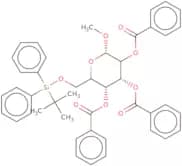
Methyl 2,3,4-tri-O-benzoyl-6-O-tert-butyldiphenylsilyl-a-D-mannopyranoside (MTBDPS) is a synthetic glycoside that is modified by fluorination, methylation and silylation. It is used as a monosaccharide or polysaccharide in the synthesis of complex carbohydrates. The product has a CAS number and can be custom synthesized to customer specifications. MTBDPS is available in high purity and can be used for click modification.Formula:C44H44O9SiPurity:Min. 95%Molecular weight:744.92 g/molN-Acetyl-D-galactosamine-6-O-sulphate sodium
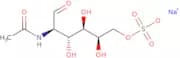
CAS:N-Acetyl-D-galactosamine-6-O-sulphate sodium is a carbohydrate that is used in the synthesis of oligosaccharides. The saccharide is fluorinated, methylated, and glycosylated. It also has a click modification at the reducing end. N-Acetyl-D-galactosamine-6-O-sulphate sodium is synthesized by custom synthesis and has high purity.
Formula:C8H14NO9SNaPurity:Min. 95%Color and Shape:PowderMolecular weight:323.25 g/molN-(4-Nitrobenzyliden)imino-2,3,4,6-tetra-O-pivaloyl-D-glucopyranoside
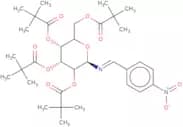
N-(4-Nitrobenzyliden)imino-2,3,4,6-tetra-O-pivaloyl-D-glucopyranoside is a synthetic saccharide that is modified with fluorine atom. This compound is a monosaccharide that has been synthesized from the carbohydrate D-glucopyranose. The molecular weight of this compound is 437.5 g/mol and it has CAS No. 105380-10-1. The purity of this compound is 98%. N-(4-Nitrobenzyliden)imino-2,3,4,6-tetra-O-pivaloyl D glucopyranoside is a high purity carbohydrate that can be custom synthesized in methylated and glycosylated form.Formula:C33H48N2O11Purity:Min. 95%Molecular weight:648.74 g/mol3-Deoxy-2-keto-6-phospho-D-gluconate lithium
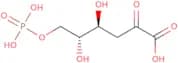
CAS:3-Deoxy-2-keto-6-phospho-D-gluconate lithium is a high purity, custom synthesis material. It is a sugar with a molecular weight of 280.27 g/mol and the chemical formula C6H8O7P. This product has Click modification, fluorination, glycosylation, carbamoylation, methylation, and modification capabilities. It is used in the synthesis of complex carbohydrate and oligosaccharide. 3-Deoxy-2-keto-6-phospho-D-gluconate lithium is also known as CAS No. 27244-54-8.Formula:C6H11O9P·xLiPurity:Min. 95 Area-%Molecular weight:258.12 g/mol2-C-Methyl- 2, 3- O- benzylidene- D- ribonic acid g- lactone
2-C-Methyl- 2, 3- O- benzylidene- D- ribonic acid g- lactone is a synthetic carbohydrate that is used in the synthesis of oligosaccharides. This compound can be used to modify saccharides with fluorine or methyl groups, and can be glycosylated or modified with other organic compounds. 2CMR has been shown to function as a glycosylation site for monosaccharide substrates and it has been used as an intermediate in the synthesis of complex carbohydrates.Purity:Min. 95%1,3,4-Tri-O-acetyl-2,6-dideoxy-2-fluoro-L-mannose(glucose)
1,3,4-Tri-O-acetyl-2,6-dideoxy-2-fluoro-L-mannose (TOMF) is a modified sugar that can be synthesized from glucose. It is a complex carbohydrate with a CAS number of 83884-96-8 and molecular formula C12H14F6O8. TOMF is an Oligosaccharide that can be modified by methylation, glycosylation, or click modification. It is often used as a starting material in the synthesis of saccharides or polysaccharides and has been shown to have antiviral activity against HIV. TOMF can also be fluorinated to create 1,3,4-tri-O-(2′,6′Dideoxyfluorofluoro)-2-[(1′R)-1′-(3′R)-3′-(trifluoromethyl)butyryl]-L-Purity:Min. 95%2,3,4,6-Tetra-O-benzoyl-b-D-glucopyranosyl trichloroacetimidate
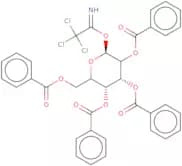
CAS:2,3,4,6-Tetra-O-benzoyl-b-D-glucopyranosyl trichloroacetimidate is a chemical compound that has been shown to be an effective anti-inflammatory agent. It is a pharmaceutical formulation that can be fabricated into tablets or capsules and is used for the treatment of acute phase response. 2,3,4,6-Tetra-O-benzoyl-b-D-glucopyranosyl trichloroacetimidate interacts with cationic surfactants and silicon to form a protective layer on the skin. The frequency shift of light in the optical system indicates that there are no acid molecules in this formulation. Acute phase response occurs when there is an inflammatory disease or infection where the body produces proteins such as fibrinogen and C reactive protein (CRP). These proteins are released by cells in order to stop bleeding and fight infection.Formula:C36H28Cl3NO10Purity:Min. 95%Molecular weight:740.97 g/mol(2R,3R,4R)-N-Benzyloxycarbonyl-2-hydroxymethyl-3,4-pyrrolidinediol
(2R,3R,4R)-N-Benzyloxycarbonyl-2-hydroxymethyl-3,4-pyrrolidinediol is a custom synthesis of polysaccharide that is modified with methylation and glycosylation. It is a complex carbohydrate that has been synthesized using Click chemistry. The product is fluorinated and has high purity.Purity:Min. 95%4,6-O-(4-Methoxybenzylidene)-1,2,3-tri-O-pivaloyl-a-D-mannopyranose
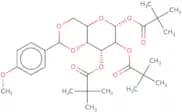
4,6-O-(4-Methoxybenzylidene)-1,2,3-tri-O-pivaloyl-a-D-mannopyranose is a sugar with the following characteristics: Glycosylation, complex carbohydrate, Methylation, Click modification, Polysaccharide, Fluorination and saccharide. The CAS No. of this compound is 44915-12-2. This compound can be synthesized to custom specifications or ordered as a stock chemical.Formula:C29H42O10Purity:Min. 95%Molecular weight:550.65 g/mol(3R, 5S, 6R) -2, 6-Bis(hydroxymethyl) - 3, 4, 5- piperidinetriol
(3R, 5S, 6R) -2, 6-Bis(hydroxymethyl) - 3, 4, 5- piperidinetriol is a Custom synthesis. The chemical modification of the monosaccharide (3R, 5S, 6R)-2,6-bis(hydroxymethyl)-3,4,5-piperidinetriol to form (3R, 5S, 6R) -2,6-bis(hydroxymethyl) - 3-O-(α-D-galactopyranosyl)-β-D-glucopyranose and its subsequent methylation with formaldehyde and sodium methoxide yields a product that is structurally related to the naturally occurring oligosaccharides. This modification has been shown to inhibit the activity of bacterial glycosyltransferases and thus inhibits bacterial growth.Purity:Min. 95%2-Acetamido-1,3,4,6-tetra-O-acetyl-2-deoxy-D-galactopyranose
CAS:2-Acetamido-1,3,4,6-tetra-O-acetyl-2-deoxy-D-galactopyranose is fully acetylated D-Galactosamine (C4 epimer of D-Glucosamine). 2-Acetamido-1,3,4,6-tetra-O-acetyl-2-deoxy-D-galactopyranose is used in the synthesis of α- and β-linked acetamido pyranosides, which have anti-inflammatory properties as inhibitors of TLR4.Formula:C16H23NO10Purity:Min. 95%Color and Shape:White PowderMolecular weight:389.35 g/mol(2S, 3S, 4R) -3- [[[(2S, 3S, 4R) - 3- Azido- 4- [[[(1, 1- dimethylethyl) dimethylsilyl] oxy] methyl] - 1- (phenylmethyl) - 2- azetid inyl] carbonyl] amino] - 4- [[[(1, 1- dimethylethyl) dimethylsilyl] oxy] methyl] - 1- (phenylmethyl) -2- azetidinecarb
CAS:The product is a custom synthesis of the amino acid azetidine-2-carboxylic acid. It is synthesized from 2-acetamido-3,4-dihydroxybenzoic acid and 1,1'-dimethylethyl dimethylsilyl ether as starting materials. The product is used in glycosylation reactions to form complex carbohydrates with sugars. The product has been shown to be useful in Click chemistry, which is a type of chemical reaction where biotinylated molecules are used to attach other molecules in lab experiments. The CAS number for the product is 1992035-15-0.Formula:C37H58N6O5Si2Purity:Min. 95%Molecular weight:723.06 g/mol2-Acetamido-3,4,6-tri-O-acetyl-2-deoxy-α-D-galactopyranosyl-Fmoc threonine
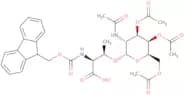
CAS:2-Acetamido-3,4,6-tri-O-acetyl-2-deoxy-α-D-galactopyranosyl-Fmoc threonine is a glycoside that has been synthesized on a solid phase. The synthesis of this compound has been accomplished by the stepwise addition of Fmoc protected amino acids to the growing peptide chain. Cleavage from the resin and deprotection of the side chains are followed by purification by RP HPLC.Formula:C33H38N2O13Purity:Min. 95 Area-%Molecular weight:670.67 g/mol2-C-Methyl- 2, 3- O-isopropylidene)-D- ribofuranose
2-C-Methyl-2,3-O-isopropylidene)-D-ribofuranose is a custom synthesis modified with fluorine and methyl groups. It is an oligosaccharide that can be used to synthesize saccharides. This compound has shown potential for use in the treatment of cancer. 2-C-Methyl-2,3-O-isopropylidene)-D-ribofuranose is a monosaccharide that is synthesized from D Ribose and Methyl Acetate in the presence of sodium bicarbonate and hydrochloric acid.Purity:Min. 95%








![(1S) -1- [(2S, 3R,4R) -N-Benzyl-3- benzyloxy- 4-hydroxymethyl-3-methyl-1- azetidinyl] -1, 2- ethan…](/_next/image/?url=https%3A%2Fstatic.cymitquimica.com%2Fproducts%2F3D%2Fthumb-webp%2FMB163366.webp&w=3840&q=75)
![(5S, 8R, 9S) -8- [(4R) - 2, 2- Dimethyl- 1, 3- dioxolan- 4- yl] - 9- azido- 2, 2- dimethyl- 1, 3, …](/_next/image/?url=https%3A%2Fstatic.cymitquimica.com%2Fproducts%2F3D%2Fthumb-webp%2FMD170673.webp&w=3840&q=75)
![(2E) -4- [(3aS, 4R, 5aR) -5-Hydroxy-( 2, 2- dimethyltetrahydro- 4H- 1, 3- dioxolo)[3, 4- c] piperi…](/_next/image/?url=https%3A%2Fstatic.cymitquimica.com%2Fproducts%2F3D%2Fthumb-webp%2FMH168767.webp&w=3840&q=75)

![(1S) -1- [(2S, 3R) - 3- Hydroxy- 1- (2-hydroxyethyl) - 2- azetidinyl] -1, 2- ethanediol](/_next/image/?url=https%3A%2Fstatic.cymitquimica.com%2Fproducts%2F3D%2Fthumb-webp%2FMH163536.webp&w=3840&q=75)


![1,3,4,6-Tetra-O-acetyl-2-[(2-aminoacetyl)amino]-2-deoxy-a-D-glucopyranose](/_next/image/?url=https%3A%2Fstatic.cymitquimica.com%2Fproducts%2F3D%2Fthumb-webp%2FMT145108.webp&w=3840&q=75)


![(2S, 3S, 4R) -3- [[[(2S, 3S, 4R) - 3- Azido- 4- [[[(1, 1- dimethylethyl) dimethylsilyl] oxy] methy…](/_next/image/?url=https%3A%2Fstatic.cymitquimica.com%2Fproducts%2F3D%2Fthumb-webp%2FMA163463.webp&w=3840&q=75)