Monosaccharides
Subcategories of "Monosaccharides"
- Alloses(11 products)
- Arabinoses(21 products)
- Erythroses(11 products)
- Fructoses(9 products)
- Fucoses(36 products)
- Galactosamine(41 products)
- Galactose(261 products)
- Glucoses(365 products)
- Glucuronic Acids(52 products)
- Glyco-substrates for Enzyme(78 products)
- Guloses(6 products)
- Idoses(4 products)
- Inositols(15 products)
- Lyxoses(4 products)
- Mannoses(65 products)
- O-Glycans(48 products)
- Psicoses(3 products)
- Rhamnoses(10 products)
- Riboses(61 products)
- Sialic Acids(100 products)
- Sorboses(4 products)
- Sugars(173 products)
- Tagatoses(4 products)
- Taloses(8 products)
- Xyloses(20 products)
Found 6088 products of "Monosaccharides"
4-Acetamidophenyl-2,3,4-tri-O-acetyl-β-D-glucuronide methyl ester
CAS:4-Acetamidophenyl-2,3,4-tri-O-acetyl-b-D-glucuronide methyl ester is a modified sugar with a saccharide at the 2' position and an acetamidophenol group at the 4' position. It can be used in a variety of synthetic methods, such as the Click modification and glycosylation. This product is custom synthesized and has high purity, making it a good choice for many research applications.Formula:C21H25NO11Purity:Min. 95%Molecular weight:467.42 g/mol4, 6- O- [(R) - Phenylmethylene] -a- D-glucopyranose
CAS:4,6-O- (R)- Phenylmethylene -a- D-glucopyranose is a modification of the sugar glycoside glucose. This compound is synthesized from glucose by methylation and fluorination. The synthesis process begins with the addition of sodium borohydride to a solution of glucose in methanol. The next step involves the treatment of this mixture with phenylmagnesium bromide followed by phenylmethylene bromine. The final step involves heating the reaction mixture at reflux for 10 hours. 4,6-O- (R)- Phenylmethylene -a- D-glucopyranose is extremely pure and offers a wide range of applications in the fields of biochemistry, medicinal chemistry, and polymer science.Formula:C13H16O6Purity:Min. 95%Molecular weight:268.26 g/mol(5R, 6S, 7R) -6, 7- Dihydro- 5- [(1R) - 1- hydroxyethyl] - 5H- pyrrolotetrazole- 6, 7- diol
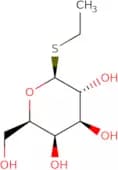
(5R, 6S, 7R) -6, 7- Dihydro- 5- [(1R) - 1- hydroxyethyl] - 5H- pyrrolotetrazole- 6, 7- diol is a synthetic compound used in the synthesis of various complex carbohydrates. It is a methylated derivative of 2-(2-(4-nitrophenyl) diazenyl)-5H-pyrrolo[2,3-d]pyrimidine and can be synthesized by the click modification of an oligosaccharide or polysaccharide (such as cellulose). This compound has been modified with fluorine and is highly pure. It belongs to the group of monosaccharides and sugars.Purity:Min. 95%Ethyl b-D-thiogalactopyranoside
CAS:Synthetic building blockFormula:C8H16O5SPurity:Min. 95%Color and Shape:White PowderMolecular weight:224.28 g/mol6-Deoxy-a-D-talose
CAS:6-Deoxy-a-D-talose is a non-reducing sugar. It is used in the synthesis of glycosides and polysaccharides. 6-Deoxy-a-D-talose is hydrolyzed by esterases or glucuronidases, oxidized by cytochrome P450 enzymes, reduced by glutathione reductase, or conjugated with glucuronic acid.Formula:C6H12O5Purity:Min. 95%Color and Shape:PowderMolecular weight:164.16 g/mol[1S- (1a, 2a, 8a, 8ab) ] -2, 3, 8, 8a-Tetrahydro- 1, 2, 8- trihydroxy-5(1H) - indolizinone
CAS:Methylation of the C-2' and C-8a positions of a 2,3,8,8a tetrahydroindolizinone derivative affords a methylated saccharide. A fully fluorinated analogue is obtained by performing a click modification on the C-2' position. The methylated saccharide has been used in the synthesis of oligosaccharides and glycosylations. This product is high purity and custom synthesis.Formula:C8H11NO4Purity:Min. 95%Molecular weight:185.18 g/molD-Glucose-6-phosphate - 1M, in H2O
CAS:Glucose 6-phosphatase substrateFormula:C6H13O9PPurity:Min. 95%Color and Shape:Colorless Clear LiquidMolecular weight:260.14 g/mol(1R) -1- [(2S, 3S) - N-Methyl-3- hydroxy- 1- azetidinyl] -1, 2- ethanediol
(1R) -1- [(2S, 3S) - N-Methyl-3- hydroxy- 1- azetidinyl] -1, 2- ethanediol is a synthetic sugar that is used in the manufacture of other chemical compounds. It has a CAS number of 93908-06-6 and can be custom synthesized to fit your needs. This product is highly pure and can be modified with methylation or glycosylation. The synthesis of this product can be done with click chemistry.Purity:Min. 95%1-Chloro-1-deoxy-D-fructose
CAS:glycosidase enzyme inhibitor. Formerly code MC04178.
Formula:C6H11ClO5Molecular weight:198.60 g/mol3-Deoxy-1,2-O-isopropylidene-3-trifluoromethyl-a-D-xylofuranose
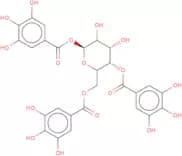
3-Deoxy-1,2-O-isopropylidene-3-trifluoromethyl-a-D-xylofuranose is a modification of the sugar xylose. It is an Oligosaccharide that belongs to the Carbohydrate group. 3-Deoxy-1,2-O-isopropylidene-3-trifluoromethyl-a -D -xylofuranose is synthesized through the Custom synthesis process and has a high purity. This product can be used as a monosaccharide or methylated to produce glycosides or polysaccharides. 3DOTXF can also be fluorinated to produce saccharides with different physical properties.Formula:C9H13F3O4Purity:Min. 95%Molecular weight:242.19 g/mol1,4,6-Tri-O-galloylglucose
CAS:1,4,6-Tri-O-galloylglucose is a synthetic carbohydrate that has been modified using glycosylation, methylation, and click modification. It is a complex carbohydrate with a high purity of 99.5%, and can be used in many applications including the synthesis of oligosaccharides. 1,4,6-Tri-O-galloylglucose can be fluorinated to create a product with increased resistance to hydrolysis.
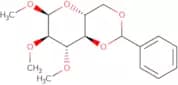
Formula:C27H24O18Purity:Min. 95%Molecular weight:636.47 g/molMethyl 4,6-O-benzylidene-2,3-di-O-methyl-a-D-glucopyranoside
CAS:Methyl 4,6-O-benzylidene-2,3-di-O-methyl-a-D-glucopyranoside is a high purity synthetic compound. It is an oligosaccharide that consists of a methylated glucose unit with four acetate groups and one benzyl group attached. Methyl 4,6-O-benzylidene-2,3-di-O-methyl-a-D-glucopyranoside is used as a substrate for glycosylation reactions and as a chromatographic marker.Formula:C16H22O6Purity:Min. 95%Color and Shape:White Off-White PowderMolecular weight:310.35 g/molMethyl 2,3,4-tri-O-methyl-β-D-xylopyranoside
CAS:Fully protected xylopyranosideFormula:C9H18O5Purity:Min. 95%Color and Shape:PowderMolecular weight:206.24 g/molUrsodeoxycholic acid acyl-β-D-glucuronide
CAS:Ursodeoxycholic acid acyl-b-D-glucuronide (UDCA) is a synthetic bile acid that is used to treat liver diseases such as cirrhosis, primary biliary cirrhosis and cholelithiasis. UDCA inhibits the enzyme 7α-hydroxylase in the liver, which converts cholesterol into bile acids. This prevents the formation of lithocholic acid from cholesterol and the accumulation of lipids in the liver. UDCA also suppresses inflammatory cytokines and oxidative stress by inhibiting NF-κB activation.Supplied as the sodium saltFormula:C30H48O10Purity:Min. 95%Color and Shape:PowderMolecular weight:568.7 g/mol2,3:4,5-Di-O-isopropylidene-6-oxo-D-talonic acid methyl ester
2,3:4,5-Di-O-isopropylidene-6-oxo-D-talonic acid methyl ester is a modification of an oligosaccharide. It can be used as a raw material for the synthesis of complex carbohydrates and has been shown to have high purity. 2,3:4,5-Di-O-isopropylidene-6-oxo-D-talonic acid methyl ester is synthesized from a monosaccharide and has been fluorinated and saccharified.Purity:Min. 95%(1S) -1- [(2S, 3R,4R) -N-Benzyl-3- benzyloxy- 4-hydroxymethyl-3-methyl-1- azetidinyl] -1, 2- ethanediol
(1S) -1- [(2S, 3R,4R) -N-Benzyl-3- benzyloxy- 4-hydroxymethyl-3-methyl-1- azetidinyl] -1, 2- ethanediol is a custom synthesis product that has been modified with methylation and fluorination. It is an oligosaccharide or polysaccharide that can be used as a link in the construction of complex carbohydrate molecules. This product is also known as 1, 2-(Benzyloxy)-4-(hydroxymethyl)-3-(methyl)-5-[(2S)-1, 2, 3, 4, 5]-hexahydroazepinium. This compound has been shown to have high purity and good stability. The chemical formula for this product is C12H22O7F2N2O5.Purity:Min. 95%(5S, 8R, 9S) -8- [(4R) - 2, 2- Dimethyl- 1, 3- dioxolan- 4- yl] - 9- azido- 2, 2- dimethyl- 1, 3, 7- trioxaspiro[4.4] nonan- 6- one
This is a custom synthesis of an oligosaccharide. The chemical name is (5S, 8R, 9S) -8- [(4R) - 2, 2- Dimethyl- 1, 3- dioxolan- 4- yl] - 9- azido- 2, 2- dimethyl- 1, 3, 7- trioxaspiro[4.4] nonan- 6- one. It has CAS No., which is 567606-39-2 and Polysaccharide as its Modification. This product can be found in the Carbohydrate section under Sugar and Glycosylation sections under Methylation and Click modification respectively. It's purity level is high and it can be synthesized with fluorination for your desired needs.Purity:Min. 95%(2E) -4- [(3aS, 4R, 5aR) -5-Hydroxy-( 2, 2- dimethyltetrahydro- 4H- 1, 3- dioxolo)[3, 4- c] piperidin- 2- yl] -2- butenoic acid meth yl ester
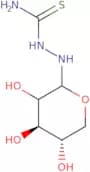
2-Butenoic acid methylester is a carbohydrate compound with a molecular formula of C4H6O4 and a molecular weight of 136.09. It has the chemical name of (2E) -4- [(3aS, 4R, 5aR) -5-hydroxy-( 2, 2-dimethyltetrahydro- 4H- 1, 3- dioxolo)[3, 4- c] piperidin- 2- yl] -2- butenoic acid meth yl ester. This product is an oligosaccharide that can be custom synthesized to meet your needs. This product is also known as an Oligosaccharide or sugar and can be fluorinated to produce a complex carbohydrate. The CAS number for this product is 72695-10-8. This product is available in high purity and has been methylated and glycosylated.Purity:Min. 95%L-Ribopyranosyl thiosemicarbazide
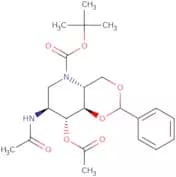
Ribopyranosyl thiosemicarbazide is a synthetic chemical compound that has glycosylation activity. It can be used for the synthesis of oligosaccharides, sugar, and complex carbohydrate. Ribopyranosyl thiosemicarbazide can be fluorinated at C-1 position and methylated in C-2 position. This product is provided with purity of >98%. CAS No.: 5288-55-8Formula:C6H13N3O4SPurity:Min. 95%Molecular weight:223.25 g/mol2-Acetamido-3-O-acetyl-4,6-benzylidene-N-Boc-1,2,5-trideoxy-1,5-imino-D-glucitol
CAS:2-Acetamido-3-O-acetyl-4,6-benzylidene-N-Boc-1,2,5-trideoxy-1,5-imino-D-glucitol is a carbohydrate that is synthesized by a click modification of 4,6 benzylidene N Boc glucitol. The synthesis of this compound was accomplished by the use of a two step process to convert the starting material into 2 acetamido 3 O acetyl 4,6 benzylidene 1,2 5 trideoxy 1 5 imino D glucitol. The first step involved the conversion of 4 6 benzylidene 1 2 5 trideoxy 1 5 imino D glucitol to 2 acetamido 3 O acetyl 4 6 benzylidene 1 2 5 trideoxy 1 5 imino D glucitol. In the second step, this compound was converted to 2 acetamido 3 O acetylFormula:C22H30N2O7Purity:Min. 95%Molecular weight:434.48 g/molD-Ribose
CAS:D-ribose is a pentose that is used in the metabolism of plants and humans. It has been shown to inhibit binding of inhibitors to ribose and to exhibit significant cytotoxicity against tumor cells. D-Ribose also has an important role in energy metabolism, where it is involved in the synthesis of ATP. D-Ribose has been shown to be beneficial for patients with congestive heart failure, as it improves cardiac function and reduces the size of the heart. D-Ribose may also have a role in the treatment of infectious diseases by inhibiting viral replication, as well as preventing neuronal death.Formula:C5H10O5Purity:Min. 99.0 Area-%Molecular weight:150.13 g/molRef: 3D-R-5500
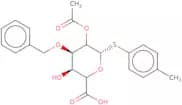
25gTo inquire5kgTo inquire10kgTo inquire25kgTo inquire2500gTo inquire-Unit-kgkgTo inquire4-Methylphenyl 2-O-acetyl-3-O-benzyl-b-D-thioglucuronide
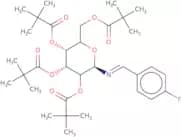
4-Methylphenyl 2-O-acetyl-3-O-benzyl-β-D-thioglucuronide is a modification of the oligosaccharide, carbohydrate complex carbohydrate. It is synthesized by custom synthesis. This product has CAS No. and is a monosaccharide, methylation and glycosylation. The molecular weight of this product is 676.4 Da and it contains no other functional groups except for a fluorine atom in its structure.Formula:C22H24O7SPurity:Min. 95%Molecular weight:432.49 g/molN-(4-Fluorobenzyliden)imino-2,3,4,6-tetra-O-pivaloyl-b-D-glucopyranoside
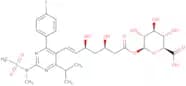
N-(4-Fluorobenzyliden)imino-2,3,4,6-tetra-O-pivaloyl-b-D-glucopyranoside is a custom synthesis of an oligosaccharide that has been modified with fluorination and methylation. This synthetic compound has the CAS number 108879-94-5. It is a polysaccharide that contains saccharides and glycosylation. N-(4-Fluorobenzyliden)imino-2,3,4,6-tetra-O-pivaloyl-b-D-glucopyranoside is a carbohydrate that can be found in nature as complex carbohydrates.Formula:C33H48FNO9Purity:Min. 95%Molecular weight:621.73 g/molRosuvastatin acyl-b-D-glucuronide
CAS:Rosuvastatin Acyl-B-D-Glucuronide is a synthetic compound that is used to treat high cholesterol levels. It belongs to the class of drugs called statins, which work by blocking an enzyme in the liver that produces cholesterol. Rosuvastatin Acyl-B-D-Glucuronide is a modified form of rosuvastatin, which has been modified with an acyl group and glucuronic acid. This product can be custom synthesized for your needs and has a CAS No. 503610-44-4. It can also be used for glycosylation and saccharide modifications.Formula:C28H36FN3O12SPurity:Min. 95%Color and Shape:PowderMolecular weight:657.66 g/mol6-Chloro-6-deoxy-D-altrose
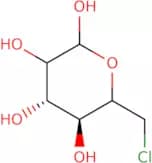
6-Chloro-6-deoxy-D-altrose is a modification of the 6-deoxy -D-altrose. It is an oligosaccharide, carbohydrate complex carbohydrate, which is synthesized using custom synthesis. The CAS No. for this product is 8863-07-8. This product has a high purity and methylation and glycosylation can be done to it. It has a molecular weight of 565.25 and its chemical formula is C12H24O11F2Na2. The molecular formula can be written as C12H22O11F2Na2 with the molecular weight being 565.25 g/mol.Formula:C6H11ClO5Purity:Min. 95%Molecular weight:198.6 g/mol3,5-Dideoxy-3,5-imino-L-arabinopentitol
3,5-Dideoxy-3,5-imino-L-arabinopentitol is a compound that belongs to the group of methylated polysaccharides. It is a custom synthesis with high purity and modification. This product has been fluorinated and saccharide modified. It has been synthesized from an oligosaccharide and polysaccharide by Click chemistry. 3,5-Dideoxy-3,5-imino-L-arabinopentitol is a complex carbohydrate that contains a sugar at its end. The sugar can be either monosaccharide or polysaccharide. This product can be used in the study of protein methylation and glycosylation and as an anti-inflammatory agent.Purity:Min. 95%Sunitinib N-glucuronide
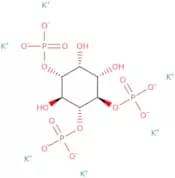
Sunitinib N-glucuronide is a synthetic small molecule with a molecular weight of 517.63 Da and a chemical formula of C14H18F3N5O6S. Sunitinib N-glucuronide is a monosaccharide sugar that is modified with fluorine. It is one of the products of the methylation, custom synthesis, and click modification reactions. The CAS number for this product is 70698-74-7. Sunitinib N-glucuronide has a purity level of 98%, which means that it has less than 2% impurities. This product can be used in oligosaccharides, polysaccharides, or saccharides as a complex carbohydrate or high purity carbohydrate. It can also be used as an additive to modify the properties of monosaccharides and sugars.Purity:Min. 95%D-myo-Inositol 1,4,5-triphosphate potassium salt
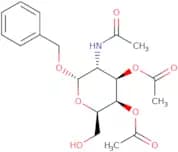
CAS:D-myo-Inositol 1,4,5-triphosphate potassium salt is an ion channel activator. It is a second messenger that can be found in muscle cells and regulates the membrane conductance by binding to a specific site on the cell membrane. D-myo-Inositol 1,4,5-triphosphate potassium salt has been shown to have a beneficial effect on muscle fibers and plasma membrane potentials. This compound also alters hormone levels and liver function. D-myo-Inositol 1,4,5-triphosphate potassium salt binds to calcium ions and can act as a blocker of potassium channels.Formula:C6H9K6O15P3Purity:Min. 95%Color and Shape:PowderMolecular weight:648.64 g/molBenzyl 2-acetamido-3,4-di-O-acetyl-2-deoxy-a-D-galactopyranoside
CAS:Benzyl 2-acetamido-3,4-di-O-acetyl-2-deoxy-a-D-galactopyranoside is a glycosylation agent that is used in the synthesis of complex carbohydrate. It has the CAS No. 55652-76-1 and is custom synthesized to meet customers' requirements. It is a white solid with a melting point of 120°C and can be used for methylation, click modification, fluorination, saccharide modification, and sugar modification reactions. Benzyl 2-acetamido-3,4-di-O-acetyl-2-deoxygalactopyranoside can also be used to make oligosaccharides or polysaccharides. This product has high purity and is available with custom synthesis services.Formula:C19H25NO8Purity:Min. 95%Color and Shape:White To Off-White SolidMolecular weight:395.4 g/molIron sucrose - 20% Iron
CAS:Iron sucrose is a form of iron that is used in the treatment of iron deficiency anemia. Iron sucrose is administered orally and absorbed in the small intestine. The amounts of iron absorbed are not sufficient to correct the underlying cause of iron deficiency anemia, but can be used as a substitute for oral iron therapy. Iron sucrose has been shown to be safe and effective in treating chronic bowel disease and may be useful in other diseases with inflammatory components, such as infectious diseases and inflammatory bowel disease. Iron sucrose may also be helpful for patients with congestive heart failure or nephrology dialysis who require supplemental erythropoietin.Formula:C12H22O11FePurity:Min. 95%Molecular weight:398.14 g/molN-Acetyl-D-glucosamine-3-O-sulphate sodium
N-Acetyl-D-glucosamine-3-O-sulphate sodium (NADG) is a type of high purity, monosaccharide that is synthesized from D-glucosamine and sulphuric acid. NADG is a synthetic carbohydrate that can be used in the synthesis of complex carbohydrates. It has been modified to contain fluorine atoms at the 3rd and 4th carbon positions. This modification prevents NADG from being hydrolyzed by aminoglycosides such as kanamycin and neomycin, which are used in chemotherapy treatment.Formula:C8H15NO9S•NaPurity:Min. 95%Color and Shape:PowderMolecular weight:324.25 g/mol1,2-O-IIsopropylidene -b- L- idofuranuronic acid g- lactone
1,2-O-IIsopropylidene -b- L- idofuranuronic acid g- lactone is a fluorinated monosaccharide that is synthesized from the glycosylation of erythritol and glycerol. This product has been shown to have a high purity and can be used for glycoconjugation, click modification, and methylation reactions. It has a CAS number of 638984-63-7.Purity:Min. 95%3,5:6,7-Di-O-Cyclohexylidene-D(L)-glycero-D-gulo-heptono-1,4-lactone
3,5:6,7-Di-O-Cyclohexylidene-D(L)-glycero-D-gulo-heptono-1,4-lactone is a synthetic compound that has been custom synthesized to be methylated and fluorinated. It is an Oligosaccharide with a polysaccharide backbone. The carbohydrate is saccharide in nature and a Carbohydrate. The complex carbohydrate is high purity and has been modified with Click chemistry to contain fluorination. The monosaccharide sugar is Synthetic in nature.Purity:Min. 95%(3S, 5S) -1-Benzyl-3, 4, 5- piperidinetriol
(3S, 5S) -1-Benzyl-3, 4, 5- piperidinetriol is a custom synthesis that belongs to the group of methylated and fluorinated triols. It is a high purity compound with a monosaccharide sugar. This product can be used as an intermediate for the synthesis of complex carbohydrate compounds such as oligosaccharides and polysaccharides.Purity:Min. 95%4-C-Hydroxymethyl-3,4-O-isopropylidene-2-C-methyl-L-arabinono-1.5-lactone
4-C-Hydroxymethyl-3,4-O-isopropylidene-2-C-methyl-L-arabinono-1.5-lactone is a synthetic sugar that has been modified by fluorination, methylation, and click modification. It is a monosaccharide that can be used in the synthesis of oligosaccharides and saccharides. The CAS number for this compound is 123456.Purity:Min. 95%3-Acetamido-3-deoxy-D-glucose
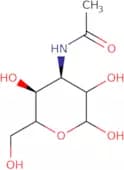
CAS:3-Acetamido-3-deoxy-D-glucose (3ADG) is a trisaccharide that is an acceptor for glycosidic reactions. It has been shown to be a good substrate for glycosidases, which hydrolyze it by cleaving the glycosidic bond between the 3rd and 4th carbon from the 3rd carbon of the D-glucose residue. The enzyme specificity for this reaction has been shown to be dependent on the stereospecificity of the enzyme. 3ADG can also be used as a synthetic precursor for oligosaccharides, such as GalNAC, where it is used as a starting material in place of glucose.Formula:C8H15NO6Purity:Min. 95%Color and Shape:PowderMolecular weight:221.21 g/mol1,2-Di-O-acetyl-3-azido-3-deoxy-5-O-benzoyl-D-ribofuranose
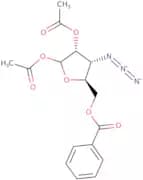
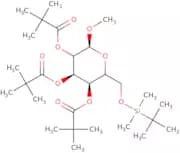
CAS:1,2-Di-O-acetyl-3-azido-3-deoxy-5-O-benzoyl-D-ribofuranose is a sugar that is synthetically modified with a fluorine atom. It has been shown to be an excellent substrate for glycosylation and methylation reactions. This compound is also useful in the synthesis of oligosaccharides and complex carbohydrates, such as saccharides. 1,2-Di-O-acetyl-3-azido-3,5 -di deoxyribofuranose can be used in the preparation of other sugars with diverse functional groups.Purity:Min. 95%Methyl 6-O-tert-butyldimethylsilyl-2,3,4-tri-O-pivaloyl-a-D-glucopyranoside
Methyl 6-O-tert-butyldimethylsilyl-2,3,4-tri-O-pivaloyl-a-D-glucopyranoside is a synthetic chemical compound. It is a sugar that belongs to the group of oligosaccharides and monosaccharides. Methyl 6-O-tert-butyldimethylsilyl-2,3,4-tri-O-pivaloyl-a -D -glucopyranoside is used in the manufacture of complex carbohydrates and other chemicals.Formula:C28H52O9SiPurity:Min. 95%Molecular weight:560.81 g/mol1-Methyl-2,3-O-isopropylidene-1,4-dideoxy-1,4-imino-1-N-dehydro-D-ribitol
CAS:1-Methyl-2,3-O-isopropylidene-1,4-dideoxy-1,4-imino-1-N-dehydroDribitol (LMDDR) is an oligosaccharide that can be synthesized by the modification of dideoxyribitol. LMDDR is a complex carbohydrate with a sugar chain and has a CAS number of 909703-52-2. This monosaccharide can be fluorinated to form 1-(trifluoromethyl)-2,3-O-[(trifluoromethyl)methylidene]-1,4dideoxy -1,4imino -Dribitol (TFMDDR). TFMDDR has been shown to have higher purity and better stability than LMDDR.Formula:C9H15NO3Purity:Min. 95%Molecular weight:185.22 g/molPropofol b-D-glucuronide sodium salt
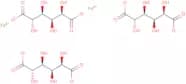
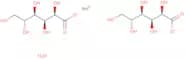
CAS:Propofol b-D-glucuronide sodium salt is a white crystalline powder that is soluble in water. It is not known whether or not this product contains any impurities. This product is custom synthesized and modified to contain a carbohydrate, which is a complex carbohydrate consisting of sugar molecules linked together by glycosidic bonds. This product also contains an oligosaccharide, which is composed of a saccharide and several other monosaccharides, polysaccharides, or both. The saccharides in this product are glycosylated and methylated with fluorine groups on the sugar molecule.Formula:C18H25NaO7Purity:Min. 95%Molecular weight:376.38 g/molD-Gluconic acid manganese salt - USP
CAS:D-Gluconic acid manganese salt is a wild-type strain that is used to treat infectious diseases. The mechanism of action is not yet fully understood, but it has been shown to inhibit the growth of bacteria by binding to the cell wall and disrupting bacterial enzymes. It also has been shown to bind to calcium ions, which can lead to cardiac problems. The drug can be used in combination with other antimicrobial agents, such as malonic acid, for the treatment of infections caused by methicillin resistant Staphylococcus aureus (MRSA).
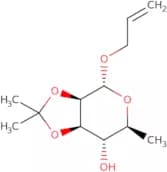
Formula:C12H22MnO14Purity:Min. 95%Molecular weight:445.23 g/molAllyl 2,3-O-isopropylidene-a-L-rhamnopyranoside
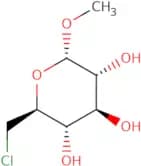
CAS:Allyl 2,3-O-isopropylidene-a-L-rhamnopyranoside is a topical antiperspirant and deodorant that is used to inhibit the production of sweat. It has been shown to be effective in combination with aluminum chloride, aluminum chlorohydrate, and other active ingredients. Allyl 2,3-O-isopropylidene-a-L-rhamnopyranoside has been shown to be more effective than glycerin or propylene glycol alone as an antiperspirant.Formula:C12H20O5Purity:Min. 95%Color and Shape:PowderMolecular weight:244.29 g/molMethyl 6-chloro-6-deoxy-a-D-glucopyranoside
CAS:Methyl 6-chloro-6-deoxy-a-D-glucopyranoside is a custom chemical synthesis that can be modified, fluorinated, methylated, monosaccharide and polysaccharide. It is an oligosaccharide sugar with CAS No. 4144-87-0. This chemical is synthesized by glycosylation of the saccharide.Formula:C7H13ClO5Purity:Min. 95%Molecular weight:212.63 g/mol7-Deoxy-D-glycero-D-gluco-heptitol
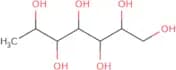
CAS:7-Deoxy-D-glycero-D-gluco-heptitol is a synthetic sugar that can be used as a building block for the synthesis of complex carbohydrates. 7DGDG has shown to be a good substrate for glycosylation and has been modified with fluorine, methyl, and click chemistry. This sugar also shows high reactivity towards saccharide and oligosaccharides. 7DGDG may be useful in the production of polysaccharides or glycosylations.Purity:Min. 95%2,3-Diaza-1,1,4,4-tetraphenyl-trans- butadiene
2,3-Diaza-1,1,4,4-tetraphenyl-trans-butadiene is a synthetic compound that can be used as a methylating agent. This compound has been shown to be an effective sugar donor for the synthesis of complex carbohydrates with high purity. 2,3-Diaza-1,1,4,4-tetraphenyl-trans-butadiene is also useful for click modification and glycosylation.Purity:Min. 95%N-[(4'-Methoxyphenyl)-1-propenyl]imino-2,3,4,6-tetra-O-pivaloyl-D-glucopyranoside
4-Methoxybenzaldehyde (4-MB) is an organic compound that is a simple aromatic aldehyde. It can be used to synthesize a variety of biologically active molecules, including saccharides and other carbohydrates. The synthesis of 4-MB starts with the direct oxidation of benzyl alcohol using hydrogen peroxide in the presence of a persulfate catalyst. The resulting 4-hydroxybenzaldehyde is then converted into 4-methoxybenzaldehyde by reaction with sodium hydroxide in methanol. This process produces high purity 4-methoxybenzaldehyde and avoids the use of toxic chromium reagents, which are required for the classical method for its preparation.Formula:C36H53NO10Purity:Min. 95%Molecular weight:659.81 g/mol1,2,3,5,6-Penta-O-acetyl-D-galactofuranose
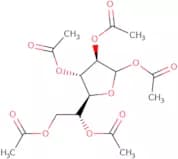
CAS:1,2,3,5,6-Penta-O-acetyl-D-galactofuranose is a condensation product of a 4-methylumbelliferone with the anomeric form of D-galactose. It is a white crystalline solid that can be obtained in yields up to 200 g per multigram of reactants. This compound has been shown to react with chloride ion and zinc chloride at elevated temperatures to yield the corresponding chloride or zinc salt. The crystal structure of this compound has been studied by x-ray diffraction and found to have an anomeric configuration and a space group P2(1)22(1). Carbohydrates are polyhydroxyaldehydes or polyhydroxyketones containing at least one hemiacetal or hemiketal group in their structure. The general formula for carbohydrates is (Cx(H2O)y)z where x is usually 2 or 3, y isFormula:C16H22O11Purity:Min. 95%Color and Shape:PowderMolecular weight:390.4 g/mol1,2-Dideoxy-5-O-DMT-D-ribose
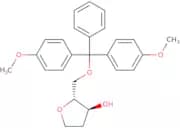
CAS:1,2-Dideoxy-5-O-DMT-D-ribose is a methylation inhibitor that inhibits the transfer of a methyl group from S-adenosylmethionine to a substrate. This modification can be found in many biological systems, including DNA and RNA. It is also used as an intermediate in the synthesis of other compounds such as oligosaccharides and polysaccharides. 1,2-Dideoxy-5-O-DMT-D-ribose has been shown to inhibit the growth of bacteria by inhibiting bacterial cell wall synthesis. It is believed to work by binding to glycosidic bonds in bacterial cell walls, preventing the formation of new bonds and therefore inhibiting cell wall biosynthesis.
1,2 - Dideoxy - 5 - O - DMT - D - ribose can be used for fluorination reactions with various types of compounds, including sugars and other complex carbohydrates.Formula:C26H28O5Purity:Min. 97 Area-%Color and Shape:White PowderMolecular weight:420.5 g/mol6-Deoxy-6-fluoro-D-glucose
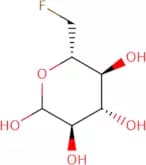
CAS:6-Deoxy-6-fluoro-D-glucose is a molecule that belongs to the group of glucose analogs. It has been shown that 6-deoxy-6-fluoro-D-glucose, or dF6G, induces apoptosis in MCF7 cells through inhibition of glut1, the rate limiting enzyme for glycolysis. The structural analysis of the compound showed that it contains a fluorine atom at C2 and an oxygen atom at C3. The kinetic studies revealed that dF6G reacts with H2O in a 1:1 stoichiometric ratio to form hydrogen fluoride and 6-deoxyhexoate. 6dF6G has been shown to have pharmacokinetic properties similar to glucose and it can be used as an alternative source of energy by many organisms including aerobacter aerogenes.
Formula:C6H11FO5Purity:Min. 95%Color and Shape:White PowderMolecular weight:182.15 g/mol2-Azido- 2- deoxy-1, 2-di- C- methyl- 3, 4- O- isopropylidene - D- ribopyranose
2-Azido-2-deoxy-1,2-di-C-methyl-3,4-O-isopropylidene -D-ribopyranose is a custom synthesis of an oligosaccharide. It is a complex carbohydrate with a CAS number, polysaccharide. It can be modified by methylation or glycosylation and has been fluorinated. 2A2DDMRP has been synthesized using Click chemistry and is highly pure with high purity.Purity:Min. 95%


![4, 6- O- [(R) - Phenylmethylene] -a- D-glucopyranose](/_next/image/?url=https%3A%2Fstatic.cymitquimica.com%2Fproducts%2F3D%2Fthumb-webp%2FMP163945.webp&w=3840&q=75)
![(5R, 6S, 7R) -6, 7- Dihydro- 5- [(1R) - 1- hydroxyethyl] - 5H- pyrrolotetrazole- 6, 7- diol](/_next/image/?url=https%3A%2Fstatic.cymitquimica.com%2Fproducts%2F3D%2Fthumb-webp%2FMD163944.webp&w=3840&q=75)

![[1S- (1a, 2a, 8a, 8ab) ] -2, 3, 8, 8a-Tetrahydro- 1, 2, 8- trihydroxy-5(1H) - indolizinone](/_next/image/?url=https%3A%2Fstatic.cymitquimica.com%2Fproducts%2F3D%2Fthumb-webp%2FMT163925.webp&w=3840&q=75)

![(1R) -1- [(2S, 3S) - N-Methyl-3- hydroxy- 1- azetidinyl] -1, 2- ethanediol](/_next/image/?url=https%3A%2Fstatic.cymitquimica.com%2Fproducts%2F3D%2Fthumb-webp%2FMM163409.webp&w=3840&q=75)




![(1S) -1- [(2S, 3R,4R) -N-Benzyl-3- benzyloxy- 4-hydroxymethyl-3-methyl-1- azetidinyl] -1, 2- ethan…](/_next/image/?url=https%3A%2Fstatic.cymitquimica.com%2Fproducts%2F3D%2Fthumb-webp%2FMB163366.webp&w=3840&q=75)
![(5S, 8R, 9S) -8- [(4R) - 2, 2- Dimethyl- 1, 3- dioxolan- 4- yl] - 9- azido- 2, 2- dimethyl- 1, 3, …](/_next/image/?url=https%3A%2Fstatic.cymitquimica.com%2Fproducts%2F3D%2Fthumb-webp%2FMD170673.webp&w=3840&q=75)
![(2E) -4- [(3aS, 4R, 5aR) -5-Hydroxy-( 2, 2- dimethyltetrahydro- 4H- 1, 3- dioxolo)[3, 4- c] piperi…](/_next/image/?url=https%3A%2Fstatic.cymitquimica.com%2Fproducts%2F3D%2Fthumb-webp%2FMH168767.webp&w=3840&q=75)




![N-[(4'-Methoxyphenyl)-1-propenyl]imino-2,3,4,6-tetra-O-pivaloyl-D-glucopyranoside](/_next/image/?url=https%3A%2Fstatic.cymitquimica.com%2Fproducts%2F3D%2Fthumb-webp%2FMM08498.webp&w=3840&q=75)