Monosaccharides
Monosaccharides are the simplest form of carbohydrates and serve as fundamental building blocks for more complex sugars and polysaccharides. These single sugar molecules play critical roles in energy metabolism, cellular communication, and structural components of cells. In this section, you will find a wide variety of monosaccharides essential for research in biochemistry, molecular biology, and glycoscience. These compounds are crucial for studying metabolic pathways, glycosylation processes, and developing therapeutic agents. At CymitQuimica, we offer high-quality monosaccharides to support your research needs, ensuring precision and reliability in your scientific investigations.
Subcategories of "Monosaccharides"
- Alloses(11 products)
- Arabinoses(21 products)
- Erythroses(11 products)
- Fructoses(9 products)
- Fucoses(36 products)
- Galactosamine(41 products)
- Galactose(261 products)
- Glucoses(365 products)
- Glucuronic Acids(51 products)
- Glyco-substrates for Enzyme(77 products)
- Guloses(6 products)
- Idoses(4 products)
- Inositols(15 products)
- Lyxoses(4 products)
- Mannoses(65 products)
- O-Glycans(48 products)
- Psicoses(3 products)
- Rhamnoses(10 products)
- Riboses(61 products)
- Sialic Acids(100 products)
- Sorboses(4 products)
- Sugars(173 products)
- Tagatoses(4 products)
- Taloses(8 products)
- Xyloses(20 products)
Show 17 more subcategories
Found 6088 products of "Monosaccharides"
Sort by
Purity (%)
0
100
|
0
|
50
|
90
|
95
|
100
1-Chloro-1-deoxy-D-fructose
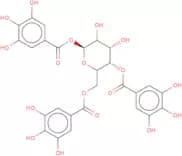
CAS:<p>glycosidase enzyme inhibitor. Formerly code MC04178.</p>Formula:C6H11ClO5Molecular weight:198.60 g/mol1,4,6-Tri-O-galloylglucose
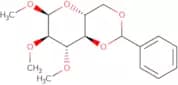
CAS:<p>1,4,6-Tri-O-galloylglucose is a synthetic carbohydrate that has been modified using glycosylation, methylation, and click modification. It is a complex carbohydrate with a high purity of 99.5%, and can be used in many applications including the synthesis of oligosaccharides. 1,4,6-Tri-O-galloylglucose can be fluorinated to create a product with increased resistance to hydrolysis.</p>Formula:C27H24O18Purity:Min. 95%Molecular weight:636.47 g/molMethyl 4,6-O-benzylidene-2,3-di-O-methyl-a-D-glucopyranoside
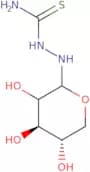
CAS:<p>Methyl 4,6-O-benzylidene-2,3-di-O-methyl-a-D-glucopyranoside is a high purity synthetic compound. It is an oligosaccharide that consists of a methylated glucose unit with four acetate groups and one benzyl group attached. Methyl 4,6-O-benzylidene-2,3-di-O-methyl-a-D-glucopyranoside is used as a substrate for glycosylation reactions and as a chromatographic marker.</p>Formula:C16H22O6Purity:Min. 95%Color and Shape:White Off-White PowderMolecular weight:310.35 g/molL-Ribopyranosyl thiosemicarbazide
<p>Ribopyranosyl thiosemicarbazide is a synthetic chemical compound that has glycosylation activity. It can be used for the synthesis of oligosaccharides, sugar, and complex carbohydrate. Ribopyranosyl thiosemicarbazide can be fluorinated at C-1 position and methylated in C-2 position. This product is provided with purity of >98%. CAS No.: 5288-55-8</p>Formula:C6H13N3O4SPurity:Min. 95%Molecular weight:223.25 g/molD-Ribose
CAS:<p>D-ribose is a pentose that is used in the metabolism of plants and humans. It has been shown to inhibit binding of inhibitors to ribose and to exhibit significant cytotoxicity against tumor cells. D-Ribose also has an important role in energy metabolism, where it is involved in the synthesis of ATP. D-Ribose has been shown to be beneficial for patients with congestive heart failure, as it improves cardiac function and reduces the size of the heart. D-Ribose may also have a role in the treatment of infectious diseases by inhibiting viral replication, as well as preventing neuronal death.</p>Formula:C5H10O5Purity:Min. 99.0 Area-%Molecular weight:150.13 g/molRef: 3D-R-5500
25gTo inquire5kgTo inquire10kgTo inquire25kgTo inquire2500gTo inquire-Unit-kgkgTo inquire3,5-Dideoxy-3,5-imino-L-arabinopentitol
<p>3,5-Dideoxy-3,5-imino-L-arabinopentitol is a compound that belongs to the group of methylated polysaccharides. It is a custom synthesis with high purity and modification. This product has been fluorinated and saccharide modified. It has been synthesized from an oligosaccharide and polysaccharide by Click chemistry. 3,5-Dideoxy-3,5-imino-L-arabinopentitol is a complex carbohydrate that contains a sugar at its end. The sugar can be either monosaccharide or polysaccharide. This product can be used in the study of protein methylation and glycosylation and as an anti-inflammatory agent.</p>Purity:Min. 95%3,5:6,7-Di-O-Cyclohexylidene-D(L)-glycero-D-gulo-heptono-1,4-lactone
<p>3,5:6,7-Di-O-Cyclohexylidene-D(L)-glycero-D-gulo-heptono-1,4-lactone is a synthetic compound that has been custom synthesized to be methylated and fluorinated. It is an Oligosaccharide with a polysaccharide backbone. The carbohydrate is saccharide in nature and a Carbohydrate. The complex carbohydrate is high purity and has been modified with Click chemistry to contain fluorination. The monosaccharide sugar is Synthetic in nature.</p>Purity:Min. 95%3-Acetamido-3-deoxy-D-glucose
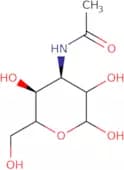
CAS:<p>3-Acetamido-3-deoxy-D-glucose (3ADG) is a trisaccharide that is an acceptor for glycosidic reactions. It has been shown to be a good substrate for glycosidases, which hydrolyze it by cleaving the glycosidic bond between the 3rd and 4th carbon from the 3rd carbon of the D-glucose residue. The enzyme specificity for this reaction has been shown to be dependent on the stereospecificity of the enzyme. 3ADG can also be used as a synthetic precursor for oligosaccharides, such as GalNAC, where it is used as a starting material in place of glucose.</p>Formula:C8H15NO6Purity:Min. 95%Color and Shape:PowderMolecular weight:221.21 g/molAllyl 2,3-O-isopropylidene-a-L-rhamnopyranoside
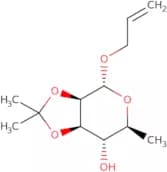
CAS:<p>Allyl 2,3-O-isopropylidene-a-L-rhamnopyranoside is a topical antiperspirant and deodorant that is used to inhibit the production of sweat. It has been shown to be effective in combination with aluminum chloride, aluminum chlorohydrate, and other active ingredients. Allyl 2,3-O-isopropylidene-a-L-rhamnopyranoside has been shown to be more effective than glycerin or propylene glycol alone as an antiperspirant.</p>Formula:C12H20O5Purity:Min. 95%Color and Shape:PowderMolecular weight:244.29 g/mol6-Deoxy-6-fluoro-D-glucose
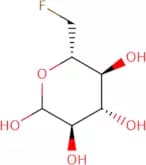
CAS:<p>6-Deoxy-6-fluoro-D-glucose is a molecule that belongs to the group of glucose analogs. It has been shown that 6-deoxy-6-fluoro-D-glucose, or dF6G, induces apoptosis in MCF7 cells through inhibition of glut1, the rate limiting enzyme for glycolysis. The structural analysis of the compound showed that it contains a fluorine atom at C2 and an oxygen atom at C3. The kinetic studies revealed that dF6G reacts with H2O in a 1:1 stoichiometric ratio to form hydrogen fluoride and 6-deoxyhexoate. 6dF6G has been shown to have pharmacokinetic properties similar to glucose and it can be used as an alternative source of energy by many organisms including aerobacter aerogenes.</p>Formula:C6H11FO5Purity:Min. 95%Color and Shape:White PowderMolecular weight:182.15 g/mol2-Azido- 2- deoxy-1, 2-di- C- methyl- 3, 4- O- isopropylidene - D- ribopyranose
<p>2-Azido-2-deoxy-1,2-di-C-methyl-3,4-O-isopropylidene -D-ribopyranose is a custom synthesis of an oligosaccharide. It is a complex carbohydrate with a CAS number, polysaccharide. It can be modified by methylation or glycosylation and has been fluorinated. 2A2DDMRP has been synthesized using Click chemistry and is highly pure with high purity.</p>Purity:Min. 95%2,3-Di-O-methyl-D-glucopyranose
CAS:<p>2,3-Di-O-methyl-D-glucopyranose is a hederagenin, a disaccharide that is found in the bark of the Hedera helix plant. This compound has been shown to have anti-inflammatory properties and may be useful for treating arthritis. The hederagenin molecule contains two glucose molecules connected by an alpha 1,4 glycosidic bond. It also contains a carboxy group at C2 and a chain of carbons with a hydroxyl group at C3. There are three other chains of carbons with hydroxyl groups at C1, C4, and C5. These chains are linked together by an ether bond between carbon 5 and carbon 6. The 2,3-diO-methyl substituent is located on the O atom of one of the oxygen atoms in the hydroxyl groups. This molecule also has two triterpene glycosides attached to it</p>Formula:C8H16O6Purity:Min. 95%Color and Shape:PowderMolecular weight:208.21 g/mol3,5-Di-O-benzoyl-2-deoxy-2,2-difluoro-1-O-methanesulfonyl-a-D-ribofuranoside - 98% α purity
CAS:<p>Intermediate in the synthesis of Gemcitabine</p>Formula:C20H18F2O8SPurity:Min. 95%Color and Shape:PowderMolecular weight:456.41 g/mol(2S, 3R, 4R) -3, 4- Dihydroxy- N- methyl- 2- pyrrolidinecarboxami de
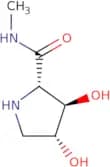
CAS:<p>(2S, 3R, 4R) -3, 4-Dihydroxy-N-methyl-2-pyrrolidinecarboxamide is a synthetic sugar that has been synthesized for the modification of complex carbohydrates. The compound has a CAS number of 1394841-58-7 and can be used to decrease the rate of glycosylation reactions by removing hydroxyl groups from saccharides or oligosaccharides. This compound is typically synthesized by methylation and glycosylation. It is also possible to click modify this product with an azide group. Click modifications are reversible and produce no side products.</p>Purity:Min. 95%Ethyl β-D-glucopyranoside
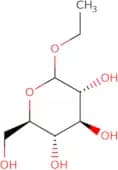
CAS:<p>Ethyl β-D-glucopyranoside is a fatty acid with the chemical formula CH 3 (CHOH) 2 CH(OH)CH 2 OH. It is a reaction product of inulin and levulinate. Ethyl β-D-glucopyranoside can be used as a control agent for urine samples to test for microbial infection. It also has an inhibitory effect on the growth of microbes, such as bacteria and fungi, which may be due to its ability to disrupt the cell membrane. Ethyl β-D-glucopyranoside is also known to have detergent properties that can be used in soaps and detergents.</p>Formula:C8H16O6Purity:Min. 98 Area-%Color and Shape:Clear Viscous Liquid Solidified MassMolecular weight:208.21 g/mol(3aS, 7R, 9S, 9aR, 9bR) -9- [[(1, 1- Dimethylethyl) dimethylsilyl] oxy] - 2, 2- diethylhexahydro- 7- methyl-1, 3- Dioxolo[4, 5- a] i ndolizin- 6(4H) - one
<p>(3aS, 7R, 9S, 9aR, 9bR) -9- [[(1, 1- Dimethylethyl) dimethylsilyl] oxy] - 2, 2- diethylhexahydro- 7- methyl-1, 3- Dioxolo[4, 5- a] i ndolizin- 6(4H) - one is a custom synthesis. It is a complex carbohydrate that is an Oligosaccharide with CAS No. (847128-50-5). It has been modified with saccharide and Methylation. It has been glycosylated and click modified. This compound also has high purity and fluorination.</p>Purity:Min. 95%1,2,3,4-Tetra-O-benzoyl-6-O-triisopropylsilyl-b-D-galactopyranose
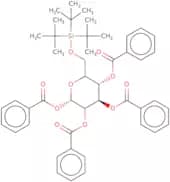
<p>1,2,3,4-Tetra-O-benzoyl-6-O-triisopropylsilyl-b-D-galactopyranose is an oligosaccharide. The carbohydrate is a complex carbohydrate that has been custom synthesized and high purity. The CAS number for this compound is 10981-97-5. This compound is a monosaccharide that has been methylated and glycosylated. It is also a polysaccharide composed of sugar molecules with the molecular formula C8H18O6. This compound has been fluorinated and saccharided.</p>Formula:C46H54O10SiPurity:Min. 95%Molecular weight:795.02 g/molPhenyl-2,3,5-tri-O-benzoyl-D-thioribofuranoside
<p>Phenyl-2,3,5-tri-O-benzoyl-D-thioribofuranoside is an Oligosaccharide that is prepared by the modification of a complex carbohydrate. It has a carbonyl group at the C6 position and a benzoyl group at the C2 position. Phenyl-2,3,5-tri-O-benzoyl-D-thioribofuranoside can be custom synthesized and is available in high purity. The CAS number for this product is 97111-10-1. Phenyl-2,3,5-tri-O-benzoyl -D -thioribofuranoside is a monosaccharide that can be methylated or glycosylated to form polysaccharides or sugars. This product has been fluorinated and saccharides have been modified with fluorine.</p>Purity:Min. 95%2-Acetamido-1,3,6-tri-O-benzyl-2-deoxy-b-D-glucopyranoside
CAS:<p>2-Acetamido-1,3,6-tri-O-benzyl-2-deoxy-b-D-glucopyranoside is a synthetic monosaccharide that can be modified to the desired structures. It is used as a building block for the synthesis of polysaccharides and oligosaccharides. It is also used as an intermediate in the preparation of saccharides. 2 - Acetamido - 1,3,6 - tri - O - benzyl - 2 - deoxy - b - D - glucopyranoside is available in high purity and custom synthesis.</p>Formula:C29H33NO6Purity:Min. 95%Color and Shape:PowderMolecular weight:491.58 g/molMethyl 2,3,4,6-tetra-O-acetyl-α-D-glucopyranoside
CAS:<p>Methyl 2,3,4,6-tetra-O-acetyl-a-D-glucopyranoside is a custom synthesis. It is a fluorinated sugar that can be modified with methyl groups and acetyl groups. Methyl 2,3,4,6-tetra-O-acetyl-a-D-glucopyranoside has been used in the synthesis of oligosaccharides and saccharides. This compound can also be glycosylated with other sugars to form complex carbohydrates.</p>Formula:C15H22O10Purity:Min. 95%Color and Shape:PowderMolecular weight:362.33 g/molGlucose spacer fluorescein
<p>Glucose spacer fluorescein is a sugar that is used in glycosylation reactions. It has a molecular weight of 368.2 g/mol, CAS No. 605-85-8, and the chemical formula C6H10O5. Glucose spacer fluorescein is synthesized by reacting glucose with an activator such as sodium borohydride or tris(dibenzylideneacetone)dipalladium(0) (Pd). The synthesis of glucose spacer fluorescein can be modified to include methylation, glycosylation, or other modifications.<br>Glucose spacer fluorescein is composed of two monosaccharides and one saccharide residue. This sugar consists of a glucose molecule linked to a fluorinated 1-deoxy-D-ribofuranose via an ether bond at position 3' and a glucosamine residue attached to the 5</p>Purity:Min. 95%Methyl 2,3,4-tri-O-pivaloyl-6-O-triisopropylsilyl-a-D-galactopyranoside
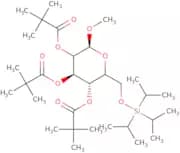
<p>Methyl 2,3,4-tri-O-pivaloyl-6-O-triisopropylsilyl-a-D-galactopyranoside is a glycosylated sugar that can be custom synthesized or purchased. This product is a fluorinated oligosaccharide with a methyl group at C2. The chemical name for this modified sugar is O-(3,4,5,6-tetra-O-(1,1,1,3,3,3,-hexafluoroethoxy)propyl)-a-D-galactopyranose. It can be used in glycosylation reactions to modify the saccharides and it has an average purity of 99%. Methyl 2,3,4-tri-O-pivaloyl-6-O--triisopropylsilyl--a--D--galactopyranoside has a CAS</p>Formula:C31H58O9SiPurity:Min. 95%Molecular weight:602.87 g/mol(2S, 3S, 4S) -1-Butyl-4- (hydroxymethyl) - N- methyl- 3- (phenylmethoxy) - 2- azetidinecarboxamide
<p>(2S, 3S, 4S) -1-Butyl-4- (hydroxymethyl) - N- methyl- 3- (phenylmethoxy) - 2- azetidinecarboxamide is a synthetic compound that can be used for glycosylation reactions. It has the following characteristics: Glycosylation, complex carbohydrate, Methylation, Click modification, Polysaccharide, Fluorination and Saccharide Modification. The CAS registry number for this compound is 109972-04-6. This product is available for custom synthesis and can be ordered with high purity.</p>Purity:Min. 95%3,5-O-Benzylidene-D-lyxono-1,4-lactone
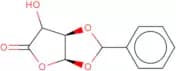
<p>3,5-O-Benzylidene-D-lyxono-1,4-lactone is a crystalline compound with a molecular formula of C6H8O3. It has the molecular weight of 154.11 g/mol and melting point of 104°C. 3,5-O-Benzylidene-D-lyxono-1,4-lactone has been shown to be an inhibitor for the enzyme xanthine oxidase. This compound may be useful in treating conditions such as hyperuricemia or gout.</p>Formula:C11H10O5Purity:Min. 95%Molecular weight:222.2 g/molN-(Succinyl)-O-b-D-glucopyranosylhydroxylamine
<p>N-(Succinyl)-O-b-D-glucopyranosylhydroxylamine is a glycosylation agent that is used in the synthesis of complex carbohydrates, such as oligosaccharides and polysaccharides. It is synthesized by reacting enzymatically with glycogen or a glycogen derivative, such as amyloglucosidase, to release glucose from the glycogen molecule. The resulting product can be methylated or fluorinated to generate different derivatives. This product can be custom synthesized to meet the needs of your application.</p>Purity:Min. 95%(2S, 3S, 4S, 5S) -2- ((tertButylsilyloxy)methyl) - 3-O-benzoyl-4-O-tert butyldimethylsilyl-5- methyl-3, 4- pyrrolidinediol
<p>(2S, 3S, 4S, 5S) -2- ((tertButylsilyloxy)methyl) - 3-O-benzoyl-4-O-tert butyldimethylsilyl-5- methyl-3, 4- pyrrolidinediol is a glycoconjugate that can be used as a drug to treat cancer. It consists of a glycosylation site on the 2 position of the pyrrole ring and an oligosaccharide chain with a terminal glucose molecule on the 5 position. This product is custom synthesized and is available in high purity.</p>Purity:Min. 95%2,3:5,6-Bis-O-(1-methylethylidene)- D-gulonic acid g-lactone
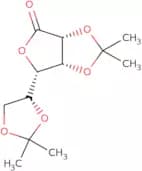
CAS:<p>2,3:5,6-Bis-O-(1-methylethylidene)-D-gulonic acid g-lactone is a synthetic sugar with a molecular weight of 588. It is used in the synthesis of oligosaccharides and saccharides. 2,3:5,6-Bis-O-(1-methylethylidene)-D-gulonic acid g-lactone can be fluorinated for use in click chemistry applications. This product has been shown to have high purity and custom synthesis capabilities.</p>Purity:Min. 95%1-Deoxy-D-ribose
CAS:<p>1-Deoxy-D-ribose is a sugar that is synthesized from the sugar ribose. It can be produced by reductive cleavage of the sugar sulfate adenosine, which gives rise to 1-deoxy-D-ribose and sulfite. This compound also has an important role in DNA synthesis. The natural source of this compound is D-ribose, which can be found in many sources such as yeast extract, pectin, and honey. 1-Deoxy-D-ribose is a nucleoside that has the cyclic form of ribose. This compound was first isolated in 1957 and was originally synthesized in 1891 by Emil Fischer. 1-Deoxy-D-ribose binds to adenosine with a connective bond and forms a cyclic molecule called pyrrolo[2,3]pyrimidine.</p>Formula:C5H10O4Purity:Min. 95%Color and Shape:PowderMolecular weight:134.2 g/mol(1R) -1- [(2R, 3S) -3- Hydroxy- 1- azetidinyl] -1, 2- ethanediol
CAS:<p>The compound is a custom synthesis of (1R) -1- [(2R, 3S) -3- Hydroxy- 1- azetidinyl] -1, 2- ethanediol. The compound has been modified with fluorination and methylation. This modification has been confirmed by high resolution mass spectrometry and nuclear magnetic resonance spectroscopy. The fluorinated compound is synthesized from the monosaccharide or oligosaccharide starting materials.<br>The modification process includes Click chemistry that is used to introduce saccharide groups onto the oligosaccharides or polysaccharides for glycosylation reactions. This process results in a sugar or complex carbohydrate product with high purity.</p>Formula:C5H11NO3Purity:Min. 95%Molecular weight:133.15 g/mol1-Deoxy-D-xylulose - Aqueous solution
CAS:<p>1-Deoxy-D-xylulose is a potent inhibitor of the enzyme xylulokinase, which catalyses the first step in the metabolism of D-xylulose to form 5-phosphate. This prevents the conversion of D-xylulose to xylitol and inhibits body formation. The 1-deoxy--D-xylulose molecule has been shown to bind selectively to sodium citrate by x-ray diffraction data. Sodium citrate is an antimicrobial agent used for food preservation and as a preservative in pharmaceuticals. It also has been shown to control enzyme activities that are involved in infectious diseases such as malaria, tuberculosis, and leprosy.<br>1-Deoxy--D--xylulose is one of many high purity steviol glycosides that have been identified as potential drug targets for inhibiting body formation or growth.</p>Formula:C5H10O4Purity:Min. 97 Area-%Color and Shape:Clear LiquidMolecular weight:134.13 g/mol3-Deoxy-1,2-O-isopropylidene-5-O-toluoyl-b-L-ribofuranose
CAS:<p>3-Deoxy-1,2-O-isopropylidene-5-O-toluoyl-b-L-ribofuranose is a sugar that is a methylated form of ribose. It also forms the backbone of polysaccharides and is modified with glycosylation. 3DOTRB can be custom synthesized in high purity and has CAS No. 2072145-19-6.</p>Purity:Min. 95%N-Acetyl-D-glucosamine 2-epimerase
CAS:<p>N-Acetyl-D-glucosamine 2-epimerase is an enzyme that catalyzes the conversion of N-acetyl D-glucosamine to N-acetyl D-mannosamine. This enzyme is a recombinant protein. It has been shown to be active against bacterial cells and has been used as a target for antibodies in research. The enzyme is insoluble at high concentrations, so it must be refolded before use. It is active in a denatured form, but can be made inactive by heat or other denaturing agents such as urea, guanidine hydrochloride, or sodium dodecyl sulfate (SDS). Refolding strategies include dilution, dialysis, or adsorption onto a solid support such as agarose beads.<br>!--</p>Purity:Min. 95%Color and Shape:Grey to brown solid.UDP-D-[1-13C]glucose disodium salt
CAS:<p>Labelled substrate for glucosyltransferase</p>Purity:Min. 95%4-Aminobutyl 2- acetamido - 2- deoxy-b- D- galactopyranoside
<p>4-Aminobutyl 2-acetamido-2-deoxy-b-D-galactopyranoside is a modification of the carbohydrate, which is an Oligosaccharide. It is synthesized by the chemical process of Methylation and Glycosylation. The functional groups on this modification are Carbohydrate and Fluorination. CAS No. for this product is 51310-59-3, and Monosaccharide is the sugar type.</p>Formula:C12H24N2O6Purity:Min. 95%Molecular weight:292.33 g/molLumefantrine b-D-Glucuronide
CAS:<p>Lumefantrine b-D-Glucuronide is an anti-malarial drug with a high purity and custom synthesis. It can be synthesized by click modification, fluorination, glycosylation, and methylation of the sugar. Lumefantrine b-D-Glucuronide is an oligosaccharide that contains saccharides and complex carbohydrates. Lumefantrine b-D-Glucuronide is a sugar modified to produce a molecule that is more soluble in water. It has a CAS No. 460745-26-0 and can also be found under the name Oligosaccharide, Monosaccharide, Saccharide, Carbohydrate.</p>Formula:C36H40Cl3NO7Purity:Min. 95%Molecular weight:705.06 g/molTopiramate impurity D
CAS:<p>Topiramate impurity D is a custom synthesis with CAS number. It is an oligosaccharide that has been modified by methylation and glycosylation. Topiramate impurity D is a complex carbohydrate with saccharide units, which are modified by fluorination and click chemistry. This product is high purity and has been synthesized using the synthetic method of glycosylation, Oligosaccharide, Methylation, and Carbohydrate.</p>Formula:C12H20O6Purity:Min. 95%Molecular weight:260.28 g/mol3,4,6-Tri-O-acetyl-2-azido-2-deoxy-β-D-galactopyranosyl trichloroacetimidate
CAS:<p>3,4,6-Tri-O-acetyl-2-azido-2-deoxy-beta-D-galactopyranosyl trichloroacetimidate is a custom synthesis that has been modified with fluorination and methylation. It is a monosaccharide containing the sugar galactose and it can be found in a saccharide or polysaccharide. This compound was synthesized using click chemistry.</p>Formula:C14H17Cl3N4O8Purity:Min. 95 Area-%Molecular weight:475.67 g/mol1,2-O-Isopropylidene-a-D-glucofuranose
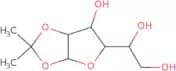
CAS:<p>1,2-O-Isopropylidene-a-D-glucofuranose (IPDF) is a natural compound that has been isolated from the leaves of the plant Cinnamomum camphora. IPDF has been shown to have biological properties such as inhibiting hl-60 cells and inducing apoptosis in leukemia cells. The metabolic rate of IPDF was studied in isolated hearts and it was found that the compound slows fatty acid oxidation. The enzyme substrate specificity of IPDF was also tested by adding trifluoroacetic acid, which yielded no reaction.</p>Formula:C9H16O6Color and Shape:White Off-White PowderMolecular weight:220.22 g/molIron sucrose
CAS:<p>Iron sucrose is a sucrose-iron complex that is administered intravenously for the treatment of bowel disease and iron deficiency. Iron sucrose has been shown to have potent inducers of oxidative injury, which may be due to the formation of reactive oxygen species. Iron sucrose has also been shown to increase cellular transformation and congestive heart failure in mice. Long-term toxicity studies have not been conducted.</p>Formula:C12H22O11FePurity:Min. 95%Color and Shape:Brown PowderMolecular weight:398.141-Amino-2,5-anhydro-1-deoxy-D-mannitol
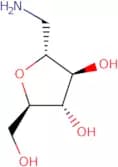
CAS:<p>1-Amino-2,5-anhydro-1-deoxy-D-mannitol is an amino sugar that is synthesized by reductive amination of d-fructose and nitrous acid. It has been shown to be a substrate for the transporter protein, which transports it into the cell. 1-Amino-2,5-anhydro-1-deoxy-D-mannitol has been used in the synthesis of arylamines with nitrous acid as a reducing agent. This process has been used to study the stereospecificity of reductive amination.</p>Formula:C6H13NO4Purity:Min. 95%Color and Shape:PowderMolecular weight:163.17 g/molBenzyl 4,6-O-benzylidene-a-D-mannopyranoside
CAS:<p>Benzyl 4,6-O-benzylidene-a-D-mannopyranoside is a sugar compound that is used in the synthesis of glycosides. It is a custom synthesized, high purity product that can be methylated and glycosylated. The CAS number for this product is 40983-94-6.</p>Formula:C20H22O6Purity:Min. 95%Color and Shape:PowderMolecular weight:358.39 g/molN-(2'-Phenylacetonitrile)-2,3,4,6-tetra-O-pivaloyl-D-glucopyranoside
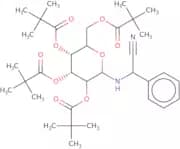
CAS:<p>N-(2'-Phenylacetonitrile)-2,3,4,6-tetra-O-pivaloyl-D-glucopyranoside is a synthetic glycosyl compound that has been modified with fluorine. The compound has been shown to be effective in the methylation of saccharides and oligosaccharides. It can be used for modification of polysaccharides and carbohydrates by Click chemistry. This product is offered as a custom synthesis and can be ordered in high purity.</p>Formula:C34H50N2O9Purity:Min. 95%Molecular weight:630.77 g/mol2-Amino- 2- deoxy- 3- O- methyl-D- glucose
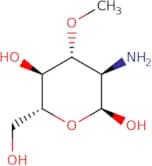
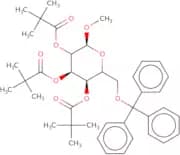
CAS:<p>2-Amino-2-deoxy-3-O-methyl-D-glucose is a modified sugar that has been synthesized by the methylation of D-glucose. This product is often used as a building block in glycosylation, which is the process of adding sugars to proteins or polysaccharides. The modification of this carbohydrate makes it resistant to hydrolysis and oxidation reactions, making it suitable for use in pharmaceuticals and other applications.<br>2-Amino-2-deoxy-3-O-methyl-D-glucose can be fluorinated to produce 2-(Fluoro)amino 2 deoxy 3 O methyl D glucose, which has been shown to have antihypertensive effects in rats with high blood pressure. This product can also be modified with click chemistry to produce 2-[(Azidomethyl)amino]-2 deoxy 3 O methyl D glucose, which can be used</p>Formula:C7H15NO5Purity:Min. 95%Molecular weight:193.2 g/molMethyl 2,3,4-tri-O-pivaloyl-6-O-trityl-a-D-mannopyranoside
<p>Methyl 2,3,4-tri-O-pivaloyl-6-O-trityl-a-D-mannopyranoside is a custom synthesis of a complex carbohydrate. It is an Oligosaccharide that has been modified with saccharide Methylation and glycosylation. This product is also fluorinated and Click modified. The CAS number for this product is <br>[[Category:Chemical compounds]]</p>Formula:C41H52O9Purity:Min. 95%Molecular weight:688.87 g/molEthyl 2-O-benzyl-4,6-O-benzylidene-b-D-thioglucopyranoside
<p>Ethyl 2-O-benzyl-4,6-O-benzylidene-b-D-thioglucopyranoside is a custom synthesis of a monosaccharide. It consists of an ethoxy group at the 4th position and a benzyl group at the 6th position on the ring. The compound has been fluorinated, methylated, and modified with click chemistry to make it more stable. This product is a synthetic oligosaccharide that has been glycosylated and modified with saccharide chains. It is used as a complex carbohydrate for dietary supplements.</p>Purity:Min. 95%Allyl 3,4-di-O-benzyl-2-O-(2-naphthylmethyl)-a-D-galactopyranoside
<p>Allyl 3,4-di-O-benzyl-2-O-(2-naphthylmethyl)-a-D-galactopyranoside is a synthetic carbohydrate with a complex structure. It is a modification of a D-galactopyranose sugar and has been glycosylated and methylated. This compound contains an allyl group that has been fluorinated at the 3 position.</p>Purity:Min. 95%Methyl 2,4-Di-O-acetyl-3-deoxy-3-fluoro-b-D-xylopyranoside
CAS:<p>Methyl 2,4-Di-O-acetyl-3-deoxy-3-fluoro-b-D-xylopyranoside is a synthetic, fluorinated glycosylation product. It is used in the synthesis of complex carbohydrates, and has been shown to be useful for click modification. This product has been custom synthesized by our company, and can be ordered in high purity.</p>Formula:C10H15FO6Purity:Min. 95%Molecular weight:250.22 g/mol2-C-Azidomethyl- 2, 3:5, 6- di-O-isopropylidene)-D- mannose
<p>2-C-Azidomethyl-2,3:5,6-di-O-isopropylidene)-D-mannose (2CAM) is a custom synthesis that is created by modifying the natural sugar D-mannose. The modification of this sugar yields 2CAM, which is a fluorinated and methylated compound. The monosaccharide in 2CAM is an alpha anomeric structure with a 6 carbon chain. This chemical can be synthesized from D-mannose through the addition of an azide group to the C4 hydroxyl group on the mannose ring. This modification to the natural sugar leads to a complex carbohydrate that exhibits saccharide properties as well as glycosylation properties.<br>2CAM has been shown to have inhibitory effects against bacterial pathogens such as Mycobacterium tuberculosis and Clostridium perfringens, which are both gram negative bacteria. In contrast,</p>Purity:Min. 95%(2S,3R,4S)-2-(Benzoyloxy)methyl-3,4,N-tri-O-benzoyl-5-methyl-pyrrolidine-3,4-diol
<p>(2S,3R,4S)-2-(Benzoyloxy)methyl-3,4,N-tri-O-benzoyl-5-methyl-pyrrolidine-3,4-diol is a high purity synthetic carbohydrate that is custom synthesized to your specifications. It can be used for saccharide and oligosaccharide modification or glycosylation. (2S,3R,4S)-2-(Benzoyloxy)methyl-3,4,N-tri-O-benzoyl-5-methyl-pyrrolidine-3,4-diol is prepared from benzoyl chloride and 3'-chloroacetyl chloride in the presence of triethylamine. This product is available for methylation and click chemistry modification.</p>Purity:Min. 95%D-Arabinose
CAS:<p>The aldopentose D-arabinose also known as aloinose, Aloe sugar, pectinose (Collins, 2006), is not as common in nature as its enantiomer L-arabinose. D-arabinose is a component of the polysaccharide in Aloe (Haynes, 1963) and is present in the unripe (green) tomato (Lycopersicon esculentum) (Chandra, 2009). The major cell wall carbohydrate of Corynebacterineae (a bacterial group that includes tuberculosis, leprosy and diphtheriae) is an arabinogalactan, a branched polysaccharide that is essential for the physiology of these bacteria. The arabinogalactan complex is often referred to as mycolyl-arabinogalactan-peptidoglycan complex. As arabinogalactan is made up of D-arabinofuranosyl and D-galactofuranosyl residues, a complete understanding of their biosynthethic pathways could provide suitable targets for new chemotherapeutics (Meniche, 2008).</p>Formula:C5H10O5Purity:Min. 99 Area-%Color and Shape:PowderMolecular weight:150.13 g/mol






![(3aS, 7R, 9S, 9aR, 9bR) -9- [[(1, 1- Dimethylethyl) dimethylsilyl] oxy] - 2, 2- diethylhexahydro- …](/_next/image/?url=https%3A%2Fstatic.cymitquimica.com%2Fproducts%2F3D%2Fthumb-webp%2FMD168729.webp&w=3840&q=75)



![(1R) -1- [(2R, 3S) -3- Hydroxy- 1- azetidinyl] -1, 2- ethanediol](/_next/image/?url=https%3A%2Fstatic.cymitquimica.com%2Fproducts%2F3D%2Fthumb-webp%2FMH163408.webp&w=3840&q=75)

![UDP-D-[1-13C]glucose disodium salt](/_next/image/?url=https%3A%2Fstatic.cymitquimica.com%2Fproducts%2F3D%2Fthumb-webp%2FMU170099.webp&w=3840&q=75)