Monosaccharides
Subcategories of "Monosaccharides"
- Alloses(11 products)
- Arabinoses(21 products)
- Erythroses(11 products)
- Fructoses(9 products)
- Fucoses(36 products)
- Galactosamine(41 products)
- Galactose(261 products)
- Glucoses(365 products)
- Glucuronic Acids(52 products)
- Glyco-substrates for Enzyme(78 products)
- Guloses(6 products)
- Idoses(4 products)
- Inositols(15 products)
- Lyxoses(4 products)
- Mannoses(65 products)
- O-Glycans(48 products)
- Psicoses(3 products)
- Rhamnoses(10 products)
- Riboses(61 products)
- Sialic Acids(100 products)
- Sorboses(4 products)
- Sugars(173 products)
- Tagatoses(4 products)
- Taloses(8 products)
- Xyloses(20 products)
Found 6084 products of "Monosaccharides"
Topiramate impurity D
CAS:Topiramate impurity D is a custom synthesis with CAS number. It is an oligosaccharide that has been modified by methylation and glycosylation. Topiramate impurity D is a complex carbohydrate with saccharide units, which are modified by fluorination and click chemistry. This product is high purity and has been synthesized using the synthetic method of glycosylation, Oligosaccharide, Methylation, and Carbohydrate.Formula:C12H20O6Purity:Min. 95%Molecular weight:260.28 g/mol3,4,6-Tri-O-acetyl-2-azido-2-deoxy-β-D-galactopyranosyl trichloroacetimidate
CAS:3,4,6-Tri-O-acetyl-2-azido-2-deoxy-beta-D-galactopyranosyl trichloroacetimidate is a custom synthesis that has been modified with fluorination and methylation. It is a monosaccharide containing the sugar galactose and it can be found in a saccharide or polysaccharide. This compound was synthesized using click chemistry.Formula:C14H17Cl3N4O8Purity:Min. 95 Area-%Molecular weight:475.67 g/mol1,2-O-Isopropylidene-a-D-glucofuranose
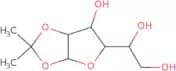
CAS:1,2-O-Isopropylidene-a-D-glucofuranose (IPDF) is a natural compound that has been isolated from the leaves of the plant Cinnamomum camphora. IPDF has been shown to have biological properties such as inhibiting hl-60 cells and inducing apoptosis in leukemia cells. The metabolic rate of IPDF was studied in isolated hearts and it was found that the compound slows fatty acid oxidation. The enzyme substrate specificity of IPDF was also tested by adding trifluoroacetic acid, which yielded no reaction.Formula:C9H16O6Color and Shape:White Off-White PowderMolecular weight:220.22 g/molIron sucrose
CAS:Iron sucrose is a sucrose-iron complex that is administered intravenously for the treatment of bowel disease and iron deficiency. Iron sucrose has been shown to have potent inducers of oxidative injury, which may be due to the formation of reactive oxygen species. Iron sucrose has also been shown to increase cellular transformation and congestive heart failure in mice. Long-term toxicity studies have not been conducted.
Formula:C12H22O11FePurity:Min. 95%Color and Shape:Brown PowderMolecular weight:398.141-Amino-2,5-anhydro-1-deoxy-D-mannitol
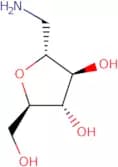
CAS:1-Amino-2,5-anhydro-1-deoxy-D-mannitol is an amino sugar that is synthesized by reductive amination of d-fructose and nitrous acid. It has been shown to be a substrate for the transporter protein, which transports it into the cell. 1-Amino-2,5-anhydro-1-deoxy-D-mannitol has been used in the synthesis of arylamines with nitrous acid as a reducing agent. This process has been used to study the stereospecificity of reductive amination.Formula:C6H13NO4Purity:Min. 95%Color and Shape:PowderMolecular weight:163.17 g/mol5-Deoxy-5-fluoro-D-galactose
5-Deoxy-5-fluoro-D-galactose is an oligosaccharide that can be used as a custom synthesis. It is a modification of the natural monosaccharide D-galactose. 5-Deoxy-5-fluoro-D-galactose has the following chemical structure:Purity:Min. 95%7-Deoxy-D-glycero-L-ido-heptitol
7-Deoxy-D-glycero-L-ido-heptitol is a synthetic carbohydrate that is a methylated, saccharide and polysaccharide. It is a custom synthesis and can be modified with Click chemistry. This product has CAS number 90319-73-6 and can be modified with fluorination. 7DGHLH is a high purity product that has been synthesized from carbon dioxide and hydrogen gas. It is an oligosaccharide that has been glycosylated and is available in the form of a powder or liquid.
Purity:Min. 95%3-O-Hydroxyethyl-D-glucose
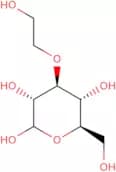
CAS:3-O-Hydroxyethyl-D-glucose (3HEG) is a hexose sugar that can be synthesized from D-glucose and glycerol. It is an important precursor for the synthesis of polyethylene glycols for drug delivery and has been shown to be a potent inhibitor of glucose uptake in Xenopus oocytes. 3HEG is also a good carbon source for cell growth, but it can only be metabolised by cells with the appropriate enzymes. Glucofuranose, which is structurally similar to 3HEG, can inhibit uptake of glucose by binding to glucose transporters on the cell membrane surface. This inhibition may be due to the structural similarities between these two sugars. Mechanistic studies indicate that this inhibition may occur as a result of competitive inhibition or allosteric modulation, but further research is required to elucidate this mechanism.Formula:C8H16O7Purity:Min. 98 Area-%Color and Shape:Yellow PowderMolecular weight:224.21 g/mol1-Amino-2,4-O-benzylidene-D-butane-2,3,4-triol
1-Amino-2,4-O-benzylidene-D-butane-2,3,4-triol is a custom synthesis. This compound is an oligosaccharide that has been modified with methylation, glycosylation, and click modification. Carbohydrate molecules are saccharides that have a sugar as their backbone. Saccharides can be classified as monosaccharides (simple sugars) or polysaccharides (complex carbohydrates). This compound is a high purity synthetic that has been fluorinated and has undergone glycose chemistry to produce a desired product.Purity:Min. 95%(2S,3S,4R,5R)-3,4-O-Benzylidene-2-cyano-N-(4-methoxybenzyl)-3,4,5-trihydroxy-piperidine
The modification of a polysaccharide with an oligosaccharide, which is the process of adding one or more sugar residues to the polysaccharide. This can be done enzymatically or chemically. The addition of a carbohydrate residue to another carbohydrate-bearing molecule. This can be done enzymatically or chemically. The synthesis of an organic compound that contains only carbon, hydrogen, and oxygen atoms in its molecular structure. This can be done enzymatically or chemically. The process of adding a methyl group to an organic compound. This can be done enzymatically or chemically. A monosaccharide is a simple sugar that cannot be hydrolyzed into simpler sugars by chemical means. It is one of the three main types of biomolecules found in living things (along with lipids and nucleic acids). Methylation is a chemical reaction involving the transfer of a methyl group from one chemical entity to another one; for example, from methanol to dimPurity:Min. 95%Allyl 2-O-acetyl-3-O-benzyl-a-L-rhamnopyranoside
CAS:Allyl 2-O-acetyl-3-O-benzyl-a-L-rhamnopyranoside is a synthetic monosaccharide that is used in the synthesis of complex carbohydrates. It has a CAS number of 940274-20-4 and may be modified with fluorine or methyl groups. Synthetic allyl 2-O-acetyl-3-O-benzyl-a -L -rhamnopyranoside is also known as "Methylated, Custom synthesis, Click modification, Oligosaccharide, Polysaccharide, saccharide, sugar."
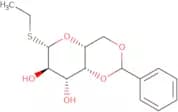
Formula:C18H24O6Purity:Min. 95%Molecular weight:336.39 g/molEthyl 4,6-O-benzylidene-β-D-thiogalactopyranoside
CAS:Ethyl 4,6-O-benzylidene-b-D-thiogalactopyranoside is a synthetically produced carbohydrate typically used as a building block in oligo-saccharide synthesis.
Formula:C15H20O5SPurity:Min. 95%Color and Shape:PowderMolecular weight:312.39 g/molGalactostatin bisulfite
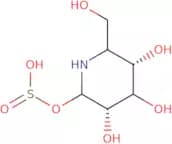
CAS:Inhibitor of β-galactosidase
Formula:C6H13NO7SPurity:Min. 95%Color and Shape:PowderMolecular weight:243.24 g/mol1-Deoxy-D-sorbofuranose
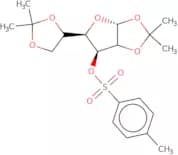
1-Deoxy-D-sorbofuranose is a custom synthesis that is an oligosaccharide with a complex carbohydrate structure. It has a molecular weight of 399.54, and CAS No. of 1092-19-3. 1DDS is modified with methylation, glycosylation, click modification and fluorination. 1DDS is also an Oligosaccharide and Polysaccharide with high purity (99.5%), Mw of 399.54 g/mol, MWt of 603.2 g/mol, Mz of 1204.8 g/mol, Purity of 99%.Purity:Min. 95%1,2:5,6-Di-O-isopropylidene-3-O-p-toluenesulfonyl-α-D-allofuranose
CAS:1,2:5,6-Di-O-isopropylidene-3-O-p-toluenesulfonyl-a-D-allofuranose is a synthetic carbohydrate with a 5 carbon backbone. The methylation of the C1 and C2 carbon atoms is required to obtain this compound. It is used in the synthesis of complex carbohydrates. This product can be custom synthesized on request and has a purity of 99%.
Formula:C19H26O8SPurity:Min. 95%Color and Shape:White To Off-White SolidMolecular weight:414.47 g/molBenzyl 4,6-O-benzylidene-a-D-mannopyranoside
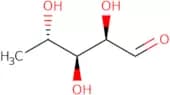
CAS:Benzyl 4,6-O-benzylidene-a-D-mannopyranoside is a sugar compound that is used in the synthesis of glycosides. It is a custom synthesized, high purity product that can be methylated and glycosylated. The CAS number for this product is 40983-94-6.Formula:C20H22O6Purity:Min. 95%Color and Shape:PowderMolecular weight:358.39 g/mol5-Deoxy-L-arabinose
CAS:5-Deoxy-L-arabinose is a tetramethylurea derivative that has been synthesized for the treatment of hyperphenylalaninemia, an atypical form of phenylketonuria. It is an analog of 5-deoxy-l-ribose and can be used to generate molybdate from ammonium molybdate. This product also has antiviral activity and can be used to inhibit the growth of filamentous fungi, such as Verticillium dahliae. 5-Deoxy-L-arabinose can be used as a phase separator in chromatography. It is stereoselective and does not react with acid catalysts.Formula:C5H10O4Purity:Min. 95%Color and Shape:Slightly Yellow Clear Viscous LiquidMolecular weight:134.13 g/mol2-Azido-((R)-3,5-O-benzylidene)-2,6-dideoxy-L-mannofuranose
2-Azido-((R)-3,5-O-benzylidene)-2,6-dideoxy-L-mannofuranose is a carbohydrate with a complex sugar structure. This compound is synthesized by reacting 2,6-dideoxy-L-mannofuranose with sodium azide and benzyl bromide in the presence of triethylamine. The resulting product is purified by crystallization from methanol and ethanol. This chemical has been shown to react with DNA to form a stable covalent bond at the N7 position of guanine residues.Purity:Min. 95%1,3-O-Benzylidene-4-O-DMT-D-threitol
1,3-O-Benzylidene-4-O-DMT-D-threitol is an oligosaccharide that is used as a synthetic building block for the synthesis of complex carbohydrates. This compound has been modified to include fluorine and methyl groups. It can be synthesized via a click reaction with 3,4,5,6-tetraiodoacetone. 1,3-O-Benzylidene-4-O-DMT-D-threitol is soluble in water and aqueous solutions and can be used as a carbohydrate marker. The modification of this compound allows it to be detected by electrophoresis or chromatography due to changes in its mobility and charge.Purity:Min. 95%D-Erythrono-1.4-lactone
D-Erythrono-1.4-lactone is a carbohydrate that belongs to the group of oligosaccharides. It is a synthetic sugar with the CAS number 687-83-0. This carbohydrate is a monosaccharide with an oxygen atom in the alpha position, which has been fluorinated and methylated. The methylation on this sugar can be accomplished by either a glycosylation or click chemistry modification. This sugar can be used as an anti-tumor agent or as an adjuvant for chemotherapy treatments.
Purity:Min. 95%1,4-Anhydro-D-xylitol
CAS:1,4-Anhydro-D-xylitol is a solid catalyst that is used for the synthesis of 1,4-anhydro-D-glucitol. The reaction follows a nucleophilic attack by sodium citrate on the oxygen atom at the anomeric position of D-xylose. 1,4-Anhydro-D-xylitol has been shown to be present in fruit extracts and it has been hypothesized that it may have biological activity as a growth factor or as a polylactic acid (PLA) or fatty acid film-forming polymer.
Formula:C5H10O4Purity:Min. 95%Color and Shape:PowderMolecular weight:134.13 g/mol2, 3:5, 6- Di- O- isopropylidene- D- mannofuranose
2, 3:5, 6-Di-O-isopropylidene-D-mannofuranose is a fluorinated monosaccharide that is used in glycosylation and polysaccharide modification. This compound has an O-methyl group on the hydroxyl group of the C2 position and a methyl group on the hydroxyl group of the C3 position. It is a white to off-white powder with a molecular weight of 332.37 g/mol. 2, 3:5, 6-Di-O-isopropylidene-D-mannofuranose has been shown to be stable at high temperatures and pH levels. It has a CAS number of 8061-93-0.Purity:Min. 95%Sucrose octaacetate
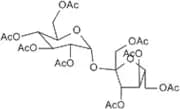
CAS:Sucrose octaacetate is used commercially and industrially in a variety of applications including as an inert ingredient in pesticides and herbicides and has been approved by the EPA as an inert ingredient in pesticides due to its low toxicity. It has also been approved by the FDA as a food additive. It has a bitter taste and is used as a bitterant to deter accidental ingestion.Formula:C28H38O19Purity:Min. 95%Color and Shape:PowderMolecular weight:678.59 g/mol1,2,3,4-Tetra-O-benzyl-6-O-triisopropylsilyl-a-D-mannopyranose
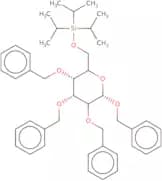
1,2,3,4-Tetra-O-benzyl-6-O-triisopropylsilyl-a-D-mannopyranose is a methylated saccharide. It has the CAS number of 43471-92-5 and is a synthetic modification of mannopyranose. This product can be modified with other functional groups to create customized synthesis for glycosylation and fluorination. It has high purity and is free from contaminants such as proteins, lipids, or carbohydrates.Formula:C43H56O6SiPurity:Min. 95%Molecular weight:697.01 g/mol6-Deoxy-L-allose
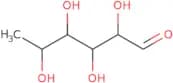
CAS:6-Deoxy-L-allose is a sugar that belongs to the class of carbohydrates. It is synthesized by chemoenzymatic methods and can be used in the synthesis of glycoconjugates. 6-Deoxy-L-allose has been shown to inhibit acid phosphatase, a key enzyme involved in phosphate group metabolism, by competitive inhibition. This synthetic sugar has also been used as an immobilizing agent for enzymes such as glycosidases and phosphatases.Formula:C6H12O5Purity:Min. 95%Color and Shape:SolidMolecular weight:164.16 g/molα-D-Glucose-1-phosphate disodium salt hydrate
CAS:Alpha-D-glucose-1-phosphate disodium salt hydrate is a sugar that is used to provide the carbohydrate in the diet. It is an important monosaccharide and can be found in many fruits, vegetables, and dairy products. The optimum pH for alpha-D-glucose-1-phosphate disodium salt hydrate is 7.5. Alpha-D-glucose-1-phosphate disodium salt hydrate has been shown to have antifungal properties, which are due to its ability to inhibit the growth of fungi by interfering with their metabolism. Alpha D glucose 1 phosphate disodium salt hydrate also inhibits the growth of bacteria such as E coli K 12 and C coli K 12, which are microorganisms that can cause food poisoning in humans. This compound also has been shown to have antihypertensive properties, which may be due to its ability to stimulate nitric oxide synthesis.Formula:C6H11O9PNa2(anhydrousbasis)Molecular weight:304.1 g/mol3,6-Di-O-acetyl-5-S-acetyl-5-deoxy-1,2-O-isopropylidene-α-D-glucofuranose
CAS:3,6-Di-O-acetyl-5-S-acetyl-5-deoxy-1,2-O-isopropylidene-a-D-glucofuranose is an acetal sugar. It is custom synthesized for research purposes. The sugar has a purity of >99% and was synthesized by click chemistry as well as fluorination and glycosylation. This product is offered in a variety of modifications including methylation, modification, and oligosaccharide. 3,6 Di O Acetyl 5 S Acetyl 5 Deoxy 1 2 O Isopropylidene A D Glucurono Furanose can be used to produce saccharides or complex carbohydrates in the laboratory setting.Formula:C15H22O8SPurity:Min. 95%Color and Shape:PowderMolecular weight:362.4 g/mol4-O-β-D-Galactopyranosyl-D-glucitol
CAS:Lactitol is a polyol sugar alcohol that has been used in the treatment of chronic viral hepatitis. It is also used to treat constipation, irritable bowel syndrome, and other gastrointestinal disorders. Lactitol is metabolized by certain types of bacteria and can have a laxative effect. Lactitol is not absorbed in the human intestine and thus does not cause an increase in blood sugar levels. Lactitol has been shown to be effective against microbial translocation and bacterial overgrowth in the gut, which may be due to its ability to lower pge2 levels and inhibit histological changes.
Formula:C12H24O11Purity:Min. 98.0 Area-%Molecular weight:344.31 g/molRef: 3D-W-109090
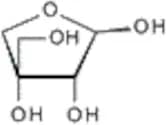
1kgTo inquire5kgTo inquire10kgTo inquire500gTo inquire2500gTo inquire-Unit-kgkgTo inquireD-Apiose - Aqueous solution
CAS:D-Apiose is a triterpenoid saponin that is isolated from the bark of the Quillaja saponaria tree. It has been shown to inhibit tumor growth and induce cell death in animal models. D-Apiose is also known to be an inhibitor of sugar transport, hydroxylation, and ribitol dehydrogenase, which are all important cellular processes. This compound induces cell lysis by binding to cellular organelles such as the mitochondria and endoplasmic reticulum. Cell lysis leads to the release of intracellular contents into the extracellular environment, which can have potent antitumor activity. The hydroxyl group on D-Apiose allows it to react with ribitol dehydrogenase, which catalyzes a reaction involving the conversion of ribitol into 2-deoxyribose 5-phosphate. The ultimate product of this reaction is galacturonic acid, which may have anti-Formula:C5H10O5Purity:Min. 95%Color and Shape:Clear LiquidMolecular weight:150.13 g/molAllyl 3-O-benzyl-2-O-p-toluenesulfonyl-a-L-rhamnopyranoside
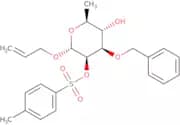
CAS:Allyl 3-O-benzyl-2-O-p-toluenesulfonyl-a-L-rhamnopyranoside (ABTS) is a synthetic sugar derivative that is used in the modification and synthesis of saccharides. ABTS can be modified by fluorination, glycosylation, methylation, or other modifications to produce new compounds. ABTS has a CAS number of 940274-22-6.Formula:C23H28O7SPurity:Min. 95%Molecular weight:448.54 g/mol5-O-tert-Butyldimethylsilyl-2,3-O-isopropylidene-D-ribofuranose
CAS:5-O-tert-Butyldimethylsilyl-2,3-O-isopropylidene-D-ribofuranose is a stereoselective, unsubstituted aryl group. It is used in the synthesis of deodorants and antiperspirants. This compound has been shown to have an effect on perspiration by reducing the amount of sweat produced by the apocrine glands. The mechanism of action may be related to its ability to inhibit c1-c4 esters that are involved in the synthesis of odoriferous substances. 5-O-tert-Butyldimethylsilyl-2,3-O-isopropylidene-D-ribofuranose also inhibits bacterial growth by binding to DNA gyrase and topoisomerase IV, which are enzymes that maintain the integrity of bacterial DNA.Formula:C14H28O5SiPurity:Min. 95%Color and Shape:White PowderMolecular weight:304.45 g/mol2-Acetamido-2-deoxy-β-D-glucopyranosyl amine
CAS:2-Acetamido-2-deoxy-beta-D-glucopyranosyl amine (A2DG) is a diagnostic marker for juvenile idiopathic polyarteritis nodosa. This molecule is an intermediate in the synthesis of the carbohydrate, heparin. The A2DG assay measures concentrations of this metabolite in plasma samples and can be used to diagnose vasculitis and other inflammatory diseases. Novartis has developed a metabolite profiling technique that uses mass spectrometry to identify molecules present in cell culture or plasma samples. This technique has been used to measure levels of A2DG metabolites in patients with vasculitis, including juvenile idiopathic polyarteritis nodosa.Formula:C8H16N2O5Purity:Min. 95.0 Area-%Molecular weight:220.22 g/mol(2S, 3S, 4S) -2- (Hydroxymethyl) - 1- methyl- 3, 4- pyrrolidinediol
CAS:Ketoconazole is an anti-infective agent that is used in the treatment of fungal and yeast infections. It has been shown to inhibit the transcriptional activation of many genes, including those encoding for α subunit of RNA polymerase and sequences involved in drug metabolism. Ketoconazole also inhibits the formation of benzimidazole compounds in bacteria, which are used by some bacteria to protect themselves against other antibiotics. The biological function of ketoconazole is not yet fully understood, but it has been shown to have a negative effect on pancreatic function in CD-1 mice.Purity:Min. 95%Methyl 2,3,5-tri-O-benzyl-β-D-ribofuranoside
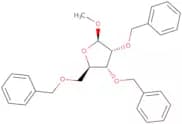
CAS:Methyl 2,3,5-tri-O-benzyl-b-D-ribofuranoside is a glycosylation reagent that can be used in the synthesis of oligosaccharides and polysaccharides. It is used to modify saccharides with fluorine or methyl groups and can be used to synthesize complex carbohydrates. Methyl 2,3,5-tri-O-benzyl-b-D-ribofuranoside is also an intermediate for click chemistry reactions. This product has high purity and can be custom synthesized to meet customers' needs.Formula:C27H30O5Purity:Min. 95%Color and Shape:Pale yellow oil.Molecular weight:434.52 g/molD-Mannose-6-phosphate sodium
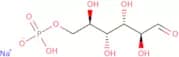
CAS:D-Mannose-6-phosphate sodium salt (DMSP) is a phosphorylated sugar that is produced by the enzyme expressed in the yeast, Saccharomyces cerevisiae. DMSP has been shown to be involved in the synthesis of phosphatidylcholine and other lipids. Its solubilization and adsorption properties have been studied using dibutyryl camp, which is a lipid found in milk fat. The amino acid analysis of DMSP revealed that it contains both D-mannose residues and 6-phosphate groups. The 6-phosphate group is found only on one side of the molecule, which may contribute to its asymmetry.Formula:C6H12NaO9PPurity:Min. 98 Area-%Color and Shape:White PowderMolecular weight:282.12 g/molmyo-Inositol 1,2,4,5,6-pentakisphosphate
Myo-inositol 1,2,4,5,6-pentakisphosphate (IP) is a phosphate of inositol that is found in the cytosol. It is an important component of polyphosphates and can be used for oxygen transport. It has been shown to inhibit the growth of cancer cells by binding to monoclonal antibodies that are targeted against CD20 and CD22 on cancer cells. IP also inhibits the activity of kinases and phosphatases in mammalian cells. This may be due to the inhibition of cytokine release from macrophages treated with IL-1β. Inositol phosphates are involved in many cellular responses including platelet-derived growth factor activation, cell proliferation, and protein synthesis.Formula:C6H17O21P5Purity:Min. 95%Molecular weight:580.06 g/molGlycerone phosphate dilithium salt
CAS:Glycerone phosphate dilithium salt is a cross-linking agent that has been used in clinical trials as a dietary supplement. It has been shown to reduce the levels of ATP, adenine nucleotides, and 6-phosphate. Glycerone phosphate dilithium salt is not metabolized by cellular enzymes and can be used as an alternate energy source for cells that are low in ATP or have high rates of glycolysis. When glycerone phosphate dilithium salt is added to fat cells in culture, it increases the rate of lipid synthesis.Formula:C3H5Li2O6PPurity:Min. 93%Color and Shape:PowderMolecular weight:181.92 g/mol2,3,4,6-Tetra-O-benzoyl-b-D-glucopyranosyl cyanide
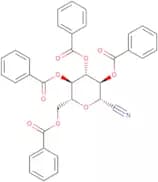
CAS:2,3,4,6-Tetra-O-benzoyl-b-D-glucopyranosyl cyanide is a quaternary ammonium salt that is found in the cenozoic sequence of samples. It has been suggested that this compound may be a new source of radiocarbon.Formula:C35H27NO9Purity:Min. 95%Color and Shape:PowderMolecular weight:605.59 g/mol5-O-tert-Butyldiphenylsilyl-2,3-O-isopropylidene-D-ribofuranose
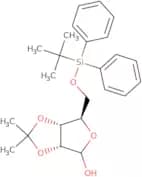
CAS:5-O-tert-Butyldiphenylsilyl-2,3-O-isopropylidene-D-ribofuranose is a synthetic compound that is an inhibitor of adenosine deaminase. This drug has been shown to inhibit the synthesis of nucleic acids and other biological molecules such as amino acids and proteins. 5-O-tert-Butyldiphenylsilyl-2,3-O-isopropylidene ribofuranose is used in organic chemistry as a chiral analog for naturally occurring compounds such as adenosine. 5BPSSIROdR inhibits the enzyme adenosine deaminase by binding to its active site and preventing it from converting adenosine into inosine.Formula:C24H32O5SiPurity:Min. 95%Color and Shape:PowderMolecular weight:428.59 g/mol4,6-Dichloro-4,6-dideoxy-D-galactose
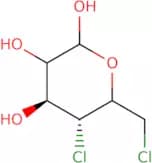
4,6-Dichloro-4,6-dideoxy-D-galactose (4,6DDG) is a chlorinated sugar that is used as a precursor for the synthesis of glycosides. It has been shown to react with cellulose to form 4,6-dichloro-4,6-dideoxycellulose. Chlorination of 4,6DDG at the hydroxyl group leads to the formation of 4,6-dichloro-4,6-dideoxyhydroxyl chloride (4,6DDH). The chlorination process can be done in two ways: nonreducing and reducing. The nonreducing chlorination process occurs by reacting 4,6DDG with chlorine and dimethylformamide. The reducing chlorination process occurs by reacting 4,6DDG with hydrogen chloride and sodium borohydride or lithium aluminum hydride. An excess of hydrogen chlorideFormula:C6H10Cl2O4Purity:Min. 95%Molecular weight:217.05 g/mol4-Penten-1-yl 2,3,4,6-tetra-O-acetyl-b-D-glucopyranoside
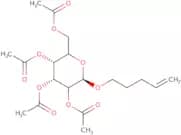
CAS:4-Penten-1-yl 2,3,4,6-tetra-O-acetyl-b-D-glucopyranoside is a carbohydrate that is synthesized by the modification of an existing molecule. It is a custom synthesis and can be modified with click chemistry to create new compounds. This compound has a high purity and is soluble in water. It can be used for saccharide or polysaccharide synthesis as well as glycosylation reactions. This product's CAS number is 50256-33-2 and it has been assigned the chemical name Methylation, saccharide, Polysaccharide, Click modification, CAS No. 50256-33-2, Modification, Oligosaccharide, Custom synthesis, Glycosylation, High purity, Carbohydrate, sugar, Synthetic, Fluorination.Formula:C19H28O10Purity:Min. 95%Molecular weight:416.42 g/molL-Lyxonic acid potassium
CAS:L-Lyxonic acid potassium salt is a synthetic, fluorinated sugar that can be modified with a variety of functional groups. It is an excellent starting material for the synthesis of glycosylations, oligosaccharides, and sugar derivatives. L-Lyxonic acid potassium salt is typically used as a sugar substitute in food products. L-Lyxonic acid potassium salt is also used in the synthesis of complex carbohydrates and saccharides. L-Lyxonic acid potassium salt has been modified to include Click chemistry or other modifications to improve its properties.Formula:C5H9KO6Purity:Min. 95%Color and Shape:PowderMolecular weight:204.22 g/molD-Talitol-1,6-diphosphate
D-Talitol-1,6-diphosphate is a modified sugar. It is an oligosaccharide and polysaccharide composed of D-talitol and 1,6-diphosphate. This product can be used in the synthesis of complex carbohydrates or as a reagent for fluorination reactions. D-Talitol phosphates are also used to modify monosaccharides by methylation, click modification, or other modifications.Purity:Min. 95%2-Azido- 2- deoxy- 5, 6- O- isopropylidene -L- gulonic acid g- lactone
2-Azido-2-deoxy-5,6-O-isopropylidene-L-gulonic acid g-lactone is a synthetic compound that is used as a building block in the synthesis of various saccharides. It can be modified to form glycosylation products and complex carbohydrates. The chemical name for this compound is 2-azido-2,3,4,5,6 -pentafluoroethane sulfonic acid. This molecule has a molecular weight of 162.14 and a molecular formula of C9H9F7O4S. It has an empirical formula of C8H12FO5S. 2-Azido-2,3,4,5,6 -pentafluoroethane sulfonic acid is soluble in water and ethanol and can be stored at room temperature for up to one year without decomposing.Purity:Min. 95%2-Azidoethyl 2,3,4,6-tetra-O-acetyl-b-D-glucopyranoside
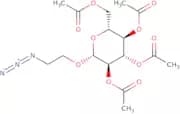
CAS:2-Azidoethyl 2,3,4,6-tetra-O-acetyl-b-D-glucopyranoside is a sugar that is custom synthesized. It is a synthetic compound that has been fluorinated and methylated. This product can be used for glycosylation or oligosaccharide synthesis. It is a high purity product with a purity of 98% and has been modified with click chemistry. The CAS number for this product is 140428-81-5.Formula:C16H23N3O10Color and Shape:White PowderMolecular weight:417.37 g/mol1,3,4,6-Tetra-O-benzoyl-α-D-fructofuranose
CAS:1,3,4,6-Tetra-O-benzoyl-a-D-fructofuranose is a fluorinated monosaccharide. It is an artificial sugar that has been modified with a benzoyl group at the 1 position and a tetra-O-benzoyl group at the 3 position. This compound has been synthesized using a custom synthesis. The compound is soluble in water and ethanol and can be used as a glycosylation or polysaccharide modification reagent. Click chemistry reactions have been performed on this compound to introduce methyl groups to the 4 and 6 positions of the sugar ring. The purity of this product is >99%.
Formula:C34H28O10Purity:Min. 95%Color and Shape:White To Off-White SolidMolecular weight:596.58 g/mol1-Deoxy- 3, 4- O- isopropylidene-D- erythro- 2- pentulofuranose
1-Deoxy- 3, 4- O- isopropylidene-D-erythro-2 pentulofuranose is a mannitol derivative. It is a carbohydrate that has been modified by fluorination and methylation and glycosylation. It can be synthesized from erythritol and 2,3,4-trihydroxybenzaldehyde. This product can be custom synthesized to order with high purity in quantities of 10 grams or more.Purity:Min. 95%Indomethacin acyl-b-D-glucuronide
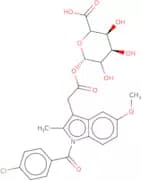
CAS:Indomethacin acyl-b-D-glucuronide is a prodrug of indomethacin. It is absorbed through the stomach and small intestine and metabolized in the liver. The pharmacokinetic parameters are not as well understood as with other drugs, but it has been shown that indomethacin acyl-b-D-glucuronide has a higher systemic exposure than indomethacin. This may be due to an increase in absorption or faster elimination. Indomethacin acyl-b-D-glucuronide is used for the treatment of pain and inflammation associated with rheumatoid arthritis, osteoarthritis, ankylosing spondylitis, gouty arthritis, and bursitis.Formula:C25H24ClNO10Purity:Min. 95 Area-%Color and Shape:Yellow PowderMolecular weight:533.91 g/mol4-Methylphenyl 2,3,4-tri-O-benzyl-b-D-thioglucuronide benzyl ester
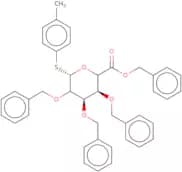
CAS:4-Methylphenyl 2,3,4-tri-O-benzyl-b-D-thioglucuronide benzyl ester is a carbohydrate that is synthesized from the monosaccharide 4-methylphenol and bromoacetaldehyde. It is a custom synthesis that can be modified with fluorination or methylation. The purity of this product is high and it has been synthesized using a click modification.Formula:C41H40O6SPurity:Min. 95%Molecular weight:660.82 g/mol