Monosaccharides
Subcategories of "Monosaccharides"
- Alloses(11 products)
- Arabinoses(21 products)
- Erythroses(11 products)
- Fructoses(9 products)
- Fucoses(36 products)
- Galactosamine(41 products)
- Galactose(261 products)
- Glucoses(365 products)
- Glucuronic Acids(52 products)
- Glyco-substrates for Enzyme(78 products)
- Guloses(6 products)
- Idoses(4 products)
- Inositols(15 products)
- Lyxoses(4 products)
- Mannoses(65 products)
- O-Glycans(48 products)
- Psicoses(3 products)
- Rhamnoses(10 products)
- Riboses(61 products)
- Sialic Acids(100 products)
- Sorboses(4 products)
- Sugars(173 products)
- Tagatoses(4 products)
- Taloses(8 products)
- Xyloses(20 products)
Found 6088 products of "Monosaccharides"
1,2,4,6-Tetra-O-acetyl-3-deoxy-3-phthalimido-D-galactopyranoside
This product is a custom synthesis of 1,2,4,6-Tetra-O-acetyl-3-deoxy-3-phthalimido-D-galactopyranoside. It is a sugar that is synthesized from 4 acetyl groups and 6 hydroxyl groups. The compound has a CAS number of 71034-05-4 and can be modified by fluorination, glycosylation, methylation, or modification. This product is an oligosaccharide that contains a saccharide with more than one monosaccharide unit. It is a complex carbohydrate with the formula C12H20O11.Formula:C22H23NO11Purity:Min. 95%Molecular weight:477.42 g/molscyllo-Inosamine hydrochloride
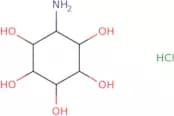
CAS:Scyllo-inosamine is a synthetic compound that is used as an oxime for the treatment of ascites tumors. It is synthesized from benzyl cyanide and cyclohexane. The benzyl groups are removed by catalytic hydrogenation, and the resulting product is hydrolyzed to scyllo-inosamine. Scyllo-inosamine has been shown to have a stereogenic center at C3, which allows it to act as an aminocyclitol, with the nitrogen atom acting as a nucleophile in the ring opening reaction. Scyllo-inosamine has been shown to be active against a number of tumor cells in culture and has been investigated as chemotherapeutic agent for cancer treatment.Formula:C6H13NO4·HClPurity:Min. 95%Molecular weight:199.63 g/mol2,5-Anhydro-D-mannitol tetraacetate
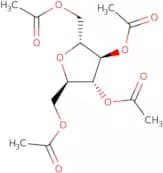
CAS:2,5-Anhydro-D-mannitol tetraacetate (2,5-AMT) is a medicament that belongs to the group of tetraacetates. It is used as an oral preparation and has been shown to be effective in treating acute myeloid leukemia. 2,5-AMT is an analog of D-mannitol and it can be used for the treatment of cancer. 2,5-AMT has anticancer activity that is due to its ability to inhibit the growth of tumor cells by inhibiting the synthesis of proteins necessary for cell division. It also inhibits the production of fibrous tissue in chronic pancreatitis and fibrosis. This drug may cause allergic reactions such as skin rashes or lip swelling.Formula:C14H20O9Purity:Min. 95%Molecular weight:332.3 g/molNeu5Acα(2-6)GalNAc-α-PNP
CAS:Neu5Acα(2-6)GalNAc-α-PNP is a modification of the oligosaccharide, carbohydrate, complex carbohydrate. It is synthesized by custom synthesis and has CAS No. 1858224-04-0. Neu5Acα(2-6)GalNAc-α-PNP is a monosaccharide that is methylated and glycosylated with polysaccharides. The product can be fluorinated or saccharided, and it has high purity.Formula:C25H35N3O16Purity:Min. 95%Molecular weight:633.6 g/mol4-O-Acetyl-3,6-di-O-tert-butyldimethylsilyl-D-glucal
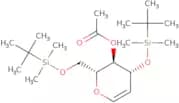
CAS:4-O-Acetyl-3,6-di-O-tert-butyldimethylsilyl-D-glucal is a methylated derivative of D-glucal which has been synthesized by the click reaction using acetyl chloride, triethylamine, and dimethyl sulfate. 4OATBDMSDG is a high purity sugar with a CAS number of 132891-79-3. This sugar can be used in the synthesis of polysaccharides or as an intermediate for custom synthesis.Purity:Min. 95%Maltopyranosyl-CTP
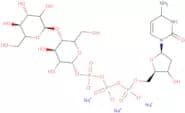
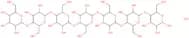
Maltopyranosyl-CTP is a high purity, custom synthesis, sugar modified with Click chemistry. The modification includes fluorination, glycosylation and methylation. Maltopyranosyl-CTP is synthesized by the reaction of maltoheptaose with 3-chloro-2-fluoroaniline. Maltopyranosyl-CTP has CAS No.: 6791-87-0 and molecular weight: 592.28. Maltopyranosyl-CTP is an oligosaccharide that consists of six monosaccharides linked together in a linear chain by alpha (1→4) glycosidic bonds. Maltopyranosyl-CTP has the following chemical formula: C6H14O6F3Cl2N3O6S2. Maltopyranosyl-CTP is a complex carbohydrate that can be found in plants and yeast.Formula:C21H32N2Na3O24P3Purity:Min. 95%Molecular weight:858.37 g/molMaltoheptaose hydrate
CAS:Maltoheptaose hydrate is a mixture of oligosaccharides and monosaccharides that has been shown to be effective as a biocide. Maltoheptaose hydrate has been shown to be an effective radiation absorber, with the ability to absorb microwaves and other forms of radiation. The compound also has the capacity to form hydrogen bonds, which can lead to the formation of alcohols in solution. This property makes maltoheptaose hydrate a useful recording agent for microwave radiation, as well as being able to absorb alcohols. Maltoheptaose hydrate is composed of both monomeric and monosaccharides, which are saccharides.
Formula:C42H74O37Purity:Min. 95%Molecular weight:1,171 g/mol4-O-Acetyl-2,5-anhydro-1,3-O-isopropylidene-6-O-trityl-D-glucitol
CAS:4-O-Acetyl-2,5-anhydro-1,3-O-isopropylidene-6-O-trityl-D-glucitol is a custom synthesis of an oligosaccharide. It is a complex carbohydrate that has been modified by methylation and glycosylation. 4OATG has been fluorinated with 1,4 difluorobenzene and then reacted with Ac 2 O to make the glycosylate form. The compound was obtained in high purity and as a white solid.Formula:C30H32O6Purity:Min. 95%Molecular weight:488.57 g/mol6,6'-Di-O-tert-butyldimethylsilyl-lactal
CAS:6,6'-Di-O-tert-butyldimethylsilyl-lactal is a synthetic glycosylation reagent that has been used in the synthesis of oligosaccharides and sugar derivatives. This compound is known to have a high purity and can be custom synthesized to meet your specifications. The fluorination reaction of this compound yields 6,6'-di-O-tert-butyldimethylsilyl-lactal, which can be methylated to yield 6,6'-di-O-methyl-lactal. The methylation reaction can be used to introduce a click modification onto the molecule. A complex carbohydrate is formed by the reaction of 6,6'-di-O-methyl lactal with other monosaccharide or polysaccharide. The saccharide group can also be modified with a click modification.Purity:Min. 95%1-O-Oleoyl-2-O-acetyl-3-O-(b-D-galactopyranosyl) syn-glycerol
1-O-Oleoyl-2-O-acetyl-3-O-(b-D-galactopyranosyl) syn-glycerol is a complex carbohydrate that is custom synthesized for use in modification reactions. It has been shown to be compatible with a variety of other saccharides and can be methylated, glycosylated, or fluorinated. This product is available in high purity and can be ordered as either a monosaccharide or a polysaccharide.Formula:C29H52O10Purity:Min. 95%Molecular weight:560.72 g/molD-Glucofuranuronic acid,gamma-lactone,1,6-13C2
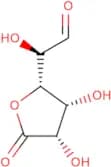
CAS:D-Glucofuranuronic acid,gamma-lactone,1,6-13C2 is an organic compound that is a glycosidic acid with a uronic acid group. It is composed of a hydrocarbon group and an acetylated d-xylose. This compound has been shown to have inhibitory activities against glycosidases and glycoside hydrolases. D-Glucofuranuronic acid,gamma-lactone,1,6-13C2 is synthesized by the reaction of trifluoroacetic acid with glyceraldehyde in the presence of water and an acid catalyst. It can be used as medicine for treating blood sugar levels but should not be taken in conjunction with other medicines because it inhibits their absorption.Formula:C2C4H8O6Purity:Min. 95%Molecular weight:178.12 g/mol3,4-Dideoxyglucosone-3-ene
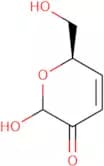
CAS:3,4-di-deoxyglucosone-3-ene is a bioreactive glucose degradation product which can be formed during heat sterilisation of glucose containing peritoneal dialysis solutions. Chemically, 3,4-Dideoxyglucosone-3-ene is an α,β-unsaturated carbonyl compound which increases its reactivity with cellular sulfhydryl, amino groups, proteins, and DNA. 3,4-Dideoxyglucosone-3-ene induces apoptosis in neutrophils, renal cells and peripheral blood mononuclear cells. Such induction leads to impaired peritoneal antibacterial defence.Formula:C6H8O4Purity:Min. 95 Area-%Color and Shape:Colorless PowderMolecular weight:144.13 g/molRiboflavin galactoside
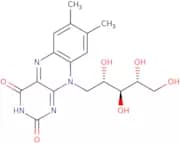
CAS:Riboflavin galactoside (RGG) is a fluorescent compound that can be used as a marker for cell proliferation. It is particularly useful in immunohistochemical techniques, which are used to detect the presence of antigens in tissue. RGG is sensitive to light, and thus it can be detected using techniques such as disintegrations per minute (DPM). RGG has been shown to be an efficient cellular target for amplifying RNA in cells. This compound also interacts with molecules that are involved in cellular growth and development, including antibodies.Formula:C23H30N4O11Purity:Min. 95%Molecular weight:538.5 g/molPhosphatidyl 1-(3-deoxy-2-O-methyl-D-myo-inositol)
CAS:Phosphatidyl 1-(3-deoxy-2-O-methyl-D-myo-inositol), also known as phosphatidylinositol (PI) is a lipid molecule that is the main component of cell membranes. PI is synthesized from glucose in the cytosol and then transported to the Golgi where it is converted into its final form, phosphatidylcholine. PI has been shown to inhibit chitinase activity in human HL60 cells and leukemia cells and may be an effective treatment for cancer.Formula:C29H59O10PPurity:Min. 95%Molecular weight:598.75 g/molBenzyl 2-acetamido-3,4-di-O-acetyl-2-deoxy-6-O-DMT-a-D-galactopyranoside
Benzyl 2-acetamido-3,4-di-O-acetyl-2-deoxy-6-O-DMT-a-D-galactopyranoside is a custom synthesis that is available in high purity. This product can be used for methylation, click modification, and fluorination. It is an oligosaccharide with a saccharide or carbohydrate as the main component. The molecular weight of this product is about 567.9 Da and the CAS number of this product is 103487-13-0.Formula:C40H43NO10Purity:Min. 95%Molecular weight:697.77 g/molN-(1-Deoxy-D-fructos-1-yl)-L-serine
CAS:The N-glycation of proteins is a process that occurs when protein reacts with glucose, which is called glycation. This process can lead to the formation of reactive oxygen species and subsequent oxidative stress. The oxidation of proteins can also lead to the formation of advanced glycation end products (AGEs), which are associated with complications such as diabetes, atherosclerosis, and cataracts. This product is an example of a protein that has undergone glycation. It has been shown to react with glucose in an enzymatic reaction and form glucose-derivatives called fructosamines, which are used for monitoring the level of glycation in humans. Fructosamines have been correlated with basic treatments such as medications or insulin therapy.Formula:C9H17NO8Purity:Min. 95%Molecular weight:267.23 g/molMethyl 3,4-isopropylidene-b-L-arabinopyranoside
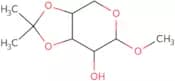
CAS:Methyl 3,4-isopropylidene-b-L-arabinopyranoside is a synthetic saccharide that has been modified by the Click chemistry. Click modification is a method of modifying a complex carbohydrate with a reactive group (e.g., an azide) at one end of the molecule and an electrophile at the other end of the molecule. The resulting product can be used in glycosylation reactions to form complex carbohydrates with various properties. Methyl 3,4-isopropylidene-b-L-arabinopyranoside is used as a precursor for the synthesis of oligosaccharides and polysaccharides. It also has been shown to be effective as an inhibitor of bacterial growth in vitro by inhibiting protein synthesis.Formula:C9H16O5Purity:Min. 95%Molecular weight:204.22 g/mol2-Acetamido-2,4-dideoxy-4-fluoro-6-O-(3-mercaptopropanoyl)-D-glucopyranose
2-Acetamido-2,4-dideoxy-4-fluoro-6-O-(3-mercaptopropanoyl)-D-glucopyranose is a sugar with a molecular formula of C10H14O7F3NO6 and a molecular weight of 441.33. It has high purity and is custom synthesized to order. It is an important building block in the synthesis of oligosaccharides, monosaccharides, saccharides, and complex carbohydrates. 2-Acetamido-2,4-dideoxy-4-fluoro-6-O-(3-mercaptopropanoyl)-D-glucopyranose has many modifications including fluorination, glycosylation, methylation, and modification. This product has CAS number 1778791 and can be found under the name Oligosaccharide (CAS No. 17Purity:Min. 95%[(1S,2S)-2-((3S,5S)-5-Amino-3,4,6-trihydroxy-tetrahydro-pyran-2-yl)-1,2-dihydroxy-ethyl]-phosphonic acid (compound D)
[(1S,2S)-2-((3S,5S)-5-Amino-3,4,6-trihydroxy-tetrahydro-pyran-2-yl)-1,2-dihydroxy-ethyl]phosphonic acid (compound D) is a methylated phosphonic acid that has a sugar group at the C5 position. It is an oligosaccharide that contains a saccharide or carbohydrate moiety attached to the phosphate group of the molecule. This complex carbohydrate is synthesized from a monosaccharide and sugar. The synthesis process involves fluorination and modification of the sugar group.Purity:Min. 95%Color and Shape:Solid1,2-O-Isopropylidene-b-L-apiose
CAS:1,2-O-Isopropylidene-b-L-apiose is a carbohydrate with the molecular formula C8H10O4. It is a monosaccharide that is derived from D-mannose by methylation and glycosylation. 1,2-O-Isopropylidene-b-L-apiose has been synthetically modified to improve its properties. The chemical structure of this compound has been modified by fluorination, saccharide modification and glycosylation to increase its solubility in water.Formula:C8H14O5Purity:Min. 95%Molecular weight:190.19 g/molAnhydro-4-azido-5,6,8-tri-O-benzyl-1,2,4-trideoxy-D-glycero-D-gulo-oct-1-ynitol
CAS:Anhydro-4-azido-5,6,8-tri-O-benzyl-1,2,4-trideoxy -D-glycero-D-gulo-oct 1 -ynitol is a methylated saccharide. It is a fluorinated sugar that can be used as an intermediate in the synthesis of oligosaccharides and polysaccharides. This compound has been modified by click chemistry to allow for the incorporation of azide groups at the 3′ position of the sugar moiety. The modification allows for the synthesis of complex carbohydrates with high purity and high yield. The product is a white powder that is soluble in water.Formula:C29H29N3O4Purity:Min. 95%Color and Shape:Colourless syrupMolecular weight:483.56 g/mol6-O-(4,7-Di-O-methyl-N-acetyl-alpha-neuraminosyl)-D-galactopyranoside
6-O-(4,7-Di-O-methyl-N-acetyl-alpha-neuraminosyl)-D-galactopyranoside is a complex carbohydrate that is used in the synthesis of glycoprotein and saccharide. It has been modified with methylation, Click reaction, and fluorination to provide an improved product for research purposes. This chemical has CAS No. 68450-29-1 and can be custom synthesized to meet your needs.Purity:Min. 95%1,2,3-Tri-O-benzyl-4,6-O-benzylidene-a-D-galactopyranoside
CAS:The 1,2,3-Tri-O-benzyl-4,6-O-benzylidene-a-D-galactopyranoside is a synthetic glycoside that can be used as a saccharide in the synthesis of complex carbohydrates. This compound has been shown to have high purity and can be custom synthesized. It has been modified with methylation and fluorination. The CAS No. for this compound is 53929-36-5.Formula:C34H34O6Purity:Min. 95%Molecular weight:538.63 g/molMethyl-5-O-benzoyl-2-chloro-2,3-dideoxy-3-fluoro-D-ribofuranoside
Methyl-5-O-benzoyl-2-chloro-2,3-dideoxy-3-fluoro-D-ribofuranoside is a custom synthesis of Methylation. It is also known as methyl 5-(benzoyl)furanosyl 2,3-dideoxyfuroate. This compound is used in the preparation of oligosaccharides and polysaccharides. It has a CAS number of 90627-95-6 and an Oligosaccharide molecular weight of 380. Methylation is the addition of a methyl group to a molecule. The result is an alkyl group with one less hydrogen atom (CH3). Methyl groups are often used in organic chemistry to modify other molecules, such as sugars or carbohydrates, by adding them to the molecule's structure. Methylation occurs most often in two ways: 1) In chemical synthesis, for exampleFormula:C13H14ClFO4Purity:Min. 95%Molecular weight:288.7 g/mol3-Chloro-3-deoxy-1,2:5,6-di-O-isopropylidene-a-D-glucofuranose
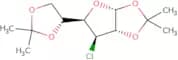
CAS:3-Chloro-3-deoxy-1,2:5,6-di-O-isopropylidene-a-D-glucofuranose is a monosaccharide that is used as an intermediate in the synthesis of complex carbohydrates. It is synthesized by the Click reaction of 3,4,5,6,-tetrachlorohexanoic acid with 2,3:5,6-diisopropylidene glucose. This product has been modified by fluorination and saccharide modification. Custom synthesis can be performed on this product to produce any desired oligosaccharides or polysaccharides. The purity of this product is >98%.Formula:C12H19ClO5Purity:Min. 95%Molecular weight:278.73 g/molAllyl 2,3-di-O-benzyl-b-D-glucopyranoside
CAS:Allyl 2,3-di-O-benzyl-b-D-glucopyranoside is a compound with a molecular weight of 276.2 g/mol and an empirical formula of C12H22O10. It has a white crystalline appearance with a melting point of 220°C. Allyl 2,3-di-O-benzyl-b-D-glucopyranoside is soluble in water and methanol but not in ethanol. It can be used as an additive for plastics and rubber to improve conductivity or as a plasticizer for cellulose acetate.Formula:C23H28O6Purity:Min. 95%Molecular weight:400.46 g/mol6-O-Benzoyl-3-O-tert-butyldiphenylsilyl-D-glucal
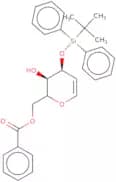
6-O-Benzoyl-3-O-tert-butyldiphenylsilyl-D-glucal is a modification of the oligosaccharide, 6-O-(benzoyloxy)hexyl glucal. The product is used as a synthetic intermediate in the synthesis of complex carbohydrates. It is also used in the production of high purity monosaccharides and polysaccharides. This product has been shown to be effective in methylation reactions, glycosylation reactions, and fluorination reactions.Purity:Min. 95%Methyl 1-(6-tert-butylmethylsilyl-4'-hydroxyraloxifene)-2,3,4,-tri-O-acetyl-b-D-glycopyranuronate
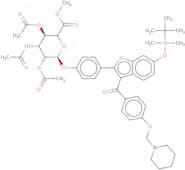
CAS:This is a complex carbohydrate, which is a modification of an oligosaccharide. The structure of this carbohydrate is based on the sugar methyl 1-(6-tert-butylmethylsilyl-4'-hydroxyraloxifene)-2,3,4,-tri-O-acetyl-b-D-glycopyranuronate. This modification has been shown to be useful for glycosylation and polysaccharide synthesis. This compound can be synthesized by click chemistry and has high purity with little or no impurities.Formula:C46H55NO13SSiPurity:Min. 95%Molecular weight:890.08 g/mol1,3,5-Tri-O-acetyl-2-deoxy-a-D-ribofuranose
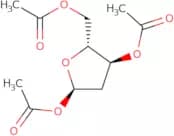
CAS:1,3,5-Tri-O-acetyl-2-deoxy-a-D-ribofuranose is a monosaccharide with a modified sugar residue that is obtained by the fluorination of 1,3,5-triacetyl-2,6'-dideoxyglucose. It is a complex carbohydrate that can be used as an additive in food and beverage products. The chemical formula for 1,3,5-triacetyl-2,6'-dideoxyglucose is C10H14O8 and the molecular weight is 392.24 g/mol.Formula:C11H16O7Purity:Min. 95%Molecular weight:260.24 g/molPentenylglycoside derivatives
Pentenylglycoside derivatives are synthetic compounds that have a sugar as their core. These compounds are synthesized by glycosylation of pentenyl alcohols with sugars. They are highly soluble in water and have good stability. The molecules have been modified to increase their activity and reduce the toxicity. Some examples of modifications include fluorination, methylation, and click chemistry. This product is not available for sale in the United States because it has not been evaluated by the Food and Drug Administration (FDA).Purity:Min. 95%4,6-O-Benzylidene-D-mannose
4,6-O-Benzylidene-D-mannose is an aromatic compound that can be used in the synthesis of various sugars. It is a precursor to d-glucose and d-galactose and can be synthesized by deacetylation of mannose with sodium hydride. The hydridization of 4,6-O-benzylidene D-mannose yields 4,6-O-(benzylidene)-D-mannitol.Formula:C13H16O6Purity:Min. 95%Color and Shape:PowderMolecular weight:268.26 g/mol1-O-tert-Butyldimethylsilyl-2-azido-2-deoxy-b-D-glucopyranoside
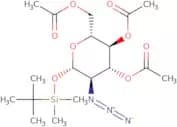
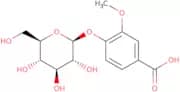
CAS:1-O-tert-Butyldimethylsilyl-2-azido-2-deoxy-b-D-glucopyranoside is a Carbohydrate, Modification, saccharide, Oligosaccharide, sugar that has been fluorinated and methylated. It is a custom synthesis. The CAS No. 99049-65-7 is 9904965.Formula:C12H25N3O5SiPurity:Min. 95%Molecular weight:319.43 g/molVanillic acid 4-beta-D-glucoside
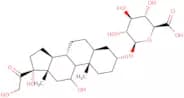
CAS:Vanillic acid 4-beta-D-glucoside is a Custom synthesis that is used as an Oligosaccharide. It is Polysaccharide and Modification of the natural product vanillin. Vanillic acid 4-beta-D-glucoside has CAS No. 32142-31-7, Methylation, Glycosylation, Carbohydrate, Click modification, saccharide, sugar, High purity and Fluorination. It is also Synthetic.Formula:C14H18O9Purity:Min. 95%Molecular weight:330.29 g/molAllo-3a-tetrahydro cortisol 3-O-b-D-glucuronide
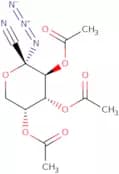
CAS:Allo-3a-tetrahydro cortisol 3-O-b-D-glucuronide is a methylated glucuronide of allo-3a,4b,5,6,7,9b tetrahydrocortisol. It is a synthetic modification of the natural hormone cortisol and has been shown to stimulate glycogenolysis in rat liver cells. Allo-3a,4b,5,6,7,9b tetrahydrocortisol has been shown to have antiinflammatory effects on skin cells and has been used as an analgesic in veterinary medicine. The compound is also used for the preparation of polysaccharides and glycosylations.Formula:C27H42O11Purity:Min. 95%Molecular weight:542.62 g/mol2,3,4-Tri-O-acetyl-1-azido-1-deoxy-b-D-arabinopyranosyl cyanide
CAS:2,3,4-Tri-O-acetyl-1-azido-1-deoxy-b-D-arabinopyranosyl cyanide is a synthetic carbohydrate that can be modified with fluorination, methylation and glycosylation. It is modified with acetyl groups at the 2, 3 and 4 positions of the sugar ring. This carbohydrate has been used to synthesize oligosaccharides and polysaccharides. The modification of this carbohydrate has been shown to improve its solubility in water.
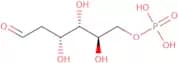
Formula:C12H14N4O7Purity:Min. 95%Molecular weight:326.26 g/mol2-Deoxy-D-glucose-6-phosphate
CAS:2-Deoxy-D-glucose-6-phosphate is a glucose analogue that is phosphorylated by hexokinase to 2-deoxy-D-glucose. It has been shown to inhibit the activity of enzymes involved in energy metabolism, such as atp synthase and dpp IV. This drug can also inhibit the synthesis of proteins and RNA by binding to response elements, which are DNA sequences that regulate gene expression. The 2-deoxy glucose analogue has been shown to be a potent inhibitor of ventricular myocardium contractility via its ability to reduce mitochondrial membrane potential.Formula:C6H13O8PPurity:Min. 95%Molecular weight:244.14 g/mol3,5-Di-O-benzoyl-2-deoxyribofuranose
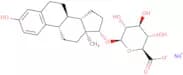
CAS:3,5-Di-O-benzoyl-2-deoxyribofuranose is a custom synthesis of an Oligosaccharide. This complex carbohydrate can be modified with methylation, glycosylation, and fluorination. 3,5-Di-O-benzoyl-2-deoxyribofuranose is also a polysaccharide that can be synthesized under high purity conditions. It has a CAS number of 112137-63-0.Formula:C19H18O6Purity:Min. 95%Molecular weight:342.34 g/molb-Estradiol 17-(b-D-glucuronide) sodium salt
CAS:b-Estradiol 17-(b-D-glucuronide) sodium salt is a fluorinated, monosaccharide, synthetic, oligosaccharide, complex carbohydrate. The glycosylation of the sugar at the C3 position of the b-estradiol molecule is accomplished by the use of dibenzoyl-L-tartaric acid and N,N'-dicyclohexylcarbodiimide as coupling agents. This product can be used for custom synthesis and modification of carbohydrates. It has been fluorinated to increase its stability and to prevent oxidation. The CAS No. for this product is 15087-02-2.Formula:C24H31O8NaPurity:Min. 95%Molecular weight:470.49 g/molN-(e-Aminocaproyl)-b-D-galactopyranosyl amine
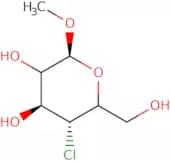
CAS:N-(e-Aminocaproyl)-b-D-galactopyranosyl amine is a fluorinated monosaccharide with a complex carbohydrate structure that has been synthesized by custom synthesis. This product is used for glycosylation, polysaccharide modification, and click chemistry. It has been shown to be a high purity product with CAS No. 38822-56-9 and can be methylated or fluorinated.Formula:C12H24N2O6Purity:Min. 95%Color and Shape:SolidMolecular weight:292.33 g/molMethyl 4-chloro-4-deoxy-a-D-galactopyranoside
Methyl 4-chloro-4-deoxy-a-D-galactopyranoside is a synthetic monosaccharide that has been modified with fluorination and methylation. The modification of this sugar provides it with the ability to be used in glycosylation reactions, click chemistry, and other modification reactions. This product is offered as a custom synthesis and can be synthesized for any desired specification. It is also available in high purity form.Formula:C7H13ClO5Purity:Min. 95%Molecular weight:212.63 g/mol3,5,6-Tri-O-benzyl-D-glucofuranose
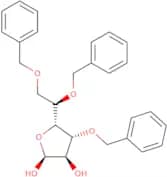
CAS:3,5,6-Tri-O-benzyl-D-glucofuranose is a crystalline and white or off-white powder. It is soluble in water and toluene, but insoluble in chlorinated solvents. The chemical has been synthesized from benzoic acid and D-glucose. 3,5,6-Tri-O-benzyl-D-glucofuranose is used as a reagent for the synthesis of polyhydroxybutyrate (PHB) polymers that are biodegradable and can be used as thermoplastic polyesters. This compound has been shown to be potentially hazardous to the environment due to its high reactivity with chloride ions in the presence of benzyl alcohols.Formula:C27H30O6Purity:Min. 95%Molecular weight:450.54 g/mol1,2-Di-O-acetyl-4-O-allyl-3-O-benzyl-a-L-rhamnpyranose
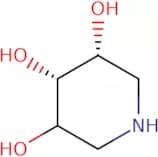
1,2-Di-O-acetyl-4-O-allyl-3-O-benzyl-a-L-rhamnpyranose is a synthetic monosaccharide that contains an O,O'-diacetyl group on the 2' position. This product is a complex carbohydrate that has been modified with fluorination and methylation. It can be used as a custom synthesis or as a glycosylation or polysaccharide modification. 1,2-Di-O-acetyl-4-O-allyl-3,6'-di(benzoyloxy)-a,a'-dimethyl rhamnopyranose is soluble in water and is of high purity.Formula:C20H26O7Purity:Min. 95%Molecular weight:378.42 g/mol1,5-Dideoxy-1,5-imino-D-xylitol
CAS:1,5-Dideoxy-1,5-imino-D-xylitol is a synthetic molecule that inhibits the enzyme glycinamide ribonucleotide transformylase (GART) and blocks the synthesis of purines. 1,5-Dideoxy-1,5-imino-D-xylitol has been shown to be potent in inhibiting GART with an IC50 of 0.3 μM. This inhibitory effect was observed in Sprague Dawley rats after oral administration of 1,5-dideoxy-1,5 imino D xylitol at a dose of 10 mg/kg. The inhibition was found to be specific for amination reactions that are catalyzed by GART and not by other enzymes such as glycine amidinotransferase or adenylate kinase. It can be used to study the structure and function of tissue cells.
Formula:C5H11NO3Purity:Min. 95%Molecular weight:133.15 g/molD-Desosamine
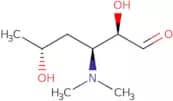
CAS:D-Desosamine is a chemical compound that has been isolated from human serum. It is an enzyme inhibitor that inhibits the activity of enzymes such as phosphatases, kinases, and proteases. D-Desosamine also has a matrix effect, which can be used to modify the properties of polymer matrices in order to improve their biocompatibility and mechanical properties. The molecular docking analysis indicated that desosamine can bind to bacterial serine/threonine protein kinase Streptococcus pyogenes phage T4 (SpyPK) and inhibit its activity. This inhibition may be due to the transfer reactions caused by desosamine binding to the enzyme's active site and blocking it. Structural analysis showed that D-desosamine forms hydrogen bonds with amino acids in SpyPK's active site, forming a covalent bond with cysteine residue Cys240. D-Desosamine has been shown to have anti-bacterial properties againstPurity:Min. 95%3,7,7a-Triepicasuarine
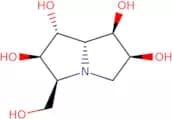
CAS:3,7,7a-Triepicasuarine is a synthetic compound that belongs to the group of polysaccharides. It can be used as a fluorinated reagent for the synthesis of complex carbohydrates and sugar molecules. 3,7,7a-Triepicasuarine is one of the most widely applied reagents in organic synthesis because it can be easily modified with various functional groups. This product has been shown to have high purity and may be used as an additive in other products.Formula:C8H15NO5Purity:Min. 95%Molecular weight:205.21 g/molPhenyl 2-azido-3,4,6-tri-O-benzyl-2-deoxy-b-D-thioglucopyranoside
CAS:Phenyl 2-azido-3,4,6-tri-O-benzyl-2-deoxy-b-D-thioglucopyranoside is a custom synthesis of an oligosaccharide with a complex carbohydrate. It is modified by methylation and has been fluorinated for the purpose of synthesizing the drug. This product is stable to heat and acid and can be used as a synthetic sugar. It has high purity and can be used in glycosylation reactions or click chemistry.Formula:C33H36N3O4SPurity:Min. 95%Molecular weight:570.72 g/molMethyl 4-azido-3-O-benzyl-4,6-dideoxy-2-O-methyl-a-D-glucopyranoside
CAS:Methyl 4-azido-3-O-benzyl-4,6-dideoxy-2-O-methyl-a-D-glucopyranoside is a synthetic sugar that has been modified with azide and fluoride. It may be used in the synthesis of saccharides as a monosaccharide or oligosaccharide. This compound can be used to prepare glycosylation derivatives, which are complex carbohydrates that are important for cell recognition and immune system function.Formula:C15H21N3O4Purity:Min. 95%Molecular weight:307.35 g/molMethyl 4,6-di-O-acetyl-2,3-carbonyl-b-D-mannopyranoside
CAS:Methyl 4,6-di-O-acetyl-2,3-carbonyl-b-D-mannopyranoside is a saccharide that is modified by the Click reaction with osmium tetroxide and methyl iodide. It can be used in glycosylation reactions to produce complex carbohydrates. This product is made of high purity and has a CAS No. 53958-22-8.Formula:C12H16O9Purity:Min. 95%Molecular weight:304.25 g/mol5-Azido-5-deoxy-2,3-O-isopropylidene-D-lyxono-1,4-lactone
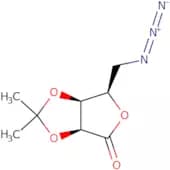
CAS:5-Azido-5-deoxy-2,3-O-isopropylidene-D-lyxono-1,4-lactone is a synthetic monosaccharide. It is used in the synthesis of glycosylated saccharides and oligosaccharides. This product can be custom synthesized at high purity.Formula:C8H11N3O4Purity:Min. 95%Color and Shape:PowderMolecular weight:213.19 g/mol2,5-Anhydro-D-mannitol-1,6-diphosphate dibarium salt dihydrate
CAS:2,5-Anhydro-D-mannitol-1,6-diphosphate dibarium salt dihydrate is a synthetic sugar that is an intermediate in the synthesis of glycosylation products. It can be modified with methyl groups and fluorine atoms. The CAS number for this product is 352000-03-4. This product can be custom synthesized to meet specifications such as purity and monosaccharide content. It is a white to off white powder with a melting point of 136 - 141 °C and a solubility of 0.01 g/L in water.Formula:C6H10Ba2O11P2·2H2OPurity:Min. 95%Molecular weight:630.77 g/mol







![[(1S,2S)-2-((3S,5S)-5-Amino-3,4,6-trihydroxy-tetrahydro-pyran-2-yl)-1,2-dihydroxy-ethyl]-phosphoni…](/_next/image/?url=https%3A%2Fstatic.cymitquimica.com%2Fproducts%2F3D%2Fthumb-webp%2FMA28843.webp&w=3840&q=75)