Monosaccharides
Subcategories of "Monosaccharides"
- Alloses(11 products)
- Arabinoses(21 products)
- Erythroses(11 products)
- Fructoses(9 products)
- Fucoses(36 products)
- Galactosamine(41 products)
- Galactose(262 products)
- Glucoses(365 products)
- Glucuronic Acids(52 products)
- Glyco-substrates for Enzyme(78 products)
- Guloses(6 products)
- Idoses(4 products)
- Inositols(15 products)
- Lyxoses(4 products)
- Mannoses(65 products)
- O-Glycans(48 products)
- Psicoses(3 products)
- Rhamnoses(10 products)
- Riboses(61 products)
- Sialic Acids(100 products)
- Sorboses(4 products)
- Sugars(174 products)
- Tagatoses(4 products)
- Taloses(8 products)
- Xyloses(20 products)
Found 6138 products of "Monosaccharides"
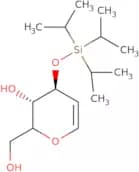
3-O-Triisopropylsilyl-D-galactal
3-O-Triisopropylsilyl-D-galactal is a carbohydrate that belongs to the group of sugars. It is an oligosaccharide with a complex structure, which is synthesized from D-galactal by treatment with triisopropylsilyl chloride in pyridine. 3-O-Triisopropylsilyl-D-galactal is used as a reagent for the methylation and glycosylation of proteins and nucleic acids. This compound has been shown to inhibit the enzyme carboxypeptidase A, which may be due to its ability to act as an inhibitor of carbohydrate binding. 3-O-Triisopropylsilyl-D-galactal has also been shown to bind specifically to erythrocyte membranes, suggesting that it could be used as a potential diagnostic marker for glycogen storage diseases.
Formula:C15H30O4SiPurity:Min. 95%Molecular weight:302.48 g/molD-Tagatose 1-phosphate
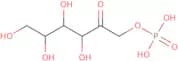
CAS:D-tagatose 1-phosphate is a cytosolic intermediate of tagatose, which is found in many dietary sources. It has been shown to have regulatory effects on mitochondrial membrane potential and peroxisome proliferation in human cells. D-tagatose 1-phosphate also has been shown to have clinical relevance for humans with liver disease, as it enhances aerobic glycolysis and increases adenine nucleotide levels.
Formula:C6H13O9PPurity:Min. 95%Molecular weight:260.14 g/moliminosugar 1
Iminosugar 1 is a fluorinated saccharide that belongs to the group of carbohydrates. It is synthesized by the modification of glucose with a fluorine atom. This modification prevents crystallization and increases solubility in water. Iminosugar 1 has been modified by methylation and glycosylation to increase its stability. This product is available as a custom synthesis, and has high purity.
Purity:Min. 95%L-[6-13C]Sorbose
CAS:L-[6-13C]Sorbose is a modified sugar that is synthesized from D-glucose, L-sorbose, and 13C-labeled methyl groups. This compound can be used to study the methylation and glycosylation of polysaccharides and oligosaccharides.Formula:C513CH12O6Purity:Min. 95%Molecular weight:181.15 g/mol1,2,3-Tri-O-benzoyl-4,6-O-(4-methoxybenzylidene)-a-D-mannopyranose
1,2,3-Tri-O-benzoyl-4,6-O-(4-methoxybenzylidene)-a-D-mannopyranose is a carbonyl compound that is an intermediate in the synthesis of saccharides. The chemical modification of this compound can be used to synthesize complex carbohydrates. This compound has been fluorinated and methylated to produce a variety of derivatives with different properties. It also has been glycosylated and click modified for use in research and development.Formula:C35H30O10Purity:Min. 95%Molecular weight:610.61 g/molOlmesartan acid O-b-D-glucuronide
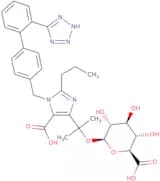
CAS:Olmesartan acid O-b-D-glucuronide is a synthetic, high purity, and custom synthesis oligosaccharide. It can be fluorinated in the presence of a base to give a fluorinated compound with the following CAS number: 369395-57-3. Olmesartan acid O-b-D-glucuronide is an oligosaccharide that has been modified by click chemistry. This modification results in a polysaccharide that contains saccharides connected through ether linkages. The saccharides are made up of monosaccharides and disaccharides, which are all sugars.
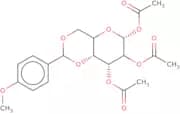
Formula:C30H34N6O9Purity:Min. 95%Molecular weight:622.63 g/mol1,2,3-Tri-O-acetyl-4,6-O-(4-methoxybenzylidene)-a-D-mannopyranose
1,2,3-Tri-O-acetyl-4,6-O-(4-methoxybenzylidene)-a-D-mannopyranose is a modification of the naturally occurring carbohydrate 1,2,3,4,6-pentaacetyl-aDmannopyranose. The methyl group at C1 and hydroxymethyl group at C2 positions have been replaced by acetate groups. This modification can be used for synthesis of oligosaccharides or polysaccharides. It has high purity and is available in custom synthesis quantities.Formula:C20H24O10Purity:Min. 95%Molecular weight:424.4 g/molH Type II-APD-BSA
H Type II-APD-BSA is a custom synthetic sugar that is used as an electron acceptor to reduce a variety of electron-deficient aromatic compounds. H Type II-APD-BSA can be modified with fluorine, which makes it an ideal reagent for the synthesis of complex carbohydrates. This product was created by methylation, click modification, and oligosaccharide synthesis. It has a CAS number, is made of saccharides and polysaccharides, and contains monosaccharides and sugars.
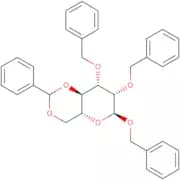
Purity:Min. 95%1,2,3-Tri-O-benzyl-4,6-O-benzylidene-a-D-mannopyranose
CAS:1,2,3-Tri-O-benzyl-4,6-O-benzylidene-a-D-mannopyranose is a custom synthesis of a sugar. It is modified with fluorination, methylation and glycosylation. This sugar has an average molecular weight of 586.5 g/mol and is composed of three monosaccharides: D-(+)-mannose, D-(+)-glucose and D-(+)-galactose. 1,2,3-Tri-O-benzyl-4,6-O-benzylidene--a--D--mannopyranose can be used in the synthesis of oligosaccharides and polysaccharides.Formula:C34H34O6Purity:Min. 95%Molecular weight:538.63 g/mol2,4-Di-O-Benzyl-D-mannopyranose
2,4-Di-O-Benzyl-D-mannopyranose is a custom synthesis of a carbohydrate. It is a fluorinated derivative of D-mannopyranose that has been modified with methylation and glycosylation.Purity:Min. 95%1,4:3,6-Dianhydro-2,5-di-O-methyl-L-mannitol
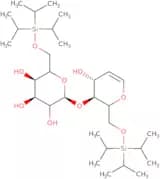
1,4:3,6-Dianhydro-2,5-di-O-methyl-L-mannitol is a carbohydrate that belongs to the group of polysaccharides. It is a methylated saccharide that can be modified with Click chemistry or glycosylsation. This product has high purity and can be custom synthesized for specific applications. It is also available in fluorinated form and as a complex carbohydrate.Formula:C8H14O4Purity:Min. 95%Molecular weight:174.19 g/mol6,6'-Di-O-triisopropylsilyl-lactal
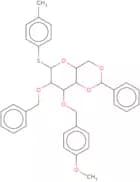
CAS:6,6'-Di-O-triisopropylsilyl-lactal is a synthetic oligosaccharide with a complex carbohydrate structure. It can be used as a monomer in the synthesis of glycosylides and glycopolymers, which are modified by fluorination, methylation, and click chemistry. This compound has been shown to have high purity and can be custom synthesized to meet your needs.Formula:C30H60O9Si2Purity:Min. 95%Molecular weight:620.96 g/mol4-Toluoyl 2-O-benzyl-4,6-O-benzylidene-3-O-p-methoxybenzyl-a-D-thiomannopyranoside
4-Toluoyl 2-O-benzyl-4,6-O-benzylidene-3-O-p-methoxybenzyl a (1 → 4)-D-thiomannopyranoside is a carbohydrate with an α-(1→4) linkage. It is synthesized by the modification of the hydroxymethyl group on the C2 position of toluose with benzyl bromide and then methylation of the C6 position. This product has been custom synthesized for our customer and can be produced in high purity. It is also glycosylated and click modified.Formula:C35H36O6SPurity:Min. 95%Molecular weight:584.72 g/molb-L-Fucopyranosyl nitromethane
b-L-Fucopyranosyl nitromethane is a synthetic carbohydrate that has been modified by fluorination and methylation. It can be used as a building block for the synthesis of complex carbohydrates including saccharides, oligosaccharides, and monosaccharides.Formula:C7H13NO6Purity:Min. 95%Molecular weight:207.2 g/mol2,5-Anhydro-D-mannofuranose oxime
CAS:2,5-Anhydro-D-mannofuranose oxime is a glycosylation inhibitor that prevents the formation of glycosidic bonds. It is used in the synthesis of complex carbohydrates, such as polysaccharides and oligosaccharides. This compound can be fluorinated or methylated to produce 2,5-anhydro-D-mannofuranose oxime derivatives that are useful for click chemistry. 2,5-Anhydro-D-mannofuranose oxime has been shown to inhibit the enzymatic conversion of mannitol to mannose and fructose by blocking the enzyme alpha mannosidase. The high purity of this compound makes it suitable for use in a variety of reactions, including glycobiology studies and carbohydrate modifications.
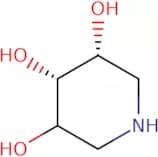
Formula:C6H11NO5Purity:Min. 95%Molecular weight:177.16 g/mol1,5-Dideoxy-1,5-imino-D-xylitol
CAS:1,5-Dideoxy-1,5-imino-D-xylitol is a synthetic molecule that inhibits the enzyme glycinamide ribonucleotide transformylase (GART) and blocks the synthesis of purines. 1,5-Dideoxy-1,5-imino-D-xylitol has been shown to be potent in inhibiting GART with an IC50 of 0.3 μM. This inhibitory effect was observed in Sprague Dawley rats after oral administration of 1,5-dideoxy-1,5 imino D xylitol at a dose of 10 mg/kg. The inhibition was found to be specific for amination reactions that are catalyzed by GART and not by other enzymes such as glycine amidinotransferase or adenylate kinase. It can be used to study the structure and function of tissue cells.
Formula:C5H11NO3Purity:Min. 95%Molecular weight:133.15 g/mol3-Deoxy-2-keto-D-galactonate lithium salt
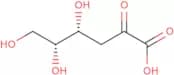
CAS:3-Deoxy-2-keto-D-galactonate lithium salt is an enzyme inhibitor that belongs to the group of galacturonosyltransferases. It is a competitive inhibitor that binds to the enzyme active site and inhibits the transfer of galacturonic acid from UDP-galactose to various acceptor molecules, including oligosaccharides, polysaccharides, glycoproteins, and glycolipids. 3-Deoxy-2-keto-D-galactonate lithium salt has been shown to inhibit wild type strains of Escherichia coli and Saccharomyces cerevisiae. This compound also inhibits acid analysis enzymes such as catalase and triosephosphate isomerase in Escherichia coli. 3DGLS also inhibits protein synthesis by inhibiting the activity of enzymes such as ribonucleotide reductase and xanthine oxidase in Escherichia coli. TheFormula:C6H10O6·xLiPurity:Min. 95%1,4:6,3-Glucarodilactone
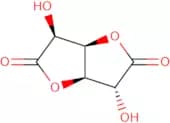
CAS:1,4:6,3-Glucarodilactone is an undecenoate with a sustainable and degradable structure. It can be used as a monomer in the production of polyols that are used in various industries, such as the plastics industry. 1,4:6,3-Glucarodilactone is also an acidic compound that has been shown to have a crystalline product and isomeric transition. It is possible to produce this compound by ring-opening polymerization of p-xylylenediamine with butyl vinyl ether or isobutyl vinyl ether.Formula:C6H6O6Purity:Min. 95%Molecular weight:174.11 g/mol2-epi-(-)-emtricitabine
CAS:2-epi-(-)-emtricitabine is an analog of the nucleoside cytidine, which inhibits the phosphorylation and subsequent degradation of deoxycytidine kinase, thereby blocking the production of the viral DNA polymerase. The compound also inhibits tyrosine kinases, which are enzymes that play a vital role in cell signaling. This inhibition may contribute to its antiviral activity. 2-epi-(-)-emtricitabine has been shown to inhibit human immunodeficiency virus (HIV) replication in vitro and in vivo. It is a prodrug that is converted to emtricitabine, its active form, by deoxycytidine kinase and then hydrolyzed by esterases. 2-epi-(-)-emtricitabine has been shown to be effective against hepatitis B virus and cancer cells.
Formula:C8H10FN3O3SPurity:Min. 95%Molecular weight:247.25 g/molD-Desosamine
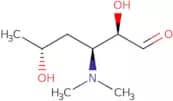
CAS:D-Desosamine is a chemical compound that has been isolated from human serum. It is an enzyme inhibitor that inhibits the activity of enzymes such as phosphatases, kinases, and proteases. D-Desosamine also has a matrix effect, which can be used to modify the properties of polymer matrices in order to improve their biocompatibility and mechanical properties. The molecular docking analysis indicated that desosamine can bind to bacterial serine/threonine protein kinase Streptococcus pyogenes phage T4 (SpyPK) and inhibit its activity. This inhibition may be due to the transfer reactions caused by desosamine binding to the enzyme's active site and blocking it. Structural analysis showed that D-desosamine forms hydrogen bonds with amino acids in SpyPK's active site, forming a covalent bond with cysteine residue Cys240. D-Desosamine has been shown to have anti-bacterial properties againstPurity:Min. 95%Phenyl 2-azido-3,4,6-tri-O-benzyl-2-deoxy-b-D-thioglucopyranoside
CAS:Phenyl 2-azido-3,4,6-tri-O-benzyl-2-deoxy-b-D-thioglucopyranoside is a custom synthesis of an oligosaccharide with a complex carbohydrate. It is modified by methylation and has been fluorinated for the purpose of synthesizing the drug. This product is stable to heat and acid and can be used as a synthetic sugar. It has high purity and can be used in glycosylation reactions or click chemistry.Formula:C33H36N3O4SPurity:Min. 95%Molecular weight:570.72 g/molPropofol-D-glucuronide methyl ester
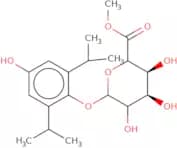
Propofol-D-glucuronide methyl ester is a modification of propofol, which is an anesthetic drug. It is also known as a polysaccharide or saccharide. The modification is made by the addition of methyl groups to the phenolic hydroxyl group on the sugar ring. This modification has been shown to have properties that are similar to those of propofol, but with greater solubility in water and a longer duration of action. Propofol-D-glucuronide methyl ester is synthesized from D-glucuronic acid, which is obtained from glucose through Oligosaccharide synthesis. This compound can be used for glycosylation reactions.Formula:C19H28O7Purity:Min. 95%Molecular weight:368.42 g/molEthyl 2,3,6-tri-O-benzoyl-b-D-thioglucopyranoside
Ethyl 2,3,6-tri-O-benzoyl-b-D-thioglucopyranoside is a synthetic monosaccharide with a complex carbohydrate structure. It can be custom synthesized to order and is available in high purity. This product is a glycosylation reagent that can be used for the synthesis of oligosaccharides and polysaccharides. The product has been shown to react with primary alcohols and amines in the presence of catalysts such as TMSOTf, DCC, or EDC to form ether bonds or amine bonds respectively. Ethyl 2,3,6-tri-O-benzoyl-b-D-thioglucopyranoside also reacts with thiols in the presence of catalysts such as HOBt or HOAt to form thioether bonds.
Purity:Min. 95%D-Glucose-BSA
Glucose covalently bound to BSA through a 3 atom spacer.
Purity:Min. 95%Color and Shape:Powder1,2:5,6-Di-O-cyclohexylidene-D-mannitol
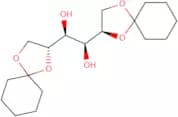
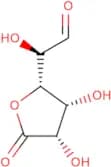
CAS:1,2:5,6-Di-O-cyclohexylidene-D-mannitol is a ligand that binds to metal ions. It forms a complex with nitro groups, which has been shown to have synergistic effects in transfer reactions. The structure of 1,2:5,6-Di-O-cyclohexylidene-D-mannitol was determined by x-ray diffraction and the crystal structure was confirmed by single crystal x-ray diffraction. This ligand can be used for the synthesis of alkenes and it reacts with magnesium chloride to form a grignard reagent. As a ligand, this compound has anticancer activity and can be used as an antiangiogenic agent.Formula:C18H30O6Purity:Min. 95%Molecular weight:342.43 g/molD-Glucofuranuronic acid,gamma-lactone,1,6-13C2
CAS:D-Glucofuranuronic acid,gamma-lactone,1,6-13C2 is an organic compound that is a glycosidic acid with a uronic acid group. It is composed of a hydrocarbon group and an acetylated d-xylose. This compound has been shown to have inhibitory activities against glycosidases and glycoside hydrolases. D-Glucofuranuronic acid,gamma-lactone,1,6-13C2 is synthesized by the reaction of trifluoroacetic acid with glyceraldehyde in the presence of water and an acid catalyst. It can be used as medicine for treating blood sugar levels but should not be taken in conjunction with other medicines because it inhibits their absorption.Formula:C2C4H8O6Purity:Min. 95%Molecular weight:178.12 g/mol2,4,7,8,9-Penta-O-acetyl-N-azidoacetyl-b-neuraminic acid methyl ester
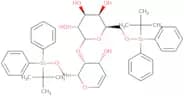
CAS:2,4,7,8,9-Penta-O-acetyl-N-azidoacetyl-b-neuraminic acid methyl ester is a custom synthesis of a monosaccharide. It is modified with fluorine and methyl groups to give it a higher degree of reactivity. This product can be used for the synthesis of oligosaccharides and polysaccharides. 2,4,7,8,9-Penta-O-acetyl-N-azidoacetyl-b-neuraminic acid methyl ester is also used for click modification reactions on saccharide molecules. The CAS number for this product is 1357804-21-7.Formula:C22H30N4O1Purity:Min. 95%Molecular weight:366.5 g/mol6,6'-Di-O-tert-butyldiphenylsilyl-lactal
CAS:6,6'-Di-O-tert-butyldiphenylsilyl-lactal is an oligosaccharide that has been modified with a click modification. This chemical is synthesized from lactal and contains three monosaccharides. The monosaccharides are 6,6'-di-O-tert-butyldiphenylsilyl-lactal and two different sugars. It is a white to off white solid that is soluble in water. The chemical can be used for glycosylation reactions or for other modifications of carbohydrates.Purity:Min. 95%3,5-O-Isopropylidene-L-arabinofuranose
3,5-O-Isopropylidene-L-arabinofuranose is a sugar that is used in the synthesis of saccharides. It is a monosaccharide that can be modified by fluorination, methylation, and custom synthesis. This product has been shown to be an excellent substrate for click chemistry and can be used as an intermediate in the production of oligosaccharides and polysaccharides. 3,5-O-Isopropylidene-L-arabinofuranose has a high purity level and can be used as a replacement for other sugars in complex carbohydrate synthesis.
Purity:Min. 95%D-Xylonic acid lithium
CAS:D-Xylonic acid lithium salt is a redox potential regulator that belongs to the class of nucleotide phosphate. It has been shown to inhibit the transcriptional regulation of genes in Saccharomyces cerevisiae strain. D-Xylonic acid lithium salt inhibits the growth of bacteria by binding to a hydroxyl group on the surface of bacterial cells, which disrupts the cell membrane and causes cell death. This drug also has film-forming properties and can be used as a model system for studying glycolaldehyde, an intermediate in sugar metabolism.
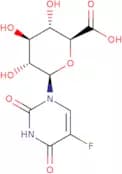
Formula:C5H10O6•LiPurity:Min. 95%Molecular weight:173.07 g/mol5-Fluorouracil N-b-D-glucuronide
CAS:5-Fluorouracil N-b-D-glucuronide is the major metabolite of 5-fluorouracil. It is mainly excreted in urine and bile, and has a high blood level. The glucuronide conjugate of 5-fluorouracin is hydrolyzed by beta-glucuronidase to generate 5-fluorouridine, which can be reabsorbed into the cell to form cytotoxic 5-fluoro uridine triphosphate. This process inhibits protein synthesis, leading to cell death. The half life of 5FU glucuronide is short and it needs to be constantly replaced with new doses. It has also been shown that levels of 5FU glucuronide are higher in tissues than in plasma, which may explain its inhibitory effect on tumors.
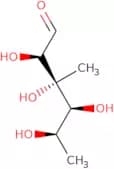
Formula:C10H11FN2O8Purity:Min. 95%Molecular weight:306.2 g/mol6-Deoxy-3-C-methyl-D-gulose
CAS:6-Deoxy-3-C-methyl-D-gulose is an enantiomer of 3,6-dideoxy-D-gluconic acid. This compound has been shown to be a virulent factor in mastitis caused by the mutant strain of Escherichia coli (MT1) and to be expressed at a higher level in mastitic milk than in normal milk. 6DMG has also been shown to induce monoclonal antibody production and stimulate specific immune responses. It is thought that 6DMG damages cells, which leads to the release of intracellular components that trigger an antibody response. The biological function of 6DMG is not known, but it may play a role in the infection process by stimulating an antibody response against infectious agents.
Purity:Min. 95%Ethyl 3,6-di-O-benzyl-2-deoxy-2-phtalimido-b-D-thioglucopyranose
Ethyl 3,6-di-O-benzyl-2-deoxy-2-phtalimido-b-D-thioglucopyranose is a modification of the sugar thioglucose. It is an oligosaccharide that is a complex carbohydrate. This compound is synthesized using custom synthesis methods, and it has purity levels of >98%. Ethyl 3,6-di-O-benzyl-2-deoxy-2-phtalimido-b -D -thioglucopyranose has CAS number 78664–01–1. It can be found in the monosaccharide group, methylation group (methyl ethers), glycosylation group (glycosides), and polysaccharide group. The chemical formula for this compound is C11H21O8N3S.
Purity:Min. 95%D-Mannose- 1, 2- 13C2
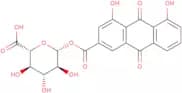
CAS:D-Mannose- 1, 2- 13C2 is a synthetic sugar that has been modified with a fluorination reaction. D-Mannose-1,2- 13C2 is used for the synthesis of glycosylations and oligosaccharides. This product is available in high purity and custom synthesis. CAS No. 141789-26-6Purity:Min. 95%Molecular weight:182.14 g/molRhein acyl-b-D-glucuronide
CAS:Rhein acyl-b-D-glucuronide is a fluorinated monosaccharide, which can be synthesized from glucose. This product is a complex carbohydrate that is synthesized from glucose and has been modified with methyl groups to provide high purity. It is also an oligosaccharide and can be custom synthesized for your needs. The chemical formula for Rhein acyl-b-D-glucuronide is C6H14O5F2O4.Formula:C21H16O12Purity:Min. 95%Molecular weight:460.34 g/mol3-Amino-2,3,6-trideoxy-β-L-lyxo-hexopyranose hydrochloride
CAS:Please enquire for more information about 3-Amino-2,3,6-trideoxy-β-L-lyxo-hexopyranose hydrochloride including the price, delivery time and more detailed product information at the technical inquiry form on this pageFormula:C6H13NO3•HClPurity:Min. 95%Molecular weight:183.63 g/mol2-Deoxy-2-fluoro-L-[UL-13C]fucose
CAS:2-Deoxy-2-fluoro-L-[UL-13C]fucose is a modified sugar molecule used in various scientific applications, particularly in glycobiology and drug development. It's used to study fucose-containing glycans, enzyme interactions, metabolic pathways, and glycoengineering. For instance, it can be incorporated into proteins to investigate the effects of fucose modifications on their function or used to develop drugs targeting fucose-metabolizing enzymes
Formula:C6H12O5Purity:Min. 95%Molecular weight:164.16 g/molMethylglycol chitosan
CAS:Methylglycol chitosan is a cationic surfactant that has been shown to have the ability to bind with zirconium oxide and polymannuronic acid. It is used in the treatment of infectious diseases, autoimmune diseases, and histological analysis. Methylglycol chitosan has been shown to inhibit the toll-like receptor 4 (TLR4) from binding with lipopolysaccharides and other molecules that are implicated in autoimmune diseases. This binding also prevents TLR4 from activating other cells involved in inflammatory responses. The surface of methylglycol chitosan particles also have a patterning effect on bacteria by preventing them from adhering to the surface of the particle, reducing their virulence.Purity:Min. 95%2-Deoxy-3,5-di-O-toluoyl-D-ribofuranose
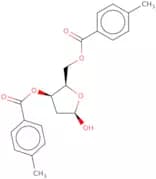
CAS:2-Deoxy-3,5-di-O-toluoyl-D-ribofuranose is a sugar that can be custom synthesized. This product is a white to off-white crystalline solid with a melting point of approximately 200°C. It is soluble in water and ethanol, but not in ether or chloroform. The chemical structure of this sugar includes an oxygen atom at the 3 position of the anomeric carbon and a chlorine atom at the 5 position of the anomeric carbon. 2-Deoxy-3,5-di-O-toluoyl-D-ribofuranose has been shown to inhibit glycosylation, methylation, and modification reactions in both nucleic acids and proteins. This product also has been shown to be helpful in understanding complex carbohydrate synthesis by reducing the size of oligosaccharides and monosaccharides into smaller fragments for analysis.Formula:C21H22O6Purity:Min. 95%Molecular weight:370.4 g/molL-Fucal
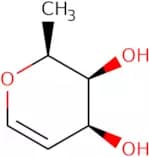
CAS:L-Fucal is a chemical that belongs to the group of glycosidic bonds. It is synthesized by reacting ethyl diazoacetate with an activated hydroxyl group. L-Fucal has been shown to inhibit the growth of cancer cells and lymphocytic leukemia cells. It binds to the receptors on the surface of cancer cells and inhibits their growth by interfering with cellular metabolism and DNA synthesis.Purity:Min. 95%Methyl 1-thiolincosaminide
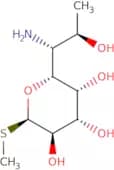
CAS:Intermediate in the production of biosynthetic antibioticsFormula:C9H19NO5SPurity:Min. 95%Molecular weight:253.32 g/molFurosemide acyl-b-D-glucuronide
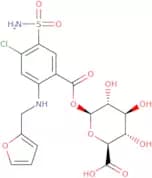
CAS:Furosemide acyl-b-D-glucuronide is a derivative of Furosemide. It is a potent diuretic that has been used in the treatment of hypertension and congestive heart failure. The drug is excreted by the kidney, and its clearance is dependent on urine flow rate. Furosemide acyl-b-D-glucuronide can be detected in human serum and urine samples following oral administration, but its detection in urine may be delayed due to its low solubility. This active form of the drug may also cause drug reactions, such as nausea and vomiting, which are most likely due to the acidic nature of this form. Hydrochloric acid increases the absorption of Furosemide acyl-b-D-glucuronide, so it is recommended to take this medication with an acidic beverage containing hydrochloric acid or food high in pyridinium content. The elimination half life for this activeFormula:C18H19ClN2O11SPurity:Min. 95%Color and Shape:Yellow PowderMolecular weight:506.87 g/mol1-Benzyl-4,6-O-acetamidogalactose
1-Benzyl-4,6-O-acetamidogalactose is an aminoglycoside antibiotic that inhibits the growth of bacteria by binding to the 50S ribosomal subunit. It enters the bacterial cell wall and blocks the synthesis of peptidoglycan, which is an essential component of the cell wall. 1-Benzyl-4,6-O-acetamidogalactose has been shown to have a potent bactericidal effect against Mycobacterium tuberculosis, with a half maximal inhibitory concentration (IC50) of 0.5 µg/mL. It also has a significant inhibitory effect on Mycobacterium avium complex (MIC=8 µg/mL).Purity:Min. 95%3-Acetamido-3-deoxy-D-allose
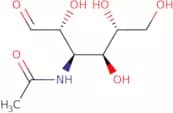
CAS:3-Acetamido-3-deoxy-D-allose is a ringed sugar that is nucleophilic and reacts with hydroxide solution to form a dithioacetal. It has been analyzed using deuterium and cyclic voltammetry. 3-Acetamido-3-deoxy-D-allose can be oxidized by periodate to form an alditol acetal and then reacted with ammonium hydroxide to produce the corresponding amine. This reaction was used to generate the compound in large quantities.Formula:C8H15NO6Purity:Min. 95%Molecular weight:221.21 g/mol(R)-Monoethyl 3-acetoxyglutarate
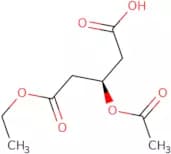
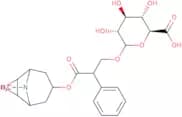
CAS:(R)-Monoethyl 3-acetoxyglutarate is a synthetic molecule that is used in the synthesis of complex carbohydrates. It can be fluorinated, methylated and glycosylated. This compound has CAS No. 113036-11-6.Formula:C9H14O6Purity:Min. 95%Molecular weight:218.2 g/molScopolamine O-b-D-glucuronide
CAS:Scopolamine O-b-D-glucuronide is a methylated derivative of scopolamine. It is an oligosaccharide that is synthesized through glycosylation and has a high purity. Scopolamine O-b-D-glucuronide is used in the synthesis of complex carbohydrates.Formula:C23H29NO10Purity:Min. 95%Molecular weight:479.48 g/molMethyl 4-deoxy-a-D-glucopyranoside
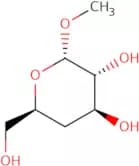
CAS:Methyl 4-deoxy-a-D-glucopyranoside is a high purity synthetic sugar with the molecular formula C5H10O5. It has been custom synthesized for Click modification, fluorination, glycosylation and methylation. Methyl 4-deoxy-a-D-glucopyranoside is used in glycosylation as a monosaccharide or saccharide to form complex carbohydrates. This product can be used in the synthesis of oligosaccharides and polysaccharides.Formula:C7H14O5Purity:Min. 95%Molecular weight:178.19 g/mol2-Bromoethyl a-L-fucopyranoside
This compound is a modification of the 2-bromoethyl a-L-fucopyranoside. It is an oligosaccharide that is a carbohydrate. It is made up of many monosaccharides, which are sugar molecules linked together. This modified carbohydrate has been synthesized from other carbohydrates and then fluorinated to make it more stable.
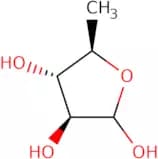
Purity:Min. 95%5-Deoxy-D-arabinose
CAS:5-Deoxy-D-arabinose is a phenylhydrazone compound that is soluble in water and alcohol. It has a molecular weight of 176.20, and its chemical formula is C6H8N2O3. The substance has been shown to be an inhibitor of the bacterial enzyme d-threose synthase, which catalyzes the formation of d-threose from D-ribose 5-phosphate and glycerone phosphate. This substance also inhibits fungal pteridine reductase; however, it does not inhibit mammalian pteridine reductase. 5-Deoxy-D-arabinose has analogues that are biologically active.Formula:C5H10O4Purity:Min. 95%Molecular weight:134.13 g/mol

![L-[6-13C]Sorbose](/_next/image/?url=https%3A%2Fstatic.cymitquimica.com%2Fproducts%2F3D%2Fthumb-webp%2FMS35536.webp&w=3840&q=75)







![2-Deoxy-2-fluoro-L-[UL-13C]fucose](/_next/image/?url=https%3A%2Fstatic.cymitquimica.com%2Fproducts%2F3D%2Fthumb-webp%2FMD45885.webp&w=3840&q=75)