Monosaccharides
Monosaccharides are the simplest form of carbohydrates and serve as fundamental building blocks for more complex sugars and polysaccharides. These single sugar molecules play critical roles in energy metabolism, cellular communication, and structural components of cells. In this section, you will find a wide variety of monosaccharides essential for research in biochemistry, molecular biology, and glycoscience. These compounds are crucial for studying metabolic pathways, glycosylation processes, and developing therapeutic agents. At CymitQuimica, we offer high-quality monosaccharides to support your research needs, ensuring precision and reliability in your scientific investigations.
Subcategories of "Monosaccharides"
- Alloses(11 products)
- Arabinoses(21 products)
- Erythroses(11 products)
- Fructoses(9 products)
- Fucoses(36 products)
- Galactosamine(41 products)
- Galactose(261 products)
- Glucoses(365 products)
- Glucuronic Acids(51 products)
- Glyco-substrates for Enzyme(77 products)
- Guloses(6 products)
- Idoses(4 products)
- Inositols(15 products)
- Lyxoses(4 products)
- Mannoses(65 products)
- O-Glycans(48 products)
- Psicoses(3 products)
- Rhamnoses(10 products)
- Riboses(61 products)
- Sialic Acids(100 products)
- Sorboses(4 products)
- Sugars(173 products)
- Tagatoses(4 products)
- Taloses(8 products)
- Xyloses(20 products)
Show 17 more subcategories
Found 6088 products of "Monosaccharides"
Sort by
Purity (%)
0
100
|
0
|
50
|
90
|
95
|
100
Propylbeta-D-glucopyranoside
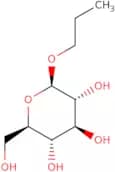
CAS:<p>Propylbeta-D-glucopyranoside is a sugar transport inhibitor that is used to inhibit bacterial growth. It has been shown to bind to the glucose transporter and quench tryptophan fluorescence in plant cells. This active form of Propylbeta-D-glucopyranoside also inhibits bacterial growth by binding to fatty acid esters and cytochalasin, modifiers of cell membrane permeability, which inhibit the synthesis of fatty acids. Microcapsules containing this drug have been shown to be effective against staphylococci and other bacteria. The activity of Propylbeta-D-glucopyranoside can be increased by hydrochloric acid or sodium hydroxide, which increase the solubility of its salts.</p>Formula:C9H18O6Purity:Min. 95%Molecular weight:222.24 g/molD-Lyxose-1-C-D
CAS:<p>Please enquire for more information about D-Lyxose-1-C-D including the price, delivery time and more detailed product information at the technical inquiry form on this page</p>Formula:C5H10O5Purity:Min. 95%Molecular weight:151.14 g/mol3-O-Toluoyl decitabine
CAS:<p>3-O-Toluoyl decitabine is a synthetic, high purity drug that is custom synthesized to order. The synthesis of 3-O-Toluoyl decitabine involves the modification of sugar molecules with fluorination, glycosylation, and methylation. This compound has CAS No. 183016-21-9 and is used in the treatment of cancer by inhibiting ribonucleic acid (RNA) synthesis. 3-O-Toluoyl decitabine inhibits RNA polymerase II and III, which are enzymes that catalyze the transcription of DNA into RNA. It also inhibits protein kinase C, which leads to cell death and tumor shrinkage.</p>Formula:C16H18N4O5Purity:Min. 95%Molecular weight:346.34 g/molD-Arabinose-1-D
CAS:<p>D-Arabinose-1-D is a potent inhibitor of human kinases, which are enzymes that play a crucial role in the regulation of cell growth and division. This analog has been shown to be effective in inhibiting tumor growth and inducing apoptosis in cancer cells. D-Arabinose-1-D is commonly used as a medicinal compound for its anticancer properties. It has also been found in human urine and Chinese medicinal herbs. As an inhibitor of protein kinases, D-Arabinose-1-D can block the activity of these enzymes, which are often overexpressed in cancer cells. The inhibition of these kinases can lead to the suppression of tumor growth and increase the efficacy of other anticancer drugs.</p>Formula:C5H10O5Purity:Min. 95%Molecular weight:151.14 g/molCladinose
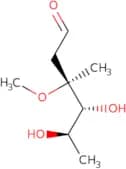
CAS:<p>Cladinose is a natural compound that has been shown to have potent inhibitory properties against microorganisms, such as bacteria and fungi. Cladinose has been shown to inhibit the growth of bacteria by reacting with the ribosomes of cells in the bacterial cytoplasm. It inhibits bacterial protein synthesis by binding to the ribosomal RNA and blocking access to the mRNA template. Cladinose also inhibits fungal growth by inhibiting ergosterol biosynthesis, which prevents fungal cell membrane formation. Cladinose has been shown to have antiinflammatory activity in mice with induced inflammation. This is due to its ability to bind to cyclooxygenase-2 (COX-2) and prevent its activation, thereby preventing prostaglandin synthesis.</p>Formula:C8H16O4Purity:Min. 95%Molecular weight:176.21 g/mol(S,S)-(-)-1,4-Dimethoxy-2,3-butanediol
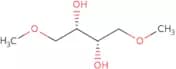
CAS:<p>(S,S)-(-)-1,4-Dimethoxy-2,3-butanediol is an organic compound with the chemical formula CH(OCH)CHOH. This colorless liquid is a chiral molecule that can exist in two enantiomeric forms. The asymmetric carbon atom (C-1) is of high stereoselectivity and has been shown to undergo nucleophilic attack by a wide variety of nucleophiles. The reaction product can be either the corresponding enolate or enolates depending on whether the nucleophile is a base or acid. In addition, this compound yields a stereoselective synthesis of chiral products when reacted with carbonyls.</p>Formula:C6H14O4Purity:Min. 95%Molecular weight:150.17 g/molD-Galactose-BSA
<p>D-Galactose-BSA is a modified carbohydrate that is synthesized by the selective substitution of the hydroxyl group on the beta-carbon of D-galactose. This modification enhances the binding affinity of D-galactose to bovine serum albumin (BSA), which is used as a carrier protein for many biological assays. The fluorination step in this synthesis creates reactive sites on the molecule, which are then available for chemical modifications such as methylation or glycosylation. D-Galactose-BSA can be custom synthesized to meet your specifications for purity, stability, and activity.</p>Color and Shape:White Powder5-O-Trityl-D-ribose
CAS:<p>5-O-Trityl-D-ribose is a sugar derivative that is used in the chemical synthesis of pharmaceuticals, natural products, and other compounds. It is an important intermediate in the synthesis of various nucleosides and nucleotides.</p>Purity:Min. 95%3,6-Di-O-triisopropylsilyl-D-glucal
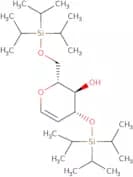
CAS:<p>3,6-Di-O-triisopropylsilyl-D-glucal is a synthetic monosaccharide. It has a molecular weight of 368.76 g/mol and chemical formula C14H22O8Si. 3,6-Di-O-triisopropylsilyl-D-glucal is soluble in water and ethanol.<br>It is used for the synthesis of oligosaccharides and polysaccharides, as well as for modification of sugar moieties on glycoproteins and glycolipids. 3,6-Di-O-triisopropylsilyl-D-glucal can be used for the preparation of complex carbohydrate structures by glycosylation or polysaccharide structures by methylation. 3,6-Di-O-triisopropylsilyl--D--glucal can also be used to synthesize sugar mo</p>Formula:C24H50O4Si2Purity:Min. 95%Molecular weight:458.82 g/molCalcium α-D-isosaccharinate
CAS:<p>Please enquire for more information about Calcium α-D-isosaccharinate including the price, delivery time and more detailed product information at the technical inquiry form on this page</p>Formula:C12H24O12•CaPurity:Min. 95%Molecular weight:400.39 g/mol2-Acetamido-4-O-(2-acetamido-2-deoxy-b-D-glucopyranosyl)-2-deoxy-D-muramic acid
CAS:<p>2-Acetamido-4-O-(2-acetamido-2-deoxy-b-D-glucopyranosyl)-2-deoxy-D-muramic acid is a synthetic, monosaccharide that is used in the synthesis of complex carbohydrates. 2AA2DMUA has been modified with methylation, glycosylation, and fluorination. This product has a CAS No. 41137-10-4 and can be custom synthesized for your needs.</p>Formula:C19H32N2O13Purity:Min. 95%Molecular weight:496.46 g/molLuteolin 7,3'-di-O-glucuronide
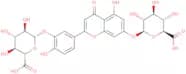
CAS:<p>Luteolin 7,3'-di-O-glucuronide is a flavonoid that is structurally similar to luteolin. It has been characterized by deglycosylation and the technique of fluitans. The deglycosylation step was carried out using glycosidase from liverwort, which cleaves the glycosidic linkage between the sugar and the aglycone. Luteolin 7,3'-di-O-glucuronide has been found in Chrysoeriol and Fluitans, which are flavonoid glycosides from Liverwort. Luteolin 7,3'-di-O-glucuronide also exhibits antiplatelet activity due to its ability to inhibit platelet aggregation and thrombus formation.</p>Formula:C27H26O18Purity:Min. 95%Color and Shape:PowderMolecular weight:638.48 g/molInositol nicotinate
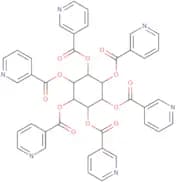
CAS:<p>Inositol nicotinate is a combination of two substances, inositol and nicotinate. It is used to reduce the risk of heart disease by lowering low-density lipoprotein-cholesterol (LDL) levels. Inositol nicotinate has been shown to increase the surface area of mitochondria, which may be due to its ability to inhibit the release of fatty acids from fat cells. Inositol nicotinate also increases magnesium levels in cells and induces mitochondrial functions. This drug has been tested in cell culture for its effects on skin cells and found that it can reduce the amount of x-linked adrenoleukodystrophy protein (XALD), a substance that accumulates in patients with X-linked adrenoleukodystrophy, an inherited disorder that causes progressive damage to the nervous system. The drugs also have been shown to have beneficial effects on cholesterol metabolism, reducing LDL cholesterol levels, as well as inhibiting platelet aggregation.</p>Formula:C42H30N6O12Purity:Min. 95%Color and Shape:White PowderMolecular weight:810.72 g/molo-Methoxytopolin-9-glucoside
CAS:<p>O-Methoxytopolin-9-glucoside is a sugar that is used in the synthesis of glycoproteins, glycosaminoglycans, and glycoconjugates. It can be used as a fluorinated sugar probe to study glycosylation. This compound has been synthesized with a variety of modifications such as methylation, fluorination, and click chemistry. O-Methoxytopolin-9-glucoside is an oligosaccharide with a monosaccharide at its reducing end. The saccharides are linked through beta 1→4 glycosidic bonds with alpha 1→2 glycosidic bonds at their other ends.<br>O-Methoxytopolin-9-glucoside has been shown to be stable under acidic conditions and can act as both an antioxidant and prooxidant depending on the pH level.</p>Formula:C19H23N5O6Purity:Min. 95%Molecular weight:417.42 g/molLosartan N1-glucuronide
CAS:<p>Losartan N1-glucuronide is a glucuronidated metabolite of losartan that is produced naturally in the human body. It is converted from losartan by the enzyme UDP-glucuronosyltransferase, which is found in humans and other animals. The rate of glucuronidation varies between individuals and is determined by genetic factors. Losartan N1-glucuronide has shown to be an effective inhibitor of angiotensin II, with an IC50 value of 1.4 μM. This inhibition can be reversed by dobutamine or recombinant human UGT2B7 enzyme, which are both competitive inhibitors of the enzyme UGT2B7. Magnetic resonance spectroscopy has been used to study the kinetic properties of this inhibitor and its effect on dobutamine-induced changes in cardiac function.</p>Formula:C28H31ClN6O7Purity:Min. 95%Molecular weight:599.03 g/molD-[6,6'-2H2]Glucose
CAS:Controlled Product<p>D-[6,6'-2H2]Glucose is a carbohydrate that is present in many foods and also produced by the cells of the human body. It can be used as a biomarker for cancer cells because it is taken up by malignant cells at a higher rate than normal cells. D-[6,6'-2H2]Glucose is often used to assess the response of patients to chemotherapy treatment. The uptake of D-[6,6'-2H2]Glucose by malignant cells can be measured using vibrational spectroscopy or chromatographic science. The deformation of glucose molecules can be quantified using nuclear magnetic resonance (NMR) spectroscopy and this data can then be used to estimate the degree of glycolysis in specific tissues.</p>Formula:C6D2H10O6Purity:Min. 95%Molecular weight:182.17 g/mol1-Deoxy-D-glucitol
CAS:<p>1-Deoxy-D-glucitol is a sugar alcohol that is a reduction product of glucose. It can be produced by the reduction of glucose 6-phosphate in muscle cells. The enzyme dehydrogenase catalyzes this reaction, which is influenced by the presence of gemini surfactants such as DMSO. 1-Deoxy-D-glucitol has been shown to have anti-fungal properties against Aspergillus parasiticus and other organisms. This activity may be due to its ability to inhibit phosphofructokinase, hexokinases, or other enzymes that are involved in the metabolism of glucose by these organisms.</p>Formula:C6H14O5Purity:Min. 95%Molecular weight:166.17 g/moltrans-Zeatin-o-glucuronide
CAS:<p>Trans-Zeatin-o-glucuronide is a synthetic cytokinin derivative, which is derived from zeatin, a naturally occurring plant hormone. Zeatin originates from a variety of plant tissues but is predominantly found in corn, where it plays a crucial role in plant growth and development. As a cytokinin, trans-Zeatin-o-glucuronide acts by influencing cell division, differentiation, and apical dominance in plants. Its glucuronide form is a metabolite, which allows researchers to study the storage and transport of cytokinins within plant cells.</p>Formula:C16H21N5O7Purity:Min. 95%Molecular weight:395.37 g/molAmiprilose
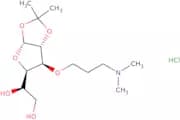
CAS:<p>Amiprilose is a nonsteroidal anti-inflammatory drug that inhibits the production of IL-2. Amiprilose has been shown to inhibit IL-17a, which is an inflammatory cytokine, in skin cells and mononuclear cells. It also inhibits cell proliferation by binding to the il-2 receptor on muscle cells. Amiprilose has been shown to be effective as a pharmacological agent for treating autoimmune diseases such as rheumatoid arthritis and psoriasis.</p>Formula:C14H27NOPurity:Min. 95%Molecular weight:225.37 g/molMoexipril acyl-b-D-glucuronide
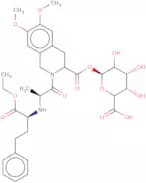
<p>Moexipril acyl-b-D-glucuronide is a complex carbohydrate that contains a saccharide and an oligosaccharide. It is synthesized by reacting moexipril with bromoacetic acid in the presence of sodium cyanoborohydride, followed by hydrolysis with potassium hydroxide to form the methyl ester. Moexipril acyl-b-D-glucuronide has CAS number 93890-82-2 and is available for custom synthesis. It has a high purity (99%) and can be methylated or glycosylated. The synthesis of this compound includes click modification.</p>Formula:C33H42N2O13Purity:Min. 95%Molecular weight:674.69 g/mol







![D-[6,6'-2H2]Glucose](/_next/image/?url=https%3A%2Fstatic.cymitquimica.com%2Fproducts%2F3D%2Fthumb-webp%2FMG74985.webp&w=3840&q=75)