Monosaccharides
Monosaccharides are the simplest form of carbohydrates and serve as fundamental building blocks for more complex sugars and polysaccharides. These single sugar molecules play critical roles in energy metabolism, cellular communication, and structural components of cells. In this section, you will find a wide variety of monosaccharides essential for research in biochemistry, molecular biology, and glycoscience. These compounds are crucial for studying metabolic pathways, glycosylation processes, and developing therapeutic agents. At CymitQuimica, we offer high-quality monosaccharides to support your research needs, ensuring precision and reliability in your scientific investigations.
Subcategories of "Monosaccharides"
- Alloses(11 products)
- Arabinoses(21 products)
- Erythroses(11 products)
- Fructoses(9 products)
- Fucoses(36 products)
- Galactosamine(41 products)
- Galactose(260 products)
- Glucoses(365 products)
- Glucuronic Acids(51 products)
- Glyco-substrates for Enzyme(77 products)
- Guloses(6 products)
- Idoses(4 products)
- Inositols(15 products)
- Lyxoses(4 products)
- Mannoses(65 products)
- O-Glycans(48 products)
- Psicoses(3 products)
- Rhamnoses(10 products)
- Riboses(61 products)
- Sialic Acids(100 products)
- Sorboses(4 products)
- Sugars(173 products)
- Tagatoses(4 products)
- Taloses(8 products)
- Xyloses(20 products)
Show 17 more subcategories
Found 6088 products of "Monosaccharides"
Sort by
Purity (%)
0
100
|
0
|
50
|
90
|
95
|
100
2,3,4,6-Tetra-O-pivaloyl-a-D-mannopyranosyl bromide
CAS:<p>2,3,4,6-Tetra-O-pivaloyl-a-D-mannopyranosyl bromide is a synthetic glycosylation reagent that is used in the synthesis of oligosaccharides and polysaccharides. It has been fluorinated to give 2,3,4,6-Tetra-O-pivaloyl-a-D-(2'-fluoroethyl)mannopyranosyl bromide (CAS No. 1360879-08). This compound can be methylated to give 2,3,4,6-Tetra-O-(2'-methoxy)pivaloylmannopyranosyl bromide (CAS No. 1360879-09). It is also a click modification agent for complex carbohydrates. This chemical has high purity and can be modified with other groups.</p>Formula:C26H43BrO9Purity:Min. 95%Molecular weight:579.52 g/mol3-O-Acetyl-1,2-O-isopropylidine-6-O-trityl-a-D-galactofuranose
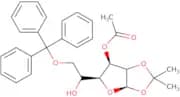
CAS:<p>3-O-Acetyl-1,2-O-isopropylidine-6-O-trityl-a-D-galactofuranose is a synthetic compound with a molecular weight of 514.5. It is an oligosaccharide with a glycosylation modification and fluorination. The compound can be used as a research tool in the study of glycosylation, methylation, click modification, polysaccharide synthesis, fluorination, saccharide modifications and sugar modifications. 3-O-Acetyl-1,2-O-isopropylidine-6-[trityl]-a-[D]galactofuranose can also be used for custom synthesis; this product is available in high purity.</p>Formula:C30H32O7Purity:Min. 95%Molecular weight:504.57 g/mol3,2',3',4'-Tetra-O-acetyl-6,6'-di-O-tert-butyldimethylsilyl-lactal
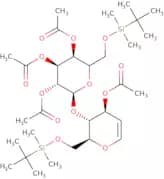
CAS:<p>3,2',3',4'-Tetra-O-acetyl-6,6'-di-O-tert-butyldimethylsilyl-lactal is a glycosylation agent that can be used in the synthesis of oligosaccharides and polysaccharides. It can be fluorinated to create a reactive site for methylation and click modification. 3,2',3',4'-Tetra-O-acetyl-6,6'-di-O-tert-butyldimethylsilyl-lactal is an acetylated lactal with a silyl ether protecting group. This product has been custom synthesized and is available in high purity.</p>Purity:Min. 95%1-a-Methylaminotrityl-2-deoxy-3,5-di-O-toluoyl-D-ribose
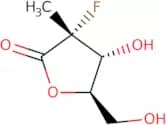
<p>1-a-Methylaminotrityl-2-deoxy-3,5-di-O-toluoyl-D-ribose is a custom synthesis of an oligosaccharide. The compound has a CAS number and is a polysaccharide with glycosylation and methylation. It is fluorinated at the 1 position on the ribose ring and modified with a click chemistry reaction to link two sugars together. This modification allows for high purity of this compound.</p>Purity:Min. 95%(3R,4R,5R)-3-Fluoro-4-hydroxy-5-(hydroxymethyl)-3-methyloxolan-2-one
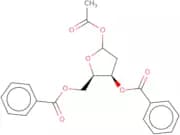
CAS:<p>(3R,4R,5R)-3-Fluoro-4-hydroxy-5-(hydroxymethyl)-3-methyloxolan-2-one is a nucleoside that has been synthesized and characterized by x-ray crystallographic analysis. It is an analog of the nucleoside fluorouracil which has been fluorinated at the 5 position of the oxo group. The crystal structure of (3R,4R,5R)-3-fluoro-4-hydroxy-5-(hydroxymethyl)-3-methyloxolan-2-one was determined using x ray crystallography to be a lactone with an anhydrous form. This compound is currently being investigated as a potential drug candidate for cancer treatment.</p>Formula:C6H9FO4Purity:Min. 95%Molecular weight:164.13 g/mol1-O-Acetyl-3,5-di-O-benzoyl-2-deoxy-D-ribofuranose
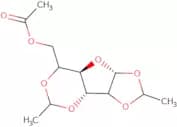
CAS:<p>1-O-Acetyl-3,5-di-O-benzoyl-2-deoxy-D-ribofuranose is a custom synthesis product. When fully synthesized and modified, it is a complex carbohydrate with glycosylation, methylation, click modification, fluorination and saccharide modifications. It has CAS No. 2155800-38-5 and Mw of 486.8 g/mol. 1-O-Acetyl-3,5-di-O-benzoyl--2--deoxy--D--ribofuranose can be used as an intermediate for the synthesis of oligosaccharides or monosaccharides or custom synthesis products. This product is available in high purity with >99% purity by HPLC analysis.</p>Formula:C21H20O7Purity:Min. 95%Molecular weight:384.38 g/mol6-O-Acetyl-1,2:3,5-di-O-methylidene-a-D-glucofuranose
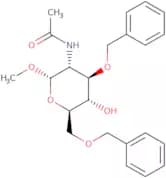
CAS:<p>6-O-Acetyl-1,2:3,5-di-O-methylidene-a-D-glucofuranose is a methylated saccharide that is a member of the polysaccharides. The compound has been modified using click chemistry to produce a fluorescent derivative. 6-O-Acetyl-1,2:3,5-di-O-methylidene-a-D-glucofuranose is also used for glycosylation and can be synthesized to provide high purity carbohydrates or sugars. It has an CAS number of 3244800 and may be used as a fluorinated complex carbohydrate.</p>Formula:C12H18O7Purity:Min. 95%Color and Shape:White to off-white solid.Molecular weight:274.27 g/molMethyl 2-acetamido-3,6-di-O-benzyl-2-deoxy-a-D-glucopyranoside
CAS:<p>Methyl 2-acetamido-3,6-di-O-benzyl-2-deoxy-a-D-glucopyranoside is a synthetic saccharide that is used in the synthesis of glycosides. This compound has been modified with fluorine to increase its stability and activity. Methyl 2-acetamido-3,6-di-O-benzyl-2-deoxyglucopyranoside can be used as a building block for glycosylation reactions due to its high purity and custom synthesis. It has been shown that this compound has click modification activity.</p>Formula:C23H29NO6Purity:Min. 95%Molecular weight:415.48 g/mol3,4-O-[(1R,2R)-1,2-Dimethoxy-1,2-dimethyl-1,2-ethanediyl]-1,6-O-[(1S,2S)-1,2-dimethoxy-1,2-dimethyl-1,2-ethanediyl]-D-myo-inositol
CAS:<p>3,4-O-[(1R,2R)-1,2-Dimethoxy-1,2-dimethyl-1,2-ethanediyl]-1,6-O-[(1S,2S)-1,2-dimethoxy-1,2-dimethyl-1,2-ethanediyl]-D-myo-inositol is a synthetic carbohydrate with the CAS number 176798-27-9. It is a polysaccharide that can be modified by methylation and glycosylation. The modification of saccharides is achieved by the use of click chemistry. This product is a complex carbohydrate with a high purity and fluorination.</p>Formula:C18H32O10Purity:Min. 95%Molecular weight:408.44 g/mol1-Bromo-2,3,4-tri-O-benzoyl-a-D-glucuronide methyl ester
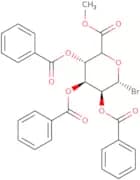
CAS:<p>1-Bromo-2,3,4-tri-O-benzoyl-a-D-glucuronide methyl ester is a custom synthesis. It is a high purity product with a custom synthesis. The CAS No. for this compound is 103674-69-7. This product undergoes Click modification and has high purity. The sugar in this compound is an oligosaccharide with glycosylation.</p>Formula:C28H23BrO9Purity:Min. 95%Molecular weight:583.39 g/mol(8-Ethoxycarbonyloctyl)-3,4,6-tri-O-acetyl-2-deoxy-2-phthalimido-b-D-glucopyranoside
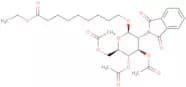
CAS:<p>(8-Ethoxycarbonyloctyl)-3,4,6-tri-O-acetyl-2-deoxy-2-phthalimido-b-D-glucopyranoside is a custom synthesis that has been modified with fluorination, methylation and acetylation. It is also a monosaccharide, which can be modified to form an oligosaccharide or polysaccharide. This product is a sugar that can be glycosylated to form complex carbohydrates.</p>Formula:C30H39NO12Purity:Min. 95%Molecular weight:605.63 g/mol1,4-Di-O-butanoyl-2,3:5,6-di-O-isopropylidene-D-myo-inositol
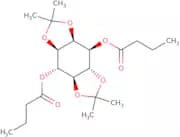
CAS:<p>1,4-Di-O-butanoyl-2,3:5,6-di-O-isopropylidene-D-myo-inositol is a synthetic glycosylation product. It has no known biological activity and is not metabolized by the body. This product is used for complex carbohydrate synthesis, fluorination reactions, methylation reactions, and click modifications.</p>Formula:C20H32O8Purity:Min. 95%Molecular weight:400.46 g/molMethyl 2,3-di-O-acetyl-b-D-xylopyranoside
CAS:<p>Methyl 2,3-di-O-acetyl-b-D-xylopyranoside is a high purity synthetic product with custom synthesis and fluorination. This product is a sugar that has been modified by glycosylation and methylation. Methyl 2,3-di-O-acetyl-b-D-xylopyranoside is a complex carbohydrate that contains saccharides, such as monosaccharides and oligosaccharides.</p>Formula:C10H16O7Purity:Min. 95%Molecular weight:248.2 g/molIsorhamnetin 3-sophoroside-7-rhamnoside
CAS:<p>Isorhamnetin 3-sophoroside-7-rhamnoside is a homogeneous catalyst that has been used in the synthesis of nanoparticles. The catalytic activity of this compound was found to be high, with a reported turnover frequency of up to 5 million turnovers per minute. The Suzuki coupling reaction was used to synthesize nanoparticles by reacting an organic acid with an aryl halide or metal salt. Isorhamnetin 3-sophoroside-7-rhamnoside was one of the catalysts in this process and was shown to have a high yield when combined with palladium. This synthetic method also eliminates the need for organic solvents, which can be toxic and expensive.>>END>></p>Purity:Min. 95%b-D-Thioglucose sodium salt hydrate
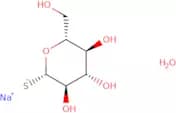
CAS:<p>b-D-Thioglucose sodium salt hydrate is a complex carbohydrate that is used as an intermediate for the synthesis of oligosaccharides and polysaccharides. It is also used in the modification of saccharide chains, such as glycosylation, and for the preparation of fluorinated carbohydrates. b-D-Thioglucose sodium salt hydrate is high purity, with no detectable impurities or degradation products. It has been modified with fluorine to form a new chemical entity that has not been previously described in the literature.</p>Formula:C6H11NaO5S·H2OPurity:Min. 95%Molecular weight:236.22 g/mol2-Acetamido-2-deoxy-b-D-galactopyranosylamine
CAS:<p>2-Acetamido-2-deoxy-b-D-galactopyranosylamine is a methylated polysaccharide that has been modified with a click chemistry reaction. It can be used as a glycosylation site for the synthesis of oligosaccharides. This compound is an excellent carbohydrate building block for the synthesis of complex carbohydrates. 2-Acetamido-2-deoxy-b-D-galactopyranosylamine is available in high purity and CAS number 102039-79-2.</p>Formula:C8H16N2O5Purity:Min. 95%Molecular weight:220.22 g/mol6-O-Benzyl-2,3-di-O-acetyl-methyl-a-D-glucopyranoside
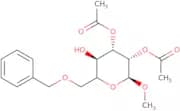
CAS:<p>6-O-Benzyl-2,3-di-O-acetyl-methyl-a-D-glucopyranoside is a high purity synthetic compound with a CAS number of 162284. It is a carbonyl sugar that has been modified with fluorination and methylation. The 6 position of the glucose monosaccharide has been acetylated to give an O6 benzyl group. This compound is used for glycosylation and click chemistry modifications.</p>Formula:C18H24O8Purity:Min. 95%Molecular weight:368.38 g/mol2,3,4,6-Tetra-O-acetyl-b-D-galactopyranosyl-(N2-Fmoc)-L-threonine
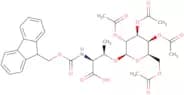
CAS:<p>Mecamylamine is a drug that binds to the active site of the acetylcholine esterase enzyme and prevents the breakdown of acetylcholine, which causes muscle contractions. Mecamylamine is used for the treatment of bowel disorders, such as diarrhoea. Randomised placebo-controlled trials have shown that mecamylamine is an effective treatment for chronic idiopathic constipation. The optimal dose and duration of treatment remain unclear, but it has been suggested that a cycle of 4 weeks on and 4 weeks off may be appropriate. Mecamylamine can cause adverse reactions, such as dizziness and blurred vision. It should not be used by people with asthma or other respiratory problems or by pregnant women.</p>Formula:C33H37NO14Purity:Min. 95%Molecular weight:671.65 g/mol1,2,4,6-Tetra-O-acetyl-3-deoxy-D-glucopyranose
CAS:<p>1,2,4,6-Tetra-O-acetyl-3-deoxy-D-glucopyranose is a compound that can inhibit the activity of the NOD1 and NOD2 receptors. It has been shown to be active against bone marrow macrophages and can be used as a potential treatment for inflammatory disorders. 1,2,4,6-Tetra-O-acetyl-3-deoxy-D-glucopyranose binds to the conformation of the NOD1 and NOD2 receptors in an uncompetitive manner. This binding prevents phosphorylation of the receptor and results in reduced NFkappaB activation.</p>Formula:C14H20O9Purity:Min. 95%Molecular weight:332.3 g/mol2,3,4,6-Tetra-O-acetyl-1,5-anhydro-D-mannitol
CAS:<p>2,3,4,6-Tetra-O-acetyl-1,5-anhydro-D-mannitol is a high yield precursor for the production of the drug 2,3,4,6-tetraacetoxybenzoin. The anomers are selectively formed by reacting with chlorides and iodides at elevated temperatures. The reaction yields the diastereomeric mixture of tetraacetoxybenzoin in a ratio of about 1:2. This product also reacts with acetobromoglucose to produce acrylonitrile (ACN). 2,3,4,6-Tetra-O-acetyl-1,5-anhydro-D-mannitol is a catalytic precursor for the production of the drug 2-(pyranosyl)-1-[2-(chloro)acetylamino]-2-(nitrophenyl)ethanol (PAN). This product can be</p>Formula:C14H20O9Purity:Min. 95%Molecular weight:332.3 g/mol



![3,4-O-[(1R,2R)-1,2-Dimethoxy-1,2-dimethyl-1,2-ethanediyl]-1,6-O-[(1S,2S)-1,2-dimethoxy-1,2-dimethy…](/_next/image/?url=https%3A%2Fstatic.cymitquimica.com%2Fproducts%2F3D%2Fthumb-webp%2FMD16692.webp&w=3840&q=75)