Monosaccharides
Monosaccharides are the simplest form of carbohydrates and serve as fundamental building blocks for more complex sugars and polysaccharides. These single sugar molecules play critical roles in energy metabolism, cellular communication, and structural components of cells. In this section, you will find a wide variety of monosaccharides essential for research in biochemistry, molecular biology, and glycoscience. These compounds are crucial for studying metabolic pathways, glycosylation processes, and developing therapeutic agents. At CymitQuimica, we offer high-quality monosaccharides to support your research needs, ensuring precision and reliability in your scientific investigations.
Subcategories of "Monosaccharides"
- Alloses(11 products)
- Arabinoses(21 products)
- Erythroses(11 products)
- Fructoses(9 products)
- Fucoses(36 products)
- Galactosamine(41 products)
- Galactose(260 products)
- Glucoses(365 products)
- Glucuronic Acids(51 products)
- Glyco-substrates for Enzyme(77 products)
- Guloses(6 products)
- Idoses(4 products)
- Inositols(15 products)
- Lyxoses(4 products)
- Mannoses(65 products)
- O-Glycans(48 products)
- Psicoses(3 products)
- Rhamnoses(10 products)
- Riboses(61 products)
- Sialic Acids(100 products)
- Sorboses(4 products)
- Sugars(173 products)
- Tagatoses(4 products)
- Taloses(8 products)
- Xyloses(20 products)
Show 17 more subcategories
Found 6088 products of "Monosaccharides"
Sort by
Purity (%)
0
100
|
0
|
50
|
90
|
95
|
100
Ethyl-3,6-di-O-benzoyl-2-trifluoromethanesulfonyl-4-O-(2,3,4,6-tetra-O-acetyl-b-D-galactopyranosyl)-b-D-mannopyranoside
CAS:<p>Ethyl-3,6-di-O-benzoyl-2-trifluoromethanesulfonyl-4-O-(2,3,4,6-tetra-O-acetyl-b-D-galactopyranosyl)-b-D-mannopyranoside is a synthetic modified oligosaccharide that has been fluorinated. It is a complex carbohydrate that has a CAS number of 1008750-65-9. The modification of the monosaccharides in this product are methylation and click modification.</p>Formula:C37H41F3O19SPurity:Min. 95%Molecular weight:878.77 g/mol2-O-Benzoyl-4,6-O-benzylidene-a-D-glucopyranoside
<p>2-O-Benzoyl-4,6-O-benzylidene-a-D-glucopyranoside is a synthetic carbohydrate with a structure that is similar to that of glucose. It has been shown to have anti-inflammatory properties in animal models and can be used for the treatment of inflammatory bowel disease and Crohn's disease. This compound has also been shown to inhibit the growth of bacteria such as Streptococcus pyogenes, Staphylococcus aureus, and Escherichia coli. 2-O-Benzoyl-4,6-O-benzylidene--aD glucopyranoside is soluble in water and has high purity with an average of 98%.</p>Formula:C20H20O7Purity:Min. 95%Molecular weight:372.37 g/mol2,3,4,6-Tetra-O-benzoyl-b-D-galactopyranosyl cyanide
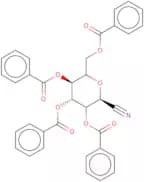
CAS:<p>2,3,4,6-Tetra-O-benzoyl-b-D-galactopyranosyl cyanide is a saccharide that can be custom synthesized. It is a modified form of galactose and contains a benzoyl group. The sugar is used in research on glycosylation and modification reactions.</p>Formula:C25H27NO9Purity:Min. 95%Molecular weight:485.48 g/molN6-Isopentenyladenine-7-glucoside
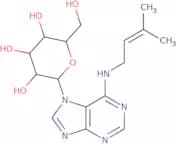
CAS:<p>N6-Isopentenyladenine-7-glucuronide is a synthetic monosaccharide that is used in the synthesis of complex carbohydrates. It is also a fluorinated compound that has been modified to form a glucuronide, which is an organic compound with a sugar and an alcohol group. N6-Isopentenyladenine-7-glucuronide can be used as a raw material for the production of oligosaccharides and polysaccharides, which are complex carbohydrates. This product can be custom synthesized to meet different requirements. It is available in high purity and the CAS number for this product is 59384-58-6.</p>Formula:C16H23N5O5Purity:Min. 95%Molecular weight:365.38 g/molL-Rhamnose bis(ethylsulfone)
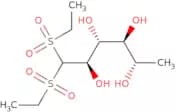
CAS:<p>L-Rhamnose bis(ethylsulfone) is a custom synthesis that belongs to the class of saccharides. L-Rhamnose bis(ethylsulfone) is often used in the production of complex carbohydrates, such as polysaccharides and glycosylation. It has been modified with fluorination, methylation, and click modification. L-Rhamnose bis(ethylsulfone) can be used for the synthesis of oligosaccharides or saccharides by glycosylation.</p>Formula:C10H22O8S2Purity:Min. 95%Molecular weight:334.41 g/mol1-Cyano-2-deoxy-3,5-di-O-toluoyl-D-ribofuranose
CAS:<p>1-Cyano-2-deoxy-3,5-di-O-toluoyl-D-ribofuranose is a monosaccharide that is used in the synthesis of oligosaccharides and polysaccharides. This product is custom synthesized to meet customer specifications. It has a CAS number of 406955-52-0. The purity of this product can be customized as well.</p>Purity:Min. 95%3-Deoxy-D-glucosone-bis(benzoylhydrazone)
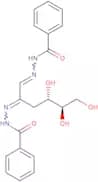
CAS:<p>3-Deoxy-D-glucosone-bis(benzoylhydrazone) is a synthetic compound that has been used in the synthesis of saccharides and oligosaccharides. This reagent can be used for the methylation of glycosyl groups, as well as the modification of carbohydrate chains to produce complex carbohydrates. 3-Deoxy-D-glucosone-bis(benzoylhydrazone) is a white powder with a molecular weight of 239. It is soluble in methanol, ethanol, acetone, and chloroform. The CAS number for this compound is 32443-70-2.</p>Formula:C20H22N4O5Purity:Min. 95%Molecular weight:398.41 g/mol2,3-O-Isopropylidene-1,5-di-O-toluoyl-b-D-ribofuranose
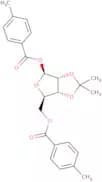
CAS:<p>2,3-O-Isopropylidene-1,5-di-O-toluoyl-b-D-ribofuranose (IPDT) is a saccharide that is modified with a methyl group at the 2' position of the ribose. This modification can be used to control the rate of glycosylation reactions, or to synthesize oligosaccharides and complex carbohydrates. IPDT is also an important precursor for click chemistry reactions, which are used in the synthesis of polymers and other organic compounds.</p>Formula:C24H26NO7Purity:Min. 95%Molecular weight:440.47 g/molHirsutanonol 5-O-glucoside
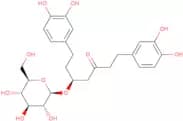
CAS:<p>Hirsutanonol 5-O-glucoside is an antral suppressant. It controls symptoms and parameters of the disease. It is a biopsy that has been carried out in patients with symptoms of gastric ulcer disease. The biopsy samples were stained with haematoxylin and eosin, and histological investigation showed that the interstitial cells are stained. Hirsutanonol 5-O-glucoside is also a symptomatic drug that can be used to investigate the correlation between gastric ulcer disease and gender.</p>Purity:Min. 95%3-Deoxy-1,2:5,6-di-O-isopropylidene-a-D-gulofuranose
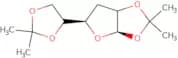
<p>3-Deoxy-1,2:5,6-di-O-isopropylidene-a-D-gulofuranose is a synthetic sugar that is used in the production of glycoproteins. It is an important component of glycosaminoglycans, which are complex carbohydrates that are responsible for the formation and maintenance of connective tissue. 3DG has been modified by fluorination, glycosylation, methylation, and modification. It can be used to synthesize oligosaccharides and monosaccharides. It can also be used as a raw material for the synthesis of saccharides. 3DG has been shown to inhibit tumor growth in animal models because it decreases protein synthesis in cancer cells.</p>Formula:C12H20O5Purity:Min. 95%Molecular weight:244.28 g/mol5-Hydroxymethyl tolterodine b-D-glucuronide
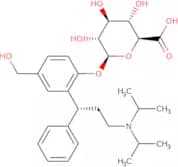
CAS:<p>5-Hydroxymethyl tolterodine b-D-glucuronide is a custom synthesis of a complex carbohydrate. It is an Oligosaccharide that is modified with Methylation, Glycosylation and Carbohydrate. The CAS No. is 210573-52-7, and it has a purity of >99%. This product has the following properties: Fluorination, Synthetic, Click modification, saccharide, sugar.</p>Formula:C28H39NO8Purity:Min. 95%Molecular weight:517.61 g/mol3,6-Di-O-tert-butyldiphenylsilyl-D-galactal
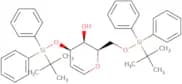
CAS:<p>3,6-Di-O-tert-butyldiphenylsilyl-D-galactal is an oligosaccharide that is a methylated and fluorinated derivative of the natural product D-galactal. The chemical structure of 3,6-di-O-tert-butyldiphenylsilyl-D-galactal is based on a beta-(1->4) linkage of two glucose residues with a terminal alpha-(1->3) linkage to form an alpha-(1->6) linkage. The compound is readily available in high purity, and can be custom synthesized to meet specific customer requirements for glycosylation, modification, or other special requests. 3,6-Di-O-tert-butyldiphenylsilyl--D--galactal has been shown in vitro to inhibit the growth of Mycobacterium tuberculosis and Mycobacterium av</p>Purity:Min. 95%Trichloroethyl 2,3,4-tri-O-acetyl-b-D-glucopyranosiduronic acid methyl ester
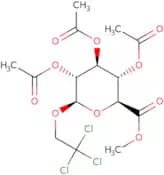
CAS:<p>Trichloroethyl 2,3,4-tri-O-acetyl-b-D-glucopyranosiduronic acid methyl ester is a synthetic carbohydrate that can be used for glycosylation reactions. Trichloroethyl 2,3,4-tri-O-acetyl-b-D-glucopyranosiduronic acid methyl ester is an intermediate in the synthesis of oligosaccharides and complex carbohydrates. It can be used to modify the sugar component of glycoproteins and glycopeptides.</p>Formula:C15H19Cl3O10Purity:Min. 95%Molecular weight:465.66 g/molR-Hydroxy topiramate
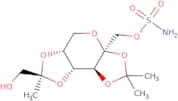
CAS:<p>R-Hydroxy topiramate is the stable isotope of the active pharmaceutical ingredient, topiramate. It can be used for the calibration of liquid chromatography and mass spectrometry methods. R-Hydroxy topiramate is prepared by dilution of a solution of topiramate with water, followed by elution from an ion exchange resin with methanol. The eluent is dried under vacuum to remove methanol and finally dissolved in a minimal volume of acetonitrile. R-Hydroxy topiramate is used to measure concentrations of lamotrigine and zonisamide in plasma and serum samples.</p>Formula:C12H21NO9SPurity:Min. 95%Molecular weight:355.36 g/mol1,2,3,5-Tetra-O-acetyl-D-ribofuranose
CAS:<p>1,2,3,5-Tetra-O-acetyl-D-ribofuranose is a dietary supplement that can be found in the form of palladium complexes. This compound has been shown to have anti-inflammatory properties and may be effective against cancer cells. 1,2,3,5-Tetra-O-acetyl-D-ribofuranose is an acetylated pyridazine derivative with antimicrobial and antibacterial effects. It has also been shown to inhibit the synthesis of purines and pyrimidines by cleaving the 6th carbon from ribose. 1,2,3,5-Tetra-O-acetyl-D-ribofuranose is synthesized by chlorination of 2,6-, 3-, 5-, or 7-(chloropurinomethyl)pyridine with mercuric chloride or nitrosyl chloride. The cleavage products are hydroxyl group</p>Purity:Min. 95%Mirabegron O-glucuronide
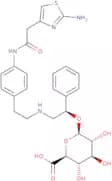
CAS:<p>Mirabegron is a drug that has been used to treat overactive bladder and urinary incontinence. Mirabegron is an agonist of the beta-3 adrenergic receptor and increases the levels of cAMP in cells by binding to this receptor. This leads to relaxation of smooth muscle tissue, which decreases resistance in the bladder and urethra and promotes urine storage. Mirabegron O-glucuronide is a metabolite of mirabegron that can be detected in urine using mass spectrometry methods. Mirabegron O-glucuronide has been found in human liver samples following oral administration, as well as in human blood samples after intravenous administration.</p>Purity:Min. 95%3-Indolyl b-D-glucopyranoside trihydrate
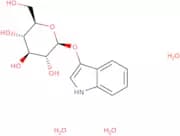
CAS:<p>Precursor of the uremic toxin indoxyl sulfate</p>Formula:C14H17NO6·3H2OPurity:Min. 95%Molecular weight:349.33 g/molIvermectin b1 monosaccharide
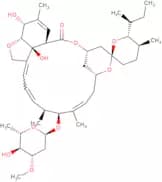
CAS:<p>Ivermectin is a derivative of avermectin that is used for the treatment of parasitic infections. Ivermectin b1 monosaccharide is an analog of the parent molecule, which lacks a carbon atom at position 1 and has a spiroketal group at position 2. It is known to be more potent than ivermectin in animal studies.</p>Formula:C41H62O11Purity:Min. 95%Color and Shape:PowderMolecular weight:730.92 g/molCMP-Pseudaminic acid
<p>CMP-Pseudaminic acid is a chemical compound that belongs to the group of thuringiensis. It is biosynthesized by the action of enzymes, which catalyze the conversion of sialic acid to CMP-pseudaminic acid. This process is carried out in two steps. The first step involves a reaction between sialic acid and ATP and the second step entails an enzymatic reaction between CMP-pseudaminic acid and UDP-glucose. X-ray crystal structures have been obtained for both steps of this process, with the second step being more complex than the first. Chemical diversity has been observed in pseudaminics, with some being glycosylated while others are not. Analysis with spectrometry has shown that pseudaminics are highly o-glycosylated at their hydroxy groups and have high levels of carbon atoms as well as hydroxyl groups. Structural analysis has revealed that pseudaminics</p>Formula:C22H32N5O15PPurity:Min. 95%Molecular weight:637.49 g/mol1-O-Tosyl-2,3:4,5-di-O-isopropylidene-L-arabinitol
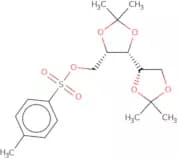
CAS:<p>1-O-Tosyl-2,3:4,5-di-O-isopropylidene-L-arabinitol is a sugar that is used in the synthesis of oligosaccharides and complex carbohydrates. This product can be custom synthesized to meet your needs. It has been shown to react with fluorine at high temperatures and with CH3OH/NaOH at low temperatures. 1-O-Tosyl-2,3:4,5-di-O-isopropylidene arabinitol can also be glycosylated or methylated. The CAS number for this product is 1241674-36-1.</p>Formula:C18H26O7SPurity:Min. 95%Color and Shape:SolidMolecular weight:386.46 g/mol