Monosaccharides
Monosaccharides are the simplest form of carbohydrates and serve as fundamental building blocks for more complex sugars and polysaccharides. These single sugar molecules play critical roles in energy metabolism, cellular communication, and structural components of cells. In this section, you will find a wide variety of monosaccharides essential for research in biochemistry, molecular biology, and glycoscience. These compounds are crucial for studying metabolic pathways, glycosylation processes, and developing therapeutic agents. At CymitQuimica, we offer high-quality monosaccharides to support your research needs, ensuring precision and reliability in your scientific investigations.
Subcategories of "Monosaccharides"
- Alloses(11 products)
- Arabinoses(21 products)
- Erythroses(11 products)
- Fructoses(9 products)
- Fucoses(36 products)
- Galactosamine(41 products)
- Galactose(260 products)
- Glucoses(365 products)
- Glucuronic Acids(51 products)
- Glyco-substrates for Enzyme(77 products)
- Guloses(6 products)
- Idoses(4 products)
- Inositols(15 products)
- Lyxoses(4 products)
- Mannoses(65 products)
- O-Glycans(48 products)
- Psicoses(3 products)
- Rhamnoses(10 products)
- Riboses(61 products)
- Sialic Acids(100 products)
- Sorboses(4 products)
- Sugars(173 products)
- Tagatoses(4 products)
- Taloses(8 products)
- Xyloses(20 products)
Show 17 more subcategories
Found 6088 products of "Monosaccharides"
Sort by
Purity (%)
0
100
|
0
|
50
|
90
|
95
|
100
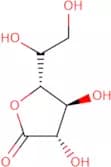
D-Idonic acid-1,4-lactone
CAS:<p>D-Idonic acid-1,4-lactone is a modification of a carbohydrate which can be custom synthesized. The product is an oligosaccharide that has a high purity and is synthetically produced. This product is composed of monosaccharides, methylation, glycosylation, polysaccharides and sugar. It also contains fluorination and saccharide.</p>Formula:C6H10O6Purity:Min. 95%Color and Shape:Colorless PowderMolecular weight:178.14 g/molIsosaccharinic acid
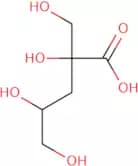
CAS:<p>Isosaccharinic acid is a bacterial strain that produces isosaccharinic acid as its main fatty acid. The thermodynamic data for the reaction mechanism of the conversion of glucose to isosaccharinic acid has been determined. Isosaccharinic acid formation is catalyzed by an enzyme called glycosyl-glycerate dehydrogenase, which converts glycerate to 3-hydroxypropanoic acid and then to 3-oxopropanoate before it undergoes decarboxylation and reduction to form isosaccharinic acid. Radionuclides such as TcO4 are used in chemical ionization mass spectrometry for the detection of this compound in samples. Neutral pH, high activation energies, and low binding constants are all factors that affect the stability of this molecule.</p>Formula:C6H12O6Purity:Min. 95%Molecular weight:180.16 g/molDaunorubicin-d3
<p>Daunorubicin-d3 is a fluorinated, monosaccharide, synthetic, oligosaccharide and complex carbohydrate. Custom synthesis of Daunorubicin-d3 is available with glycosylation, methylation and other modifications. Daunorubicin-d3 has CAS No. 1614-68-8 and purity >99%.</p>Formula:C27H26D3NO10Purity:Min. 95%Molecular weight:530.54 g/mol1,3-Di-O-acetyl-5-O-benzoyl-2-deoxy-D-xylofuranose
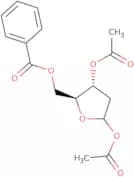
CAS:<p>1,3-Di-O-acetyl-5-O-benzoyl-2-deoxy-D-xylofuranose is a complex carbohydrate that has been custom synthesized. It is a monosaccharide with a methyl group at the C1 position and an acetyl group at the C3 position. The chemical formula for 1,3 Di-O-acetyl 5 O benzoyl 2 deoxy D xylofuranose is C11H21NO6. The molecular weight of 1,3 Di O acetyl 5 O benzoyl 2 deoxy D xylofuranose is 277.27 g/mol. 1,3 Di O acetyl 5 O benzoyl 2 deoxy D xylofuranose may have glycosidic bonds and be used in the synthesis of other carbohydrates or as a reagent in organic chemistry reactions.</p>Formula:C16H18O7Purity:Min. 95%Molecular weight:322.31 g/molD-Glucose ethylenedithioacetal
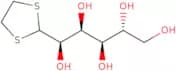
CAS:<p>D-Glucose ethylenedithioacetal is a biological agent. It is a white to off-white crystalline powder that has a molecular weight of 204.3. D-Glucose ethylenedithioacetal is soluble in water and ethanol, but not in ether or chloroform. It is stable in air, but will react with alkali to form the corresponding salt of D-glucose.</p>Formula:C8H16O5S2Purity:Min. 95%Molecular weight:256.34 g/molUDP-b-L-fucose diammonium salt
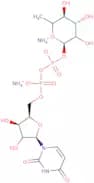
<p>Synthetically produced sugar nucleotide</p>Formula:C15H22N2O16P2·N2H8Purity:Min. 95%Molecular weight:584.37 g/molCMP-N-acetylneuraminic acid 9-sp-biotin
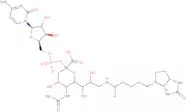
<p>CMP-N-acetylneuraminic acid 9-sp-biotin is a biotinylated sugar nucleotide</p>Purity:Min. 95%5-Thio-N-acetylglucosamine
<p>5-Thio-N-acetylglucosamine is a microtubule inhibitor that binds to o-glcnac, a posttranslational modification of proteins that regulates the morphology and cycling of stem cells. 5-Thio-N-acetylglucosamine has been shown to inhibit the transcriptional activity of o-glcnacase, an enzyme that catalyzes the conversion of o-glcnac to glucosamine. This drug also inhibits the metabolic activity of neural progenitor cells, which may be due to its ability to regulate subpopulations with concomitant expression of markers such as Oct4 and Sox2.</p>Purity:Min. 95%Methyl 1,2,3,4-tetra-O-acetyl-a-L-idopyranuronate
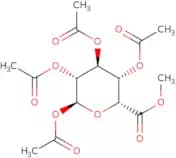
CAS:<p>Methyl 1,2,3,4-tetra-O-acetyl-a-L-idopyranuronate is a carbohydrate standard that belongs to the group of L-iduronic acid derivatives. Methyl 1,2,3,4-tetra-O-acetyl-a-L-idopyranuronate is commonly used in the synthesis of glycosides and glycoconjugates. Its fluorescence properties make it useful for labeling and detection purposes in biochemical assays. This compound can also serve as a substrate for enzymes involved in carbohydrate metabolism. Overall, Methyl 1,2,3,4-tetra-O-acetyl-a-L-idopyranuronate is an essential tool for researchers in the field of glycobiology and biochemistry.</p>Formula:C15H20O11Purity:Min. 95%Molecular weight:376.31 g/mol1,2-13C2-D-Rhamnose
<p>Enantiomer of natural L-Rha 13C-labelled at carbons 1 and 2</p>Formula:C2C4H12O5Purity:Min. 95%Color and Shape:White PowderMolecular weight:166.14 g/mol2,4-Bis(acetylamino)-2,4,6-trideoxy-D-galactose
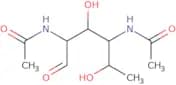
CAS:<p>2,4-Bis(acetylamino)-2,4,6-trideoxy-D-galactose (BTDG) is a nitro derivative of L-threonine that has been derivatized with an acetyl group and a molecule of 2,4,6-trideoxygalactose. BTDG has been shown to be safe in clinical trials for vaccine development against life-threatening diseases. It is the first glycopolymer approved by the FDA for clinical use in humans. This drug has been shown to increase the antibody response and improve protection against influenza virus infection. BTDG also inhibits bacterial replication by blocking protein synthesis in some bacteria and inhibiting glycolysis in others.</p>Formula:C10H18N2O5Purity:Min. 95%Color and Shape:PowderMolecular weight:246.26 g/mol1,4-Dideoxy-1,4-epithio-D-ribitol
CAS:<p>1,4-Dideoxy-1,4-epithio-D-ribitol is a complex carbohydrate that belongs to the group of oligosaccharides. It is an Oligosaccharide with a molecular weight of 538.77. It has been modified by methylation and glycosylation and fluorination. The compound is synthesized in high purity and is available for custom synthesis.</p>Formula:C5H10O3SPurity:Min. 95%Molecular weight:150.2 g/mol(±)-Muscarine chloride
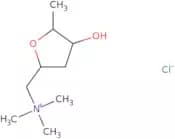
CAS:Controlled Product<p>Muscarine chloride is a potent acetylcholine receptor agonist that causes activation of the postsynaptic membrane by increasing the K+ concentration and hyperpolarizing the membrane. Muscarine chloride increases spontaneous activity in muscle and ganglion cells, which may be due to its ability to activate cholinergic receptors. Muscarine chloride has been shown to cause paralysis of skeletal muscle when injected into frog sciatic nerve, which is caused by its ability to block nerve impulses. Muscarine chloride is effective at doses as low as 0.1 ug/kg and can be used for research purposes when activating acetylcholine receptors.br> br></p>Formula:C9H20NO2•ClPurity:Min. 95%Color and Shape:PowderMolecular weight:209.71 g/molDihydrozeatin-7-glucoside
CAS:<p>Dihydrozeatin-7-glucoside (DZG) is a plant hormone that belongs to the group of abscisic acid. It is biosynthesized from zeatin, an intermediate in the synthesis of the plant hormone gibberellin. DZG has been shown to regulate water loss in plants and plays a role in the regulation of photosynthesis and seed germination. The uptake of DZG by plant cells is complex and can be influenced by both physiological and environmental factors. It can be conjugated with small molecules such as typhasterol, which is found in tobacco leaves, or tabacum l., which is found in certain species of tobacco plants. Dihydrozeatin-7-glucoside also interacts with other hormones such as 24-epibrassinolide and regulates various biochemical processes such as protein synthesis and cell growth.</p>Formula:C16H25N5O6Purity:Min. 95%Molecular weight:383.4 g/molADP-L-glycero-b-D-manno-heptose
<p>ADP-L-glycero-b-D-manno-heptose is a synthetic, fluorinated oligosaccharide that is custom synthesized and modified. It has a high purity level and CAS No., as well as being a complex carbohydrate that can be modified with methylation or click modification to generate desired properties. ADP-L-glycero-b-D-manno-heptose is an Oligosaccharide with a glycosylation and methylation. This compound can be used in the synthesis of saccharides, polysaccharides, or other complex carbohydrates.</p>Purity:Min. 95%6-Amino-6-deoxy-D-mannopyranose hydrochloride
CAS:<p>The 6-Amino-6-deoxy-D-mannopyranose hydrochloride is a custom synthesis and modification of mannose. It is a complex carbohydrate that is an oligosaccharide or polysaccharide, and it can be modified by methylation, glycosylation, or carbamylation. The 6-Amino-6-deoxy-D-mannopyranose hydrochloride has high purity and fluorescence properties. This compound has the CAS number 2074444-9 and is synthetically produced.</p>Formula:C6H13NO5•HClPurity:Min. 95%Molecular weight:215.63 g/molGalactostatin
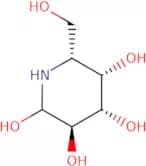
CAS:<p>Galactostatin is a protein synthesis inhibitor that binds to the l-tartaric acid site of the bacterial 30S ribosomal subunit. It inhibits the binding of aminoacyl-tRNA to the ribosome, preventing translation and inhibiting cell growth. Galactostatin has been shown to be effective against HIV infection in mammalian cells. This drug also has a chaperone effect that protects cells from heat or cold stress.</p>Formula:C6H13NO5Purity:Min. 95%Molecular weight:179.17 g/mol3-Deoxy-2-keto-D-xylonate lithium
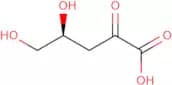
CAS:<p>3-Deoxy-2-keto-D-xylonate lithium salt is a synthetic compound that is used in the synthesis of protamine. It is produced by the reduction of an aldehyde with borohydride. 3-Deoxy-2-keto-D-xylonate lithium salt has been shown to be active against E. cloacae, which can cause diarrhea and other gastrointestinal disorders. 3-Deoxy-2-keto-D-xylonate lithium salt inhibits the growth of E. cloacae by inhibiting glycolaldehyde reductase and aldolases, which are enzymes that are essential for glycolysis and citrate metabolism, respectively. The cleavage products formed by this reaction inhibit bacterial growth by interfering with cell wall biosynthesis, preventing protein synthesis, or blocking ATP production (oxidative phosphorylation).</p>Formula:C5H8O5•LixPurity:Min. 95%Color and Shape:PowderMolecular weight:148.11 g/mol3-Deoxy-2-keto-6-phospho-D-galactonate lithium salt
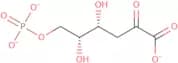
CAS:<p>The enzyme aldolase, which is involved in the metabolism of carbohydrates, catalyzes the cleavage of 3-deoxy-2-keto-6-phospho-D-galactonate to form aldol and 6-phosphoglycerate. The reaction mechanism involves an initial dehydration step that converts the substrate to an enolate ion. This intermediate then reacts with water to produce aldol and 6-phosphoglycerate. The enzyme is active only at low pH levels due to its dependence on divalent cations. The enzyme is also inhibited by other substrates or products of the reaction, such as D-tagatose, D-sorbose, and maltophilia.</p>Formula:C6H11O9P·xLiPurity:Min. 95%L-Psicose
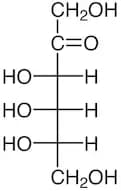
CAS:Formula:C6H12O6Purity:>98.0%(HPLC)Color and Shape:White to Almost white powder to crystalMolecular weight:180.16