Metal Salts
Found 2872 products of "Metal Salts"
1,2-Benzisoxazole-3-methanesulfonate sodium salt
CAS:1,2-Benzisoxazole-3-methanesulfonate sodium salt (BMS) is a reactive intermediate that is used in the synthesis of drugs. It is a dehydrating agent and can be used as an impurity in the synthesis of pharmaceuticals. BMS has a flow rate of 0.5 to 2.0 g/min and an end point at around 200°C. BMS can be synthesized by reacting benzisoxazole with methanesulfonyl chloride in acetonitrile or chloroform or by reacting cetylpyridinium chloride with hydrochloric acid in acetonitrile. This compound can be purified by chromatographic methods such as flash column chromatography or gas chromatography, which are both reproducible and validated methods for purification.Formula:C8H6NNaO4SPurity:Min. 95%Color and Shape:White PowderMolecular weight:235.19 g/molChloro[1,3-bis(2,6-diisopropylphenyl)imidazol-2-ylidene]copper(I)
CAS:Chloro[1,3-bis(2,6-diisopropylphenyl)imidazol-2-ylidene]copper(I) is a transfer reagent that can be used in preparative organic chemistry. It reacts with alkyl halides to form 1,3-bis(2,6-diisopropylphenyl)-imidazolium chloride. This reaction can be used for the preparation of chloroalkenes by filtration and pentane extraction. In addition to its use as a transfer reagent, chloro[1,3-bis(2,6-diisopropylphenyl)imidazol-2-ylidene]copper(I) has been shown to have anti-inflammatory properties due to its ability to inhibit the transcription of proinflammatory genes.Formula:C27H36ClCuN2Purity:Min. 95%Color and Shape:White Off-White PowderMolecular weight:487.59 g/molLithium fluoride
CAS:Lithium fluoride (LiF) is a chemical compound that has high chemical stability and kinetic energy. It can be used as a laser medium or to generate light in the infrared region. Lithium fluoride is used to produce fluorine gas by reaction with hydrochloric acid, which is then reacted with hydrogen fluoride to produce hydrogen trifluoride. Lithium fluoride is also used for biological purposes, such as the treatment of hyperthyroidism. In addition, lithium fluoride can be used to treat syphilis and other sexually transmitted diseases because it has an inhibitory effect on bacterial growth. Lithium fluoride also inhibits erythrocyte proliferation by inhibiting DNA synthesis and protein synthesis in vivo.Formula:LiFPurity:Min. 95%Color and Shape:PowderMolecular weight:25.94 g/molPotassium Trifluoromethanesulfonate
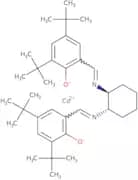
CAS:Potassium trifluoromethanesulfonate is a chemical compound that belongs to the family of organofluorine compounds. It has been shown to be an excellent hydrogen bond acceptor, which is the most important factor for its application in water vapor detection. Potassium trifluoromethanesulfonate has been used as an enhancement agent in analytical chemistry. It has also been used as a fluorescence detector and in x-ray crystal structure determination studies. The reaction mechanism of potassium trifluoromethanesulfonate is not yet known with certainty, but it is likely that the protonated amide form of potassium trifluoromethanesulfonate reacts with light emission from an organic dye, producing a fluorescent product.Formula:CF3KO3SPurity:Min. 95%Color and Shape:PowderMolecular weight:188.17 g/mol(S,S)-(+)-N,N'-Bis(3,5-di-tert-butylsalicylidene)-1,2-cyclohexanediaminocobalt(II)
CAS:The (S,S)-(+)-N,N'-Bis(3,5-di-tert-butylsalicylidene)-1,2-cyclohexanediaminocobalt(II) is an orange copolymer that is soluble in water and organic solvents. It has a molecular weight of 542.83 g/mol and a density of 1.221 g/cm3. The (S,S)-(+)-N,N'-Bis(3,5-di-tert-butylsalicylidene)-1,2-cyclohexanediaminocobalt(II) is used to catalyze the desymmetrization of epoxides and the ligand in enantioselective kinetic preparative reactions. The (S,S)-(+)-N,N'-Bis(3,5-di-tert-butylsalicylFormula:C36H52CoN2O2Purity:(Icp) Min. 96%Color and Shape:Red PowderMolecular weight:603.74 g/molSodium dibutyldithiocarbamate, 40% aqueous solution
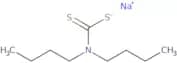
CAS:Sodium dibutyldithiocarbamate is a chemical that belongs to the group of cross-linking agents. It is used in the production of rubber and plastic products, as well as in textile finishing. This chemical is also used in the treatment of allergic reactions, such as those caused by poison ivy. Sodium dibutyldithiocarbamate has been shown to be an effective crosslinker for elastomeric polymers, such as natural rubber and synthetic polymers, including polychloroprene and styrene-butadiene copolymers. The viscosity of sodium dibutyldithiocarbamate solutions are dependent on the concentration, and can range from about 1 centipoise (cP) at 40% to 3 cP at 60%. Its average particle diameter ranges from 10 nm to 20 nm.Formula:C9H18NNaS2Color and Shape:Clear LiquidMolecular weight:227.37 g/molDichloro[9,9-dimethyl-4,5-bis(diphenylphosphino)xanthene]palladium(II)
CAS:Controlled ProductDichloro[9,9-dimethyl-4,5-bis(diphenylphosphino)xanthene]palladium(II) is a fine chemical that can be used as a building block in the synthesis of compounds with diverse structures. It is a research chemical and reagent that has been found to be useful in the synthesis of complex organic compounds. This compound is also versatile enough to be used as an intermediate or scaffold in the synthesis of many different types of organic compounds.Formula:C39H32Cl2OP2PdPurity:Min. 95%Color and Shape:Yellow PowderMolecular weight:755.94 g/molClodronic acid disodium salt
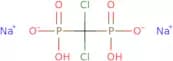
CAS:Clodronic acid disodium salt is a drug that can be used as a treatment for bowel disease. It binds to the chemoattractant protein and inhibits the activation of toll-like receptor 4, which is involved in inflammatory reactions. Clodronic acid also has an effect on polymorphonuclear leucocytes, inhibiting the production of cytokines and other inflammatory mediators. Clodronic acid has been shown to reduce neuronal death in experimental models and inhibit mitochondrial membrane potential in leukemic mice. The drug acts by binding to basic proteins in bone cells, preventing the release of calcium from bone stores into the blood stream. The monosodium salt form is more soluble than clodronate, which is a disodium salt.Formula:CH2Cl2Na2O6P2Purity:Min. 95%Color and Shape:White PowderMolecular weight:288.86 g/molSodium ammonium hydrogen phosphate
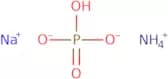
CAS:Sodium ammonium hydrogen phosphate is a salt that has genotoxic effects. The genotoxic potential of this compound is dependent on the concentration and duration of exposure. This substance can interact synergistically with other substances, such as inorganic acids or hydrochloric acid. Sodium ammonium hydrogen phosphate has been shown to cause malonic acid in the presence of an appropriate carbon source, and to form diammonium phosphate, which is a genotoxic agent. It also interacts with collagen and particle substrates, forming a carbonyl group which may be responsible for its genotoxicity. br>br> Sodium ammonium hydrogen phosphate is acidic and reacts with proteins to form amide bonds. This reaction may lead to biochemical pathways that are associated with DNA damage.
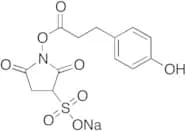
Formula:H5NNaO4PPurity:Min. 95%Color and Shape:PowderMolecular weight:137.01 g/mol4-Hydroxy-benzenepropanoic Acid 2,5-Dioxo-3-sulfo-1-pyrrolidinyl Ester Sodium Salt
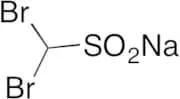
CAS:Controlled ProductFormula:C13H12NNaO8SColor and Shape:NeatMolecular weight:365.291Sodium Dibromomethanesulfonate
CAS:Stability Hygroscopic
Applications Sodium Dibromomethanesulfonate is used in the preparation of halogenated alkyl sulfonic acid used in preparation of Rontgen photographs of urogenital organs.
References Allardt, H. G., et al.: Patent May 4, 1933Formula:CHBr2NaO3SColor and Shape:Off-WhiteMolecular weight:275.88α-(2-Amino-5-chlorophenyl)-N-(carboxymethyl)-α-phenylnitrone Monosodium Salt
CAS:Controlled ProductApplications α-(2-Amino-5-chlorophenyl)-N-(carboxymethyl)-α-phenylnitrone Monosodium Salt, can be used for the synthesis of pharmaceutical compounds containing Quinazolines showing muscle relaxant, sedative and anticonvulsant properties.
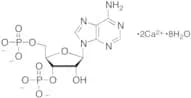
References Sternbach, L. H., et al.: Quinazolines, 26, 4936 (1961);Formula:C15H12ClN2NaO3Color and Shape:NeatMolecular weight:326.71Adenosine 3',5'-Bisphosphate Dicalcium Hydrate
CAS:Controlled ProductFormula:C10H27Ca2N5O18P2Color and Shape:NeatMolecular weight:423.1695,6-Dihydroxy-Des(dimethoxy) Bosutinib
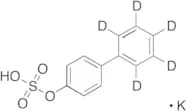
CAS:Controlled ProductFormula:C24H25Cl2N5O3Color and Shape:NeatMolecular weight:502.3934-Biphenylyl Sulfate-d5 Potassium Salt
CAS:Controlled ProductApplications 4-Biphenylyl Sulfate-d5 Potassium Salt is the isotope labelled analog of 4-Biphenylyl Sulfate Potassium Salt . 4-Biphenylyl Sulfate Potassium Salt is a derivative of 4-Phenylphenol (P336135). 4-Phenylphenol is a reagent used in the synthesis of pyrrolo[1,2-c]imidazole dione derivatives as selective serotonin 5-HT1A receptor agonists with antinociceptive activity.
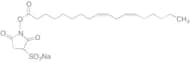
References Valhondo, M., et al.: J. Med. Chem., 56, 7851 (2013); Nichols, D., et al.: Chem. Rev., 108, 1614 (2008)Formula:C12D5H5O4S·KColor and Shape:NeatMolecular weight:294.399Sulfosuccinimidyl Linoleate Sodium
Controlled ProductApplications Sulfosuccinimidyl Linoleate Sodium is an analog of Sulfosuccinimidyl Oleate Sodium (S689200).
Formula:C22H34NNaO7SColor and Shape:NeatMolecular weight:479.563MES Sodium Salt
CAS:Controlled ProductApplications MES Sodium Salt is a useful buffer.
Formula:C6H12NNaO4SColor and Shape:NeatMolecular weight:217.22Sodium Octadecanoate-d35
CAS:Controlled ProductApplications Sodium Octadecanoate-d35 (CAS# 1219794-97-4) is a useful isotopically labeled research compound.
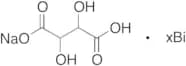
Formula:C18D35NaO2Color and Shape:NeatMolecular weight:341.68Bismuth Sodium rac-Tartrate
CAS:Controlled ProductFormula:C4H2O6·Bi·NaColor and Shape:NeatMolecular weight:378.025


![Chloro[1,3-bis(2,6-diisopropylphenyl)imidazol-2-ylidene]copper(I)](/_next/image/?url=https%3A%2Fstatic.cymitquimica.com%2Fproducts%2F3D%2Fthumb-webp%2FFC60942.webp&w=3840&q=75)


![Dichloro[9,9-dimethyl-4,5-bis(diphenylphosphino)xanthene]palladium(II)](/_next/image/?url=https%3A%2Fstatic.cymitquimica.com%2Fproducts%2F3D%2Fthumb-webp%2FFD60980.webp&w=3840&q=75)