Metal Salts
Found 2872 products of "Metal Salts"
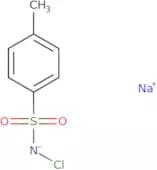
N-Chloro-4-toluenesulfonamide sodium
CAS:N-Chloro-4-toluenesulfonamide sodium (NCTS) is a disinfectant that is used to treat wastewater and as a preservative for water. It has been shown to be effective against bacteria, fungi, and viruses. NCTS is an antimicrobial agent that reacts with the matrix in which it is applied to form chloramines-T (NHClO). The chloramines-T inhibits the activity of enzymes such as those involved in DNA synthesis and protein synthesis. This reaction also generates an electric current due to the redox potentials of the reactants. The presence of aziridines in NCTS leads to crosslinking between proteins, which enhances its effectiveness as a disinfectant. NCTS has been shown to have no adverse effects on human erythrocytes or DNA when used at concentrations up to 100 µg/mL.Formula:C7H8ClNO2S•NaPurity:Min. 95%Color and Shape:PowderMolecular weight:228.65 g/molCarbonyldiiodo(pentamethylcyclopentadienyl)cobalt(III)
CAS:Carbonyldiiodo(pentamethylcyclopentadienyl)cobalt(III) is a high-quality, reagent, complex compound that is useful as a reaction component in the production of fine chemicals and speciality chemicals. It is also used as a building block for more complex compounds. This versatile building block can be used to produce research chemicals, useful scaffolds and building blocks for organic synthesis. Carbonyldiiodo(pentamethylcyclopentadienyl)cobalt(III) has CAS number 35886-64-7.Formula:C11H15CoI2OPurity:Min. 95%Color and Shape:Black SolidMolecular weight:475.98 g/molSodium isopropylxanthate
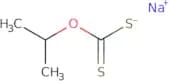
CAS:Sodium isopropylxanthate is a chemical compound that is used in the production of chitosan polymers. It is a white solid that is soluble in water and methanol, with a melting point of about 150-160°C. The adsorption mechanism of this chemical compound has been shown to be through hydrogen bonding between hydroxyl groups on the surface of pyrite and xanthate anions, which are ionized at the pH values present in the environment. Sodium isopropylxanthate has been shown to interact with chitosan polymer, which can be electrochemically detected through impedance spectroscopy. Furthermore, it can react with benzyl groups to form carbon disulphide, which has a redox potential of -0.5V, suggesting that sodium isopropylxanthate should be added to solutions containing benzyl groups at concentrations below its optimum concentration for maximum effectiveness. This chemical compound also shows uptakeFormula:C4H7NaOS2Purity:Min. 90%Color and Shape:Off-White PowderMolecular weight:158.22 g/molSulfo-N-succinimidyl 6-[3-(2-pyridyldithio)propionamido] hexanoate, sodium salt
CAS:Sulfo-N-succinimidyl 6-[3-(2-pyridyldithio)propionamido] hexanoate, sodium salt is a monoclonal antibody that binds to survivin and inhibits the immune reaction. It has been shown to be effective against P. aeruginosa and metallothionein with a strong binding affinity for antigen and can be used as an immobilization agent for nanosensors.Formula:C18H22N3NaO8S3Purity:Min. 95%Color and Shape:Off-White To Tan SolidMolecular weight:527.57 g/molIsopilocarpic acid sodium salt
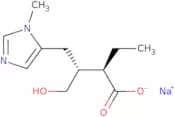
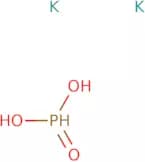
CAS:Isopilocarpic acid sodium salt is a synthetic compound that contains methyl groups and electron. It is an utilizable and liquid chromatographic compound with an acyl group. Isopilocarpic acid sodium salt has been shown to be a prodrug derivative that is hydrolyzed to form the active methylene and hydroxy groups. The aliphatic chain in this compound can be ethylene or benzyl.Formula:C11H17N2NaO3Purity:Min. 95%Color and Shape:White PowderMolecular weight:248.25 g/molDipotassium hydrogen phosphite
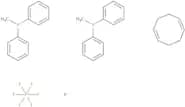
CAS:Dipotassium hydrogen phosphite is a versatile building block that has many uses in research and commercial laboratories. It can be used as a reagent, intermediate, or scaffold for the synthesis of other compounds. Dipotassium hydrogen phosphite has been shown to have high quality and purity, making it an excellent choice for any chemical synthesis.Formula:H3O3P·2KColor and Shape:PowderMolecular weight:160.19 g/mol(1,5-Cyclooctadiene)bis(methyldiphenylphosphine) iridium(I) hexafluorophosphate
CAS:(1,5-Cyclooctadiene)bis(methyldiphenylphosphine) iridium(I) hexafluorophosphate is an organometallic compound that is a reagent for the synthesis of β-unsaturated aldehydes. It can be used in organic solvents such as diethyl ether and hexanes to transvinylate anion with methanol or ethylene glycol to produce propenyl alcohols. (1,5-Cyclooctadiene)bis(methyldiphenylphosphine) iridium(I) hexafluorophosphate has been found to be insoluble in water, alcohols, and acetals.
Formula:C34H38F6IrP3Purity:Min. 97%Color and Shape:PowderMolecular weight:845.79 g/molEosin Y disodium salt
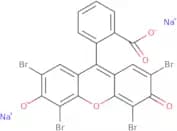
CAS:Eosin Y, a red xanthene dye, has been noted to reduce the affinity of Mg2+-ATPase for ATP and increase the enzyme affinity for Mg2+ at concentrations of 10-50 μM. At higher concentrations near 100 μM the affinity for Mg2+-ATPase for the ion-activator has been shown to be reduced. This compound has also been reported to be a photosensitizer that works as a molecular photoelectrode via catalyzation of the visible-light-driven electron-transfer reaction. Eosin Y has been used to stain structures such as muscle, cytoplasm, and collagen. This agent also enhances fluorescent quenching abilities by forming a complex with polyvinulpyrrolidone.
Formula:C20H6Br4Na2O5Purity:Min. 95%Color and Shape:Brown PowderMolecular weight:691.85 g/molAcamprosate calcium
CAS:GABA receptor agonist; threatment for alcohol dependence
Formula:C10H20CaN2O8S2Purity:Min 98%Color and Shape:White PowderMolecular weight:400.48 g/molDihexyl sodium sulfosuccinate, 80% aqueous solution
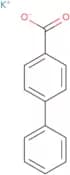
CAS:Dihexyl sodium sulfosuccinate is a compound used as a substrate film in tumor treatment. It is an anhydrous sodium salt of sulfosuccinic acid and has a high resistance to radiation and oxidation. The hydroxyl group on the dihexyl sodium sulfosuccinate molecule allows the polymer to be dissolved in water. The receptor molecule, surfactant, can be used to control the particle size of the polymer. This product was injected into tumors to study its effect on tumor size and weight.Formula:C16H30O7S•NaPurity:79 To 81%Color and Shape:Clear LiquidMolecular weight:389.46 g/molPotassium 4-biphenylcarboxylate
CAS:Potassium 4-biphenylcarboxylate is a fine chemical that is a useful intermediate for research chemicals. It is a versatile building block and can be used as a reaction component in the synthesis of complex compounds. Potassium 4-biphenylcarboxylate has been shown to react with polystyrene to form poly(4-phenoxybutadiene), which is known for its high quality and good solubility. Potassium 4-biphenylcarboxylate has also been shown to have antioxidant properties, which may be due to its ability to scavenge reactive oxygen species (ROS).Formula:C13H9O2•KPurity:Min. 95%Color and Shape:PowderMolecular weight:236.31 g/molSodium pyroantimonate
CAS:Sodium pyroantimonate is a chemical compound that has been used as an intermediate in the synthesis of other, more complex compounds. It is a white solid with a melting point of about 300°C. This compound can be used to react with substances containing carbon, sulfur, or nitrogen. It can also be used as a reagent for the preparation of other chemicals. Sodium pyroantimonate is not soluble in water and does not react with acids or bases.
Formula:H2Na2O7Sb2Color and Shape:PowderMolecular weight:403.51 g/molTetrakis[N-phthaloyl-(R)-tert-leucinato]dirhodium bis(ethyl acetate) adduct
CAS:Tetrakis[N-phthaloyl-(R)-tert-leucinato]dirhodium bis(ethyl acetate) adduct is a reagent that is used in organic synthesis and research. It has been shown to be useful as a scaffold for the synthesis of complex compounds, such as polymers. Tetrakis[N-phthaloyl-(R)-tert-leucinato]dirhodium bis(ethyl acetate) adduct can be used as an intermediate in the production of fine chemicals and speciality chemicals, as well as a versatile building block for the synthesis of diverse chemical compounds.
Formula:C56H56N4O16Rh2·C8H16O4Purity:Min. 95%Color and Shape:Yellow To Brown To Dark Green SolidMolecular weight:1423.08Ferulic acid 4-O-sulfate disodium salt
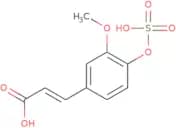
CAS:Ferulic acid 4-O-sulfate disodium salt is a compound belonging to the class of hydroxybenzoic acids. It is found in plant and animal tissue, as well as in urine samples. Ferulic acid 4-O-sulfate disodium salt has been shown to have antitumorigenic activity on thp-1 cells by inhibiting activation of toll-like receptor 2 (TLR2). It also inhibits the production of proinflammatory cytokines and interleukin 6 (IL6) in human macrophages. Ferulic acid 4-O-sulfate disodium salt may be a potential chemopreventive agent for women with breast cancer who are at high risk for recurrence. In addition, ferulic acid 4-O-sulfate disodium salt may have antiobesity properties that are mediated through inhibition of fatty acid synthesis in humans.
Formula:C10H8Na2O7SPurity:Min. 95%Color and Shape:White Off-White PowderMolecular weight:318.21 g/molSodium Hexadecyl Sulfate - contains ca. 40% Sodium Stearyl Sulfate
CAS:Sodium hexadecyl sulfate is a nonionic surfactant with emulsifying and solubilizing properties. It is used as an industrial chemical, a catalyst for the synthesis of pharmaceuticals, and in textile processing. It has been shown to be effective in the production of chlorophyll a. Sodium hexadecyl sulfate is also used as a fluorescence probe to measure metal ions such as Ca2+, Cu2+, Fe3+, Mn2+, Ni2+ and Zn2+. The process optimization of this compound can be measured by titration calorimetry or ester hydrochloride. Molecular weight: 564.4 Molecular formula: C18H36O3S Boiling point: 230 °C Melting point: -5 °CFormula:C16H33NaO4SPurity:(Gc) Min. 50.0%Color and Shape:PowderMolecular weight:344.49 g/molEtidronate disodium
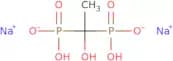
CAS:Atherosclerotic plaque inhibitor; anti-bone resorptive therapy
Formula:C2H6Na2O7P2·xH2OPurity:Min. 95%Color and Shape:PowderMolecular weight:249.99 g/molCitric acid tripotassium monohydrate
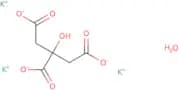
CAS:Citric acid tripotassium salt monohydrate is a membrane-stabilizing agent that has been shown to improve the function of the circuitry in animals. It has been used for the treatment of motoneurons and muscle pain. Citric acid tripotassium salt monohydrate has also been found to be an effective treatment for chronic pain, which may be due to its ability to block pain signals from reaching the brain. This drug has also shown efficacy in treating neurological disorders such as Parkinson's disease, Alzheimer's disease, and multiple sclerosis. Citric acid tripotassium salt monohydrate is effective at improving the physiological mechanisms that are responsible for translating nervous system activity into movement.Formula:C6H8O7•H2O•K3Purity:Min. 95%Color and Shape:White To Off-White SolidMolecular weight:237.43 g/molDoxycycline calcium
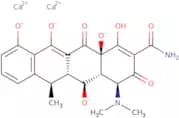
CAS:Antibiotic; anti-protozoal; anti-helmintic; protein synthesis inhibitorFormula:C22H24N2O8·2CaPurity:Min. 95%Molecular weight:524.59 g/mol1-[[5-(p-Nitrophenyl)furfurylidene]amino]-hydantoin sodium
CAS:Dantrolene sodium is a muscle relaxant that belongs to the group of pharmacological agents. It is used to treat muscle spasms and hyperactivity in patients with neuromuscular disorders. Dantrolene sodium inhibits calcium release by blocking the activity of the enzyme ryanodine receptor in skeletal muscle cells. This inhibition prevents uncontrolled contraction of muscles and reduces their energy consumption. The drug also has an effect on malignant hyperthermia, which is caused by an increase in the production of adenosine triphosphate (ATP) due to increased cellular metabolism. Dantrolene sodium can inhibit ATP synthesis, thus reducing energy production and stabilizing cell membranes, thereby preventing cell death in neurons and other tissues.
Formula:C14H10N4O5•NaPurity:Min. 95%Color and Shape:Yellow PowderMolecular weight:337.24 g/molPotassium ferricyanide
CAS:Controlled ProductPotassium ferricyanide is a metal salt that has been used as a model system to study the rate constant of antimicrobial agents. It is also used in wastewater treatment and analytical methods, such as chemiluminescence. Potassium ferricyanide reacts with an electron-donating substance, such as sodium dodecyl sulfate or an organic compound containing hydroxyl groups, to form a radical anion. The radical anion can react with oxygen to form chemiluminescence. Potassium ferricyanide is also a useful reagent for analytical determination of metals such as iron and copper by complexation with chelating agents.
Formula:C6FeN6•K3Purity:Min. 95%Color and Shape:PowderMolecular weight:329.24 g/mol

![Sulfo-N-succinimidyl 6-[3-(2-pyridyldithio)propionamido] hexanoate, sodium salt](/_next/image/?url=https%3A%2Fstatic.cymitquimica.com%2Fproducts%2F3D%2Fthumb-webp%2FFS27955.webp&w=3840&q=75)


![Tetrakis[N-phthaloyl-(R)-tert-leucinato]dirhodium bis(ethyl acetate) adduct](/_next/image/?url=https%3A%2Fstatic.cymitquimica.com%2Fproducts%2F3D%2Fthumb-webp%2FFT60015.webp&w=3840&q=75)

![1-[[5-(p-Nitrophenyl)furfurylidene]amino]-hydantoin sodium](/_next/image/?url=https%3A%2Fstatic.cymitquimica.com%2Fproducts%2F3D%2Fthumb-webp%2FFN44999.webp&w=3840&q=75)