Metal Salts
Found 2872 products of "Metal Salts"
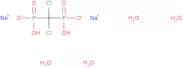
Disodium clodronate tetrahydrate
CAS:Disodium clodronate tetrahydrate is a water-soluble salt of the active form of clodronic acid, which has been shown to have anti-inflammatory activity. It is used in the treatment of breast cancer, as well as bowel disease. Disodium clodronate tetrahydrate inhibits basic protein synthesis and the production of pro-inflammatory cytokines by toll-like receptor 4 (TLR4) on polymorphonuclear leucocytes (PMN). This drug has also been shown to inhibit the enzyme activities of sodium salts, but not other enzymes such as phosphofructokinase or lactate dehydrogenase. Disodium clodronate tetrahydrate is also used in analytical methods that are based on measuring changes in the migration rate of proteins.Formula:CH2Cl2Na2O6P2·4H2OColor and Shape:White PowderMolecular weight:360.92 g/molCeftiofur sodium
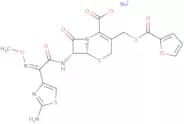
CAS:Ceftiofur sodium is a veterinary antibiotic that belongs to the class of antimicrobial agents. It is the most active agent for treating infections caused by gram-positive bacteria and has been shown to have a high degree of efficacy against amoxicillin-clavulanic acid-resistant strains. Ceftiofur sodium binds to bacterial ribosomes and inhibits protein synthesis, leading to cell death by inhibiting proteins vital for cell division. Ceftiofur sodium also inhibits DNA synthesis by binding to DNA gyrase, which is an enzyme that maintains the integrity of bacterial DNA. Ceftiofur hydrochloride (CFT) is a prodrug that is hydrolyzed in vivo to ceftiofur sodium, its active form. Ceftiofur hydrochloride has been shown to be effective against tetracycline-resistant Staphylococcus aureus (TETR) and Mycobacterium tuberculosis complex, but not against EscherichiaFormula:C19H16N5NaO7S3Purity:Min. 95 Area-%Color and Shape:Off-White PowderMolecular weight:545.55 g/molGallic acid sodium
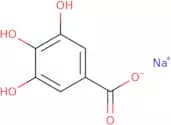
CAS:Gallic acid sodium salt is a fatty acid that can be extracted from plant sources. It is a hydroxyl group with a cationic surfactant and it has high values in the hydroxide solution. Gallic acid sodium salt can be used as a hydroxyl group extractant, which is an important property for use in clinical settings. It also has high values as a radiation-resistant, hydroxide solution, and hydroxyapatite extractant. The compound can be prepared by treating gallic acid with sodium carbonate or sodium hydroxide to form gallium(III) ion and sodium chloride. This compound can then react with copper chloride to form gallium(III) copper chloride coordination complex.
Formula:C7H5O5NaPurity:Min. 95%Color and Shape:PowderMolecular weight:192.1 g/molThallium (III) oxide
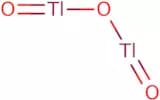
CAS:Thallium (III) oxide is a white powder that is insoluble in water and hydrochloric acid, soluble in nitric acid, and melts at 200 degrees Celsius. It has a density of 3.2 g/cm3 and thermal expansion coefficient of 5.5x10⁻⁶ K-1. Thallium (III) oxide has an irreversible oxidation reaction with hydrochloric acid to form thallous chloride and hydrogen gas. It also undergoes strong absorption of ultraviolet light at wavelengths below 300 nm, which makes it useful for the detection of hydrocarbons in petroleum products. Thallium (III) oxide can be used as a catalyst for acylation reactions and exhibits hydrogen bonding interactions with organic molecules.Formula:Tl2O3Purity:Min. 95%Color and Shape:Brown Clear LiquidMolecular weight:456.76 g/molSulfacetamide sodium monohydate
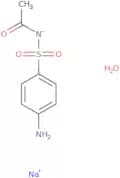
CAS:Sulfacetamide sodium monohydrate is a sulfa drug that is used in the treatment of infections caused by bacteria that are sensitive to sulfonamides. It is also used to reduce the symptoms of rosacea, a skin condition. Sulfacetamide sodium monohydrate inhibits microbial growth by disrupting microbial fatty acid synthesis and inhibiting bacterial growth through various mechanisms including hydrolysis by hydrochloric acid, metabolic disorders, or changes in water permeability. It has been shown to be an effective treatment for congestive heart failure due to its ability to increase the thickness of the glomerular basement membrane and inhibit erythrocyte adhesion. This drug is also useful as a topical agent for treating mild cases of radiation dermatitis and has high values as an anhydrous sodium sulfate substitute for wastewater treatment.Formula:C8H10N2O3S•H2O•NaPurity:Min. 95%Molecular weight:255.25 g/molPoly(acrylic acid, sodium salt) solution - average molecular weight 15000, 35% in water
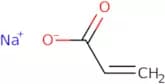
CAS:Poly(acrylic acid) is a polymer that has significant cytotoxicity. The molecular weight of the polymers range from 10,000 to 1,000,000 and it is soluble in water. Poly(acrylic acid) can be used for the treatment of solid tumours and bowel diseases. It has been shown to have a phase transition temperature at around 55°C, which means that it is a liquid at room temperature but becomes a gel when heated. Poly(acrylic acid) is also used as an ionotropic gelation agent in ionotropic electrode gels, and as an additive to increase the viscosity of benzalkonium chloride solutions.
Formula:(C3H4O2)x•NaxPurity:Min. 95%Color and Shape:Clear LiquidMethoxatin disodium salt
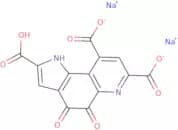
CAS:Methoxatin disodium salt is a sodium salt that has been shown to have antioxidant properties. It protects cells from oxidative damage and increases the mitochondrial membrane potential, which is essential for the production of ATP. Methoxatin disodium salt also stimulates enzyme activities, such as glutathione peroxidase and glutathione reductase, and prevents lipid peroxidation of human serum. This compound also inhibits radiation-induced cellular damage by preventing DNA strand breakage. Methoxatin disodium salt may be effective in treating diseases related to oxidative stress, such as diabetes and cancer.Formula:C14H4N2Na2O8Purity:Min. 97 Area-%Color and Shape:PowderMolecular weight:374.17 g/molPhosphoenolpyruvate potassium salt
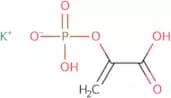
CAS:Emax (230 nm) = 3113
Formula:C3H4O6PKColor and Shape:White PowderMolecular weight:206.13 g/mol2,5-Dichlorobenzoic acid potassium
CAS:2,5-Dichlorobenzoic acid potassium salt is a fine chemical that is used as an intermediate for the synthesis of pharmaceuticals and speciality chemicals. It is a versatile building block with a variety of uses in research and manufacturing, including being used as a reaction component or as a reagent. This product has CAS No. 184637-62-5 and has been assigned the Chemical Abstract Service (CAS) number 184637-62-5.Formula:C7H4Cl2O2•KPurity:Min. 95%Color and Shape:PowderMolecular weight:230.11 g/molLithium chloride
CAS:Lithium chloride is a cyclic peptide drug that has anthelmintic properties. It is active against various nematodes and cestodes, such as Ascaris lumbricoides, Toxocara canis, and Taenia pisiformis. Lithium chloride induces autophagy in cultured cells by increasing the permeability of the cell membrane to water vapor. This leads to the release of intracellular contents into the extracellular space and subsequent cell death. In vivo studies using a rat model have shown that lithium chloride is also capable of inducing autophagy in the gastrointestinal tract and inhibiting food intake. Lithium chloride has been shown to be effective in treating metabolic disorders, such as obesity and diabetes mellitus type II, due to its ability to increase GLP-1 production.Formula:LiClColor and Shape:White PowderMolecular weight:42.39 g/molPotassium sorbate
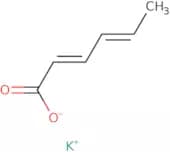
CAS:Controlled ProductPotassium sorbate is a salt of sorbic acid and potassium. It is used as a food preservative and stabilizer, with an optimum concentration of 0.1%. It has been shown to be genotoxic in certain studies with Candida glabrata, but not in others. Potassium sorbate has also been shown to inhibit the growth of mold and yeast, while being non-toxic to humans. The analytical method for determining the concentration of potassium sorbate in a sample is based on the reaction between potassium sorbate and p-hydroxybenzoic acid (PHBA). This reaction produces benzoic acid (BA) and water vapor, which are measured by gas chromatography/mass spectroscopy (GC/MS). Potassium sorbate has been shown to have anti-atherosclerotic effects through its ability to inhibit cholesterol synthesis.
Formula:C6H7KO2Purity:Min. 95%Color and Shape:PowderMolecular weight:150.22 g/molZinc L-lactate
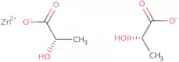
CAS:Zinc L-lactate is a form of zinc that has been used in the health-care industry for many years. It is an active targeting agent that selectively accumulates in cells, tissues, and organs where it is needed most. Zinc L-lactate is a mixture of the two enantiomers of L-lactic acid (D and L). These two enantiomers can be separated by chromatographic methods to isolate the D form. The D form has been shown to be more active than the L form in animal studies. Zinc L-lactate has also been shown to stimulate cell growth and function as well as being a primary component of platelet-derived growth factor.Formula:C3H5O3ZnPurity:Min. 95%Color and Shape:PowderMolecular weight:121.76 g/molTitanium (IV) oxide - Anatase, particle size 18nm
CAS:Titanium (IV) oxide is a reactive chemical that is used as a reagent, fine chemical, and speciality chemical. It has been used in the production of titanium metal and titanium metal alloys. Titanium (IV) oxide is also used as a building block for complex compounds, such as organic dyes, which are used in the textile industry. Titanium (IV) oxide is also used in the manufacture of pigments that are used in paints, plastics, and rubber products. This compound can be found under CAS No. 13463-47-6.Formula:TiO2Purity:Min. 95%Color and Shape:White Clear LiquidMolecular weight:79.87 g/molZinc methacrylate
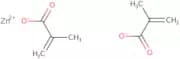
CAS:Zinc methacrylate is a model system for the study of polymerization reactions. It is used in biomedical applications such as light-emitting devices, prosthetic devices, and drug delivery systems. Zinc methacrylate is also a component of polymeric matrices that are used in cell culture. The reaction mechanism involves the formation of metal hydroxides through the crosslinking of zinc diethyldithiocarbamate with unsaturated alkyl groups on the surface of fatty acid molecules. This polymerization process creates a gel-like substance that can be cast into various shapes or molded into the desired shape. Zinc methacrylate has been shown to cause an increase in serum bilirubin levels and may be toxic to humans because it contains boron nitride, which can cause skin irritation or dermatitis.
Formula:C8H10O4ZnPurity:Min. 95%Color and Shape:White PowderMolecular weight:235.54 g/molEthyl potassium malonate
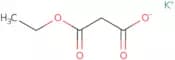
CAS:Ethyl potassium malonate is a compound that has been shown to have antimicrobial activity in vivo. It is an inhibitor of the enzyme malonic acid reductase, which catalyzes the conversion of malonic acid to its corresponding ketone. This reaction is required for fatty acid biosynthesis. Ethyl potassium malonate has been shown to inhibit the growth of Gram-positive bacteria and fungi, as well as some Gram-negative bacteria. The antimicrobial activity of ethyl potassium malonate is due to its ability to react with hydroxyl groups on proteins and amides on lipids, leading to chemical degradation and cell death.Formula:C5H7KO4Purity:Min. 95%Color and Shape:White/Off-White SolidMolecular weight:170.2 g/molCesium sulfate
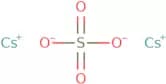
CAS:Cesium sulfate is a chemical compound that is a combination of the elements cesium and sulfur. It is used in wastewater treatment and has high resistance to organic solvents, making it an experimental model for studying fatty acid degradation. Cesium sulfate can be synthesized by reacting ethylene diamine with sodium citrate, which will precipitate as cesium sulfate. This compound has been used to study metal hydroxides and coordination geometry. Cesium sulfate is also used in biological samples such as plasma and human serum. It undergoes thermal expansion in the presence of light and emits light when heated to decomposition.Formula:Cs2SO4Purity:Min. 95%Color and Shape:PowderMolecular weight:361.87 g/molSodium stearyl fumarate
CAS:Sodium stearyl fumarate is a pharmaceutical excipient that is used as an anti-caking agent, lubricant, and flow agent in tablet production. It is also used as an additive to improve the stability of some drugs. Sodium stearyl fumarate can be used in diagnosis of metabolic disorders and prognosis of cardiovascular diseases. It reacts with hydrogen peroxide to form a particle which may be responsible for its anti-oxidant properties. The reaction mechanism for this drug has been elucidated using electron paramagnetic resonance spectroscopy on the hydroxyl radical.
Formula:C22H39NaO4Purity:Min. 95%Color and Shape:PowderMolecular weight:390.53 g/molCreatinine zinc chloride
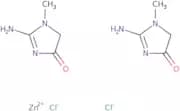
CAS:Creatinine zinc chloride is a fine chemical that is useful as a scaffold for the synthesis of complex compounds. Creatinine zinc chloride has been used as an intermediate in the synthesis of research chemicals and as a reaction component in the production of speciality chemicals. It has also been used as a building block for the synthesis of high-quality reagents.
Formula:(C4H7N3O)2•ZnCl2Purity:Min. 95%Color and Shape:PowderMolecular weight:362.52 g/molSodium L-lactate - 60% aqueous solution
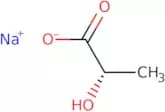
CAS:Lactate is a monocarboxylic acid that is produced by the liver and kidneys. It is also produced as a result of anaerobic metabolism. Lactate can be converted back to glucose in the liver, thereby contributing to blood sugar levels. Lactate has been shown to have inhibitory effects on bacterial growth and may work by binding to calcium ions. The uptake of lactate by bacteria is catalyzed by the enzyme L-lactate dehydrogenase, which converts lactate into pyruvate with concomitant release of a hydrogen ion (H+). The H+ may serve as an electron donor for the reduction of ferric iron, which leads to its oxidation state becoming ferrous iron (Fe2+) and thus prevents it from catalyzing the production of hydroxyl radicals. Magnetic particles are used to study the effect of lactate on bacterial cells. These studies show that lactate has low energy requirements and acts as a carbon source for bacteriaFormula:C3H5NaO3Purity:Min. 95%Color and Shape:Colorless Clear LiquidMolecular weight:112.06 g/molHydroxycitric acid tripotassium monohydrate
CAS:Hydroxycitric acid tripotassium salt monohydrate is a reagent that is used as a starting material in organic synthesis. It can be used as an intermediate in the preparation of complex compounds. Hydroxycitric acid tripotassium salt monohydrate has been shown to be useful for research purposes, as it has a versatile scaffold and can be used as a building block in the preparation of speciality chemicals. The compound also has a high quality and is considered to be a fine chemical. It is CAS No. 232281-44-6 and can be found on ChemSpider at http://www.chemspider.com/Chemical-Structure.232281-44-6.htmlFormula:C6H5K3O8•H2OPurity:Min. 95%Color and Shape:PowderMolecular weight:340.41 g/mol