Metal Salts
Found 2872 products of "Metal Salts"
1-[[6-(2,5-Dihydro-2,5-dioxo-1H-pyrrol-1-yl)-1-oxohexyl]oxy]-2,5-dioxo-3-pyrrolidinesulfonic acid sodium salt
CAS:1-[[6-(2,5-Dihydro-2,5-dioxo-1H-pyrrol-1-yl)-1-oxohexyl]oxy]-2,5-dioxo-3-pyrrolidinesulfonic acid sodium salt is an antibody response enhancer that binds to the Fc receptor of monocytes and macrophages. This binding activates the cells and increases their ability to produce antibodies against infectious agents. This product is used in the treatment of a variety of infections caused by viruses and bacteria. It has been shown to be effective for the treatment of influenza virus infection and other viral diseases such as HIV. The product also contains epidermal growth factor (EGF) which stimulates cell proliferation and differentiation in skin tissue. Antiinfective effects are achieved through inhibition of protein synthesis by silver ions or growth factors such as erythropoietin or photoelectron. This product also inhibits prostaglandin
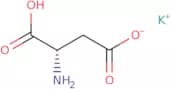
Formula:C14H15N2NaO9SPurity:Min. 95%Color and Shape:SolidMolecular weight:410.33 g/molL-Aspartic acid potassium
CAS:L-Aspartic acid potassium salt is a pyrazinoic acid derivative that is used for the treatment of bowel disease. L-Aspartic acid potassium salt prevents the formation of toxic metabolites by inhibiting the enzyme aspartate aminotransferase, which converts aspartate to oxaloacetate. This compound also has an inhibitory effect on cell factor and energy metabolism in cells. L-Aspartic acid potassium salt has been shown to have low potency against malignant cells in culture. !--END-->
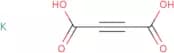
Formula:C4H7NO4•KPurity:Min. 95%Color and Shape:PowderMolecular weight:172.2 g/molAcetylene dicarboxylic acid potassium salt
CAS:Acetylene dicarboxylic acid potassium salt (ADAC) is a drug that belongs to the class of 2-fluorobenzoic acid derivatives. Acetylene dicarboxylic acid potassium salt inhibits the enzyme 2,3-dihydroxybenzoate-4-hydroxylase and reduces the production of propiolic acid, which leads to a decrease in the synthesis of tetracene. Acetylene dicarboxylic acid potassium salt has been shown to be an effective anesthetic, with good visual and motor activity. The high toxicity of this compound is due to its high affinity for protein binding sites and its ability to form hydrogen bonds.Formula:C4H2KO4Purity:Min. 95%Molecular weight:153.15 g/molPotassium dihydrogen phosphate
CAS:Potassium dihydrogen phosphate (KDP) is a biocompatible polymer that is used in the treatment of bowel disease. It is a polyphosphate salt consisting of two molecules of potassium, one molecule of dihydrogen phosphate, and four molecules of water. KDP has been shown to have protective effects against radiation-induced DNA damage and to inhibit the activity of calcium-dependent enzymes such as 2,4-dichlorobenzoic acid. KDP has also been shown to enhance the activity of other enzymes such as polymerase chain reaction (PCR) and cyclic AMP phosphodiesterase. KDP binds to proteins through electrostatic interactions and can be used as a phase transition temperature sensor.Formula:KH2PO4Purity:(Titration) 95 To 105%Color and Shape:PowderMolecular weight:136.09 g/mol2-Chloroethanesulfonic acid sodium hydrate
CAS:2-Chloroethanesulfonic acid sodium hydrate is a chemical compound that belongs to the class of primary amines. It has a strong tendency to adsorb on surfaces, which can be seen in its FTIR spectra. 2-Chloroethanesulfonic acid sodium hydrate is a white crystalline solid and is insoluble in water. This compound has been found to have a high reactivity with metal ions, such as Na+, K+, Ca2+, and Mg2+. 2-Chloroethanesulfonic acid sodium hydrate reacts slowly with chloropropane, but more quickly with chloroacetic acid. The reaction time depends on the concentration of the reactants and the temperature at which it is heated.Formula:C2H4ClO3SNa·H2OPurity:Min. 98%Color and Shape:White PowderMolecular weight:184.58 g/molgamma-Polyglutamic acid sodium - MW > 700,000
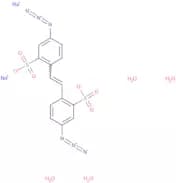
CAS:Gamma-Polyglutamic acid sodium - MW > 700,000 is a high molecular weight biopolymer, which is a salt form of polyglutamic acid. Its unique structure consists of glutamic acid units linked via γ-amide bonds, resulting in a robust and biodegradable polymer.The mode of action of gamma-Polyglutamic acid sodium involves its high water-binding capacity and viscosity, which make it exceptional in forming hydrogels. This property is pivotal in applications that require moisture retention or controlled release of active ingredients. Its biodegradability and non-toxic nature add to its versatility and safety profile.Gamma-Polyglutamic acid sodium is used across various fields, including biotechnology, pharmaceuticals, agriculture, and cosmetics. In biotechnology and pharmaceuticals, it is utilized as a drug delivery vehicle and tissue engineering scaffold due to its compatibility with human tissues. Its agricultural applications include acting as a soil conditioner and enhancing water retention. In cosmetics, it serves as a potent moisturizer and anti-aging ingredient.Formula:(C5H7NO3)n•NaxPurity:Min. 90 Area-%Color and Shape:White PowderDisodium 4,4'-diazidostilbene-2,2'-disulfonate tetrahydrate
CAS:Please enquire for more information about Disodium 4,4'-diazidostilbene-2,2'-disulfonate tetrahydrate including the price, delivery time and more detailed product information at the technical inquiry form on this pageFormula:C14H8N6Na2O6S2·4H2OPurity:Min. 95%Color and Shape:PowderMolecular weight:538.42 g/molD-isoascorbiate sodium
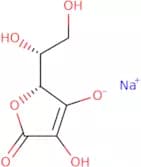
CAS:D-Sodium isoascorbiate is a model system for the study of enzyme activities. The compound can be used to determine the effects of glycol ether on kidney bean and ascorbic acid, as well as the effect of sodium salts on caproic acid. D-Sodium isoascorbiate has been used in electrochemical impedance spectroscopy (EIS) to study wastewater treatment. This compound has also been used in analytical methods for biological properties and physiological effects.Formula:C6H8O6•NaPurity:Min. 95%Color and Shape:PowderMolecular weight:199.11 g/molHEPES sodium salt
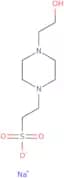
CAS:HEPES sodium salt is a piperazinic buffer with an optimal pH range of 6.8-8.2 and a pKa of 7.48. This buffering agent is widely used in cell culture however when exposed to light HEPES can produce hydrogen peroxide.Formula:C8H17N2NaO4SPurity:(Nmr) Min. 90%Color and Shape:PowderMolecular weight:260.29 g/molCalcium β-hydroxy-β-methylbutyrate monohydrate
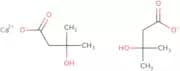
CAS:Calcium b-hydroxy-b-methylbutyrate monohydrate is a dietary supplement that has been shown to be effective in the treatment of skin conditions such as eczema. It is a calcium salt of the natural fatty acid, b-hydroxy-b-methylbutyrate, which is naturally found in kidney beans. This product may also be used for kidney disease and other health care products. The extract from this compound has been shown to increase collagen production in skin cells, as well as protein synthesis and casein production. Calcium b-hydroxy-b-methylbutyrate monohydrate can also bind with acetate (a chemical compound) and form calcium acetate, which has been shown to have antihypertensive effects.Formula:C5H10O3•Ca0•(H2O)0Purity:Min 97%Color and Shape:White PowderMolecular weight:294.36 g/molSodium dodecylsulfate
CAS:Sodium dodecylsulfate is a surfactant that is used as an experimental model for the study of crystalline cellulose, water vapor, and basic proteins. It has been shown to be effective in the polymerase chain reaction (PCR) when combined with fluorescence probes. Sodium dodecylsulfate has also been used in laser ablation mass spectrometry and optical sensors for detecting sodium salts. The optimum concentration of this surfactant is between 0.1% and 0.5%. Sodium dodecylsulfate binds to cell nuclei, making it useful for the treatment of infectious diseases.Formula:C12H26O4S•NaPurity:Min. 97 Area-%Color and Shape:PowderMolecular weight:289.39 g/molCalcium folinate pentahydrate
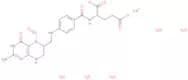
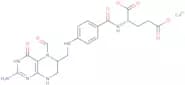
CAS:Calcium folinate pentahydrate is a drug that is used to treat overexertion. It is also used as a pharmacological treatment for cancer and as a drug repositioning agent. Calcium folinate pentahydrate has been shown to be effective in treating the symptoms of overexertion, including muscle cramps, pain, and fatigue. This drug binds to the casein in the bloodstream and forms calcium citrate, which is then excreted from the body. In cancer patients, this drug prevents tumor cells from dividing by inhibiting DNA synthesis and RNA synthesis. It does not affect normal cells because it cannot diffuse through membranes that are impenetrable by ions (e.g., cell membrane).
Formula:C20H21CaN7O7·5H2OPurity:Min. 95%Color and Shape:Yellow PowderMolecular weight:601.58 g/molLasalocid A sodium salt - 0.1mg/ml, in acetonitrile
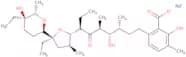
CAS:Lasalocid A sodium salt is a sodium salt of lasalocid, which is a macrolide antibiotic that inhibits bacterial growth by binding to the 50S ribosomal subunit. Lasalocid A sodium salt has intramolecular hydrogen bonds and exhibits high solubility in acetonitrile. The experimental solubility data was obtained using an analytical method with quillaja saponaria as a model system. Lasalocid A sodium salt has been used as an experimental model for congestive heart failure and is also used in biological samples such as blood, urine, or tissue. This drug is highly resistant to degradation by bacteria.Formula:C34H53NaO8Purity:Min. 90 Area-%Color and Shape:Colorless Clear LiquidMolecular weight:612.77 g/molH acid monosodium salt
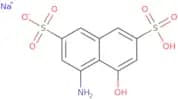
CAS:H acid monosodium salt is a versatile building block of complex compounds, which has been used in research chemicals and as a reagent. It is also useful as an intermediate for the synthesis of other chemical compounds and as a scaffold for drug development. H acid monosodium salt is soluble in water and has CAS number 5460-09-3.Formula:C10H8NNaO7S2Purity:Min. 97 Area-%Color and Shape:Off-White PowderMolecular weight:341.29 g/molOxonic acid potassium
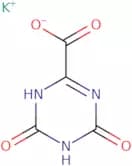
CAS:Oxonic acid potassium is a selectively competitive uricase inhibitor that avoids excretion of uric acid. It also inhibits the activity of orotate phosphoribosyltransferase (OPRT), an enzyme needed for the biosynthesis of pyrimidine nucleotides. Oxonic acid potassium catalyzes the phosphorylation of 5-fluorouracil (FF05372, BF166014) to 5-fluorouridine-5'-monophosphate (NF31487). In certain studies with rats, it has been shown that oxonic accid potassium suppresses the gastrointestinal toxicity of 5-fluorouracil or 5-FU without inhibiting the antitumor activity. Oxonic acid potassium, in combination with other prodrugs, boosts the antitumor activity and has shown positive results to treat gastric, pancreatic, lung, head, neck, and breast carcinomas.Formula:C4H2KN3O4Purity:Min. 98 Area-%Color and Shape:PowderMolecular weight:195.17 g/molCholesterol 3-sulfate sodium
CAS:Cholesterol 3-sulfate sodium salt is a fine chemical that is used as a versatile building block and reagent. It is a useful intermediate that can be used in the synthesis of complex compounds, speciality chemicals, and reaction components. Cholesterol 3-sulfate sodium salt can be used to synthesize cholesterol derivatives. This compound has been shown to have high reactivity with nucleophiles and can be used as a building block for other organic compounds. The CAS number for Cholesterol 3-sulfate sodium salt is 2864-50-8.Formula:C27H45NaO4SPurity:Min. 95%Color and Shape:White PowderMolecular weight:488.7 g/molFerrozine sodium salt
CAS:Ferrozine sodium salt, also known as ferrozine, is an iron chelator. It is used for the removal of iron from physiological fluids and tissue samples in order to identify the presence of reactive oxygen species (ROS). Ferrozine binds to iron ions and forms ferrous complexes that are excreted through urine or bile. It has been shown that ferrozine inhibits lipid peroxidation in rat liver mitochondria. This may be due to its ability to react with hydrogen peroxide and form a complex with iron-hydrogen peroxide, which prevents the formation of hydroxyl radicals.Formula:C20H13N4NaO6S2Purity:Min. 97 Area-%Color and Shape:Off-White PowderMolecular weight:492.46 g/molCalcium folinate
CAS:Dihydrofolate reductase activator; decreases methotrexate toxicityFormula:C20H21CaN7O7Purity:Min. 95%Color and Shape:PowderMolecular weight:511.50 g/molValeric acid sodium
CAS:Valeric acid sodium salt is a fatty acid that has been shown to inhibit bacterial growth in the presence of epidermal growth factor and sodium salts. Valeric acid sodium salt is used as an antiseptic in topical formulations and as a preservative for pharmaceuticals. Valeric acid sodium salt also inhibits HIV infection by inhibiting the binding of HIV to its receptor, which prevents the virus from entering cells.Formula:C5H10O2•NaPurity:Min. 95%Color and Shape:PowderMolecular weight:125.12 g/molCopper(II) oxide
CAS:Copper oxide is a solid ionic compound that has the chemical formula CuO. It has been shown to have potent anti-inflammatory properties and can be used in pharmaceutical preparations to treat rheumatoid arthritis, osteoarthritis, and gout. Copper oxide has a particle size of less than 10 microns with amines adsorbed on its surface. The adsorption of amines on the surface of copper oxide particles is an important factor for increasing the effectiveness of this material in biological applications. Copper oxide also provides protection against oxidative stress by scavenging free radicals. The activation energy for the reaction is high at 40 kcal/mol, which leads to a slow reaction rate. This reaction is kinetically controlled and the rate increases with increased temperature.Formula:CuOPurity:Min. 95%Color and Shape:PowderMolecular weight:79.55 g/mol
![1-[[6-(2,5-Dihydro-2,5-dioxo-1H-pyrrol-1-yl)-1-oxohexyl]oxy]-2,5-dioxo-3-pyrrolidinesulfonic acid …](/_next/image/?url=https%3A%2Fstatic.cymitquimica.com%2Fproducts%2F3D%2Fthumb-webp%2FFD24987.webp&w=3840&q=75)