Metal Salts
Found 2870 products of "Metal Salts"
Tin(II) chloride dihydrate
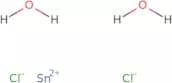
CAS:Tin(II) chloride dihydrate is a white or pale yellow crystalline solid. It is soluble in water and has a relatively low melting point. Tin(II) chloride dihydrate is used as an acid catalyst for the preparation of esters from ethyl trifluoroacetate, and as an intermediate for synthesizing quinoline derivatives. Tin(II) chloride dihydrate can also be used to deactivate fatty acids by reacting with them in the presence of water. The reaction vessel is heated to about 300°C to evaporate the solvent and leave a residue of tin chloride, which can then be recovered by distillation. Tin(II) chloride dihydrate has been shown to have transport properties that are similar to those of other metal chlorides at comparable concentrations.
Formula:SnCl2•(H2O)2Purity:Min. 95%Color and Shape:Colorless Clear LiquidMolecular weight:225.65 g/molButynediol sulfopropyl ethersodium
CAS:Controlled ProductPlease enquire for more information about Butynediol sulfopropyl ethersodium including the price, delivery time and more detailed product information at the technical inquiry form on this page
Formula:C7H11NaO5SPurity:Min. 95%Molecular weight:230.22 g/mol3-Sulfoglycolithocholic acid disodium
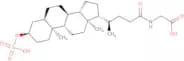
CAS:3-Sulfoglycolithocholic acid disodium is a potential biomarker for inflammatory bowel disease. It is also used as an analytical method to measure bile acids in the blood. 3-Sulfoglycolithocholic acid disodium has been shown to be a strong indicator of liver inflammation and hepatitis. This compound can also be used as a diagnostic tool for infectious diseases, such as HIV and hepatitis C, by measuring serum bile acids levels. The level of this molecule can be measured in the blood and urine of patients with bowel disease, such as ulcerative colitis or Crohn's disease. 3-Sulfoglycolithocholic acid disodium can also be used to diagnose atrial fibrillation.
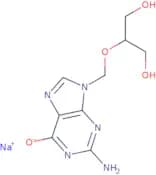
Formula:C26H43NO7S•Na2Purity:Min. 95%Molecular weight:559.67 g/molGanciclovir sodium
CAS:Anti-viral; DNA polymerase inhibitor; dGTP competitive inhibitor
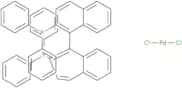
Formula:C9H13N5NaO4Purity:Min. 95%Molecular weight:278.22 g/mol(R)-(+)-(2,2-Bis(Diphenylphosphino)-1,1-binaphthyl)palladium(II)chloride
CAS:Controlled Product(R)-(+)-(2,2-Bis(Diphenylphosphino)-1,1-binaphthyl)palladium(II)chloride is a colorless solid that can be made into a crystalline form. It has a molecular weight of 518.8 g/mol and the chemical formula C12H14P4Cl2. The compound has four asymmetric carbon atoms and two stereocenters in the molecule. This compound is used as a catalyst for organic reactions and in the synthesis of other compounds. (R)-(+)-(2,2-Bis(Diphenylphosphino)-1,1-binaphthyl)palladium(II)chloride is soluble in ethanol and ether but insoluble in water. It reacts with oxygen to produce phosphorous acid and hydrogen chloride gas. This compound has been shown to have nuclear magnetic resonance spectra at room temperature with chemical shifts (Formula:C44H33Cl2P2PdPurity:Min. 95%Molecular weight:801.01 g/molRuthenium(III) chloride
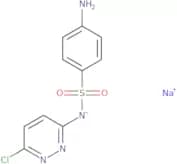
CAS:Ruthenium(III) chloride is a compound of ruthenium and chlorine that is used in the preparation of pharmaceuticals. Ruthenium(III) chloride reacts with potassium dichromate to form stable complexes, as well as being oxidized by picolinic acid or other oxidizing agents to form stable complexes. It has been shown to be an effective catalyst for organic synthesis reactions and biological studies have shown it can inhibit the growth of bacteria such as Mycobacterium tuberculosis by inhibiting the synthesis of proteins necessary for cell division. Ruthenium(III) chloride also forms complexes with amines and nitrogen atoms, which may be due to its ability to bind with these groups.Formula:RuCl3Purity:Min. 95%Color and Shape:Black SolidMolecular weight:207.43 g/molSodium N-(6-chloropyridazin-3-yl)sulphanilamidate
CAS:Sodium N-(6-chloropyridazin-3-yl)sulphanilamidate (NPS) is a sulfa drug that has been shown to have an effect on the enzyme activities of some endoparasites, such as Giardia lamblia and Entamoeba histolytica. The active form of NPS is metabolized through a number of metabolic transformations, including hydrolysis by esterases or glucuronidases, oxidation by cytochrome P450 enzymes, reduction by glutathione reductase, or conjugation with glucuronic acid. It also specifically binds to markers expressed at high levels in Mycobacterium tuberculosis strains (e.g., ESX-1 secretion system protein) and inhibits cell growth in culture.Formula:C10H8ClN4O2SNaPurity:Min. 95%Molecular weight:306.7 g/molVinylferrocene
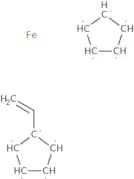
CAS:Vinylferrocene is a zirconium-containing compound that can be used as an electrode material for sensors and electrochemical impedance spectroscopy. It has been shown to react with 3-mercaptopropionic acid at high temperatures in the presence of a palladium catalyst, producing polymer films with cationic polymerization. The phase transition temperature of Vinylferrocene has been shown to be between -30°C and -35°C using gravimetric analysis. The transfer reactions of Vinylferrocene are likely due to the carbonyl groups present on its surface. Vinylferrocene has been shown to have excellent electrochemical properties, including a reversible charge transfer resistance that is significantly lower than other materials such as gold. This property makes it an excellent candidate for use as electrodes in sensors.
Formula:C12H12FePurity:Min. 95%Color and Shape:Yellow PowderMolecular weight:212.07 g/molSodium taurodeoxycholate monohydrate
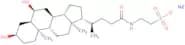
CAS:Sodium taurodeoxycholate monohydrate is a bile salt, which is a biochemical compound derived from the conjugation of bile acids with taurine. This compound is sourced from bovine bile, where it functions as a surfactant in the digestive system by emulsifying fats, thereby facilitating their absorption in the intestine.Formula:C26H44NO6S·H2O·NaPurity:Min. 95%Molecular weight:539.7 g/molCalcium nitrate tetrahydrate
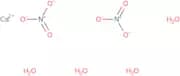
CAS:Controlled ProductCalcium nitrate tetrahydrate (CNT) is a calcium salt of nitric acid that has been used in the past to control insects. It is an oxidizing agent and is used as a fertilizer. CNT reacts with water to produce heat and water vapor, which can be used for heating or cooking. When heated, CNT decomposes into calcium nitrite and nitrogen dioxide. The structural analysis of CNT was carried out by X-ray diffraction and thermodynamic data were obtained by differential scanning calorimetry. The thermal expansion coefficient of CNT was determined by DTA experiments.Formula:Ca(NO3)2•(H2O)4Purity:Min. 95%Molecular weight:236.15 g/molAmoxicillin dimer tri-sodium salt (penicilloic acid form) - mixture of diastereomers
Please enquire for more information about Amoxicillin dimer tri-sodium salt (penicilloic acid form) - mixture of diastereomers including the price, delivery time and more detailed product information at the technical inquiry form on this pageFormula:C32H27N6Na3O11S2Purity:Min. 95%Molecular weight:804.69 g/mol[1,4-Bis(diphenylphosphino)butane]palladium(II) Dichloride
CAS:Controlled Product[1,4-Bis(diphenylphosphino)butane]palladium(II) dichloride (PdCl2(DPPB)) is a covalent catalyst that is used in the cross-coupling of styrene with chlorides. It has been shown to be a very effective catalyst for this reaction and yields high yields. The use of this catalyst allows for the quantification of the phosphine ligand that is used in the reaction. [1,4-Bis(diphenylphosphino)butane]palladium(II) dichloride has also been shown to be an efficient catalyst for other reactions, such as solvents and diphosphine ligands.Formula:C28H28Cl2P2PdPurity:Min. 95%Molecular weight:603.79 g/molPotassium periodate
CAS:Potassium periodate is an oxidizing agent that is used in analytical chemistry to oxidize the hydroxyl groups of glycolipids, glycoproteins, and glycoconjugates. Potassium periodate has been shown to be effective against infectious diseases such as HIV, hepatitis B virus, and herpes simplex virus. It has also been used as a nutrient solution in pharmaceutical preparations. The mechanism of this reaction is not fully understood but it is thought that the trifluoroacetic acid reacts with potassium periodate to form hypochlorous acid which then reacts with the amino group on the glycolipid or protein. This reaction results in a linear calibration curve for the concentration of hydroxyl ions.
Formula:KIO4Purity:Min. 95%Molecular weight:230 g/molSodium L-lactate-13C3
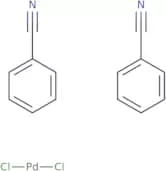
CAS:Please enquire for more information about Sodium L-lactate-13C3 including the price, delivery time and more detailed product information at the technical inquiry form on this pageFormula:C3H5NaO3Purity:Min. 95%Color and Shape:PowderMolecular weight:115.04 g/molBis(Benzonitrile)palladium(II) chloride
CAS:Controlled ProductBis(benzonitrile)palladium(II) chloride is a palladium complex with the coordination geometry of square-planar. It has been shown to undergo a suzuki coupling reaction when reacted with an aromatic hydrocarbon, such as benzene or toluene, in the presence of sodium carbonate and nitrogen gas. This reaction produces an intramolecular hydrogen bond between the oxygen atom of the hydroxyl group and the nitrogen atom on the chelate ligand. Bis(benzonitrile)palladium(II) chloride has also been shown to be useful for generating x-ray crystal structures of metal complexes by using ft-ir spectroscopy. The chlorine atom from bis(benzonitrile)palladium(II) chloride may react with hydrochloric acid to produce a soluble complex that can be isolated by crystallography.Formula:C14H10Cl2N2PdPurity:Min. 95%Molecular weight:383.57 g/molAcetaminophen glutathione disodium salt
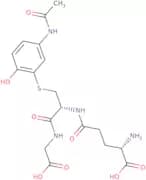
CAS:Acetaminophen glutathione disodium salt is a prodrug of acetaminophen, which is a non-opioid analgesic and antipyretic drug. It has been shown to be protective against cisplatin-induced nephrotoxicity in cell culture and in CD-1 mice. Acetaminophen glutathione disodium salt inhibits mitochondrial enzyme activities, including dehydroascorbate reductase, which reduces the formation of reactive oxygen species. Acetaminophen glutathione disodium salt also blocks proximal tubule reabsorption and increases the excretion of drugs or their metabolites by increasing the second-order rate constant.
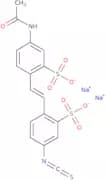
Formula:C18H22N4Na2O8SPurity:Min. 95%Molecular weight:500.43 g/mol4-Acetamido-4'-isothiocyanatostilbene-2,2'-disulfonic acid, sodium salt
CAS:4-Acetamido-4'-isothiocyanatostilbene-2,2'-disulfonic acid, sodium salt (AITC-S) is a stilbene derivative with inhibitory properties. It has been shown to inhibit the uptake of camp in rat ventricular myocytes and caco-2 cells as well as the release of camp from rat renal proximal tubules. AITC-S also inhibits the transport of camp into the cells. The mechanism by which AITC-S inhibits uptake is not yet known, but it may be due to competition for a common carrier or an effect on intracellular metabolism. This compound has also been shown to have an acute ischemic protective effect on rats when administered before reperfusion following coronary artery occlusion.Formula:C17H12N2Na2O7S3Purity:Min. 95%Molecular weight:498.46 g/molSodium oxalate
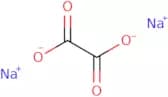
CAS:Sodium oxalate is a salt of oxalic acid and sodium. It can be used as an inhibitor in electrochemical impedance spectroscopy, which is a method for measuring the mass transport of ions in a solution. Sodium oxalate has been shown to inhibit the reaction solution by hydrogen bonding interactions with the citric acid that is present in wastewater. This inhibition leads to the formation of the salt citrate, which is insoluble and can be removed by filtration. The surface methodology was used to measure the kinetic energy of sodium oxalate crystals on surfaces. The x-ray diffraction data was collected from anhydrous sodium oxalate crystals at room temperature.
Formula:C2O4Na2Purity:Min. 95%Color and Shape:PowderMolecular weight:134 g/molTris(2-phenylpyridine)iridium
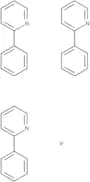
CAS:Tris(2-phenylpyridine)iridium (IrCl) is a coordination compound that is used as a catalyst to initiate cationic polymerization of biphenyl. It is also used as an analytical reagent for determining the content of fatty acids in oils and fats. The steric interactions between the phenyl groups and the electron-rich iridium atoms lead to a high degree of conversion of ethylene oxide to ethylene glycol, which can be observed by UV absorption. The synthesis of IrCl occurs in two steps: first, the reaction of chloroacetone with phenylmagnesium bromide followed by addition of hydrated iridium chloride. The product crystallizes in red needles, which are analyzed using x-ray crystal structures. Analysis using nmr spectroscopy reveals that IrCl contains four nitrogen atoms and three oxygen atoms. Its redox potentials are -0.9 volts for oxidation and +1.3 volts for reduction, makingFormula:C33H24IrN3Purity:Min. 98 Area-%Color and Shape:PowderMolecular weight:654.78 g/molLithium chromate
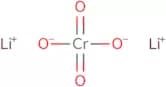
CAS:Lithium chromate is a chemical compound that has the chemical formula Li2CrO4. It is a salt of lithium and chromic acid, with a basic structure of Li+-O-Cr+-O-Li+. The hydroxyl group on the chromium atom makes it soluble in water. Lithium chromate is an ionic compound that undergoes phase transitions to form solids and solutions at various temperatures. Lithium chromate can be synthesized by reacting potassium dichromate, magnesium salt, and dimethyl fumarate with lithium carbonate or lithium hydroxide. The product has been shown to have toxicological properties in animal studies.
Formula:Li2CrO4Purity:Min. 95%Molecular weight:129.88 g/mol



![[1,4-Bis(diphenylphosphino)butane]palladium(II) Dichloride](/_next/image/?url=https%3A%2Fstatic.cymitquimica.com%2Fproducts%2F3D%2Fthumb-webp%2FFB60968.webp&w=3840&q=75)