Metal Salts
In this section, you can find various metal salts, which are compounds characterized by containing both metal and non-metal atoms. Essentially, metal salts are composed of cations that are one or more metal atoms. These salts play a crucial role in numerous chemical reactions and applications, serving as catalysts, reactants, or intermediates in various industrial and research processes. At CymitQuimica, we offer a wide selection of high-quality metal salts to meet your research and industrial needs, ensuring reliable and effective performance in your applications.
Found 2870 products of "Metal Salts"
Sort by
Purity (%)
0
100
|
0
|
50
|
90
|
95
|
100
Eplerenone hydroxyacid potassium salt
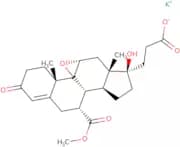
CAS:<p>Eplerenone is a drug that belongs to the class of drugs known as selective mineralocorticoid receptor antagonists. It is a prodrug that is metabolized in vivo to its active form, eplerenone acid. Eplerenone inhibits the binding of aldosterone to its receptors in the kidney. Eplerenone hydroxyacid potassium salt has been shown to have stereochemical purity of >98% and no detectable process-related impurities or experimental impurities. High-performance liquid chromatography (HPLC) methods have been used to characterize this drug substance and confirm that it has an average particle size 10 micrometers with no particles > 150 micrometers.</p>Formula:C24H31KO7Purity:Min. 95%Molecular weight:470.6 g/molSodium stearyl maleate
CAS:Sodium stearyl maleate is a pharmaceutical excipient that has been used as a diluent and granule. It is an effective particle in the treatment of pancreatitis. Sodium stearyl maleate is also used to help treat chronic bladder inflammation by increasing its fluidity. The use of sodium stearyl maleate in lipoprotein preparations can increase their proliferative activity, which can be useful in cancer research and the treatment of malignant and benign tumors. The long-chain fatty acids found in sodium stearyl maleate have been shown to decrease cholesterol levels and prevent the progression of liver cirrhosis and hepatocellular carcinoma.Formula:C22H39NaO4Purity:Min. 95%Molecular weight:390.53 g/molcis-Dichloro(N,N,N',N'-tetramethylethylenediamine)palladium(II)
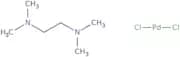
CAS:Controlled ProductPlease enquire for more information about cis-Dichloro(N,N,N',N'-tetramethylethylenediamine)palladium(II) including the price, delivery time and more detailed product information at the technical inquiry form on this pageFormula:C6H16Cl2N2PdPurity:Min. 95%Molecular weight:293.53 g/molSinalbin potassium
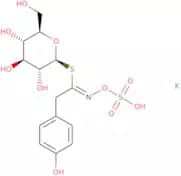
CAS:<p>Sinalbin potassium is a chemical compound that serves as a glucosinolate derivative, specifically sourced from white mustard seeds. It is a naturally occurring molecule that undergoes enzymatic conversion to yield biologically active substances. This compound is primarily characterized by its role in plant defense mechanisms, where it participates in chemical reactions that deter herbivores and pathogens.</p>Formula:C14H18NO10S2·KPurity:Min. 95%Color and Shape:Off-White PowderMolecular weight:463.52 g/molEthametsulfuron methyl sodium salt
CAS:Ethametsulfuron methyl sodium salt (EMS) is a herbicide that is used to control weeds in agricultural fields. It prevents the synthesis of fatty acids by blocking the activity of acetyl-CoA carboxylase, which is an enzyme involved in the production of fatty acids. EMS also inhibits plant enzymes that are involved in amino acid metabolism, such as protein synthesis. EMS has been shown to inhibit surface glycoprotein and human serum esterases. This herbicide can cause high resistance because it blocks cell division and alters lipid metabolism.Formula:C15H17N6NaO6SPurity:Min. 95%Molecular weight:432.39 g/molLead dibromide
CAS:Lead dibromide is a non-radioactive catalyst that can be used in the organic synthesis of pharmaceuticals and other organic compounds. It is typically used as an oxidizing agent for the formation of carbon-carbon bonds. The electron microscopic study of lead dibromide reveals the presence of small, crystalline particles with a diameter of about 0.2 microns. Lead dibromide is soluble in allylation, n-dimethyl formamide, and trifluoroacetic acid and insoluble in water or polar solvents. This compound has been found to stabilize reactive intermediates in organic reactions, such as those involving ketones, epoxides, and nitriles.Formula:PbBr2Purity:Min. 95%Molecular weight:367.01 g/molLithium chromate
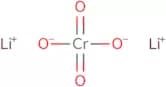
CAS:<p>Lithium chromate is a chemical compound that has the chemical formula Li2CrO4. It is a salt of lithium and chromic acid, with a basic structure of Li+-O-Cr+-O-Li+. The hydroxyl group on the chromium atom makes it soluble in water. Lithium chromate is an ionic compound that undergoes phase transitions to form solids and solutions at various temperatures. Lithium chromate can be synthesized by reacting potassium dichromate, magnesium salt, and dimethyl fumarate with lithium carbonate or lithium hydroxide. The product has been shown to have toxicological properties in animal studies.</p>Formula:Li2CrO4Purity:Min. 95%Molecular weight:129.88 g/molAllylpalladium(II) chloride dimer
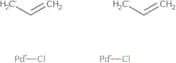
CAS:<p>Allylpalladium(II) chloride dimer is a homogeneous catalyst that can be used for the asymmetric synthesis of organosilicon compounds. It is an allylation agent and has been shown to react with certain nitrogen-containing compounds to form a palladium nitride complex. This compound is also a good transport agent, due to its high solubility in organic solvents. Allylpalladium(II) chloride dimer has been shown to be effective in the production of cancer chemotherapeutic agents, including chlorambucil, as well as anti-inflammatory drugs such as ibuprofen. This catalyst has also been used for cross-coupling reactions with alkyl bromides and iodides. A major drawback of this catalyst is that it often leads to an isolated yield of the product, which can be improved by using a solvent or by adding water or alcohols.</p>Formula:C6H10Cl2Pd2Purity:95%NmrMolecular weight:365.89 g/molZinc orotate
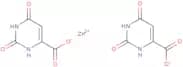
CAS:Zinc orotate is a mineral supplement that contains elemental zinc in the form of an orotate salt. It is used to treat or prevent zinc deficiency and for the prevention and treatment of various conditions, such as liver lesions, antimicrobial agents, brain functions, and energy metabolism. Zinc is an essential mineral that is required for normal growth and development. Zinc also plays a role in maintaining healthy skin and hair. The physiological levels of zinc are 10-20 mg per day for adults. Zinc orotate provides 100% of the daily requirement (15 mg) in just one tablet.Formula:C10H6N4O8Zn·2H2OPurity:Min. 95%Color and Shape:White PowderMolecular weight:411.59 g/molVinylferrocene
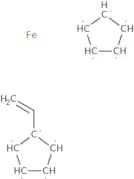
CAS:<p>Vinylferrocene is a zirconium-containing compound that can be used as an electrode material for sensors and electrochemical impedance spectroscopy. It has been shown to react with 3-mercaptopropionic acid at high temperatures in the presence of a palladium catalyst, producing polymer films with cationic polymerization. The phase transition temperature of Vinylferrocene has been shown to be between -30°C and -35°C using gravimetric analysis. The transfer reactions of Vinylferrocene are likely due to the carbonyl groups present on its surface. Vinylferrocene has been shown to have excellent electrochemical properties, including a reversible charge transfer resistance that is significantly lower than other materials such as gold. This property makes it an excellent candidate for use as electrodes in sensors.</p>Formula:C12H12FePurity:Min. 95%Color and Shape:Yellow PowderMolecular weight:212.07 g/molN,N-Bis-(4-sulfobutyl)-3-methylaniline disodium salt
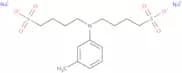
CAS:N,N-Bis-(4-sulfobutyl)-3-methylaniline disodium salt is a fine chemical that is used as a building block for organic synthesis. It can be used in the formulation of pharmaceuticals and other chemicals. N,N-Bis-(4-sulfobutyl)-3-methylaniline disodium salt has been shown to be an excellent reagent for the synthesis of complex compounds with high purity and high quality. This compound is also versatile in its use as a building block, scaffold or intermediate for the synthesis of many different types of molecules.Formula:C15H23NNa2O6S2Purity:Min. 95%Color and Shape:PowderMolecular weight:423.46 g/molTetrakis[N-tetrachlorophthaloyl-(S)-tert-leucinato]dirhodium Bis(ethyl Acetate) Adduct
CAS:<p>Please enquire for more information about Tetrakis[N-tetrachlorophthaloyl-(S)-tert-leucinato]dirhodium Bis(ethyl Acetate) Adduct including the price, delivery time and more detailed product information at the technical inquiry form on this page</p>Formula:C56H40Cl16N4O16Rh2·C8H16O4Purity:Min. 95%Molecular weight:1,974.2 g/molSodium decyl sulfate
CAS:<p>Sodium decyl sulfate is a surfactant used in the preparation of biological samples for analysis using mass spectrometry. This compound forms a disulfide bond with cysteine residues on proteins, which can be cleaved by reducing agents such as dithiothreitol or mercaptoethanol. Sodium decyl sulfate also has potent antitumor activity and is used to treat autoimmune diseases such as multiple sclerosis. The thermal expansion of this compound is proportional to the vapor pressure of water over the range from 0-100°C, and it has been shown to have a constant pressure at temperatures below 100°C. Furthermore, sodium decyl sulfate has been found to be chiral and binds to receptor molecules that are hydrophobic in nature.</p>Formula:C10H21O4SNaPurity:Min. 95%Color and Shape:White PowderMolecular weight:260.33 g/molD,L-Alanosine sodium salt
<p>Please enquire for more information about D,L-Alanosine sodium salt including the price, delivery time and more detailed product information at the technical inquiry form on this page</p>Formula:C3H6N3NaO4Purity:Min. 95%Molecular weight:171.09 g/molLithium difluoro(oxalato)borate
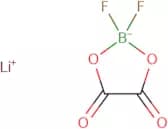
CAS:Lithium difluoro(oxalato)borate is an electron-microscopic corrosion inhibitor that belongs to the class of ester compounds. It is a solid compound that has been shown to be efficacious against oxidation products. The efficiency of this compound is dependent on the concentration and purity of lithium difluoro(oxalato)borate and the type of metal, such as steel or aluminum. Lithium difluoro(oxalato)borate can be used in rechargeable batteries, due to its transport properties, high salt tolerance, and low self-discharge rate. This compound has been shown to have functional groups that are capable of interacting with hydrogen fluoride in an organic solution.Formula:C2BF2O4•LiPurity:Min. 95%Molecular weight:143.77 g/molAntimony(III) acetate
CAS:Antimony(III) acetate is a catalyst that is used in glycol esters and other organic reactions. It has been shown to have an activity index of 1.2-1.5, which means it can be used in place of antimony trioxide for many purposes. The chemical species is the film-forming polymer with particle size between 0.2-0.4 microns and a hydroxide solution of pH 3-6. Antimony(III) acetate can be used in the production of polymers with high viscosity, such as polyester, polyurethane, or polyethylene terephthalate (PET). This catalyst also reacts with hydrochloric acid or trifluoroacetic acid to produce a polymer film that is used in various applications such as coatings and adhesives.br>br> The following are some common uses for this product:Formula:C6H12O6•SbPurity:Min. 95%Color and Shape:PowderMolecular weight:301.92 g/mol[1,3-Bis(diphenylphosphino)propane]palladium(II) dichloride
CAS:Controlled Product<p>Please enquire for more information about [1,3-Bis(diphenylphosphino)propane]palladium(II) dichloride including the price, delivery time and more detailed product information at the technical inquiry form on this page</p>Formula:C27H26Cl2P2PdPurity:Min. 95%Molecular weight:589.77 g/molBis(methyldiphenylphosphine)palladium(II) Dichloride
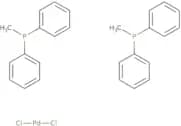
CAS:Controlled ProductBis(methyldiphenylphosphine)palladium(II) chloride is an aryl halide catalyst that is used in the preparation of aryl chlorides. It can be used for the synthesis of pharmaceuticals, agrochemicals, perfumes and other chemical compounds. This catalyst has been shown to be effective in the presence of chloride as well as aryl halides. The reaction can be performed in either the presence or absence of solvent. Methyldiphenylphosphine is soluble in organic solvents such as ether, benzene, and toluene.Formula:C26H26Cl2P2PdPurity:Min. 95%Molecular weight:577.76 g/molSodium methanethiolate - 15% aqueous solution
CAS:<p>Sodium methanethiolate is an antimicrobial agent that is a white, crystalline solid. It reacts with trifluoroacetic acid and water to produce the active form of sodium trifluoroacetate. The reaction mechanism is likely due to the formation of a bicyclic heterocycle that has been shown to be effective against a number of bacteria. Sodium methanethiolate has been used for the treatment of infectious diseases, such as respiratory infections and skin infections, as well as autoimmune diseases and cardiovascular disorders. The oxidation catalyst in this compound may also have physiological effects on the body's cells and tissues.</p>Formula:CH3NaSPurity:Min. 95%Color and Shape:Clear LiquidMolecular weight:70.09 g/molCadmium chloride
CAS:<p>Cadmium chloride is a compound that belongs to the group of inorganic compounds. Cadmium chloride inhibits the activity of c-jun, an important transcription factor involved in cell growth and differentiation. It also affects the activity of other transcription factors, such as NF-κB, and has been shown to induce cell death by inhibiting DNA synthesis. The cytotoxicity of cadmium chloride is related to its ability to interact with hydrogen bonding sites on proteins. In vitro studies have shown that it has significant cytotoxicity against tumor cells with a cell specific response. Cadmium chloride has also been used in therapy groups for patients with inflammatory bowel disease and rheumatoid arthritis.</p>Formula:CdCl2Purity:Min. 95%Molecular weight:183.32 g/mol




![Tetrakis[N-tetrachlorophthaloyl-(S)-tert-leucinato]dirhodium Bis(ethyl Acetate) Adduct](/_next/image/?url=https%3A%2Fstatic.cymitquimica.com%2Fproducts%2F3D%2Fthumb-webp%2FFT60020.webp&w=3840&q=75)



![[1,3-Bis(diphenylphosphino)propane]palladium(II) dichloride](/_next/image/?url=https%3A%2Fstatic.cymitquimica.com%2Fproducts%2F3D%2Fthumb-webp%2FFB46063.webp&w=3840&q=75)