Metal Salts
In this section, you can find various metal salts, which are compounds characterized by containing both metal and non-metal atoms. Essentially, metal salts are composed of cations that are one or more metal atoms. These salts play a crucial role in numerous chemical reactions and applications, serving as catalysts, reactants, or intermediates in various industrial and research processes. At CymitQuimica, we offer a wide selection of high-quality metal salts to meet your research and industrial needs, ensuring reliable and effective performance in your applications.
Found 2870 products of "Metal Salts"
Sort by
Purity (%)
0
100
|
0
|
50
|
90
|
95
|
100
D-Lactic acid lithium
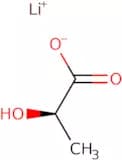
CAS:<p>D(+)-Lactic acid lithium salt is a dipolar molecule with an activation energy of about 44 kJ/mol. It has been studied by NMR techniques and found to have a resonance in the range of 1.8-2.0 ppm, which is characteristic of protons on the oxygen atom. The proton magnetic resonance (PMR) study showed that the d-lactate resonances were very broad and shifted to higher frequencies, whereas the l-lactate resonances were sharp and shifted to lower frequencies. This may be due to the different number of protons on each type of lactate molecule. The magnetic resonance (NMR) study showed that lithium salt was a radical with a spin density distribution around 2.6 ppm in the nmr spectrum.</p>Formula:C3H6O3•LiPurity:Min. 95%Color and Shape:PowderMolecular weight:97.02 g/mol16-Deacetyl fusidic acid sodium salt
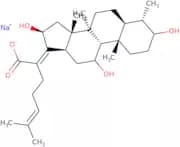
CAS:Controlled Product<p>Please enquire for more information about 16-Deacetyl fusidic acid sodium salt including the price, delivery time and more detailed product information at the technical inquiry form on this page</p>Formula:C29H45NaO5Purity:Min. 95%Molecular weight:496.65 g/molDL-Lactic acid sodium salt, 60% w/w syrup
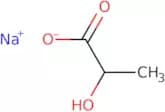
CAS:<p>Lactic acid is a natural product that has been used for many years as an antimicrobial agent in wastewater treatment. It is also used in the food industry to prevent the growth of bacteria and fungi, and as a preservative. Lactic acid has been shown to have a physiological effect on locomotor activity, which may be due to its ability to convert pyruvate into lactate. Lactic acid also inhibits the growth of some bacterial strains by increasing the disulfide bond formation between two cysteine residues. The sodium salt form of lactic acid is more soluble than the acid form and can be used as an experimental model for studying sodium-lactate interactions. Sodium lactate is used in maternal blood transfusions to increase blood pH levels during labor, and is also added to water vapor for humidification purposes.</p>Formula:C3H5O3NaColor and Shape:Colorless Clear LiquidMolecular weight:112.06 g/molPrednisolone disodium phosphate
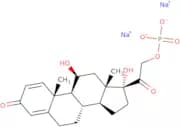
CAS:<p>Prednisolone is a corticosteroid that is used to treat inflammation and reduce the body's immune response. Prednisolone disodium phosphate (PDSP) is an enteric-coated tablet that releases prednisolone in the small intestine, where it can be absorbed into the bloodstream. It has been shown to be effective at reducing bowel disease activity in patients with inflammatory bowel disease. Prednisolone disodium phosphate may also have a role in controlling infectious diseases, such as tuberculosis, due to its ability to inhibit toll-like receptor 4 signaling. The drug has been studied as a model system for predicting drug interactions by monitoring the rate constant for benzalkonium chloride binding to human serum albumin.</p>Formula:C21H29O8P•Na2Purity:Min. 95%Color and Shape:PowderMolecular weight:486.4 g/mol2,3-Diketogulonic acid potassium
CAS:<p>Please enquire for more information about 2,3-Diketogulonic acid potassium including the price, delivery time and more detailed product information at the technical inquiry form on this page</p>Formula:C6H7KO7Purity:Min. 95%Color and Shape:SolidMolecular weight:230.21 g/molMonosodium succinate
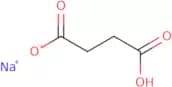
CAS:Monosodium succinate is a salt that inhibits the growth of antibiotic-resistant strains of bacteria. It is a chemical that has been shown to be stable in acidic environments and during logarithmic growth phase. Monosodium succinate has been used as a monoclonal antibody against the bladder wall, where it binds to acidic phosphotungstic acid. This binding prevents the formation of an enzyme-inhibitor complex with the enzyme cell wall synthesis that is required for cell wall biosynthesis, inhibiting protein synthesis and cell division. Monosodium succinate has also been shown to have metabolic disorders properties through its ability to inhibit uptake and increase sodium carbonate levels in urine.Formula:C4H5NaO4Purity:Min. 95%Molecular weight:140.07 g/molLithium tetrachloroaluminate
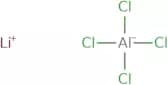
CAS:<p>Lithium tetrachloroaluminate is a compound that consists of lithium, copper, and aluminum. It has an average particle diameter of about 1 micrometer. Lithium tetrachloroaluminate can be used as a catalyst for the reduction of inorganic and organic solutes. This compound is soluble in water and organic solvents, which may be due to its ionic nature. Lithium tetrachloroaluminate can be used as a rechargeable battery electrode material because it has a high capacity for storing lithium ions. The reaction with chloride ions produces chlorine gas, which is corrosive and toxic under certain conditions.</p>Formula:LiAlCl4Purity:(%) Min. 98%Color and Shape:White PowderMolecular weight:175.73 g/molPotassium phosphate dibasic , anhydrous - for HPLC, >99.0%
CAS:<p>Potassium phosphate dibasic, anhydrous - for HPLC, >99.0% is a crystalline cellulose used as a model system for enzyme activities. It has been shown to have the same effects on enzymes as potassium phosphate monobasic and potassium dihydrogen phosphate. This product also has a use in radiation-induced damage studies due to its ability to absorb ionizing radiation.</p>Formula:K2HPO4Purity:Min. 95%Color and Shape:PowderMolecular weight:174.18 g/molBromoferrocene
CAS:Bromoferrocene is a ligand that binds to the ferrocenecarboxylic acid skeleton. It is an aromatic hydrocarbon that has been shown to be a potent inhibitor of cervical cancer proliferation. Bromoferrocene was synthesized by a Friedel-Crafts reaction between styrene and hydrobromic acid. The bromine atom in this compound is electron-withdrawing and therefore has radical character, which makes it a reactive molecule with potential for biological activity. Bromoferrocene is chiral and thus can exist as two enantiomers - one with R configuration, the other L.Formula:C10H9BrFePurity:90%NmrMolecular weight:264.93 g/molSodium benzyloxide solution - 1.0 M in benzyl alcohol
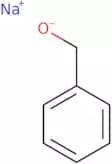
CAS:<p>Sodium benzyloxide is an alkanoic acid with the chemical formula CH3C6H2O2. It is used as a matrix metalloproteinase inhibitor in the synthesis of bicyclic heterocycles. It is also used in asymmetric synthesis and as a substrate for enzyme inhibitors. Sodium benzyloxide has been shown to be effective against herpes simplex virus by preventing viral replication and inducing apoptosis.</p>Formula:C6H5CH2ONaColor and Shape:Clear LiquidMolecular weight:130.12 g/molSodium tetrachloropalladate(II)
CAS:Sodium tetrachloropalladate(II) is a photoelectron acceptor that absorbs x-rays in the wavelength range of 0.2-1.5 Å. It is used as a nanomaterial for the preparation of microspheres and optical devices. Sodium tetrachloropalladate(II) has been shown to have a chloride ion content of 36%. The chemical composition of this element can be determined by using preparative methods such as suzuki coupling reaction, phase chromatography, or elemental analysis. The isolated yield of sodium tetrachloropalladate(II) can be determined by immobilizing it on an ion exchange resin and eluting with 0.1 M HCl.Formula:Cl4Na2PdPurity:Min. 95%Molecular weight:294.21 g/molDichloro[1,3-Bis(2,6-diisopropylphenyl)imidazolyl-2-idene](3-chloropyridyl)palladium(IV)
CAS:Controlled Product<p>Dichloro[1,3-Bis(2,6-diisopropylphenyl)imidazolyl-2-idene](3-chloropyridyl)palladium(IV) is an insoluble molecule with a beige color. The molecule belongs to the class of palladium catalyzed cross coupling reactions. It can react with various halides and has been shown to have functionalities, skeleton and reactive groups. This compound is used in synthetic organic chemistry in order to generate sequences with chloride and pentane.</p>Formula:C32H40Cl3N3PdPurity:Min. 95%Color and Shape:PowderMolecular weight:679.46 g/molLithium thiocyanate hydrate
CAS:Lithium thiocyanate hydrate is a crystalline compound that consists of lithium, sulfur, and oxygen. It has been shown to have antihypertensive activity, which may be due to the inhibition of the enzyme angiotensin-converting enzyme (ACE). Lithium thiocyanate hydrate is used in pharmaceutical preparations as a coagulant and solvent. Crystals of this compound are formed by reacting lithium chloride with hexafluoroisopropanol in an aqueous solution containing metal ions. The crystals are macrocyclic structures consisting of alternating layers of lithium thiocyanate and sulfoxide groups. These groups form hydrogen bonds between adjacent layers, leading to the formation of the crystals' crystalline structure.Formula:LiSCN·xH2OPurity:(%) Min. 99.9%Color and Shape:White PowderSodium percarbonate
CAS:<p>Sodium percarbonate is a chemical compound that has a high degree of chemical stability. It is a white, crystalline solid with an appearance similar to table salt. Sodium percarbonate can be used for wastewater treatment by reacting with the hydrogen peroxide in wastewater to produce carbon dioxide and sodium sulfate. The reaction mechanism is based on the oxidation of p-hydroxybenzoic acid by hydrogen peroxide. Sodium percarbonate can also be used as an oxidizing agent in organic synthesis reactions, such as ester hydrolysis, nitro reduction, and decomposition of boron compounds. Optimum concentrations range from 1% to 3%.</p>Formula:C2H6Na4O12Purity:Min. 95%Molecular weight:314.02 g/molGlycochenodeoxycholic acid 3-sulfate disodium salt
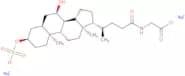
CAS:<p>Please enquire for more information about Glycochenodeoxycholic acid 3-sulfate disodium salt including the price, delivery time and more detailed product information at the technical inquiry form on this page</p>Formula:C26H41NNa2O8SPurity:Min. 95%Color and Shape:PowderMolecular weight:573.65 g/molTauroursodeoxycholic acid, sodium salt
CAS:<p>Tauroursodeoxycholic acid, sodium salt is a taurine-conjugated bile acid derivative, which is synthesized in the liver from ursodeoxycholic acid. It functions through its role in stabilizing the mitochondria and inhibiting apoptosis by modulating the unfolded protein response. This molecular action involves reducing endoplasmic reticulum stress, thereby providing cytoprotective effects in various cellular environments.</p>Formula:C26H44NNaO6SPurity:Min. 95%Molecular weight:521.69 g/molChloro[2-(di-tert-butylphosphino)-2',4',6'-triisopropyl-1,1'-biphenyl][2-(2-aminoethyl)phenyl)]palladium(II)
CAS:Controlled Product<p>Chloro[2-(di-tert-butylphosphino)-2',4',6'-triisopropyl-1,1'-biphenyl][2-(2-aminoethyl)phenyl)]palladium(II) is a molecule that inhibits the adenosine receptor in autoimmune diseases and cancer. It also has an inhibitory effect on the membrane transport of glucose, glucosan, and aziridine. This drug can be used to treat inflammatory diseases such as diabetes, asthma, and inflammatory bowel disease. The geometric isomers of this molecule are not identical in shape or size and can have different effects on the body.</p>Formula:C37H55ClNPPdPurity:Min. 95%Molecular weight:686.69 g/molBenzylbis(triphenylphosphine)palladium(II) Chloride
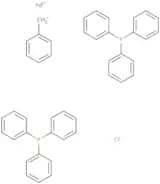
CAS:Controlled ProductBenzylbis(triphenylphosphine)palladium(II) Chloride is an organic compound that contains a benzene and palladium complex. The anion of this compound is chloride and it has been used as a reagent in the preparation of nitroarenes, porphyrin complexes, and various other organic compounds. This salt is insoluble in water and organic solvents, and it has been used as a sensor for chloride ions. Benzylbis(triphenylphosphine)palladium(II) Chloride’s color changes from green to red in the presence of chloride ions, which can be detected by potentiometric titration or colorimetric analysis.Formula:C43H37ClP2PdPurity:Min. 95%Molecular weight:757.57 g/molLithium Tetrakis(pentafluorophenyl)borate - Ethyl Ether Complex
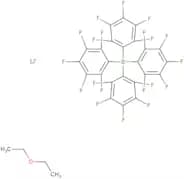
CAS:Controlled ProductLithium tetrakis(pentafluorophenyl)borate - ethyl ether complex is a ligand that has the ability to bind to magnesium. The complex is highly soluble in organic solvents such as ethylene and ether, but not in water. It can be used to produce high yields of ethylene with magnesium as a co-catalyst. The complex binds to magnesium by forming a six-membered ring with the borate group and two oxygen atoms from the ether molecule. The crystal structure of this complex was determined using x-ray crystallography. This complex has been found naturally in plants such as spinach and beets, although it is not yet known what role it plays in these plants.Purity:70%NmrCalcium nitrate tetrahydrate
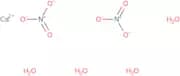
CAS:Controlled ProductCalcium nitrate tetrahydrate (CNT) is a calcium salt of nitric acid that has been used in the past to control insects. It is an oxidizing agent and is used as a fertilizer. CNT reacts with water to produce heat and water vapor, which can be used for heating or cooking. When heated, CNT decomposes into calcium nitrite and nitrogen dioxide. The structural analysis of CNT was carried out by X-ray diffraction and thermodynamic data were obtained by differential scanning calorimetry. The thermal expansion coefficient of CNT was determined by DTA experiments.Formula:Ca(NO3)2•(H2O)4Purity:Min. 95%Molecular weight:236.15 g/mol



palladium(IV)](/_next/image/?url=https%3A%2Fstatic.cymitquimica.com%2Fproducts%2F3D%2Fthumb-webp%2FFB157435.webp&w=3840&q=75)


![Chloro[2-(di-tert-butylphosphino)-2',4',6'-triisopropyl-1,1'-biphenyl][2-(2-aminoethyl)phenyl)]pal…](/_next/image/?url=https%3A%2Fstatic.cymitquimica.com%2Fproducts%2F3D%2Fthumb-webp%2FFC156938.webp&w=3840&q=75)