Metal Salts
In this section, you can find various metal salts, which are compounds characterized by containing both metal and non-metal atoms. Essentially, metal salts are composed of cations that are one or more metal atoms. These salts play a crucial role in numerous chemical reactions and applications, serving as catalysts, reactants, or intermediates in various industrial and research processes. At CymitQuimica, we offer a wide selection of high-quality metal salts to meet your research and industrial needs, ensuring reliable and effective performance in your applications.
Found 2870 products of "Metal Salts"
Sort by
Purity (%)
0
100
|
0
|
50
|
90
|
95
|
100
Sodium thiocyanate
CAS:<p>Sodium thiocyanate is a salt that is used as an injection solution and reaction solution in the chemical laboratory. It reacts with water vapor to form sodium carbonate and hydrogen cyanide, which are then converted into sodium salts. The biological properties of this compound are not well-known, but it has been shown to be toxic to cells at high concentrations. Sodium thiocyanate is a salt that is used as an injection solution and reaction solution in the chemical laboratory. It reacts with water vapor to form sodium carbonate and hydrogen cyanide, which are then converted into sodium salts. The biological properties of this compound are not well-known, but it has been shown to be toxic to cells at high concentrations.</p>Formula:CNNaSPurity:Min. 95%Color and Shape:White PowderMolecular weight:81.07 g/molN, N-Bis(Carboxymethyl)-L -glutamic acid tetrasodium salt - ca. 40% in water
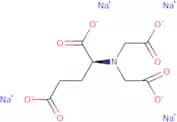
CAS:N,N-Bis(carboxymethyl)-L-glutamic acid tetrasodium salt is a cationic surfactant that has been used in the production of personal care products and industrial cleaners. This compound is soluble in water and can be used as a post-treatment to reduce the redox potential of hydrochloric acid. It also has antibacterial efficacy against both Gram-positive and Gram-negative bacteria. N,N-Bis(carboxymethyl)-L-glutamic acid tetrasodium salt has been shown to be effective against tumor cells.Formula:C9H9NO8·4NaPurity:Min. 95%Color and Shape:PowderMolecular weight:351.13 g/molAluminum diacetate hydroxide
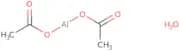
CAS:Aluminum diacetate hydroxide is a white powder that is soluble in water. It is used as a laser ablation material and can be used to seal chemical reactions. Aluminum diacetate hydroxide also functions as a gas sensor, with its sensitivity to aromatic hydrocarbons and fatty acids. This compound has clinical use in detergent compositions, where it prevents the formation of foam.Formula:C4H7AlO5Purity:Min. 28%Color and Shape:PowderMolecular weight:162.08 g/molSodium phenoxide
CAS:<p>Sodium phenoxide is a glycol ether that has been used to treat wastewater containing phenol and p-hydroxybenzoic acid. The reaction solution is prepared by mixing the desired amount of sodium phenoxide with an excess of copper chloride in anhydrous sodium. This process can be monitored using electrochemical impedance spectroscopy, which provides information about the chemical stability of the product. The use of sodium phenoxide as a wastewater treatment agent can be evaluated through treatment trials, where it is mixed with wastewater containing different concentrations of inhibitor drugs such as metoprolol succinate. Langmuir adsorption isotherm can also be used to determine the effectiveness of this product for wastewater treatment purposes.</p>Formula:C6H5O·NaPurity:Min. 95%Color and Shape:PowderMolecular weight:116.09 g/molPotassium chlorate
CAS:Controlled ProductPotassium chlorate is a strong oxidizing agent and a salt of potassium and chlorate. Potassium chlorate is used as an oxidizer in fireworks, propellants, and for the treatment of wastewater. It can also be used to generate chlorine dioxide, which is used as a disinfectant. Potassium chlorate has been shown to have genotoxic effects on rat liver cells, which may be due to its ability to induce transcriptional regulation by altering DNA methylation status. Chronic exposure to high concentrations of potassium chlorate can cause apical necrosis in rats. This type of necrosis is caused by the accumulation of potassium ions that lead to a disruption in membrane integrity. Chlorates are also known to cause chronic renal toxicity via oxidative stress mechanisms.Formula:ClKO3Purity:Min. 95%Color and Shape:White SolidMolecular weight:122.55 g/molCesium bromide
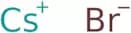
CAS:Cesium bromide is a chemical compound that has a high melting point. It is used as an ionic liquid and as a salt in analytical chemistry. Cesium bromide can be used to measure the thermal expansion of materials or to measure the hydrogen bond strength between two molecules. Cesium bromide is also used in membrane systems for water purification, and it can be used for radiation treatment of cancer cells. Cesium bromide can be found in wastewater treatment plants where it helps to remove halides and other contaminants from water vapor, providing kinetic energy to do so. Cesium bromide is also used as an analytical method for measuring hydrochloric acid, uv absorption, or chelate rings.Formula:CsBrPurity:Min. 95%Molecular weight:212.81 g/molDichlorotitanium Diisopropoxide
CAS:Controlled Product<p>Dichlorotitanium Diisopropoxide is a novel reagent for the asymmetric synthesis of amides. The reaction mechanism is based on the formation of a chloride-containing titanium enolate from titanium tetrachloride and an amine. This enolate reacts with another molecule of titanium tetrachloride to form the desired amide. Dichlorotitanium Diisopropoxide has been used in the preparation of polymers, such as poly(vinyl chloride) and poly(methyl methacrylate). It has also been used to produce organic compounds, such as chloroform, dichloromethane, and chlorobenzene. The stereoselectivity can be controlled by changing the solvent used in this reaction.nowiki>END>></p>Formula:C6H14Cl2O2TiPurity:Min. 95%Molecular weight:236.95 g/molPotassium vinyltrifluoroborate
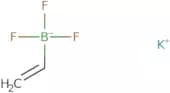
CAS:<p>Potassium vinyltrifluoroborate is a salt that contains the inorganic anion potassium and the organic ligand vinyltrifluoroborate. It is used as an electrolyte in electrochemical cells, such as fuel cells, to increase power output by increasing the conductivity of the electrolyte. This compound has been shown to be effective against chronic kidney disease and infectious diseases such as HIV and malaria. Potassium vinyltrifluoroborate also has anti-cancer properties due to its ability to inhibit cellular proliferation and induce apoptosis in cancer cells. The mechanism of action of this drug is still unclear but may be due to its ability to inhibit proteases, such as ns3 protease found in human erythrocytes.</p>Formula:C2H3BF3KPurity:Min. 95%Color and Shape:PowderMolecular weight:133.95 g/molCalcium bromide
CAS:Calcium bromide is a white solid that has a phase transition temperature of -14.8 °C. It is soluble in water and glycol ether. Calcium bromide can be used to measure the concentration of calcium ions by taking advantage of the high affinity between calcium ions and its salt, calcium bromide, at constant pressure. In this process, water vapor and anhydrous sodium are also adsorbed onto the surface of the solid. The x-ray diffraction data for calcium bromide crystals show that it has a space group of p2 with lattice parameters a = 12.39 Å, c = 10.93 Å, and β = 90°. This salt can be used as a model system for studying reaction mechanisms in chemistry and biochemistry involving ionic liquids or other ionic compounds. The most common application of calcium bromide is as an extractant for volatile organic compounds from air samples using solid phase microextraction (SPFormula:CaBr2Purity:Min. 95%Molecular weight:199.89 g/molGanciclovir sodium
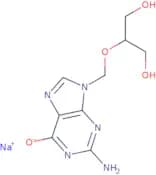
CAS:<p>Anti-viral; DNA polymerase inhibitor; dGTP competitive inhibitor</p>Formula:C9H13N5NaO4Purity:Min. 95%Molecular weight:278.22 g/molrac 5-Hydroxy valproic acid sodium
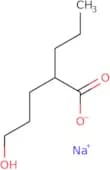
CAS:<p>Please enquire for more information about rac 5-Hydroxy valproic acid sodium including the price, delivery time and more detailed product information at the technical inquiry form on this page</p>Formula:C8H16O3•NaPurity:Min. 95%Color and Shape:PowderMolecular weight:183.2 g/molTrisodium phosphonoformate hexahydrate
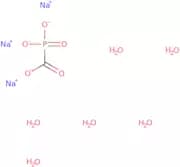
CAS:Trisodium phosphonoformate hexahydrate is a cytotoxic drug that is used to treat cytomegalovirus infections. It acts by inhibiting viral DNA polymerase and RNA synthesis, leading to cell death. Trisodium phosphonoformate hexahydrate can be used in combination with other antiviral drugs such as ganciclovir or foscarnet sodium for the treatment of HIV-1 infection. Trisodium phosphonoformate hexahydrate can also be used for prophylactic treatment against cytomegalovirus infection in immunosuppressed patients. This drug has been shown to be effective in reducing the incidence of CMV disease and mortality in transplant recipients who were undergoing low-dose chemotherapy. Trisodium phosphonoformate hexahydrate has been shown to be more effective than foscarnet sodium alone in preventing CMV disease and mortality during low-dose chemotherapy.Formula:CH12O11Na3PPurity:Min. 95%Color and Shape:PowderMolecular weight:300.04 g/molCopper(I) trifluoromethanesulfonate toluene complex
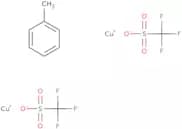
CAS:Controlled Product<p>Toluene complex</p>Formula:C9H8Cu2F6O6S2Purity:Min. 95%Molecular weight:517.37 g/molb-Glycerophosphoric acid disodium salt tetrahydrate
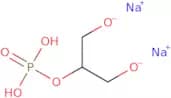
CAS:<p>Glycerolipid metabolism component</p>Formula:C3H7O6P·2Na·4H2OPurity:Min. 95%Molecular weight:288.1 g/molCopper(II) acetate monohydrate
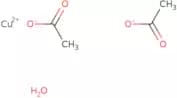
CAS:Copper acetate is a chemical compound that is composed of copper and acetic acid. Copper acetate monohydrate, the form used in this product, is an ionic salt that has the chemical formula Cu(CHCO)2. The copper atom has a coordination geometry of 4.5 and is surrounded by six oxygen atoms and two hydrogen atoms. The reaction mechanism for this compound involves methyl ethyl malonic acid as shown below: The first step in the reaction mechanism is the formation of a carbanion intermediate with the loss of a proton from one of the methyl groups on malonic acid. This carbanion attacks the copper atom to form an intermediate with two positive charges on it, which then breaks down into two molecules of malonic acid and one molecule of water. The other methyl group then reacts with another molecule of malonic acid to form methyl ethyl dicarboxylate and release another proton. This proton can be accepted by water or react withFormula:C4H6CuO4·H2OPurity:Min. 95%Color and Shape:Blue Clear LiquidMolecular weight:199.65 g/mol(Trimethyl)pentamethylcyclopentadienyltitanium(IV)
CAS:Please enquire for more information about (Trimethyl)pentamethylcyclopentadienyltitanium(IV) including the price, delivery time and more detailed product information at the technical inquiry form on this pageFormula:C13H24TiPurity:Min. 95%Molecular weight:228.2 g/molPotassium tetracyanoaurate(III)
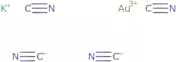
CAS:Controlled Product<p>Potassium tetracyanoaurate(III) (K[AuCl4]) is a crystalline, intermetallic compound that has been used in the production of coatings, spherical particles, and electrochemical materials. The pentahydrate form has a diameter of 4.8-5.2 Å and a melting point of ~115°C. K[AuCl4] is stable in air and water but reacts with strong acids to form potassium chloride and potassium tetracyanocuprate(II). This substance also has an optimal pH range of 6-7 and an average solubility range of 0.05-0.1g/100mL at 20°C. The microstructure of K[AuCl4] is not well understood because it is difficult to isolate from other compounds during synthesis.</p>Formula:C4AuN4KPurity:Min. 95%Color and Shape:PowderMolecular weight:340.13 g/molButynediol sulfopropyl ethersodium
CAS:Controlled Product<p>Please enquire for more information about Butynediol sulfopropyl ethersodium including the price, delivery time and more detailed product information at the technical inquiry form on this page</p>Formula:C7H11NaO5SPurity:Min. 95%Molecular weight:230.22 g/molLithium tetrakis(pentafluorophenyl)borate ethyl etherate
CAS:Controlled Product<p>Lithium tetrakis(pentafluorophenyl)borate ethyl etherate is a lithium salt of the etherate ester of pentafluorophenylboronic acid (B(C6F5)3). The complex is an electron donor and ligand, which can stabilize the high-energy intermediate state in the reaction. Lithium tetrakis(pentafluorophenyl)borate ethyl etherate reacts with magnesium to form a magnesium salt and ethylene. This product can be used as a co-catalyst for coupling reactions, such as the synthesis of cyclic compounds from alkenes.</p>Formula:C24BF20·(C4H10O)2·LiPurity:Min. 95%Molecular weight:760.11 g/molSodium chlorite
CAS:<p>Sodium chlorite is a disinfectant that is used to reduce the number of bacteria in the air, water, and surfaces. It is acidic and has been shown to be effective against infectious diseases such as tuberculosis, cholera, and malaria. Sodium chlorite can be produced through the oxidation of sodium chloride by chlorite ion at high temperatures. The optimum concentration for sodium chlorite is 10-15%. This agent can also be used as an analytical method for determining the presence of organic compounds that are difficult to measure by other methods. Laser ablation coupled with mass spectrometry is one example of this technique. Sodium chlorite can also be used to treat wastewater and inhibits oxidative injury in cells.</p>Formula:NaClO2Purity:Min. 95%Color and Shape:White To Yellow SolidMolecular weight:90.44 g/mol