Metal Salts
In this section, you can find various metal salts, which are compounds characterized by containing both metal and non-metal atoms. Essentially, metal salts are composed of cations that are one or more metal atoms. These salts play a crucial role in numerous chemical reactions and applications, serving as catalysts, reactants, or intermediates in various industrial and research processes. At CymitQuimica, we offer a wide selection of high-quality metal salts to meet your research and industrial needs, ensuring reliable and effective performance in your applications.
Found 2870 products of "Metal Salts"
Sort by
Purity (%)
0
100
|
0
|
50
|
90
|
95
|
100
Bis (1,5-Cyclooctadiene) rhodium(I)tetrafluoroborate
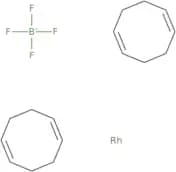
CAS:Bis (1,5-Cyclooctadiene) rhodium(I)tetrafluoroborate (BODIPY) is a catalyst that enhances the rate of hydrosilylation reactions. This catalyst has been shown to be effective in the synthesis of aryl chlorides from amines and aldehydes with high enantioselectivity. BODIPY is also immobilized on silica gel to create an active catalyst for asymmetric synthesis. The immobilization process on silica gel is done by reacting BODIPY with ammonium formate and amines. The resulting catalyst can be used for the synthesis of functionalized organic compounds, such as pyrrolidines, tetrahydrofurans, and thiophenes.Formula:C16H24BF4RhPurity:Min. 95%Molecular weight:406.07 g/molSilver tetrafluoroborate
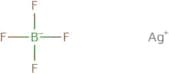
CAS:<p>Silver tetrafluoroborate (AgBF) is a chemical reagent that is used in analytical chemistry and structural analysis. It has shown to be a stable complex with organic molecules, such as fatty acids, and has been used to study the properties of these compounds. AgBF is an inorganic salt that can be synthesized by reacting silver nitrate and barium fluoride in the presence of trifluoroacetic acid. This compound has also been found to form stable complexes with organic molecules containing a hydroxyl group or nitrogen atom. The structure of AgBF has been determined through X-ray crystal structures and electron diffraction patterns. The molecule consists of two symmetric chains joined by a central disulfide bond.</p>Formula:AgBF4Purity:Min. 95%Color and Shape:PowderMolecular weight:194.67 g/molSuccinyl coenzyme A sodium
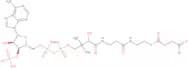
CAS:<p>Succinyl coenzyme A sodium (SCCA) is a membrane-permeable probe that can be used to measure the mitochondrial membrane potential. SCCA is transported into mitochondria and reduced by dehydrogenase, resulting in an increase in the concentration of its oxidized form, succinic semialdehyde. This increase in extracellular concentrations of succinic semialdehyde can be detected using high performance liquid chromatography with fluorescence detection. The use of this probe has been shown to be useful for measuring mitochondrial function in live cells and tissues, and for investigating genetic disorders that affect mitochondrial function.</p>Formula:C25H40N7O19P3S•NaxPurity:Min. 95%Molecular weight:889.59 g/molSodium hexamethylene-1,6-bisthiosulfate dihydrate
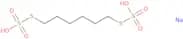
CAS:Sodium hexamethylene-1,6-bisthiosulfatedihydrate is a salt of an oxide of benzene with hexamethylene 1,6-disulfate dihydrate. It has a white to off-white crystalline appearance and is used as an additive in mixtures to improve the wetting and dispersing properties of the mixture. The chemical formula for this compound is C8H4NaOS·2H2O.Formula:C6H12Na2O6S4Purity:Min. 95%Color and Shape:PowderMolecular weight:354.4 g/mol4-Acetamido-4'-isothiocyanatostilbene-2,2'-disulfonic acid, sodium salt
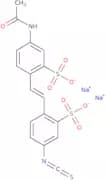
CAS:4-Acetamido-4'-isothiocyanatostilbene-2,2'-disulfonic acid, sodium salt (AITC-S) is a stilbene derivative with inhibitory properties. It has been shown to inhibit the uptake of camp in rat ventricular myocytes and caco-2 cells as well as the release of camp from rat renal proximal tubules. AITC-S also inhibits the transport of camp into the cells. The mechanism by which AITC-S inhibits uptake is not yet known, but it may be due to competition for a common carrier or an effect on intracellular metabolism. This compound has also been shown to have an acute ischemic protective effect on rats when administered before reperfusion following coronary artery occlusion.Formula:C17H12N2Na2O7S3Purity:Min. 95%Molecular weight:498.46 g/molCobalt(II) oxide
CAS:<p>Cobalt is a transition metal with the atomic number 27. It has an oxidation state of +2 and belongs to group 8 on the periodic table. Cobalt(II) oxide (CoO) is a black solid that can be formed by heating cobalt metal at temperatures greater than 1400°C. The electrochemical impedance spectroscopy of CoO shows that it has high resistivity and good electrical conductivity, making it useful for corrosion protection. Cobalt oxide is also used as a catalyst in chemical reactions, such as oxidation and reduction, due to its redox potential. Cobalt oxide can be produced from the reaction between hydrochloric acid and zirconium oxide by electrolysis, which produces an electric current. This process can be done in two ways: either by using an electrochemical cell or by laser ablation. The latter method is more efficient because it requires less energy input than using an electrochemical cell. In addition, CoO particles are spherical in shape, have</p>Formula:CoOPurity:75%MinColor and Shape:PowderMolecular weight:74.93 g/molTitanium(IV) isopropoxide
CAS:Titanium(IV) isopropoxide is a chemical compound with the formula Ti(OCH(CH)) (i-Pr). It is an organotitanium compound that reacts with water to form titanium hydroxide. The compound has a low vapor pressure and a high melting point, which makes it well suited for use in high temperature environments. Titanium(IV) isopropoxide can be used as an additive to improve the corrosion resistance of metal surfaces, such as steel and copper. It also has been shown to have synergistic effects when combined with other additives, such as metal hydroxides or methyl glycosides.Formula:C12H28O4TiPurity:Min. 95%Molecular weight:284.22 g/molDichloro(1,5-cyclooctadiene)palladium(II)
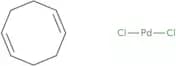
CAS:Controlled ProductDichloro(1,5-cyclooctadiene)palladium(II) is a stable metal complex in which the chlorine atom is coordinated to two benzyl groups and one palladium atom. The chloride ion is coordinated to the palladium atom through a strong coordinate bond. The chloride ion is also coordinated to the two benzyl groups by weaker coordinate bonds. In the presence of sodium carbonate, hydrogen chloride and nitrogen gas, dichloro(1,5-cyclooctadiene)palladium(II) reacts with hydrogen chloride to form stable complexes that are soluble in water. These complexes can be used as catalysts for organic reactions because they are able to transfer hydrogen atoms between molecules without breaking covalent bonds. Dichloro(1,5-cyclooctadiene)palladium(II) has been shown to have antibacterial activity against Staphylococcus aureus and Pseudomonas aeruginosaFormula:C8H12Cl2PdPurity:Min. 98%Molecular weight:285.51 g/mol4-Methoxybenzyl chloride - stabilised with potassium carbonate
CAS:<p>4-Methoxybenzyl chloride is a chemotherapeutic agent that inhibits the binding of inhibitor molecules to their target proteins. It has been shown to inhibit the binding of uridine and methanol solvent to their targets, which are enzymes in the synthesis of nucleic acids. The inhibition of these enzymes prevents DNA replication and protein synthesis, leading to cell death. 4-Methoxybenzyl chloride has been found to be effective in treating autoimmune diseases and solid tumours, as well as being an antimicrobial treatment for microbial infections. 4-Methoxybenzyl chloride is also used in chemical syntheses for its ability to undergo cationic polymerization and asymmetric synthesis.</p>Formula:C8H9ClOPurity:Min. 95%Color and Shape:Colorless Clear LiquidMolecular weight:156.61 g/molTris(dibenzylideneacetone)dipalladium(0)
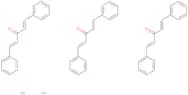
CAS:<p>Tris(dibenzylideneacetone)dipalladium(0) (Pd2(dba)) is a monoclonal antibody that is used to treat infectious diseases. The metal complex binds to the fatty acid and inhibits the synthesis of membrane lipids, which leads to an inhibition of virus replication. Tris(dibenzylideneacetone)dipalladium(0) has been shown to have potent antitumor activity in animal models, with cytotoxic effects on mutant melanoma cells and hydrochloric acid. This drug also has potent pro-apoptotic properties, inducing apoptosis by binding to pro-apoptotic proteins. Tris(dibenzylideneacetone)dipalladium(0) has been shown to be a potent inhibitor of x-ray crystal structures at high temperatures, where it competes with water for the labile hydrogen atoms on the surface of hydroxyl groups.</p>Formula:C17H14O·Pd2Purity:Min. 95%Color and Shape:Purple PowderMolecular weight:915.72 g/molBis(tri-tert-butylphosphine)palladium(0)
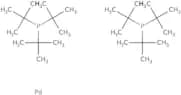
CAS:Bis(tri-tert-butylphosphine)palladium(0) is a chemical compound, insoluble in organic solvents. It has been used as a catalyst for cross-coupling reactions in organic chemistry. Bis(tri-tert-butylphosphine)palladium(0) reacts with sodium salts and palladium-catalyzed cross-coupling to form an insoluble complex in the presence of hexane, which is soluble in organic solvents. The reaction proceeds through reductive elimination, yielding a trisubstituted product. This process can be used for the synthesis of halides and transmetallation.Formula:C24H54P2PdPurity:Min. 95%Color and Shape:White PowderMolecular weight:511.05 g/molSodium 1-Tetradecanesulfonate
CAS:<p>Sodium 1-tetradecanesulfonate is a detergent additive that can be used in water-based cleaning compositions. It is a sodium salt and fatty acid that has been shown to provide high viscosity in the presence of water vapor. This product also provides excellent detergency on oily soils, and is compatible with other ingredients such as fatty alcohols, glycol ethers, glycerin, aluminium, dodecyl cations, and polyvinyl alcohols. Sodium 1-tetradecanesulfonate has been shown to have a wide range of applications including wastewater treatment and analytical chemistry.</p>Purity:Min. 95%Barium tetracyanoplatinate(II) hydrate
CAS:Controlled ProductPlease enquire for more information about Barium tetracyanoplatinate(II) hydrate including the price, delivery time and more detailed product information at the technical inquiry form on this pageFormula:C4H2BaN4OPtPurity:Min. 95%Molecular weight:454.5 g/molBis(4-(di-tert-butylphosphino)-N,N-dimethylbenzenamine) palladium dichloride
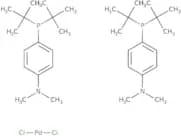
CAS:Controlled ProductBis(4-(di-tert-butylphosphanyl)-N,N-dimethylaniline) is a boronic acid that has been used as a surfactant in organic chemistry. It is hydrophobic and has hydrogen bonding interactions with other molecules. Bis(4-(di-tert-butylphosphanyl)-N,N-dimethylaniline) is also a proton acceptor and can form stable complexes with metal ions such as palladium chloride. This compound is kinase selective and can be used to inhibit tyrosine kinases by binding to the ATP binding site of the enzyme's kinase domain. The functional groups of this compound are able to undergo cross-coupling reactions with other functional groups that have been activated by a reagent such as palladium chloride. Bis(4-(di-tert-butylphosphanyl)-N,N-dimethylaniline) has been used in highFormula:C32H56Cl2N2P2PdPurity:Min. 95%Color and Shape:PowderMolecular weight:708.07 g/mol7,7-Azo-3-a,12-a-dihydroxytaurocholanic acid sodium salt
CAS:Please enquire for more information about 7,7-Azo-3-a,12-a-dihydroxytaurocholanic acid sodium salt including the price, delivery time and more detailed product information at the technical inquiry form on this pageFormula:C26H42N3NaO6SPurity:Min. 95%Molecular weight:547.68 g/mol4-Hydroxy atorvastatin disodium salt
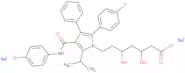
CAS:<p>Please enquire for more information about 4-Hydroxy atorvastatin disodium salt including the price, delivery time and more detailed product information at the technical inquiry form on this page</p>Formula:C33H33FN2Na2O6Purity:Min. 95%Molecular weight:618.6 g/mol[1,2-Bis(diphenylphosphino)ethane]dichloropalladium(II)
CAS:Controlled Product[1,2-Bis(diphenylphosphino)ethane]dichloropalladium(II) is a chemical compound that is insoluble in water and soluble in organic solvents. It is a reagent used to prepare other compounds. The synthesis of this compound involves the reaction of chloroform with dichloro[1,2-bis(diphenylphosphino)ethane]palladium (II). The resulting compound has a yellow color due to its ligands, which are amines or halides. This compound can be recrystallized from toluene or ether for use in preparative work. [1,2-Bis(diphenylphosphino)ethane]dichloropalladium(II) has been used as an analytical reagent for the determination of chloride and ligand content in some organic solvents.Formula:C26H24Cl2P2PdPurity:Min. 95%Molecular weight:575.74 g/molRhodium 5% on alumina
CAS:Rhodium 5% on alumina is a chemical catalyst that is used in the oxidation of hydrocarbons and the reduction of nitro compounds. It is used in the process of catalytic conversion of hydrocarbons to produce gasoline, diesel fuel, and other fuels. Rhodium 5% on alumina has high resistance to hydrochloric acid, water vapor, and acid complex. This catalyst has been shown to be an effective catalyst for hydrogenation reactions with boron nitride as a support material. Rhodium 5% on alumina also has analytical chemistry applications due to its ability to bind up blood group antigens from animal sources or human blood samples.Purity:Min. 95%Tin(II) oxalate
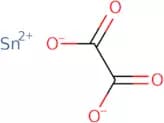
CAS:<p>Tin(II) oxalate is a chemical compound with the formula (CH3COO)2SnO. It is a white crystalline solid that is soluble in water and alcohol but not ether. Tin(II) oxalate has been shown to be an effective inhibitor of epidermal growth factor (EGF). This compound also inhibits the formation of dibutyltin oxide, which is a component of some paints. The following are the high-quality product descriptions for eCommerce: Rifapentine Rifapentine is an anti-tuberculosis drug that belongs to the class of rifamycins. It is the most active of the rifamycins for the treatment of tuberculosis. Rifapentine inhibits bacterial growth by binding to DNA-dependent RNA polymerase, thereby preventing transcription and replication. The high frequency of human activity has been shown using a patch-clamp technique on human ery</p>Formula:C2O4SnPurity:Min. 95%Molecular weight:206.73 g/mol4-Chloro-benzene-sulfinic acid sodium salt
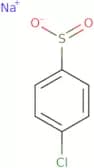
CAS:The 4-chloro-benzenesulfinic acid sodium salt is a type of sulfinic acid. It can be used to control experiments involving methides, halides, and human macrophages. Sodium salts of this compound have been shown to inhibit the growth of Candida glabrata and Galleria mellonella in vitro. The 4-chloro-benzenesulfinic acid sodium salt reacts with chloride ion to form a nucleophilic trifluoroacetate anion, which reacts with thiosulfonates to produce type strain. Trifluoroacetic acid is used as a solvent in the reaction.Formula:C6H4ClNaO2SPurity:Min. 95%Molecular weight:198.6 g/mol







![[1,2-Bis(diphenylphosphino)ethane]dichloropalladium(II)](/_next/image/?url=https%3A%2Fstatic.cymitquimica.com%2Fproducts%2F3D%2Fthumb-webp%2FFB54999.webp&w=3840&q=75)