Metal Salts
Found 2872 products of "Metal Salts"
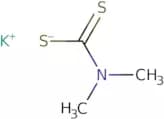
Potassium dimethyldithiocarbamate - 50% aqueous solution
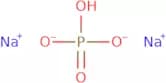
CAS:Potassium dimethyldithiocarbamate is a biocide that is used for the treatment of wastewater. It has been shown to inhibit the growth of bacteria and fungi through its antimicrobial activity. Potassium dimethyldithiocarbamate prevents bacterial attachment to surfaces, which may be due to its ability to bind covalently with proteins and form a protective layer on metal surfaces. This agent also has an inhibitory effect on complex enzyme reactions, such as transfer reactions, which are important in microbial metabolism.Formula:C3H7NS2·KPurity:Min. 95%Color and Shape:Clear LiquidMolecular weight:160.32 g/molDisodium hydrogen phosphate anhydrous
CAS:Disodium hydrogen phosphate anhydrous is a sodium salt of phosphoric acid. It is used in the formulation of medicinal products as a buffering agent and as a source of sodium ions. Disodium hydrogen phosphate anhydrous also has synergistic effects with other drugs, such as calcium pantothenate and ambroxol hydrochloride injection, which are used for the treatment of infectious diseases. Disodium hydrogen phosphate anhydrous has phase transition temperature that is low enough to permit dissolution in water vapor, making it suitable for use in liquid formulations. The solubility of this drug can be increased by combining it with other compounds such as calcium pantothenate or ambroxol hydrochloride injection. This compound can be analyzed using chromatographic methods and microdialysis probes to determine its concentration in reaction solutions.Formula:HNa2O4PPurity:Min. 95%Color and Shape:PowderMolecular weight:141.96 g/molCadmium diethyldithiocarbamate
CAS:Cadmium diethyldithiocarbamate is a chemical compound with the molecular formula Cd(C2H5)2S2Cl, which contains a disulfide bond. It is a light-sensitive powder that can be prepared in a variety of ways. Cadmium diethyldithiocarbamate can be used as an analytical reagent for metal ions and other compounds. It is also used in the synthesis of zinc diethyldithiocarbamate, which has been shown to have anti-inflammatory properties in rat models. The divalent hydrocarbon nature of cadmium diethyldithiocarbamate makes it useful as a solid dispersant in liquid chromatography methods.
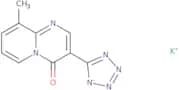
Formula:C10H20CdN2S4Purity:Area-% Min. 95 Area-%Color and Shape:PowderMolecular weight:408.95 g/molPemirolast potassium
CAS:Histamine release inhibitor
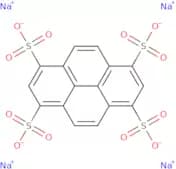
Formula:C10H8N6O•KPurity:Min. 95%Color and Shape:PowderMolecular weight:267.31 g/mol1,3,6,8-Pyrenetetrasulfonic acid tetrasodium salt - powder
CAS:1,3,6,8-Pyrenetetrasulfonic acid tetrasodium salt is a fluorescent dye that belongs to the group of hydroxide salts. It has been shown to have an absorption maximum at 524 nm and emission maximum at 585 nm. The molecule has a constant pressure of 0.1 mmHg when dissolved in water. 1,3,6,8-Pyrenetetrasulfonic acid tetrasodium salt is soluble in water and hydrochloric acid and has been used as a microcapsule encapsulation agent for copper complexes. This substance also absorbs light due to its dipole moment and can be used as a control experiment for other substances with different optical properties.
Formula:C16H6Na4O12S4Purity:Min. 97 Area-%Color and Shape:PowderMolecular weight:610.43 g/molSodium ammonium phosphate tetrahydrate
CAS:Sodium ammonium phosphate tetrahydrate is an inorganic compound that is a salt. It is used as a test compound to measure the inhibition of viral growth. The test compound binds to the virus and prevents it from binding to cells, thus inhibiting viral replication. Sodium ammonium phosphate tetrahydrate can also be used as a means of preventing cavities by lowering the pH level in the mouth and inhibiting bacterial growth. Selenium compounds have been shown to have antiviral properties when tested on the typhimurium virus. Selenium compounds are not active against herpes simplex virus, but protocatechuic acid has been shown to inhibit herpes simplex virus replication in vitro and in vivo. Protocatechuic acid has also been shown to inhibit fatty acid synthesis and chloride ion uptake into cells, which may be responsible for its anti-viral properties.Formula:NaNH5PO4·4H2OPurity:Min. 95%Color and Shape:PowderMolecular weight:209.07 g/mol5-Methyltetrahydrofolic acid disodium salt
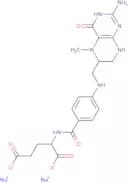
CAS:5-Methyltetrahydrofolic acid disodium salt is a form of vitamin B9 that is produced by the body from 5,10-methylenetetrahydrofolate. It also can be obtained through the diet in foods such as milk, eggs, and leafy vegetables. This vitamin is necessary for many cellular processes, including amino acid metabolism. 5-Methyltetrahydrofolic acid disodium salt has been shown to have a significant effect on neuron cell growth and health. It has been shown to stimulate the enzyme activities of catecholamine-O-methyltransferase and dopamine beta hydroxylase in vitro. The effects were seen with both acidic and neutral pHs. 5-Methyltetrahydrofolic acid disodium salt has been found to be a selective inhibitor of receptor α (rho) uptake in Caco-2 cells at acidic pHs but not at neutral pHs. In additionFormula:C20H23N7Na2O6Color and Shape:PowderMolecular weight:503.42 g/molPotassium hexafluoraluminate
CAS:Potassium hexafluoromalonate is a chemical compound that is used as an intermediate in the production of other chemicals. It has been shown to be a useful building block in organic synthesis and can also be used as a research chemical. Potassium hexafluoromalonate is prepared by reacting fluoroaluminate with potassium hydroxide, producing potassium hexafluoromalonate. This reaction produces hydrogen fluoride gas, which must be removed from the product before use. Potassium hexafluoromalonate is soluble in water and is stable at room temperature for up to one year.Formula:K3AlF6Purity:Min 97%Color and Shape:Colorless White PowderMolecular weight:258.27 g/molSuramin hexasodium salt hydrate
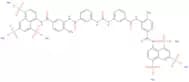
CAS:Treatment of trypanosomiasis in heamolytic stageFormula:C51H34N6O23S6·6Na·13H2OPurity:Min. 95%Color and Shape:PowderMolecular weight:1,663.38 g/molSodium bromate
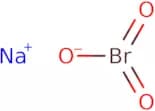
CAS:Sodium bromate is a particle that has a neutral pH and can be used as a catalyst for epoxidation reactions. In the presence of copper ions, sodium bromate reacts with organic compounds to produce epoxide products. The reaction mechanism of sodium bromate involves the formation of a copper complex, which binds to protocatechuic acid to form an intermediate. This intermediate then reacts with malonic acid to form an epoxide product. This process is also known as the Sabatier Reaction. The genotoxic effects of sodium bromate are due to its ability to cause DNA strand breaks and cross-links between DNA strands. Sodium bromate can also react with hydrochloric acid or sodium carbonate in solution, leading to cell lysis and release of cellular contents into the environment.Formula:NaBrO3Purity:Min. 95%Color and Shape:White Clear LiquidMolecular weight:150.89 g/molZinc dibutyldithiocarbamate
CAS:Zinc dibutyldithiocarbamate is a chemical compound that forms a complex with fatty acids. It is used as an absorbent and sample preparation agent in uv spectroscopy. Zinc dibutyldithiocarbamate can also cause allergic reactions and is toxic to cells in the presence of calcium stearate. This chemical is found in reaction solutions, where it reacts with hydrochloric acid and boron nitride to form zinc diethyldithiocarbamate. Zinc dibutyldithiocarbamate has shown growth factor-like properties and was shown to enhance the rate of cell growth on V79 cells when combined with polyene.Formula:C18H36N2S4ZnPurity:Min. 95%Color and Shape:PowderMolecular weight:474.14 g/molDihydro caffeic acid 3-O-sulfate sodium salt
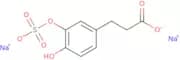
CAS:Dihydro caffeic acid 3-O-sulfate sodium salt is a flavonol that is found in plants. It has been shown to have antioxidant properties and may be effective in the treatment of diseases associated with oxidative stress, such as diabetes mellitus and cancer. Dihydrocaffeic acid 3-O-sulfate sodium salt has also been shown to inhibit the growth of bacteria by modulating the production of nitric oxide. This agent has been quantified in human urine, which provides evidence for its potential use as a biomarker for disease risk due to its association with phenolic metabolites.Formula:C9H8Na2O7SPurity:Min. 95%Color and Shape:White Off-White PowderMolecular weight:306.2 g/molIron hydroxide
CAS:Iron hydroxide is a type of iron oxide, which is a chemical compound that is composed of iron and oxygen. Iron hydroxide has been shown to inhibit the growth of bacteria by binding to pyrite and other minerals in the soil. The inhibition caused by iron hydroxide is due to its ability to increase the concentration of free calcium ions in the environment and thus disrupt bacterial metabolism. Iron hydroxide can be found in dry soils, especially those with high amounts of pyrite. Iron hydroxide binds to pyrite because it has a higher affinity for it than for Ca2+. This occurs because pyrite has more surface area than Ca2+ and so more molecules are able to bind to it. Iron hydroxide can also be found in women’s urine where it inhibits the growth of bacteria such as Escherichia coli, Enterococcus faecalis, Klebsiella pneumoniae, Proteus mirabilis, PseudFormula:Fe(OH)3Color and Shape:PowderMolecular weight:106.87 g/molPotassium 3,3,4,4,5,5,6,6,7,7,8,8,8-tridecafluorooctanesulphonate
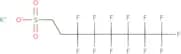
CAS:Potassium 3,3,4,4,5,5,6,6,7,7,8,8,8-tridecafluorooctanesulphonate is a potassium salt of the perfluoroalkanesulfonic acid. It is a versatile building block with a wide range of applications in the research chemical and fine chemical industries. Potassium 3,3,4,4,5,5,6,6... 8-tridecafluorooctanesulphonate can be used as an intermediate for the synthesis of complex compounds or as a reagent in organic synthesis. It is also useful for making high quality resins and polymers. CAS No.: 59587-38-1.Formula:C8H4F13KO3SPurity:(¹H-Nmr) Min. 95 Area-%Color and Shape:PowderMolecular weight:466.26 g/molN-Ethyl-N-(2-hydroxy-3-sulfopropyl)-3-methylaniline sodium salt dihydrate
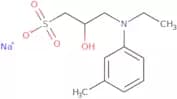
CAS:N-Ethyl-N-(2-hydroxy-3-sulfopropyl)-3-methylaniline sodium salt dihydrate (NMS) is a functional group with a side effect profile that is characterized by low incidence of adverse events. This drug has been shown to be well tolerated in clinical use, and there is evidence that it may be useful for the treatment of infectious diseases. Clinical studies have demonstrated that NMS can improve fatty acid and cholesterol levels, as well as reducing carnitine palmitoyltransferase activity. These effects are due to the inhibition of lipoprotein lipase, cholesterol esterase and carnitine palmitoyltransferase enzymes. In addition, NMS has been shown to be effective against dermatitis caused by atopic dermatitis or psoriasis.Formula:C12H18NNaO4S·2H2OPurity:Min. 98 Area-%Color and Shape:White PowderMolecular weight:331.36 g/mol1,2-Dipalmitoyl-sn-glycero-3-phosphatidic acid sodium
CAS:1,2-Dipalmitoyl-sn-glycero-3-phosphatidic acid sodium (DPPA) is a drug substance that has been used in primary culture to study the cell membrane of hepatocytes. This compound is a phospholipid with a cavity at one end and contains two hydroxy groups that can be conjugated to other molecules. It has been shown to be effective against Hepatitis B virus and mesenchymal stromal cells. DPPA has also been used as an adjuvant for gadolinium contrast agents for magnetic resonance imaging. Gadolinium may bind to the hydroxy groups on DPPA, which increases its birefringence and brightness on MRI scans.Formula:C35H69Na2O8PPurity:Min. 98 Area-%Color and Shape:White PowderMolecular weight:694.87 g/molTropaeolin O sodium salt
CAS:Tropaeolin O sodium salt is a reactive dye that possesses the ability to form hydrogen bonds with hydroxyl groups. Tropaeolin O sodium salt has been used in pharmaceutical preparations as a dye for serum and urine samples. It is also used as an indicator for the presence of fatty acids in human serum. The reactive dye is cationic and can be used to detect anionic surfactants, such as sodium dodecyl sulfate, which are commonly found in detergents and soaps. Tropaeolin O sodium salt exhibits synchronous fluorescence when it reacts with hydroxyl ions. This property can be useful for detecting the presence of hydrochloric acid in a sample or identifying p-hydroxybenzoic acid (a product of human metabolism) in urine samples.Formula:C12H9N2O5SNaPurity:Min. 95%Color and Shape:PowderMolecular weight:316.27 g/mol5-Methoxysalicylic acid sodium
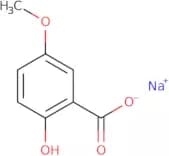
CAS:5-Methoxysalicylic acid sodium (MSAS) is a drug that is used to treat intestinal ulcers. It is also used to reduce the viscosity of blood and as an adjuvant in the treatment of rheumatoid arthritis. The bioavailability of MSAS is increased when it is administered with cefmetazole, which enhances the absorption of this drug in the small intestine. MSAS has a hypoglycemic effect and can be used to treat high blood sugar levels. This drug binds to muscle cells and prevents their contraction, which can lead to relief from muscle pain or spasms. MSAS may also have a pharmacological effect on ligation, which occurs when tissue is cut off from its blood supply.
Formula:C8H7O4·NaPurity:Min. 95%Color and Shape:PowderMolecular weight:190.13 g/molDimethylglyoxime disodium salt octahydrate
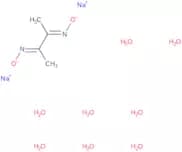
CAS:Dimethylglyoxime is a pesticide that has been used to control insects and nematodes. It has been found to be effective in controlling mosquitoes, flies, and other pests. This compound is also used as an extractor in microextraction. Dimethylglyoxime is not toxic to humans and does not cause any adverse effects on the environment or human health. It can be used with chlorine for wastewater treatment.Formula:C4H8N2Na2O2·8H2OPurity:Min. 95%Color and Shape:PowderMolecular weight:306.22 g/molOlsalazine sodium salt
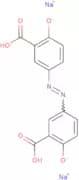
CAS:Olsalazine sodium salt is a drug that is used to treat bowel disease. It has been shown to be effective in treating ulcerative colitis and other hyperproliferative diseases, such as dermatitis herpetiformis, with the matrix effect of dextran sulfate. Olsalazine sodium salt is a combination therapy group drug that includes olsalazine, which is an anti-inflammatory drug, and dextran sulfate, which increases the surface area of the bowel and improves absorption. The chemiluminescence method was used to measure the cytosolic Ca2+ concentration in experimental models of colitis. The results showed that olsalazine sodium salt significantly reduced the level of cytosolic Ca2+, suggesting it may have anti-inflammatory properties.Formula:C14H8N2Na2O6Purity:Min. 95%Color and Shape:Yellow PowderMolecular weight:346.2 g/mol