Metal Salts
Found 2872 products of "Metal Salts"
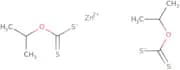
Zinc isopropylxanthate
CAS:Zinc isopropylxanthate is a chemical that has a chemical stability in the presence of fatty acids and organic solvents. It can be used as a zinc supplement, or to reduce the viscosity of glycerin. Zinc isopropylxanthate also has anti-inflammatory properties, which may be due to its ability to inhibit prostaglandin synthesis.Formula:C8H14O2S4ZnPurity:Min. 95%Color and Shape:PowderMolecular weight:335.84 g/molSodium 2-(4-Methoxyphenoxy)propionate
CAS:Sodium 2-(4-methoxyphenoxy)propionate is a chemical compound that inhibits the activity of protein kinase A (PKA). This inhibition is due to the binding of Sodium 2-(4-methoxyphenoxy)propionate to the catalytic site of PKA, which blocks access by ATP. Sodium 2-(4-methoxyphenoxy)propionate has been shown to inhibit the production of inflammatory cytokines in vitro. It also has been shown to be a potent inducer of sweet taste receptors in vivo and in vitro. The inhibition of PKA may be useful for treating bowel diseases such as ulcerative colitis.Formula:C10H12O4•NaPurity:Min. 95%Color and Shape:PowderMolecular weight:219.19 g/molPotassium 4-anisate
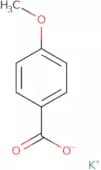
CAS:4-Anisate is a ligand that binds to metal ions. It has high resistance to light and UV spectroscopy, and it catalyzes the reaction of styrene with potassium ions under alkaline conditions. The skeleton of 4-anisate is composed of a cyclic anhydride ring with two methoxy groups. This compound also exhibits anion activity, which is characteristic of the flavone class of compounds.Formula:C8H8O3•KPurity:Min. 95%Color and Shape:PowderMolecular weight:191.25 g/molMalonic acid disodium salt monohydrate
CAS:Malonic acid disodium salt monohydrate is a water-soluble alkanoic acid that is used as a cross-linking agent in the manufacture of polymers. Malonic acid disodium salt monohydrate is also used to produce immunogenic antigens for cancer research and as a synthetic intermediate in the synthesis of pharmaceuticals or agricultural chemicals. Malonic acid disodium salt monohydrate is converted to malic acid by the enzyme cytosolic malate dehydrogenase. Malonic acid disodium salt monohydrate has an acidic pH and can be used to neutralize sodium salts such as sodium bicarbonate. Cell culture studies have shown that exposure to malonic acid disodium salt monohydrate inhibits protein synthesis and cell growth, which may be due to its ability to bind with DNA during transcription.
Formula:C3H2Na2O4·H2OPurity:Min 98%Color and Shape:White PowderMolecular weight:166.04 g/molPalladium chloride
CAS:Controlled ProductPalladium chloride is a palladium-containing compound that reacts with sodium-dependent glucose to produce hydrogen and palladium metal. Palladium chloride is also known as the "carbonyl" of palladium. It can be used in the laboratory as a catalyst for ethylene diamine synthesis, and has been shown to have clinical relevance in the treatment of high blood sugar levels. The reaction mechanism between palladium chloride and glucose involves a diazonium salt and hydrochloric acid, which forms ethylene diamine, chloride, and hydrogen gas. The biological studies of palladium chloride are mostly related to its ability to form hydrogen bonds with proteins. Palladium is an effective catalyst for reactions involving organic compounds called carbonyls, such as ethylene diamine. High values for this compound have been found in patients with acute pancreatitis, who also had elevated levels of potassium dichromate (a type of chromium).Formula:PdCl2Purity:Min. 95%Color and Shape:PowderMolecular weight:177.33 g/molSodium 2-(3,3-bis(4-(dimethylamino)phenyl)ureido)acetate
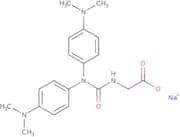
CAS:Please enquire for more information about Sodium 2-(3,3-bis(4-(dimethylamino)phenyl)ureido)acetate including the price, delivery time and more detailed product information at the technical inquiry form on this pageFormula:C19H23N4NaO3Purity:Min. 95%Molecular weight:378.4 g/molN-(2-Hydroxy-3-sulfopropyl)-3,5-dimethoxyaniline sodium
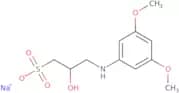
CAS:N-(2-Hydroxy-3-sulfopropyl)-3,5-dimethoxyaniline sodium is a chemical compound that has been shown to have antidiabetic activity in animal studies. It is a competitive inhibitor of the enzyme cholesterol esterase and has been shown to reduce the level of fatty acids and cholesterol in blood plasma. N-(2-Hydroxy-3-sulfopropyl)-3,5-dimethoxyaniline sodium binds to dextran sulfate as well as other amines and can be used for the analysis of test samples. This chemical also binds to monoclonal antibodies, which are proteins produced by B lymphocytes that recognize specific structures on foreign objects such as bacteria or viruses.Formula:C11H16NO6SNaPurity:Min. 95%Color and Shape:White PowderMolecular weight:313.3 g/mol2-Cyanoethyl phosphate barium salt hydrate
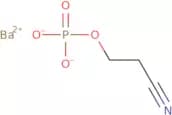
CAS:2-Cyanoethyl phosphate barium salt hydrate is an alkaline compound that is soluble in water. It has been used to synthesize phosphodiesters, benzene, dioxan and alcohols. The chemical was originally developed as a reagent for the quantitative conversion of ethyl acetate esters to their corresponding acid chlorides. This reaction can be carried out quantitatively in tetrahydrofuran at room temperature with yields of about 95%. 2-Cyanoethyl phosphate barium salt hydrate also converts alcohols to their corresponding monophosphates quantitatively in alkaline conditions. Crystalline forms are obtained by reacting the compound with triethylamine and benzene.Formula:C3H6BaNO4P•xH2OPurity:Min. 95%Color and Shape:PowderMolecular weight:324.42 g/molEdetate calcium disodium dihydrate
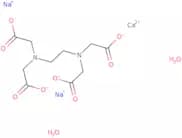
CAS:Edetate calcium disodium dihydrate is an antidote for poisoning by lead, mercury, or arsenic. It is a chelating agent that binds to the metal ions and prevents their absorption into the body. The chemical reaction of edetate calcium disodium dihydrate with lead, mercury, or arsenic produces a stable precipitate that is eliminated in urine. This drug has been shown to be effective when given as a single dose and has been used in clinical trials for long-term efficacy and optimum concentration. Edetate calcium disodium dihydrate has also been used to treat bowel disease and symptoms of lead toxicity such as abdominal pain, nausea, vomiting, constipation, headache, and muscle weakness.Formula:C10H12CaN2O8·2H2O·2NaColor and Shape:White PowderMolecular weight:410.3 g/molSodium 2-[[3-(trifluoromethyl)phenyl]amino]benzoate
CAS:Sodium 2-[[3-(trifluoromethyl)phenyl]amino]benzoate (TFPB) is a synthetic substrate that has been used in the synthesis of microcapsules. TFPB is soluble in water, which allows it to be administered orally and provides a non-toxic environment for the release of protein drugs. TFPB is also able to bind with receptors on polymorphonuclear leucocytes and can be used as an adjuvant therapy in women.
Formula:C14H9F3NNaO2Purity:Min. 95%Color and Shape:PowderMolecular weight:303.21 g/molXanthine sodium salt monohydrate
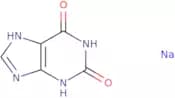
CAS:Xanthine sodium salt monohydrate is a dietary supplement that is used to treat metabolic disorders such as hyperuricemia and gout. It also has antiviral effects against herpes simplex virus-1 (HSV-1) and type-2 (HSV-2). Xanthine sodium salt monohydrate inhibits the production of viral DNA polymerase, which causes cell death by inhibiting the synthesis of proteins vital for cell division. Xanthine sodium salt monohydrate can be used to inhibit the growth of cancer cells in vitro. The mechanism of action is not yet fully understood, but it is thought that xanthine may inhibit phosphodiesterase activity or have a direct effect on the cell membrane.Formula:C5H3N4NaO2•H2OPurity:Min. 95 Area-%Color and Shape:PowderMolecular weight:192.11 g/molFerrocenecarboxylic acid
CAS:Controlled ProductFerrocenecarboxylic acid is a ferrocene compound that has been used as a polymerase chain reaction (PCR) probe. It has been shown to have an antiproliferative effect on leukemia cells, and can be used in the treatment of cancers. Ferrocenecarboxylic acid is membrane permeable and can therefore be used as a cell-impermeable chemotherapeutic agent. This drug also has the ability to bind to target DNA, with this binding being dependent on the functional groups present on the molecule. The ferrocene carboxylate conjugates are also able to react with nucleophiles such as dithiopyridine or pyridinium salts, which may serve as strategies for converting the drug into an MRI contrast agent.Formula:C11H10FeO2Purity:Min. 98 Area-%Color and Shape:Yellow PowderMolecular weight:230.04 g/molAcetyl phosphate dilithium salt
CAS:Acetyl phosphate dilithium salt is a chemical compound that belongs to the group of acetylating agents. Acetyl phosphate has been shown to inhibit cholesterol synthesis in the liver by competitive inhibition of 3-hydroxy-3-methylglutaryl-coenzyme A reductase (HMGCR), an enzyme involved in this process. It also inhibits the formation of disulfide bonds, which are important for proper protein folding and function. Acetyl phosphate binds to proteins by nucleophilic attack, forming a covalent bond with a carbonyl group on the target protein. This binding prevents the protein from functioning properly in a variety of biological processes, including transcriptional regulation.
Formula:C2H3O5P·2LiPurity:Min. 95%Color and Shape:White PowderMolecular weight:151.9 g/molSodium metasilicate nonahydrate
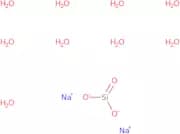
CAS:Sodium metasilicate nonahydrate is a chemical that is used as a surfactant in water treatment and as a food additive. It has been shown to reduce the surface tension of water, which allows for more efficient cleaning. Sodium metasilicate nonahydrate has been used to remove heavy metals from wastewater, such as potassium dichromate and sodium citrate. This chemical also reacts with hydroxides of metals such as sodium carbonate and glycol ethers to form soluble silicates. The solubility data for this compound was obtained by measuring the solubility of anhydrous sodium metasilicate in water at different temperatures using a particle technique.Formula:Na2SiO3•(H2O)9Purity:Min. 95%Color and Shape:PowderMolecular weight:284.2 g/molSodium phosphate monobasic monohydrate
CAS:Sodium phosphate monobasic monohydrate is a nonsteroidal anti-inflammatory drug that belongs to the class of sodium salts. It is used to treat bowel disease and has been shown to reduce the production of prostaglandins in the stomach, which are mediators of inflammation. Sodium phosphate monobasic monohydrate can also be used for its anti-inflammatory effects on other parts of the body, such as joints or muscles. This drug is often used for rheumatoid arthritis, osteoarthritis, or ankylosing spondylitis. The molecular weight of this compound is 288.3 g/mol and it has a melting point of 519°C. Sodium phosphate monobasic monohydrate can be administered orally or intravenously and should not be given with food or antacids due to its high solubility in water. Sodium phosphate monobasic monohydrate also has potential cytotoxicity and significant cytotoxicity against human cells in vitroFormula:H2NaO4P·H2OPurity:Min. 98 Area-%Color and Shape:PowderMolecular weight:137.99 g/molDL-Isocitric acid trisodium
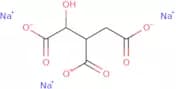
CAS:DL-Isocitric acid trisodium salt hydrate is a nutrient solution that is used to provide energy for bacterial growth. DL-Isocitric acid trisodium salt hydrate provides sodium citrate, sodium succinate, and sodium carbonate which are essential for the metabolism of fatty acids. It also stabilizes chemical compounds and can be used as an alternative to the use of antibiotics. DL-Isocitric acid trisodium salt hydrate has been shown to inhibit enzyme activity in bacteria by binding to the active site of enzymes, inhibiting protein synthesis and cell division. The addition of colloidal gold particles can enhance its effectiveness in preventing bacterial growth.Formula:C6H8O7•Na3Purity:Min. 95%Color and Shape:PowderMolecular weight:261.09 g/molSodium fluoroacetate
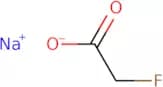
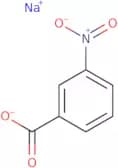
CAS:Sodium fluoroacetate is a salt that is synthesized by the reaction of methyl ethyl and sodium trifluoroacetate. It has been used as an insecticide, but also has been used to treat metabolic disorders such as bowel disease and eye disorders. Sodium fluoroacetate also has been used in natural products for the treatment of autoimmune diseases. The toxicological studies of sodium fluoroacetate have shown that it can cause eye disorders and x-ray crystal structures have revealed its mechanism of action.Formula:C2H2FNaO2Color and Shape:White PowderMolecular weight:100.02 g/molSodium 3-nitrobenzoate
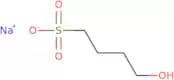
CAS:Sodium 3-nitrobenzoate trihydrate is a salt of the chemical compound sodium 3-nitrobenzoate. It is an analytical chemistry reagent that is commonly used as a standard in solute analysis. Sodium 3-nitrobenzoate trihydrate has been shown to be soluble in water vapor, but not in anhydrous sodium. The hydrogen bond between this molecule and water molecules has been observed using vibrational spectroscopy and quantum theory. This solubility data can be used to calculate an activation energy for the dissociation of the hydrogen bond with water molecules.Formula:C7H5NO4•NaPurity:Min. 95%Color and Shape:PowderMolecular weight:190.11 g/mol4-Hydroxybutanesulfonate sodium
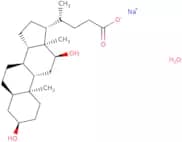
CAS:4-Hydroxybutanesulfonate is a reagent that is used in research, as well as industrial and pharmaceutical applications. It is a versatile building block that can be used to synthesize complex compounds with high purity. 4-Hydroxybutanesulfonate is also a useful intermediate for the synthesis of many organic compounds, such as pharmaceuticals. The CAS number for this compound is 31465-25-5.Formula:C4H10O4S•NaPurity:Min. 95%Color and Shape:White To Off-White SolidMolecular weight:177.18 g/molSodium deoxycholate monohydrate
CAS:Controlled ProductDeoxycholic acid is a bile acid that plays an important role in the digestion of fat. Sodium deoxycholate is used as a detergent to solubilize biological samples and increase their sensitivity to analysis. Deoxycholic acid has been shown to bind to toll-like receptor 4 (TLR4) and induce a response in cells that can be measured using fluorescence probes. It also has shown activity against infectious diseases, such as primary sclerosing cholangitis, by inducing apoptosis. Sodium deoxycholate monohydrate is used as an injection solution for bowel disease.Formula:C24H39O4Na·H2OPurity:Min. 95%Color and Shape:PowderMolecular weight:432.57 g/mol




![Sodium 2-[[3-(trifluoromethyl)phenyl]amino]benzoate](/_next/image/?url=https%3A%2Fstatic.cymitquimica.com%2Fproducts%2F3D%2Fthumb-webp%2FFS92420.webp&w=3840&q=75)