Metal Salts
Found 2872 products of "Metal Salts"
Tetrakis(triphenylphosphine) palladium
CAS:Catalyst for coupling reactions (e.g. Suzuki, Sonogashira, Negishi and Stille)
Formula:C72H60P4PdPurity:(Elemental Analysis) Min. 99%Color and Shape:Yellow PowderMolecular weight:1,155.58 g/mol6-Sulfatoxy melatonin sodium salt
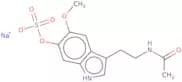
CAS:6-Sulfatoxy melatonin sodium salt is a fine chemical that is a useful scaffold, versatile building block, and useful intermediate. It is used in research chemicals as well as in the manufacture of pharmaceuticals, agrochemicals, and other specialty chemicals. 6-Sulfatoxy melatonin sodium salt is a complex compound with a high quality and has CAS No. 76290-78-3.
Formula:C13H15N2NaO6SPurity:Min. 95 Area-%Color and Shape:PowderMolecular weight:350.32 g/molDL-2-Hydroxyvaleric acid sodium salt
CAS:2-Hydroxyvaleric acid sodium salt is a fine chemical that can be used as a building block for the synthesis of more complex compounds. It is also used as a reagent in research and as a speciality chemical. The CAS number for this compound is 84176-70-5. 2-Hydoxyvaleric acid sodium salt is most commonly used in the synthesis of pharmaceuticals, pesticides, and other chemicals. It has also been shown to be useful in the synthesis of biodegradable polymers and as an intermediate in organic reactions.Formula:C5H9NaO3Purity:Min. 95%Color and Shape:PowderMolecular weight:140.11 g/mol5-Amino-1H-tetrazole potassium salt
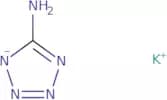
CAS:5-Amino-1H-tetrazole potassium salt is a chemical compound that is used as a reagent for the alkylation of organic compounds. It can be synthesized by reacting sodium with 5-amino-1H-tetrazole in the presence of dimethylformamide and ether. The yield of this reaction is high, but it is not an efficient process because it requires large quantities of starting materials. The potassium salt can be isolated from the mixture by adding water to produce a precipitate, which can then be dried.Formula:CH2KN5Purity:Min. 95%Color and Shape:Slightly Yellow PowderMolecular weight:123.16 g/molBis(maltolato)oxovanadium(IV)
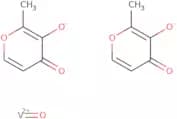
CAS:Bis(maltolato)oxovanadium(IV) is a vanadium compound that has an insulin-like effect on blood glucose levels. It binds to the IL-2 receptor, which is an essential protein in the immune system. The binding of Bis(maltolato)oxovanadium(IV) to IL-2 receptor increases the production of IL-2 and activates insulin-sensitive K+ channels, resulting in increased uptake of glucose from the blood. This leads to decreased serum glucose levels and improved glycemic control. Although not fully understood, it is thought that this anti-diabetic drug may act through its interaction with the IL-2 receptor to regulate insulin sensitivity and glucose transport. In addition, Bis(maltolato)oxovanadium(IV) has been shown to have a protective effect on myocardial infarction (heart attack), as well as protecting against iron deficiency by increasing iron homeostasis.
Formula:C12H10O7VPurity:Min. 95%Color and Shape:Brown PowderMolecular weight:317.15 g/molBacitracin zinc
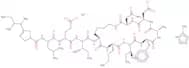
CAS:Bacitracin zinc is a biocide that is used for the treatment of infectious diseases in animals. It has neurotrophic and polyvinyl pyrrolidone properties, which inhibit bacterial growth by preventing protein synthesis. Bacitracin zinc can be used to treat infections caused by bacteria that are resistant to penicillin, tetracycline, erythromycin, and other antibiotics. This drug can be formulated as a suspension or an emulsion in a polymeric matrix with undamaged polymer chains to provide stabilization against hydrolysis.
Formula:C66H101N17O16SZnPurity:Min. 95%Color and Shape:PowderMolecular weight:1,486.06 g/molD-Calcium pantothenate
CAS:Pantothenic acid (pantothenate) is a water-soluble vitamin of the B complex. It is an essential nutrient that is necessary for the normal development and maintenance of the human body. Pantothenate is necessary for energy metabolism, as well as synthesis of coenzyme A and acetylcholine. Pantothenate also participates in the synthesis of hemoglobin, blood cells, and steroid hormones. Pantothenate deficiency can lead to dermatitis, insomnia, irritability, fatigue, depression, dizziness, muscle pain or cramps, and hair loss. D-Calcium pantothenate (DCP) is a salt form of pantothenic acid that has been shown to be effective in treating coronary heart disease and oxidative injury. DCP has been used as a model system to study polymerase chain reactions (PCR) in vitro. This vitamin also acts as an antioxidant by reducing free radicals such as peroxides and lipid hydroFormula:C18H32CaN2O10Color and Shape:White Off-White PowderMolecular weight:476.53 g/molSodium alpha-ketoisocaproate
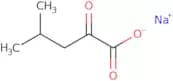
CAS:Sodium alpha-ketoisocaproate is a sodium salt that is used as a protein synthesis inhibitor. It blocks the formation of the amino acid glutamine, which is required for protein synthesis. Sodium alpha-ketoisocaproate has been shown to inhibit the growth of liver cells in vitro. This inhibition may be due to its ability to bind with fatty acids and form an acid complex that inhibits cell growth. This drug also has an inhibitory effect on corynebacterium glutamicum, an organism that can cause abdominal surgery infections, and other bacteria such as Staphylococcus aureus and Enterobacter cloacae. The production of urea nitrogen was inhibited by 50% in mice given this drug for three days before surgery. Sodium alpha-ketoisocaproate is also active against Escherichia coli, Salmonella enterica serovar Typhimurium, Klebsiella pneumoniae, Proteus mirabilFormula:C6H9NaO3Purity:Min. 95%Color and Shape:PowderMolecular weight:152.1 g/molDihydro ferulic acid 4-O-sulfate sodium salt
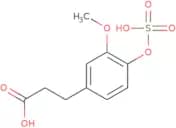
CAS:Dihydroferulic acid is a chlorogenic acid that has been shown to have anti-inflammatory properties in vitro and in vivo. Dihydroferulic acid has been shown to inhibit the production of pro-inflammatory cytokines, such as tumor necrosis factor alpha (TNF-α) and interleukin 10 (IL-10), in monocytic cells. This compound also inhibits the activation of toll-like receptor 4 (TLR4) and TLR2, which are receptors on immune cells that bind to bacterial lipopolysaccharides. Dihydroferulic acid has been found to be present in human urine samples, suggesting it is absorbed from dietary sources. It can also be found in wine and tea, where it may contribute to the positive health effects seen with these beverages. Protocatechuic acid is a phenolic compound with similar activity as dihydroferulic acid.Formula:C10H10Na2O7SPurity:Min. 95%Color and Shape:PowderMolecular weight:320.23 g/mol3-(N-Morpholino)-2-hydroxypropanesulfonic acid sodium salt
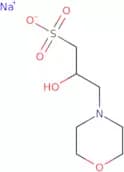
CAS:3-(N-Morpholino)-2-hydroxypropanesulfonic acid sodium salt is a buffer that is used to maintain the pH of a solution. It has been found to be a potential biomarker for bladder cancer, with an increased concentration seen in urine samples and chloride ions as well as inorganic acids. The reaction vessel must be filled with 3N sodium hydroxide solution and heated to dissolve the 3-(N-morpholino) 2-hydroxypropanesulfonic acid sodium salt.Formula:C7H14NO5SNaPurity:Min. 95%Color and Shape:PowderMolecular weight:247.25 g/molSodium molybdate - anhydrous
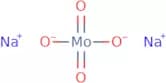
CAS:Sodium molybdate is the monosodium salt of molybdenum. It is a naturally occurring mineral found in various rocks and soils, as well as in water and plant materials. Sodium molybdate is used to treat metabolic disorders, such as diabetes mellitus, because it increases the absorption of glucose from the intestine and stimulates the production of insulin by pancreatic cells. In addition, sodium molybdate has been shown to be useful for treating Wilson's disease, which results from copper accumulation in the liver. This drug also has potential applications in industrial processes involving hydrogen bonding interactions.
Formula:Na2MoO4Purity:Min. 95%Color and Shape:PowderMolecular weight:205.92 g/molTetrahydroxy-1,4-benzoquinone disodium
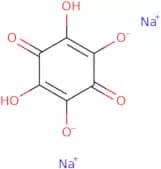
CAS:Tetrahydroxy-1,4-benzoquinone disodium salt is a reaction product of hydrogen peroxide and an alkali metal. It is a nucleophilic compound with a hydration rate that depends on the concentration of hydrogen peroxide. Tetrahydroxy-1,4-benzoquinone disodium salt reacts with amines to form radical species that can be detected by electron spin resonance spectroscopy. These radicals have been shown to be more reactive than the parent amine and can lead to enhanced reactivity in some cases.Formula:C6H4O6•Na2Color and Shape:PowderMolecular weight:218.07 g/molClavulanate Lithium
CAS:Clavulanate lithium is an antibiotic that inhibits the growth of bacteria by binding to penicillin-binding proteins. It is a prodrug that is hydrolyzed in vivo to clavulanic acid, its active form. The inhibitory properties of clavulanate lithium are similar to those of amoxicillin, but it has greater activity against pseudomonas aeruginosa and Staphylococcus aureus. Clavulanate lithium has been shown to increase the plasma concentrations of amoxicillin when used in combination with this drug. It is also effective against a variety of bacterial infections, including Escherichia coli, Proteus mirabilis, Enterobacter cloacae, and Staphylococcus aureus isolates. Clavulanate lithium can be used as an adjunct therapy for the treatment of respiratory tract infections caused by common viruses such as influenza and rhinovirus. Clavulanate
Formula:C8H9NO5•LiPurity:Min. 95%Color and Shape:PowderMolecular weight:206.1 g/molDichloro[(S,S)-ethylenebis(4,5,6,7-tetrahydro-1-indenyl)]titanium(IV)
CAS:Dichloro[(S,S)-ethylenebis(4,5,6,7-tetrahydro-1-indenyl)]titanium(IV) is an organometallic compound that is a useful building block in the synthesis of fine chemicals. It can also be used as a reagent or intermediate in organic synthesis. Dichloro[(S,S)-ethylenebis(4,5,6,7-tetrahydro-1-indenyl)]titanium(IV) has a CAS number of 83462-46-8 and can be used to synthesize diverse structures. It is also versatile and can be used as a scaffold for organic molecules with varying functionality.Formula:C20H24Cl2TiPurity:Min. 95%Color and Shape:Red PowderMolecular weight:383.18 g/molCadmium selenide
CAS:Cadmium selenide is a compound of cadmium and selenide. It is a semiconductor material with high resistance to hydrogen fluoride, and it can be synthesized by heating the elements in an ethylene diamine reaction solution. Cadmium selenide has been shown to have genotoxic effects at high concentrations in biological studies. Cadmium selenide is used as a model system for studying light emission, thermal expansion, and transport properties.Formula:CdSePurity:(%) Min. 99.99%Color and Shape:PowderMolecular weight:191.37 g/molZincon monosodium salt
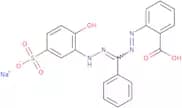
CAS:Zincon monosodium salt is a water-soluble antimicrobial agent that has been shown to have the ability to kill microorganisms in both dry and wet environments. Zincon monosodium salt is a broad spectrum antibiotic, inhibiting microbial growth by binding to intracellular targets such as peptide antimicrobial agents, chitosan gel, and microcapsules. Zincon monosodium salt has been shown to be effective against candida glabrata, which is an opportunistic human pathogen.Formula:C20H15N4O6SNaPurity:(Uv) Min. 98%Color and Shape:Red PowderMolecular weight:462.41 g/molN-Desmethyl ibandronate sodium
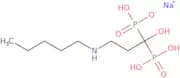
CAS:N-Desmethyl ibandronate sodium is a white crystalline solid with a melting point of 238-240 °C. It has versatile building block, complex compound and research chemicals applications. It is an intermediate used in the synthesis of other compounds, such as speciality chemicals, useful intermediates and useful scaffolds. N-Desmethyl ibandronate sodium can be used in reactions that require high quality and high purity products.Formula:C8H20NO7P2·xNaPurity:(%) Min. 95%Color and Shape:PowderMolecular weight:327.18 g/molRosuvastatin sodium
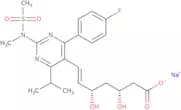
CAS:Rosuvastatin sodium salt is a statin drug that inhibits the enzyme HMG-CoA reductase. It is used to lower cholesterol and triglyceride levels in the blood, and to prevent heart attacks and strokes. Rosuvastatin sodium salt has been shown to have anti-inflammatory activity in human liver cells, which may be due to its ability to suppress the release of proinflammatory cytokines. Rosuvastatin sodium salt has also been shown to have synergistic effects with other drugs such as desipramine hydrochloride in primary cells, which may be due to its ability to inhibit the activity of cytochrome P450 enzymes. This drug is metabolized by alkali hydrolysis into rosuvastatin acid, which is then converted into an active form by polymorphic esterases in the liver. The active form can then be hydrolyzed by plasma esterases into inactive metabolites. Rosuvastatin sodium salt is a crystalline powderFormula:C22H28FN3O6S•NaPurity:Min. 96 Area-%Color and Shape:White PowderMolecular weight:504.53 g/molZinc carbonate
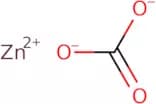
CAS:Zinc carbonate is a compound that contains zinc and carbonate ions. It is a white powder that is insoluble in water. Zinc carbonate has been shown to react with sodium hydroxide to form the soluble salt sodium carbonate, which has the formula NaZn(CO)xHO. The product of this reaction is a crystalline solid that can be used as an antacid or buffer solution. Zinc carbonate also reacts with reactive functional groups such as amines and alcohols, leading to the formation of new compounds. This process can be used for the synthesis of new polymeric matrices, such as those that are biocompatible and resistant to enzymatic degradation.Formula:CO3ZnPurity:Min. 95%Color and Shape:PowderMolecular weight:125.39 g/molPotassium hydrogen oxalate
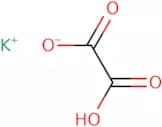
CAS:Potassium hydrogen oxalate is a salt of potassium and oxalate. It has been used as an experimental model for ammonium and sodium salts to study the effects of metal hydroxides on the surface reactivity of oxalate ions. The kinetic energy of the reaction solution is determined by measuring the terminal residues, which are measured using matrix effect. Potassium hydrogen oxalate has been used to study the interactions between oxalate and tetracycline in metal hydroxides, such as zirconium oxide. This salt also has been used in electrochemical impedance spectroscopy (EIS) experiments with zirconium oxide to determine its reactivity with oxalate ions.
Formula:C2HO4KPurity:Min. 95%Color and Shape:White PowderMolecular weight:128.13 g/mol





![Dichloro[(S,S)-ethylenebis(4,5,6,7-tetrahydro-1-indenyl)]titanium(IV)](/_next/image/?url=https%3A%2Fstatic.cymitquimica.com%2Fproducts%2F3D%2Fthumb-webp%2FFD165824.webp&w=3840&q=75)