Metal Salts
Found 2872 products of "Metal Salts"
Sodium perfluorohexanoate
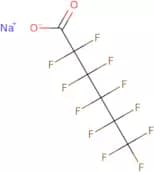
CAS:Sodium perfluorohexanoate is a compound that belongs to the group of pharmacological agents. It has been shown to have low water permeability and receptor activity in vitro. The toxicity of this compound has been studied extensively in animals, and it does not have any significant effects on the liver or kidney. However, it may cause damage to the spleen, brain, and testes. Chronic oral exposure to sodium perfluorohexanoate can cause toxic effects on the liver, kidney, spleen, brain, and testes. Sodium perfluorohexanoate is also an analytical method for measuring human serum levels of dinucleotide phosphate (dNTP) and erythrocyte membrane potential (EMP).Formula:C6HF11O2•NaPurity:Min. 95%Color and Shape:PowderMolecular weight:337.04 g/molEthylenediaminetetraacetic acid disodium dihydrate
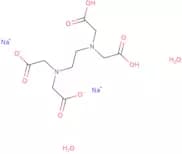
CAS:Hexadentate chelator
Formula:C10H14N2Na2O8·2H2OColor and Shape:White PowderMolecular weight:372.24 g/molRifamycin SV sodium
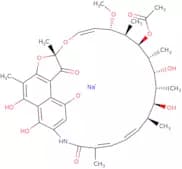
CAS:Rifamycin SV sodium is a hydroxide solution of the antibiotic rifamycin. Rifamycin SV sodium inhibits bacterial growth by binding to DNA-dependent RNA polymerase, thereby preventing transcription and replication. The high frequency of human activity has been shown using a patch-clamp technique on human erythrocytes. This active form is metabolized through a number of metabolic transformations, including hydrolysis by esterases or glucuronidases, oxidation by cytochrome P450 enzymes, reduction by glutathione reductase, or conjugation with glucuronic acid. Rifapentine also specifically binds to markers expressed at high levels in Mycobacterium tuberculosis strains (e.g., ESX-1 secretion system protein) and inhibits cell growth in culture.Formula:C37H46NNaO12Purity:Min 900U/MgColor and Shape:PowderMolecular weight:719.75 g/molPotassium oxirane-2-carboxylate
CAS:Potassium oxirane-2-carboxylate is a chiral, silicon containing compound that inhibits the enzyme glucose 6-phosphate dehydrogenase. It has been shown to inhibit the formation of 6-phosphate in tubule cells. This inhibition leads to renal toxicity and may be due to its ability to catalyze primary alcohols into chloroacetone and malate. Potassium oxirane-2-carboxylate is an organosilicon compound that can be used as a catalyst for enzymatic reactions, such as dehydrogenation.Formula:C3H3KO3Purity:Min. 95 Area-%Color and Shape:PowderMolecular weight:126.15 g/molFusidic acid sodium
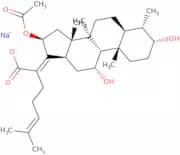
CAS:Inhibitor of protein synthesis; steroid antibioticFormula:C31H48O6•NaPurity:Min. 95%Color and Shape:PowderMolecular weight:539.7 g/molAnthraquinone-2,7-disulfonic acid disodium salt - 80%
CAS:Anthraquinone-2,7-disulfonic acid disodium salt, 2,7-AQDS, is an anthraquinone sulfonate used for many different purposes, such as, desulfurizing agent for removing oil in refinery and as an intermediate for dyes or decolorization agent. In addition, anthraquinone-2,7-disulfonic salt or 2,7-AQDS is frequently used in electrochemistry, as a redox mediator. For example, in aqueous organic redox flow batteries (AORFB), anthraquinone-2,7-disulfonic acid disodium salt (2,7-AQDS) plays a role in increasing the capacity and the performance of these types of batteries.
Formula:C14H6O8S2·2NaPurity:Min. 80 Area-%Color and Shape:Red Purple PowderMolecular weight:412.3 g/mol(S)-(-)-Pantoprazole sodium
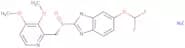
CAS:Pantoprazole sodium is a proton pump inhibitor that inhibits the production of gastric acid by blocking the H+/K+-ATPase enzyme. It has been shown to be effective in treating gastroesophageal reflux disease (GERD) and peptic ulcers. Pantoprazole sodium is available as a sodium salt, which is an ester of pantoprazole and sodium hydroxide. This product crystallizes from ethyl acetate or recrystallizes from acetonitrile. Pantoprazole sodium is chiral, meaning it has two forms that are non-superimposable mirror images of each other. The (S)-(-)-pantoprazole sodium form is the more potent form and is used in this product.Formula:C16H14F2N3NaO4SPurity:Min. 95%Molecular weight:405.35 g/molSodium selenite pentahydrate
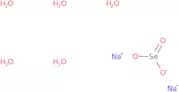
CAS:Sodium selenite pentahydrate is a model system that exhibits antioxidative properties and can be used as an antimicrobial agent. It has been shown to have therapeutic benefits in the treatment of metabolic disorders and also has antifungal, antibacterial, and antiviral properties. The reaction between sodium selenite pentahydrate and malonic acid generates hydrogen peroxide, which has been shown to inhibit the growth of prostate cancer cells. Sodium selenite pentahydrate is used as a plasma mass spectrometry standard for the identification of sodium salts in animal tissue. This compound is also used to produce probiotic bacteria that are beneficial to human health.Formula:Na2SeO3•(H2O)5Purity:Min. 95%Color and Shape:PowderMolecular weight:263.01 g/molTetrakis(triphenylphosphine)platinum(0)
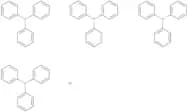
CAS:Tetrakis(triphenylphosphine)platinum(0) is a compound that belongs to the group of organometallic complexes. It is a multinuclear compound, which means it contains more than one metal atom. Tetrakis(triphenylphosphine)platinum(0) has been used as an oxidizing agent in organic chemistry and as a catalyst for chemical reactions. Tetrakis(triphenylphosphine)platinum(0) is chemically stable and insoluble in water, making it useful for reactions that require protection from water or other protic solvents. Tetrakis(triphenylphosphine)platinum(0) has been shown to react with chloride to form chloroplatinates, with ester compounds to form platinum esters, and with carbon-carbon double bonds to form platinum carbonyls.Formula:C72H60P4PtColor and Shape:PowderMolecular weight:1,244.23 g/molSodium 4-hydroxybenzenesulfonate
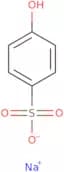
CAS:Sodium 4-hydroxybenzenesulfonate is a chemical compound that is the sodium salt of 4-hydroxybenzenesulfonic acid. It has an inhibitory effect on sucrase activity and can be used as an antidiabetic drug. Sodium 4-hydroxybenzenesulfonate is synthesized by reacting sodium carbonate with 4-hydroxybenzene sulfonyl chloride in the presence of a proton, usually generated from an acid or base. The reaction mechanism for this process is nucleophilic substitution at the carbonyl group. This product has been shown to have optical properties that are sensitive to changes in pH and chloride concentration. Sodium 4-hydoxybenzenesulfonate has been immobilized onto a glassy carbon electrode surface using electrochemical immobilization techniques and then characterized using electrochemical impedance spectroscopy (EIS).
Formula:C6H6O4S•NaPurity:Min. 95%Color and Shape:PowderMolecular weight:197.17 g/molZinc difluoromethanesulfinate
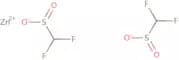
CAS:Zinc difluoromethanesulfinate is used as a precursor in the production of pharmaceuticals and other organic chemicals. It is an inorganic compound that has a structural formula of Zn(CH)SOF. When heated, this compound decomposes to produce zinc oxide, SO2, and HF. The vibrational properties of zinc difluoromethanesulfinate have been measured using infrared techniques. This compound has shown biological activity in hyperproliferative diseases such as cancer and mental disorders such as psychosis and chronic kidney disease. Zinc difluoromethanesulfinate also has a number of biological effects on the cardiovascular system, including stimulating ganglia cells and inhibiting the release of potassium ions from heart muscle cells.
Formula:C2H2F4O4S2ZnPurity:Min. 95%Color and Shape:White PowderMolecular weight:295.54 g/molSodium tetrakis[3,5-bis(trifluoromethyl)phenyl]borate
CAS:Tetrakis(3,5-bis(trifluoromethyl)phenyl)borate is a boron compound that has the formula [(CH)B] and is an ionic compound. It is a model system for studying conformational properties of organic compounds in solution. A reaction solution containing sodium tetrakis(3,5-bis(trifluoromethyl)phenyl)borate reacts with coumarin derivatives to form stable complexes. These complexes are then detected by infrared spectroscopy, mass spectrometry, and nuclear magnetic resonance (NMR). This method has been applied to urine samples and plasma from healthy subjects as well as human serum. The stable complexes can be used to measure the concentration of free coumarin derivatives in these samples. The cationic polymerization of polystyrene was studied using tetrakis(3,5-bis(trifluoromethyl)phenyl)borate
Formula:C32H12BF24•NaPurity:(%) Min. 95%Color and Shape:PowderMolecular weight:886.2 g/molDL-Hydroxysuccinic acid sodium
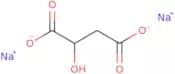
CAS:DL-Hydroxysuccinic acid sodium (DLS) is a metabolite of the enzyme succinic dehydrogenase, which is involved in the conversion of malic acid to acrylate. It is an inhibitor of malic enzyme and glycol ether hydrolase, with toxicity studies showing that DLS inhibits the activity of complex enzymes. DLS has been shown to have interactions with sunitinib and sodium salts. The potential for drug interactions should be considered when administering DLS with other drugs. DL-Hydroxysuccinic acid sodium also has effects on energy metabolism, as it may inhibit enzymes such as malate dehydrogenase and 2-oxoglutarate dehydrogenase.Formula:C4H4Na2O5Purity:Min. 95%Color and Shape:PowderMolecular weight:178.05 g/molResazurin, sodium salt
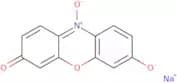
CAS:Weakly fluorescent blue dye; indicator of mitochondrial activity
Formula:C12H6NNaO4Purity:Min. 85 Area-%Color and Shape:Green PowderMolecular weight:251.17 g/molSodium 3-phosphoglycerate hydrate
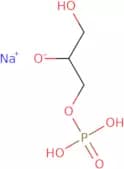
CAS:Sodium 3-phosphoglycerate hydrate is a salt of sodium and phosphoglycerate. It is used as a pharmaceutical ingredient to treat metabolic disorders such as hypoglycemia, hyperglycemia, and diabetes mellitus. The chemical structure of 3PGA consists of three phosphate groups and one glycerate group attached to the carbon backbone. This compound's three phosphate groups are critical for its function in energy metabolism and storage. One phosphate group is involved in the synthesis of ATP (adenosine triphosphate), while two phosphate groups are involved in the breakdown of glucose (glycolysis). The enzyme inhibitors that inhibit the enzymes phosphofructokinase and pyruvate kinase are also present in this compound, which may be responsible for its effects on insulin secretion. Sodium 3-phosphoglycerate hydrate contains redox potentials that can be measured by cyclic voltammetry or potentiometry. This study provides structural analysis of thisFormula:C3H8O6P•Nax•(H2O)yColor and Shape:PowderMolecular weight:194.06 g/molSodium azide
CAS:Sodium azides are a group of chemical compounds that inhibit the enzyme activity of human polymorphonuclear leukocytes. Sodium azide is used as a model system to study p-glycoprotein inhibition, which is an important drug target for cancer chemotherapy. It has also been shown to inhibit mouse monoclonal antibody production in vitro. Energy metabolism is affected by sodium azide through its ability to induce neuronal death and inhibit energy-dependent processes such as neurotransmitter release and synaptic vesicle exocytosis. Sodium azide has also been shown to have protective effects on eye disorders and infectious diseases, including wild-type strains of bacteria such as Staphylococcus aureus.Formula:NaN3Purity:Min. 99%Color and Shape:White PowderMolecular weight:65.01 g/molRhodizonic acid dipotassium salt
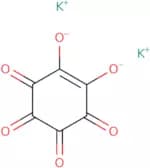
CAS:Rhodizonic acid dipotassium salt is a solubilized dye that is used to stain acidic polysaccharides in the cell wall of bacteria. This compound has been shown to be useful in clinical studies for identifying colon cancer, as well as being used as a dietary supplement. Rhodizonic acid dipotassium salt contains nitrogen atoms and an oxidation product, malonic acid, which are found in a variety of biological systems. Rhodizonic acid dipotassium salt has been shown to have staining properties and is often used for the identification of bacteria with a simple staining technique. It can also be used to identify bacteria with more complicated techniques such as electrophoresis and chromatography. Rhodizonic acid dipotassium salt has been found to be rechargeable by treatment with chloride ions under acidic conditions.Formula:C6O6·2KPurity:Min. 95%Color and Shape:PowderMolecular weight:246.26 g/molMethylthymol blue sodium
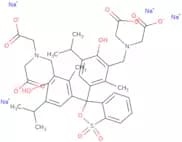
CAS:Methylthymol blue sodium salt (MTBS) is a dye that is used in complexometry. It is typically used for determination of calcium and sulfate. λmax of 438 nm; Solubility of 860g/L.Check application notes for our ACS strontium test procedureFormula:C37H40N2Na4O13SPurity:Min. 95%Color and Shape:PowderMolecular weight:844.74 g/mol1-Nonanesulfonic acid sodium salt
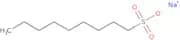
CAS:1-Nonanesulfonic acid sodium salt is a chromatographic method for the analysis of aliphatic hydrocarbons. It has been shown to have strong thermal expansion properties and can be used for the preparation of polyvinyl chloride (PVC) films with high particle transport properties. 1-Nonanesulfonic acid sodium salt has also been used in the development of covid-19, a pandemic influenza vaccine. 1-Nonanesulfonic acid sodium salt is an interferometric technique that can be used as a clinical diagnostic for detecting chloride ions in urine samples.Formula:C9H19O3SNaPurity:Min. 95%Color and Shape:PowderMolecular weight:230.3 g/molEthyl 4-hydroxybenzoate sodium
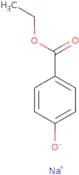
CAS:Ethyl 4-hydroxybenzoate sodium salt is a benzoate that has been shown to be effective in the treatment of bowel disease. It has been shown to inhibit the growth of fungi by reacting with their cell walls and preventing them from synthesizing proteins. The mechanism of action may be due to its hydrophobic effect, which prevents water molecules from penetrating the cell wall and disrupting membrane function. This compound also prevents metabolic disorders, such as diabetes mellitus, by inhibiting the activity of enzymes involved in carbohydrate metabolism. Ethyl 4-hydroxybenzoate sodium salt can be used as an antimicrobial agent against bacteria and fungi.Formula:C9H10O3•NaPurity:Min. 98 Area-%Color and Shape:PowderMolecular weight:189.16 g/mol



![Sodium tetrakis[3,5-bis(trifluoromethyl)phenyl]borate](/_next/image/?url=https%3A%2Fstatic.cymitquimica.com%2Fproducts%2F3D%2Fthumb-webp%2FFS93415.webp&w=3840&q=75)