Volatile Organic Compound (VOC) Standards
Volatile Organic Compound (VOC) standards are critical for the analysis and quantification of VOCs, which are commonly present in air, water, and soil. VOCs are a key focus in environmental monitoring due to their potential health impacts. At CymitQuimica, we offer high-purity VOC standards that guarantee precise calibration of analytical equipment, ensuring reliable results in environmental, industrial, and air quality testing.
Found 194 products of "Volatile Organic Compound (VOC) Standards"
Sort by
Purity (%)
0
100
|
0
|
50
|
90
|
95
|
100
Trichloroethylene
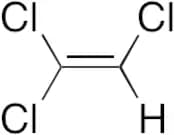
CAS:<p>Applications Trichloroethylene is a common industrial solvent that is used in dry cleaning and metal degreasing. Trichloroethylene is also a suspected carcinogen to humans, and is a common groundwater contaminant.<br> Not a dangerous good if item is equal to or less than 1g/ml and there is less than 100g/ml in the package<br>References Little, D., et al., Appl. Env. Microb., 54, 951 (1988); Vogel, T. & McCarty, P.: Appl. Environ. Microb., 49, 1080 (1985); Wartenberg, D., et al.: Environ. Health Persp., 108, 161 (2000)<br></p>Formula:C2HCl3Color and Shape:ColourlessMolecular weight:131.394-Chlorodiphenyl Ether
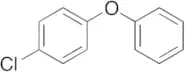
CAS:Controlled Product<p>Applications 4-Chlorodiphenyl Ether is a standard for environmental testing and research. Biodegradability studies with organic priority pollutant compounds.<br>References Tabak, H. H., et al.: J. Water Pollut. Control Fed., 53, 1503 (1981)<br></p>Formula:C12H9ClOColor and Shape:NeatMolecular weight:204.65Decyl Hexyl Phthalate-d4
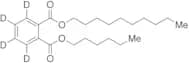
CAS:Controlled ProductFormula:C24D4H34O4Color and Shape:NeatMolecular weight:394.5811,2-Dichloroethylene (Mixture of cis and trans)
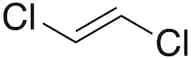
CAS:Controlled Product<p>Stability Light Sensitive<br>Applications 1,2-Dichloroethylene (Mixture of cis and trans) is a chlorinated solvent used in organic synthesis. Environmental pollutant found in river ecosystems contributing to habitat degradation.Environmental toxin on US EPA Toxic Release Inventory list (TRI) list.<br> Not a dangerous good if item is equal to or less than 1g/ml and there is less than 100g/ml in the package<br>References Schaefer, R. et al.: Freshwater Biol., 61, 2116 (2016);<br></p>Formula:C2H2Cl2Color and Shape:ColourlessMolecular weight:96.941,2-Pentanediol
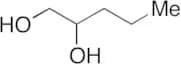
CAS:Controlled Product<p>Applications 1,2-Pentanediol is used in synthesizing quinoxalines from biomass-derived glycols. Also used in the synthesis of propiconazole (P770100) a fungicide as well as other antifungals.<br>References Climent, M. et al.: J. Catal., 292, 118 (2012); Zhou, Y. et al.: Carbo. Res., 344, 1289 (2009);<br></p>Formula:C5H12O2Color and Shape:ColourlessMolecular weight:104.15Bromodiiodomethane (>85%)
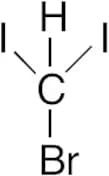
CAS:Controlled Product<p>Stability Light Sensitive<br>Applications Bromodiiodomethane, is a Iodinated trihalomethanes (ITHMs),which can be used for several medicinal or pharmaceutical taste and odor events in drinking water.<br>References Cancho, B. et al.: Wat. Res,, 34. No. 13, 3380 (2000);<br></p>Formula:CHBrI2Purity:>85%Color and Shape:YellowMolecular weight:346.73Dimethyl Trisulphide
CAS:Controlled Product<p>Applications Dimethyl trisulphide (CAS# 3658-80-8) is a useful research chemical compound.<br></p>Formula:C2H6S3Color and Shape:ColourlessMolecular weight:126.261,2-Dichloroethane-D4
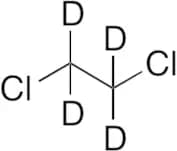
CAS:Controlled Product<p>Stability Volatile<br>Applications 1,2-Dichloroethane-D4 is a labelled analogue of 1,2-Dichloroethane (D434325). 1,2-Dichloroethane is one of the major waste products of the Vinyl Chloride industries, and has also been classified as a potential human carcinogen.<br> Not a dangerous good if item is equal to or less than 1g/ml and there is less than 100g/ml in the package<br>References Hung, W., et al.: Appl. Surf. Sci., 255, 2205 (2008); Rannug, U., et al.: Chem.-Biol. Int., 20, 1 (1978)<br></p>Formula:C22H4Cl2Color and Shape:ColourlessMolecular weight:102.98Hexafluoroacetone Trihydrate
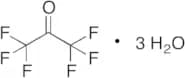
CAS:Controlled ProductFormula:C3F6O·3H2OColor and Shape:NeatMolecular weight:220.071,2-Diethoxyethane
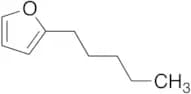
CAS:Controlled Product<p>Applications 1,2-Diethoxyethane is from the group of glycol ether class of industrial solvents, widely used in the manufacture of protective coatings.<br> Not a dangerous good if item is equal to or less than 1g/ml and there is less than 100g/ml in the package<br>References George, J.D., et al.: Toxicol Sci., 19, 15 (1991)<br></p>Formula:C6H14O2Color and Shape:NeatMolecular weight:118.172-Pentylfuran
CAS:Controlled Product<p>Stability Volatile<br>Applications 2-Pentylfuran is a volatile compound that is detected in meat smoke aerosol, rice aroma and tomato paste volatiles.<br> Not a dangerous good if item is equal to or less than 1g/ml and there is less than 100g/ml in the package<br>References Rogge, W., et al.; Environ. Sci. Technol., 25, 1112 (1991); Buttery, R., et al.: J. Agric. Food Chem., 36, 1006 (1988); Buttery, R., et al.: J. Agric. Food Chem., 38, 336 (1990);<br></p>Formula:C9H14OColor and Shape:Colourless To Light YellowMolecular weight:138.21Hexylene Glycol
CAS:<p>Applications Hexylene Glycol is used as a reagent in the synthesis of functionalized boronic esters. Also used in the preparation of vinylboronates.<br>References Demory, E. et al: Org. Proc. Res. Dev., 15, 710 (2011); PraveenGanesh, N. et al.: J. Org. Chem., 72 4510 (2007);<br></p>Formula:C6H14O2Color and Shape:ColourlessMolecular weight:118.17Methyl Methanesulfonate
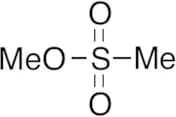
CAS:<p>Applications Methyl Methanesulfonate is used as a reagent in the synthesis of 2-Methyllamotrigine (M315350); an impurity of Lamotrigine (L173250) which is an anticonvulsant that inhibits glutamate release, possible through inhibition of sodium, potassium and calcium currents. Also used in treatment of bipolar depression.<br> Not a dangerous good if item is equal to or less than 1g/ml and there is less than 100g/ml in the package<br>References Miller, A.A., et al.: Epilepsia, 27, 483 (1986); Grunze, et al.: Neuropsychobiology, 38, 131 (1998); Calabrese, J.R., et al.: J. Clin. Psychiatry, 60, 79 (1999)<br></p>Formula:C2H6O3SColor and Shape:Colourless LiquidMolecular weight:110.132-Methylfuran-d3 (>90%) (1 mg/mL in Methanol)
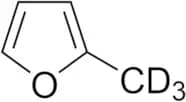
CAS:Controlled ProductFormula:C52H3H3OPurity:>90%Color and Shape:ColourlessMolecular weight:85.12Dichloromethane(Methylene Chloride)
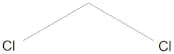
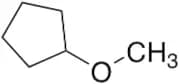
CAS:Controlled ProductFormula:CH2Cl2Color and Shape:ColourlessMolecular weight:84.93Cyclopentyl Methyl Ether
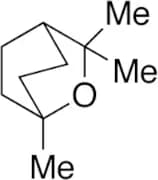
CAS:Controlled ProductFormula:C6H12OColor and Shape:ColourlessMolecular weight:100.161,8-Cineol
CAS:<p>Applications 1,8-Cineol is the chief constituent of oil of eucalyptus. Used as pharmaceutic aid (flavor).<br> Not a dangerous good if item is equal to or less than 1g/ml and there is less than 100g/ml in the package<br>References Jori, et al.: Eur. J. Pharmacol., 9, 362 (1970); Maugh, T.H., Science, 218, 278 (1982),<br></p>Formula:C10H18OColor and Shape:NeatMolecular weight:154.252-Methyl Hippuric Acid
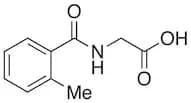
CAS:Controlled Product<p>Applications The main metabolite of o-xylene.<br>References Gregus, Z., et al.: Drug Metab. Dispos., 26, 1082 (1998), Gregus, Z., et al.: Xenobiotica, 29, 547 (1999), Gonzalez-Reche, L., et al.: Arch. Toxicol., 77, 80 (2003),<br></p>Formula:C10H11NO3Color and Shape:White To Off-WhiteMolecular weight:193.202,2-Dichloroethanol
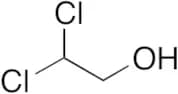
CAS:Controlled Product<p>Applications 2,2-Dichloroethanol is a reagent in the preparation of tunable molecular catalysts via functionalizing methylene bridge of bis(N-heterocyclic carbene) ligands.<br>References Zhong, R., et al.: ChemPlusChem, 79, 1294-1303 (2014)<br></p>Formula:C2H4Cl2OColor and Shape:NeatMolecular weight:114.961,3-Dichlorobenzene
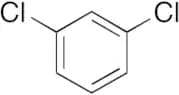
CAS:Controlled Product<p>Applications 1,3-Dichlorobenzene was used to study the effect of solvent vapor pressure on the vertical nanowire of C60 molecules. It can be detected in environmental samples using an advanced Fourier transform infrared spectroscopy-attenuated total reflectance (FTIR-ATR) sensor.<br> Not a dangerous good if item is equal to or less than 1g/ml and there is less than 100g/ml in the package<br>References Kim, J.: ACS Nano, 7, 9122 (2013); Lu, R., et al.: Scientific Reports, 3, 2525 (2013)<br></p>Formula:C6H4Cl2Color and Shape:ColourlessMolecular weight:147.00Allyl Chloride
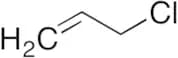
CAS:<p>Stability Light Sensitive, Volatile<br>Applications Allyl chloride is a chlorinated hydrocarbon that is considered to be a hazardous air pollutant because of its potential human health effects. Allyl chloride is also a known mutagen towards Salmonella typhimurium, and induces gene conversion in Saccharomyces cerevisiae.<br> E0<br>References Mc Coy, E., et al.: Mut. Res./Fund. Mol. Mech. Mutagen., 57, 11 (1978); Shepson, P., et al.: Environ. Sci. Technol., 21, 568 (1987)<br></p>Formula:C3H5ClColor and Shape:ColourlessMolecular weight:76.521-Butylpyrrolidin-2-one
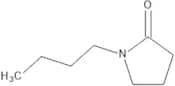
CAS:Controlled Product<p>Applications 1-BUTYLPYRROLIDIN-2-ONE (cas# 3470-98-2) is a useful research chemical.<br></p>Formula:C8H15NOColor and Shape:ColourlessMolecular weight:141.214-Isopropylthioxanthone
CAS:<p>Applications 4-Isopropylthioxanthone is a thioxanthone derivative useful as photoinitiators.<br>References Ginex, T., et al.: Chem. Res. Toxicol., 27, 279 (2014); Reitsma, M., et al.: Toxicol. Sci., 133, 345 (2013);<br></p>Formula:C16H14OSColor and Shape:Light YellowMolecular weight:254.351,4-Dichlorobenzene-d4
CAS:Controlled Product<p>Applications 1,4-Dichlorobenzene-d4 is labelled 1,4-Dichlorobenzene (D431875), a versatile building block and a small bioactive molecule, used in various organic synthesis. It is also used as disinfectant, deodorant, and pesticide.<br> Not a dangerous good if item is equal to or less than 1g/ml and there is less than 100g/ml in the package<br>References Fahey, D. R., et al.: Macromolecules, 24 (15), 4242 (1991); Rossberg, M., et al.: Ullmann's Encyclopedia of Industrial Chemistry, (2006);<br></p>Formula:C6D4Cl2Color and Shape:ColourlessMolecular weight:151.027Ethyl Methanesulfonate
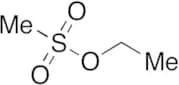
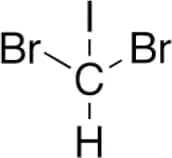
CAS:Controlled Product<p>Stability Moisture Sensitive<br>Applications Ethyl Methanesulfonate is used in studies as DNA damage specific control of cell death by cryptochrome in p53-mutant Ras-transformed cells.<br>References Lee, J.H., et al.: Cancer Res., 73, 785 (2013);<br></p>Formula:C3H8O3SColor and Shape:NeatMolecular weight:124.16Dibromoiodomethane (90%)
CAS:<p>Stability Light Sensitive, Volatile<br>Applications Dibromoiodomethane was found as a disinfection byproducts in European drinking water.<br>References Jeong, C.H., et al.: Environ. Sci. Technol. 46, 12120 (2012); Krasner, S.W., et al.: Proceed. Water. Qual. Technol. Confer., 1592 (2001);<br></p>Formula:CHBr2IPurity:90%Color and Shape:Dark Red To Dark BrownMolecular weight:299.73Dibromoacetonitrile
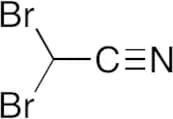
CAS:Controlled Product<p>Stability Light Sensitive<br>Applications Dibromoacetonitrile is a carcinogenic nitrogenous disinfection byproduct. Dibromoacetonitrile in drinking water was linked to oral cavity cancer in rats and forestomach cancer in mice. In addition, Dibromoacetonitrile may cause oxidative damage in rat brain.<br> Not a dangerous good if item is equal to or less than 1g/ml and there is less than 100g/ml in the package<br>References Guo, Z., et al.: Chem. Eng. J. 306, 1180 (2016); Krasner, S. W., et al.: Environ. Sci. Technol. 50, 9583 (2016); Natl Toxicol Program Tech Rep Ser. 544, 1 (2010); Klattisaksiri, P., et al.: Water Res 98, 160 (2016); Sayed, R. H., et al.: Environ Toxicol Pharmacol. 34, 849 (2012)<br></p>Formula:C2HBr2NColor and Shape:ColourlessMolecular weight:198.84Isopropanol-d7
CAS:Controlled Product<p>Applications A deuterated alcohol used in the study of lignite liquefaction.<br> Not a dangerous good if item is equal to or less than 1g/ml and there is less than 100g/ml in the package<br>References Kuznetov, P.N. et al.: Fuel, 70, 559 (1991);<br></p>Formula:C32H7HOColor and Shape:ColourlessMolecular weight:67.14tert-Butyl Methyl Ether
CAS:<p>Applications tert-Butyl Methyl Ether is used in the preparation of gasolines, acting as an oxygenate to improve octane index and combustion efficiency (1). A mutagenic component of the mixtures present in the environment through degredation (2). Drinking water contaminant candidate list 3 (CCL 3) compound as per United States Environmental Protection Agency (EPA), environmental, and food contaminants.<br> Not a dangerous good if item is equal to or less than 1g/ml and there is less than 100g/ml in the package<br>References 1. Landmeyer, J. et al.: Ground Water Monit. R. 1998 Nov:18(4) p93-1022. Fayolle, F. et al.: Appl. Microbiol. Biotechnol. 2001 Aug;56(3-4):339-49.<br></p>Formula:C5H12OColor and Shape:ColourlessMolecular weight:88.15n-Heptane
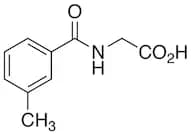
CAS:<p>Applications n-Heptane is used a component of blended fuel compositions as well as a solvent in organic chemical reactions.<br> Not a dangerous good if item is equal to or less than 1g/ml and there is less than 100g/ml in the package<br>References Ding, Y. et al.: J. Haz. Mat., 271, 82 (2014); Xu, H. et al.: J. Chem. Eng. Dat., 59, 1281 (2014);<br></p>Formula:C7H16Color and Shape:ColourlessMolecular weight:100.203-Methyl Hippuric Acid
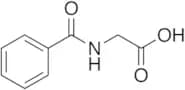
CAS:Controlled Product<p>Applications Α substituted hippurate analog as substrates and inhibitor of peptidylglycine α-hydroxylating monooxygenase (PHM).<br>References Kruse, L., et al.: J. Med. Chem., 33, 781 (1990), Jeng, A., et al.: J. Biol. Chem., 272, 14666 (1997), Schally, A., et al.: Horm. Metab. Res., 40, 315 (2008),<br></p>Formula:C10H11NO3Color and Shape:Off-WhiteMolecular weight:193.20Hippuric Acid
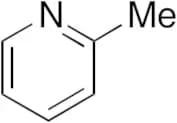
CAS:Controlled Product<p>Applications N-Benzoylglycine also known as Hippuric Acid is the glycine conjugate of benzoic acid commonly found in ruminant urine. Hippuric acid is synthesized in the liver and its production is greatly increased following consumption of benzoic acid. In itself it does not have a direct biological function, however p-hydroxy-hippurica acid can be used as an inhibitor of Ca2+ ATPase.A possible biomarker of Parkinson’s disease.<br>References Jankowski J. T. et. al.: Kidney Int. 78, 84 (2001); Chem. and Eng. News p. 13, Apr. 1, (2019)<br></p>Formula:C9H9NO3Color and Shape:NeatMolecular weight:179.172-Picoline
CAS:Controlled Product<p>Applications 2-Picoline is used as a reagent in the synthesis of 2-Picolineborane, a non-toxic alternative to sodium borohydride for the labelling of oligosaccharides.<br> Not a dangerous good if item is equal to or less than 1g/ml and there is less than 100g/ml in the package<br>References Renee Ruhaak, L., et al.: Proteomics, 10, 2330 (2010)<br></p>Formula:C6H7NColor and Shape:NeatMolecular weight:93.131-Bromopropane
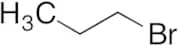
CAS:Controlled Product<p>Stability Volatile<br>Applications 1-Bromopropane, is used as a solvent and for the cleaning of metal surfaces, removal of soldering residues from electronic circuit boards. It is anticipated to be human carcinogen.<br> Not a dangerous good if item is equal to or less than 1g/ml and there is less than 100g/ml in the package<br>References Lingyo Zh., et al.: Toxicology, 304, 76 (2013); Samukawa, M. et al.: Archives Internal Med., 172(16), 1257 (2012);<br></p>Formula:C3H7BrColor and Shape:NeatMolecular weight:122.99Chlorbutanol Hemihydrate
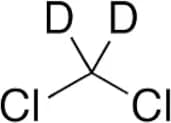
CAS:<p>Applications Chlorbutanol Hemihydrate acts as a fish anaesthetic, primarily on members of the octopus species. Also used as an ophthalmic antimicrobial preservative agent (1).<br>References (1) Amin, A. et al.;Pharm. Dev. Tech., 17, 614 (2012)<br></p>Formula:C4H7Cl3O·H2OColor and Shape:White To Off-WhiteMolecular weight:372.93Methylene Chloride-d2
CAS:Controlled Product<p>Stability Volatile<br>Applications Labelled Methylene Chloride used in organic chemical reactions as a general solvent.<br> Not a dangerous good if item is equal to or less than 1g/ml and there is less than 100g/ml in the package<br>References Fulmer, G. et al.: Organometal., 29, 2176 (2010); Kobayashi, M. et al.: J. Porph. Pthalo., 16, 359 (2012);<br></p>Formula:C2H2Cl2Color and Shape:Colourless LiquidMolecular weight:86.941-Chlorobutane
CAS:<p>Stability Volatile<br>Applications 1-Chlorobutane is used in biological studies to evaluate the activity of haloalkan dehalogenase from Sphingomonas paucimobilis.<br> Not a dangerous good if item is equal to or less than 1g/ml and there is less than 100g/ml in the package<br>References Oakley, A.J., et al.: Biochem., 41, 4847 (2002)<br></p>Formula:C4H9ClColor and Shape:NeatMolecular weight:92.57Isobutyric Acid
CAS:Controlled Product<p>Applications Isobutyric acid is used in biological studies to discriminate between the different volatile compounds found in wines and beers.<br> Not a dangerous good if item is equal to or less than 1g/ml and there is less than 100g/ml in the package<br>References Dourtoglou, V., et al.: Food Chem., 159, 181 (2014); Webber, V., et al.: Food Chem., 159, 391 (2014)<br></p>Formula:C4H8O2Color and Shape:ColourlessMolecular weight:88.11Isoflurane
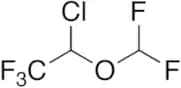
CAS:<p>Applications Isoflurane is a halogenated ether used for inhalational anesthesia. Recent studies suggest that there might be a relationship between administration of isoflurane and postoperative cognitive dysfunction (POCD).<br> Not a dangerous good if item is equal to or less than 1g/ml and there is less than 100g/ml in the package<br>References Lewis, M.C. et al.: Med. Hypoth., 68, 484 (2007); Mellon, R.D. et al.: Anesth. Analg., 104, 509 (2007);<br></p>Formula:C3H2ClF5OColor and Shape:NeatMolecular weight:184.49Borneol
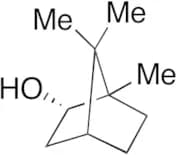
CAS:<p>Applications Borneol is found in the composition of essential oils extracted from Kaempferia Galanga L. Also used to promote absorption of drugs into various foods, liquids and edible items.<br> Not a dangerous good if item is equal to or less than 1g/ml and there is less than 100g/ml in the package<br>References Wong, K. et al.: Flav. Frag. J., 7, 263 (1992); Yang, L. et al.: J. Zhejiang. Univ. Sci. B., 12, 143 (2011);<br></p>Formula:C10H18OColor and Shape:White To Off-WhiteMolecular weight:154.252,3-Dichloro-1-propanol
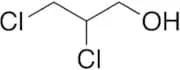
CAS:Controlled ProductFormula:C3H6Cl2OColor and Shape:NeatMolecular weight:128.992-Bromo-2-chloroacetonitrile (~90%)
CAS:Controlled Product<p>Applications 2-Bromo-2-chloroacetonitrile is a disinfection byproduct in drinking water. Discharges of produced waters from oil and gas extraction via wastewater treatment plants are the sources of disinfection byproducts to receiving streams.<br> Not a dangerous good if item is equal to or less than 1g/ml and there is less than 100g/ml in the package<br>References Raymer, J. H., et al.: J. Expo. Anal. Env. Epid., 10, 808-815 (2000); Hladik. M. L., et al.: ; Sci. Total. Environ. 466-467, 1085-1093 (2014)<br></p>Formula:C2HBrClNPurity:~90%Color and Shape:ColourlessMolecular weight:154.39p-Benzoquinone
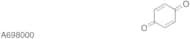
CAS:<p>Applications p-Benzoquinone is used as a catalyst in the preperation of allyl silyl ethers. p-Benzoquinone is a superoxide scavenger that has been used in the characterization of carnation-like SnS2 nanostructure photocatalysts for photodegredation. p-Benzoquinone is a toxic metabolite found in human blood.<br> Not a dangerous good if item is equal to or less than 1g/ml and there is less than 100g/ml in the package<br>References Kinoshita, H., et. al.: Org. Lett., 15, 5538 (2013); Liu, H., et. al.: J. Mol. Catal. A-Chem., 288, 19221 (2013); Du, H., et. al.: Environ Sci. Technol., 47, 2823 (2013)<br></p>Formula:C6H4O2Color and Shape:Dark BrownMolecular weight:108.09Bromobenzene-d5
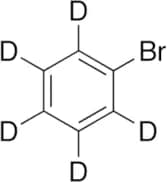
CAS:Controlled Product<p>Stability Volatile<br>Applications The labelled version of Bromobenzene (B680145), used as a general reagent in palladium-catalyzed reactions and in the synthesis of Grignard reagents.<br> Not a dangerous good if item is equal to or less than 1g/ml and there is less than 100g/ml in the package<br>References Miyaura, N. et al.: Synth. Commun., 11, 513 (1981); Nahm, S. et al.: Tetra. Lett., 22, 3815 (1981);<br></p>Formula:C62H5BrColor and Shape:NeatMolecular weight:162.042,6-Lutidine
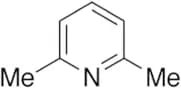
CAS:Controlled Product<p>Applications Isolated from the basic fraction of coal tar. A semi-volatile compound in tobacco.<br> Not a dangerous good if item is equal to or less than 1g/ml and there is less than 100g/ml in the package<br>References Van den Dool, H., et al.: J. Chromatogr.,11, 463 ( 1963), Radulovic, N., et al.: Phytother. Res., 20, 85 (2006),<br></p>Formula:C7H9NColor and Shape:NeatMolecular weight:107.15Bromoethane
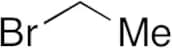
CAS:Controlled Product<p>Applications Bromoethane is used in the synthesis of novel non-competitive antagonists of kainate Glu1/Glu2 receptors (1). Bromoethane is a useful reagent to prepare tryptophan analogues and the antibiotic, Tamoxifen (2).<br> Not a dangerous good if item is equal to or less than 1g/ml and there is less than 100g/ml in the package<br>References (1) Kaczor, A. et al.: Lett Drug Discov 9, 891 (2012) (1) Ma, C. et al.: J. Org Chem. 66, 4525 (2001)<br></p>Formula:C2H5BrColor and Shape:NeatMolecular weight:108.97