APIs for research and impurities
Subcategories of "APIs for research and impurities"
- Aminoacids and derivatives(12,440 products)
- Anthraquinones and derivatives(407 products)
- Benzimidazole and Imidazole Derivatives(10,464 products)
- Benzodiazepine Derivatives(335 products)
- Carbohydrates and glycoconjugates(5,388 products)
- Esters and Derivatives(42,306 products)
- Fatty Acids and Lypidic Derivatives(32,486 products)
- Flavonoids and Polyphenols(17,100 products)
- Free Radicals and Oxidant/Reducing Agents(214 products)
- Ketones and derivatives(2,692 products)
- Natural and semi-synthetic antibiotics(6,409 products)
- Nitriles and Cyano Derivatives(3,070 products)
- Nitrosamines and Derivatives(55 products)
- Nucleosides and Nucleotides(3,492 products)
- Organic Phosphates and Phosphonates(1,203 products)
- Organic Sulphonates and Sulphates(10,451 products)
- Organometallics(4,425 products)
- Others(6,340 products)
- Peptides and Proteins(3,164 products)
- Polymers and Derivatives(100 products)
- Purines and Pyrimidine Derivatives(8,974 products)
- Quinazoline and Quinoline Derivatives(66,217 products)
- Quinones and Derivatives(24,378 products)
- Salts and Derivatives of Active Pharmaceutical Ingredients (API)(92,938 products)
- Steroids and Derivatives(4,987 products)
- Sulfonamides and Derivatives(2,607 products)
- Terpenoids and Derivatives(3,860 products)
- Thiazolidinediones and Thiopyrans(2,755 products)
- β-Adrenergic Compounds(231 products)
Found 66870 products of "APIs for research and impurities"
Flumethasone Impurity 12
Flumethasone impurity 12 is a high purity, HPLC standard that is used for research and development. This impurity is an analytical standard that is also used in the drug development process as a pharmacopoeia to measure the purity of an API. Flumethasone impurity 12 can be purchased in various quantities and purities and can be custom synthesized to meet your needs. It has CAS number 511-24-2 and a molecular weight of 306.45 g/mol.Purity:Min. 95%3'-N,N-Didesmethyl-N-(methoxycarbonyl) azithromycin
CAS:3'-N,N-Didesmethyl-N-(methoxycarbonyl) azithromycin is a research and development impurity standard. It is synthesized by reacting 3-desacetylazithromycin with methoxycarbonyl chloride in the presence of triethylamine. This product has been tested for purity by HPLC. CAS No. 16892-65-2Formula:C39H74N2O14Purity:Min. 95%Molecular weight:795.01 g/molAmoxicillin trihydrate impurity N
Amoxicillin trihydrate impurity N is a drug product that is an impurity in amoxicillin trihydrate. It is a natural, API impurity, which has been synthesized and tested for use as an impurity standard for HPLC analysis of amoxicillin trihydrate. The CAS number for Amoxicillin trihydrate impurity N is 592-84-1.Purity:Min. 95%Methyl 2-disazobenzoate hydrochloride
CAS:Methyl 2-disazobenzoate hydrochloride is a drug product that is used as an HPLC standard and as a metabolite in the development of drugs. It has been found to be naturally occurring and is a research and development metabolite. Methyl 2-disazobenzoate hydrochloride is also an impurity of API, which can be quantified in analytical studies. It is a synthetic compound with CAS No. 35358-78-2 and it can be used to manufacture high purity pharmaceuticals. Methyl 2-disazobenzoate hydrochloride has been shown to have niche pharmacological effects, such as anti-inflammatory activities.Formula:C8H7N2O2ClPurity:Min. 95%Molecular weight:198.61 g/mol(S)-2-Ethylbutyl 2-aminopropanoate hydrochloride
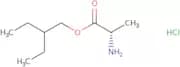
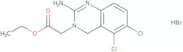
CAS:Remdesivir impurityFormula:C9H20ClNO2Purity:Min. 95%Color and Shape:PowderMolecular weight:209.71 g/mol2-Amino-5,6-dichloro-3(4H)-quinazoline acetic acid ethyl ester hydrobromide
CAS:2-Amino-5,6-dichloro-3(4H)-quinazoline acetic acid ethyl ester hydrobromide is a drug development impurity that belongs to the group of API impurities. It is an impurity standard for HPLC and also appears as a metabolite in animal studies. This compound has been shown to have a high purity and can be used as a custom synthesis or analytical standard. 2-Amino-5,6-dichloro-3(4H)-quinazoline acetic acid ethyl ester hydrobromide is also an impurity in the drug product called "NOVOQUINOL". The compound has been found to be an intermediate in metabolism studies.Formula:C12H14BrCl2N3O2Purity:Min. 95%Color and Shape:PowderMolecular weight:383.07 g/molDideiodo amiodarone
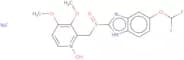
CAS:Controlled ProductDideiodo amiodarone is a noncompetitive inhibitor of the enzyme, which is expressed in the human heart. It has been shown to interact with the benzofuran derivatives that are responsible for the antiarrhythmic effects of amiodarone. The inhibitory potency of dideiodo amiodarone is dose-dependent and constant. This drug has shown no competitive inhibition against any other analogs, such as quinidine or digitoxin. Dideiodo amiodarone inhibits the enzyme by binding to an allosteric site on the enzyme molecule. This site does not bind any other analogs, such as quinidine or digitoxin, and therefore it does not compete for this site.Formula:C25H31NO3Purity:Min. 95%Color and Shape:Clear LiquidMolecular weight:393.52 g/molPantoprazole N-oxide sodium
CAS:Pantoprazole N-oxide sodium is a custom synthesis drug product that is being developed as an impurity standard in the synthesis of Pantoprazole. The compound is also used as a pharmacopoeia analytical standard and a HPLC standard.Formula:C16H15F2N3O5S·NaPurity:Min. 95%Color and Shape:PowderMolecular weight:422.36 g/mol(S)-6-(Ethyl(2-(thiophen-2-yl)ethyl)amino)-5,6,7,8-tetrahydronaphthalen-1-ol hydrochloride
CAS:(S)-6-(Ethyl(2-(thiophen-2-yl)ethyl)amino)-5,6,7,8-tetrahydronaphthalen-1-ol hydrochloride is a synthetic compound that has been designed for use as an impurity standard in the validation of analytical methods. It is a custom synthesis product and is not commercially available. It is a white crystalline solid with a melting point of 170°C and its molecular formula is C14H12N2O3S. (S)-6-(Ethyl(2-(thiophen-2-yl)ethyl)amino)-5,6,7,8-tetrahydronaphthalen-1-ol hydrochloride has been shown to have no biological activity in rats.Formula:C18H24ClNOSPurity:Min. 95%Molecular weight:337.9 g/molDes-His(1)-Semaglutide
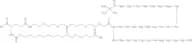
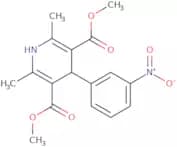
Des-His(1)-semaglutide is a semaglutide-related impurity. This des-amino acid form has the histidine (His) amino acid from position 1 removed from the peptide chain. Semaglutide impurities are structurally related compounds that arise during synthesis, purification, or storage of semaglutide, a long-acting GLP-1 receptor agonist used for managing type 2 diabetes and obesity.Formula:C181H284N42O58Molecular weight:3,976.5 g/mol1,4-Dihydro-2,6-dimethyl-4-(3-nitrophenyl)-3.5-pyridinecarboxylic acid dimethyl ester
CAS:1,4-Dihydro-2,6-dimethyl-4-(3-nitrophenyl)-3.5-pyridinecarboxylic acid dimethyl ester is a creatine kinase inhibitor that blocks the synthesis of creatine phosphate, which is an important energy source for muscle contraction. Creatine kinase inhibitors are used in the treatment of congestive heart failure and myocardial infarct. They also have vasodilatory effects on blood vessels and can be used to treat hypertension. The elimination rate of 1,4-dihydro-2,6-dimethyl-4-(3-nitrophenyl)-3.5-pyridinecarboxylic acid dimethyl ester depends on its formulation: solid dispersions have a half life of about 3 hours whereas orally administered doses have a half life of about 8 hours.Formula:C17H18N2O6Purity:Min. 95%Color and Shape:Yellow PowderMolecular weight:346.33 g/molAceclofenac methyl ester
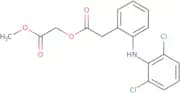
CAS:Aceclofenac methyl ester is an analgesic that belongs to the arylpropionic acid derivatives. It has been developed for the treatment of acute pain. Aceclofenac methyl ester has a structural formula of CH3CO-O-CH3 and a molecular weight of 164.2 g/mol. Aceclofenac is metabolized by CYP450 enzymes, which are located in the liver and other organs, to form acetic acid and 5-hydroxyaceclofenac. The reaction time is approximately 1 hour and tetrahydrofuranyl (THF) is used as a nucleophile in this reaction. This product can be synthesized by reacting ethyl acetate with acetonitrile in high yield, making it stable and anhydrous. The analgesic effects of aceclofenac methyl ester are due to its ability to block the transmission of pain signals from nerves to the brain at the spinal cord levelFormula:C17H15Cl2NO4Purity:Min. 98 Area-%Color and Shape:White PowderMolecular weight:368.21 g/molGliclazide impurity F
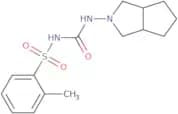
CAS:Gliclazide is a sulfonylurea drug that is used to treat type 2 diabetes. The impurity F, which is an impurity standard, can be synthesized by reacting 1-chloro-2,6-difluoroaniline with sodium methoxide in methanol. It is also an API impurity found in the synthesis of gliclazide and can be custom synthesized for research and development purposes. Gliclazide impurity F has a CAS number of 1076198-18-9 and the molecular formula C8H4ClF3NOS. This product has a purity of >99% and is classified as synthetic. It has been shown to have pharmacopoeia activity and can also be used for niche applications such as drug development.Formula:C15H21N3O3SPurity:Min. 95%Color and Shape:White Off-White PowderMolecular weight:323.41 g/molD-His(1)-Semaglutide
D-His(1)-Semaglutide is a semaglutide impurity. The amino acid at position 1 has been replaced by the D-form of the amino acid D-histidine (D-His). Semaglutide impurities are structurally related compounds that arise during synthesis, purification, or storage of semaglutide, a long-acting GLP-1 receptor agonist for managing type 2 diabetes and obesity.Formula:C187H291N45O59Molecular weight:4,113.64 g/molOlsalazine sodium impurity D
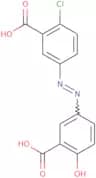
CAS:Olsalazine sodium impurity D is a natural substance that is present as an impurity in the drug Olsalazine sodium. It is used as an analytical standard for Olsalazine sodium and its metabolites, which are involved in drug development. The purity of this substance can be customized by our research and development team. This product has CAS number 93964-55-7 and is available at a reasonable price.
Formula:C14H9ClN2O5Purity:Min. 95%Color and Shape:PowderMolecular weight:320.68 g/mol(RS)-Isopropyl 2-methoxyethyl 1,4-dihydro-2,6-dimethyl-4-(4-nitrophenyl)pyridine-3,5-dicarboxylate
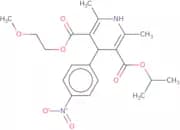
CAS:(RS)-Isopropyl 2-methoxyethyl 1,4-dihydro-2,6-dimethyl-4-(4-nitrophenyl)pyridine-3,5-dicarboxylate is a white to off-white crystalline powder that is soluble in methanol and slightly soluble in water. It can be used as an impurity standard for the API drug product, research and development and metabolism studies. The CAS number for this compound is 2200280-99-3. This compound has a purity of 99% or greater with an analytical purity of 99.9%. This compound has been shown to have a melting point of about 237°C and a density of 1.06 g/cm3. This compound is insoluble in ether and acetone.Formula:C21H26N2O7Purity:Min. 95%Color and Shape:Light (Or Pale) Yellow To Yellow SolidMolecular weight:418.44 g/molCimetidine
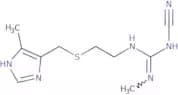
CAS:Cimetidine is a histamine-2 receptor antagonist that inhibits gastric acid secretion and reduces the activity of stomach enzymes. It is used to treat peptic ulcers, gastroesophageal reflux disease, and Zollinger-Ellison syndrome. Cimetidine has been shown to inhibit the activity of drug-metabolizing enzymes such as cytochrome P450. Cimetidine also inhibits the transport protein P-glycoprotein (P-gp), which leads to increased concentrations of some drugs in the blood and tissues. This inhibition may lead to an increase in cardiac effects with certain drugs, such as x-ray diffraction data with taxol or h1 antagonists.
Formula:C10H16N6SPurity:Min. 95%Color and Shape:White PowderMolecular weight:252.34 g/molD-Ser(8)-Semaglutide
D-Ser(8)-Semaglutide is a semaglutide impurity. The amino acid at position 8 has been replaced by the D-form of the amino acid D-serine (D-Ser). Semaglutide impurities are structurally related compounds that arise during synthesis, purification, or storage of semaglutide, a long-acting GLP-1 receptor agonist for managing type 2 diabetes and obesity.Formula:C187H291N45O59Molecular weight:4,113.64 g/mol(RS)-Di-isopropyl 1,4-dihydro-2,6-dimethyl-4-(3-nitrophenyl)pyridine-3,5-dicarboxylate
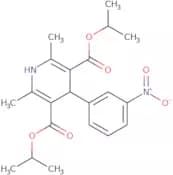
CAS:Di-isopropyl 1,4-dihydro-2,6-dimethyl-4-(3-nitrophenyl)pyridine-3,5-dicarboxylate is a metabolite of gatifloxacin. It is a natural product and its CAS number is 21881-78-7. Diisopropyl 1,4-dihydro 2,6-dimethyl 4-(3 nitrophenyl) pyridine 3,5 di carboxylate is an impurity standard for gatifloxacin. It has been synthesized and can be custom made to meet the pharmacopeia or API impurity requirements for drug development. The purity of this compound ranges from 98% to 100%. This compound is used in HPLC standards for research and development purposes such as metabolism studies.Formula:C21H26N2O6Purity:Min. 95%Color and Shape:White PowderMolecular weight:402.44 g/molSitagliptin keto amide impurity
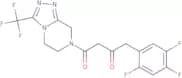
CAS:Sitagliptin Keto Amide Impurity is a research and development impurity standard that has been shown to be an impurity in the drug product Sitagliptin. It is a synthetic, analytical impurity that has been shown to be present in the drug product at 0.1% of the total weight. This impurity is soluble in water and ethanol, but insoluble in ether, chloroform, benzene, and dichloromethane. The CAS number for this compound is 764667-65-4. Sitagliptin Keto Amide Impurity can be used as an analytical reference material or as a pharmacopoeia reference standard for HPLC analysis of sitagliptin keto amide and its metabolites.
Formula:C16H12F6N4O2Purity:Min. 95%Color and Shape:Slightly Yellow PowderMolecular weight:406.28 g/mol