APIs for research and impurities
Subcategories of "APIs for research and impurities"
- Aminoacids and derivatives(12,440 products)
- Anthraquinones and derivatives(407 products)
- Benzimidazole and Imidazole Derivatives(10,464 products)
- Benzodiazepine Derivatives(335 products)
- Carbohydrates and glycoconjugates(5,388 products)
- Esters and Derivatives(42,306 products)
- Fatty Acids and Lypidic Derivatives(32,486 products)
- Flavonoids and Polyphenols(17,100 products)
- Free Radicals and Oxidant/Reducing Agents(214 products)
- Ketones and derivatives(2,692 products)
- Natural and semi-synthetic antibiotics(6,409 products)
- Nitriles and Cyano Derivatives(3,070 products)
- Nitrosamines and Derivatives(55 products)
- Nucleosides and Nucleotides(3,492 products)
- Organic Phosphates and Phosphonates(1,205 products)
- Organic Sulphonates and Sulphates(10,451 products)
- Organometallics(4,425 products)
- Others(6,340 products)
- Peptides and Proteins(3,164 products)
- Polymers and Derivatives(100 products)
- Purines and Pyrimidine Derivatives(8,975 products)
- Quinazoline and Quinoline Derivatives(66,222 products)
- Quinones and Derivatives(24,379 products)
- Salts and Derivatives of Active Pharmaceutical Ingredients (API)(92,942 products)
- Steroids and Derivatives(4,987 products)
- Sulfonamides and Derivatives(2,607 products)
- Terpenoids and Derivatives(3,860 products)
- Thiazolidinediones and Thiopyrans(2,755 products)
- β-Adrenergic Compounds(231 products)
Found 66875 products of "APIs for research and impurities"
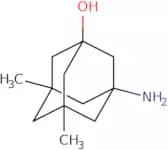
Memantine impurity IV
CAS:Memantine impurity IV is a hydrolysis product of memantine. It appears as a white to off-white powder and has a molecular weight of 198.1 g/mol. Memantine impurity IV is an intermediate in the production of memantine and is therefore not used for any other purpose. The compound contains hydroxy groups, hydroxy, alcohols, and bridgehead groups which are efficient at hydrolyzing to form amino acids.
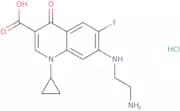
Formula:C12H21NO·HClPurity:Min. 95%Color and Shape:White PowderMolecular weight:231.76 g/molDesethylene Ciprofloxacin hydrochloride
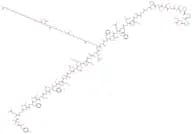
CAS:Desethylene ciprofloxacin hydrochloride is a metabolite of ciprofloxacin that is converted to the active form of the drug. Desethylene ciprofloxacin hydrochloride has a concentration-response relationship, which can be used for in vitro testing of pharmaceutical preparations. The chromatographic evaluation of this metabolite can be used to identify the presence of antibiotics in environmental samples. Desethylene ciprofloxacin hydrochloride is also a substrate for carbonyl reductase and piperazine, which are enzymes that produce an activated form of the metabolite.Formula:C15H16FN3O3·HClPurity:Min. 95%Color and Shape:Off-White Yellow PowderMolecular weight:341.77 g/molD-His(1)-Semaglutide
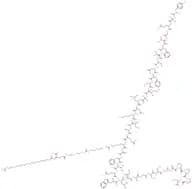
D-His(1)-Semaglutide is a semaglutide impurity. The amino acid at position 1 has been replaced by the D-form of the amino acid D-histidine (D-His). Semaglutide impurities are structurally related compounds that arise during synthesis, purification, or storage of semaglutide, a long-acting GLP-1 receptor agonist for managing type 2 diabetes and obesity.Formula:C187H291N45O59Molecular weight:4,113.64 g/mol4-[2'-(7''-Deazaguanine)ethyl]benzoic acid N-hydroxysuccinimide ester
CAS:4-[2'-(7''-Deazaguanine)ethyl]benzoic acid N-hydroxysuccinimide ester is a useful intermediate in the synthesis of 7''-deazaguanine, which is a key building block in the synthesis of DNA. 4-[2'-(7''-Deazaguanine)ethyl]benzoic acid N-hydroxysuccinimide ester is a versatile building block that can be used in the synthesis of complex compounds. It has been shown to react with amines, sulfonyl chlorides, and epoxides to form amides, sulfonamides, and epoxy amines respectively. The CAS number for this compound is 204257-65-8.Formula:C19H17N5O5Purity:Min. 95%Molecular weight:395.37 g/molN-(Aminosulphonyl)-3-[[[2-[(aminoiminomethyl)amino]-4-thiazolyl]methyl]thio]propanamide, hydrochloride
CAS:Famotidine is a histamine H2 receptor antagonist. It is used to prevent stomach ulcers, heartburn, or "acid indigestion." Famotidine is available in various forms for oral administration: tablets, capsules, and solution. The chemical name for famotidine is N-(aminosulphonyl)-3-[[[2-[(aminoiminomethyl)amino]-4-thiazolyl]methyl]thio]propanamide hydrochloride.Formula:C8H15ClN6O3S3·HClPurity:Min. 95%Color and Shape:White To Off-White SolidMolecular weight:411.35 g/mol1-β-D-Ribofuranosyl-3-guanylurea picrate
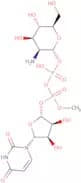
CAS:Controlled Product1-beta-D-Ribofuranosyl-3-guanylurea picrate is also known as 1-(diaminomethylene)-3-(beta-D-ribofuranosyl)urea picrate, 1-amidino-3-b-D-ribofuranosylurea monopicrate and Azacitidine Related Compound C. 1-beta-D-Ribofuranosyl-3-guanylurea picrate is an impurity generated from the hydrolysis of the drug Azacitidine, available on the market with the trade name Vidaza. Azacitidine is a chemical analogue of cytidine and is used in the treatment of myelodysplastic syndrome.Formula:C7H14N4O5•C6H3N3O7Purity:Min. 95.0 Area-%Color and Shape:PowderMolecular weight:463.31 g/molDes-Glu(3)-Semaglutide
Des-Glu(3)-semaglutide is a semaglutide-related impurity. This des-amino acid form has got the glutamic acid or glutamate (Glu) amino acid from position 3 removed from the peptide chain. Semaglutide impurities are structurally related compounds that arise during synthesis, purification, or storage of semaglutide, a long-acting GLP-1 receptor agonist used for managing type 2 diabetes and obesity.Formula:C182H284N44O56Molecular weight:3,984.53 g/molCetirizine glycerol ester impurity
CAS:Cetirizine glycerol ester impurity is a drug product that is an analytical impurity. It is a natural, API impurity, and synthetic. The CAS number for this impurity is 1243652-36-9. Research and Development (R&D) of cetirizine glycerol ester impurity is required for the manufacture of pharmaceutical products. High purity cetirizine glycerol ester impurity can be used as a pharmacopoeia standard for HPLC analyses.Formula:C24H31ClN2O5Purity:Min. 95%Molecular weight:462.97 g/molAceclofenac methyl ester
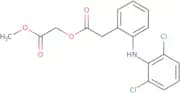
CAS:Aceclofenac methyl ester is an analgesic that belongs to the arylpropionic acid derivatives. It has been developed for the treatment of acute pain. Aceclofenac methyl ester has a structural formula of CH3CO-O-CH3 and a molecular weight of 164.2 g/mol. Aceclofenac is metabolized by CYP450 enzymes, which are located in the liver and other organs, to form acetic acid and 5-hydroxyaceclofenac. The reaction time is approximately 1 hour and tetrahydrofuranyl (THF) is used as a nucleophile in this reaction. This product can be synthesized by reacting ethyl acetate with acetonitrile in high yield, making it stable and anhydrous. The analgesic effects of aceclofenac methyl ester are due to its ability to block the transmission of pain signals from nerves to the brain at the spinal cord levelFormula:C17H15Cl2NO4Purity:Min. 98 Area-%Color and Shape:White PowderMolecular weight:368.21 g/molN-(((5R)-3-(3-Fluoro-4- (4-morpholinyl)phenyl)-2-oxo- 5-oxazolidinyl)methyl) acetamide
CAS:N-(((5R)-3-(3-Fluoro-4-(4-morpholinyl)phenyl)-2-oxo-5-oxazolidinyl)methyl)acetamide (LFMAPO) is an antibacterial agent that inhibits bacterial growth by binding to the active site of bacterial DNA gyrase. LFMAPO has a molecular weight of 552.2 Da and a log P value of 2.6. It was synthesized from acetamide, 3-fluoroaniline, and 4-(4-morpholinyl)benzaldehyde in 60% yield using techniques such as millimolar stoichiometry, electrophoresis method, binding constants, and molecular modeling study. The drug also has chiral properties with two stereocenters at carbons C1 and C5 that have been shown to be important for the activity of this compound against Gram positive bacteria.
Formula:C16H20FN3O4Purity:Min. 95%Color and Shape:PowderMolecular weight:337.35 g/mol2-Phenylbutyric acid
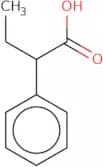
CAS:2-Phenylbutyric acid is a product of the oxidation of phenylacetic acid by flavus. 2-Phenylbutyric acid is an inhibitor of contactor reactions that use α1-acid glycoprotein as a chromatographic support. It has been shown to inhibit the reaction mechanism of extractants (e.g., butamirate citrate) with enantiomeric compounds (e.g., creatine). It also inhibits subclinical mastitis in cows and fatty acid synthesis, leading to decreased cholesterol synthesis in humans.
Formula:C10H12O2Purity:Min. 95%Molecular weight:164.2 g/molSemaglutide Impurity 101 (D-Glu 3)
D-Glu(3)-Semaglutide is a semaglutide impurity. The amino acid at position 3 has been replaced by the D-form of the amino acid D-glutamic acid (D-Glu). Semaglutide impurities are structurally related compounds that arise during synthesis, purification, or storage of semaglutide, a long-acting GLP-1 receptor agonist for managing type 2 diabetes and obesity.Formula:C187H291N45O59Molecular weight:4,113.64 g/mol5-(2-Ethoxyphenyl)-1-methyl-3-n-propyl-1,6-dihydro-7H-pyrazolo[4,3-d]pyrimidin-7-one
CAS:Sildenafil is a selective PDE-5 inhibitor that is used in the treatment of erectile dysfunction. It has been shown to have anticancer activity in vitro and in vivo. Sildenafil inhibits the activity of cyclic guanosine monophosphate (cGMP) phosphodiesterase type 5 (PDE-5), which is found in the corpus cavernosum of the penis and inhibits cGMP degradation, leading to vasodilation and increased blood flow. Sildenafil has been shown to inhibit cancer cell proliferation by blocking the synthesis of both DNA and protein, as well as inhibiting the expression of genes encoding for anti-apoptotic proteins. Sildenafil binds to PDE-5 with high affinity, but does not bind to other PDEs or ion channels at therapeutic concentrations.Formula:C17H20N4O2Purity:Min. 95%Color and Shape:White To Off-White SolidMolecular weight:312.37 g/mol5-Hydroxy duloxetine
CAS:5-Hydroxy duloxetine (5HD) is a drug product that is synthesized by Custom Synthesis. It has high purity and analytical specifications, and can be used for metabolism studies, natural product development, pharmacopoeia, and research and development. 5HD also has a CAS number of 741693-77-6. This product is synthetically produced with impurity standards. The molecular weight of 5HD is 236.3 g/mol with an impurity level of less than 1%. 5HD can be used in the following applications: HPLC standard, HPLC calibration standard, Impurity standard for LCMS, Impurity standard for GCMS.
Formula:C18H19NO2SPurity:Min. 95%Color and Shape:PowderMolecular weight:313.40 g/molAmikacin EP Impurity A
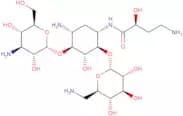
CAS:Amikacin EP Impurity A is a metabolite of amikacin. It is a white crystalline substance with a molecular weight of 269.5. Amikacin EP Impurity A is found in the urine and bile of individuals who have been administered amikacin. It has been shown to be pharmacologically active, inhibiting bacterial growth by binding to DNA-dependent RNA polymerase, thereby preventing transcription and replication.Formula:C22H43N5O13Purity:Min. 95%Molecular weight:585.6 g/molCalcipotriol EP impurity E
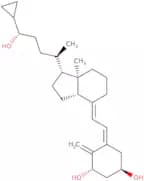
Calcipotriol EP Impurity E is a synthetic impurity that is found in the calcipotriol EP API. Calcipotriol EP Impurity E is an impurity standard for HPLC and can be used in drug development, research and development, and pharmacopoeia. It has been shown to have no significant effect on the pharmacological activity of calcipotriol EP.
Formula:C27H42O3Purity:Min. 95 Area-%Color and Shape:PowderMolecular weight:414.62 g/mol4-(2,3,4-Trimethoxybenzyl)piperazine-1-carbaldehyde hydrochloride
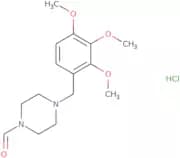
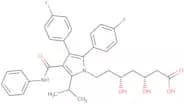
CAS:4-(2,3,4-Trimethoxybenzyl)piperazine-1-carbaldehyde hydrochloride is a custom synthesis that is used as a drug product, impurity standard and metabolic studies. The compound has been shown to be metabolized via oxidation by cytochrome P450 enzymes. It also binds to markers expressed at high levels in Mycobacterium tuberculosis strains (e.g., ESX-1 secretion system protein) and inhibits cell growth in culture.Formula:C15H22N2O4·HClPurity:Min. 98 Area-%Color and Shape:Off-White PowderMolecular weight:330.81 g/molDifluoro atorvastatin
CAS:Difluoro atorvastatin is a filtrate of atorvastatin, which is a cholesterol-lowering drug. It is synthesized by reacting butyric acid with atorvastatin in an organic solvent. The reaction solution was filtered to remove impurities and then purified by liquid chromatography. The product was characterized by diffraction and LC-MS analysis. Difluoro atorvastatin has a high purity and is suitable for further use in the preparation of pharmaceuticals.
Formula:C33H34F2N2O5Purity:Min. 95%Molecular weight:576.63 g/mol


![4-[2'-(7''-Deazaguanine)ethyl]benzoic acid N-hydroxysuccinimide ester](/_next/image/?url=https%3A%2Fstatic.cymitquimica.com%2Fproducts%2F3D%2Fthumb-webp%2FFD20837.webp&w=3840&q=75)
![N-(Aminosulphonyl)-3-[[[2-[(aminoiminomethyl)amino]-4-thiazolyl]methyl]thio]propanamide, hydrochlo…](/_next/image/?url=https%3A%2Fstatic.cymitquimica.com%2Fproducts%2F3D%2Fthumb-webp%2FIA58075.webp&w=3840&q=75)




![5-(2-Ethoxyphenyl)-1-methyl-3-n-propyl-1,6-dihydro-7H-pyrazolo[4,3-d]pyrimidin-7-one](/_next/image/?url=https%3A%2Fstatic.cymitquimica.com%2Fproducts%2F3D%2Fthumb-webp%2FNE16544.webp&w=3840&q=75)