APIs for research and impurities
Subcategories of "APIs for research and impurities"
- Aminoacids and derivatives(12,440 products)
- Anthraquinones and derivatives(407 products)
- Benzimidazole and Imidazole Derivatives(10,464 products)
- Benzodiazepine Derivatives(335 products)
- Carbohydrates and glycoconjugates(5,388 products)
- Esters and Derivatives(42,306 products)
- Fatty Acids and Lypidic Derivatives(32,486 products)
- Flavonoids and Polyphenols(17,100 products)
- Free Radicals and Oxidant/Reducing Agents(214 products)
- Ketones and derivatives(2,692 products)
- Natural and semi-synthetic antibiotics(6,409 products)
- Nitriles and Cyano Derivatives(3,070 products)
- Nitrosamines and Derivatives(55 products)
- Nucleosides and Nucleotides(3,492 products)
- Organic Phosphates and Phosphonates(1,205 products)
- Organic Sulphonates and Sulphates(10,451 products)
- Organometallics(4,425 products)
- Others(6,340 products)
- Peptides and Proteins(3,164 products)
- Polymers and Derivatives(100 products)
- Purines and Pyrimidine Derivatives(8,975 products)
- Quinazoline and Quinoline Derivatives(66,222 products)
- Quinones and Derivatives(24,379 products)
- Salts and Derivatives of Active Pharmaceutical Ingredients (API)(92,942 products)
- Steroids and Derivatives(4,987 products)
- Sulfonamides and Derivatives(2,607 products)
- Terpenoids and Derivatives(3,860 products)
- Thiazolidinediones and Thiopyrans(2,755 products)
- β-Adrenergic Compounds(231 products)
Found 66875 products of "APIs for research and impurities"
Gliclazide impurity F
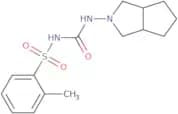
CAS:Gliclazide is a sulfonylurea drug that is used to treat type 2 diabetes. The impurity F, which is an impurity standard, can be synthesized by reacting 1-chloro-2,6-difluoroaniline with sodium methoxide in methanol. It is also an API impurity found in the synthesis of gliclazide and can be custom synthesized for research and development purposes. Gliclazide impurity F has a CAS number of 1076198-18-9 and the molecular formula C8H4ClF3NOS. This product has a purity of >99% and is classified as synthetic. It has been shown to have pharmacopoeia activity and can also be used for niche applications such as drug development.Formula:C15H21N3O3SPurity:Min. 95%Color and Shape:White Off-White PowderMolecular weight:323.41 g/molParacetamol Impurity L
Paracetamol Impurity L is a drug product that is used as an analytical standard for the impurity paracetamol. It is found in pharmaceuticals, such as acetaminophen, which is used to relieve pain and reduce fever. Paracetamol Impurity L is a natural compound and has been shown to be metabolically stable in humans. The CAS number for this compound is 619-25-4.Formula:C16H16N2O4Purity:Min. 95%Molecular weight:300.31 g/molrac-Diacetolol
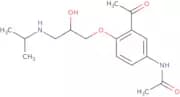
CAS:Rac-Diacetolol is a racemic mixture of two isomers, (+) and (-), of acebutolol. Rac-Diacetolol is used to treat bowel disease, chronic oral inflammation and cardiac arrhythmias. It is also used as an experimental solubility probe in the study of the interactions between drugs and biological membranes. Rac-Diacetolol has been shown to have a low affinity for cytochrome P450 enzymes, which are responsible for metabolizing many drugs in the body. Rac-Diacetolol has been found to reduce plasma concentrations of PCSK9 antibody in patients with inflammatory bowel disease. The drug also has anti-inflammatory properties that may be due to its inhibition of prostaglandin synthesis.
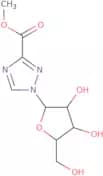
Formula:C16H24N2O4Purity:Min. 95%Color and Shape:PowderMolecular weight:308.37 g/mol1-b-D-Ribofuranosyl-1,2,4-triazole-3-carboxylic acid methyl ester
CAS:Intermediate in the synthesis of ribavirinFormula:C9H13N3O6Purity:Min. 95%Color and Shape:White PowderMolecular weight:259.22 g/mol3,3'-(3,6-Dihydropyrazine-2,5-diyl)dipropanoic acid
CAS:3,3'-(3,6-Dihydropyrazine-2,5-diyl)dipropanoic acid (DPPA) is a potent metal chelator that can be used in the treatment of cancer. DPPA binds to metal ions and prevents their access to vital cellular components such as DNA and proteins. This agent has been shown to inhibit the growth of carcinoma cells in culture. It also has an effect on the synthesis of demyelination, which may account for its ability to prevent reactive oxygen species from damaging DNA. DPPA is a strong inhibitor of mitochondrial function and at high concentrations it damages mitochondria by releasing hydrogen peroxide into the cell cytoplasm. The release of hydrogen peroxide causes catalase to become active, leading to cell death.Formula:C10H14N2O4Purity:Min. 95%Molecular weight:226.23 g/molN-(2-Phenethyl)benzamide
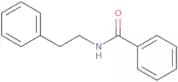
CAS:N-(2-Phenethyl)benzamide (NPEB) is a molecule that belongs to the group of reactive molecules. It has been shown to be toxic to gram-positive bacteria, such as Staphylococcus aureus and Bacillus subtilis, but not gram-negative bacteria such as Escherichia coli. NPEB also has been shown to have locomotor activity in animals, which may be due to its ability to inhibit the mitochondrial electron transport chain and inhibit ATP production. NPEB's biological properties are well characterized. FTIR spectroscopy showed that this molecule has an amide functional group and is a small molecule with a molecular weight of 176.4 g/mol. This molecule was also found to be able to bind to mitochondria in animals.Formula:C15H15NOPurity:Min. 97 Area-%Color and Shape:PowderMolecular weight:225.29 g/molDesmethyl fondenafil
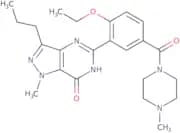
CAS:Fondenafil is a drug that belongs to the class of PDE-5 inhibitors. It is used for the treatment of erectile dysfunction and pulmonary hypertension. Fondenafil is chemically related to sildenafil, but lacks the ethyl group. Fondenafil has been shown to be effective in treating insulin resistance by increasing glucose uptake in adipose tissue and skeletal muscle cells. Fondenafil also reduces blood pressure, cholesterol, and triglyceride levels in patients with metabolic syndrome.Formula:C23H30N6O3Purity:Min. 95%Molecular weight:438.5 g/molCimetidine
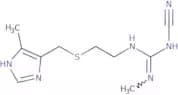
CAS:Cimetidine is a histamine-2 receptor antagonist that inhibits gastric acid secretion and reduces the activity of stomach enzymes. It is used to treat peptic ulcers, gastroesophageal reflux disease, and Zollinger-Ellison syndrome. Cimetidine has been shown to inhibit the activity of drug-metabolizing enzymes such as cytochrome P450. Cimetidine also inhibits the transport protein P-glycoprotein (P-gp), which leads to increased concentrations of some drugs in the blood and tissues. This inhibition may lead to an increase in cardiac effects with certain drugs, such as x-ray diffraction data with taxol or h1 antagonists.
Formula:C10H16N6SPurity:Min. 95%Color and Shape:White PowderMolecular weight:252.34 g/molAtorvastatin methyl ester
CAS:Atorvastatin methyl ester is a statin drug that inhibits the synthesis of cholesterol and other lipids in the body. It is used to reduce high levels of low-density lipoprotein (LDL) cholesterol, which may lead to heart disease or stroke. Atorvastatin methyl ester has been shown to be effective in reducing the uptake of LDL cholesterol into cells by preventing the formation of LDL particles. This drug also decreases the production of biphosphate-containing phospholipids, which are essential for dendritic cell maturation. The crystalline polymorphs have been characterized by X-ray diffraction and microscopy. Impurities can be detected using ultraviolet spectroscopy, infrared spectroscopy, or nuclear magnetic resonance spectroscopy.
Formula:C34H37FN2O5Purity:Min. 95%Color and Shape:PowderMolecular weight:572.67 g/molN-(5-Aminopentyl) methotrexate amide
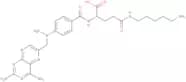
CAS:N-(5-Aminopentyl) methotrexate amide is a fluorescent probe that is used to study the transport of drugs across cell membranes. It binds to the plasma membrane of cells and can be visualized with a fluorescence microscope. N-(5-Aminopentyl) methotrexate amide has been shown to bind to leukemia cells in murine leukemia models. It has a high affinity for drug-resistant cells, which makes it useful for studying drug resistance mechanisms. This probe can be used at nanomolar concentrations for imaging studies, as well as for measuring the uptake of drugs into cancer cells by flow cytometry.
Formula:C25H34N10O4Purity:Min. 95%Color and Shape:Yellow PowderMolecular weight:538.6 g/molBicalutamide sulfide
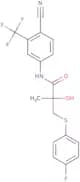
CAS:Bicalutamide sulfide is a synthetic, phosphotungstic acid-reactive, bifunctional reagent that is synthesized from the reaction of bicalutamide and trifluoroacetic acid. This product can be used for the separation of fatty acids in environmental pollutants. The product has been shown to be useful for the analysis of fatty acid esters in recycled oils and fats. Bicalutamide sulfide is also used as an intermediate in the synthesis of pharmaceuticals, such as phosphotungstitane derivatives.Formula:C18H14F4N2O2SPurity:Min. 95%Color and Shape:White To Off-White SolidMolecular weight:398.37 g/molFlumethasone Impurity 12
Flumethasone impurity 12 is a high purity, HPLC standard that is used for research and development. This impurity is an analytical standard that is also used in the drug development process as a pharmacopoeia to measure the purity of an API. Flumethasone impurity 12 can be purchased in various quantities and purities and can be custom synthesized to meet your needs. It has CAS number 511-24-2 and a molecular weight of 306.45 g/mol.Purity:Min. 95%2-[[[(4-Methoxypropoxy)-3-methyl-2-pyridinyl]methyl]sulfonyl]-1H-benzimidazole
CAS:2-[[[(4-Methoxypropoxy)-3-methyl-2-pyridinyl]methyl]sulfonyl]-1H-benzimidazole is a protonated sulfonamide that is used as an analytical method to detect the presence of other drugs in human liver tissue. It has been shown to inhibit the activity of cytochrome P450 3A4 (CYP3A4), one of the enzymes responsible for metabolizing many drugs. Bromoenol lactone and powder diffraction spectrum are two additional analytical methods that can be used to detect 2-[([(4-methoxypropoxy)-3-methyl-2-pyridinyl]methyl]sulfonyl]-1H-benzimidazole.
Formula:C18H21N3O4SPurity:Min. 95%Color and Shape:White/Off-White SolidMolecular weight:375.44 g/molDecitabine impurity 13
CAS:Decitabine is a drug product that is being developed for the treatment of cancer. It has been shown to inhibit the proliferation of human tumor cells in vitro and to induce apoptosis in prostate cancer cells. Decitabine is metabolized to an active form, dideoxycitidine (DDC), which binds to DNA and inhibits the enzyme DNA polymerase alpha, leading to inhibition of DNA synthesis. Impurity 13 is a by-product of the synthesis process and can be used as an analytical standard. It can also be used as a research and development impurity standard or as a pharmacopoeia impurity standard.Formula:C4H6N6O2Purity:Min. 95%Molecular weight:170.13 g/molSitagliptin keto amide impurity
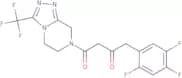
CAS:Sitagliptin Keto Amide Impurity is a research and development impurity standard that has been shown to be an impurity in the drug product Sitagliptin. It is a synthetic, analytical impurity that has been shown to be present in the drug product at 0.1% of the total weight. This impurity is soluble in water and ethanol, but insoluble in ether, chloroform, benzene, and dichloromethane. The CAS number for this compound is 764667-65-4. Sitagliptin Keto Amide Impurity can be used as an analytical reference material or as a pharmacopoeia reference standard for HPLC analysis of sitagliptin keto amide and its metabolites.
Formula:C16H12F6N4O2Purity:Min. 95%Color and Shape:Slightly Yellow PowderMolecular weight:406.28 g/mol3,3',5,5'-Tetraiodothyroformic acid
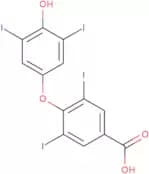
CAS:Cymit Quimicaetic beta-D-glucosiduronic acidFormula:C13H6I4O4Purity:Min. 95 Area-%Color and Shape:Off-White PowderMolecular weight:733.8 g/molLenvatinib impurity 10
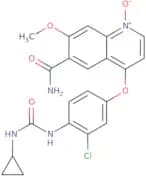
CAS:Lenvatinib impurity 10 is a synthetic impurity that is used as an analytical standard in HPLC. It is also a metabolite of lenvatinib and has been found to have anti-inflammatory properties. Lenvatinib impurity 10 is available in high purity and can be custom synthesized to meet the needs of your research or development.
Formula:C35H26Cl2N6O7Purity:Min. 95%Color and Shape:PowderMolecular weight:713.53 g/molCefazolin impurity A
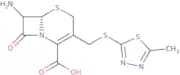
CAS:Cefazolin impurity A is a by-product in the synthesis of Cefazolin, which is a drug product. It has CAS No. 30246-33-4 and is used as an impurity standard for analytical purposes. The Impurity Standard is also known as Metabolite A. Research and Development (R&D) studies are needed to identify the appropriate analytical impurities for this API, which will be reported on Pharmacopoeia's List of Impurities for reference. The high purity and custom synthesis of this API makes it ideal for use in R&D studies, HPLC standards, or niche markets.
CAS No.: 30246-33-4
Synonyms: Metabolite A
Formula: C11H14N2O5S
Molecular weight: 289.24 g/mol
Appearance: white solid powderFormula:C11H12N4O3S3Purity:Min. 95%Color and Shape:PowderMolecular weight:344.44 g/molOlmesartan lactone impurity
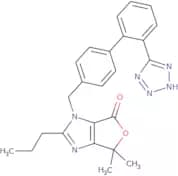
CAS:Olmesartan lactone impurity is a high-purity, low-cost, and stable pharmaceutical intermediate. It is an ester of olmesartan and medoxomil. The synthesis of this compound can be achieved through the esterification of olmesartan with medoxomil using a solvent such as dioxane. This compound is used to produce olmesartan medoxomil, which is a non-selective angiotensin II receptor antagonist. Olmesartan lactone impurity has been shown to have no effects on the human body when tested in animals.Formula:C24H24N6O2Purity:Min. 95%Color and Shape:White PowderMolecular weight:428.49 g/mol



![2-[[[(4-Methoxypropoxy)-3-methyl-2-pyridinyl]methyl]sulfonyl]-1H-benzimidazole](/_next/image/?url=https%3A%2Fstatic.cymitquimica.com%2Fproducts%2F3D%2Fthumb-webp%2FIM57866.webp&w=3840&q=75)