


APIs for research and impurities
Subcategories of "APIs for research and impurities"
- Aminoacids and derivatives(12,440 products)
- Anthraquinones and derivatives(407 products)
- Benzimidazole and Imidazole Derivatives(10,464 products)
- Benzodiazepine Derivatives(335 products)
- Carbohydrates and glycoconjugates(5,388 products)
- Esters and Derivatives(42,306 products)
- Fatty Acids and Lypidic Derivatives(32,486 products)
- Flavonoids and Polyphenols(17,100 products)
- Free Radicals and Oxidant/Reducing Agents(214 products)
- Ketones and derivatives(2,692 products)
- Natural and semi-synthetic antibiotics(6,409 products)
- Nitriles and Cyano Derivatives(3,070 products)
- Nitrosamines and Derivatives(55 products)
- Nucleosides and Nucleotides(3,492 products)
- Organic Phosphates and Phosphonates(1,203 products)
- Organic Sulphonates and Sulphates(10,451 products)
- Organometallics(4,425 products)
- Others(6,340 products)
- Peptides and Proteins(3,164 products)
- Polymers and Derivatives(100 products)
- Purines and Pyrimidine Derivatives(8,974 products)
- Quinazoline and Quinoline Derivatives(66,217 products)
- Quinones and Derivatives(24,378 products)
- Salts and Derivatives of Active Pharmaceutical Ingredients (API)(92,894 products)
- Steroids and Derivatives(4,987 products)
- Sulfonamides and Derivatives(2,607 products)
- Terpenoids and Derivatives(3,860 products)
- Thiazolidinediones and Thiopyrans(2,755 products)
- β-Adrenergic Compounds(231 products)
Found 66870 products of "APIs for research and impurities"
beta-Epoxyabiraterone acetate
CAS:Beta-Epoxyabiraterone acetate is a synthetic and natural metabolite of abiraterone that is used as an API impurity in the synthesis of abiraterone acetate. The drug product is a niche compound with CAS No. 52464-96-6. The Metabolite is an impurity found in the synthesis of beta-epoxyabiraterone acetate. Drug development research and development, analytical methods, and pharmacopoeia are all involved in the production of this compound.Formula:C26H33NO3Purity:Min. 90 Area-%Color and Shape:White Off-White PowderMolecular weight:407.55 g/mol(1S)-1-Phenyl-1,2,3,4-tetrahydroisoquinoline
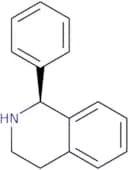
CAS:(1S)-1-Phenyl-1,2,3,4-tetrahydroisoquinoline is a drug used to treat depression. It is an antidepressant drug that inhibits the reuptake of serotonin and norepinephrine in the brain by blocking their transport into the nerve cells. The drug acts as a weak inhibitor of monoamine oxidase (MAO). It also has an effect on bladder function. This compound is synthesized from 1-phenyl-2,5-dihydrothiazole by way of a sequence of reactions that includes the formation of an amine salt via reaction with phosphorus pentoxide and chloroacetic acid followed by conversion to the chloride with thionyl chloride.Formula:C15H15NPurity:Min. 95%Color and Shape:White PowderMolecular weight:209.29 g/mol(S)-Duloxetine succinamide
CAS:Duloxetine succinamide is a chromatographic, solid, acidic compound. It has been synthesized by reacting (S)-duloxetine hydrochloride with succinic anhydride in the presence of triethylamine and acetonitrile. The reaction mixture was purified by high-performance liquid chromatography to produce the desired product. The purity of the compound was confirmed by postulating that it should have a reversed-phase HPLC profile similar to that of duloxetine succinate. Duloxetine succinamide is not soluble in water and is insoluble in organic solvents such as acetone, chloroform, ether, or benzene. The compound is stable at room temperature but decomposes when heated at higher temperatures. !--Formula:C22H23NO4SPurity:Min. 95%Color and Shape:PowderMolecular weight:397.49 g/molOlsalazine sodium impurity H
Olsalazine sodium impurity H is a metabolite of olsalazine sodium. Olsalazine sodium is a drug that is used to treat ulcerative colitis. It belongs to the class of sulfonamides, which inhibit the synthesis of folic acid in bacteria and lead to bacterial cell death. Olsalazine sodium impurity H can be used as an impurity standard for olsalazine sodium, as well as for pharmacopoeia products and API preparations. This metabolite can also be used in drug development, analytical studies, and metabolism studies.Formula:C21H14N4O9Purity:Min. 95%Molecular weight:466.36 g/molN-[[2'-(2H-Tetrazol-5-yl)[1,1'-biphenyl]-4-yl]methyl]-L-Valine
CAS:N-[[2'-(2H-Tetrazol-5-yl)[1,1'-biphenyl]-4-yl]methyl]-L-Valine is a synthetic, nonstandardized HPLC standard that is used in drug development and metabolism studies. It is not available as a natural product, but can be made synthetically. N-[[2'-(2H-Tetrazol-5-yl)[1,1'-biphenyl]-4-yl]methyl]-L-Valine has the CAS No. 676129-92-3 and impurity standards are available for this compound.
Formula:C19H21N5O2Purity:Min. 95%Color and Shape:PowderMolecular weight:351.4 g/molOlmesartan dimer ester impurity
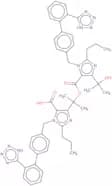
CAS:The product is an impurity that is used as a standard in HPLC analysis. It is a natural metabolite of olmesartan, which is a drug marketed for the treatment of hypertension. The purity levels are high and the material has been shown to be stable with respect to decomposition in the presence of light, heat, or alkali. This compound has also been used in metabolism studies and as an analytical reference material.
Formula:C48H50N12O5Purity:Min. 95%Color and Shape:PowderMolecular weight:874.99 g/molOlsalazine sodium impurity C
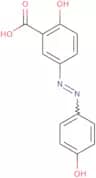
CAS:Olsalazine sodium impurity C is a metabolite of olsalazine sodium. It is a natural product that can be custom synthesized for research and development purposes. Olsalazine sodium impurity C has been shown to have pharmacopoeia-grade purity and can be used as an analytical standard or an API impurity in drug products. The CAS number for this substance is 259151-72-9.
Formula:C13H10N2O4Purity:Min. 95%Color and Shape:PowderMolecular weight:258.23 g/mol2,3-Dichlorobenzoic acid
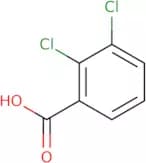
CAS:2,3-Dichlorobenzoic acid is an organic compound that belongs to the class of carboxylates. It is used as a drug substance in the treatment of mycobacterial infections. 2,3-Dichlorobenzoic acid has been shown to have antimicrobial activity against Mycobacterium tuberculosis and other mycobacteria. The sensitivity index for this compound was determined using a chromatographic method with human erythrocytes as the test organism. 2,3-Dichlorobenzoic acid displays its antibacterial activity by inhibiting protein synthesis and cell division. This drug also forms crystalline solids that are soluble in organic solvents such as chloroform or benzene.Formula:C7H4Cl2O2Purity:Min. 95%Color and Shape:PowderMolecular weight:191.01 g/molN-((-3-(3-Fluoro-4-(4-morpholinyl)phenyl)-2-oxo-5-oxazolidinyl)methyl) acetamide
CAS:N-((-3-(3-Fluoro-4-(4-morpholinyl)phenyl)-2-oxo-5-oxazolidinyl)methyl) acetamide is a custom synthesis, drug product, niche, Metabolite, Drug Development, CAS No. 224323-50-6. It is a natural compound and has pharmacopoeia and API impurity. It is an analytical standard for HPLC and research and development. It is a high purity synthetic with impurity standard.Formula:C16H20FN3O4Purity:Min. 95%Color and Shape:PowderMolecular weight:337.35 g/molrac N-Demethyl promethazine hydrochloride
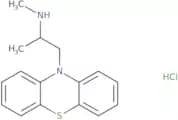
CAS:Rac-N-Demethylpromethazine hydrochloride is a racemic mixture of promethazine. It is an analytical reference material that is offered as a high purity API impurity standard, which can be used for HPLC analysis. Rac-N-Demethylpromethazine hydrochloride is also offered as a drug development and drug product impurity standard for the manufacture of drugs. The racemic mixture of promethazine has been shown to inhibit the growth of bacteria by competitive inhibition of bacterial enzymes. Rac-N-Demethylpromethazine hydrochloride acts on bacterial DNA gyrase and topoisomerase IV, which maintain the integrity of bacterial DNA by inhibiting the production of proteins vital for cell division. Rac-N-Demethylpromethazine hydrochloride has also been shown to have antiinflammatory properties in animal studies.
Formula:C16H19ClN2SPurity:Min. 95%Color and Shape:PowderMolecular weight:306.86 g/molN-[1-(R)-(+)-(2-Naphthyl)ethyl]-3-[3-(trifluoromethyl)phenyl]-1-aminopropane hydrochloride
CAS:N-[1-(R)-(+)-(2-Naphthyl)ethyl]-3-[3-(trifluoromethyl)phenyl]-1-aminopropane hydrochloride is a metabolite that is produced by the metabolism of naphthalene. It is an impurity in the naphthalene standard, which is used as an API to assess the purity of other substances. N-[1-(R)-(+)-(2-Naphthyl)ethyl]-3-[3-(trifluoromethyl)phenyl]-1-aminopropane hydrochloride has been shown to be a substrate for CYP2D6. This metabolite is also found in pharmaceuticals and other drugs.Formula:C22H22F3N•HClPurity:Min. 95%Molecular weight:393.87 g/molN-(5-Aminopentyl) methotrexate amide
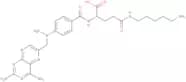
CAS:N-(5-Aminopentyl) methotrexate amide is a fluorescent probe that is used to study the transport of drugs across cell membranes. It binds to the plasma membrane of cells and can be visualized with a fluorescence microscope. N-(5-Aminopentyl) methotrexate amide has been shown to bind to leukemia cells in murine leukemia models. It has a high affinity for drug-resistant cells, which makes it useful for studying drug resistance mechanisms. This probe can be used at nanomolar concentrations for imaging studies, as well as for measuring the uptake of drugs into cancer cells by flow cytometry.
Formula:C25H34N10O4Purity:Min. 95%Color and Shape:Yellow PowderMolecular weight:538.6 g/molMethyl 2-deoxy-3,5-di-O-(4-chlorobenzoyl)-a-D-ribofuranoside
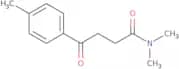
CAS:Methyl 2-deoxy-3,5-di-O-(4-chlorobenzoyl)-a-D-ribofuranoside is a research and development impurity standard for the synthesis of drug products. This chemical is used as a metabolite in the study of metabolic pathways and can be converted to Methyl 3,5-di-O-(4-chlorobenzoyl)-a-D-ribofuranoside by hydrolysis with dilute acid. Methyl 2-deoxy-3,5-di-O-(4-chlorobenzoyl)-a-D ribofuranoside has been shown to be a synthetic molecule and is listed in pharmacopoeia. CAS No. 7818564 5.Formula:C22H24O6Purity:Min. 95%Molecular weight:384.42 g/molN,N-Dimethyl-3-(4-methylbenzoyl)propionamide
CAS:N,N-Dimethyl-3-(4-methylbenzoyl)propionamide is a metabolite of the antihistamine drug diphenhydramine. It is a natural impurity and an impurity standard for this drug. N,N-Dimethyl-3-(4-methylbenzoyl)propionamide can be used in pharmacopoeia to test for purity and quality of drugs, as well as for analytical purposes. It has also been used in drug development and metabolism studies.Formula:C13H17NO2Purity:Min. 95%Color and Shape:PowderMolecular weight:219.28 g/molAtorvastatin epoxydione impurity
CAS:Atorvastatin epoxydione impurity (EPI) is a heptanoic, hydrate, diastereoisomer, racemic mixture, enantiomer and impurity of Atorvastatin. The EPI has been minimized in the formulation process by using a novel synthesis route that employs a chiral pyrrole derivative as an intermediate. This minimization has allowed for the elimination of the tautomer and other impurities present in the original compound.
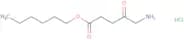
Formula:C26H22FNO4Purity:Min. 95 Area-%Color and Shape:White PowderMolecular weight:431.46 g/mol5-Aminolevulinic acid hexyl ester hydrochloride
CAS:5-Aminolevulinic acid hexyl ester hydrochloride is a cytotoxic drug that inhibits the growth of cancer cells. It is used to diagnose and treat certain cancers, including squamous cell carcinoma, skin cancer, and some types of lung cancer. 5-Aminolevulinic acid hexyl ester hydrochloride can be used in conjunction with fluorescein angiography to detect blood vessels in the skin or other tissues. This drug has also been shown to have anti-inflammatory properties that may be useful for the treatment of autoimmune diseases.Formula:C11H22NO3ClPurity:Min. 95%Color and Shape:White PowderMolecular weight:251.75 g/molAtorvastatin lactam sodium salt impurity
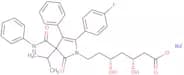
CAS:Atorvastatin is a drug used for the treatment of hypercholesterolemia and cardiovascular diseases. Atorvastatin lactam, which is an impurity formed during the synthesis of atorvastatin, has been shown to inhibit cholesterol biosynthesis in a rat model. The in vivo metabolism of atorvastatin lactam was studied by HPLC-MS/MS and was found to be identical to that of the parent molecule. This impurity may be useful as a research and development or custom synthesis product, or as an impurity standard for HPLC analysis.
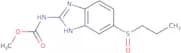
Formula:C33H34FN2NaO6Purity:Min. 95%Color and Shape:White PowderMolecular weight:596.62 g/molAlbendazole sulfoxide
CAS:Albendazole sulfoxide is a sulfoxide of albendazole. The molecular docking analysis of the two molecules showed that the sulfoxide group is located in the same position as the hydroxyl group on albendazole. It has been shown that this replacement of hydroxyl with a sulfoxide group increases the solubility and stability of albendazole, which may be due to hydrogen bonding interactions between these groups. Albendazole sulfoxide has been shown to be an effective treatment for infections caused by parasites such as helminths. However, it should not be used in combination with drugs that are metabolized by cytochrome P450 enzymes because it can inhibit their activity.
Formula:C12H15N3O3SPurity:Min. 97 Area-%Color and Shape:White PowderMolecular weight:281.33 g/mol3-[[[2-[(Aminoiminomethyl)amino]-4-thiazolyl]methyl]thio]-propanoic acid methyl ester
CAS:3-[[[2-[(Aminoiminomethyl)amino]-4-thiazolyl]methyl]thio]-propanoic acid methyl ester is an impurity standard for HPLC. The compound is a metabolite of the drug product and is naturally occurring. The CAS number for 3-[[[2-[(Aminoiminomethyl)amino]-4-thiazolyl]methyl]thio]-propanoic acid methyl ester is 76824-14-1. It has a purity of > 99% and can be used in research and development, analytical applications, or as an impurity standard for HPLC.
Formula:C9H14N4O2S2Purity:Min. 95%Molecular weight:274.37 g/mol6-Chloro-4-(2-chlorophenyl)-2-quinazolinecarboxaldehyde
CAS:6-Chloro-4-(2-chlorophenyl)-2-quinazolinecarboxaldehyde is a colorimetric reagent that can be used to detect Cl. It has been shown to react with Cl in the presence of an acidic solution and produce a red color. The reagent is stable in organic solvents, such as chloroform, but decomposes in water. 6-Chloro-4-(2-chlorophenyl)-2-quinazolinecarboxaldehyde is also used to detect chloride by titrimetric or polarographic methods.Formula:C15H8Cl2N2OPurity:Min. 95%Color and Shape:Off-White PowderMolecular weight:303.14 g/mol


![N-[[2'-(2H-Tetrazol-5-yl)[1,1'-biphenyl]-4-yl]methyl]-L-Valine](/_next/image/?url=https%3A%2Fstatic.cymitquimica.com%2Fproducts%2F3D%2Fthumb-webp%2FIT106480.webp&w=3840&q=75)

![N-[1-(R)-(+)-(2-Naphthyl)ethyl]-3-[3-(trifluoromethyl)phenyl]-1-aminopropane hydrochloride](/_next/image/?url=https%3A%2Fstatic.cymitquimica.com%2Fproducts%2F3D%2Fthumb-webp%2FIN58182.webp&w=3840&q=75)

![3-[[[2-[(Aminoiminomethyl)amino]-4-thiazolyl]methyl]thio]-propanoic acid methyl ester](/_next/image/?url=https%3A%2Fstatic.cymitquimica.com%2Fproducts%2F3D%2Fthumb-webp%2FIA23223.webp&w=3840&q=75)
