APIs for research and impurities
Subcategories of "APIs for research and impurities"
- Aminoacids and derivatives(12,440 products)
- Anthraquinones and derivatives(407 products)
- Benzimidazole and Imidazole Derivatives(10,464 products)
- Benzodiazepine Derivatives(335 products)
- Carbohydrates and glycoconjugates(5,388 products)
- Esters and Derivatives(42,306 products)
- Fatty Acids and Lypidic Derivatives(32,486 products)
- Flavonoids and Polyphenols(17,100 products)
- Free Radicals and Oxidant/Reducing Agents(214 products)
- Ketones and derivatives(2,692 products)
- Natural and semi-synthetic antibiotics(6,409 products)
- Nitriles and Cyano Derivatives(3,070 products)
- Nitrosamines and Derivatives(55 products)
- Nucleosides and Nucleotides(3,492 products)
- Organic Phosphates and Phosphonates(1,203 products)
- Organic Sulphonates and Sulphates(10,451 products)
- Organometallics(4,425 products)
- Others(6,340 products)
- Peptides and Proteins(3,164 products)
- Polymers and Derivatives(100 products)
- Purines and Pyrimidine Derivatives(8,974 products)
- Quinazoline and Quinoline Derivatives(66,217 products)
- Quinones and Derivatives(24,378 products)
- Salts and Derivatives of Active Pharmaceutical Ingredients (API)(92,894 products)
- Steroids and Derivatives(4,987 products)
- Sulfonamides and Derivatives(2,607 products)
- Terpenoids and Derivatives(3,860 products)
- Thiazolidinediones and Thiopyrans(2,755 products)
- β-Adrenergic Compounds(231 products)
Found 66870 products of "APIs for research and impurities"
Desethylene Ciprofloxacin hydrochloride
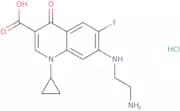
CAS:Desethylene ciprofloxacin hydrochloride is a metabolite of ciprofloxacin that is converted to the active form of the drug. Desethylene ciprofloxacin hydrochloride has a concentration-response relationship, which can be used for in vitro testing of pharmaceutical preparations. The chromatographic evaluation of this metabolite can be used to identify the presence of antibiotics in environmental samples. Desethylene ciprofloxacin hydrochloride is also a substrate for carbonyl reductase and piperazine, which are enzymes that produce an activated form of the metabolite.Formula:C15H16FN3O3·HClPurity:Min. 95%Color and Shape:Off-White Yellow PowderMolecular weight:341.77 g/molO-Methyl atorvastatin calcium
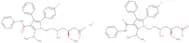
CAS:O-Methyl atorvastatin calcium is a drug product that is an HPLC standard. It is a natural metabolite of atorvastatin, which is synthesized by cytochrome P450 3A4 in the liver. O-Methyl atorvastatin calcium has been shown to be an impurity in some batches of atorvastatin calcium. It has been observed to have pharmacological effects similar to those of atorvastatin. O-Methyl atorvastatin calcium has been used as a research and development (R&D) tool for studies on the metabolism of drugs, including its own synthesis and the study of the effect on other drugs such as amiodarone.Formula:CaC68H71F2N4O10Purity:Min. 95%Color and Shape:PowderMolecular weight:1,182.39 g/molLenvatinib impurity 10
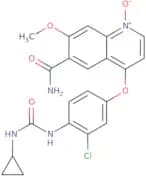
CAS:Lenvatinib impurity 10 is a synthetic impurity that is used as an analytical standard in HPLC. It is also a metabolite of lenvatinib and has been found to have anti-inflammatory properties. Lenvatinib impurity 10 is available in high purity and can be custom synthesized to meet the needs of your research or development.
Formula:C35H26Cl2N6O7Purity:Min. 95%Color and Shape:PowderMolecular weight:713.53 g/molCimetidine impurity F
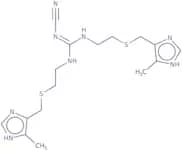
CAS:Cimetidine impurity F is a research and development, drug product, analytical, synthetic, natural, niche, HPLC standard and pharmacopoeia impurity.
CAS No. 55272-86-1Formula:C16H24N8S2Purity:Min. 95%Color and Shape:White PowderMolecular weight:392.55 g/molOlmesartan EP Impurity C
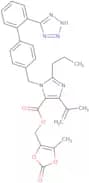
CAS:Olmesartan medoxomil is a prodrug that is metabolized to the active form, olmesartan, in the liver. The esters of olmesartan medoxomil are metabolized by hydrolysis and by esterases. The most common side effects of olmesartan medoxomil are headache, dizziness, fatigue, nausea and diarrhea. Olmesartan medoxomil is used for the treatment of high blood pressure in adults. This drug also has anti-inflammatory properties due to its inhibition of prostaglandin synthesis.
Formula:C29H28N6O5Purity:Min. 95%Color and Shape:White Off-White PowderMolecular weight:540.57 g/molN-Desmethyl galanthamine
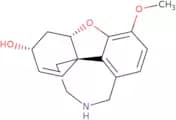
CAS:Controlled ProductN-Desmethyl galanthamine is a plant alkaloid that is found in the Huperzia serrata plant. It has been shown to have cholinergic activity and calcium binding properties. N-Desmethyl galanthamine inhibits acetylcholinesterase, an enzyme responsible for the breakdown of acetylcholine, which is a neurotransmitter. This inhibition leads to increased levels of acetylcholine, which results in increased neuron stimulation and improved memory function. N-Desmethyl galanthamine also binds to β2 nicotinic receptor sites and blocks the binding of nicotine, leading to decreased nicotine dependence.
Formula:C16H19NO3Purity:Min. 95%Molecular weight:273.33 g/molCefpodoxime proxetil impurity H
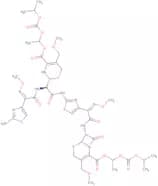
CAS:Cefpodoxime proxetil impurity H is an impurity of cefpodoxime proxetil, which is a prodrug that has been shown to be metabolized by esterases to the active form cefpodoxime. Cefpodoxime proxetil impurity H was found in the elution fraction when using liquid chromatography with reversed-phase as the separation method. It is thought that this impurity may arise from the use of methanol in the process of preparing cefpodoxime proxetil, although other mechanisms have not been ruled out. The mass spectrum for cefpodoxime proxetil impurity H shows peaks at m/z 812 and 682, which correspond to the parent drug and its hydrolysis product, respectively. The fragmentation pattern observed for cefpodoxime proxetil impurity H corresponds to that seen for cephalosporins.Formula:C42H54N10O18S4Purity:Min. 95%Molecular weight:1,115.2 g/molTopiramate N-methyl impurity
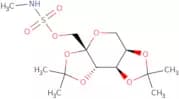
CAS:Topiramate is a drug used to treat epilepsy and weight loss. The N-methyl impurity is a synthetic compound that is an impurity in the drug product. The impurity was synthesized by reacting 4-hydroxybenzaldehyde with methylamine in the presence of triethylamine. It has been shown to be not metabolized, but excreted unchanged in urine.Formula:C13H23NO8SPurity:Min. 95%Color and Shape:Colourless LiquidMolecular weight:353.39 g/molAllopurinol impurity C
CAS:Allopurinol impurity C is a product of the reaction between allopurinol and n-butyl alcohol, which occurs in the presence of sodium hydroxide solution and dimethylformamide. The reaction condition is heated to reflux for 12 hours, after which the mixture is filtered and concentrated under reduced pressure. The resultant crude product is purified by column chromatography with ethyl acetate and then recrystallized from methanol. The synthesis scheme can be found in Figure 1.Formula:C6H6N6OPurity:Min. 95%Color and Shape:Slightly Yellow PowderMolecular weight:178.15 g/molCaspofungin impurity C
Caspofungin impurity C is a high-purity, chromatographically pure, caspofungin impurity. It was isolated by chromatography and was found to have a retention time of 12.5 minutes on the chromatogram. The impurity is thought to be an organic compound with a molecular weight of 437.2 and may be due to the presence of an acetyl group or hydroxyl group.Purity:Min. 95%3-Bromo-N,N-dimethyl-3-(4-methylbenzoyl)propionamide
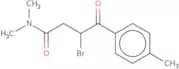
CAS:3-Bromo-N,N-dimethyl-3-(4-methylbenzoyl)propionamide is a natural metabolite of the drug 3-(2,6-dichlorobenzoyl)-1,2,3,4-tetrahydroisoquinoline. It is an impurity found in the synthesis of 3-(2,6-dichlorobenzoyl)-1,2,3,4-tetrahydroisoquinoline and has been shown to be a metabolite of this compound. 3-Bromo-N,N-dimethyl-3-(4-methylbenzoyl)propionamide is also used as an analytical reference material for HPLC. This chemical can be synthesized from commercially available starting materials or custom synthesized with your specifications.Formula:C13H16BrNO2Purity:Min. 95%Color and Shape:PowderMolecular weight:298.18 g/molAtorvastatin diepoxide
CAS:Atorvastatin diepoxide is an analytical standard for the drug atorvastatin that is used in the development of pharmaceuticals. It is synthesized by reacting atorvastatin with epichlorohydrin, which produces a diepoxide derivative. This synthetic molecule can be used as an impurity standard for HPLC analysis. The CAS number for atorvastatin diepoxide is 887470-43-1.
Formula:C33H35FN2O7Purity:Min. 95%Molecular weight:509.64 g/molAtorvastatin impurity F
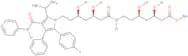
CAS:Atorvastatin impurity F is an impurity that can be found in atorvastatin. It is a white to off-white crystalline solid with a melting point of 142°C. It has a molecular weight of 273.5 and chemical formula of C14H13N3O2. This impurity can be found in atorvastatin as an API impurity, which may have an effect on the efficacy or toxicity of the drug product. Impurities are present in all pharmaceutical products and should be identified, characterized, and quantified for quality control purposes. Impurities are often unavoidable byproducts of the manufacturing process and can lead to potential safety concerns if they are not detected early on during drug development. The presence of impurities may also affect the pharmacological effects or therapeutic efficacy of the drug product.
Formula:C40H47FN3O8NaPurity:Min. 95%Color and Shape:PowderMolecular weight:739.8 g/molAll-trans-retinol-d5
CAS:Controlled ProductAll-trans-retinol-d5 is a supplement that is used to protect the brain from oxidative damage and to help maintain healthy skin. It is an antioxidant that prevents free radicals from damaging cells and helps maintain the structural integrity of cell membranes. All-trans-retinol-d5 can be found in high concentrations in animal tissues, such as liver, lung, kidney, heart, brain, and eye. It can also be found in human urine. The presence of all-trans-retinol-d5 in urine has been correlated with neuroprotective effects. Retinol levels have been shown to be higher in children who are less obese than those who are obese or overweight. All-trans retinol has been shown to inhibit cancer cell proliferation and induce apoptosis by inhibiting protein synthesis at the level of transcription.
Formula:C20H25D5OPurity:(%) Min. 80%Color and Shape:Clear Viscous LiquidMolecular weight:291.48 g/molDes(2-methylbutyryl) pavastatin sodium
CAS:Des(2-methylbutyryl)pavastatin sodium is a synthetic analog of the natural product, pravastatin. It is the methyl ester of the active metabolite of pravastatin and has been shown to be an effective inhibitor of cholesterol biosynthesis. Des(2-methylbutyryl)pavastatin sodium is used in drug development as an analytical standard and as a research and development impurity standard for HPLC. This compound's CAS number is 151061-28-8, making it a niche product that does not require extensive synthesis.
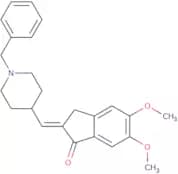
Formula:C18H29NaO6Purity:Min. 95%Molecular weight:364.41 g/mol1-Benzyl-4-(5,6-dimethoxy-1-oxoindan-2-ylidene)methylpiperidine
CAS:1-Benzyl-4-(5,6-dimethoxy-1-oxoindan-2-ylidene)methylpiperidine is an analytical standard and a drug product. It is a synthetic compound that has been shown to have pharmacological effects similar to those of the analgesic or opioid drugs. 1-Benzyl-4-(5,6-dimethoxy-1-oxoindan-2-ylidene)methylpiperidine can be used as an impurity standard for HPLC analyses as well as metabolic studies. This compound is also known to have potential interactions with other drugs.Formula:C24H27NO3Purity:Min. 98 Area-%Color and Shape:PowderMolecular weight:377.48 g/molN-[4-Amido-3-(trifluoromethyl)phenyl-3-[(4-fluorophenyl)sulphinyl]-2-hydroxy-2-methylpropanamide
CAS:This drug product is a custom synthesis, CAS No. 2200280-97-1, drug development, Metabolite, Synthetic, Impurity standard, Metabolism studies, API impurity, Natural (pharmacopoeia), analytical (HPLC standard), Research and Development (High purity). It is a metabolite of the drug N-[4-amido-3-(trifluoromethyl)phenyl-3-[(4-fluorophenyl)sulphinyl]-2-hydroxy-2-methylpropanamide. This compound has been shown to have high affinity for the dopamine receptor with an IC50 of 0.5 nM.Formula:C18H16F4N2O5SPurity:Min. 95 Area-%Color and Shape:White to off-white solid.Molecular weight:448.39 g/mol(3S)-3-[4-[(5-Bromo-2-chlorophenyl)methyl]phenoxy]tetrahydro-furan
CAS:Intermediate in the synthesis of empagliflozinFormula:C17H16BrClO2Purity:Min. 95%Color and Shape:White PowderMolecular weight:367.66 g/mol4-Methoxy-N,N-dimethyl-phenethylamine
CAS:Controlled Product4-Methoxy-N,N-dimethylphenethylamine is a natural product that has been shown to inhibit the transfer of bacteria from the environment to food. It also has regulatory properties and can be used as a supplement in dietary drinks. 4-Methoxy-N,N-dimethylphenethylamine is an alkaloidal extract and has been shown to have antibacterial activity against Escherichia coli, Salmonella enterica, and Listeria monocytogenes. This compound was also found to have diffraction properties, which are related to its ability to bind DNA in bacterial cells.Formula:C11H17NOPurity:Min. 95%Color and Shape:Clear LiquidMolecular weight:179.26 g/molTenofovir isoproxil monoester
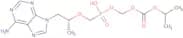
CAS:Tenofovir isoproxil monoester is a prodrug of Tenofovir, which is an antiviral drug. Tenofovir prevents the growth of HIV by interfering with the synthesis of viral DNA. The process development stage involves converting Tenofovir to its disoproxil monoester form, which has been shown to have greater antiviral activity than Tenofovir alone. This conversion process involves condensing one molecule of fumarate with two molecules of tenofovir, forming tenofovir disoproxil fumarate (TFD). TFD can be converted back to Tenofovir using hydrolysis and hydrogenation. Impurities in TFD include isopropyl tenofovir and unidentified impurities that are not present in the parent drug, tenofovir. Tenofovir Disoproxil Fumarate was also shown to be more potent than TFD and is undergoing clinical trials forFormula:C14H22N5O7PPurity:Min. 97 Area-%Color and Shape:White/Off-White SolidMolecular weight:403.33 g/mol

![N-[4-Amido-3-(trifluoromethyl)phenyl-3-[(4-fluorophenyl)sulphinyl]-2-hydroxy-2-methylpropanamide](/_next/image/?url=https%3A%2Fstatic.cymitquimica.com%2Fproducts%2F3D%2Fthumb-webp%2FIA58277.webp&w=3840&q=75)
![(3S)-3-[4-[(5-Bromo-2-chlorophenyl)methyl]phenoxy]tetrahydro-furan](/_next/image/?url=https%3A%2Fstatic.cymitquimica.com%2Fproducts%2F3D%2Fthumb-webp%2FIB75174.webp&w=3840&q=75)