APIs for research and impurities
Active Pharmaceutical Ingredients (APIs) are the substances in drugs responsible for their therapeutic effects. In this section, you will find a wide variety of APIs intended for research use. These compounds are essential for the development, testing, and validation of new pharmaceutical formulations. CymitQuimica offers high-quality APIs to support research in drug discovery and development.
Subcategories of "APIs for research and impurities"
- Aminoacids and derivatives(12,241 products)
- Anthraquinones and derivatives(401 products)
- Benzimidazole and Imidazole Derivatives(10,345 products)
- Benzodiazepine Derivatives(332 products)
- Carbohydrates and glycoconjugates(5,006 products)
- Esters and Derivatives(42,023 products)
- Fatty Acids and Lypidic Derivatives(32,187 products)
- Flavonoids and Polyphenols(16,990 products)
- Free Radicals and Oxidant/Reducing Agents(213 products)
- Ketones and derivatives(2,393 products)
- Natural and semi-synthetic antibiotics(6,335 products)
- Nitriles and Cyano Derivatives(3,042 products)
- Nitrosamines and Derivatives(55 products)
- Nucleosides and Nucleotides(3,413 products)
- Organic Phosphates and Phosphonates(1,191 products)
- Organic Sulphonates and Sulphates(10,370 products)
- Organometallics(4,396 products)
- Others(6,270 products)
- Peptides and Proteins(3,116 products)
- Polymers and Derivatives(99 products)
- Purines and Pyrimidine Derivatives(8,888 products)
- Quinazoline and Quinoline Derivatives(65,497 products)
- Quinones and Derivatives(24,191 products)
- Salts and Derivatives of Active Pharmaceutical Ingredients (API)(79,238 products)
- Steroids and Derivatives(4,949 products)
- Sulfonamides and Derivatives(2,584 products)
- Terpenoids and Derivatives(3,835 products)
- Thiazolidinediones and Thiopyrans(2,733 products)
- β-Adrenergic Compounds(228 products)
Show 21 more subcategories
Found 56511 products of "APIs for research and impurities"
Sort by
Purity (%)
0
100
|
0
|
50
|
90
|
95
|
100
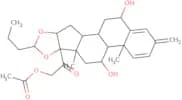
6β-Hydroxy 21-acetyloxy budesonide
CAS:<p>Please enquire for more information about 6β-Hydroxy 21-acetyloxy budesonide including the price, delivery time and more detailed product information at the technical inquiry form on this page</p>Formula:C28H38O7Purity:Min. 95%Molecular weight:486.6 g/mol3-(2-Fluorophenyl) ezetimibe
CAS:<p>3-(2-Fluorophenyl) ezetimibe is an impurity of the drug product Ezetimibe. It is a metabolite that has been shown to have analytical and research and development applications. 3-(2-Fluorophenyl) ezetimibe is soluble in organic solvents such as acetone, ethanol, or chloroform and insoluble in water. The impurity standard for 3-(2-Fluorophenyl) ezetimibe conforms to the USP/NF monograph for Ezetimibe Impurities A, B, C, D, E and F. The CAS number for this impurity is 1798008-25-9.</p>Formula:C24H21F2NO3Purity:Min. 95%Molecular weight:409.40 g/molL(+)-2-Amino-5-phosphonovaleric acid
CAS:<p>L-2-Amino-5-phosphonovaleric acid is an inhibitory neurotransmitter that binds to the GABAA receptor. It is used in the treatment of bladder disorders, such as urinary frequency, urgency, and incontinence. L-2-Amino-5-phosphonovaleric acid has been shown to have a depressant effect on the central nervous system and can cause symptoms such as nausea, vomiting, and headache. This drug also has antimicrobial properties due to its ability to inhibit bacterial enzyme activities. L-2-Amino-5-phosphonovaleric acid blocks glutamate receptors in mouse hippocampal cells by binding the alpha1 subunit of the GABAA receptor. This prevents the influx of calcium ions into cells and inhibits phosphorylation of protein kinase C. L(+)-2-Amino-5-phosphonovaleric acid also inhibits pentosan polysulfate sodium,</p>Formula:C5H12NO5PPurity:Min. 95%Molecular weight:197.13 g/mol7-Hydroxyhyoscyamine
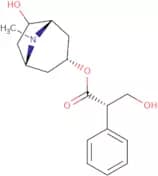
CAS:<p>7-Hydroxyhyoscyamine is an antibacterial agent that is used in the treatment of bacterial infections. It has been shown to inhibit the growth of a number of bacteria including Staphylococcus aureus, Streptococcus pyogenes, and Escherichia coli. 7-Hydroxyhyoscyamine has been shown to be more potent than 6-hydroxyhyoscyamine (6-OH Hya) for inhibiting protein synthesis in the bacteria. The compound does not have any psychoactive effects, unlike atropine sulfate, which is also an alkaloid found in plants from the Solanaceae family. 7-Hydroxyhyoscyamine can be synthesized by reacting atropine with nitrous acid or hydrochloric acid. This synthetic process leads to n-oxides as impurities, which can be removed by using a reversed phase high performance liquid chromatography (RP HPLC). Validation of this</p>Formula:C17H23NO4Purity:Min. 95%Color and Shape:PowderMolecular weight:305.4 g/molSalbutamol Impurity D
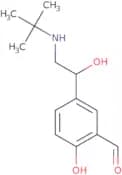
CAS:<p>Salbutamol Impurity D is a chiral, metal chelator impurity of the drug substance Salbutamol. It is a prodrug that is hydrolyzed to its active form, salbutamol sulfate, in vivo. Salbutamol Impurity D binds to chloride ions and has been shown to be an interferent for many analytical methods. The reversed-phase chromatography retention time for Salbutamol Impurity D is about 10 minutes shorter than for Salbutamol sulfate.</p>Formula:C13H19NO3Purity:Min. 95%Molecular weight:237.29 g/molAtorvastatin lactam allyl ester
CAS:<p>Please enquire for more information about Atorvastatin lactam allyl ester including the price, delivery time and more detailed product information at the technical inquiry form on this page</p>Formula:C36H39FN2O6Purity:Min. 95%Molecular weight:614.7 g/molTopiramate impurity C
CAS:<p>Topiramate impurity C is an analytical reference standard, which is primarily sourced from the chemical synthesis of topiramate-related compounds. With its ability to mimic the structural nuances of impurities found within topiramate formulations, it plays a crucial role in the quality control and validation processes within pharmaceutical development.Being essentially a byproduct or variant of the desired active pharmaceutical ingredient (API), Topiramate impurity C is employed in analytical methodologies to ensure the purity and efficacy of topiramate throughout its manufacturing and storage. Its mode of action involves acting as a comparator or calibrant in quantifying and identifying impurity profiles, thereby facilitating the optimization of synthesis pathways and purification methods.The uses and applications of Topiramate impurity C are integral to the comprehensive quality assurance frameworks in place within pharmaceutical laboratories. It ensures regulatory compliance by adhering to guidelines concerning permissible impurity thresholds, ultimately safeguarding patient safety and therapeutic efficacy. Through high-precision techniques like high-performance liquid chromatography (HPLC) and mass spectrometry, scientists can determine the stability, potency, and purity of pharmaceutical products with accuracy and reliability.</p>Formula:C12H19ClO8SPurity:Min. 95%Molecular weight:358.79 g/molAztreonam Impurity B TFA salt
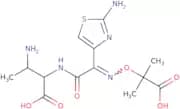
CAS:<p>Aztreonam Impurity B (AZTB) is a synthetic, non-natural impurity that has been identified in Aztreonam. The CAS number for AZTB is 102586-36-7. Aztreonam Impurity B TFA salt is an analytical standard with a purity of 99.9%. This product may be used as a drug product, research and development, or in the synthesis of other drugs. HPLC analysis of AZTB reveals an Rf value of 0.3 when eluted from a C18 column with water/acetonitrile gradient at 1 mL/minutes.</p>Formula:C13H19N5O6SPurity:Min. 95%Molecular weight:373.39 g/molRwj-52353 hydrochloride
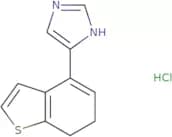
CAS:<p>Rwj-52353 hydrochloride is a drug product that is custom synthesized in the laboratory. It has a high purity, and is used for analytical and metabolism studies. Rwj-52353 hydrochloride is metabolized in humans by esterases or glucuronidases, oxidation by cytochrome P450 enzymes, reduction by glutathione reductase, or conjugation with glucuronic acid. This drug also has a toxic effect on respiratory system cells, which may be due to its ability to induce apoptosis. Rwj-52353 hydrochloride has shown anti-inflammatory properties, which may be due to its inhibition of prostaglandin synthesis. Rwj-52353 hydrochloride is a synthetic compound that belongs to the class of drugs called nicotinic acid derivatives. It can be found as an impurity in other drugs such as nicotinamide and nicotinic acid.</p>Formula:C11H11ClN2SPurity:Min. 95%Molecular weight:238.74 g/molNaftifine-d3 hydrochloride
CAS:Controlled Product<p>Naftifine-d3 is an analytical standard for HPLC. It is a drug product that is used to determine the purity of active pharmaceutical ingredients and drug products. Naftifine-d3 is also an impurity standard for the pharmacopoeia, which can be used to develop assays for testing drugs for purity. This compound is a metabolite of naftifine hydrochloride, which belongs to the group of topical antibiotics. Naftifine-d3 has been found in natural sources such as plants and fungi. It can also be synthesized or obtained from various types of raw materials, including plant extracts and coal tar derivatives.</p>Formula:C21H19D3ClNPurity:Min. 95%Molecular weight:326.88 g/molKakkanin
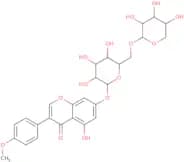
CAS:<p>Kakkanin is a natural compound that has shown potential in inhibiting the growth of cancer cells. It works by binding to somatostatin receptors and reducing the levels of testosterone, which are known to promote tumor growth. Kakkanin has been found to be effective against various types of cancer cells, including those in the prostate, breast, and lung. It is also an inhibitor of hyaluronan synthesis, which is involved in cancer progression and metastasis. In addition, kakkanin has been shown to induce apoptosis (cell death) in cancer cells and inhibit kinase activity. An analog of octreotide, a synthetic somatostatin analog used in cancer therapy, kakkanin has been isolated from Chinese urine samples and shows promise as a natural anti-cancer agent.</p>Formula:C27H30O14Purity:Min. 95%Molecular weight:578.5 g/molEplivanserin
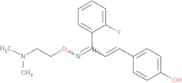
CAS:<p>Eplivanserin is a potent tumor inhibitor that belongs to the class of indirubin kinase inhibitors. It has shown great promise as an anticancer agent due to its ability to induce apoptosis in cancer cells and inhibit their growth cycle. Eplivanserin has been found to be effective against a variety of cancers, including breast, lung, and prostate cancer. This medicinal compound is derived from Chinese herbs and has been extensively studied for its potential in cancer treatment. In addition, eplivanserin has been found in urine samples from humans, indicating that it may have potential as a diagnostic tool for cancer detection. Its protein targets are still being investigated, but it is believed that eplivanserin works by inhibiting key enzymes involved in cell signaling pathways that promote cancer cell growth and survival.</p>Formula:C19H21FN2O2Purity:Min. 95%Molecular weight:328.4 g/molSalbutamol EP Impurity F
CAS:<p>Salbutamol EP Impurity F is a drug impurity that is an analytical standard and pharmacopoeia reference material. It is used in the manufacture of pharmaceuticals to ensure that the product meets quality standards. Salbutamol EP Impurity F has been shown to be a metabolite of salbutamol, which is produced as a result of oxidative metabolism by cytochrome P450 enzymes such as CYP3A4. The compound has also been observed in human urine and plasma.</p>Formula:C26H40N2O5Purity:Min. 95%Molecular weight:460.61 g/molPBB 154
CAS:Controlled Product<p>PBB 154 is a medicinal compound that has shown promising results in the treatment of cancer. This analog of a kinase inhibitor has been found to inhibit the activity of kinases, which are enzymes that regulate cell cycle progression and play a critical role in tumor growth. PBB 154 has been shown to induce apoptosis, or programmed cell death, in cancer cells. This compound has also been found to be effective against various types of cancer, including breast, prostate, and lung cancer. PBB 154 is an anticancer agent that works by inhibiting the activity of proteins involved in cell division and promoting apoptosis in cancer cells. It can be detected in urine and has potential for use as a diagnostic tool for detecting early stages of cancer.</p>Formula:C12H4Br6Purity:Min. 95%Molecular weight:627.6 g/molLamivudine acid
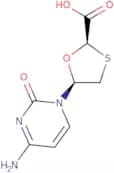
CAS:<p>Lamivudine acid is a synthetic orotate prodrug that is converted to the active form, lamivudine. It inhibits the synthesis of viral DNA by inhibiting the reverse transcriptase enzyme and has been used as a treatment for HIV infection. Lamivudine acid is soluble in organic solvents such as acetone and cyclohexane. The crystal structure of this compound has been determined using X-ray crystallography and exhibits a zwitterion structure with a hydrogen bond between the carboxylate group and the amide nitrogen atom of the molecule.</p>Formula:C8H9N3O4SPurity:Min. 95%Molecular weight:243.24 g/molFluorobexarotene
CAS:<p>Fluorobexarotene is a fatty acid that has been shown to induce the expression of inflammatory genes in animal models. It has also been shown to inhibit the growth of human cancer cells in vitro and in vivo. Fluorobexarotene is used for the diagnosis of x-linked adrenoleukodystrophy and is currently being studied as a treatment for liver cancer. This molecule is also an agonist of retinoic acid receptors, which may be responsible for its effects on gene transcription.</p>Formula:C24H27FO2Purity:Min. 95%Molecular weight:366.5 g/mol9,10-Dioxo ketotifen
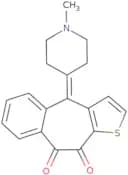
CAS:<p>9,10-Dioxo ketotifen is a drug product that belongs to the category of HPLC standards. It has been shown to be a metabolite of ketotifen and also an impurity in ketotifen. 9,10-Dioxo ketotifen has been shown to possess antihistamine activity and may have potential as a lead compound for the development of new drugs.</p>Formula:C19H17NO2SPurity:Min. 95%Color and Shape:PowderMolecular weight:323.41 g/molMirtazapine bromide
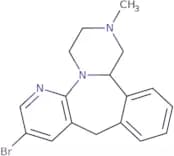
CAS:<p>Mirtazapine bromide is a substance that belongs to the class of monohydrates. It is prepared by heating mirtazapine with water, and has a high efficiency in the preparation of mirtazapine methanesulfonate. Mirtazapine bromide has an enantiomerically pure form in solid state. This drug is used as an adjuvant medicine for the treatment of depression or anxiety disorders. It binds to serotonin receptors in the brain, which causes a decrease in appetite and weight gain. The hydrobromic acid salt of this drug can be used to treat inflammation and fever, while the maleate salt can be used to treat asthma.</p>Formula:C17H18BrN3Purity:Min. 95%Molecular weight:344.2 g/molAgomelatine dimer acetamide
CAS:<p>Agomelatine dimer acetamide is an impurity of agomelatine, an antidepressant that is used in the treatment of major depressive disorder. Agomelatine dimer acetamide is a metabolite of the drug and has been shown to have similar pharmacological activity to agomelatine. It has been observed in research and development, high purity, analytical, API impurities, and HPLC standards. Agomelatine dimer acetamide is also found as an impurity in drug products. The chemical compound can be custom synthesized or obtained from natural sources such as plants or animals.</p>Formula:C28H29NO3Purity:Min. 95%Molecular weight:427.5 g/molLurasidone sulfoxide
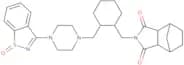
CAS:<p>Lurasidone sulfoxide is a molecule that inhibits the binding of ligands to the receptors in cells. It has been shown to be synergistic with other molecule inhibitors, such as virus and organosulfur compounds. Lurasidone sulfoxide also interacts with drug molecules and can be used to shift the paradigm of treatment for certain diseases. Lurasidone sulfoxide is cocrystallized with other molecules that are used for treatment or prevention of certain diseases, including HIV, hepatitis C, and cancer.</p>Formula:C28H36N4O3SPurity:Min. 95%Molecular weight:508.68 g/mol