APIs for research and impurities
Active Pharmaceutical Ingredients (APIs) are the substances in drugs responsible for their therapeutic effects. In this section, you will find a wide variety of APIs intended for research use. These compounds are essential for the development, testing, and validation of new pharmaceutical formulations. CymitQuimica offers high-quality APIs to support research in drug discovery and development.
Subcategories of "APIs for research and impurities"
- Aminoacids and derivatives(12,241 products)
- Anthraquinones and derivatives(401 products)
- Benzimidazole and Imidazole Derivatives(10,345 products)
- Benzodiazepine Derivatives(332 products)
- Carbohydrates and glycoconjugates(5,006 products)
- Esters and Derivatives(42,023 products)
- Fatty Acids and Lypidic Derivatives(32,187 products)
- Flavonoids and Polyphenols(16,990 products)
- Free Radicals and Oxidant/Reducing Agents(213 products)
- Ketones and derivatives(2,393 products)
- Natural and semi-synthetic antibiotics(6,335 products)
- Nitriles and Cyano Derivatives(3,042 products)
- Nitrosamines and Derivatives(55 products)
- Nucleosides and Nucleotides(3,413 products)
- Organic Phosphates and Phosphonates(1,191 products)
- Organic Sulphonates and Sulphates(10,370 products)
- Organometallics(4,396 products)
- Others(6,270 products)
- Peptides and Proteins(3,116 products)
- Polymers and Derivatives(99 products)
- Purines and Pyrimidine Derivatives(8,888 products)
- Quinazoline and Quinoline Derivatives(65,497 products)
- Quinones and Derivatives(24,191 products)
- Salts and Derivatives of Active Pharmaceutical Ingredients (API)(79,238 products)
- Steroids and Derivatives(4,949 products)
- Sulfonamides and Derivatives(2,584 products)
- Terpenoids and Derivatives(3,835 products)
- Thiazolidinediones and Thiopyrans(2,733 products)
- β-Adrenergic Compounds(228 products)
Show 21 more subcategories
Found 56511 products of "APIs for research and impurities"
Sort by
Purity (%)
0
100
|
0
|
50
|
90
|
95
|
100
Hydroxy cyclophosphamide semicarbazone-d4
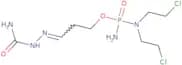
CAS:<p>Hydroxy cyclophosphamide semicarbazone-d4 is an analytical standard used to monitor the purity of a drug product. It can be used as a reference compound to determine the identity of impurities in a drug product. Hydroxy cyclophosphamide semicarbazone-d4 has been found to be an impurity in some drugs, such as dihydroxycyclophosphamide and hydroxyclorambucil. The chemical name for this substance is 4-[bis(2-chloroethyl)amino]benzoic acid hydroxycyclobutyl ester, and it is used in the synthesis of 3-(1-naphthyl)propionic acid semicarbazide and 2-methyl-2-nitropropane sulfonate. Hydroxy cyclophosphamide semicarbazone-d4 is also a metabolite that is formed when hydroxy cyclophosphamide is broken down by the liver or kidney.</p>Formula:C8H18Cl2N5O3PPurity:Min. 95%Molecular weight:334.14 g/molNbi 27914 hydrochloride
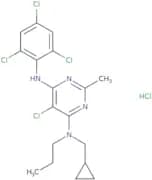
CAS:<p>NBI 27914 hydrochloride is a small molecule that binds to and blocks the neurotransmitter receptor for norepinephrine, which is involved in the regulation of mood. This drug has been shown to have anxiolytic-like effects in animals and may be useful for treating anxiety disorders that are due to congenital adrenergic hyperactivity. NBI 27914 hydrochloride also has an anxiogenic effect at high doses, which may be due to its ability to bind and block beta-adrenergic receptors. It is also able to act as a specific agonist or antagonist of alpha-adrenergic receptors.</p>Formula:C18H21Cl5N4Purity:Min. 95%Molecular weight:470.6 g/mol3-[[[2-[(Aminoiminomethyl)amino]-4-thiazolyl]methyl]sulfinyl]-N-(aminosulfonyl)propanimidamide
CAS:<p>3-[[[2-[(Aminoiminomethyl)amino]-4-thiazolyl]methyl]sulfinyl]-N-(aminosulfonyl)propanimidamide is a drug product that is custom synthesized. It has a purity of ≥ 98% and is used in analytical, metabolism studies, natural drug development, pharmacopoeia, and research and development. 3-[[[2-[(Aminoiminomethyl)amino]-4-thiazolyl]methyl]sulfinyl]-N-(aminosulfonyl)propanimidamide has an impurity standard of 5% and can be found under CAS No. 90237-03-9.</p>Formula:C8H15N7O3S3Purity:Min. 95%Molecular weight:353.45 g/molFluticasone furoate EP impurity E
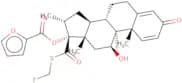
CAS:<p>Fluticasone furoate EP impurity E is an analytical reference standard for pharmacopoeia and research. It is a synthetic fluticasone furoate EP impurity that has been custom synthesized for use as a high-purity, HPLC-grade standard. Fluticasone furoate EP impurity E is characterized by its natural origin and purity, making it appropriate for use in drug development and research. The CAS number for this product is 398454-97-2.</p>Formula:C25H31F3O5SPurity:Min. 95%Molecular weight:500.5 g/molDes(oxopentyl) valsartan benzyl ester
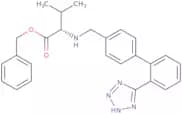
CAS:<p>Des(oxopentyl) Valsartan Benzyl Ester is an analytical standard for the drug valsartan. It is a white to off-white, crystalline powder that is soluble in methanol and acetone. This compound can be used as an HPLC standard, or as an impurity standard in the development of valsartan drugs. Des(oxopentyl) Valsartan Benzyl Ester also has niche uses in natural product isolation and synthetic organic chemistry. It is a metabolite of des(oxopentyl)valsartan, which is a prodrug of valsartan.</p>Formula:C26H27N5O2Purity:Min. 95%Molecular weight:441.53 g/mol(S)-4,5,6,7-Tetrahydro-N2,N6-propionyl-2,6-benzothiazolediamine
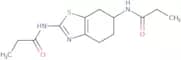
CAS:<p>(S)-4,5,6,7-Tetrahydro-N2,N6-propionyl-2,6-benzothiazolediamine is an analytical standard that is used in the research and development of drugs. It has a purity of 99.9%, and the CAS number is 1346617-47-7. This compound can be used as a reference substance to identify other impurities in drug products. The compound is also used as an HPLC standard for verifying the purity of raw materials or intermediates on a high performance liquid chromatography system.</p>Formula:C13H19N3O2SPurity:Min. 95%Molecular weight:281.38 g/mol5-Dimethylaminobutyryl citalopram
CAS:<p>5-Dimethylaminobutyryl citalopram is a metabolite of the antidepressant drug, Citalopram. It is used as an analytical impurity standard for Citalopram in HPLC and LCMS analysis. 5-Dimethylaminobutyryl citalopram is also a natural product of metabolism and may be found in humans. 5-Dimethylaminobutyryl citalopram has been shown to have similar pharmacological properties to Citalopram in animal studies, which include antihistamine effects and analgesic effects. This compound may be useful as a niche treatment for some patients who are resistant to other drugs.</p>Formula:C25H33FN2O2Purity:Min. 95%Molecular weight:412.54 g/mol3-[(1E)-2-[4-[[(2-Carboxyethyl)amino]carbonyl]phenyl]diazenyl] balsalazide
CAS:<p>3-[(1E)-2-[4-[[(2-Carboxyethyl)amino]carbonyl]phenyl]diazenyl] balsalazide is a white to off-white solid that is soluble in water and acidic solutions. It has an impurity level of less than 0.5%. The melting point of 3-[(1E)-2-[4-[[(2-Carboxyethyl)amino]carbonyl]phenyl]diazenyl] balsalazide is approximately 195°C. This compound has been shown to have antibiotic activity against a variety of bacteria, including methicillin resistant Staphylococcus aureus (MRSA).</p>Formula:C27H24N6O9Purity:Min. 95%Molecular weight:576.51 g/molD-Ribose-L-cysteine
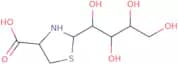
CAS:<p>D-Ribose-L-cysteine is a combination of D-ribose and L-cysteine. It is used for the treatment of bowel disease, radiation injury, pentobarbital sodium induced ileus, atherosclerotic lesion, oral hypoglycaemic, neuronal death, psychotic disorder in AIDS patients and active antiretroviral therapy. D-Ribose-L-cysteine has been shown to decrease ATP levels and increase histological damage in v79 cells. D-Ribose-L-cysteine has also been shown to have a protective effect on hamster V79 cells against inflammatory bowel disease by decreasing the release of inflammatory cytokines.</p>Formula:C8H15NO6SPurity:Min. 95%Molecular weight:253.28 g/molLevofloxacin carboxylic acid
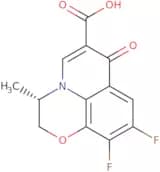
CAS:<p>Levofloxacin is a synthetic molecule with an asymmetric carbon atom in its heterocycle. It is synthesized by reacting chloroform with 2-fluoro-5-nitrobenzaldehyde, which reacts further with sodium hydroxide and hydrochloric acid to form the levofloxacin carboxylic acid. Impurities can be found in the reaction product due to chlorine atoms that are formed during the synthesis. The amount of impurities present in the final product can be determined using a titration method or through HPLC analysis. Levofloxacin has been shown to be effective against methicillin-resistant Staphylococcus aureus (MRSA) and Clostridium perfringens, although is not active against acid-fast bacteria such as Mycobacterium tuberculosis or Mycobacterium avium complex.</p>Formula:C13H9F2NO4Purity:Min. 95%Color and Shape:PowderMolecular weight:281.21 g/molAztreonam Impurity 5
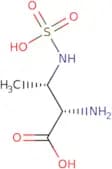
CAS:<p>Aztreonam Impurity 5 is a drug product that is used as an analytical standard in HPLC. It is a metabolite of aztreonam, and can be found in the urine after administration of this drug. Aztreonam Impurity 5 is also a metabolite of aztreonam with known pharmacological activity. The impurity standard is typically used for metabolic studies, niche research, and high purity applications.</p>Formula:C4H10N2O5SPurity:Min. 95%Molecular weight:198.2 g/mol1-Methoxy-5-(methoxymethoxy)-naphthalene
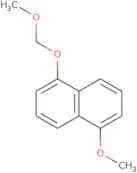
CAS:<p>Please enquire for more information about 1-Methoxy-5-(methoxymethoxy)-naphthalene including the price, delivery time and more detailed product information at the technical inquiry form on this page</p>Formula:C13H14O3Purity:Min. 95%Molecular weight:218.25 g/mol2,2',3,4,4',5-Hexachlorobiphenyl
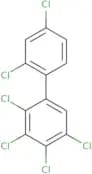
CAS:Controlled Product<p>2,2',3,4,4',5-Hexachlorobiphenyl is a potent inhibitor of cancer cell growth and has been shown to induce apoptosis in Chinese hamster ovary cells. This compound also inhibits the activity of kinase inhibitors such as chloroquine and artesunate. It has been found in human urine samples and may be involved in the development of cancer. 2,2',3,4,4',5-Hexachlorobiphenyl has been identified as an analog of tumor-promoting compounds and may have potential as an anticancer agent. Further research is needed to fully understand its mechanism of action and potential therapeutic applications.</p>Formula:C12H4Cl6Purity:Min. 95%Molecular weight:360.9 g/molVitamin B6 impurity 3
CAS:<p>Vitamin B6 impurity 3 is a high purity synthetic compound with the CAS number 1385767-86-1. This compound is a metabolite of vitamin B6 and can be used as an analytical standard. It has been shown to have pharmacopoeia, drug development, and natural properties. Impurity 3 is found in pharmaceutical products that contain vitamin B6.</p>Formula:C12H17NO3Purity:Min. 95%Molecular weight:223.27 g/mol(2S,4S)-tert-Butyl 2-(5-(2-((2S,5S)-1-((S)-2-((methoxycarbonyl)amino)-3-methylbutanoyl)-5-methylpyrrolidin-2-yl)-1,11-dihydroisochro meno[4',3':6,7]naphtho[1,2-d]imidazol-9-yl)-1H-imidazol-2-yl)-4-(methoxymethyl)pyrrolidine-1-carboxylate
CAS:<p>(2S,4S)-tert-Butyl 2-(5-(2-((2S,5S)-1-((S)-2-((methoxycarbonyl)amino)-3-methylbutanoyl)-5-methylpyrrolidin-2-yl)-1,11-dihydroisochro meno[4',3':6,7]naphtho[1,2-d]imidazol-9-yl)-1H-imidazol-2-yl)-4-(methoxymethyl)pyrrolidine-1-carboxylate is a drug product that has been synthesized and is being developed for the treatment of cancer. (2S,4S)-tert–Butyl 2-(5-(2-[(2R,5R)-1-[(R) -2-[(methoxycarbonyl)amino]-</p>Formula:C44H53N7O7Purity:Min. 95%Molecular weight:791.9 g/molBGC-20-1531
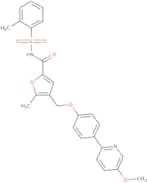
CAS:<p>BGC-20-1531 is a medicinal compound that has been found to be an effective inhibitor of kinases in cancer cells. This Chinese-derived analog has shown potent anticancer activity in human tumor models and induces apoptosis in cancer cells. It works by inhibiting the protein kinase activity that is essential for cancer cell survival, leading to cell death. BGC-20-1531 has been shown to be effective against a wide range of cancer types and can be used as a potential therapeutic agent for cancer treatment. Additionally, this compound has been found in human urine and may have potential as a biomarker for cancer diagnosis and prognosis. With its unique characteristics, BGC-20-1531 is an exciting new prospect for the development of novel anticancer drugs.</p>Formula:C26H24N2O6SPurity:Min. 95%Molecular weight:492.5 g/molOxaliplatin Impurity E
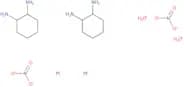
CAS:<p>Oxaliplatin Impurity E is a drug product, which is an impurity that was discovered in the synthesis of oxaliplatin. It is a metabolite and an impurity standard for HPLC. Oxaliplatin Impurity E has been shown to inhibit the growth of cancer cells and may be used as a chemopreventive agent. Research is currently being conducted to determine how this compound interacts with the body's natural processes.</p>Formula:C12H30N6O8Pt2Purity:Min. 95%Color and Shape:White/Off-White SolidMolecular weight:776.57 g/molTofacitinib impurity
CAS:<p>Tofacitinib impurity is a pharmacopoeia grade synthetic tofacitinib impurity intended for the manufacture of drug products and research and development. It is a custom synthesis that is not found in nature. Tofacitinib impurity is used for the production of analytical standards and as an impurity standard for HPLC analysis. The purity of this product is greater than 99% with a specific gravity between 1.2-1.3 g/mL at 25°C, an assay range between 20-200 μg/mL, and a melting point range between 124-128°C.</p>Purity:Min. 95%Molecular weight:314.39 g/molAmoxicillin EP Impurity E
CAS:<p>Amoxicillin EP Impurity E is an impurity found in Amoxicillin EP, which is a β-lactam antibiotic. It belongs to the group of β-lactam antibiotics and has antibacterial activity. Amoxicillin EP Impurity E is found by applying validation methods to measure the concentration of this product. The analytical method used for this impurity is a wavelength measurement or a magnetic field measurement. This impurity can be determined using chromatographic or elution methods. The chromatographic methods used are high performance liquid chromatography (HPLC) and gas chromatography (GC). Method development is required for determining the level of this impurity, as well as validation procedures for measuring it with various methods.</p>Formula:C15H21N3O4SPurity:Min. 95%Molecular weight:339.41 g/molRavidasvir
CAS:<p>Ravidasvir is a protein inhibitor that targets tumor kinases to induce apoptosis in cancer cells. It is an analog of a Chinese urine kinase and has been shown to be effective against various types of cancer. Ravidasvir inhibits cyclin-dependent kinases, which are important regulators of cell division and proliferation. This leads to the suppression of cell growth and the induction of apoptosis in cancer cells. Ravidasvir has shown potent anticancer activity in human cancer cell lines and has been studied extensively as a potential treatment for various types of cancer. Its unique mechanism of action makes it a promising candidate for further development as an anticancer agent.</p>Formula:C42H50N8O6Purity:Min. 95%Molecular weight:762.9 g/mol

![3-[[[2-[(Aminoiminomethyl)amino]-4-thiazolyl]methyl]sulfinyl]-N-(aminosulfonyl)propanimidamide](/_next/image/?url=https%3A%2Fstatic.cymitquimica.com%2Fproducts%2F3D%2Fthumb-webp%2FIA182983.webp&w=3840&q=75)

![3-[(1E)-2-[4-[[(2-Carboxyethyl)amino]carbonyl]phenyl]diazenyl] balsalazide](/_next/image/?url=https%3A%2Fstatic.cymitquimica.com%2Fproducts%2F3D%2Fthumb-webp%2FIC19769.webp&w=3840&q=75)