APIs for research and impurities
Active Pharmaceutical Ingredients (APIs) are the substances in drugs responsible for their therapeutic effects. In this section, you will find a wide variety of APIs intended for research use. These compounds are essential for the development, testing, and validation of new pharmaceutical formulations. CymitQuimica offers high-quality APIs to support research in drug discovery and development.
Subcategories of "APIs for research and impurities"
- Aminoacids and derivatives(12,241 products)
- Anthraquinones and derivatives(401 products)
- Benzimidazole and Imidazole Derivatives(10,345 products)
- Benzodiazepine Derivatives(332 products)
- Carbohydrates and glycoconjugates(5,006 products)
- Esters and Derivatives(42,023 products)
- Fatty Acids and Lypidic Derivatives(32,187 products)
- Flavonoids and Polyphenols(16,990 products)
- Free Radicals and Oxidant/Reducing Agents(213 products)
- Ketones and derivatives(2,393 products)
- Natural and semi-synthetic antibiotics(6,335 products)
- Nitriles and Cyano Derivatives(3,042 products)
- Nitrosamines and Derivatives(55 products)
- Nucleosides and Nucleotides(3,413 products)
- Organic Phosphates and Phosphonates(1,191 products)
- Organic Sulphonates and Sulphates(10,370 products)
- Organometallics(4,396 products)
- Others(6,270 products)
- Peptides and Proteins(3,116 products)
- Polymers and Derivatives(99 products)
- Purines and Pyrimidine Derivatives(8,888 products)
- Quinazoline and Quinoline Derivatives(65,497 products)
- Quinones and Derivatives(24,191 products)
- Salts and Derivatives of Active Pharmaceutical Ingredients (API)(79,238 products)
- Steroids and Derivatives(4,949 products)
- Sulfonamides and Derivatives(2,584 products)
- Terpenoids and Derivatives(3,835 products)
- Thiazolidinediones and Thiopyrans(2,733 products)
- β-Adrenergic Compounds(228 products)
Show 21 more subcategories
Found 56511 products of "APIs for research and impurities"
Sort by
Purity (%)
0
100
|
0
|
50
|
90
|
95
|
100
N-Methyltaxol C
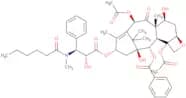
CAS:<p>N-Methyltaxol C is an amide derivative of the taxane family. It has been shown to increase systolic pressure in animal models and acts as a cardiac depressant. N-Methyltaxol C also has arrhythmogenic properties, which may be due to its ability to inhibit the inward flow of potassium ions through the cardiac membrane. This drug is being studied for its potential use in cancer treatment, specifically for cancer that arises from breast cells. N-Methyltaxol C has been shown to inhibit the growth of human breast cancer cells in vitro and to induce apoptosis in these cells. The mechanism by which it does this is not yet known, but it is thought that it may work by interfering with cell cycle progression or DNA synthesis by inhibiting protein synthesis or DNA replication.</p>Formula:C47H59NO14Purity:Min. 95%Molecular weight:861.97 g/mol(betaR,deltaR)-2,3-Bis(4-fluorophenyl)-β,δ-dihydroxy-5-(1-methylethyl)-4-[(phenylamino)carbonyl]-1H-pyrrole-1-heptanoic acid hemicalcium salt
CAS:<p>(betaR,deltaR)-2,3-Bis(4-fluorophenyl)-beta,delta-dihydroxy-5-(1-methylethyl)-4-[(phenylamino)carbonyl]-1H-pyrrole-1-heptanoic acid hemicalcium salt is an impurity that is used in the production of a drug product. This product is metabolized to (betaR,deltaR)-2,3-bis(4-fluorophenyl)-beta,delta-dihydroxy-5-(1-methylethyl)-4-[(phenylamino)carbonyl]-1H-pyrrole 1 heptanoic acid which is used as an analytical standard for HPLC.</p>Formula:C66H66CaF4N4O10Purity:Min. 95%Molecular weight:1,193.34 g/mol2-Hydroxy cephalexin
CAS:<p>2-Hydroxy cephalexin is a metabolite of cephalexin. It is an impurity that is present in the final drug product. 2-Hydroxy cephalexin has been used as an analytical standard and as a HPLC standard for quantification of cephalexin. 2-Hydroxy cephalexin is also used as a research and development tool for drug development.</p>Formula:C16H17N3O5SPurity:Min. 95%Molecular weight:363.40 g/molBendamustine isopropyl ester
CAS:<p>Bendamustine isopropyl ester is a synthetic, high purity drug product. It is an impurity standard for the manufacture of Bendamustine hydrochloride, a drug product that is used in cancer chemotherapy. Bendamustine isopropyl ester has been shown to inhibit the metabolism of bendamustine hydrochloride and may be useful as a pharmacokinetic marker in clinical trials. Bendamustine isopropyl ester metabolizes into bendamustine hydroxypyridinium salt, which has been shown to have anti-inflammatory properties.</p>Formula:C19H27Cl2N3O2Purity:Min. 95%Molecular weight:400.30 g/molEdoxaban 4-carboxylic acid hydrochloride
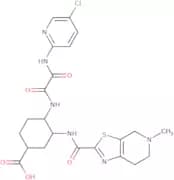
CAS:<p>Edoxaban 4-carboxylic acid hydrochloride is a drug product with high purity. It has been synthesized using natural ingredients and is an analytical standard. The metabolite of edoxaban 4-carboxylic acid hydrochloride is the substance CAS No. 834919-19-6, which is also a metabolite for other drugs. Edoxaban 4-carboxylic acid hydrochloride can be used in drug development and pharmacopoeia research, as well as in niche areas such as HPLC standards and analytical research.</p>Formula:C22H25ClN6O5SPurity:Min. 95%Molecular weight:521 g/molDesoximetasone impurity A
CAS:Controlled Product<p>Desoximetasone impurity A is an impurity found in the drug product Desoximetasone, which is a corticosteroid. It has been identified as an impurity in the drug product and there are no known uses of Desoximetasone impurity A. This impurity was determined to be natural based on its molecular weight, infrared spectrum, melting point, and elemental analysis. The molecular weight for Desoximetasone impurity A is 687.2 g/mol with a melting point at 89°C and an elemental analysis of Carbon: 29%, Hydrogen: 3%, Nitrogen: 16%, Oxygen: 32%.</p>Formula:C21H25FO4Purity:Min. 95%Molecular weight:360.42 g/molUlifloxacin acyl-β-D-glucuronide
CAS:<p>Ulifloxacin acyl-β-D-glucuronide is an inhibitor of protein kinases that has been shown to induce apoptosis in cancer cells. This compound is a metabolite of ulifloxacin, a fluoroquinolone antibiotic used to treat urinary tract infections. Ulifloxacin acyl-β-D-glucuronide has potent anticancer activity and has been shown to inhibit the growth of tumor cells in vitro. This compound is an analog of other kinase inhibitors and has been extensively studied in Chinese hamster ovary (CHO) cells, where it was found to be effective against various types of cancer. Ulifloxacin acyl-β-D-glucuronide also possesses toxin-binding properties and may have potential as an anti-toxin agent.</p>Formula:C22H24FN3O9SPurity:Min. 95%Molecular weight:525.5 g/molUnc-926 hydrochloride
CAS:<p>Unc-926 is a pluripotent stem cell (PSC) that can differentiate into cells from all three germ layers. Unc-926 cells have been shown to be glucose-dependent and utilize the mitochondrial respiratory chain for respiration. These cells are capable of differentiating into insulin-producing beta cells and pancreatic islet cells, which can be used in the treatment of diabetes.</p>Formula:C16H22BrClN2OPurity:Min. 95%Molecular weight:373.7 g/molPerindopril acyl-b-D-glucuronide
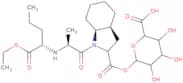
CAS:<p>Metabolite of perindopril</p>Formula:C25H40N2O11Purity:Min. 95%Color and Shape:Off-white or pale yellow solid.Molecular weight:544.6 g/molChloromethyl olanzapinium chloride
CAS:<p>Chloromethyl olanzapinium chloride is an analytical reference material that can be used as a standard for HPLC-UV analysis. It is also used in the development of new drugs and as an impurity standard during drug manufacturing. Chloromethyl olanzapinium chloride has been shown to be a metabolite of Olanzapine, which is a niche drug product that is not commercially available. Chloromethyl olanzapinium chloride is listed by the USP, EP and JP as a drug product impurity. It can be synthesized from natural or synthetic sources.</p>Formula:C18H22Cl2N4SPurity:Min. 95%Color and Shape:PowderMolecular weight:397.37 g/mol[6-Hydroxy-2-(4-hydroxyphenyl)-benzo[b]thien-7-yl][4-[2-(1-piperidinyl)ethoxy]phenyl]methanone
CAS:<p>6-Hydroxy-2-(4-hydroxyphenyl)-benzo[b]thien-7-yl][4-[2-(1-piperidinyl)ethoxy]phenyl]methanone is a synthetic impurity standard that is used as a reference material in the analytical, natural and drug development, and metabolite studies. 6-Hydroxy-2-(4-hydroxyphenyl)-benzo[b]thien-7-yl][4-[2-(1-piperidinyl)ethoxy]phenyl]methanone has a molecular weight of 390.27 and chemical formula C26H28N2O3S. It is also referred to by its CAS number 1391054-73-1.6</p>Formula:C28H27NO4SPurity:Min. 95%Molecular weight:473.58 g/molLimetol
CAS:<p>Limetol is a potent anticancer agent that has been found to induce apoptosis in cancer cells. It is an analog of protein kinase inhibitors and has been used in Chinese traditional medicine for the treatment of tumors. Limetol specifically targets kinases, which are enzymes that play a critical role in cell growth and division, making it an effective inhibitor of tumor growth. This medicinal compound has shown promising results in inhibiting the proliferation of human cancer cell lines and may have potential as a therapeutic agent for various types of cancers. Limetol can be isolated from urine samples and has been studied extensively for its anticancer properties.</p>Formula:C10H18OPurity:Min. 95%Molecular weight:154.25 g/molNSC 37553
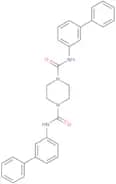
CAS:<p>Please enquire for more information about NSC 37553 including the price, delivery time and more detailed product information at the technical inquiry form on this page</p>Formula:C30H28N4O2Purity:Min. 95%Molecular weight:476.6 g/mol3,4-Dimethoxyphenyl isopropyl ketone
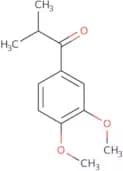
CAS:<p>3,4-Dimethoxyphenyl isopropyl ketone (DMPK) is a calcium antagonist that has been shown to be hypotensive in rats. It is also used as a pharmacological agent to study muscle physiology and biotransformations. DMPK has been shown to have microbial uptake and chronotropic properties, which may explain its use in the treatment of bacterial infections. DMPK binds to sulfoxides and chiral compounds, blocking their activity by inhibiting the enzyme systems involved in oxidation reactions. The drug is an analog of benzyl alcohol, with which it shares similar pharmacological profile.</p>Formula:C12H16O3Purity:Min. 95%Molecular weight:208.25 g/mol(E)-4-(((2S,4R)-1-([1,1'-Biphenyl]-4-yl)-5-ethoxy-4-methyl-5-oxopentan-2-yl)amino)-4-oxobut-2-enoic acid
<p>(E)-4-(((2S,4R)-1-([1,1'-Biphenyl]-4-yl)-5-ethoxy-4-methyl-5-oxopentan-2-yl)amino)-4-oxobut-2-enoic acid is an organic compound that is a metabolite of the drug product. It is a synthetic chemical compound and does not occur in nature. It has been used as an analytical standard for HPLC and LC/MS. It has also been used as an impurity standard for API's. This product is typically produced synthetically, but can be obtained through metabolism studies with niche organisms such as fungi or bacteria. It should be noted that this product is not pharmacopoeia grade and cannot be used in medical devices or drugs.br>br><br>This product has been classified by the International Union of Pure and Applied Chemistry (IUPAC) as a 2-(3-(aminoc</p>Purity:Min. 95%3-[4-(2-Pyridylsulfamoyl)phenyl] sulfasalazine
CAS:<p>3-[4-(2-Pyridylsulfamoyl)phenyl] sulfasalazine is an analytical standard and a metabolite of sulfasalazine. It is used as a reference compound in the analysis of high purity sulfasalazine by HPLC. 3-[4-(2-Pyridylsulfamoyl)phenyl] sulfasalazine is also used as an impurity in the drug product, API, and drug development. The CAS number for 3-[4-(2-Pyridylsulfamoyl)phenyl] sulfasalazine is 1391062-34-2.</p>Formula:C29H22N6O7S2Purity:Min. 95%Molecular weight:630.65 g/mol4-(3-Nitrophenyl)-3-morpholinone
CAS:<p>Please enquire for more information about 4-(3-Nitrophenyl)-3-morpholinone including the price, delivery time and more detailed product information at the technical inquiry form on this page</p>Formula:C10H10N2O4Purity:Min. 95%Molecular weight:222.2 g/mol2-O-[4-[[(2-Carboxyethyl)amino]carbonyl]phenyl] balsalazide
CAS:<p>2-O-[4-[[(2-Carboxyethyl)amino]carbonyl]phenyl] balsalazide is a drug product that has been custom synthesized and purified to high purity. It is an analytical standard for metabolism studies. This compound is metabolized through a number of metabolic transformations, including hydrolysis by esterases or glucuronidases, oxidation by cytochrome P450 enzymes, reduction by glutathione reductase, or conjugation with glucuronic acid. 2-O-[4-[[(2-Carboxyethyl)amino]carbonyl]phenyl] balsalazide is also used as a pharmacopoeia impurity standard and as a research and development HPLC standard.</p>Formula:C27H24N4O9Purity:Min. 95%Molecular weight:548.5 g/mol(2S,4S)-tert-Butyl 2-(5-(2-((2S,5S)-1-((S)-2-((methoxycarbonyl)amino)-3-methylbutanoyl)-5-methylpyrrolidin-2-yl)-1,11-dihydroisochro meno[4',3':6,7]naphtho[1,2-d]imidazol-9-yl)-1H-imidazol-2-yl)-4-(methoxymethyl)pyrrolidine-1-carboxylate
CAS:<p>(2S,4S)-tert-Butyl 2-(5-(2-((2S,5S)-1-((S)-2-((methoxycarbonyl)amino)-3-methylbutanoyl)-5-methylpyrrolidin-2-yl)-1,11-dihydroisochro meno[4',3':6,7]naphtho[1,2-d]imidazol-9-yl)-1H-imidazol-2-yl)-4-(methoxymethyl)pyrrolidine-1-carboxylate is a drug product that has been synthesized and is being developed for the treatment of cancer. (2S,4S)-tert–Butyl 2-(5-(2-[(2R,5R)-1-[(R) -2-[(methoxycarbonyl)amino]-</p>Formula:C44H53N7O7Purity:Min. 95%Molecular weight:791.9 g/molIndacaterol impurity 3
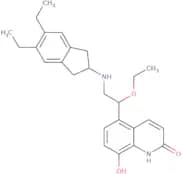
CAS:<p>Indacaterol is a drug product that belongs to the class of drugs known as beta-adrenergic agonists. It is used for the treatment of asthma and COPD. Indacaterol impurity 3 (ID3) is an impurity found in indacaterol, which has been identified as a metabolite of indacaterol. ID3 is not active against bacteria. ID3 has been shown to be synthesized by human liver microsomes and erythrocytes in vitro. ID3 can be purified from indacaterol by HPLC with a purity greater than 99%.</p>Formula:C26H32N2O3Purity:Min. 95%Molecular weight:420.5 g/mol

![(betaR,deltaR)-2,3-Bis(4-fluorophenyl)-β,δ-dihydroxy-5-(1-methylethyl)-4-[(phenylamino)carbonyl]-1…](/_next/image/?url=https%3A%2Fstatic.cymitquimica.com%2Fproducts%2F3D%2Fthumb-webp%2FIA104320.webp&w=3840&q=75)





![[6-Hydroxy-2-(4-hydroxyphenyl)-benzo[b]thien-7-yl][4-[2-(1-piperidinyl)ethoxy]phenyl]methanone](/_next/image/?url=https%3A%2Fstatic.cymitquimica.com%2Fproducts%2F3D%2Fthumb-webp%2FIH45348.webp&w=3840&q=75)

![(E)-4-(((2S,4R)-1-([1,1'-Biphenyl]-4-yl)-5-ethoxy-4-methyl-5-oxopentan-2-yl)amino)-4-oxobut-2-enoi…](/_next/image/?url=https%3A%2Fstatic.cymitquimica.com%2Fproducts%2F3D%2Fthumb-webp%2FIB181151.webp&w=3840&q=75)
![3-[4-(2-Pyridylsulfamoyl)phenyl] sulfasalazine](/_next/image/?url=https%3A%2Fstatic.cymitquimica.com%2Fproducts%2F3D%2Fthumb-webp%2FIP145663.webp&w=3840&q=75)

![2-O-[4-[[(2-Carboxyethyl)amino]carbonyl]phenyl] balsalazide](/_next/image/?url=https%3A%2Fstatic.cymitquimica.com%2Fproducts%2F3D%2Fthumb-webp%2FIC167038.webp&w=3840&q=75)