APIs for research and impurities
Subcategories of "APIs for research and impurities"
- Aminoacids and derivatives(12,335 products)
- Anthraquinones and derivatives(405 products)
- Benzimidazole and Imidazole Derivatives(10,451 products)
- Benzodiazepine Derivatives(334 products)
- Carbohydrates and glycoconjugates(5,048 products)
- Esters and Derivatives(42,251 products)
- Fatty Acids and Lypidic Derivatives(32,417 products)
- Flavonoids and Polyphenols(17,084 products)
- Free Radicals and Oxidant/Reducing Agents(213 products)
- Ketones and derivatives(2,402 products)
- Natural and semi-synthetic antibiotics(6,387 products)
- Nitriles and Cyano Derivatives(3,068 products)
- Nitrosamines and Derivatives(55 products)
- Nucleosides and Nucleotides(3,484 products)
- Organic Phosphates and Phosphonates(1,201 products)
- Organic Sulphonates and Sulphates(10,435 products)
- Organometallics(4,421 products)
- Others(6,307 products)
- Peptides and Proteins(3,148 products)
- Polymers and Derivatives(100 products)
- Purines and Pyrimidine Derivatives(8,948 products)
- Quinazoline and Quinoline Derivatives(66,044 products)
- Quinones and Derivatives(24,363 products)
- Salts and Derivatives of Active Pharmaceutical Ingredients (API)(80,490 products)
- Steroids and Derivatives(4,958 products)
- Sulfonamides and Derivatives(2,600 products)
- Terpenoids and Derivatives(3,849 products)
- Thiazolidinediones and Thiopyrans(2,754 products)
- β-Adrenergic Compounds(231 products)
Found 57768 products of "APIs for research and impurities"
aR453588
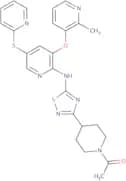
CAS:aR453588 is a human analog of Voriconazole, which has been found to have anticancer properties. This compound is a kinase inhibitor that works by inducing apoptosis in cancer cells. It has been shown to be effective against various types of tumors, including those resistant to other inhibitors. aR453588 also inhibits the growth of cancer cells by blocking protein synthesis and cell division. This compound is derived from cellulose and can be detected in urine samples after administration. Overall, aR453588 shows great promise as a potential treatment for cancer.
Formula:C25H25N7O2S2Purity:Min. 95%Molecular weight:519.6 g/mol4-Hydroxy azithromycin
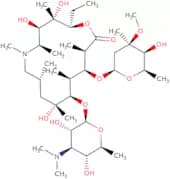
CAS:4-Hydroxy azithromycin is an impurity of Azithromycin that is a metabolite of the drug. 4-Hydroxy azithromycin is a synthetic product, which has been synthesized for use as an analytical standard for HPLC and LC-MS/MS. It has also been used as a pharmacopoeia standard for testing antibiotic purity and quality. Metabolism studies have shown that 4-hydroxy azithromycin is not absorbed from the gastrointestinal tract, but is found in the urine and feces.
Formula:C38H72N2O13Purity:Min. 95%Molecular weight:764.98 g/molPseudomonic acid B
CAS:Pseudomonic acid B is a metabolite of pseudomonic acid A and is used as an impurity standard for the pharmacopoeia. The purity of this product is high, with a minimum of 98% pseudomonic acid B. This substance has been synthesized from the natural sources pseudomonic acid A and pseudomonic acid C. Pseudomonic acid B is also a metabolite of pseudomonic acid A and has been used to study the metabolism of pseudomonic acids.Formula:C26H44O10Purity:Min. 95%Molecular weight:516.60 g/mol10-Oxo mirtazapine
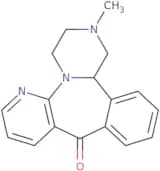
CAS:10-Oxo mirtazapine is a metabolite of the antidepressant drug mirtazapine. It is an impurity in the HPLC standard for mirtazapine and has been shown to be pharmacologically active in animal models. 10-Oxo mirtazapine has also been found to be an impurity in other drugs, such as fluoxetine hydrochloride, but it is not known if it has any activity.Formula:C17H17N3OPurity:Min. 95%Molecular weight:279.34 g/molValdecoxib impurity I
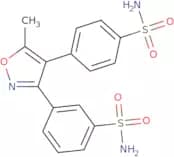
CAS:Valdecoxib impurity I is a synthetic compound that is used as an impurity standard for the drug product Valdecoxib. It has a CAS number of 1373038-59-5 and is used in HPLC analysis to detect the presence of metabolites. Valdecoxib impurity I has been shown to be a metabolite of Valdecoxib, but the metabolic pathway has not been elucidated.Formula:C16H15N3O5S2Purity:Min. 95%Molecular weight:393.44 g/molCarbofuran N,N-dibutyl-3λ1-trisulfan-1-amine
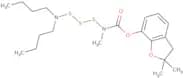
CAS:Please enquire for more information about Carbofuran N,N-dibutyl-3λ1-trisulfan-1-amine including the price, delivery time and more detailed product information at the technical inquiry form on this page
Formula:C20H32N2O3S3Purity:Min. 95%Molecular weight:444.7 g/mol(2R,2R,Trans)-saxagliptin
CAS:(2R,2R,Trans)-saxagliptin is a drug product that is synthesized using natural ingredients. It is a custom synthesis and has high purity. The CAS number for this compound is 1564266-03-0. (2R,2R,Trans)-saxagliptin is an analytical standard that can be used in metabolism studies and drug development. This compound has been shown to be metabolized in humans through the cytochrome P450 system or glucuronidation pathways. Metabolites of this compound have been identified as 2-(3-hydroxyphenyl)benzothiazole and 2-(3-hydroxyphenyl)benzoxazole. Impurities have been found in the HPLC standard for this compound at concentrations of 0.0025%.Formula:C18H25N3O2Purity:Min. 95%Molecular weight:315.40 g/mol3alpha-Hydroxy pravastatin sodium salt
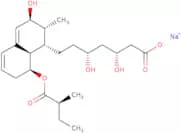
CAS:3alpha-Hydroxy pravastatin sodium salt is a white to off-white crystalline powder. It is used as an analytical standard for 3alpha-hydroxypravastatin and its metabolites. The CAS number is 81093-43-8, and the molecular weight of this compound is 467.6 g/mol. This product can be custom synthesized to meet your needs.Formula:C23H35NaO7Purity:Min. 95%Color and Shape:Off-White PowderMolecular weight:446.51 g/mol3-[4-(4-Chlorobenzoyl)phenoxy]-2-butanone
CAS:3-[4-(4-Chlorobenzoyl)phenoxy]-2-butanone is an impurity in the drug product, N-{3-[4-(4-chlorobenzoyl)phenoxy]-2-butenyl}acetamide. It can be used as an analytical reference standard for determining the presence of impurities in pharmaceutical products. 3-[4-(4-Chlorobenzoyl)phenoxy]-2-butanone is not a natural component of the API and is typically synthesized with high purity. This compound has been shown to be metabolized by human liver microsomes and rat lung microsomes. The metabolic pathways are unknown but may include oxidation, hydrolysis, or conjugation reactions.Formula:C17H15ClO3Purity:Min. 95%Molecular weight:302.75 g/molPf9 tetrasodium
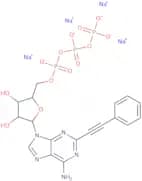
CAS:Pf9 tetrasodium is a high purity, HPLC standard. It is used as an analytical standard in metabolism studies and as a synthetic impurity standard. Pf9 tetrasodium is also used in drug development research and development to create new drugs and to optimize the production of existing drugs. This product is sold in quantities of 100 grams or more. Pf9 tetrasodium has CAS number 851265-78-6.Formula:C18H16N5Na4O13P3Purity:Min. 95%Molecular weight:695.2 g/molHyoscyamine related compound A
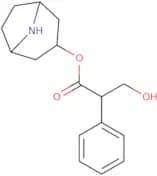
CAS:Hyoscyamine related compound A is a pure, synthetic chemical compound that is used as an impurity standard and can be custom synthesized to meet the requirements of a customer's research and development. Hyoscyamine related compound A is also known as a metabolite in the body, which means it is created from another substance. It is created from the breakdown of Hyoscyamine, which is found in plants such as jimson weed, mandrake, and henbane. Hyoscyamine related compound A has a CAS number of 537-29-1. It can be used to create drug product or pharmacopoeia standards. It has been classified as a custom synthesis by the FDA because it has not been approved for use in humans or animals.Formula:C16H21NO3Purity:Min. 95%Molecular weight:275.35 g/mol(S)-Aspartimide
CAS:(S)-Aspartimide is a drug product that is used in the synthesis of pharmaceuticals. Its purity should be greater than 99% and it should be free from detectable impurities. (S)-Aspartimide is metabolized by esterases, glutathione reductase, cytochrome P450 enzymes, and conjugation with glucuronic acid. It has been shown to inhibit the growth of bacteria that are resistant to penicillin, ampicillin, erythromycin, and gatifloxacin. (S)-Aspartimide has been found to have an anti-inflammatory effect due to its inhibition of prostaglandin synthesis.
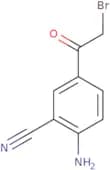
Formula:C4H6N2O2Purity:Min. 95%Molecular weight:114.10 g/mol2-Amino-5-(2-bromoacetyl)benzonitrile hydrobromide
CAS:Please enquire for more information about 2-Amino-5-(2-bromoacetyl)benzonitrile hydrobromide including the price, delivery time and more detailed product information at the technical inquiry form on this page
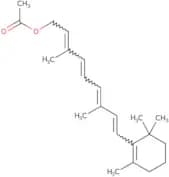
Formula:C9H7BrN2OPurity:Min. 95%Molecular weight:239.07 g/mol9-Cis,13-cis-retinol 15-acetate
CAS:9-Cis,13-cis-retinol 15-acetate is an impurity in drugs that are used to treat a variety of conditions including psoriasis, acne, and ichthyosis. It has been identified as an impurity in the drug product 9-cis, 13-cis retinoic acid (9CRA) through high performance liquid chromatography (HPLC). It has been found to be a metabolite of 9CRA and is not toxic.
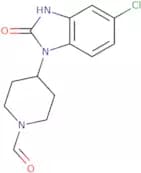
Formula:C22H32O2Purity:Min. 95%Molecular weight:328.5 g/mol4-(5-Chloro-2-oxo-2,3-dihydro-1H-benzimidazol-1-yl)-1-formylpiperidine
CAS:4-(5-Chloro-2-oxo-2,3-dihydro-1H-benzimidazol-1-yl)-1-formylpiperidine is a drug product that is used for the synthesis of pharmaceuticals. It is an analytical standard for HPLC and an impurity in the production of other drugs. 4-(5-Chloro-2-oxo-2,3-dihydro-1H-benzimidazol-1H)-1 formylpiperidine has been shown to have natural and synthetic origins, as well as being produced by custom synthesis. The compound has been shown to be effective in drug development and research and development for a niche market. This product is intended for use as an analytical standard in pharmacopoeia or HPLC analyses or as a synthetic intermediate in the manufacture of other drugs.Formula:C13H14ClN3O2Purity:Min. 95%Molecular weight:279.72 g/molNeflumozide hydrochloride
CAS:Neflumozide is a drug product with CAS No. 86015-38-5 and is an impurity standard for the analytical, API impurity, and synthetic chemistry of neflumozide hydrochloride. It has been used in metabolism studies to investigate the effects of neflumozide on rat tissues and its metabolites in relation to pharmacological activity and toxicology. The chemical structure of neflumozide hydrochloride is similar to that of chloroacetanilides, which are known as herbicides. Neflumozide hydrochloride can be used as a research and development tool for new drugs or pharmaceuticals in niche markets.Formula:C22H24ClFN4O2Purity:Min. 95%Molecular weight:430.90 g/molN-(4-Hydroxyphenyl)propanamide
CAS:The N-(4-hydroxyphenyl)propionamide (HPPA) is a synthetic drug that binds to the human liver. It has been shown to be effective in preventing implantation of fertilized eggs, and can be used as a diagnostic agent for determining the presence of HPPA in human liver tissue. HPPA is also used as a diluent for other drugs. The HPPA binds to chromatographic components and can be detected using electrochemical detection, which allows it to be used as a targetable probe for cancer research. HPPA is also used to study iontophoretic transport of ions across reconstituted membranes in vitro.Formula:C9H11NO2Purity:(%) Min. 97%Molecular weight:165.19 g/molProthoate
CAS:Prothoate is a medicinal analog that acts as an inhibitor of kinases. It has been shown to have anticancer properties and can induce apoptosis in cancer cells. Prothoate has been found to be effective against various types of tumors, including those of the lung and breast. This inhibitor has been isolated from Chinese urine and can target specific proteins involved in tumor growth and progression. Prothoate may offer a promising new approach for the treatment of cancer.Formula:C9H20NO3PS2Purity:Min. 95%Molecular weight:285.4 g/mol7-Chloro-3-(piperazin-1-yl)benzol[D]isothiazole
CAS:Please enquire for more information about 7-Chloro-3-(piperazin-1-yl)benzol[D]isothiazole including the price, delivery time and more detailed product information at the technical inquiry form on this pageFormula:C11H12ClN3SPurity:Min. 95%Molecular weight:253.75 g/molDihydro artemisinin tetrahydrofuran acetate
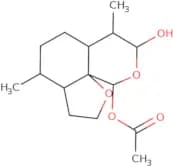
CAS:Please enquire for more information about Dihydro artemisinin tetrahydrofuran acetate including the price, delivery time and more detailed product information at the technical inquiry form on this pageFormula:C15H24O5Purity:Min. 95%Molecular weight:284.35 g/mol

![3-[4-(4-Chlorobenzoyl)phenoxy]-2-butanone](/_next/image/?url=https%3A%2Fstatic.cymitquimica.com%2Fproducts%2F3D%2Fthumb-webp%2FIC20198.webp&w=3840&q=75)

![7-Chloro-3-(piperazin-1-yl)benzol[D]isothiazole](/_next/image/?url=https%3A%2Fstatic.cymitquimica.com%2Fproducts%2F3D%2Fthumb-webp%2FEDC83554.webp&w=3840&q=75)