APIs for research and impurities
Subcategories of "APIs for research and impurities"
- Aminoacids and derivatives(12,316 products)
- Anthraquinones and derivatives(402 products)
- Benzimidazole and Imidazole Derivatives(10,375 products)
- Benzodiazepine Derivatives(323 products)
- Carbohydrates and glycoconjugates(5,038 products)
- Esters and Derivatives(42,239 products)
- Fatty Acids and Lypidic Derivatives(32,360 products)
- Flavonoids and Polyphenols(17,066 products)
- Free Radicals and Oxidant/Reducing Agents(208 products)
- Ketones and derivatives(2,393 products)
- Natural and semi-synthetic antibiotics(6,307 products)
- Nitriles and Cyano Derivatives(3,068 products)
- Nitrosamines and Derivatives(55 products)
- Nucleosides and Nucleotides(3,409 products)
- Organic Phosphates and Phosphonates(1,192 products)
- Organic Sulphonates and Sulphates(10,415 products)
- Organometallics(4,417 products)
- Others(6,257 products)
- Peptides and Proteins(3,129 products)
- Polymers and Derivatives(99 products)
- Purines and Pyrimidine Derivatives(8,889 products)
- Quinazoline and Quinoline Derivatives(65,574 products)
- Quinones and Derivatives(24,334 products)
- Salts and Derivatives of Active Pharmaceutical Ingredients (API)(81,501 products)
- Steroids and Derivatives(4,905 products)
- Sulfonamides and Derivatives(2,539 products)
- Terpenoids and Derivatives(3,827 products)
- Thiazolidinediones and Thiopyrans(2,752 products)
- β-Adrenergic Compounds(227 products)
Found 58881 products of "APIs for research and impurities"
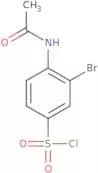
4-(Acetylamino)-3-bromobenzenesulfonyl chloride
CAS:4-(Acetylamino)-3-bromobenzenesulfonyl chloride is a white crystalline powder that is soluble in water, ethanol and chloroform. It has an analytical standard purity of 99% or greater. This compound can be used for research and development purposes as well as for the synthesis of pharmaceuticals. The impurity profile of 4-(acetylamino)-3-bromobenzenesulfonyl chloride includes 3-acetylbenzenesulfonic acid, sodium acetate, ammonium chloride, sodium sulfite, potassium bromide, potassium iodide, potassium carbonate, and potassium citrate.
Formula:C8H7BrClNO3SPurity:Min. 95%Molecular weight:312.57 g/mol2,5-Dioxabicyclo[2.2.1]heptane α-D-galactopyranoside
CAS:Please enquire for more information about 2,5-Dioxabicyclo[2.2.1]heptane α-D-galactopyranoside including the price, delivery time and more detailed product information at the technical inquiry form on this page
Formula:C12H18Cl2O8Purity:Min. 95%Molecular weight:361.17 g/molaS1810722
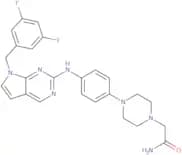
CAS:aS1810722 is a potent inhibitor of kinases that has shown promise in the treatment of cancer. This protein analog is derived from human urine and has been found to inhibit the activity of ghrelin, which is known to promote tumor growth. In preclinical studies, aS1810722 has demonstrated strong anticancer activity by inducing apoptosis in cancer cells and inhibiting tumor growth. This inhibitor has been tested on Chinese hamster ovary cells and has shown promising results as a potential therapeutic agent for the treatment of various cancers. Its specificity for kinases makes it an attractive candidate for targeted cancer therapy.Formula:C25H25F2N7OPurity:Min. 95%Molecular weight:477.5 g/molN-(2-Hydroxyethyl)-P,P-bisaziridinyl thiophosphamide
CAS:N-(2-Hydroxyethyl)-P,P-bisaziridinyl thiophosphamide (HEPBTP) is a metabolite of the drug product. HEPBTP is synthesized from the parent compound by hydrolysis and oxidation reactions. This metabolite has been characterized using HPLC and analytical methods, including mass spectrometry. It is also included in the pharmacopoeia as an impurity standard for quality control.
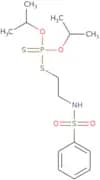
Formula:C6H15N3O4PSPurity:Min. 95%Molecular weight:256.24 g/molBensulide
CAS:Bensulide is a potent inhibitor of kinases, which are enzymes that regulate various cellular processes. It has been shown to have anticancer properties by inducing apoptosis in cancer cells. Bensulide is a Chinese medicinal herb that has been used for centuries as a traditional medicine. It is an analog of protein kinase inhibitors and can be used as an inhibitor of tumor growth. Bensulide has also been found in human urine and may have potential as a diagnostic marker for cancer. Its mechanism of action involves the inhibition of protein kinases, which are involved in cell signaling pathways that regulate cell growth and division. Overall, Bensulide shows great promise as an anticancer agent with potent inhibitory effects on cancer cells.
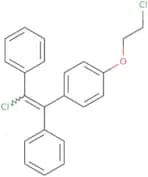
Formula:C14H24NO4PS3Purity:Min. 95%Molecular weight:397.5 g/mol1-(2-Chloro-1,2-diphenylethenyl)-4-(2-chloroethoxy)benzene
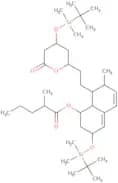
CAS:Please enquire for more information about 1-(2-Chloro-1,2-diphenylethenyl)-4-(2-chloroethoxy)benzene including the price, delivery time and more detailed product information at the technical inquiry form on this pageFormula:C22H18Cl2OPurity:Min. 95%Molecular weight:369.3 g/molHomopravastatin lactone di-(tert-butyldimethylsilyl) ether
CAS:Please enquire for more information about Homopravastatin lactone di-(tert-butyldimethylsilyl) ether including the price, delivery time and more detailed product information at the technical inquiry form on this pageFormula:C36H64O6Si2Purity:Min. 95%Molecular weight:649.1 g/molOxodesmosine
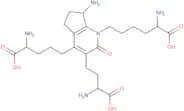
CAS:Oxodesmosine is an analog of a protein found in Chinese urine that has shown promise as an anticancer agent. It works by inhibiting kinases, which are enzymes that play a key role in cancer cell growth and survival. Oxodesmosine has been shown to induce apoptosis, or programmed cell death, in tumor cells both in vitro and in vivo. This compound may be useful as a therapeutic agent for the treatment of various types of cancer in humans. Additionally, Oxodesmosine has been studied for its potential synergistic effects with other kinase inhibitors such as mirtazapine. Overall, Oxodesmosine represents a promising new avenue for the development of novel anticancer therapies.Formula:C23H37N5O7Purity:Min. 95%Molecular weight:495.6 g/molRotigotine sulfate
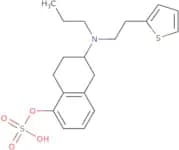
CAS:Rotigotine is a drug that belongs to the group of pharmaceutical formulations. It is an unlabeled drug that has been shown to be effective in the treatment of depression. Rotigotine may be administered through a transdermal patch or by iontophoresis, which is a technique used to administer drugs through the skin. The mechanism of action is not known, but it may involve the inhibition of monoamine reuptake and/or alteration of intracellular levels of catecholamines. Rotigotine sulfate has a high affinity for dopamine receptors and increases plasma concentrations of dopamine by inhibiting its reuptake into presynaptic neurons. This leads to increased concentrations of dopamine in synaptic clefts and an increase in postsynaptic receptor binding.Formula:C19H25NO4S2Purity:Min. 95%Molecular weight:395.5 g/molAlpha-[4-(2-dimethylaminoethoxy)phenyl]stilbene
CAS:Alpha-[4-(2-dimethylaminoethoxy)phenyl]stilbene (DS) is a synthetic, analytical standard that is used as an impurity in the manufacture of pharmaceutical products. DS is also sold as a reference material for HPLC and GC/MS analysis.
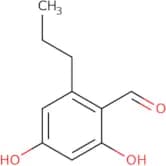
Formula:C24H25NOPurity:Min. 95%Molecular weight:343.50 g/mol2,4-Dihydroxy-6-propylbenzaldehyde
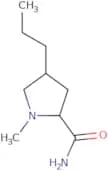
CAS:Please enquire for more information about 2,4-Dihydroxy-6-propylbenzaldehyde including the price, delivery time and more detailed product information at the technical inquiry form on this pageFormula:C10H12O3Purity:Min. 95%Molecular weight:180.2 g/molL-Trans-1-methyl-4-propyl-2-pyrrolidinecarboxamide
CAS:Please enquire for more information about L-Trans-1-methyl-4-propyl-2-pyrrolidinecarboxamide including the price, delivery time and more detailed product information at the technical inquiry form on this pageFormula:C9H18N2OPurity:Min. 95%Molecular weight:170.25 g/molAAK1-IN-1
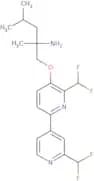
CAS:AAK1-IN-1 is a potent inhibitor of the AAK1 kinase, which plays a crucial role in regulating cell cycle progression and apoptosis. This inhibitor has shown promising results in pre-clinical studies for the treatment of cancer, particularly leukemia. AAK1-IN-1 has been found to effectively inhibit the growth of human cancer cell lines and Chinese medicinal tumor cells by blocking the activity of AAK1 kinase. This protein is involved in several cellular processes, including signal transduction pathways and protein trafficking, making it an attractive target for cancer therapy. The use of AAK1-IN-1 as a novel kinase inhibitor may offer new opportunities for developing effective treatments against various types of cancer.
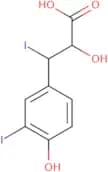
Formula:C19H23F4N3OPurity:Min. 95%Molecular weight:385.4 g/mol3,5-Diiodo-4-hydroxy-DL-phenyllactic acid
CAS:Please enquire for more information about 3,5-Diiodo-4-hydroxy-DL-phenyllactic acid including the price, delivery time and more detailed product information at the technical inquiry form on this page
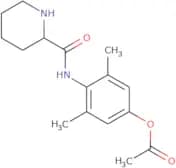
Formula:C9H8I2O4Purity:Min. 95%Molecular weight:433.97 g/mol4-Acetyloxy-N-despropyl ropivacaine
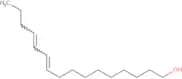
CAS:Please enquire for more information about 4-Acetyloxy-N-despropyl ropivacaine including the price, delivery time and more detailed product information at the technical inquiry form on this pageFormula:C16H22N2O3Purity:Min. 95%Molecular weight:290.36 g/mol(10E,12E)-10,12-Hexadecadienol
CAS:(10E,12E)-10,12-Hexadecadienol is an analog of a Chinese herbal compound that has been shown to have anticancer properties. It acts as an inhibitor of kinases, which are enzymes involved in cell signaling pathways that regulate cell growth and division. This compound has been found to induce apoptosis, or programmed cell death, in cancer cells. (10E,12E)-10,12-Hexadecadienol has also been shown to inhibit the growth of tumors in human studies. Additionally, this compound has been identified in urine samples from individuals taking the diabetes medication vildagliptin, suggesting its potential use as a biomarker for drug efficacy. Overall, (10E,12E)-10,12-Hexadecadienol shows promising potential as a natural anticancer agent with multiple therapeutic applications.Formula:C16H30OPurity:Min. 95%Molecular weight:238.41 g/mol4-(1,1-Dimethylpropyl)-alpha-methyl-benzenepropanal
CAS:4-(1,1-Dimethylpropyl)-alpha-methyl-benzenepropanal is a synthetic compound that is used as an impurity standard for the measurement of purity in drug products. It can also be used to monitor the metabolism of drugs, and may contribute to their side effects. 4-(1,1-Dimethylpropyl)-alpha-methyl-benzenepropanal has shown little evidence of toxicity in animal studies.Formula:C15H22OPurity:Min. 95%Molecular weight:218.33 g/mol(5E)-2,2-Dimethyl-7-[(1-naphthalenylmethyl)amino]-5-hepten-3-ynoic acid
CAS:The compound (5E)-2,2-dimethyl-7-[(1-naphthalenylmethyl)amino]-5-hepten-3-ynoic acid is a chiral antifungal agent. It was developed to be used as an analytical tool for the determination of plasma concentrations and it can be used in profiling and chiral chromatography. This compound has been shown to have excellent solubility in water and good stability in most organic solvents. The compound is metabolized by the liver and excreted via the kidneys, with a half life of approximately 6 hours. The compound also shows linearity over a wide concentration range, which makes it useful for measuring quantitative changes in plasma concentrations.Formula:C20H21NO2Purity:Min. 95%Molecular weight:307.39 g/molCefdinir impurity H
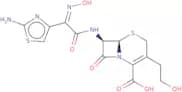
Cefdinir impurity H is a metabolite of the drug cefdinir. It is an impurity in the drug product that was discovered during research and development of cefdinir. Cefdinir impurity H has a CAS number, which indicates that it is a drug product. It also has high purity and can be used for analytical purposes or as a metabolism study standard. Metabolism studies have been conducted on this compound to determine its pharmacological effects. This metabolite is not natural, but synthetic and may be considered a niche compound due to its limited use in research and development.br>
This impurity may be found in the form of an HPLC standard and can be used for developing new drugs against bacterial infections such as tuberculosis, which are caused by Mycobacterium tuberculosis.br>br>Formula:C14H15N5O6S2Purity:Min. 95%Molecular weight:413.43 g/molS-Amisulpride
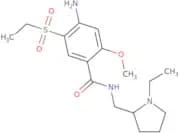
CAS:Controlled ProductS-Amisulpride is a benzamide antipsychotic drug that is an atypical antipsychotic. It has been shown to be effective in the treatment of schizophrenia, schizoaffective disorder, and bipolar disorder. Amisulpride was first synthesized by a French company called Laboratoires Servier and it was approved for sale in France in 1988. The drug is available as tablets for oral administration. The clinical effects of amisulpride are due to its ability to block dopamine receptors and serotonin receptors, which are neurotransmitters that play a role in the regulation of mood. Amisulpride also has stereoselective properties as it is active as an antipsychotic only when administered in the S-enantiomer form.Formula:C17H27N3O4SPurity:Min. 95%Molecular weight:369.5 g/mol

![2,5-Dioxabicyclo[2.2.1]heptane α-D-galactopyranoside](/_next/image/?url=https%3A%2Fstatic.cymitquimica.com%2Fproducts%2F3D%2Fthumb-webp%2FFEA06620.webp&w=3840&q=75)
![Alpha-[4-(2-dimethylaminoethoxy)phenyl]stilbene](/_next/image/?url=https%3A%2Fstatic.cymitquimica.com%2Fproducts%2F3D%2Fthumb-webp%2FUAA95751.webp&w=3840&q=75)
![(5E)-2,2-Dimethyl-7-[(1-naphthalenylmethyl)amino]-5-hepten-3-ynoic acid](/_next/image/?url=https%3A%2Fstatic.cymitquimica.com%2Fproducts%2F3D%2Fthumb-webp%2FID21358.webp&w=3840&q=75)