APIs for research and impurities
Subcategories of "APIs for research and impurities"
- Aminoacids and derivatives(12,316 products)
- Anthraquinones and derivatives(402 products)
- Benzimidazole and Imidazole Derivatives(10,375 products)
- Benzodiazepine Derivatives(323 products)
- Carbohydrates and glycoconjugates(5,038 products)
- Esters and Derivatives(42,239 products)
- Fatty Acids and Lypidic Derivatives(32,360 products)
- Flavonoids and Polyphenols(17,066 products)
- Free Radicals and Oxidant/Reducing Agents(208 products)
- Ketones and derivatives(2,393 products)
- Natural and semi-synthetic antibiotics(6,307 products)
- Nitriles and Cyano Derivatives(3,068 products)
- Nitrosamines and Derivatives(55 products)
- Nucleosides and Nucleotides(3,409 products)
- Organic Phosphates and Phosphonates(1,192 products)
- Organic Sulphonates and Sulphates(10,415 products)
- Organometallics(4,417 products)
- Others(6,257 products)
- Peptides and Proteins(3,129 products)
- Polymers and Derivatives(99 products)
- Purines and Pyrimidine Derivatives(8,889 products)
- Quinazoline and Quinoline Derivatives(65,574 products)
- Quinones and Derivatives(24,334 products)
- Salts and Derivatives of Active Pharmaceutical Ingredients (API)(81,501 products)
- Steroids and Derivatives(4,905 products)
- Sulfonamides and Derivatives(2,539 products)
- Terpenoids and Derivatives(3,827 products)
- Thiazolidinediones and Thiopyrans(2,752 products)
- β-Adrenergic Compounds(227 products)
Found 58878 products of "APIs for research and impurities"
Pseudomonic acid D sodium
CAS:Pseudomonic acid D sodium is a drug product that is used for the development of novel drugs. It is a natural metabolite of pseudomonic acid A, which is found in the fungus Pseudomonas sp. Pseudomonic acid D sodium is used as an analytical standard to aid in the identification of pseudomonic acid A and its metabolites. Pseudomonic acid D sodium can be synthesized by reacting 2-chloro-4-nitrobenzene with sodium bisulfate. The synthesis proceeds through a sequence of three reactions, namely nucleophilic substitution, electrophilic substitution, and hydrolysis. The structure of pseudomonic acid D sodium has been confirmed using nuclear magnetic resonance spectroscopy (NMR) and mass spectrometry (MS).
Formula:C26H41NaO9Purity:90%MinMolecular weight:520.59 g/mol3-((3R,4S)-3,4-Dimethylpiperidin-4-yl)phenol
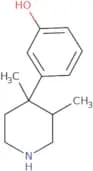
CAS:3-((3R,4S)-3,4-Dimethylpiperidin-4-yl)phenol is a potent inhibitor of cancer cell growth and tumor development. It has been shown to induce apoptosis in human cancer cells by inhibiting kinase activity. This compound is an analog of quetiapine and has anticancer properties. 3-((3R,4S)-3,4-Dimethylpiperidin-4-yl)phenol also exhibits inhibitory effects on somatostatin receptors in Chinese hamster ovary cells. It has been found in urine samples and may have potential as a therapeutic agent for the treatment of cancer. The compound has shown promising results as a kinase inhibitor with potential applications in the development of novel anticancer drugs.
Formula:C13H19NOPurity:Min. 95%Molecular weight:205.3 g/molMMPI-1154
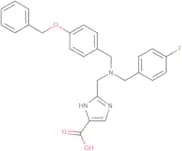
CAS:MMPI-1154 is an analog of a protein kinase inhibitor that has shown promising anticancer activity. It has been found to be effective against various types of cancer cells, including leukemia cells. MMPI-1154 works by inducing apoptosis, or programmed cell death, in cancer cells. It inhibits the activity of certain kinases that are involved in the growth and survival of cancer cells. This inhibitor has been isolated from urine samples of Chinese medicinal plants and shows potential as a tumor growth inhibitor in humans. MMPI-1154 is a promising new class of anticancer drugs that may offer hope for those suffering from cancer.Formula:C26H24FN3O3Purity:Min. 95%Molecular weight:445.5 g/molNeostige impurity A
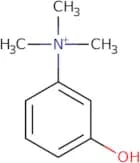
CAS:Neostigmine impurity A is a potent inhibitor of kinases that have been implicated in cancer cell growth and tumor progression. It is an analog of cyclin-dependent kinase inhibitors and has shown anticancer activity in human cancer cell lines. Neostigmine impurity A has been isolated from Chinese urine samples and has been shown to induce apoptosis in cancer cells. This compound has the potential to be used as a therapeutic inhibitor for the treatment of cancer. Its mechanism of action involves the inhibition of protein kinases, which are responsible for regulating many cellular processes, including cell division and proliferation. Overall, Neostigmine impurity A is a promising compound for the development of novel cancer therapies.Formula:C9H14NOPurity:Min. 95%Molecular weight:152.21 g/mol1,4-Dihydro-4-oxo-3-quinolinecarbonyl chloride
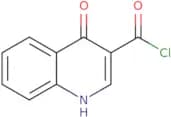
CAS:Please enquire for more information about 1,4-Dihydro-4-oxo-3-quinolinecarbonyl chloride including the price, delivery time and more detailed product information at the technical inquiry form on this pageFormula:C10H6ClNO2Purity:Min. 95%Molecular weight:207.61 g/molDes[(5-ethyl-2-pyridinyl)ethyl] pioglitazone dimer ether impurity
CAS:Des[(5-ethyl-2-pyridinyl)ethyl] pioglitazone dimer ether impurity is a research and development impurity standard. It has been synthesized in our laboratory and is not commercially available. Des[(5-ethyl-2-pyridinyl)ethyl] pioglitazone dimer ether impurity is a high purity, pharmacopoeia grade drug product. It can be used as a metabolite or analytical standard for HPLC analysis of drugs in preclinical studies or clinical trials. The CAS number for this compound is 1391052-15-5. Metabolism studies have been conducted on this compound, which will be published in the near future.Formula:C20H16N2O5S2Purity:Min. 95%Molecular weight:428.50 g/mol1,3-Benzodioxol-5-yl[4-(2-chloroethoxy)phenyl]methanone
CAS:1,3-Benzodioxol-5-yl[4-(2-chloroethoxy)phenyl]methanone (1,3-BDE) is a synthetic compound that is intended for use as an analytical reference standard. 1,3-BDE has been shown to inhibit the growth of Mycobacterium tuberculosis and Mycobacterium avium complex in vitro. This drug product is intended for research and development purposes only.Formula:C16H13ClO4Purity:Min. 95%Molecular weight:304.72 g/molAmaroswerin
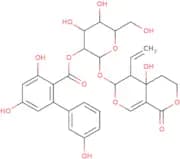
CAS:Amaroswerin is an analog of a medicinal plant compound that has been shown to have potent anticancer properties. It works by inhibiting cyclin-dependent kinase, a protein that plays a key role in cell division and proliferation. This inhibition leads to apoptosis, or programmed cell death, in cancer cells. Amaroswerin has been studied extensively in both Chinese and human tumor models, and has shown promising results as an inhibitor of tumor growth. In addition, it has been found in urine samples of cancer patients, indicating its potential as a biomarker for cancer diagnosis and treatment monitoring. Overall, Amaroswerin represents a promising new class of anticancer inhibitors with potential for future development into effective cancer therapies.Formula:C29H30O14Purity:Min. 95%Color and Shape:PowderMolecular weight:602.5 g/mol4-Ethyl-5-fluoropyrimidine hydrochloride
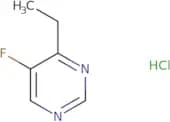
CAS:Please enquire for more information about 4-Ethyl-5-fluoropyrimidine hydrochloride including the price, delivery time and more detailed product information at the technical inquiry form on this pageFormula:C6H8ClFN2Purity:Min. 95%Molecular weight:162.59 g/molDapsone N-β-D-glucuronide sodium salt
CAS:Dapsone N-β-D-glucuronide sodium salt is a drug product that is Custom synthesized for your research and development needs. It is available for sale as a white to off-white crystalline powder with a purity of 98%. Dapsone N-β-D-glucuronide sodium salt has CAS No. 54749-81-4, analytical, Metabolism studies, Drug development, Natural, Metabolite, pharmacopoeia, niche, Synthetic, Impurity standard and Research and Development. It is an HPLC standard in the form of a white to off-white crystalline powder with a purity of 98%.Formula:C18H19N2NaO8SPurity:Min. 95%Molecular weight:446.41 g/molOzagrel impurity I
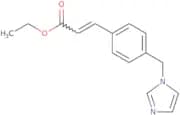
CAS:Ozagrel impurity I is a protein analog that has been shown to have anticancer properties. It acts as an inhibitor of kinases involved in cell cycle regulation and apoptosis, making it a potential candidate for cancer treatment. This impurity has been isolated from Chinese medicinal herbs and is present in human urine. Ozagrel impurity I has been tested against various cancer cell lines and has demonstrated significant growth inhibition. Its mechanism of action involves blocking the activity of proteins involved in tumor development and progression. Overall, Ozagrel impurity I shows promising potential as an anticancer agent.
Formula:C15H16N2O2Purity:Min. 95%Molecular weight:256.3 g/mol7-Hydroxy warfarin β-D-glucuronide disodium salt
CAS:Please enquire for more information about 7-Hydroxy warfarin β-D-glucuronide disodium salt including the price, delivery time and more detailed product information at the technical inquiry form on this page
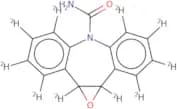
Formula:C25H24O11Purity:Min. 95%Molecular weight:500.4 g/molCarbamazepine-10,11-epoxide-d10 (rings-d10)
CAS:Controlled ProductCarbamazepine-10,11-epoxide-d10 (rings-d10) is a metabolite of carbamazepine that has been shown to have pharmacological properties similar to those of the parent compound. It is used in drug development, metabolism studies, and as an impurity standard for pharmaceutical products. Carbamazepine-10,11-epoxide-d10 (rings-d10) is not found in nature and can be synthesized from carbamazepine. This metabolite has a purity of at least 98% and may be used as an analytical standard or as a research and development compound for pharmacopoeia.Formula:C15H2D10N2O2Purity:Min. 95%Molecular weight:262.33 g/molDeacylated alfuzosin
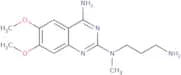
CAS:Deacylated alfuzosin is an impurity of alfuzosin, which is a selective alpha-1A-adrenergic receptor antagonist. It has been shown to minimize the effects of impurities in alfuzosin by binding competitively to the alpha-1A-adrenergic receptors.Formula:C14H21N5O2Purity:Min. 95%Molecular weight:291.35 g/molL-693,403 Maleate
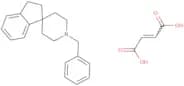
CAS:L-693,403 Maleate is an analytical and research chemical with a purity of > 99%. L-693,403 Maleate is used as an impurity standard for HPLC analysis and drug development. It can also be used as a reference standard in the production of APIs. L-693,403 Maleate is an impurity in the synthesis of several drugs, including clozapine, fluoxetine, and loratadine. The natural form of L-693,403 Maleate can be found in the leaves of the plant Acacia holosericea. Synthetic L-693,403 Maleate can be synthesized from 3-(4'-chlorophenyl)propionic acid.
Formula:C24H27NO4Purity:Min. 95%Molecular weight:393.5 g/mol1-(3'-Pyridylmethyl)-3-(4'-nitrophenyl)urea
CAS:1-(3'-Pyridylmethyl)-3-(4'-nitrophenyl)urea is a medicinal compound that has been used in Chinese traditional medicine for its tumor-fighting properties. It acts as a potent inhibitor of protein kinases, which are enzymes involved in cell signaling and proliferation. This analog has been shown to induce apoptosis, or programmed cell death, in cancer cells by inhibiting the activity of specific kinases. The compound has also demonstrated anticancer activity in human cancer cell lines and may have potential as a therapeutic agent for the treatment of various types of cancer. Additionally, 1-(3'-Pyridylmethyl)-3-(4'-nitrophenyl)urea can be detected in urine and may serve as a biomarker for kinase inhibitor activity.
Formula:C13H11N3O4Purity:Min. 95%Molecular weight:273.24 g/molPF-04856264
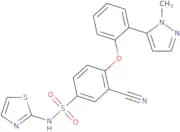
CAS:PF-04856264 is an anticancer drug that belongs to the class of protein kinase inhibitors. It has been shown to inhibit the growth of cancer cells by inducing apoptosis, which is a process of programmed cell death. PF-04856264 is a medicinal analog of nalbuphine and has been tested in human urine for its effectiveness against various types of cancer. This drug specifically targets tumor cells and inhibits their growth by blocking the activity of certain kinases that are involved in cell division. PF-04856264 has also been found to be effective against Chinese hamster ovary cells, making it a promising candidate for further cancer research.Formula:C20H15N5O3S2Purity:Min. 95%Molecular weight:437.5 g/mol(-)-Nefopam
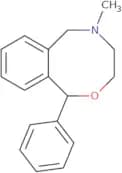
CAS:(-)-Nefopam is a medicinal compound that acts as an inhibitor of kinases, which are enzymes involved in many cellular processes. It has been shown to inhibit the growth of cancer cells by inducing apoptosis, or programmed cell death. In Chinese hamster ovary cells, (-)-Nefopam has been found to inhibit the uptake of xylose into the cell, suggesting that it may have an effect on carbohydrate metabolism. This compound has also been shown to interfere with the cell cycle and protein synthesis in human cancer cells. Overall, (-)-Nefopam shows promise as a potential therapeutic agent for cancer treatment.
Formula:C17H19NOPurity:Min. 95%Molecular weight:253.34 g/mol4-(Diphenylmethylene)-1-methylpiperidine
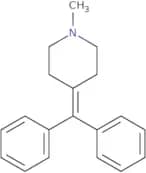
CAS:Please enquire for more information about 4-(Diphenylmethylene)-1-methylpiperidine including the price, delivery time and more detailed product information at the technical inquiry form on this page
Formula:C19H21NPurity:Min. 95%Molecular weight:263.4 g/molAcetylsalicylic acid sodium salt
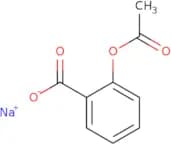
CAS:Acetylsalicylic acid sodium salt is a potent inhibitor of kinases in both human and Chinese cells. It is an analog of salicylic acid and has been shown to inhibit the growth of cancer cells in vitro. Acetylsalicylic acid sodium salt also induces apoptosis, or programmed cell death, in cancer cells. Additionally, it has been shown to inhibit heparin-induced platelet aggregation and reduce the risk of blood clots. This drug has potential anticancer properties due to its ability to inhibit chitin synthesis, which is necessary for tumor growth and survival. Acetylsalicylic acid sodium salt may be useful as a therapeutic agent for the treatment of cancer and other diseases associated with abnormal kinase activity.
Formula:C9H7NaO4Purity:Min. 95%Molecular weight:202.14 g/mol


![Des[(5-ethyl-2-pyridinyl)ethyl] pioglitazone dimer ether impurity](/_next/image/?url=https%3A%2Fstatic.cymitquimica.com%2Fproducts%2F3D%2Fthumb-webp%2FRFC05215.webp&w=3840&q=75)
![1,3-Benzodioxol-5-yl[4-(2-chloroethoxy)phenyl]methanone](/_next/image/?url=https%3A%2Fstatic.cymitquimica.com%2Fproducts%2F3D%2Fthumb-webp%2FJKA14965.webp&w=3840&q=75)