APIs for research and impurities
Subcategories of "APIs for research and impurities"
- Aminoacids and derivatives(12,335 products)
- Anthraquinones and derivatives(405 products)
- Benzimidazole and Imidazole Derivatives(10,451 products)
- Benzodiazepine Derivatives(334 products)
- Carbohydrates and glycoconjugates(5,048 products)
- Esters and Derivatives(42,251 products)
- Fatty Acids and Lypidic Derivatives(32,418 products)
- Flavonoids and Polyphenols(17,084 products)
- Free Radicals and Oxidant/Reducing Agents(213 products)
- Ketones and derivatives(2,402 products)
- Natural and semi-synthetic antibiotics(6,388 products)
- Nitriles and Cyano Derivatives(3,068 products)
- Nitrosamines and Derivatives(55 products)
- Nucleosides and Nucleotides(3,484 products)
- Organic Phosphates and Phosphonates(1,201 products)
- Organic Sulphonates and Sulphates(10,435 products)
- Organometallics(4,421 products)
- Others(6,307 products)
- Peptides and Proteins(3,148 products)
- Polymers and Derivatives(100 products)
- Purines and Pyrimidine Derivatives(8,948 products)
- Quinazoline and Quinoline Derivatives(66,046 products)
- Quinones and Derivatives(24,364 products)
- Salts and Derivatives of Active Pharmaceutical Ingredients (API)(80,492 products)
- Steroids and Derivatives(4,958 products)
- Sulfonamides and Derivatives(2,600 products)
- Terpenoids and Derivatives(3,850 products)
- Thiazolidinediones and Thiopyrans(2,754 products)
- β-Adrenergic Compounds(231 products)
Found 57774 products of "APIs for research and impurities"
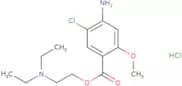
Sdz 205-557 hydrochloride
CAS:Controlled ProductSdz 205-557 hydrochloride is a research and development compound that is used in the preparation of drug products and as an analytical reference standard. It has been synthesized by custom synthesis. Sdz 205-557 hydrochloride has been shown to have pharmacopoeia standards for purity, and it is a synthetic compound that does not occur naturally. Metabolism studies on this compound have been completed, and it was found to be metabolized through oxidation, hydroxylation, or deamination.
Formula:C14H21ClN2O3•HClPurity:Min. 95%Color and Shape:PowderMolecular weight:337.24 g/molDiflorasone 17-propionate
CAS:Diflorasone 17-propionate is a synthetic corticosteroid with the chemical name of 9,11-difluoro-17-hydroxy-16-methylpregna-1,4,9(11)-trienoic acid 17-propionate. It is an impurity standard in the manufacture of diflucortolone acetate. Diflorasone 17-propionate is used in drug development and analytical studies for its high purity and pharmacopoeia quality. Its metabolite profile has been investigated using HPLC with UV detection. Metabolism studies have been conducted to determine the metabolic pathway of diflorasone 17-propionate in humans.Formula:C25H32F2O6Purity:Min. 95%Color and Shape:PowderMolecular weight:466.5 g/mol2',3'-Di-O-acetyl-5'-deoxy-5-fluorocytidine
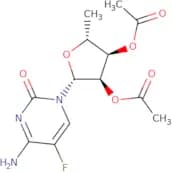
CAS:2',3'-Di-O-acetyl-5'-deoxy-5-fluorocytidine is a cytosine analog that is used as an industrial chemical. It is prepared by the reaction of 5'-deoxycytidine with acetic anhydride in the presence of sodium bicarbonate, followed by a purification procedure. 2',3'-Di-O-acetyl-5'-deoxy-5-fluorocytidine reacts with toluene and trifluoromethanesulfonic acid to form 2',3'-di-O-acetyl 5'-deoxyfluorocytidine. This compound can be converted to 5'-deoxyfluorocytosine by heating in the presence of sodium tetrachloride. The yield for this process is high.
Formula:C13H16FN3O6Purity:Min. 95%Molecular weight:329.29 g/molEmtricitabine impurity 17
CAS:Please enquire for more information about Emtricitabine impurity 17 including the price, delivery time and more detailed product information at the technical inquiry form on this page
Formula:C8H10FN3O4SPurity:Min. 95%Molecular weight:263.24 g/molAmoxicillin EP Impurity C
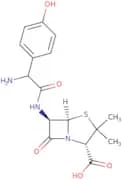
CAS:Amoxicillin EP Impurity C is a metabolite of amoxicillin that is formed by oxidation. It can be used as an impurity standard for the detection of amoxicillin in HPLC and LC-MS analyses. Amoxicillin EP Impurity C has been found to be a natural metabolite of amoxicillin in human urine. This impurity also exhibits anti-inflammatory activity, which may be due to its ability to inhibit prostaglandin synthesis.Formula:C16H19N3O5SPurity:Min. 95%Molecular weight:365.4 g/mol3-Chloro-4-hydroxyacetanilide
CAS:3-Chloro-4-hydroxyacetanilide is a chemical compound that belongs to the class of acetanilides. It has long-term toxicity and is used as a drug substance in the production of aniline derivatives. 3-Chloro-4-hydroxyacetanilide has been shown to be carcinogenic in hamsters. The long term exposure to this chemical was shown to cause liver damage and increased incidence of tumours in rats. This drug also contains impurities and traces of chloride, chlorine, and thionyl chloride, which are toxic substances that can cause irritation or burns on contact with skin or eyes.
Formula:C8H8ClNO2Purity:Min. 95%Molecular weight:185.61 g/molPseudomonic acid D sodium
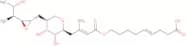
CAS:Pseudomonic acid D sodium is a chemical compound that is found in coal tar. It has antimicrobial properties and can be used to inhibit the growth of bacteria and fungi. Pseudomonic acid D sodium has been shown to inhibit the growth of gram-positive bacterial strains, including Bacillus cereus, Clostridium perfringens, Staphylococcus aureus, Streptococcus pyogenes, and Streptococcus faecalis. It also inhibits the growth of yeast such as Candida albicans. Pseudomonic acid D sodium is soluble in water at low concentrations and insoluble in water at high concentrations. This chemical exhibits acidic properties with an acidic pH range from 2-4. Pseudomonic acid D sodium does not dissolve calcium carbonate or hydroxide solution due to its weakly acidic nature.Formula:C26H41NaO9Purity:Min. 95%Molecular weight:520.59 g/molAtorvastatin lactam phenanthrene calcium salt impurity
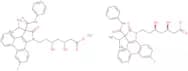
CAS:Atorvastatin lactam phenanthrene calcium salt impurity is a high purity, custom synthesis drug product. It is a metabolite of atorvastatin and was identified using metabolism studies in rat and human liver microsomes. This impurity has been shown to be an analytical standard for HPLC. Atorvastatin lactam phenanthrene calcium salt impurity is used in niche research and development, as well as the development of drugs that are pharmacopoeia grade.
Formula:C66H64CaF2N4O12Purity:Min. 95%Molecular weight:1,183.31 g/molN-[4-[2-(2-Amino-4,7-dihydro-4-oxo-3H-pyrrolo[2,3-d]pyrimidin-5-yl)ethyl]benzoyl]-L-γ-glutamyl-L-glutamic acid
CAS:N-[4-[2-(2-Amino-4,7-dihydro-4-oxo-3H-pyrrolo[2,3-d]pyrimidin-5-yl)ethyl]benzoyl]-L-gamma-glutamyl-L-glutamic acid is used as a research and development purity standard. It is a white crystalline powder that is soluble in water and ethanol. N-[4-[2-(2Amino 4,7dihydro 4oxo 3Hpyrrolo 2,3d]pyrimidin 5yl)ethyl]benzoyl]-L gamma glutamyl L glutamic acid has CAS number 144051 68 3. The drug product is a synthetic compound with high purity. It has been shown to be an analytical reference substance for HPLC standards and to have niche applications in metabolism studies of other drugs.
Formula:C25H28N6O9Purity:Min. 95%Molecular weight:556.52 g/mol5,6-Dehydro-tigecycline
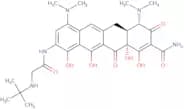
CAS:5,6-Dehydro-tigecycline is a synthetic antibiotic that is used for the treatment of multi-drug resistant bacterial infections. 5,6-Dehydro-tigecycline binds to the 30S ribosomal subunit and blocks protein synthesis by inhibiting peptidyl transferase activity. This drug has been shown to be effective in treating methicillin resistant Staphylococcus aureus (MRSA) infections. 5,6-Dehydro-tigecycline also inhibits the growth of Mycobacterium tuberculosis and Mycobacterium avium complex, although it is not active against acid-fast bacteria such as Mycobacterium tuberculosis or Mycobacterium avium complex. Metabolism studies have shown that 5,6-Dehydro-tigecycline undergoes oxidative metabolism via CYP450 enzymes to form reactive metabolites like N2-[(
Formula:C29H37N5O8Purity:Min. 95%Molecular weight:583.63 g/molMethylnaltrexone Peak Identification Mixture CII (Methylnaltrexone Bromide containing about 0.1% methylnaltrexone related compound A)
Controlled ProductDiagnostic or lab reagents on a backing, prepared diagnostic or lab reagents whether or not on a backing, whether or not in the form of kits, nesoiColor and Shape:White SolidClindamycin-B2-phosphate
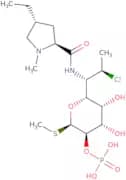
CAS:Clindamycin-B2-phosphate is a drug product with CAS No. 54887-31-9 that is used as an analytical reference standard. It is metabolized in animals and humans to form clindamycin, which has been shown to bind to ribosomes and inhibit protein synthesis. Clindamycin-B2-phosphate also binds to DNA gyrase and topoisomerase IV, inhibiting their activity. This drug product has been shown to be effective against methicillin resistant Staphylococcus aureus (MRSA) and Clostridium perfringens, although it is not active against acid-fast bacteria such as Mycobacterium tuberculosis or Mycobacterium avium complex.Formula:C17H32ClN2O8PSPurity:Min. 95%Color and Shape:White PowderMolecular weight:490.94 g/molIsopropyl 2-hydroxy-2-phenylacetate
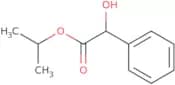
CAS:Isopropyl 2-hydroxy-2-phenylacetate is an inorganic acid that is used as a solvent and as a reagent for sample preparation. It has been shown to be able to dissolve hydroxy methyl cellulose, which is a common component of membranes. In addition, it can be used as an electrospray ionization source and has been shown to have a phase transition temperature of -24 degrees Celsius. Isopropyl 2-hydroxy-2-phenylacetate has also been shown to inhibit the action of cholic acid on kinetics in high-performance liquid chromatography. This chemical compound also contains an ethyl group, which may be due to its derivation from acetone.Formula:C11H14O3Purity:Min. 95%Molecular weight:194.23 g/molChlorthalidone impurity J
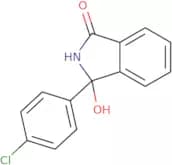
CAS:Chlorthalidone is a drug product that contains the impurity J. Chlorthalidone is an antihypertensive drug that belongs to the class of thiazides. It is used in the treatment of hypertension, congestive heart failure, and edema. Chlorthalidone is metabolized by the liver and eliminated through urine; it has been shown to be excreted unchanged in urine as well as in bile. The impurity J can be found in human urine, which may be due to metabolism by microorganisms or renal clearance.Formula:C14H10ClNO2Purity:Min. 95 Area-%Color and Shape:White Off-White PowderMolecular weight:259.69 g/molAztreonam Impurity F
CAS:Aztreonam Impurity F is an impurity of the drug aztreonam. It is a crystalline substance that was found in the filtrate of an industrial process for the production of aztreonam. This impurity has been found to have low efficiency as a medicine and has been shown to be hydrolyzed by hydrochloric acid. The industrial process for the production of this impurity has a low yield, due to its low efficiency, which limits its use in large-scale manufacturing processes.Formula:C15H21N5O8S2Purity:Min. 95%Molecular weight:463.5 g/molFR 901464
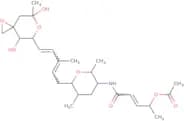
CAS:FR 901464 is a cytotoxic compound that inhibits the activity of the mammalian splicing factor receptor (SFRS2), which is involved in the splicing process. The active form of FR 901464 binds to SFRS2 and prevents it from binding to other proteins, thereby inhibiting the formation of functional complexes. This leads to an increase in the production of proteins that are not targeted for degradation and a decrease in the production of proteins targeted for degradation. This drug also has anti-inflammatory properties by inhibiting epidermal growth factor (EGF) and its receptor, EGF-R. It also has antimicrobial effects against some bacteria by inhibiting bacterial growth factors such as amide or conjugates.Formula:C27H41NO8Purity:Min. 95%Molecular weight:507.6 g/mol1-Bromo-3,5-dimethyladamantane
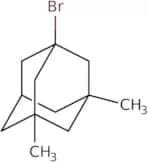
CAS:Intermediate in the synthesis of memantineFormula:C12H19BrPurity:Min. 95%Molecular weight:243.18 g/molα-Hydroxy olopatadine hydrochloride
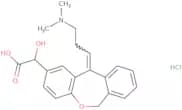
CAS:Olopatadine is an antihistamine that is used to treat allergic rhinitis and seasonal allergic conjunctivitis. It is an α-hydroxy acid metabolite of the arylacetic acid group. This drug has been shown to inhibit the metabolism of olopatadine in humans, which may result in reduced potency for this drug. Olopatadine hydrochloride is used as a standard for quantitative analysis by high performance liquid chromatography (HPLC) and can be used as an impurity standard for preparing synthetic olopatadine. It is also used in drug development and research, such as evaluating its pharmacological properties and investigating its potential role in treating other ocular conditions such as dry eye syndrome.Formula:C21H23NO4•HClPurity:Min. 95%Color and Shape:PowderMolecular weight:389.9 g/mol3,8-Dihydroxy-1-methylanthraquinone-2-carboxylic acid
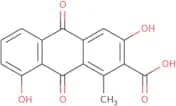
CAS:3,8-Dihydroxy-1-methylanthraquinone-2-carboxylic acid is a potent protein kinase inhibitor with anticancer properties. It is an analog of emodin, a natural compound found in Chinese medicinal herbs. This compound has been shown to inhibit the growth of cancer cells and induce apoptosis through the inhibition of various kinases. Its potential as an anticancer drug has been demonstrated in vitro and in vivo studies, where it has shown to reduce tumor size and metastasis. This compound has also been detected in human urine, suggesting that it may have potential as a diagnostic marker for cancer. The discovery of 3,8-Dihydroxy-1-methylanthraquinone-2-carboxylic acid may lead to the development of new inhibitors for various kinases and improve cancer treatment options.Formula:C16H10O6Purity:Min. 95%Molecular weight:298.25 g/molPravastatin impurity A
CAS:Pravastatin impurity A is a synthetic impurity found in the drug product pravastatin. It is not listed as an impurity in the pharmacopoeia and has no CAS number assigned to it. This impurity is a yellow crystalline solid. It has been shown to be metabolized by cytochrome P450 3A4/5, CYP2C8, CYP2C9, and CYP3A4 isoforms with half-lives of 1.6 hours, 2.2 hours, 3.7 hours, and 6.1 hours respectively.Formula:C23H36O7Purity:Min. 95%Molecular weight:424.5 g/mol



![N-[4-[2-(2-Amino-4,7-dihydro-4-oxo-3H-pyrrolo[2,3-d]pyrimidin-5-yl)ethyl]benzoyl]-L-γ-glutamyl-L-g…](/_next/image/?url=https%3A%2Fstatic.cymitquimica.com%2Fproducts%2F3D%2Fthumb-webp%2FIA63809.webp&w=3840&q=75)