Amino Acids (AA)
Amino acids (AAs) are the fundamental building blocks of proteins, playing a crucial role in various biological processes. These organic compounds are essential for protein synthesis, metabolic pathways, and cell signaling. In this category, you will find a comprehensive range of amino acids, including essential, non-essential, and modified forms, which are vital for research in biochemistry, molecular biology, and nutritional sciences. At CymitQuimica, we provide high-quality amino acids to support your research and development needs, ensuring accuracy and reliability in your experimental outcomes.
Subcategories of "Amino Acids (AA)"
- Amino Acid Derivatives(3,978 products)
- Amino Acid and Amino Acid Related Compounds(3,477 products)
- Amino Acids with Oxygen or Sulphur(168 products)
- Boc- Amino Acids(351 products)
- Fmoc Amino Acids(1,710 products)
Found 38329 products of "Amino Acids (AA)"
Sort by
Purity (%)
0
100
|
0
|
50
|
90
|
95
|
100
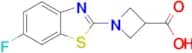
1-(6-fluoro-1,3-benzothiazol-2-yl)azetidine-3-carboxylic acid
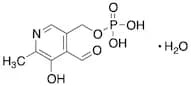
CAS:Purity:95.0%Molecular weight:252.25999450683594(4-Formyl-5-hydroxy-6-methylpyridin-3-yl)methyl Dihydrogen Phosphate Hydrate
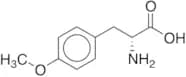
CAS:<p>Stability Air Sensitive, Moisture Sensitive<br>Applications (4-Formyl-5-hydroxy-6-methylpyridin-3-yl)methyl dihydrogen phosphate hydrate (cas# 41468-25-1) is a useful research chemical.<br></p>Formula:C8H10NO6P·H2OColor and Shape:White To Off-WhiteMolecular weight:265.16(R)-2-Amino-3-(4-methoxyphenyl)propanoic Acid
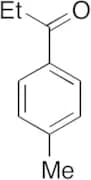
CAS:Controlled ProductFormula:C10H13NO3Color and Shape:NeatMolecular weight:195.2154′-Methylpropiophenone
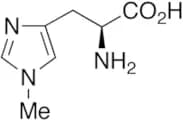
CAS:Controlled Product<p>Applications 4′-Methylpropiophenone is a chemical reagent used in electrocarboxylation reactions.<br>References Zhang, K. et al.: Chin. J. Chem., 28, 509 (2010); Zhao, S. et al.: Tetra. Lett., 52, 2702 (2011);<br></p>Formula:C10H12OColor and Shape:NeatMolecular weight:148.201-Methyl-L-histidine
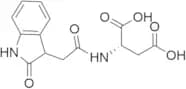
CAS:Controlled Product<p>Applications The urinary 1- and 3-methylhistidine (1- and 3-MH) metabolites as potential biomarkers of skeletal muscle toxicity. These metabolites were highly correlated to sex-, dose-, and time-dependent development of cerivastatin-induced myotoxicity. Natural but non-proteinogenic amino acid; employed as index of muscle protein breakdown.<br>References Berna, M., et al.: Anal. Chem., 79, 4199 (2007), Pritt, M., et al.: Toxicol. Sci., 103, 382 (2008), Tonomura, Y., et al.: Toxicology, 266, 48 (2009),<br></p>Formula:C7H11N3O2Color and Shape:NeatMolecular weight:169.18Oxindole-3-acetyl-N-aspartic Acid
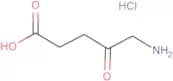
CAS:Controlled ProductFormula:C14H14N2O6Color and Shape:NeatMolecular weight:306.2715-Amino-4-oxopentanoic acid hydrochloride
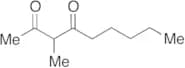
CAS:<p>066621 - 5-Amino-4-oxopentanoic acid hydrochloride</p>Formula:C5H10ClNO3Purity:97.0%Color and Shape:Solid, Powder or Crystalline Powder or SolidMolecular weight:167.593-Methylnonane-2,4-dione (>80%)
CAS:Controlled Product<p>Applications 3-Methylnonane-2,4-dione is a compound that possesses a butter-like and beany off flavour that is a result of flavour reversion of soya-bean oil. 3-Methylnonane-2,4-dione is also present in Japanese green tea and pressure-cooked hen meat.<br>References Farkaš, P., et al.: Food Chem., 60, 617 (1997); Guth, H. & Grosch, W.: Flav. Chem., No vol. given, 377 (1999); Kumazawa, K. & Masuda, H.: J. Agr. Food Chem., 47, 5169 (1999)<br></p>Formula:C10H18O2Purity:>80%Color and Shape:NeatMolecular weight:170.25a-Methacrylic Acid
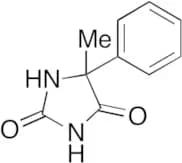
CAS:Controlled Product<p>Stability Light Sensitive<br>Applications α-Methacrylic acid is used in chemistry as a stabilizing agent, forming a thin capping layer on the surface of nanoparticles. α-Methacrylic acid is also used as a surfactant, so that control is maintained during nanocrystal growth. α-Methacrylic acid is also used as a chelating agent.<br> Not a dangerous good if item is equal to or less than 1g/ml and there is less than 100g/ml in the package<br>References Peng, W., et al.: J. Cryst. Growth, 279, 454 (2005); Qu, S., et al.: Appl. Phys. Lett., 80, 3605 (2002); Zhao, G., et al.: Phys. C: Supercond., 468, 2317 (2008)<br></p>Formula:C4H6O2Color and Shape:ColourlessMolecular weight:86.095-Methyl-5-phenylhydantoin
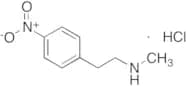
CAS:Controlled Product<p>Applications 5-Methyl-5-phenylhydantoin is a reactant for synthesis of beta-amino alcohols as inhibitors of anti-tubercular target N-acetyltransferase, chlorohydantoins and specific MMP inhibitors.<br>References Fullam, E., et al.: Bioorg. Med. Chem. Lett., 21, 1185 (2011); Whitehead, D., et al.: Tetrahedron Lett., 50, 3 (2009); Chollet, A., et al.: Bioorg. Med. Chem., 10, 531 (2002)<br></p>Formula:C10H10N2O2Color and Shape:NeatMolecular weight:190.20N-Methyl-2-(4-nitrophenyl)ethanamine Hydrochloride
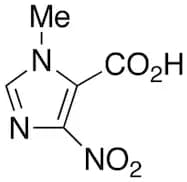
CAS:Controlled Product<p>Applications N-Methyl-2-(4-nitrophenyl)ethanamine Hydrochloride is used as a reactant in the preparation of small molecule CDC25 phosphatases inhibitors.<br>References Contour-Galcera, Marie-Odile, et al.: Bioorg. & Med. Chem. Let., 14(23), 5809-5812 (2004)<br></p>Formula:C9H12N2O2·HClColor and Shape:NeatMolecular weight:216.661-Methyl-4-nitro-1H-imidazole-5-carboxylic Acid
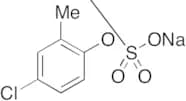
CAS:Controlled Product<p>Applications A derivative of imidazole used in the synthesis of heteroxanthine.<br>References Sarasin, J., et al.: Helv. Chim. Acta, 7, 713 (1924),<br></p>Formula:C5H5N3O4Color and Shape:NeatMolecular weight:171.114-Chloro-2-methylphenol Sulfate Sodium Salt
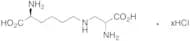
CAS:<p>Stability Unstable in methanol solution<br>Applications 4-Chloro-2-methylphenol Sulfate Sodium Salt is a halogenated derivative of o-toluenesulfonate, present in landfill leachates. o-Toluenesulfonate is an analog of the strong organic acid p-Toluenesulfonate.<br>References Riediker, S. et al.: Environ. Sci. Tech., 34, 2156 (2000);<br></p>Formula:C7H6ClNaO4SColor and Shape:NeatMolecular weight:244.628Lysinoalanine Hydrochloride Salt
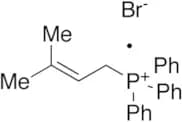
CAS:Controlled Product<p>Applications This not naturally occurring amino acid was first observed after alkali treatment of different proteins. Synthetic Lysinoalanine was found to have a strong chelating ability for metals.<br>References Schwass, D., et al.: J. Agric. Food Chem., 32, 1377 (1984), Ahmed, M., et al.: J. Biol. Chem., 261, 8816 (1986), Wells-Knecht, K., et al.: Biochem., 34, 3702 (1995),<br></p>Formula:C9H19N3O4·xHClColor and Shape:NeatMolecular weight:306.19(3-Methyl-2-butenyl)triphenyl-phosphonium Bromide
CAS:Controlled Product<p>Applications (3-Methyl-2-butenyl)triphenyl-phosphonium Bromide (cas# 1530-34-3 ) is a compound useful in organic synthesis.<br></p>Formula:C23H24BrPColor and Shape:NeatMolecular weight:411.318-Bromo-7-(2-butyn-1-yl)-3,7-dihydro-3-methyl-1-[(4-methyl-2-quinazolinyl)methyl]-1H-purine-2,6-dione
CAS:<p>Applications 8-Bromo-7-(2-butyn-1-yl)-3,7-dihydro-3-methyl-1-[(4-methyl-2-quinazolinyl)methyl]-1H-purine-2,6-dione is an intermediate used to prepare selective inhibitors of dipeptidyl peptidase 4 (DPP4) for potential use in the treatment of type 2 diabetes.<br>References Sutton, J., et al.: Bioorg. Med. Chem. Lett., 22, 1464 (2012); Lai, Z., et al.: Eur. J. Med. Chem., 83, 547 (2014)<br></p>Formula:C20H17BrN6O2Color and Shape:NeatMolecular weight:453.293-[(1-methyl-1H-pyrazolo[3,4-d]pyrimidin-4-yl)amino]benzoic acid
CAS:Purity:95.0%Molecular weight:269.26400756835942-Azido-2-deoxy-D-glucose
CAS:<p>Applications 2-Azido-2-deoxy-D-glucose is a glucose derivative that have been used to study the substrate specificity of galactokinase.<br>References Zou, W., et al.: Bioorg. Med. Chem. Lett., 22, 3540 (2012);<br></p>Formula:C6H11N3O5Color and Shape:White PowderMolecular weight:205.171,2-Cyclohexanedicarboxylic Acid Mono 4-Methyl-7-carboxy-heptyl Ester
CAS:<p>Stability Hygroscopic<br>Applications 1,2-Cyclohexanedicarboxylic Acid Mono 4-Methyl-7-carboxy-heptyl Ester is a possible metabolite of the di(isononyl)cyclohexane-1,2-dicarboxylate (DINCH) monoester (MINCH).<br>References Koch, H., et al.: Arch. Toxicol., 87, 799 (2013)<br></p>Formula:C17H28O6Color and Shape:Colourless To Light YellowMolecular weight:328.41-Carboxy-7-(dimethylamino)-3,4-dihydroxyphenoxazin-5-ium chloride
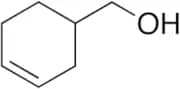
CAS:Purity:95.0%Molecular weight:336.73001098632813-Cyclohexene-1-methanol
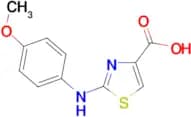
CAS:Controlled ProductFormula:C7H12OColor and Shape:NeatMolecular weight:112.172-(4-Methoxy-phenylamino)-thiazole-4-carboxylic acid
CAS:Formula:C11H10N2O3SPurity:95.0%Color and Shape:SolidMolecular weight:250.274-(4-bromobenzoyl)-8-ethyl-1-oxa-4,8-diazaspiro[4.5]decane-3-carboxylic acid
CAS:Purity:95.0%Molecular weight:397.26901245117192'-Amino-[1,1':3',1''-terphenyl]-4,4''-dicarboxylic acid
CAS:Purity:98%Molecular weight:333.3429870605469N-(2-Hydroxyethyl)glycine (~90%)
CAS:Controlled Product<p>Applications N-(2-Hydroxyethyl)glycine (~90%) (cas# 5835-28-9) is a compound useful in organic synthesis.<br></p>Formula:C4H9NO3Purity:>85%Color and Shape:NeatMolecular weight:119.124-(4-methylphenyl)-3H,4H,5H,6H,7H-imidazo[4,5-c]pyridine-6-carboxylic acid
CAS:Purity:95.0%Molecular weight:257.29299926757812-Methylnaphth[1,2-d]oxazole
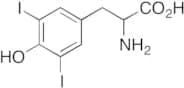
CAS:Controlled Product<p>Applications 2-Methylnaphth[1,2-d]oxazole (cas# 85-15-4) is a useful research chemical.<br></p>Formula:C12H9NOColor and Shape:YellowMolecular weight:183.2063,5-Diiodo-DL-tyrosine
CAS:Controlled Product<p>Applications 3,5-Diiodo-DL-tyrosine is used for diagnosis of hypothyroidism caused by DEHAL1 gene defects.<br>References Encinas, S., et al.: Chem. Res. Toxicol., 11, 946 (1998), Daneshvar, A., et al.: Chemosphere, 80, 301 (2010), Eriksson, J., et al.: Photochem. Photobiol., 86, 528 (2010),<br></p>Formula:C9H9I2NO3Color and Shape:NeatMolecular weight:432.983,5-Dichloro-4-methylaniline
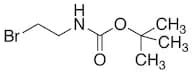
CAS:Controlled Product<p>Applications 3,5-Dichloro-4-methylaniline<br></p>Formula:C7H7Cl2NColor and Shape:NeatMolecular weight:176.043N-t-Boc-2-bromoethylamine (Technical grade, ~90%)
CAS:Controlled Product<p>Applications N-t-Boc-2-bromoethylamine (Technical grade, ~90%) (cas# 39684-80-5) is a compound useful in organic synthesis.<br></p>Formula:C7H14BrNO2Purity:~90%Color and Shape:NeatMolecular weight:224.105-(3,4-dihydro-2(1H)-isoquinolinylmethyl)-2-furoic acid
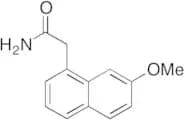
CAS:Purity:95.0%Molecular weight:257.289001464843757-Methoxy-1-naphthaleneacetamide
CAS:Controlled Product<p>Applications 7-Methoxy-1-naphthaleneacetamide, can be used for the synthesis of the analogs of Melatonin (M215000), containing naphthalene moiety instead of indole nucleus, having high affinity for the melatonin receptor. Agomelatine Impurity 6<br>References Tang, J. D., et al.: Org. Prep. Proc. Int., 41, 164 (2009); Sndrieux Y. J., et al.: J. Med. Chem., 35, 1484 (1992);<br></p>Formula:C13H13NO2Color and Shape:NeatMolecular weight:215.255-Benzyloxy-6-methoxyindole
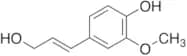
CAS:Controlled Product<p>Applications 5-Benzyloxy-6-methoxyindole (cas# 4790-04-9) is a compound useful in organic synthesis.<br>References McBride, C., et al.: Bioorg. Med. Chem. Lett., 16, 3789 (2006), Frost, J., et al.: J. Med. Chem., 51, 1904 (2008),<br></p>Formula:C16H15NO2Color and Shape:NeatMolecular weight:253.304-(3-Hydroxyprop-1-en-1yl)-2-methoxyphenol
CAS:<p>Applications 4-(3-HYDROXYPROP-1-EN-1-YL)-2-METHOXYPHENOL (cas# 458-35-5) is a useful research chemical.<br></p>Formula:C10H12O3Color and Shape:NeatMolecular weight:180.204-(2-methoxybenzoyl)-8-propyl-1-oxa-4,8-diazaspiro[4.5]decane-3-carboxylic acid
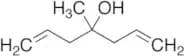
CAS:Purity:95.0%Molecular weight:362.42599487304694-Hydroxy-4-methylhepta-1,6-diene
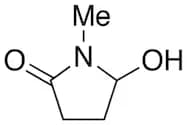
CAS:Controlled Product<p>Applications 4-Hydroxy-4-methylhepta-1,6-diene is a compound useful in organic synthesis.<br>References Ji, X., et al.: Xiangliao Xiangjing Huazhuangpin, 4, 6 (2011)<br></p>Formula:C8H14OColor and Shape:NeatMolecular weight:126.205-Hydroxy-N-methyl-2-pyrrolidinone
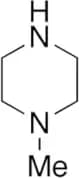
CAS:Controlled Product<p>Applications 5-Hydroxy-N-methyl-2-pyrrolidinone is a metabolite of N-methylpyrrolidone (NMP).<br>References Payan, J., et al.: Drug Metab. Dispos., 30, 1418 (2002), Carnerup, M., et al.: Food Chem. Toxicol., 43, 1441 (2005), Angerer, J., et al.: Toxicol. Sci., 93, 3 (2006),<br></p>Formula:C5H9NO2Color and Shape:NeatMolecular weight:115.131-Methylpiperazine
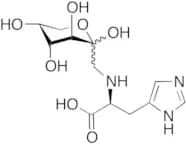
CAS:Controlled Product<p>Impurity Imatinib EP Impurity G<br>Applications 1-Methylpiperazine (Imatinib EP Impurity G) is used in the preparation of 2-(4-Methyl-1-piperazinylmethyl)acrylophenone(MPMAP), an antimicrotubular drug. It is a COVID19-related research product.<br>References Mallevais, M.L. et al.: Biochimie, 66, 477 (1984);<br></p>Formula:C5H12N2Color and Shape:Colourless To Light YellowMolecular weight:100.16Fructose-histidine
CAS:Controlled Product<p>Applications Fructose-histidine is an amadori compound formed in food.<br>References Wang, J., et al.: J. Mass Spec., 43, 262 (2008); Hashiba, H.: J. Agri. Food Chem., 24, 70 (1976)<br></p>Formula:C12H19N3O7Color and Shape:NeatMolecular weight:317.3(4S)-4-METHYL-L-PROLINE HCL
CAS:Formula:C6H12ClNO2Purity:97.0%Color and Shape:SolidMolecular weight:165.624-(3-phenoxyphenyl)-3H,4H,5H,6H,7H-imidazo[4,5-c]pyridine-6-carboxylic acid
CAS:Purity:95.0%Molecular weight:335.36300659179692-Methyl-2-(nitroamino)-1-propanol
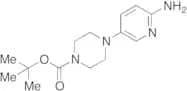
CAS:Controlled Product<p>Applications A nitroamino subsituted primary alcohol.<br></p>Formula:C4H10N2O3Color and Shape:NeatMolecular weight:134.131-Boc-4-(6-aminopyridin-3-yl)piperazine
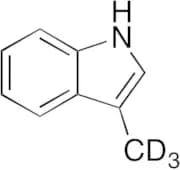
CAS:Controlled Product<p>Applications 1-Boc-4-(6-aminopyridin-3-yl)piperazine is used to prepare pyrido[2,3-d]pyrimidin-7-ones as selective inhibitors of cyclin-dependent kinases 4 and 6.<br>References Toogood, P., et al.: J. Med. Chem., 48, 2388 (2005); Cho, Y., et al.: J. Med. Chem., 53, 7938 (2010)<br></p>Formula:C14H22N4O2Color and Shape:NeatMolecular weight:278.353-Methyl-d3-indole
CAS:Controlled Product<p>Applications 3-Methyl-d3-indole has been used to prove that bioactivation of the pulmonary toxin 3-methylindole requires methyl carbon-hydrogen bond breakage in mice. 3-Methyl-d3-indole is the labeled analogue of 3-Methylindole (M313470), A naturally abundant pneumotoxin, found primarily in mammalian feces providing its strong fecal odor.<br> Not a dangerous good if item is equal to or less than 1g/ml and there is less than 100g/ml in the package<br>References Huijzer, J., et. al.: Toxicol. Appl. Pharm., 90, 60 (1987); Nakashima, T., et al.: Biol. Pharm. Bull., 32, 832 (2009); Xu, H., et al.: Chem. Pharm. Bull., 57, 321 (2009); Bodoor, K., et al.: J. Med. Chem., 52, 3753 (2009); Naskar, S., et al.: J. Chem. Res., 3, 174 (2009); Sollner, K., et al.: J. Agric. Food Chem., 57, 4319 (2009)<br></p>Formula:C92H3H6NColor and Shape:NeatMolecular weight:134.19(6Z)-8-Methyl-6-nonenoic Acid (up to 10% trans isomer)
CAS:Controlled Product<p>Applications Used in the synthesis of Capsaicin analogues, useful for their anti-tumor activity.<br>References Fusco, B., et al.: Drugs, 53, 909 (1997), Buisman, G., et al.: Biotechnol. Lett., 20, 131 (1998), Kobata, K., et al.: Bios. Biotechnol. Biochem., 66, 319 (2002), Aluru, M., et al.: J. Exp. Bot., 54, 1655 (2003),; Wang, W. et al.: Gaodeng Xuexiao Huaxue Xuebao 31, 2400(2010)<br></p>Formula:C10H18O2Color and Shape:NeatMolecular weight:170.25N-Methyltaurine Sodium Salt (>50% in Water)
CAS:Controlled Product<p>Applications N-Methyltaurine Sodium Salt is used in the analysis of the changing properties of anionic surfactants and the development of new skin cleansers or soaps. It is the salt of N-Methyltaurine, a compound used in sperm cryopreservation studies. N-Methyltaurine is also used in the studies relating to effects on oxidative damage to erythrocytes via phenylhydrazine.<br> Not a dangerous good if item is equal to or less than 1g/ml and there is less than 100g/ml in the package<br>References Pokhrel, P.K. et al.: Adv. Exp. Med. Biol., 483, 503 (2000); Miyahara, R. et al.: Fragr. J., 28, 11 (2000); Garde, J.J. et al.: Bio. Repro., 69, 602 (2003);<br></p>Formula:C3H8NO3S·NaColor and Shape:ColourlessMolecular weight:161.166-Methoxy-N2-methylpyridine-2,3-diamine Dihydrochloride
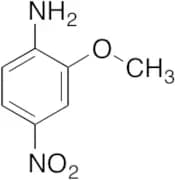
CAS:Controlled Product<p>Applications 6-Methoxy-N2-methylpyridine-2,3-diamine dihydrochloride (cas# 83732-72-3) is a useful research chemical.<br></p>Formula:C7H13Cl2N3OColor and Shape:NeatMolecular weight:226.12-Methoxy-4-nitroaniline
CAS:<p>Applications 2-Methoxy-4-nitroaniline is a derivative of 4-Nitroaniline (N491770), which is used in the synthesis of photorefractive polymers, as novel chromophores in analytical study. As well, due to the absorption spectrum associated with 4-Nitroaniline, it is used to determine catechol derivatives in syntheses.<br>References Nagaraja, P. et al.: J. Pharm. Biomed. Anal., 25, 417 (2001);<br></p>Formula:C7H8N2O3Color and Shape:YellowMolecular weight:168.158-benzyl-4-(2,2-dimethylpropanoyl)-1-oxa-4,8-diazaspiro[4.5]decane-3-carboxylic acid
CAS:Purity:95.0%Molecular weight:360.4540100097656[1-(2-Thienyl)-3,4-dihydroisoquinolin-2(1H)-yl]acetic acid
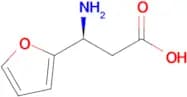
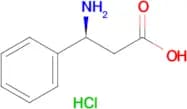
CAS:Purity:95.0%Molecular weight:273.3500061035156(S)-(-)-3-Amino-3-phenylpropionic acid hydrochloride
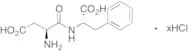
CAS:Formula:C9H12ClNO2Purity:95.0%Color and Shape:SolidMolecular weight:201.65L-Aspartyl-L-phenylalanine Hydrochloride
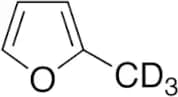
CAS:Controlled Product<p>Applications L-Aspartyl-L-phenylalanine is an impurity of Thiamine (T344185). Thiamine Impurity B.<br>References Aluwihare, L., et al.: Science, 308, 1007 (2005), Koch, B., et al.: Anal. Chem., 79, 1758 (2007), Reemtsma, T., et al.: Environ. Sci. Technol., 42, 1430 (2008),<br></p>Formula:C13H16N2O5xHClColor and Shape:NeatMolecular weight:280.282-Methylfuran-d3
CAS:Controlled Product<p>Stability Light Sensitive, Volatile<br>Applications Labelled 2-Methylfuran (M305440). 2-Methylfuran is a volatile organic compound (VOCs) used as a potential non-intrusive tool for screening of lung cancer.<br> Not a dangerous good if item is equal to or less than 1g/ml and there is less than 100g/ml in the package<br>References McWilliams, et al.: Curr. Oncol. Rep., 4, 487 (2002), Buszewski, B., et al.: Biomed. Chromatogr., 21, 553 (2007), Ligor, T., et al.: J. Breath. Res., 1, 1 (2007),<br></p>Formula:C52H3H3OPurity:>90%Color and Shape:Light YellowMolecular weight:85.125-Bromo-2-(2-methyl-2H-tetrazol-5-yl)pyridine
CAS:Controlled Product<p>Applications 5-Bromo-2-(2-methyl-2H-tetrazol-5-yl)pyridine is a reagent in the synthesis and structure-activity relationship studies of highly potent novel benzoxazinyl-oxazolidinone which is an antibacterial agent. Benzoxazinyl-oxazolidinone had potent activity against Gram-positive pathogens. 5-Bromo-2-(2-methyl-2H-tetrazol-5-yl)pyridine is also an intermediate in the synthesis of Tedizolid (T013750).<br>References Xin, Q., et al.: J. Med. Chem., 54, 7493 (2011)<br></p>Formula:C7H6BrN5Color and Shape:NeatMolecular weight:240.065-Methyl-4,5,6,7-tetrahydrothiazolo[5,4-c]pyridine-2-carboxylic Acid Hydrochloride
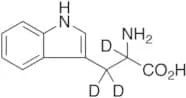
CAS:Controlled Product<p>Stability Hygroscopic<br>Applications 5-Methyl-4,5,6,7-tetrahydrothiazolo[5,4-c]pyridine-2-carboxylic Acid Hydrochloride is used as a reagent in the synthesis of N-(2-acylaminobenzyl or 2-acylaminoheterocyclylmethyl)thiophene-2-carboxamide derivatives as antithrombotics. It is also used as a reagent in the synthesis of diamide derivatives as FXa inhibitors. 5-Methyl-4,5,6,7-tetrahydrothiazolo[5,4-c]pyridine-2-carboxylic Acid Hydrochloride is an intermediate for Edoxaban (E555520).<br>References Mochizuki, A., et al.: Jpn. Kokai Tokkyo Koho. JP 2010120852 A 20100603. Jun 3, 2010; Mochizuki, A., et al.: PCT Int. Appl. WO 2008123017 A1 20081016. Oct 16, 2008<br></p>Formula:C8H11ClN2O2SColor and Shape:Light BrownMolecular weight:234.7D,L-Tryptophan-d3
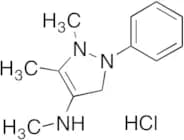
CAS:Controlled Product<p>Applications A labelled, essential amino acid.<br>References Liu, F., et al.: Bioorg. Med. Chem., 18, 4167 (2010), Kumar, R., et al.: Eur. J. Med. Chem., 45, 2265 (2010), Cai, W., et al.: Bioorg. Med. Chem., 18, 1899 (2010),<br></p>Formula:C112H3H9N2O2Color and Shape:NeatMolecular weight:207.244-Methylaminoantipyrine Hydrochloride
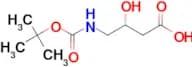
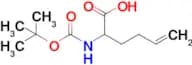
CAS:Formula:C12H15N3O·ClHColor and Shape:Light Orange Colour To Light BrownMolecular weight:253.73(R)-4-(BOC-AMINO)-3-HYDROXYBUTANOIC ACID
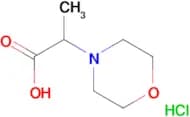
CAS:Purity:97.0%Color and Shape:SolidMolecular weight:219.236999511718751-(4-morpholinyl)cyclohexanecarboxylic acid hydrochloride hydrate
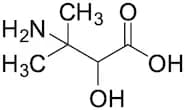
Purity:95.0%Molecular weight:267.753-Amino-2-hydroxy-3-methylbutanoic Acid
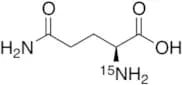
CAS:Controlled ProductFormula:C5H11NO3Color and Shape:NeatMolecular weight:133.146L-Glutamine-15N
CAS:<p>Applications L-Glutamine (Alpha-15n, 98%) (cas# 80143-57-3) is a useful research chemical.<br></p>Formula:C5H1015NNO3Color and Shape:NeatMolecular weight:147.138(8-Benzyl-2,4-dioxo-1,3,8-triaza-spiro[4.5]dec-3-yl)-acetic acid
CAS:Purity:95.0%Molecular weight:317.34500122070313-Methylfuran-d3
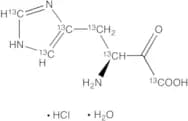
CAS:Controlled Product<p>Stability Volatile<br>Applications Labelled 3-Methylfuran (M305443). 3-Methylfuran is a volatile organic compound (VOCs) used as a potential non-intrusive tool for screening of lung cancer.<br> Not a dangerous good if item is equal to or less than 1g/ml and there is less than 100g/ml in the package<br>References McWilliams, et al.: Curr. Oncol. Rep., 4, 487 (2002), Buszewski, B., et al.: Biomed. Chromatogr., 21, 553 (2007), Ligor, T., et al.: J. Breath. Res., 1, 1 (2007),<br></p>Formula:C52H3H3OColor and Shape:ColourlessMolecular weight:85.12L-Histidine Hydrochloride Hydrate (<5% D) (13C6, 97-99%)
CAS:Controlled ProductFormula:C6H9N3O2•(HCl)•(H2O)Purity:97-99%Color and Shape:NeatMolecular weight:161.11364618022-Methyl-4-nitroaniline
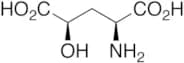
CAS:Controlled Product<p>Applications A red azoic dye. Dyes and metabolites, Environmental Testing<br>References Hoover, K., et al.: Chem. Res. Toxicol., 18, 1497 (2005), Altenburger, R., et al.: Environ. Toxicol. Chem., 24, 324 (2005), Gonzalez, M., et al.: Bioorg. Med. Chem., 13, 1775 (2005),<br></p>Formula:C7H8N2O2Color and Shape:YellowMolecular weight:152.15(2S,4R)-4-Hydroxy-L-glutamic Acid
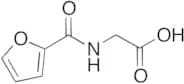
CAS:Controlled Product<p>Applications (2S,4R)-4-Hydroxy-L-glutamic Acid is a metabolite of Glutamic acid (G596960).<br>References Hampson, D., et al.: J. Biol. Chem., 274, 33488 (1999), Jensen, A., et al.: Eur. J. Pharmacol., 397, 247 (2000),<br></p>Formula:C5H9NO5Color and Shape:NeatMolecular weight:163.132-Furoylglycine
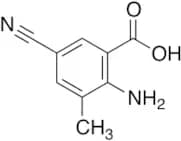
CAS:Controlled Product<p>Applications 2-Furoylglycine is an intermediate used to prepare non-nucleoside inhibitors of HCV NS5b RNA polymerase. It is also used in the synthesis of benzimidazolylazabicyclooctylethylpiperidines as Ccr5 antagonists for the treatment of HIV infection.<br>References Antonysamy, S., et al.: Bioorg. Med. Chem. Lett., 18, 2990 (2008); Kazmierski, W., et al.: PCT Int. Appl. (2004), WO 2004054974 A2 20040701<br></p>Formula:C7H7NO4Color and Shape:NeatMolecular weight:169.132-Amino-5-cyano-3-methylbenzoicAcid
CAS:Controlled Product<p>Applications 2-Amino-5-cyano-3-methylbenzoic Acid (cas# 871239-18-8) is a useful research chemical.<br></p>Formula:C9H8N2O2Color and Shape:NeatMolecular weight:176.172Thiodiglycolic Acid-d4
CAS:Controlled Product<p>Applications Thiodiglycolic Acid-d4 acts as a reagent for the synthesis of metabolites of S-carboxymethyl-L-cysteine and S-methyl-L-Cysteine and of some isotoically labelled (2H, 13C) analogs.<br>References Meese, C. O., et al.: Archiv der Pharmazie, 323, 957 (1990)<br></p>Formula:C4D4H2O4SColor and Shape:NeatMolecular weight:154.17L-Histidinol Dihydrochloride
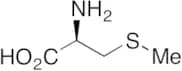
CAS:Controlled ProductFormula:C6H11N3O·2ClHColor and Shape:NeatMolecular weight:214.09S-Methyl-L-cysteine
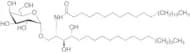
CAS:Controlled Product<p>Applications S-Methyl-L-cysteine is a substrate in the catalytic antioxidant system mediated by methionine sulfoxide reductase A (MSRA). It has been studied as a theurapeutic for neurodegenerative diseases including Parkinson′s.<br>References Wassef, R., et al.: J. Neurosci., 21, 12808 (2007)<br></p>Formula:C4H9NO2SColor and Shape:NeatMolecular weight:135.19KRN7000
CAS:Controlled Product<p>Stability Hygroscopic<br>Applications Galactosylceramides play an important roles in promoting the regulation of nerve cells, regulating protein kinase C activities and modulating the function of the hormone receptor. It has shown to have significant immunostimulatory and anti-umor activity in mice with liver metastasis of the Colon26 adenocarcinoma.<br>References Morita, M., et al.: J. Med. Chem., 38, 2176 (1995), Sakai, T., et al.: J. Med. Chem., 42, 1836 (1999),<br></p>Formula:C50H99NO9Color and Shape:NeatMolecular weight:858.32D-Homocystine
CAS:Controlled Product<p>Applications D-Homocysteine is the stereoisomer of L-Homocystine, increased levels lead to hyperhomocysteinemia; a cardiovascular risk factor in prediction of coronary heart disease as well as being associated with congenital birth defects, pregnancy complications and cancer.<br>References Geisel, J. et al.: Clin. Chem. Lab. Med., 41, 1513 (2003); Geisel, J. et al.: Clin. Chem. Lab. Med., 41, 1513 (2003);<br></p>Formula:C8H16N2O4S2Color and Shape:WhiteMolecular weight:268.353a,4,5,9b-Tetrahydro-3 H -cyclopenta[ c ]quinoline-4-carboxylic acid
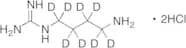
CAS:Purity:95.0%Color and Shape:SolidMolecular weight:215.25199890136724-Aminobutyl-d8 Guanidine Dihydrochloride
CAS:Controlled Product<p>Applications 4-Aminobutyl-d8 Guanidine is the labelled analog of the decarboxylation product of the amino acid arginine (A769500) and also an intermediate in polyamine biosynthesis.<br>References Golding, B.T., et al.: Biochem. Soc. Trans., 22, 391S (1994);<br></p>Formula:C5H6D8N4·2HClColor and Shape:NeatMolecular weight:211.162638-ethyl-4-[2-(4-methoxyphenyl)acetyl]-1-oxa-4,8-diazaspiro[4.5]decane-3-carboxylic acid
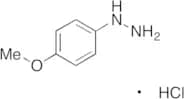
CAS:Purity:95.0%Molecular weight:362.4259948730469(4-Methoxyphenyl)hydrazine Hydrochloride
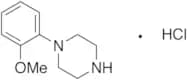
CAS:<p>Stability Light Sensitive<br>Applications 4-Methoxyphenylhydrazine hydrochloride was used in the preparation of 5-cyano-3-(5-methoxy-2-methylindol-3-yl)-1,2,4-thiadiazole. It was also used to synthesize diarylpyrazoles as possible cyclooxygenase 2 ((COX-2)) inhibitors.<br>References Iwakawa, T., et al.: Chem. Pharm. Bull., 48, 160 (2000); Penning, T., et al.: J. Med. Chem., 40, 1347 (1997)<br></p>Formula:C7H10N2O·HClColor and Shape:Off-White To Light PurpleMolecular weight:138.17 + 36.461-(2-Methoxyphenyl)piperazine Hydrochloride
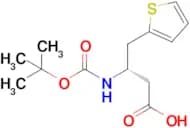
CAS:Controlled Product<p>Applications Piperazine derivative used as reference material for forensic laboratories.<br>References Brady, J., et al.: Drug Dev. Res., 20, 231 (1990), Winter, J., et al.: J. Pharmacol. Exp. Ther., 262, 682 (1992), Ator, N., et al.: Eur. J. Pharmacol., 241, 237 (1993), Forster, E., et al.: Eur. J. Pharmacol., 281, 81 (1995),<br></p>Formula:C11H16N2O·ClHColor and Shape:NeatMolecular weight:228.72(S)-3-((tert-Butoxycarbonyl)amino)-4-(thiophen-2-yl)butanoic acid
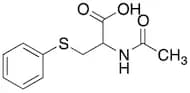
CAS:Purity:96%Molecular weight:285.35998535156252-(Acetylamino)-3-(phenylthio)propanoic Acid
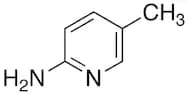
CAS:Controlled Product<p>Applications 2-(Acetylamino)-3-(phenylthio)propanoic acid is a useful chemical in research.<br></p>Formula:C11H13NO3SColor and Shape:NeatMolecular weight:239.292-Amino-5-methylpyridine
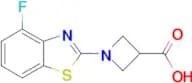
CAS:Controlled Product<p>Applications 2-Amino-5-methylpyridine (cas# 1603-41-4) is a compound useful in organic synthesis.<br> Not a dangerous good if item is equal to or less than 1g/ml and there is less than 100g/ml in the package<br>References Francotte, P., et al.: Bioorg. Med. Chem., 16, 9948 (2008), Sundaraganesan, N., et al.: J. Mol. Struc., 891, 284 (2008), Caleta, I., et al.: J. Med. Chem., 52, 1744 (2009),<br></p>Formula:C6H8N2Color and Shape:NeatMolecular weight:108.141-(4-fluoro-1,3-benzothiazol-2-yl)azetidine-3-carboxylic acid
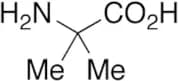
CAS:Purity:95.0%Molecular weight:252.259994506835942-Aminoisobutyric Acid (2-Methylalanine)
CAS:Controlled Product<p>Applications 2-Methylalanine is an Alanine (A481400) derivative. Alanine is an amino acid that occurs naturally in nature. It is a functional component in the alanine cycle which regulates the level of alanine aminotransferases which can be used as a diagnostic tool to predict type II diabetes.<br>References Naveed S. et al.: Diab., 53, 11 (2004); Barlind, J. et al.: Bioorg. Med. Chem. Lett., 23, 2721 (2013);<br></p>Formula:C4H9NO2Color and Shape:NeatMolecular weight:103.121-(4-Hydroxy-3-methoxyphenyl)-1-propanone
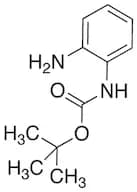
CAS:<p>Applications 1-(4-Hydroxy-3-methoxyphenyl)-1-propanone is a derivative of Guaiacol, a precursor to various flavorants, such as eugenol and vanillin.<br>References Allen, C., et al.: Org. Synth., 3, 418 (1955); Esposito, L., et al.: Kirk-Othmer Encyclopedia of Chemical Technology, 4th edition, 24, 812 (1997)<br></p>Formula:C10H12O3Color and Shape:NeatMolecular weight:180.20N-Boc-1,2-phenyldiamine
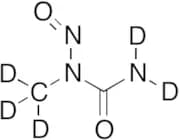
CAS:Controlled Product<p>Applications Protected 1,2-Phenyldiamine, an intermediate in the synthesis of histone deacetylase agents and antitumor agents.<br>References Andrews, D., et al.: Bioorg. Med. Chem. Lett., 18, 2580 (2008), Mahboobi, S., et al.: J. Med. Chem., 52, 2265 (2009),<br></p>Formula:C11H16N2O2Color and Shape:NeatMolecular weight:208.26N-Methyl-N-nitroso Urea-d5 (Wetted with water >20%)
CAS:Controlled Product<p>Applications N-Methyl-N-nitroso Urea-d6 is the labelled form of N-Methyl-N-nitroso Urea (M325815), which is a precursor of Diazomethane. It has a cytotoxicity effect.<br>References Huggins, C., et al.: J. Exp. Med., 131, 321 (1970); Gullino, P.M., et al.: J. Natl. Cancer Inst., 54, 401 (1975)<br></p>Formula:C2D5N3O2Color and Shape:NeatMolecular weight:108.11Tris(2-(2-methoxyethoxy)ethyl)amine
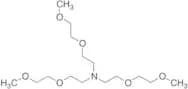
CAS:Controlled Product<p>Applications Tris(2-(2-methoxyethoxy)ethyl)amine (cas# 70384-51-9) is a useful research chemical.<br></p>Formula:C15H33NO6Color and Shape:NeatMolecular weight:323.434-(2,4-dimethoxyphenyl)-3H,4H,5H,6H,7H-imidazo[4,5-c]pyridine-6-carboxylic acid
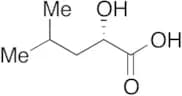
CAS:Purity:95.0%Molecular weight:303.3179931640625L-Leucic Acid
CAS:Controlled Product<p>Applications L-Leucic Acid is a reagent in the synthesis of cryptophycins based macrocyclic depsipeptides which are used as tubulin inhibitors.<br>References Kumar, A., et al.: Eur. J. Med. Chem., 93, 55 (2015)<br></p>Formula:C6H12O3Color and Shape:NeatMolecular weight:132.167-Chloro-L-Tryptophan
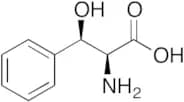
CAS:Controlled Product<p>Stability Hygroscopic<br>Applications 7-CHLORO-L-TRYPTOPHAN (cas# 73945-46-7) is a useful research chemical.<br></p>Formula:C11H11N2O2ClColor and Shape:NeatMolecular weight:238.67L-threo-Phenylserine
CAS:Controlled Product<p>Applications L-threo-Phenylserine is a valuable chiral synthon.<br></p>Formula:C9H11NO3Color and Shape:NeatMolecular weight:181.192-Bromo-4-methylphenol
CAS:Controlled Product<p>Applications 2-Bromo-4-methylphenol is a useful synthetic intermediate. It was used in the synthesis of furan-2-ylmethylene thiazolidinediones as potent, and selective inhibitors of phosphoinositide 3-kinase γ. It was also a reactant used to prepare phosphoramidate and phosphorothioamidate analogs of amiprophos Me as potential antimalarial agents.<br>References Pomel, V., et al.: J. Med. Chem., 49, 3857 (2006); Mara, C., et al.: Bioorg. Med. Chem. Lett., 21, 6180 (2011)<br></p>Formula:C7H7BrOColor and Shape:NeatMolecular weight:187.03



![1-[(3-methoxythien-2-yl)methyl]piperidine-4-carboxylic acid](/_next/image/?url=https%3A%2Fstatic.cymitquimica.com%2Fproducts%2F10%2Fthumb-webp%2FF518818.webp&w=3840&q=75)
![8-Bromo-7-(2-butyn-1-yl)-3,7-dihydro-3-methyl-1-[(4-methyl-2-quinazolinyl)methyl]-1H-purine-2,6-di…](/_next/image/?url=https%3A%2Fstatic.cymitquimica.com%2Fproducts%2FTR%2Fthumb-webp%2FB680510.webp&w=3840&q=75)
![3-[(1-methyl-1H-pyrazolo[3,4-d]pyrimidin-4-yl)amino]benzoic acid](/_next/image/?url=https%3A%2Fstatic.cymitquimica.com%2Fproducts%2F10%2Fthumb-webp%2FF314870.webp&w=3840&q=75)


![4-(4-bromobenzoyl)-8-ethyl-1-oxa-4,8-diazaspiro[4.5]decane-3-carboxylic acid](/_next/image/?url=https%3A%2Fstatic.cymitquimica.com%2Fproducts%2F10%2Fthumb-webp%2FF525691.webp&w=3840&q=75)
![2'-Amino-[1,1':3',1''-terphenyl]-4,4''-dicarboxylic acid](/_next/image/?url=https%3A%2Fstatic.cymitquimica.com%2Fproducts%2F10%2Fthumb-webp%2FF695958.webp&w=3840&q=75)

![4-(4-methylphenyl)-3H,4H,5H,6H,7H-imidazo[4,5-c]pyridine-6-carboxylic acid](/_next/image/?url=https%3A%2Fstatic.cymitquimica.com%2Fproducts%2F10%2Fthumb-webp%2FF522491.webp&w=3840&q=75)
![2-Methylnaphth[1,2-d]oxazole](/_next/image/?url=https%3A%2Fstatic.cymitquimica.com%2Fproducts%2FTR%2Fthumb-webp%2FM332348.webp&w=3840&q=75)




![4-(2-methoxybenzoyl)-8-propyl-1-oxa-4,8-diazaspiro[4.5]decane-3-carboxylic acid](/_next/image/?url=https%3A%2Fstatic.cymitquimica.com%2Fproducts%2F10%2Fthumb-webp%2FF525737.webp&w=3840&q=75)


![4-(3-phenoxyphenyl)-3H,4H,5H,6H,7H-imidazo[4,5-c]pyridine-6-carboxylic acid](/_next/image/?url=https%3A%2Fstatic.cymitquimica.com%2Fproducts%2F10%2Fthumb-webp%2FF522499.webp&w=3840&q=75)



![8-benzyl-4-(2,2-dimethylpropanoyl)-1-oxa-4,8-diazaspiro[4.5]decane-3-carboxylic acid](/_next/image/?url=https%3A%2Fstatic.cymitquimica.com%2Fproducts%2F10%2Fthumb-webp%2FF525790.webp&w=3840&q=75)
![[1-(2-Thienyl)-3,4-dihydroisoquinolin-2(1H)-yl]acetic acid](/_next/image/?url=https%3A%2Fstatic.cymitquimica.com%2Fproducts%2F10%2Fthumb-webp%2FF494876.webp&w=3840&q=75)

![5-Methyl-4,5,6,7-tetrahydrothiazolo[5,4-c]pyridine-2-carboxylic Acid Hydrochloride](/_next/image/?url=https%3A%2Fstatic.cymitquimica.com%2Fproducts%2FTR%2Fthumb-webp%2FM330085.webp&w=3840&q=75)

![(8-Benzyl-2,4-dioxo-1,3,8-triaza-spiro[4.5]dec-3-yl)-acetic acid](/_next/image/?url=https%3A%2Fstatic.cymitquimica.com%2Fproducts%2F10%2Fthumb-webp%2FF495291.webp&w=3840&q=75)






![3a,4,5,9b-Tetrahydro-3 H -cyclopenta[ c ]quinoline-4-carboxylic acid](/_next/image/?url=https%3A%2Fstatic.cymitquimica.com%2Fproducts%2F10%2Fthumb-webp%2FF028952.webp&w=3840&q=75)
![8-ethyl-4-[2-(4-methoxyphenyl)acetyl]-1-oxa-4,8-diazaspiro[4.5]decane-3-carboxylic acid](/_next/image/?url=https%3A%2Fstatic.cymitquimica.com%2Fproducts%2F10%2Fthumb-webp%2FF525679.webp&w=3840&q=75)

![4-(2,4-dimethoxyphenyl)-3H,4H,5H,6H,7H-imidazo[4,5-c]pyridine-6-carboxylic acid](/_next/image/?url=https%3A%2Fstatic.cymitquimica.com%2Fproducts%2F10%2Fthumb-webp%2FF522514.webp&w=3840&q=75)